2021 Volvo XC40 vs 2020 Toyota Highlander

Overview | |
MSRP$34,600 | MSRP$33,700 |
Listings48 | Listings31 |
Ratings & Reviews | |
User Reviews | User Reviews |
Expert reviews7.2 out of 10 | Expert reviews8.0 out of 10 |
Pros
Cons
| |
2020 Toyota Highlander Reviews SummaryMidsize three-row SUVs are all spacious and powerful, but only the Toyota Highlander reaches the premium threshold for passenger comfort. Redesigned for 2020, the Highlander's revised styling and technology are secondary to its silent operation, soft ride, and cosseting interior. The upper trims feel and drive just like a Lexus, without the upcharge. There is nothing exciting about a Highlander, and yet, there is no other SUV in the $40,000 to $55,000 range that feels so effortless and tranquil. | |
2021 Volvo XC40 Reviews SummaryIntroduced for the 2019 model year, the Volvo XC40 enters 2021 with one major change—the addition of an all-electric powertrain option. The 2021 Volvo XC40 Recharge is the Scandinavian automaker’s first mass-market pure electric vehicle, in fact. The Recharge will be sold alongside gasoline versions of the XC40, which carry over largely unchanged, and compete against small luxury crossovers like the Audi Q3, BMW X1, Mercedes-Benz GLA-Class, and Lexus UX. With its electric powertrain, the Recharge is a de facto Tesla Model Y competitor. It’s also priced similar to high-end versions of the Ford Mustang Mach-E, although the two electric crossovers have somewhat different philosophies. In addition to that zero-emission powertrain, the Recharge gets an Android-based operating system, over-the-air (OTA) software update capability for all vehicle systems, and some updates to driver-assist tech. These changes don’t apply to gasoline 2021 XC40 models, but Volvo does plan to add the Android operating system to more vehicles in the future. Since the Recharge is the main new thing for the 2021 XC40, that’s what we focused on for this review. While the gasoline XC40 is available in three trim levels—Momentum, R-Design, and Inscription—with standard all-wheel drive (AWD) in Canada, the Recharge is only offered in a single trim level. | |
No video found | |
Popular Features & Specs | |
Engine3.5L 295 hp V6 | Engine2.0L 187 hp I4 |
Drive TrainFWD | Drive TrainFWD |
Seating Capacity8 | Seating Capacity5 |
Horsepower295 hp @ 6600 rpm | Horsepower187 hp @ 4700 rpm |
MPG City20 | MPG City23 |
MPG Highway28 | MPG Highway32 |
Engine | |
Engine Name3.5L 295 hp V6 | Engine Name2.0L 187 hp I4 |
Torque263 lb-ft @ 4700 rpm | Torque221 lb-ft @ 1400 rpm |
Horsepower295 hp @ 6600 rpm | Horsepower187 hp @ 4700 rpm |
DrivetrainFWD | DrivetrainFWD |
Fuel Economy | |
MPG City20 | MPG City23 |
MPG Highway28 | MPG Highway32 |
Interior | |
Leather Seats | Leather SeatsStandard |
Seating Capacity8 | Seating Capacity5 |
Safety | |
Front Crash Overall4 | Front Crash Overall5 |
Side Crash Overall5 | Side Crash Overall5 |
Dimensions & Capacity | |
Cargo Space16.0 cu ft | Cargo Space20.7 cu ft |
Curb Weight4145 lbs | Curb Weight3627 lbs |
Height68.1 in | Height65.3 in |
Length194.9 in | Length174.2 in |
Width76.0 in | Width80.1 in |
Wheelbase112.2 in | Wheelbase106.4 in |
Maximum Payload1685 lbs | Maximum Payload1133 lbs |
Number of doors4 | Number of doors4 |
Maximum Towing Capacity5000 lbs | Maximum Towing Capacity3500 lbs |
Overview | ||
MSRP | $34,600 | $33,700 |
Listings | ||
Ratings & Reviews | ||
User reviews | ||
Expert reviews | 7.2 out of 10Read full review | 8.0 out of 10Read full review |
Pros & cons | Pros
Cons
| |
Summary | Midsize three-row SUVs are all spacious and powerful, but only the Toyota Highlander reaches the premium threshold for passenger comfort. Redesigned for 2020, the Highlander's revised styling and technology are secondary to its silent operation, soft ride, and cosseting interior. The upper trims feel and drive just like a Lexus, without the upcharge. There is nothing exciting about a Highlander, and yet, there is no other SUV in the $40,000 to $55,000 range that feels so effortless and tranquil. | Introduced for the 2019 model year, the Volvo XC40 enters 2021 with one major change—the addition of an all-electric powertrain option. The 2021 Volvo XC40 Recharge is the Scandinavian automaker’s first mass-market pure electric vehicle, in fact. The Recharge will be sold alongside gasoline versions of the XC40, which carry over largely unchanged, and compete against small luxury crossovers like the Audi Q3, BMW X1, Mercedes-Benz GLA-Class, and Lexus UX. With its electric powertrain, the Recharge is a de facto Tesla Model Y competitor. It’s also priced similar to high-end versions of the Ford Mustang Mach-E, although the two electric crossovers have somewhat different philosophies. In addition to that zero-emission powertrain, the Recharge gets an Android-based operating system, over-the-air (OTA) software update capability for all vehicle systems, and some updates to driver-assist tech. These changes don’t apply to gasoline 2021 XC40 models, but Volvo does plan to add the Android operating system to more vehicles in the future. Since the Recharge is the main new thing for the 2021 XC40, that’s what we focused on for this review. While the gasoline XC40 is available in three trim levels—Momentum, R-Design, and Inscription—with standard all-wheel drive (AWD) in Canada, the Recharge is only offered in a single trim level. |
Video | No video found | |
Popular Features & Specs | ||
Engine | 3.5L 295 hp V6 | 2.0L 187 hp I4 |
Drive Train | FWD | FWD |
Seating Capacity | 8 | 5 |
Horsepower | 295 hp @ 6600 rpm | 187 hp @ 4700 rpm |
MPG City | 20 | 23 |
MPG Highway | 28 | 32 |
Engine | ||
Engine Name | 3.5L 295 hp V6 | 2.0L 187 hp I4 |
Torque | 263 lb-ft @ 4700 rpm | 221 lb-ft @ 1400 rpm |
Horsepower | 295 hp @ 6600 rpm | 187 hp @ 4700 rpm |
Drivetrain | FWD | FWD |
Fuel Economy | ||
MPG City | 20 | 23 |
MPG Highway | 28 | 32 |
Interior | ||
Leather Seats | Standard | |
Seating Capacity | 8 | 5 |
Safety | ||
Front Crash Overall | 4 | 5 |
Side Crash Overall | 5 | 5 |
Dimensions & Capacity | ||
Cargo Space | 16.0 cu ft | 20.7 cu ft |
Curb Weight | 4145 lbs | 3627 lbs |
Height | 68.1 in | 65.3 in |
Length | 194.9 in | 174.2 in |
Width | 76.0 in | 80.1 in |
Wheelbase | 112.2 in | 106.4 in |
Maximum Payload | 1685 lbs | 1133 lbs |
Number of doors | 4 | 4 |
Maximum Towing Capacity | 5000 lbs | 3500 lbs |
The 2020 Toyota Highlander presented a design that was both familiar and subtly refined. Its exterior featured a trapezoidal theme that was evident in the tailgate's license plate cutout, rear bumper, headlights, grille, and lower front bumper. The vehicle's body panels had more pronounced creases, and the tailgate glass was slanted slightly more than its predecessor. The Highlander came equipped with projector-beam LED headlights across all trims, while the higher trims, Limited and Platinum, boasted prettier LED running lamps and new 20-inch alloy wheels. The interior of the Highlander was where it truly shone, with quality fit and finish. Silver-painted accents highlighted the curves and angles, and the 8-inch touchscreen appeared to float above the multi-layered dash. The Limited trim featured a three-tone interior with rich textures and padded surfaces, offering a level of detail and quality that was unmatched by most competitors.
In contrast, the 2021 Volvo XC40 embraced a more traditional SUV styling with a tall, flat roof and upright rear hatch. It shared familial styling cues with the rest of the Volvo lineup, such as the “Thor’s Hammer” LED headlights and a simple oval grille. The XC40 Recharge variant was distinguished by a blanked-off grille, subtle “Recharge” badging, and model-specific alloy wheels. The interior of the XC40 was minimalist yet premium, with high-quality materials and a coherent design. Real metal trim adorned the dashboard, and the upholstery combined Nappa leather and Nubuck textile. The XC40's interior design was cohesive, with elements like the portrait-oriented touchscreen and air vents melding seamlessly. Volvo's approach to interior design in the XC40 was a testament to its commitment to luxury and quality.


The 2020 Toyota Highlander was powered by a 3.5-litre V6 engine, available in both front-wheel drive (FWD) and all-wheel drive (AWD) configurations. This engine delivered 295 horsepower and 263 pound-feet of torque, providing brisk acceleration without the need for turbochargers. The eight-speed automatic transmission made full use of the engine's power, although it required a heavy foot for a kickdown. The Highlander's steering was loose, and the suspension was soft, leading to a ride that was more about comfort than precision. Despite its size and weight, the Highlander offered a calming driving experience, especially on long road trips. Fuel efficiency was commendable, with the FWD model rated at 11.9 L/100 km in the city and 8.3 on the highway, while the AWD model had slightly different figures. The Highlander hybrid variant offered even better fuel consumption.
The 2021 Volvo XC40 offered a three-tiered powertrain lineup, with the electric Recharge model at the top. The gasoline options included a 2.0-litre turbocharged four-cylinder engine, with the T4 producing 187 horsepower and the T5 delivering 248 hp. The Recharge model shared its powertrain with the Polestar 2, featuring one electric motor for each axle, resulting in a combined 402 hp and 486 lb-ft of torque. The Recharge could accelerate from zero to 100 km/h in 4.9 seconds, while the T5 and T4 took 6.4 and 8.5 seconds, respectively. The XC40 emphasized comfort and quietness, with excellent ride quality even on rough roads. The Recharge model offered one-pedal driving and had a towing capacity of 900 kilograms when properly equipped.
The 2020 Toyota Highlander offered seating for eight, or seven with the second-row captain's chairs on Platinum trims. The second-row seats were versatile, with generous adjustments and easy access to the third row. The Highlander's ergonomics were designed for ease of ingress and egress, with wide-opening rear doors and comfortable seat heights. Cargo space was generous, with 453 litres behind the third row, 1,359 litres behind the second, and 2,378 litres with both rows folded. The Highlander also featured practical storage solutions, including eight cupholders, four bottle holders, and two shelves integrated into the dash.
The 2021 Volvo XC40, while not particularly spacious, offered clever storage solutions to compensate for its limited interior space. The centre console included a removable trash bin, and a bag hook was built into the glovebox door. The Harman Kardon audio system's speakers were moved to the dashboard, allowing for larger door bins. The storage cubby ahead of the shifter was designed to hold a phone securely, and a wireless charging pad was optional. However, second-row occupants lacked phone-charging options. The XC40's interior space was more competitive compared to rivals like the Audi Q3 and BMW X1, but it still fell short in terms of overall utility.
The 2020 Toyota Highlander's infotainment system felt outdated, with maps lacking detail and a convoluted process for using onboard apps. The 12.3-inch touchscreen on the Platinum trim was limited in its usability, as it always displayed climate and fuel efficiency information. However, the Highlander redeemed itself with a 10-inch head-up display and a 7-inch display in the instrument cluster, both of which were crisp and informative. The semi-automated driving system was effective, and adaptive cruise control and automatic high beams were standard. The JBL audio system on Limited and Platinum trims was decent, and the vehicle offered a range of connectivity options, including Apple CarPlay and Android Auto.
The 2021 Volvo XC40 Recharge featured the Android Automotive OS infotainment system, which integrated Google apps like Google Assistant and Google Maps. This system allowed for further customization by syncing with Android phones. The standard hardware setup included a 9-inch touchscreen and a 12.3-inch digital instrument cluster, both of which offered top-notch graphics and menu layouts. The Recharge model also introduced OTA update capability, allowing for software updates without visiting a dealership. The XC40 lacked a start button, relying on the key fob for operation, and Volvo planned to introduce a Digital Key feature in the future.
The 2020 Toyota Highlander came equipped with Toyota Safety Sense 2.0, which included automatic emergency braking with pedestrian and cyclist detection, lane-keeping assist, adaptive cruise control, and automatic high beams. Optional features included blind-spot monitoring, rear cross-traffic alert, parking sensors, and rear emergency braking. The Highlander received a five-star overall safety rating from the NHTSA and a 2020 Top Safety Pick from the IIHS.
The 2021 Volvo XC40 received the highest “Top Safety Pick+” rating from the IIHS and a five-star overall crash-test rating from the NHTSA. The XC40 came with a comprehensive list of standard safety features, including lane-keep assist, blind-spot monitoring, automatic emergency braking, and rear parking sensors. The Recharge model featured Volvo’s latest sensor suite, which was scalable for future driver aids.
CarGurus highlights
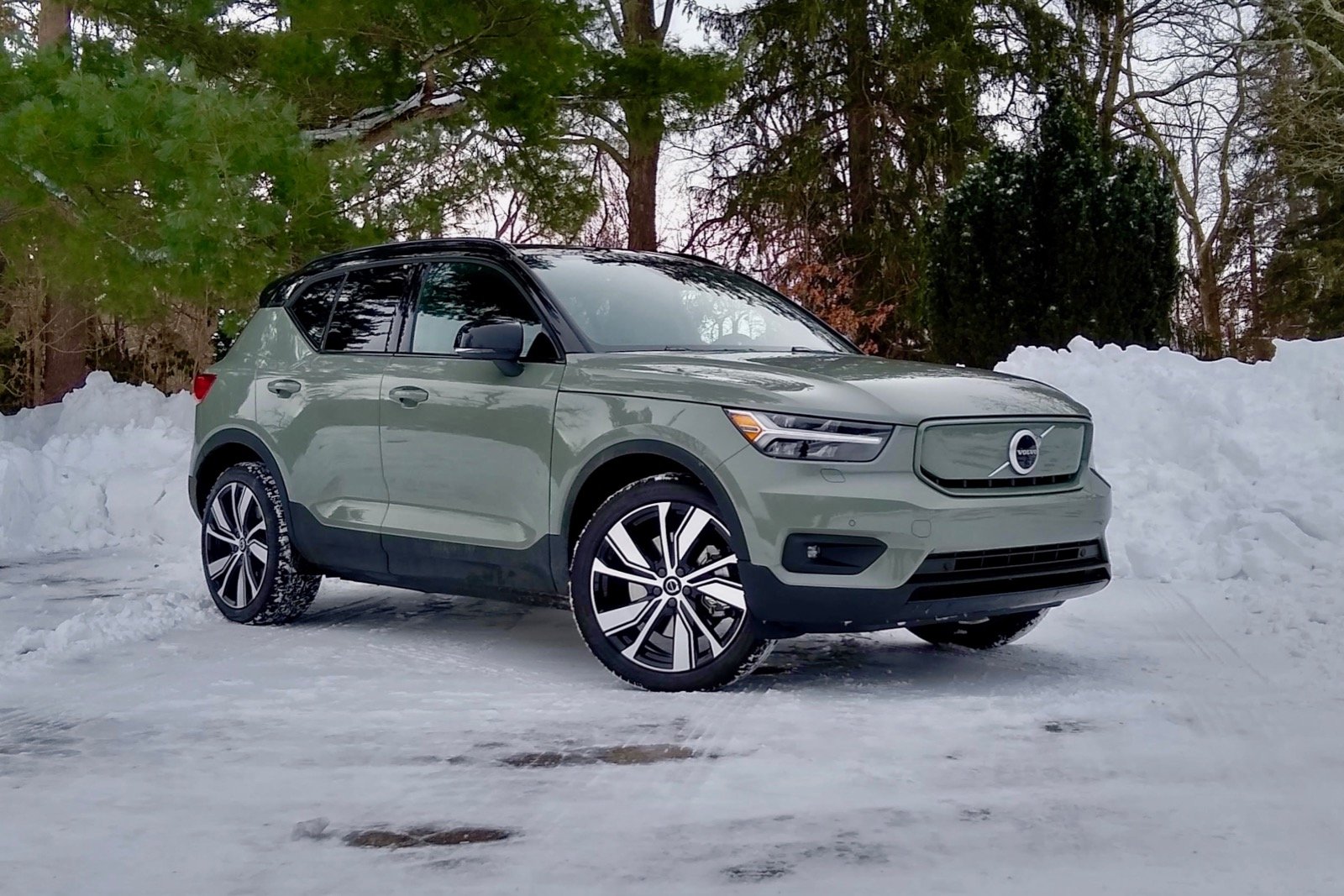
According to CarGurus experts, the overall rating for the 2020 Toyota Highlander is 7.2 out of 10, while the 2021 Volvo XC40 scores 8.0 out of 10. Based on these ratings, the 2021 Volvo XC40 is the recommended choice, offering a more advanced technology suite, a premium interior, and a higher overall rating.
Choose the 2021 Volvo XC40 if:
- You prefer a luxury vehicle with a minimalist and premium interior design.
- You want a vehicle with advanced technology, including Google-integrated infotainment.
- You are interested in an electric vehicle with impressive performance and one-pedal driving capability.


Choose the 2020 Toyota Highlander if:
- You prioritize a spacious and versatile interior with ample cargo space.
- You value a comfortable and calming driving experience for long road trips.
- You seek a vehicle with a strong safety rating and comprehensive safety features.


CarGurus highlights
According to CarGurus experts, the overall rating for the 2020 Toyota Highlander is 7.2 out of 10, while the 2021 Volvo XC40 scores 8.0 out of 10. Based on these ratings, the 2021 Volvo XC40 is the recommended choice, offering a more advanced technology suite, a premium interior, and a higher overall rating.
Choose the 2021 Volvo XC40 if:
Shop Now- You prefer a luxury vehicle with a minimalist and premium interior design.
- You want a vehicle with advanced technology, including Google-integrated infotainment.
- You are interested in an electric vehicle with impressive performance and one-pedal driving capability.


Choose the 2020 Toyota Highlander if:
Shop Now- You prioritize a spacious and versatile interior with ample cargo space.
- You value a comfortable and calming driving experience for long road trips.
- You seek a vehicle with a strong safety rating and comprehensive safety features.


By: CarGurus + AI
At CarGurus, our team of experienced automotive writers remain at the heart of our content operation, conducting hands-on car tests and writing insightful guides that are backed by years of industry experience. To complement this, we are harnessing AI to make our content offering more diverse and more helpful to shoppers than ever. To achieve this, our AI systems are based exclusively on CarGurus content, ratings and data, so that what we produce is both unique to CarGurus, and uniquely helpful to car shoppers.

