2020 Nissan Rogue vs 2020 Toyota Highlander
Overview | |
MSRP$34,600 | MSRP$25,490 |
Listings50 | Listings191 |
Ratings & Reviews | |
User Reviews | User Reviews |
Expert reviews7.2 out of 10 | Expert reviews6.0 out of 10 |
Pros
Cons
| Pros
Cons
|
2020 Toyota Highlander Reviews SummaryMidsize three-row SUVs are all spacious and powerful, but only the Toyota Highlander reaches the premium threshold for passenger comfort. Redesigned for 2020, the Highlander's revised styling and technology are secondary to its silent operation, soft ride, and cosseting interior. The upper trims feel and drive just like a Lexus, without the upcharge. There is nothing exciting about a Highlander, and yet, there is no other SUV in the $40,000 to $55,000 range that feels so effortless and tranquil. | |
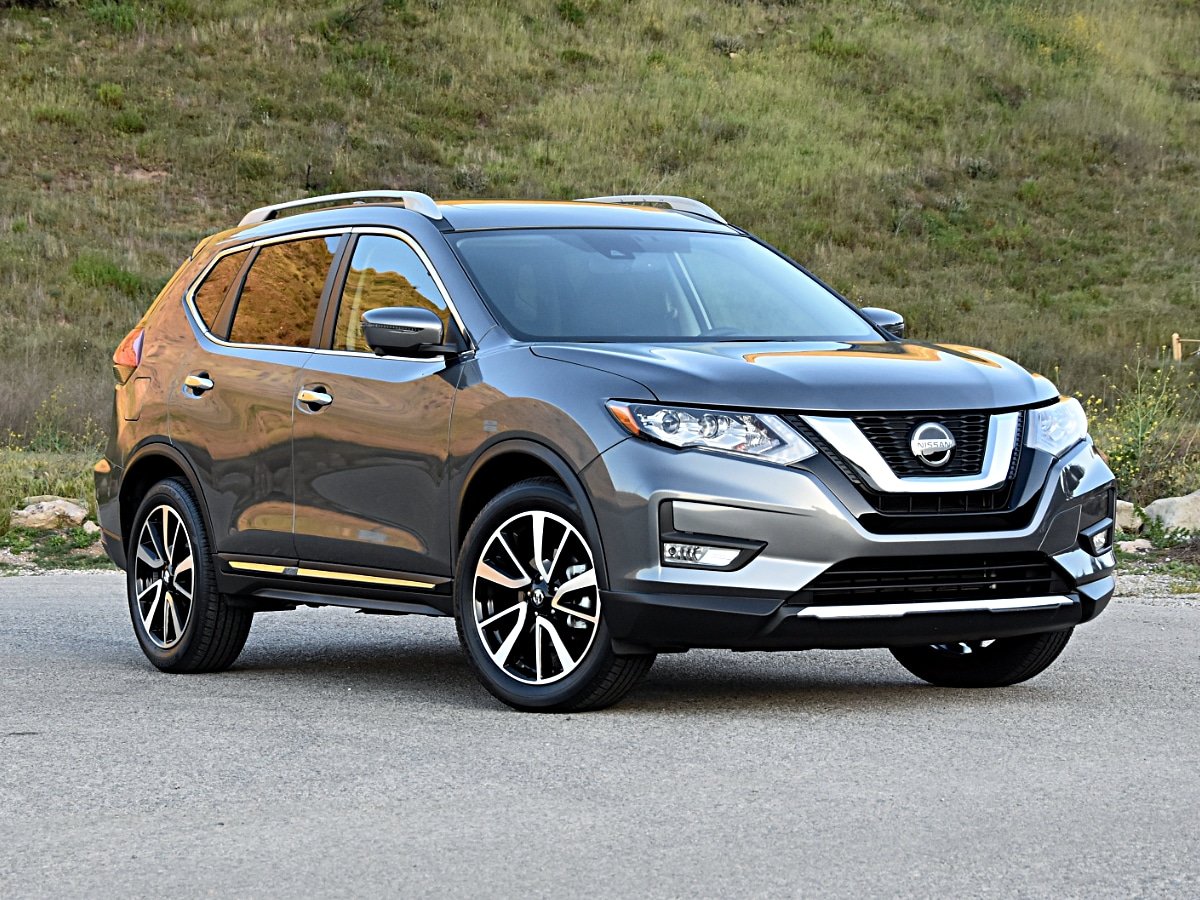
2020 Nissan Rogue Reviews SummaryBy 2020 the Nissan Rogue was looking somewhat dated, having been on sale since 2014. Is it still worth considering, or are you better off looking at the newer model instead? The answers to these questions depend on who you are and what you value in a compact crossover SUV. | |
No video found | |
Popular Features & Specs | |
Engine3.5L 295 hp V6 | Engine2.5L 170 hp I4 |
Drive TrainFWD | Drive TrainFWD |
Seating Capacity8 | Seating Capacity5 |
Horsepower295 hp @ 6600 rpm | Horsepower170 hp @ 6000 rpm |
MPG City20 | MPG City26 |
MPG Highway28 | MPG Highway33 |
Engine | |
Engine Name3.5L 295 hp V6 | Engine Name2.5L 170 hp I4 |
Torque263 lb-ft @ 4700 rpm | Torque175 lb-ft @ 4400 rpm |
Horsepower295 hp @ 6600 rpm | Horsepower170 hp @ 6000 rpm |
DrivetrainFWD | DrivetrainFWD |
Fuel Economy | |
MPG City20 | MPG City26 |
MPG Highway28 | MPG Highway33 |
Interior | |
Seating Capacity8 | Seating Capacity5 |
Safety | |
Front Crash Overall4 | Front Crash Overall4 |
Side Crash Overall5 | Side Crash Overall5 |
Dimensions & Capacity | |
Cargo Space16.0 cu ft | Cargo Space39.3 cu ft |
Curb Weight4145 lbs | Curb Weight3463 lbs |
Height68.1 in | Height66.3 in |
Length194.9 in | Length184.5 in |
Width76.0 in | Width72.4 in |
Wheelbase112.2 in | Wheelbase106.5 in |
Maximum Payload1685 lbs | Maximum Payload1127 lbs |
Number of doors4 | Number of doors4 |
Maximum Towing Capacity5000 lbs | Maximum Towing Capacity |
Overview | ||
MSRP | $34,600 | $25,490 |
Listings | ||
Ratings & Reviews | ||
User reviews | ||
Expert reviews | 7.2 out of 10Read full review | 6.0 out of 10Read full review |
Pros & cons | Pros
Cons
| Pros
Cons
|
Summary | Midsize three-row SUVs are all spacious and powerful, but only the Toyota Highlander reaches the premium threshold for passenger comfort. Redesigned for 2020, the Highlander's revised styling and technology are secondary to its silent operation, soft ride, and cosseting interior. The upper trims feel and drive just like a Lexus, without the upcharge. There is nothing exciting about a Highlander, and yet, there is no other SUV in the $40,000 to $55,000 range that feels so effortless and tranquil. | By 2020 the Nissan Rogue was looking somewhat dated, having been on sale since 2014. Is it still worth considering, or are you better off looking at the newer model instead? The answers to these questions depend on who you are and what you value in a compact crossover SUV. |
Video | No video found | |
Popular Features & Specs | ||
Engine | 3.5L 295 hp V6 | 2.5L 170 hp I4 |
Drive Train | FWD | FWD |
Seating Capacity | 8 | 5 |
Horsepower | 295 hp @ 6600 rpm | 170 hp @ 6000 rpm |
MPG City | 20 | 26 |
MPG Highway | 28 | 33 |
Engine | ||
Engine Name | 3.5L 295 hp V6 | 2.5L 170 hp I4 |
Torque | 263 lb-ft @ 4700 rpm | 175 lb-ft @ 4400 rpm |
Horsepower | 295 hp @ 6600 rpm | 170 hp @ 6000 rpm |
Drivetrain | FWD | FWD |
Fuel Economy | ||
MPG City | 20 | 26 |
MPG Highway | 28 | 33 |
Interior | ||
Seating Capacity | 8 | 5 |
Safety | ||
Front Crash Overall | 4 | 4 |
Side Crash Overall | 5 | 5 |
Dimensions & Capacity | ||
Cargo Space | 16.0 cu ft | 39.3 cu ft |
Curb Weight | 4145 lbs | 3463 lbs |
Height | 68.1 in | 66.3 in |
Length | 194.9 in | 184.5 in |
Width | 76.0 in | 72.4 in |
Wheelbase | 112.2 in | 106.5 in |
Maximum Payload | 1685 lbs | 1127 lbs |
Number of doors | 4 | 4 |
Maximum Towing Capacity | 5000 lbs | |
The 2020 Toyota Highlander presented a somewhat understated exterior design, with subtle changes from its predecessor, such as a more slanted tailgate glass and pronounced body panel creases. The trapezoidal theme was evident in various elements, including the tailgate's license plate cutout and the grille. While the base trims featured projector-beam LED headlights, the higher trims, Limited and Platinum, boasted prettier LED running lamps and new 20-inch alloy wheels. Despite the exterior's lack of excitement, the Highlander's interior was a different story. Toyota focused on quality fit and finish, with silver-painted accents and a multi-layered dash that housed an 8-inch touchscreen. The Limited trim offered a three-tone interior with rich textures and padded surfaces, rivaling the Kia Telluride in terms of interior quality.
In contrast, the 2020 Nissan Rogue maintained an attractive appearance despite its age, with a bold V-Motion grille and exaggerated fender swells. The SL Platinum trim, equipped with 19-inch aluminum alloy wheels, added to its appeal. However, the interior revealed its age, with older styling themes and unimpressive plastic surfaces. The Rogue's seats, though undersized, featured Nissan's Zero Gravity design and Quick Comfort heating. While the front seats posed comfort challenges for taller drivers, the rear seats offered excellent thigh support and legroom, enhanced by a panoramic moonroof. The Rogue's cargo area was spacious, with 1,112 litres of space and a Divide-n-Hide cargo management system, though in-cabin storage was limited.


The 2020 Toyota Highlander was powered by a 3.5-litre V6 engine, delivering 295 horsepower and 263 lb-ft of torque. Available in both FWD and AWD, the Highlander offered smooth and brisk acceleration, akin to the Lexus RX. The eight-speed automatic transmission efficiently utilized the engine's power, though it required a heavy foot for kickdown. Despite its new chassis, the Highlander suffered from loose steering and a soft suspension, leading to a floaty ride. However, it provided a calming driving experience, especially on long trips. The AWD system on higher trims included torque vectoring and selectable driving modes, enhancing its handling capabilities. Fuel efficiency was commendable, with the FWD model rated at 11.9 L/100 km city and 8.3 L/100 km highway.
The 2020 Nissan Rogue featured a 2.5-litre four-cylinder engine producing 170 horsepower and 175 lb-ft of torque, paired with a CVT. While adequate for everyday driving, the Rogue struggled with acceleration, especially during highway merging or passing. The CVT managed the power well, but the engine's response was often more noise than action. Fuel efficiency was a concern, with the Rogue achieving 9.4 L/100 km during testing, despite official ratings suggesting better performance. The Rogue's ride and handling were improved by Intelligent Trace Control and Active Ride Control, but it lacked the fun-to-drive factor. The steering was lifeless, and the suspension offered limited isolation, making the driving experience more of an endurance than enjoyment.
The 2020 Toyota Highlander offered seating for eight or seven with second-row captain's chairs. The second-row seats were versatile, with generous legroom and easy access to the third row. The Highlander's ergonomics were commendable, with wide-opening rear doors and comfortable seat heights. Standard features included three-zone automatic climate control, with upper trims offering a panoramic moonroof and heated second-row seats. Cargo space was ample, with 453 litres behind the third row and 2,378 litres with seats folded. The Highlander also featured practical storage solutions, though the wireless charging pad obstructed access to the centre armrest cubby.
The 2020 Nissan Rogue's front seats, though featuring Zero Gravity design, posed comfort challenges for taller drivers. The rear seats, however, offered excellent support and legroom, with a stadium-style seating arrangement. The panoramic moonroof enhanced the rear passengers' experience, along with rear climate control vents and USB charging ports. While in-cabin storage was limited, the Rogue excelled in cargo space, offering 1,112 litres behind the back seat. The Divide-n-Hide cargo management system and underfloor storage compartments added to its practicality.
The 2020 Toyota Highlander's infotainment system felt outdated, with low-resolution screens and a lack of onboard apps. The 12.3-inch touchscreen on the Platinum trim was underutilized, with limited usable area. However, Apple CarPlay and Android Auto were standard, and the Platinum trim featured a 10-inch head-up display and a 7-inch instrument cluster display. The semi-automated driving system was effective, and the JBL audio system, though decent, was not exceptional. Safety Connect and factory navigation offered additional connectivity and convenience features.
The 2020 Nissan Rogue's infotainment system included Bluetooth, Apple CarPlay, Android Auto, and SiriusXM satellite radio. Higher trims offered navigation, a Bose audio system, and NissanConnect Services, which provided remote access and safety features. However, the 7-inch touchscreen and interface were outdated, with slow response times and subpar voice recognition. Despite its sophisticated features, the Rogue's tech experience was hindered by its dated interface.
The 2020 Toyota Highlander came standard with Toyota Safety Sense 2.0, which included automatic emergency braking, lane-keeping assist, adaptive cruise control, and automatic high beams. Optional features included blind-spot monitoring and rear cross-traffic alert. The Highlander received a five-star overall safety rating from the NHTSA and a 2020 Top Safety Pick from the IIHS, thanks to its top crash test ratings and effective emergency braking.
The 2020 Nissan Rogue featured the Safety Shield 360 suite, which included forward-collision warning, automatic emergency braking, blind-spot monitoring, and rear cross-traffic alert. Additional features included Rear Door Alert and Tire Fill Alert. Optional safety features included ProPilot Assist, which offered adaptive cruise control and lane-centring. However, the Rogue's safety ratings were less impressive, with a four-star overall rating from the NHTSA and no Top Safety Pick designation from the IIHS due to issues with frontal-impact protection and headlights.
CarGurus highlights

According to CarGurus experts, the overall rating for the 2020 Toyota Highlander is 7.2 out of 10, while the 2020 Nissan Rogue scores 6.0 out of 10. Based on these ratings, the Toyota Highlander is the recommended choice, offering a superior interior, better performance, and higher safety ratings, making it a more well-rounded option for consumers.
Choose the 2020 Nissan Rogue if:
- You prefer a compact SUV with a spacious cargo area.
- You want a vehicle with a comprehensive suite of standard safety features.
- You appreciate rear-seat comfort and amenities for passengers.



Choose the 2020 Toyota Highlander if:
- You prioritize a high-quality interior with excellent fit and finish.
- You need a spacious and versatile vehicle for family trips.
- You value advanced safety features and top safety ratings.


CarGurus highlights
According to CarGurus experts, the overall rating for the 2020 Toyota Highlander is 7.2 out of 10, while the 2020 Nissan Rogue scores 6.0 out of 10. Based on these ratings, the Toyota Highlander is the recommended choice, offering a superior interior, better performance, and higher safety ratings, making it a more well-rounded option for consumers.
Choose the 2020 Nissan Rogue if:
Shop Now- You prefer a compact SUV with a spacious cargo area.
- You want a vehicle with a comprehensive suite of standard safety features.
- You appreciate rear-seat comfort and amenities for passengers.




Choose the 2020 Toyota Highlander if:
Shop Now- You prioritize a high-quality interior with excellent fit and finish.
- You need a spacious and versatile vehicle for family trips.
- You value advanced safety features and top safety ratings.


By: CarGurus + AI
At CarGurus, our team of experienced automotive writers remain at the heart of our content operation, conducting hands-on car tests and writing insightful guides that are backed by years of industry experience. To complement this, we are harnessing AI to make our content offering more diverse and more helpful to shoppers than ever. To achieve this, our AI systems are based exclusively on CarGurus content, ratings and data, so that what we produce is both unique to CarGurus, and uniquely helpful to car shoppers.

