2021 Kia Sorento Hybrid vs 2020 Toyota 4Runner

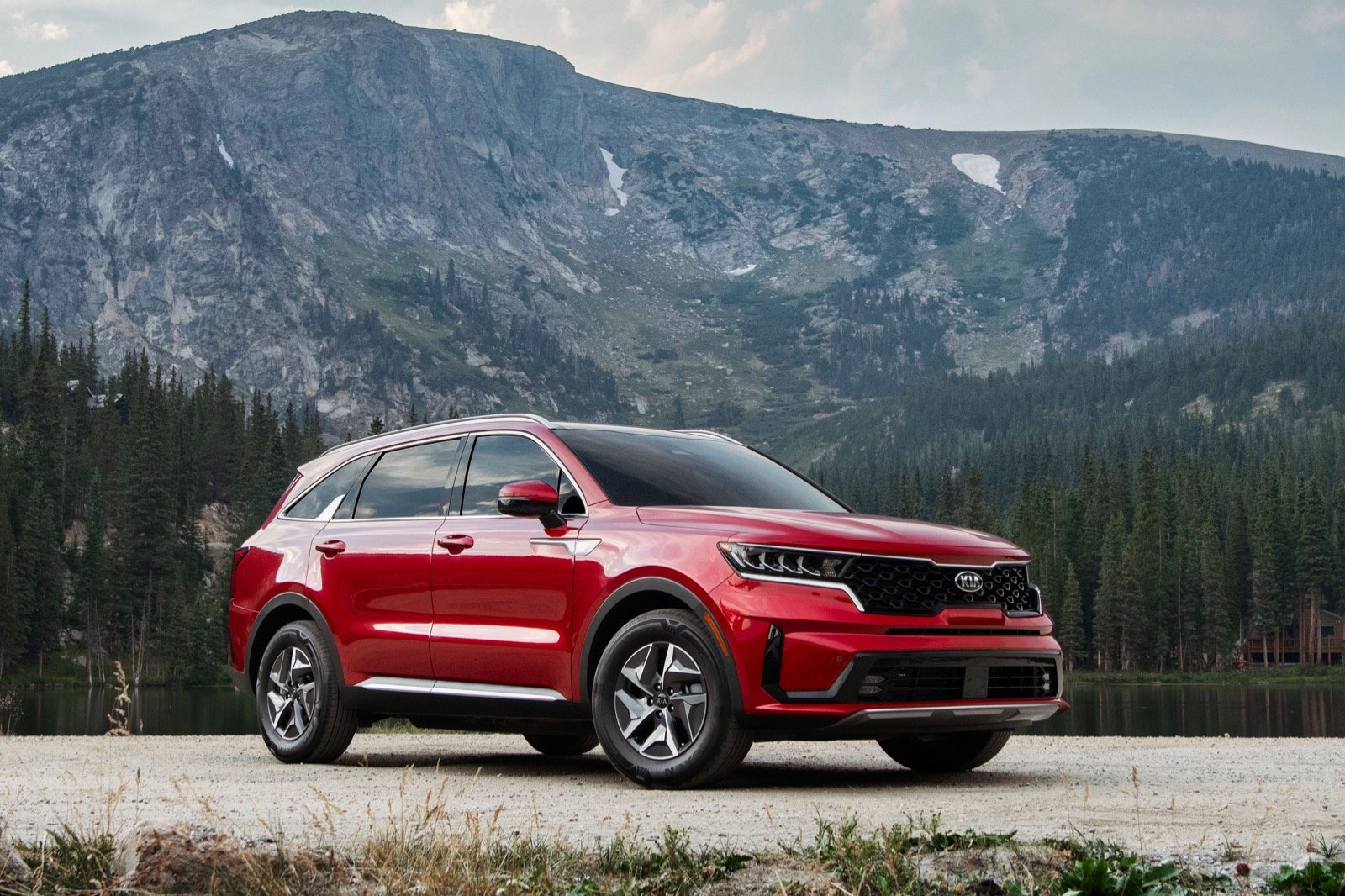
Overview | |
Listings37 | Listings0 |
Ratings & Reviews | |
User Reviews | User Reviews |
Expert reviews6.8 out of 10 | Expert reviews |
Pros
Cons
| |
2020 Toyota 4Runner Reviews SummaryEven with its expensive Limited package, the Toyota 4Runner remains clearly purpose-built for tackling terrain. Whether on a dusty cow path or snowy mountain road, the 4Runner looks most in its element when its outside the typical car’s comfort zone. For 2020, Toyota keeps enough chrome and leather available to market the 4Runner as a rough-and-tumble luxury alternative, but shoppers considering one had better have a real need for 4-wheel drive. | |
2021 Kia Sorento Hybrid Reviews Summary | |
No video found | No video found |
Popular Features & Specs | |
Engine4.0L 270 hp V6 | Engine1.6L 227 hp I4 Hybrid |
Drivetrain4X2 | DrivetrainFWD |
Seating Capacity7 | Seating Capacity6 |
Horsepower270 hp @ 5600 rpm | Horsepower |
EV Battery Capacity | EV Battery Capacity1.6 kWh |
Fuel Economy (City)14.7 L(e)/100 km | Fuel Economy (City)6.0 L(e)/100 km |
Fuel Economy (Highway)12.4 L(e)/100 km | Fuel Economy (Highway)6.7 L(e)/100 km |
Engine | |
Engine Name4.0L 270 hp V6 | Engine Name1.6L 227 hp I4 Hybrid |
Torque278 lb-ft @ 4400 rpm | Torque |
Horsepower270 hp @ 5600 rpm | Horsepower |
Drivetrain4X2 | DrivetrainFWD |
Fuel Economy | |
EV Battery Capacity | EV Battery Capacity1.6 kWh |
Fuel Economy (City)14.7 L(e)/100 km | Fuel Economy (City)6.0 L(e)/100 km |
Fuel Economy (Highway)12.4 L(e)/100 km | Fuel Economy (Highway)6.7 L(e)/100 km |
Interior | |
Seating Capacity7 | Seating Capacity6 |
Safety | |
Front Crash Overall4 | Front Crash Overall4 |
Side Crash Overall5 | Side Crash Overall5 |
Dimensions & Capacity | |
Cargo Space1337 L | Cargo Space357 L |
Curb Weight1996 kg | Curb Weight1805 kg |
Height1816 mm | Height1694 mm |
Length4831 mm | Length4811 mm |
Width1925 mm | Width1900 mm |
Wheelbase2789 mm | Wheelbase2809 mm |
Maximum Payload771 kg | Maximum Payload725 kg |
Number of doors4 | Number of doors4 |
Maximum Towing Capacity2268 kg | Maximum Towing Capacity |
Standard Towing Capacity2268 kg | Standard Towing Capacity |
Overview | ||
Listings | ||
Ratings & Reviews | ||
User reviews | ||
Expert reviews | 6.8 out of 10Read full review | |
Pros & cons | Pros
Cons
| |
Summary | Even with its expensive Limited package, the Toyota 4Runner remains clearly purpose-built for tackling terrain. Whether on a dusty cow path or snowy mountain road, the 4Runner looks most in its element when its outside the typical car’s comfort zone. For 2020, Toyota keeps enough chrome and leather available to market the 4Runner as a rough-and-tumble luxury alternative, but shoppers considering one had better have a real need for 4-wheel drive. | |
Video | No video found | No video found |
Popular Features & Specs | ||
Engine | 4.0L 270 hp V6 | 1.6L 227 hp I4 Hybrid |
Drivetrain | 4X2 | FWD |
Seating Capacity | 7 | 6 |
Horsepower | 270 hp @ 5600 rpm | |
EV Battery Capacity | 1.6 kWh | |
Fuel Economy (City) | 14.7 L(e)/100 km | 6.0 L(e)/100 km |
Fuel Economy (Highway) | 12.4 L(e)/100 km | 6.7 L(e)/100 km |
Engine | ||
Engine Name | 4.0L 270 hp V6 | 1.6L 227 hp I4 Hybrid |
Torque | 278 lb-ft @ 4400 rpm | |
Horsepower | 270 hp @ 5600 rpm | |
Drivetrain | 4X2 | FWD |
Fuel Economy | ||
EV Battery Capacity | 1.6 kWh | |
Fuel Economy (City) | 14.7 L(e)/100 km | 6.0 L(e)/100 km |
Fuel Economy (Highway) | 12.4 L(e)/100 km | 6.7 L(e)/100 km |
Interior | ||
Seating Capacity | 7 | 6 |
Safety | ||
Front Crash Overall | 4 | 4 |
Side Crash Overall | 5 | 5 |
Dimensions & Capacity | ||
Cargo Space | 1337 L | 357 L |
Curb Weight | 1996 kg | 1805 kg |
Height | 1816 mm | 1694 mm |
Length | 4831 mm | 4811 mm |
Width | 1925 mm | 1900 mm |
Wheelbase | 2789 mm | 2809 mm |
Maximum Payload | 771 kg | 725 kg |
Number of doors | 4 | 4 |
Maximum Towing Capacity | 2268 kg | |
Standard Towing Capacity | 2268 kg | |
2021 Kia Sorento Hybrid for Sale


2020 Toyota 4Runner for Sale


By: CarGurus + AI
At CarGurus, our team of experienced automotive writers remain at the heart of our content operation, conducting hands-on car tests and writing insightful guides that are backed by years of industry experience. To complement this, we are harnessing AI to make our content offering more diverse and more helpful to shoppers than ever. To achieve this, our AI systems are based exclusively on CarGurus content, ratings and data, so that what we produce is both unique to CarGurus, and uniquely helpful to car shoppers.
