Cadillac Escalade vs Hyundai Ioniq 9
Overview | |
MSRP$91,100 | MSRP$58,995 |
Listings376 | Listings154 |
Ratings & Reviews | |
User Reviews | User Reviews |
Expert reviews7.7 out of 10 | Expert reviews7.3 out of 10 |
Pros
Cons
| Pros
Cons
|
Reviews SummaryThe standard-wheelbase Escalade seats up to eight passengers across three rows, rides on a body-on-frame platform shared with the Chevrolet Tahoe/Suburban and GMC Yukon/Yukon XL, and is powered exclusively by a naturally aspirated 6.2-litre V8. For 2026, the Escalade lineup receives a new base trim and some revised naming (Premium Luxury Platinum becomes Platinum Luxury, Sport Platinum is now Platinum Sport). The mechanicals carry over unchanged from the thoroughly refreshed 2025-model-year version. It competes with the Lincoln Navigator, BMW X7, Mercedes-Benz GLS, Infiniti QX80, and Lexus LX. Verdict: The 2026 Cadillac Escalade remains the default choice in full-size luxury SUVs with good reason. Its platform limitations are real, but a well-optioned example is genuinely difficult to fault on comfort, technology, or presence. Buyers should budget accordingly for fuel. | |
Reviews SummaryAlthough the 2026 Hyundai Ioniq 9 isn’t the first three-row electric SUV through the door, it may be the best choice for most shoppers. With a starting price of $59,999 before fees and qualifying for EV rebates where they still exist, it’s much more affordable than a Tesla Model X or a Rivian R1S. And its standard 110.3-kWh battery pack provides a long range compared to a base-model Kia EV9. Verdict: The Hyundai Ioniq 9 isn’t a perfect vehicle, but it offers terrific passenger space, good tech, and family-friendly features. Shoppers may find its design polarizing — you could easily say the same about the Hyundai Ioniq 5 or the Ioniq 6 — but families interested in electric vehicles will do well to test drive this new option. | |
No video found | |
Popular Features & Specs | |
Engine6.2L 420 hp V8 | Engine215 hp Electric |
DrivetrainRWD | DrivetrainRWD |
Seating Capacity8 | Seating Capacity7 |
Horsepower420 hp @ 5600 rpm | Horsepower |
EV Battery Capacity | EV Battery Capacity110 kWh |
MPG City15 | MPG City103 |
MPG Highway19 | MPG Highway81 |
Battery Charge Time (120V) | Battery Charge Time (120V)93 hours |
Battery Charge Time (240V) | Battery Charge Time (240V)9.7 hours |
Engine | |
Engine Name6.2L 420 hp V8 | Engine Name215 hp Electric |
Torque460 lb-ft @ 4100 rpm | Torque |
Horsepower420 hp @ 5600 rpm | Horsepower |
Battery Charge Time (120V) | Battery Charge Time (120V)93 hours |
Battery Charge Time (240V) | Battery Charge Time (240V)9.7 hours |
DrivetrainRWD | DrivetrainRWD |
Fuel Economy | |
EV Battery Capacity | EV Battery Capacity110 kWh |
MPG City15 | MPG City103 |
MPG Highway19 | MPG Highway81 |
Interior | |
Seating Capacity8 | Seating Capacity7 |
Key Features | |
Navigation SystemStandard | Navigation SystemStandard |
Safety | |
Front Crash Overall5 | Front Crash Overall5 |
Side Crash Overall5 | Side Crash Overall5 |
Dimensions & Capacity | |
Cargo Space25.5 cu ft | Cargo Space21.9 cu ft |
Curb Weight5860 lbs | Curb Weight5507 lbs |
Height76.7 in | Height70.5 in |
Length211.9 in | Length199.2 in |
Width81.1 in | Width78.0 in |
Wheelbase120.9 in | Wheelbase123.2 in |
Maximum Payload1570 lbs | Maximum Payload1393 lbs |
Number of doors4 | Number of doors4 |
Maximum Towing Capacity8100 lbs | Maximum Towing Capacity3500 lbs |
Overview | ||
MSRP | $91,100 | $58,995 |
Listings | ||
Ratings & Reviews | ||
User reviews | ||
Expert reviews | 7.7 out of 10Read full review | 7.3 out of 10Read full review |
Pros & cons | Pros
Cons
| Pros
Cons
|
Summary | The standard-wheelbase Escalade seats up to eight passengers across three rows, rides on a body-on-frame platform shared with the Chevrolet Tahoe/Suburban and GMC Yukon/Yukon XL, and is powered exclusively by a naturally aspirated 6.2-litre V8. For 2026, the Escalade lineup receives a new base trim and some revised naming (Premium Luxury Platinum becomes Platinum Luxury, Sport Platinum is now Platinum Sport). The mechanicals carry over unchanged from the thoroughly refreshed 2025-model-year version. It competes with the Lincoln Navigator, BMW X7, Mercedes-Benz GLS, Infiniti QX80, and Lexus LX. Verdict: The 2026 Cadillac Escalade remains the default choice in full-size luxury SUVs with good reason. Its platform limitations are real, but a well-optioned example is genuinely difficult to fault on comfort, technology, or presence. Buyers should budget accordingly for fuel. | Although the 2026 Hyundai Ioniq 9 isn’t the first three-row electric SUV through the door, it may be the best choice for most shoppers. With a starting price of $59,999 before fees and qualifying for EV rebates where they still exist, it’s much more affordable than a Tesla Model X or a Rivian R1S. And its standard 110.3-kWh battery pack provides a long range compared to a base-model Kia EV9. Verdict: The Hyundai Ioniq 9 isn’t a perfect vehicle, but it offers terrific passenger space, good tech, and family-friendly features. Shoppers may find its design polarizing — you could easily say the same about the Hyundai Ioniq 5 or the Ioniq 6 — but families interested in electric vehicles will do well to test drive this new option. |
Video | No video found | |
Popular Features & Specs | ||
Engine | 6.2L 420 hp V8 | 215 hp Electric |
Drivetrain | RWD | RWD |
Seating Capacity | 8 | 7 |
Horsepower | 420 hp @ 5600 rpm | |
EV Battery Capacity | 110 kWh | |
MPG City | 15 | 103 |
MPG Highway | 19 | 81 |
Battery Charge Time (120V) | 93 hours | |
Battery Charge Time (240V) | 9.7 hours | |
Engine | ||
Engine Name | 6.2L 420 hp V8 | 215 hp Electric |
Torque | 460 lb-ft @ 4100 rpm | |
Horsepower | 420 hp @ 5600 rpm | |
Battery Charge Time (120V) | 93 hours | |
Battery Charge Time (240V) | 9.7 hours | |
Drivetrain | RWD | RWD |
Fuel Economy | ||
EV Battery Capacity | 110 kWh | |
MPG City | 15 | 103 |
MPG Highway | 19 | 81 |
Interior | ||
Seating Capacity | 8 | 7 |
Key Features | ||
Navigation System | Standard | Standard |
Safety | ||
Front Crash Overall | 5 | 5 |
Side Crash Overall | 5 | 5 |
Dimensions & Capacity | ||
Cargo Space | 25.5 cu ft | 21.9 cu ft |
Curb Weight | 5860 lbs | 5507 lbs |
Height | 76.7 in | 70.5 in |
Length | 211.9 in | 199.2 in |
Width | 81.1 in | 78.0 in |
Wheelbase | 120.9 in | 123.2 in |
Maximum Payload | 1570 lbs | 1393 lbs |
Number of doors | 4 | 4 |
Maximum Towing Capacity | 8100 lbs | 3500 lbs |
The 2026 Hyundai Ioniq 9 presented a polarizing design that some found appealing while others did not. Its aerodynamic shape, inspired by smooth pebbles and midcentury modern sofas, was crafted to house seven passengers comfortably. Measuring 5,060 millimetres in length with a 3,130 mm wheelbase, it offered significant interior volume, comparable to larger SUVs like the Chevy Tahoe. Despite its size, the Ioniq 9 achieved a 0.27 drag coefficient, enhancing its aerodynamic efficiency. However, its design was not universally praised, with a swooping roofline and a stubby rear end that some found dissonant. The rear view, with LED taillights wrapping around the tail, was particularly distinctive.
The Ioniq 9 was available in seven paint colours, with options varying by trim. Wheel sizes ranged from 19 to 21 inches, with unique designs for higher trims. Inside, the Ioniq 9 offered a spacious and airy cabin, thanks to its EV platform allowing for flat floors. The dashboard featured multiple cubbies, and higher trims included a panoramic sunroof. Upholstery options ranged from cloth to leatherette, with the latter available in various colour combinations. While the interior featured high-quality plastic, some elements, like the dashboard insert, felt underwhelming. The seats, though soft, lacked thigh support, which could be a drawback for some.
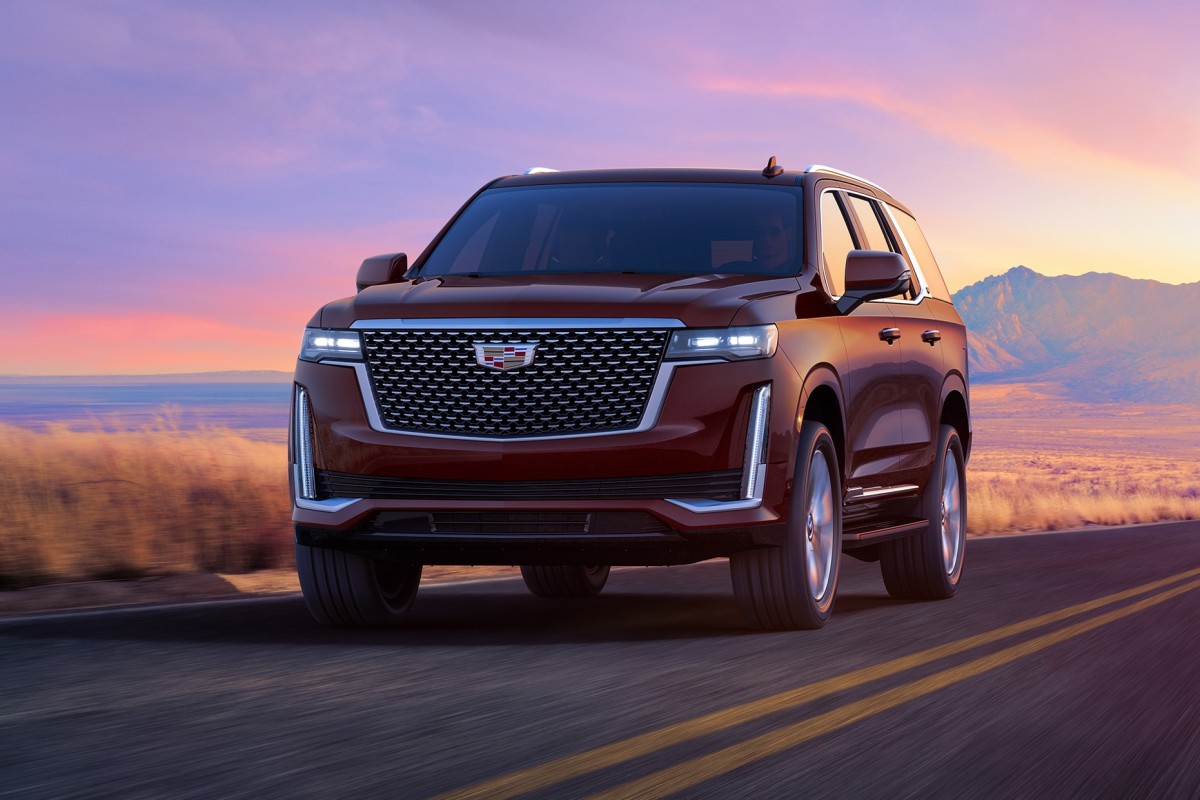
The 2026 Cadillac Escalade Platinum Sport was anything but subtle, with its imposing dimensions of 5,383 millimetres in length and 1,948 mm in height. The Escalade's trim lineup was divided between Sport and Luxury versions, with the Sport trims featuring a blacked-out exterior and a more menacing presence. The vertical LED headlights, introduced in the 2025 refresh, remained distinctive. Our test vehicle, with Deep Sea Metallic paint and 24-inch wheels, was a striking sight.
Inside, the Escalade's Sheer Grey and Jet Black semi-aniline leather with faceted quilting added a premium touch. Cadillac's interior design strategy effectively masked the Escalade's truck-platform origins with a screen-centric dashboard. The 55-inch curved display spanning the dash was a standout feature, though most controls were haptic touchscreen buttons. At the Platinum Sport level, the cabin featured leather door trims, a microsuede headliner, and a leather-wrapped steering wheel, creating a genuinely premium feel. However, the Escalade's body-on-frame platform couldn't match the refinement of unibody rivals like the BMW X7 and Mercedes-Benz GLS.

The 2026 Hyundai Ioniq 9 was equipped with a 110.3-kWh battery pack on Hyundai's e-GMP platform. The base Essential trim featured a single rear-mounted 160-kW motor, delivering 215 horsepower. Other trims had dual-motor AWD systems, with the Preferred AWD producing 303 hp and the Preferred AWD+ generating 422 hp. Despite its power, the Ioniq 9 demonstrated impressive energy efficiency, often exceeding its estimated 500-kilometre range. The Ioniq 9's chassis, while providing a smooth ride, was not designed for spirited cornering, behaving more like a minivan. It was exceptionally quiet, with active noise cancellation and sound-absorbing features. Towing capacity varied from 1,587 kilograms for the RWD model to 2,268 kilograms for AWD models. Charging options included Tesla-style NACS superchargers and CCS-port Level 3 chargers, with varying charge times depending on the charger type.
The 2026 Cadillac Escalade was powered by a 6.2-litre V8 engine producing 420 horsepower and 460 pound-feet of torque, paired with a 10-speed automatic transmission. In Canada, 4WD was standard on non-V-Series models. The Escalade-V offered a supercharged version of the V8 with 682 hp. On a 500-kilometre road trip, the Escalade achieved 14.3 litres per 100 kilometres, slightly better than its estimated 15.0 L/100 km. The V8 engine provided a pleasing note under acceleration, and the 10-speed transmission operated smoothly. The Escalade's ride quality was impressive, thanks to adaptive air suspension, though it lacked the dynamic refinement of some European rivals. The standard brakes were adequate but lacked confidence under hard stops, making the Brembo brake upgrade worth considering.
The 2026 Hyundai Ioniq 9 focused on family-SUV practicality, seating seven with a middle-row bench or six with captain's chairs in the Preferred AWD+ Ultimate Calligraphy Package. The sliding centre console improved access for middle-row passengers. The Ioniq 9 offered 1,086 millimetres of legroom in the middle row, though the third row's 813 mm felt tight for adults. The rear doors provided easy access, and dual-zone climate control with air vents in all rows was standard. Cargo space was 620 litres behind the third row, expanding to 1,323 and 2,462 litres with rows folded. The small front trunk was best for storing the charging cable and adapter.
The standard-wheelbase 2026 Cadillac Escalade offered 722 litres of cargo space behind the third row, 2,064 litres with the third row folded, and 3,412 litres with both rear rows down. The power-folding second and third rows made reconfiguring the interior easy. The Escalade seated up to eight, with generous second-row legroom of 1,060 mm. The third row, with 886 mm of legroom, was tight for adults but competitive with rivals. Towing capacity was 3,580 kilograms, trailing the Lincoln Navigator's rating. Power-retractable side steps were standard on Platinum Sport models, aiding entry and exit.
The 2026 Hyundai Ioniq 9 featured dual curved 12.3-inch displays for infotainment, similar to other Hyundai models. The screens were responsive but prone to fingerprints and glare. Standard features included SiriusXM Satellite Radio, wireless Android Auto and Apple CarPlay, and a wireless charging pad. However, the charging pad struggled to keep up with high-demand devices. Six USB-C ports provided ample charging options. The 14-speaker Bose audio system, standard on higher trims, delivered impressive sound quality.
The 2026 Cadillac Escalade's interior was dominated by a 55-inch curved display, incorporating a digital instrument cluster, a 35-inch central infotainment touchscreen, and a 20-inch front passenger screen. The system was responsive and logically organized, with wireless Apple CarPlay and Android Auto standard. The Platinum Sport trim featured a 34-speaker AKG audio system, which delivered impressive audio quality after some adjustments. Super Cruise, GM's hands-free highway driving system, was standard and performed well in winter conditions. The Escalade also included dual 12.6-inch second-row entertainment screens and an optional Executive Second Row Seating Package. However, its voice recognition system lagged behind European rivals.
The 2026 Hyundai Ioniq 9 had not yet been rated by NHTSA or IIHS. It included a comprehensive suite of ADAS features, such as collision avoidance, lane guidance, driver attention warning, and safe-exit assist. Hyundai's Highway Driving Assist 2 provided supervised hands-free driving without a subscription. Higher trims added a surround-view monitor and blind-spot view monitor.
The 2026 Cadillac Escalade came with a wide array of standard driver-assistance technologies, including automatic emergency braking, blind-spot monitors, rear cross-traffic alert, adaptive cruise control, and a 360-degree camera system. Super Cruise was also standard. The Teen Driver system allowed parents to set speed alerts and review driving reports. The Escalade received a five-star safety rating from NHTSA but had not been evaluated by IIHS. Its size provided safety advantages but also created blind spot challenges.
CarGurus highlights
According to CarGurus experts, the overall rating for the 2026 Hyundai Ioniq 9 is 7.3 out of 10, while the 2026 Cadillac Escalade scores 7.7 out of 10. Based on these ratings, the Cadillac Escalade is the recommended choice for those seeking a luxurious and spacious SUV with advanced technology and a powerful engine.
Choose the 2026 Hyundai Ioniq 9 if:
- You prioritize a spacious and quiet interior with advanced noise-cancellation features.
- You want an electric vehicle with impressive energy efficiency and a smooth ride.
- You value a comprehensive suite of standard driver-assistance features without a subscription.


Choose the 2026 Cadillac Escalade if:
- You need a large SUV with class-leading cargo space and seating for up to eight.
- You appreciate a premium interior with advanced technology, including a 55-inch curved display.
- You want a powerful V8 engine with a smooth 10-speed transmission and impressive ride quality.


CarGurus highlights
According to CarGurus experts, the overall rating for the 2026 Hyundai Ioniq 9 is 7.3 out of 10, while the 2026 Cadillac Escalade scores 7.7 out of 10. Based on these ratings, the Cadillac Escalade is the recommended choice for those seeking a luxurious and spacious SUV with advanced technology and a powerful engine.
Choose the 2026 Hyundai Ioniq 9 if:
Shop Now- You prioritize a spacious and quiet interior with advanced noise-cancellation features.
- You want an electric vehicle with impressive energy efficiency and a smooth ride.
- You value a comprehensive suite of standard driver-assistance features without a subscription.
Choose the 2026 Cadillac Escalade if:
Shop Now- You need a large SUV with class-leading cargo space and seating for up to eight.
- You appreciate a premium interior with advanced technology, including a 55-inch curved display.
- You want a powerful V8 engine with a smooth 10-speed transmission and impressive ride quality.

By: CarGurus + AI
At CarGurus, our team of experienced automotive writers remain at the heart of our content operation, conducting hands-on car tests and writing insightful guides that are backed by years of industry experience. To complement this, we are harnessing AI to make our content offering more diverse and more helpful to shoppers than ever. To achieve this, our AI systems are based exclusively on CarGurus content, ratings and data, so that what we produce is both unique to CarGurus, and uniquely helpful to car shoppers.
