2025 BMW X3 vs 2025 Toyota Land Cruiser
Overview | |
Listings40 | Listings24 |
Ratings & Reviews | |
User Reviews | User Reviews |
Expert reviews7.5 out of 10 | Expert reviews6.8 out of 10 |
Pros
Cons
| Pros
Cons
|
2025 BMW X3 Reviews SummaryWith alluring proportions, unusual design, and impressive technology, the 2025 X3 seems like a bargain at its sticker price. However, this BMW is not about traditional luxury, so set those expectations aside. Instead, it is a study in minimalism, with simple forms, reductive controls, and Germanic austerity. Nevertheless, its comfort, technology, and driving dynamics make the X3 rewarding, and BMW provides plenty of options to tailor the X3 to your preferences. Verdict: We had some unexpected trouble with BMW’s latest infotainment system, the Steering Assistant technology proved aggravating in certain situations, and our test vehicle’s 21-inch wheels and M Sport suspension tuning produced a firm, jiggly ride on imperfect road surfaces. However, despite these complaints, the redesigned 2025 BMW X3 impresses. | |
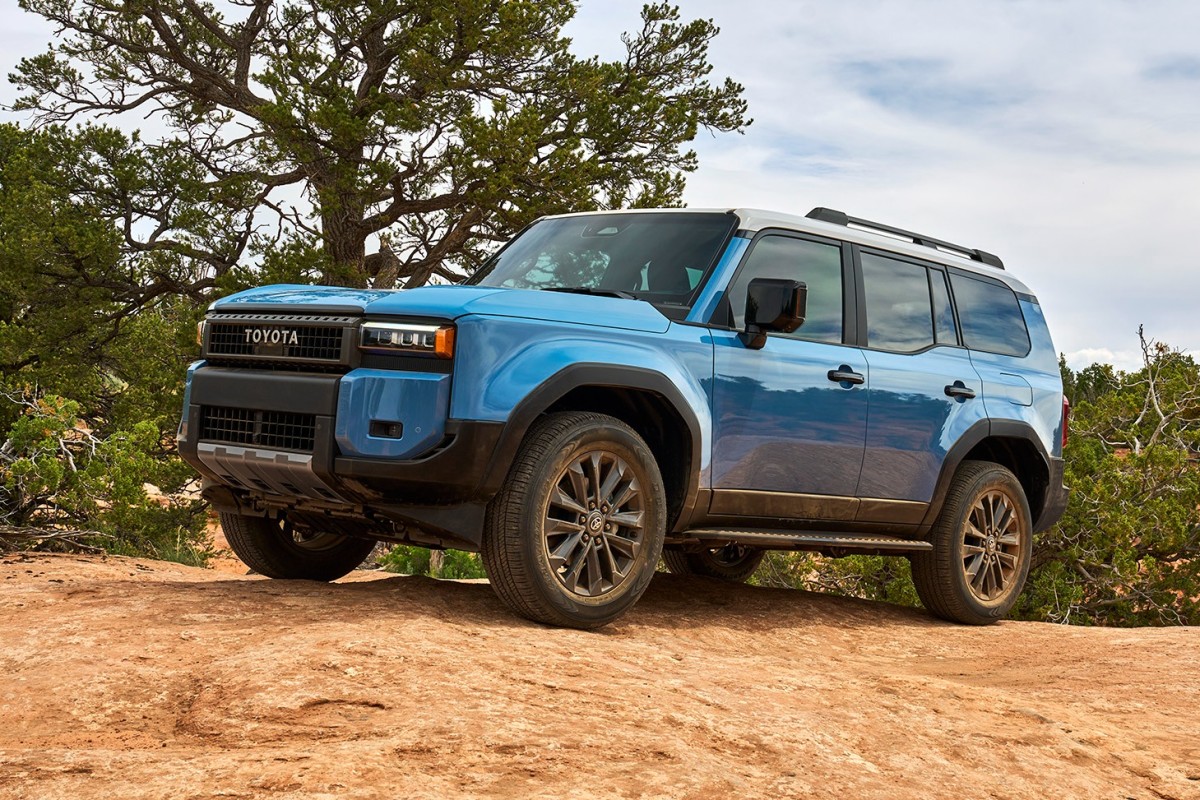
2025 Toyota Land Cruiser Reviews SummaryThis two-row midsize SUV is designed for travelling almost anywhere at almost any time. It shares its platform with the rugged Toyota 4Runner SUV and Tacoma pickup truck, and it’s equipped with a turbocharged hybrid powertrain better at supplying power than efficiency. The 2025 Land Cruiser is almost unchanged following its 2024 redesign, which saw its return to the Canadian market after a nearly 30-year hiatus. Verdict: There is a lot to like about the Land Cruiser, especially if you don’t care about fuel economy. Our test vehicle averaged 15 litres per 100 kilometres, falling well short of expectations. Its thirst for fuel easily ranks as the worst thing about this SUV. Also, we recommend upgrading from the base 1958 trim level. | |
No video found | No video found |
Popular Features & Specs | |
Engine2.0L 255 hp I4 | Engine2.4L 326 hp I4 Hybrid |
DrivetrainAWD | Drivetrain4X4 |
Seating Capacity5 | Seating Capacity5 |
Horsepower255 hp @ 4700 rpm | Horsepower |
EV Battery Capacity | EV Battery Capacity1.9 kWh |
Fuel Economy (City)8.7 L(e)/100 km | Fuel Economy (City)10.7 L(e)/100 km |
Fuel Economy (Highway)7.1 L(e)/100 km | Fuel Economy (Highway)9.4 L(e)/100 km |
Engine | |
Engine Name2.0L 255 hp I4 | Engine Name2.4L 326 hp I4 Hybrid |
Torque295 lb-ft @ 1600 rpm | Torque |
Horsepower255 hp @ 4700 rpm | Horsepower |
DrivetrainAWD | Drivetrain4X4 |
Fuel Economy | |
EV Battery Capacity | EV Battery Capacity1.9 kWh |
Fuel Economy (City)8.7 L(e)/100 km | Fuel Economy (City)10.7 L(e)/100 km |
Fuel Economy (Highway)7.1 L(e)/100 km | Fuel Economy (Highway)9.4 L(e)/100 km |
Interior | |
Seating Capacity5 | Seating Capacity5 |
Key Features | |
Navigation SystemStandard | Navigation System |
Safety | |
Front Crash Overall4 | Front Crash Overall |
Side Crash Overall5 | Side Crash Overall |
Dimensions & Capacity | |
Cargo Space892 L | Cargo Space1308 L |
Curb Weight1894 kg | Curb Weight2431 kg |
Height1661 mm | Height1923 mm |
Length4755 mm | Length4989 mm |
Width2131 mm | Width2113 mm |
Wheelbase2865 mm | Wheelbase2850 mm |
Maximum Payload502 kg | Maximum Payload499 kg |
Number of doors4 | Number of doors4 |
Maximum Towing Capacity1815 kg | Maximum Towing Capacity2722 kg |
Standard Towing Capacity | Standard Towing Capacity2722 kg |
Overview | ||
Listings | ||
Ratings & Reviews | ||
User reviews | ||
Expert reviews | 7.5 out of 10Read full review | 6.8 out of 10Read full review |
Pros & cons | Pros
Cons
| Pros
Cons
|
Summary | With alluring proportions, unusual design, and impressive technology, the 2025 X3 seems like a bargain at its sticker price. However, this BMW is not about traditional luxury, so set those expectations aside. Instead, it is a study in minimalism, with simple forms, reductive controls, and Germanic austerity. Nevertheless, its comfort, technology, and driving dynamics make the X3 rewarding, and BMW provides plenty of options to tailor the X3 to your preferences. Verdict: We had some unexpected trouble with BMW’s latest infotainment system, the Steering Assistant technology proved aggravating in certain situations, and our test vehicle’s 21-inch wheels and M Sport suspension tuning produced a firm, jiggly ride on imperfect road surfaces. However, despite these complaints, the redesigned 2025 BMW X3 impresses. | This two-row midsize SUV is designed for travelling almost anywhere at almost any time. It shares its platform with the rugged Toyota 4Runner SUV and Tacoma pickup truck, and it’s equipped with a turbocharged hybrid powertrain better at supplying power than efficiency. The 2025 Land Cruiser is almost unchanged following its 2024 redesign, which saw its return to the Canadian market after a nearly 30-year hiatus. Verdict: There is a lot to like about the Land Cruiser, especially if you don’t care about fuel economy. Our test vehicle averaged 15 litres per 100 kilometres, falling well short of expectations. Its thirst for fuel easily ranks as the worst thing about this SUV. Also, we recommend upgrading from the base 1958 trim level. |
Video | No video found | No video found |
Popular Features & Specs | ||
Engine | 2.0L 255 hp I4 | 2.4L 326 hp I4 Hybrid |
Drivetrain | AWD | 4X4 |
Seating Capacity | 5 | 5 |
Horsepower | 255 hp @ 4700 rpm | |
EV Battery Capacity | 1.9 kWh | |
Fuel Economy (City) | 8.7 L(e)/100 km | 10.7 L(e)/100 km |
Fuel Economy (Highway) | 7.1 L(e)/100 km | 9.4 L(e)/100 km |
Engine | ||
Engine Name | 2.0L 255 hp I4 | 2.4L 326 hp I4 Hybrid |
Torque | 295 lb-ft @ 1600 rpm | |
Horsepower | 255 hp @ 4700 rpm | |
Drivetrain | AWD | 4X4 |
Fuel Economy | ||
EV Battery Capacity | 1.9 kWh | |
Fuel Economy (City) | 8.7 L(e)/100 km | 10.7 L(e)/100 km |
Fuel Economy (Highway) | 7.1 L(e)/100 km | 9.4 L(e)/100 km |
Interior | ||
Seating Capacity | 5 | 5 |
Key Features | ||
Navigation System | Standard | |
Safety | ||
Front Crash Overall | 4 | |
Side Crash Overall | 5 | |
Dimensions & Capacity | ||
Cargo Space | 892 L | 1308 L |
Curb Weight | 1894 kg | 2431 kg |
Height | 1661 mm | 1923 mm |
Length | 4755 mm | 4989 mm |
Width | 2131 mm | 2113 mm |
Wheelbase | 2865 mm | 2850 mm |
Maximum Payload | 502 kg | 499 kg |
Number of doors | 4 | 4 |
Maximum Towing Capacity | 1815 kg | 2722 kg |
Standard Towing Capacity | 2722 kg | |
The 2025 BMW X3 presented a seductive appearance for a two-box SUV, with its redesigned features capturing attention. Despite the oversized grille, the vehicle's aerodynamically honed flanks and overall proportions contributed to its athletic look. The long and tall hood, captivating dashboard-to-axle ratio, and tapering greenhouse and roofline emphasized its sporty stance. The test model, adorned in BMW’s Arctic Race Blue paint, paired with machined surface wheels and gloss black M Sport details, added to its allure. Inside, the cabin featured Calm Beige upholstery with Veganza artificial leather, offering a luxurious feel. However, some interior elements, like the plastic trim lower in the cabin, revealed the X3’s price point, lacking liners to reduce noise and vibration.
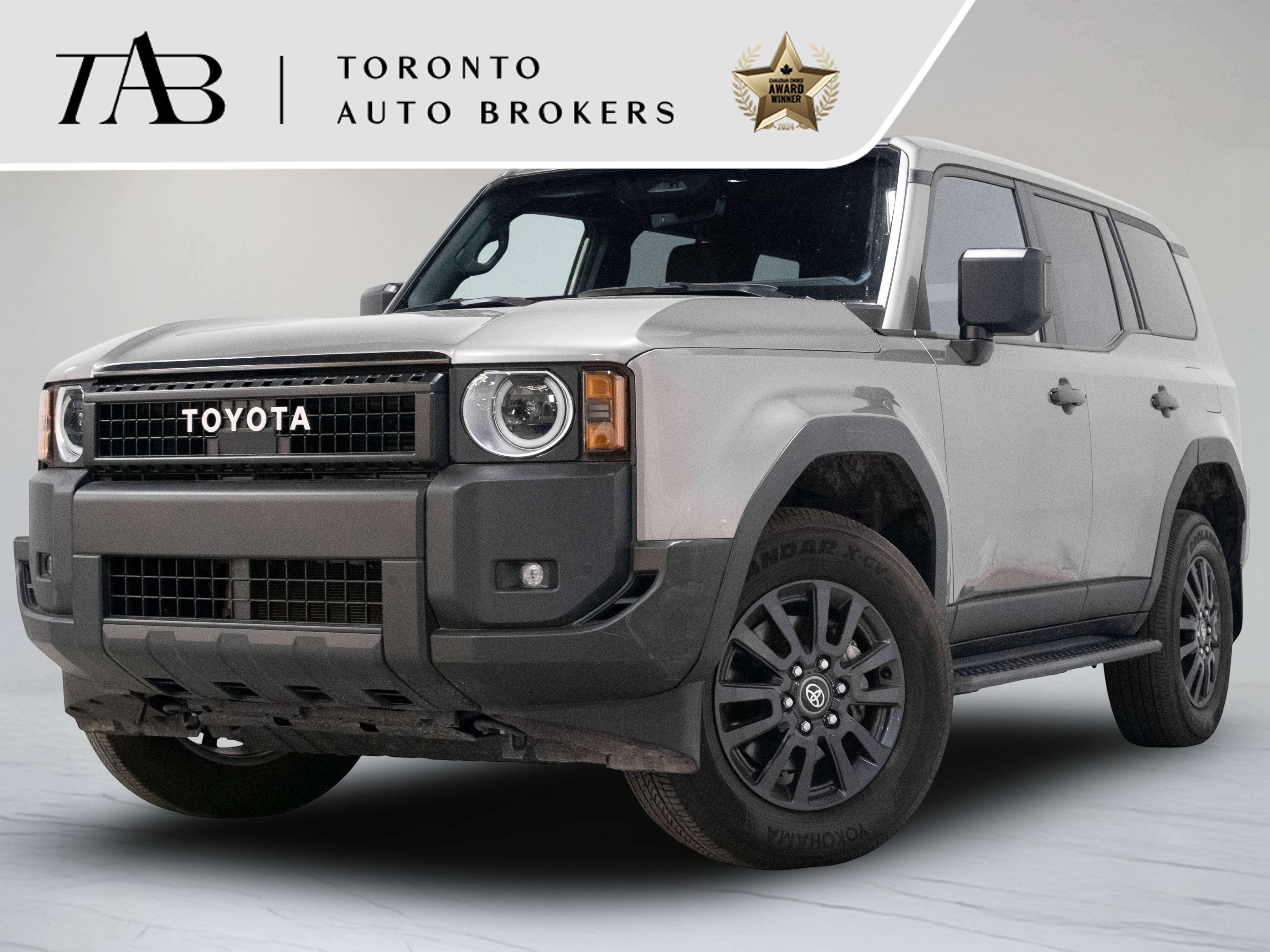
In contrast, the 2025 Toyota Land Cruiser offered a more traditional SUV design, maximizing off-road clearances and utility. The base model, known as the 1958, featured a retro look with round headlights and basic equipment, while the Cruiser trim provided a modern, upscale appearance. Our test vehicle, equipped with the Premium Package, showcased Heritage Blue and Grey paint, 20-inch wheels, and a roof rack. The interior, adorned with Java-coloured leather, offered a comfortable and technologically advanced experience with dual 12.3-inch digital screens. Despite its utilitarian design, the Land Cruiser’s interior felt worth the price, though the rear window design and centre console's cool box were less practical.
The 2025 BMW X3 30 xDrive featured a turbocharged 2.0-litre four-cylinder engine, producing 255 horsepower and 295 pound-feet of torque. Despite its 1,894-kilogram weight, the X3 achieved a respectable zero-to-100 km/h time of 6.3 seconds, thanks to its eight-speed automatic transmission and xDrive AWD system. The 48-volt mild-hybrid system enhanced off-the-line responsiveness and improved fuel economy, although real-world consumption was higher than official ratings. For those seeking more power, the M50 xDrive variant offered a turbocharged 3.0-litre inline six-cylinder engine with 393 horsepower, achieving 100 km/h in 4.6 seconds. The X3’s sport-tuned suspension and performance tires provided an engaging driving experience, though the ride quality on imperfect roads was less comfortable.
The 2025 Toyota Land Cruiser, equipped with Toyota’s i-Force Max hybrid system, combined a turbocharged 2.4-litre four-cylinder engine with an electric motor, delivering 326 horsepower and 465 pound-feet of torque. The full-time 4WD system, with electronic locking differentials, enabled a towing capacity of 2,720 kilograms. Despite its off-road prowess, the Land Cruiser struggled on twisty roads due to its tires and suspension tuning. The SUV excelled in urban and suburban environments, offering a smooth ride over rough surfaces. Off-road capabilities were enhanced by features like Crawl Control and Multi-Terrain Monitor, though fuel consumption was higher than expected during testing.
Inside the 2025 BMW X3, the power-adjustable driver’s seat offered a sports car-like view, with the hood framed by the front fenders. The cabin felt spacious, with a simple dashboard featuring the BMW Curved Display, housing a 12.3-inch digital instrument panel and a 14.9-inch touchscreen. Front seats provided comfort with Veganza artificial leather and optional ventilation, while rear seats were less accommodating for taller passengers. The cargo area offered 892 litres of space, with practical features like a removable cover and additional storage under the load floor.
The 2025 Toyota Land Cruiser’s interior, upgraded from cloth to SofTex artificial leather in the Cruiser trim, offered ventilated front seats and a sunroof. Front seats provided excellent support, but the second-row seats lacked comfort and thigh support. The rear window design limited airflow, and the centre console's cool box reduced storage space. The cargo area provided 1,062 litres of space, with a high load floor requiring effort to load heavy items. Maximum cargo capacity with the rear seats folded was 2,324 litres.
The 2025 BMW X3 featured the BMW Curved Display with iDrive 9 software, offering a user-friendly interface with Quick Select. However, creating profiles and accessing BMW Digital Services proved challenging during testing. The system occasionally froze, and media preferences were sometimes forgotten. Despite these issues, wireless Apple CarPlay worked seamlessly. The navigation system, with augmented video, provided accurate directions, though the overall infotainment experience was frustrating.
In the 2025 Toyota Land Cruiser, the Cruiser trim upgraded to dual 12.3-inch displays with the Toyota Audio Multimedia system. It included wireless Apple CarPlay, Android Auto, and access to music accounts. Drive Connect offered cloud-based navigation and a digital assistant, performing well in voice recognition tests. The Premium Package added a JBL sound system, wireless charger, head-up display, and digital key technology, enhancing the overall tech experience.
The 2025 BMW X3 came equipped with standard safety features like forward collision warning, automatic emergency braking, and lane-keeping assist. The Premium Package added adaptive cruise control and Steering Assistant, while the Parking Assistant Professional Package offered semi-automated parking tech. The X3 earned a four-star overall rating from the NHTSA, with room for improvement in frontal-impact crash tests.
The 2025 Toyota Land Cruiser included Toyota Safety Sense 3.0, featuring forward-collision warning, automatic emergency braking, and lane-centring assist. The adaptive cruise control and lane-centring assist provided semi-autonomous driving, though performance varied. The Premium Package added front cross-traffic alert and Traffic Jam Assist. The Land Cruiser received a four-star overall rating from the NHTSA, with a three-star rollover resistance rating.
CarGurus highlights

According to CarGurus experts, the overall rating for the 2025 BMW X3 is 7.5 out of 10, while the 2025 Toyota Land Cruiser scores 6.8 out of 10. Based on these ratings, the BMW X3 is the recommended choice, offering a better balance of performance, technology, and overall value.
Choose the 2025 BMW X3 if:
- You value a sporty and athletic design with a luxurious interior feel.
- You seek a compact SUV with engaging driving dynamics and a robust powertrain.
- You prefer a vehicle with a user-friendly infotainment system and seamless smartphone integration.


Choose the 2025 Toyota Land Cruiser if:
- You need a traditional SUV with exceptional off-road capabilities and utility.
- You prioritize a comfortable ride in urban and suburban environments.
- You desire a technologically advanced interior with comprehensive safety features.



CarGurus highlights
According to CarGurus experts, the overall rating for the 2025 BMW X3 is 7.5 out of 10, while the 2025 Toyota Land Cruiser scores 6.8 out of 10. Based on these ratings, the BMW X3 is the recommended choice, offering a better balance of performance, technology, and overall value.
Choose the 2025 BMW X3 if:
Shop Now- You value a sporty and athletic design with a luxurious interior feel.
- You seek a compact SUV with engaging driving dynamics and a robust powertrain.
- You prefer a vehicle with a user-friendly infotainment system and seamless smartphone integration.
Choose the 2025 Toyota Land Cruiser if:
Shop Now- You need a traditional SUV with exceptional off-road capabilities and utility.
- You prioritize a comfortable ride in urban and suburban environments.
- You desire a technologically advanced interior with comprehensive safety features.

By: CarGurus + AI
At CarGurus, our team of experienced automotive writers remain at the heart of our content operation, conducting hands-on car tests and writing insightful guides that are backed by years of industry experience. To complement this, we are harnessing AI to make our content offering more diverse and more helpful to shoppers than ever. To achieve this, our AI systems are based exclusively on CarGurus content, ratings and data, so that what we produce is both unique to CarGurus, and uniquely helpful to car shoppers.
