2024 Volkswagen Atlas vs 2025 Hyundai IONIQ 5

Overview | |
Listings207 | Listings7 |
Ratings & Reviews | |
User Reviews | User Reviews |
Expert reviews7.3 out of 10 | Expert reviews |
Pros
Cons
| |
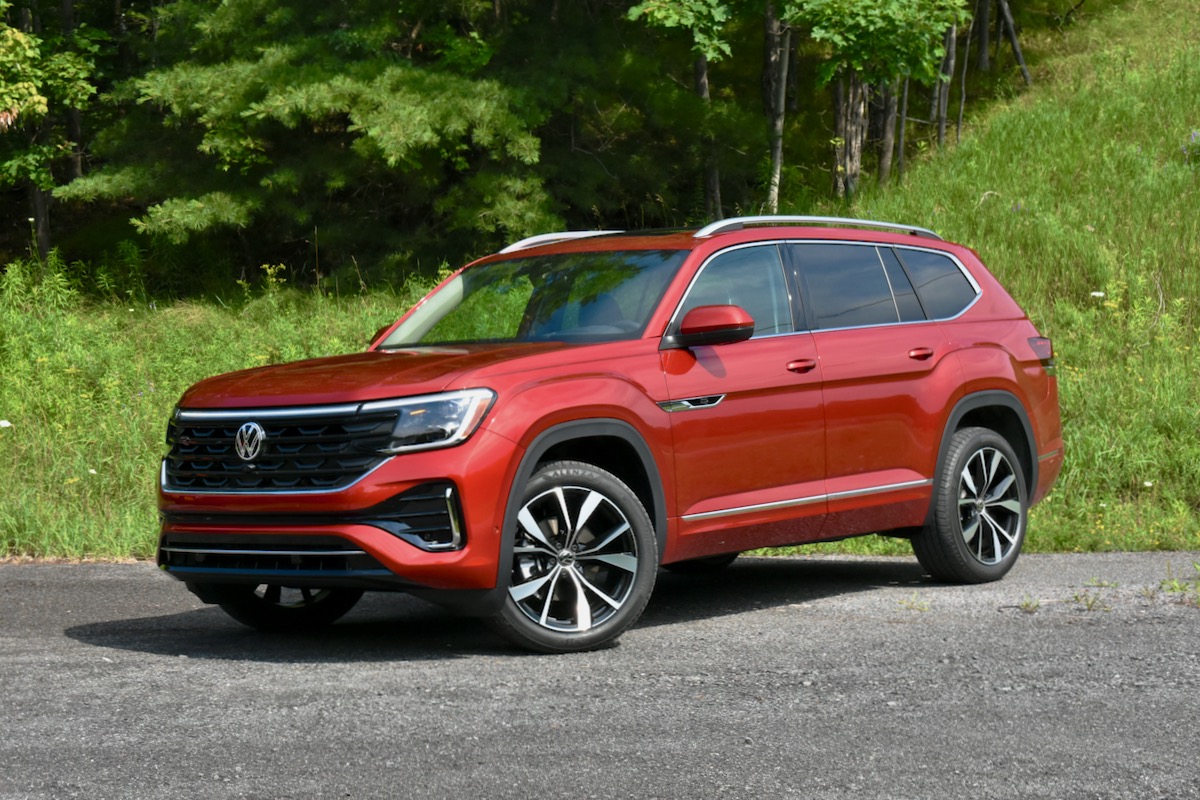
2024 Volkswagen Atlas Reviews SummaryLaunched for the 2018 model year, the Volkswagen Atlas is engineered specifically for the North American market. It's a mid-size three-row SUV, big for a VW, but targeting a popular market segment that already includes the Chevrolet Traverse, Ford Explorer, Hyundai Palisade, Kia Telluride, Honda Pilot, Nissan Pathfinder, Subaru Ascent, and Toyota Highlander. To keep up in such a competitive segment, the Atlas gets a major refresh for the 2024 model year. The 2024 Volkswagen Atlas is essentially the same vehicle as before, but it gets key updates like different styling and more standard features. It also loses its six-cylinder engine option, but the remaining turbocharged four-cylinder engine gets more horsepower and torque. In Canada, the 2024 Atlas lineup includes Comfortline, Highline, and Execline, plus a new-for-2024 Peak Edition trim that slots in just above base. For this review, we tested the U.S. equivalent of an Atlas Execline, representing the top of the range. | |
2025 Hyundai IONIQ 5 Reviews Summary | |
No video found | No video found |
Popular Features & Specs | |
Engine2.0L 269 hp I4 | Engine168 hp Electric |
DrivetrainFWD | DrivetrainRWD |
Seating Capacity7 | Seating Capacity5 |
EV Battery Capacity | EV Battery Capacity63 kWh |
MPG City20 | MPG City131 |
MPG Highway27 | MPG Highway100 |
Battery Charge Time (120V) | Battery Charge Time (120V)54 hours |
Battery Charge Time (240V) | Battery Charge Time (240V)5.7 hours |
Engine | |
Engine Name2.0L 269 hp I4 | Engine Name168 hp Electric |
Battery Charge Time (120V) | Battery Charge Time (120V)54 hours |
Battery Charge Time (240V) | Battery Charge Time (240V)5.7 hours |
DrivetrainFWD | DrivetrainRWD |
Fuel Economy | |
EV Battery Capacity | EV Battery Capacity63 kWh |
MPG City20 | MPG City131 |
MPG Highway27 | MPG Highway100 |
Interior | |
Seating Capacity7 | Seating Capacity5 |
Key Features | |
Navigation System | Navigation SystemStandard |
Safety | |
Front Crash Overall4 | Front Crash Overall |
Side Crash Overall5 | Side Crash Overall |
Dimensions & Capacity | |
Cargo Space583 L | Cargo Space745 L |
Curb Weight1970 kg | Curb Weight1880 kg |
Height1788 mm | Height1600 mm |
Length5098 mm | Length4656 mm |
Width2248 mm | Width1890 mm |
Wheelbase2979 mm | Wheelbase3000 mm |
Maximum Payload495 kg | Maximum Payload490 kg |
Number of doors4 | Number of doors4 |
Maximum Towing Capacity907 kg | Maximum Towing Capacity |
Overview | ||
Listings | ||
Ratings & Reviews | ||
User reviews | ||
Expert reviews | 7.3 out of 10Read full review | |
Pros & cons | Pros
Cons
| |
Summary | Launched for the 2018 model year, the Volkswagen Atlas is engineered specifically for the North American market. It's a mid-size three-row SUV, big for a VW, but targeting a popular market segment that already includes the Chevrolet Traverse, Ford Explorer, Hyundai Palisade, Kia Telluride, Honda Pilot, Nissan Pathfinder, Subaru Ascent, and Toyota Highlander. To keep up in such a competitive segment, the Atlas gets a major refresh for the 2024 model year. The 2024 Volkswagen Atlas is essentially the same vehicle as before, but it gets key updates like different styling and more standard features. It also loses its six-cylinder engine option, but the remaining turbocharged four-cylinder engine gets more horsepower and torque. In Canada, the 2024 Atlas lineup includes Comfortline, Highline, and Execline, plus a new-for-2024 Peak Edition trim that slots in just above base. For this review, we tested the U.S. equivalent of an Atlas Execline, representing the top of the range. | |
Video | No video found | No video found |
Popular Features & Specs | ||
Engine | 2.0L 269 hp I4 | 168 hp Electric |
Drivetrain | FWD | RWD |
Seating Capacity | 7 | 5 |
EV Battery Capacity | 63 kWh | |
MPG City | 20 | 131 |
MPG Highway | 27 | 100 |
Battery Charge Time (120V) | 54 hours | |
Battery Charge Time (240V) | 5.7 hours | |
Engine | ||
Engine Name | 2.0L 269 hp I4 | 168 hp Electric |
Battery Charge Time (120V) | 54 hours | |
Battery Charge Time (240V) | 5.7 hours | |
Drivetrain | FWD | RWD |
Fuel Economy | ||
EV Battery Capacity | 63 kWh | |
MPG City | 20 | 131 |
MPG Highway | 27 | 100 |
Interior | ||
Seating Capacity | 7 | 5 |
Key Features | ||
Navigation System | Standard | |
Safety | ||
Front Crash Overall | 4 | |
Side Crash Overall | 5 | |
Dimensions & Capacity | ||
Cargo Space | 583 L | 745 L |
Curb Weight | 1970 kg | 1880 kg |
Height | 1788 mm | 1600 mm |
Length | 5098 mm | 4656 mm |
Width | 2248 mm | 1890 mm |
Wheelbase | 2979 mm | 3000 mm |
Maximum Payload | 495 kg | 490 kg |
Number of doors | 4 | 4 |
Maximum Towing Capacity | 907 kg | |
2024 Volkswagen Atlas for Sale


2025 Hyundai IONIQ 5 for Sale


By: CarGurus + AI
At CarGurus, our team of experienced automotive writers remain at the heart of our content operation, conducting hands-on car tests and writing insightful guides that are backed by years of industry experience. To complement this, we are harnessing AI to make our content offering more diverse and more helpful to shoppers than ever. To achieve this, our AI systems are based exclusively on CarGurus content, ratings and data, so that what we produce is both unique to CarGurus, and uniquely helpful to car shoppers.
