2024 BMW 7 Series vs 2024 Toyota Prius

Overview | |
Listings2 | Listings22 |
Ratings & Reviews | |
User Reviews | User Reviews |
Expert reviews6.7 out of 10 | Expert reviews7.5 out of 10 |
Pros
Cons
| Pros
Cons
|
2024 BMW 7 Series Reviews SummaryRedesigned for 2023, the 7 Series is BMW's full-size flagship sedan, arch-rival to the Mercedes-Benz S-Class, Audi A8, and newcomers like the Genesis G90. For 2024, BMW has added the plug-in hybrid (PHEV) 750e and lightly updated the infotainment system. Unfortunately, these additions don't change the 7 Series calculus. The 750e has a disjointed driving personality and quickly eats its electric charge. Despite the update, the car's digital systems remain frustratingly complex. Verdict: The 2024 BMW 7 Series has lots to offer luxury buyers, including features like a rear-seat theatre and cashmere upholstery, plus performance and fuel efficiency that are often superior to most rivals, few of whom offer PHEV options. But the car's frustrating digital systems and controls undermine the experience. | |
2024 Toyota Prius Reviews SummaryIf the disparity between your income and the cost of living is getting you down, but you need a new set of wheels, consider the 2024 Prius. The Prius recently won the 2024 World Car Design of the Year, carries up to five people, and holds up to 575 litres of cargo behind its back seat. All-wheel drive (AWD) is standard in Canada, a plug-in hybrid powertrain are available, and the hybrid Prius goes as low as 4.8 litres per 100 kilometres in combined driving. Starting prices just barely tip over $40,000. Verdict: The 2024 Toyota Prius is the right car for lots of people. Blending intriguing design with comfortable front seats and a practical interior at an appealing price, the Prius is perfect for daily driving and will save you plenty of money at the gas pump. | |
No video found | No video found |
Popular Features & Specs | |
Engine3.0L 375 hp I6 | Engine2.0L 194 hp I4 Hybrid |
DrivetrainRWD | DrivetrainFWD |
Seating Capacity5 | Seating Capacity5 |
Horsepower375 hp @ 5200 rpm | Horsepower |
EV Battery Capacity | EV Battery Capacity0.9 kWh |
Fuel Economy (City)9.4 L(e)/100 km | Fuel Economy (City)4.1 L(e)/100 km |
Fuel Economy (Highway)7.6 L(e)/100 km | Fuel Economy (Highway)4.2 L(e)/100 km |
Engine | |
Engine Name3.0L 375 hp I6 | Engine Name2.0L 194 hp I4 Hybrid |
Torque398 lb-ft @ 1850 rpm | Torque |
Horsepower375 hp @ 5200 rpm | Horsepower |
DrivetrainRWD | DrivetrainFWD |
Fuel Economy | |
EV Battery Capacity | EV Battery Capacity0.9 kWh |
Fuel Economy (City)9.4 L(e)/100 km | Fuel Economy (City)4.1 L(e)/100 km |
Fuel Economy (Highway)7.6 L(e)/100 km | Fuel Economy (Highway)4.2 L(e)/100 km |
Interior | |
Seating Capacity5 | Seating Capacity5 |
Key Features | |
Navigation SystemStandard | Navigation System |
Sunroof/MoonroofStandard | Sunroof/Moonroof |
Safety | |
Front Crash Overall | Front Crash Overall5 |
Side Crash Overall | Side Crash Overall5 |
Dimensions & Capacity | |
Cargo Space541 L | Cargo Space674 L |
Curb Weight2141 kg | Curb Weight1405 kg |
Height1544 mm | Height1420 mm |
Length5390 mm | Length4600 mm |
Width2192 mm | Width1783 mm |
Wheelbase3216 mm | Wheelbase2751 mm |
Maximum Payload498 kg | Maximum Payload390 kg |
Number of doors4 | Number of doors4 |
Overview | ||
Listings | ||
Ratings & Reviews | ||
User reviews | ||
Expert reviews | 6.7 out of 10Read full review | 7.5 out of 10Read full review |
Pros & cons | Pros
Cons
| Pros
Cons
|
Summary | Redesigned for 2023, the 7 Series is BMW's full-size flagship sedan, arch-rival to the Mercedes-Benz S-Class, Audi A8, and newcomers like the Genesis G90. For 2024, BMW has added the plug-in hybrid (PHEV) 750e and lightly updated the infotainment system. Unfortunately, these additions don't change the 7 Series calculus. The 750e has a disjointed driving personality and quickly eats its electric charge. Despite the update, the car's digital systems remain frustratingly complex. Verdict: The 2024 BMW 7 Series has lots to offer luxury buyers, including features like a rear-seat theatre and cashmere upholstery, plus performance and fuel efficiency that are often superior to most rivals, few of whom offer PHEV options. But the car's frustrating digital systems and controls undermine the experience. | If the disparity between your income and the cost of living is getting you down, but you need a new set of wheels, consider the 2024 Prius. The Prius recently won the 2024 World Car Design of the Year, carries up to five people, and holds up to 575 litres of cargo behind its back seat. All-wheel drive (AWD) is standard in Canada, a plug-in hybrid powertrain are available, and the hybrid Prius goes as low as 4.8 litres per 100 kilometres in combined driving. Starting prices just barely tip over $40,000. Verdict: The 2024 Toyota Prius is the right car for lots of people. Blending intriguing design with comfortable front seats and a practical interior at an appealing price, the Prius is perfect for daily driving and will save you plenty of money at the gas pump. |
Video | No video found | No video found |
Popular Features & Specs | ||
Engine | 3.0L 375 hp I6 | 2.0L 194 hp I4 Hybrid |
Drivetrain | RWD | FWD |
Seating Capacity | 5 | 5 |
Horsepower | 375 hp @ 5200 rpm | |
EV Battery Capacity | 0.9 kWh | |
Fuel Economy (City) | 9.4 L(e)/100 km | 4.1 L(e)/100 km |
Fuel Economy (Highway) | 7.6 L(e)/100 km | 4.2 L(e)/100 km |
Engine | ||
Engine Name | 3.0L 375 hp I6 | 2.0L 194 hp I4 Hybrid |
Torque | 398 lb-ft @ 1850 rpm | |
Horsepower | 375 hp @ 5200 rpm | |
Drivetrain | RWD | FWD |
Fuel Economy | ||
EV Battery Capacity | 0.9 kWh | |
Fuel Economy (City) | 9.4 L(e)/100 km | 4.1 L(e)/100 km |
Fuel Economy (Highway) | 7.6 L(e)/100 km | 4.2 L(e)/100 km |
Interior | ||
Seating Capacity | 5 | 5 |
Key Features | ||
Navigation System | Standard | |
Sunroof/Moonroof | Standard | |
Safety | ||
Front Crash Overall | 5 | |
Side Crash Overall | 5 | |
Dimensions & Capacity | ||
Cargo Space | 541 L | 674 L |
Curb Weight | 2141 kg | 1405 kg |
Height | 1544 mm | 1420 mm |
Length | 5390 mm | 4600 mm |
Width | 2192 mm | 1783 mm |
Wheelbase | 3216 mm | 2751 mm |
Maximum Payload | 498 kg | 390 kg |
Number of doors | 4 | 4 |
The 2024 BMW 7 Series presented a more conventional design compared to its predecessors, with a traditional luxury sedan shape from the windshield backward. However, the front of the vehicle featured a massive grille, similar to other recent BMW models, flanked by narrow LED headlights and large projector beams. This bold design was an acquired taste for some. The car offered a wide array of colour and trim choices, including two-tone schemes on the 760i trim, which varied its appearance significantly. The M Sport Shadowline Package turned the grille black, making the styling indistinct, while the chrome option was more appealing. The interior of the 7 Series was less controversial, with beautifully made metal grilles hiding the speakers and seats available in various materials and colours. The cabin featured a big curved-screen infotainment display and a crystalline-looking strip with customizable ambient lighting, adding to the luxurious feel.
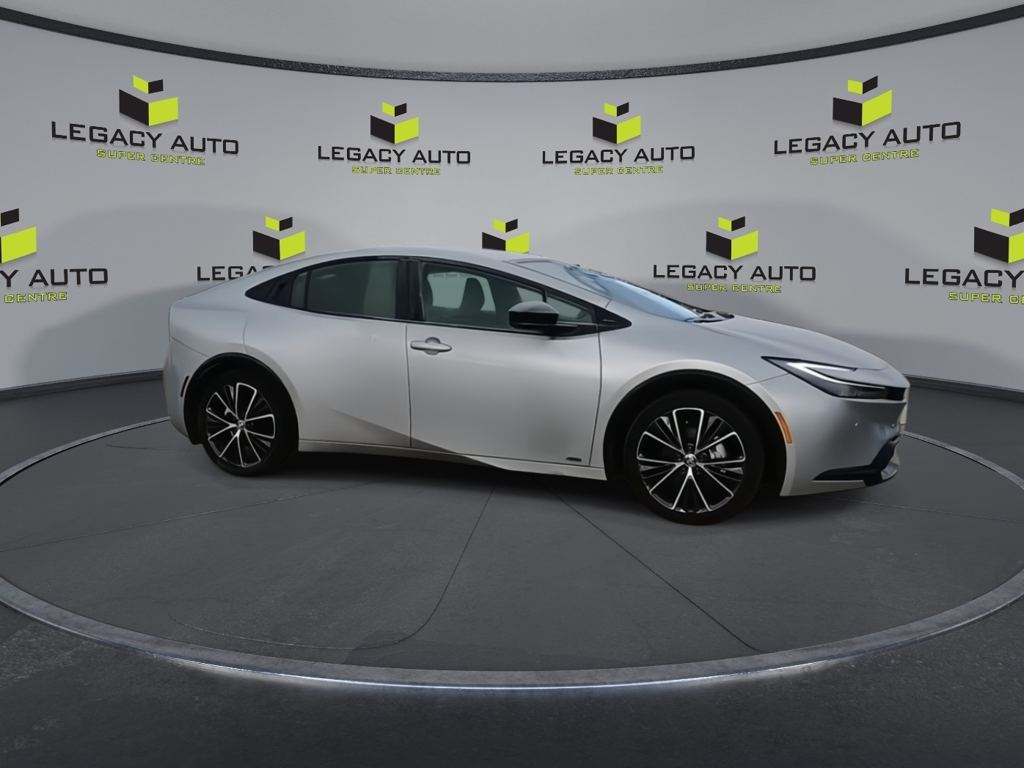
In contrast, the 2024 Toyota Prius retained its familiar wedge-shaped profile but introduced distinctive and appealing styling for its aerodynamically optimized bodywork. The 19-inch aluminum wheels were particularly attractive. Inside, the Prius maintained its quirky nature, with the instrumentation moving from the centre of the dashboard to in front of the driver. However, the digital panel's placement near the windshield could obstruct visibility depending on the driver's seating position. The interior featured hard plastic, leading to creaks and squeaks, and the padding was thin in areas where comfort was expected. Despite these drawbacks, the Prius continued to offer excellent fuel efficiency and remained a practical choice for eco-conscious drivers.
The 2024 BMW 7 Series offered two potent powertrains in Canada. The 760i featured a twin-turbo 4.4-litre V8 engine with 536 horsepower and 553 lb-ft of torque, capable of reaching 100 km/h in 4.2 seconds. The 750e plug-in hybrid combined a 3.0-litre twin-turbo six-cylinder engine with an electric motor, delivering 483 horsepower and 516 lb-ft of torque, achieving 100 km/h in approximately 4.7 seconds. The 750e excelled in fuel efficiency, rated at 3.6 litres-equivalent per 100 kilometres (electric) and 9.4 L/100 km (gas) combined, although real-world tests showed closer to 8.4 L/100 km. The 760i was also relatively efficient, delivering 11.5 L/100 km combined. The 7 Series handled like a sports sedan, with precise steering and minimal body roll, thanks to its standard air suspension.
The 2024 Toyota Prius received a significant power boost with its redesign, boasting a 2.0-litre four-cylinder engine paired with an 83-kilowatt electric motor and a lithium-ion battery pack. The hybrid system produced a combined output of 196 horsepower, allowing the Prius to accelerate from 0 to 96 km/h in seven seconds. The Prius excelled in fuel efficiency, rated at 4.8 L/100 km in city driving, 4.7 on the highway, and 4.8 combined. The Prius Prime plug-in hybrid offered between 64 and 72 kilometres of electric driving range. The Prius's driving dynamics improved, with enhanced handling and energetic acceleration, although the steering felt artificial, and the continuously variable transmission (CVT) could be noisy during hard acceleration.
The 2024 BMW 7 Series, available only as a long-wheelbase sedan, offered a luxurious and comfortable interior. The front seats were well-padded and supportive, with numerous adjustment settings and an optional massaging function. Rear passengers enjoyed 1,087 millimetres of legroom, making it spacious even for taller individuals. The rear seats were as comfortable as the front, with door-mounted control screens for comfort and entertainment functions. The 7 Series provided ample cargo space, with 523 litres in the 750e and 540 litres in gas-only models, surpassing competitors like the Audi A8 and Genesis G90.
The 2024 Toyota Prius's interior felt snug compared to previous generations, with a comfortable driver's seat but limited visibility due to the dramatic windshield pillars. The 7-inch digital instrumentation panel was too small and cluttered, with the steering wheel potentially blocking part of the display. Rear seats were cramped but comfortable for two passengers. The Prius offered 575 litres of cargo space, although the cargo cover limited the capacity to two full-size suitcases. Removing the cover allowed for more storage but obstructed the hatchback's window. The Prius featured a wireless smartphone charging slot, although it was prone to collecting dirt and difficult to clean.
The 2024 BMW 7 Series featured a massive curved-screen display, combining a 12.3-inch driver's screen with a 14.9-inch infotainment display. The interface was primarily touchscreen-driven, with few hard controls. BMW updated the software to iDrive 8.5, offering a more smartphone-like interface with customization options. However, the system required navigating numerous menus, and the voice assistant, while helpful, occasionally struggled with inputs. The 7 Series included Apple CarPlay and Android Auto, but they couldn't control most vehicle functions. An 18-speaker Bowers & Wilkins stereo was standard, with an optional 40-speaker surround-sound system. The 31.3-inch theatre screen for rear passengers was impressive but blocked the rearview mirror when in use.
The 2024 Toyota Prius featured the Toyota Audio Multimedia infotainment system, with an 8-inch (XLE) or 12.3-inch (Limited) touchscreen display. It included Bluetooth connectivity, wireless Apple CarPlay, wireless Android Auto, and SiriusXM satellite radio. The Prius offered four connected services plans with varying trial subscriptions, including Service Connect, Safety Connect, Remote Connect, and Drive Connect. The Limited trim had an exclusive eight-speaker JBL premium sound system, although it was bass-heavy and left something to be desired. The Prius Limited also offered a 360-degree surround-view camera system and a semi-autonomous parking assistance system.
The 2024 BMW 7 Series had not been crash-tested by the IIHS or NHTSA, but it shared the same platform architecture as the BMW 5 Series, which earned a Top Safety Pick+ designation from the IIHS. The 7 Series offered standard active safety features, including forward-collision warning, automatic emergency braking, blind-spot monitoring, and lane-keep assist. The Advanced Driver Assistance Package added partially automated active driving assistant and highway assistant, offering limited hands-free capability. BMW's systems operated smoothly and reliably, although GM's Super Cruise was considered superior.
The 2024 Toyota Prius came equipped with Toyota Safety Sense 3.0 (TSS 3.0) and a blind-spot monitoring system with rear cross-traffic alert. TSS 3.0 included adaptive cruise control, forward-collision warning, automatic emergency braking, lane-departure warning, and lane-keeping assist. The Prius earned high crash-test ratings, with five-star ratings from the NHTSA in every assessment except for rollover resistance, which received four stars. The IIHS named the 2024 Prius a Top Safety Pick+.
CarGurus highlights
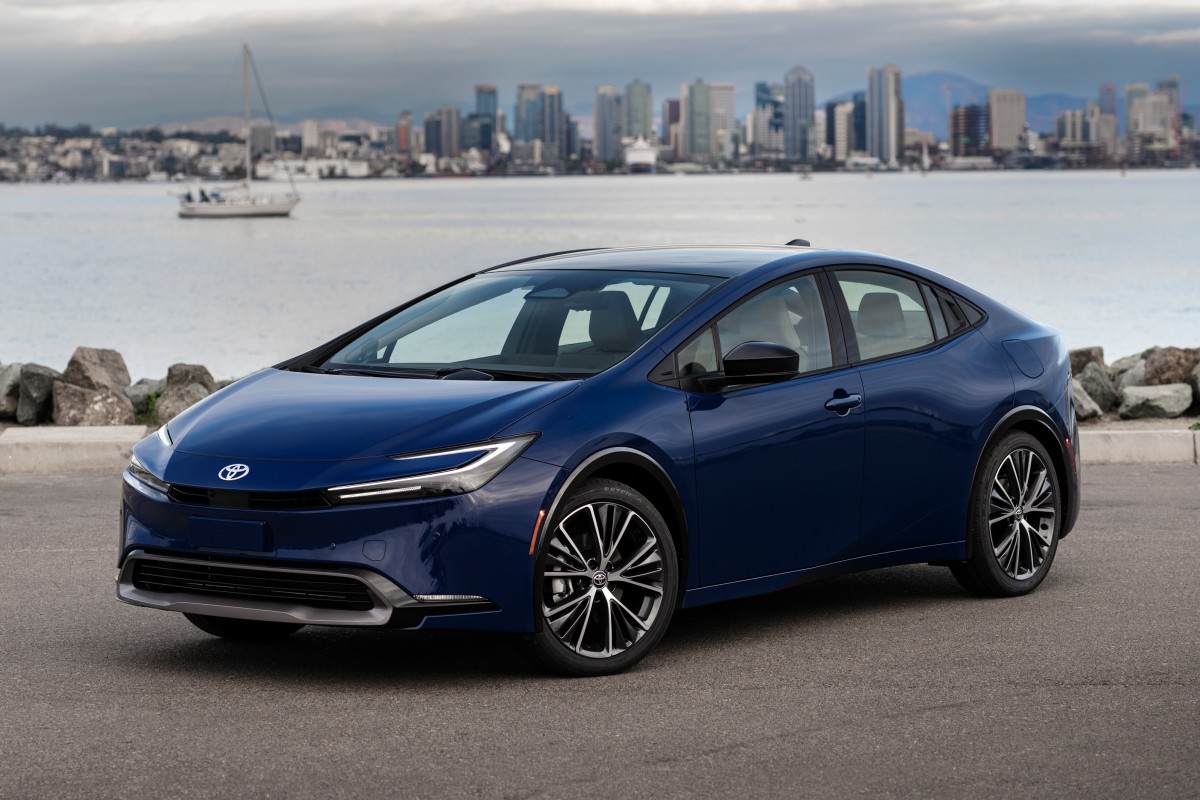
According to CarGurus experts, the overall rating for the 2024 BMW 7 Series is 6.7 out of 10, while the 2024 Toyota Prius scores 7.5 out of 10. Based on these ratings, the 2024 Toyota Prius is the recommended choice for its superior fuel efficiency, safety features, and practicality, making it a more well-rounded option for consumers.
Choose the 2024 BMW 7 Series if:
- You prioritize luxury and comfort, with features like massaging seats and a spacious interior.
- You desire powerful performance with options like the twin-turbo V8 engine.
- You appreciate advanced technology and infotainment systems, despite their complexity.


Choose the 2024 Toyota Prius if:
- You value fuel efficiency and eco-friendliness, with excellent hybrid performance.
- You seek a more affordable vehicle with a strong safety record.
- You prefer a practical and reliable car for everyday use.




CarGurus highlights
According to CarGurus experts, the overall rating for the 2024 BMW 7 Series is 6.7 out of 10, while the 2024 Toyota Prius scores 7.5 out of 10. Based on these ratings, the 2024 Toyota Prius is the recommended choice for its superior fuel efficiency, safety features, and practicality, making it a more well-rounded option for consumers.
Choose the 2024 BMW 7 Series if:
Shop Now- You prioritize luxury and comfort, with features like massaging seats and a spacious interior.
- You desire powerful performance with options like the twin-turbo V8 engine.
- You appreciate advanced technology and infotainment systems, despite their complexity.
Choose the 2024 Toyota Prius if:
Shop Now- You value fuel efficiency and eco-friendliness, with excellent hybrid performance.
- You seek a more affordable vehicle with a strong safety record.
- You prefer a practical and reliable car for everyday use.

By: CarGurus + AI
At CarGurus, our team of experienced automotive writers remain at the heart of our content operation, conducting hands-on car tests and writing insightful guides that are backed by years of industry experience. To complement this, we are harnessing AI to make our content offering more diverse and more helpful to shoppers than ever. To achieve this, our AI systems are based exclusively on CarGurus content, ratings and data, so that what we produce is both unique to CarGurus, and uniquely helpful to car shoppers.
