2024 BMW 7 Series vs 2025 Toyota Prius

Overview | |
Listings2 | Listings5 |
Ratings & Reviews | |
User Reviews | User Reviews |
Expert reviews6.7 out of 10 | Expert reviews6.7 out of 10 |
Pros
Cons
| Pros
Cons
|
2024 BMW 7 Series Reviews SummaryRedesigned for 2023, the 7 Series is BMW's full-size flagship sedan, arch-rival to the Mercedes-Benz S-Class, Audi A8, and newcomers like the Genesis G90. For 2024, BMW has added the plug-in hybrid (PHEV) 750e and lightly updated the infotainment system. Unfortunately, these additions don't change the 7 Series calculus. The 750e has a disjointed driving personality and quickly eats its electric charge. Despite the update, the car's digital systems remain frustratingly complex. Verdict: The 2024 BMW 7 Series has lots to offer luxury buyers, including features like a rear-seat theatre and cashmere upholstery, plus performance and fuel efficiency that are often superior to most rivals, few of whom offer PHEV options. But the car's frustrating digital systems and controls undermine the experience. | |
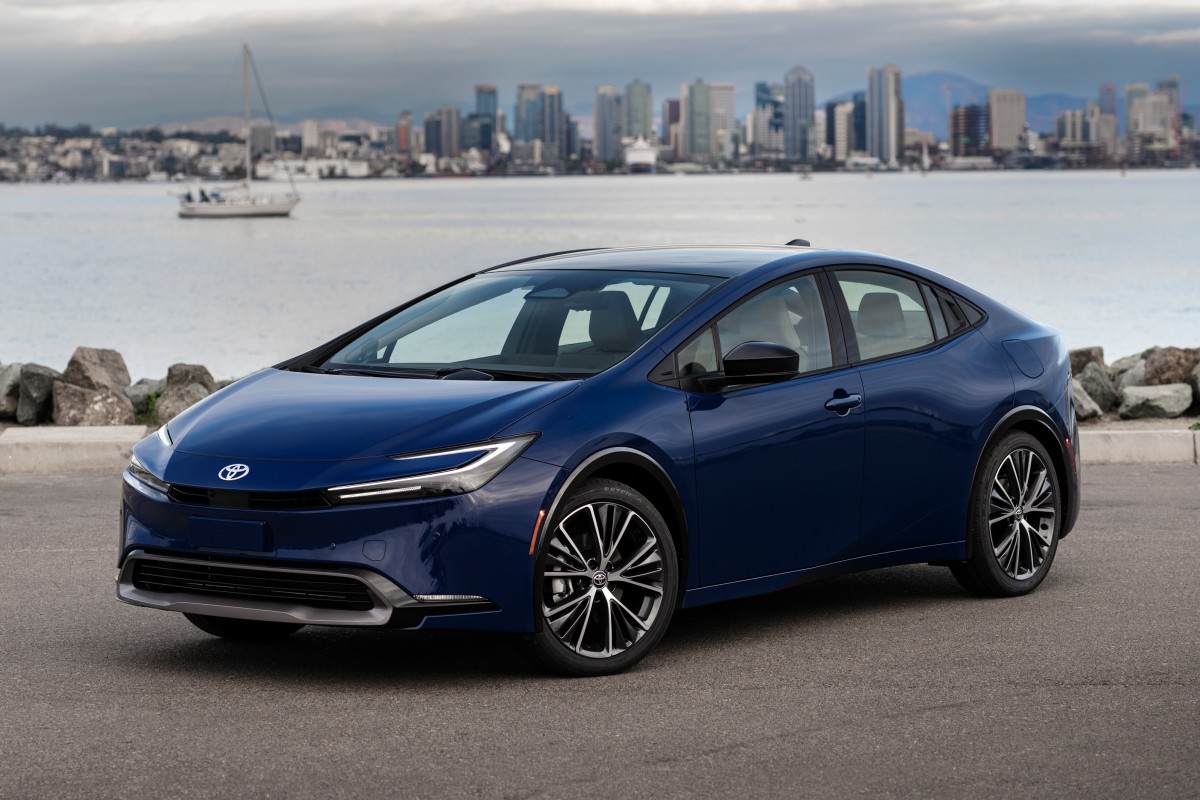
2025 Toyota Prius Reviews SummaryDecades ago, few cars were anywhere near as fuel efficient as the Toyota Prius. Today, the 2025 Prius remains a fuel economy champion, but numerous alternatives are close. Some even offer more interior room at a lower price. That reality, coupled with the cramped interior, limited trunk space, and general weirdness of the Prius, means hybrid car buyers have options. Verdict: The point of the 2025 Toyota Prius is fuel economy, but our test car averaged 6.0 litres per 100 kilometres, falling significantly short of the Natural Resources Canada estimate of 4.8 L/100 km in combined driving. That certainly isn’t superior to roomier hybrid cars from Honda, Hyundai, or from within Toyota’s own lineup. | |
No video found | No video found |
Popular Features & Specs | |
Engine3.0L 375 hp I6 | Engine2.0L 194 hp I4 Hybrid |
DrivetrainRWD | DrivetrainFWD |
Seating Capacity5 | Seating Capacity5 |
Horsepower375 hp @ 5200 rpm | Horsepower |
EV Battery Capacity | EV Battery Capacity0.9 kWh |
Fuel Economy (City)9.4 L(e)/100 km | Fuel Economy (City)4.1 L(e)/100 km |
Fuel Economy (Highway)7.6 L(e)/100 km | Fuel Economy (Highway)4.2 L(e)/100 km |
Engine | |
Engine Name3.0L 375 hp I6 | Engine Name2.0L 194 hp I4 Hybrid |
Torque398 lb-ft @ 1850 rpm | Torque |
Horsepower375 hp @ 5200 rpm | Horsepower |
DrivetrainRWD | DrivetrainFWD |
Fuel Economy | |
EV Battery Capacity | EV Battery Capacity0.9 kWh |
Fuel Economy (City)9.4 L(e)/100 km | Fuel Economy (City)4.1 L(e)/100 km |
Fuel Economy (Highway)7.6 L(e)/100 km | Fuel Economy (Highway)4.2 L(e)/100 km |
Interior | |
Seating Capacity5 | Seating Capacity5 |
Key Features | |
Navigation SystemStandard | Navigation System |
Sunroof/MoonroofStandard | Sunroof/Moonroof |
Safety | |
Front Crash Overall | Front Crash Overall5 |
Side Crash Overall | Side Crash Overall5 |
Dimensions & Capacity | |
Cargo Space541 L | Cargo Space674 L |
Curb Weight2141 kg | Curb Weight1405 kg |
Height1544 mm | Height1420 mm |
Length5390 mm | Length4600 mm |
Width2192 mm | Width1783 mm |
Wheelbase3216 mm | Wheelbase2751 mm |
Maximum Payload498 kg | Maximum Payload390 kg |
Number of doors4 | Number of doors4 |
Overview | ||
Listings | ||
Ratings & Reviews | ||
User reviews | ||
Expert reviews | 6.7 out of 10Read full review | 6.7 out of 10Read full review |
Pros & cons | Pros
Cons
| Pros
Cons
|
Summary | Redesigned for 2023, the 7 Series is BMW's full-size flagship sedan, arch-rival to the Mercedes-Benz S-Class, Audi A8, and newcomers like the Genesis G90. For 2024, BMW has added the plug-in hybrid (PHEV) 750e and lightly updated the infotainment system. Unfortunately, these additions don't change the 7 Series calculus. The 750e has a disjointed driving personality and quickly eats its electric charge. Despite the update, the car's digital systems remain frustratingly complex. Verdict: The 2024 BMW 7 Series has lots to offer luxury buyers, including features like a rear-seat theatre and cashmere upholstery, plus performance and fuel efficiency that are often superior to most rivals, few of whom offer PHEV options. But the car's frustrating digital systems and controls undermine the experience. | Decades ago, few cars were anywhere near as fuel efficient as the Toyota Prius. Today, the 2025 Prius remains a fuel economy champion, but numerous alternatives are close. Some even offer more interior room at a lower price. That reality, coupled with the cramped interior, limited trunk space, and general weirdness of the Prius, means hybrid car buyers have options. Verdict: The point of the 2025 Toyota Prius is fuel economy, but our test car averaged 6.0 litres per 100 kilometres, falling significantly short of the Natural Resources Canada estimate of 4.8 L/100 km in combined driving. That certainly isn’t superior to roomier hybrid cars from Honda, Hyundai, or from within Toyota’s own lineup. |
Video | No video found | No video found |
Popular Features & Specs | ||
Engine | 3.0L 375 hp I6 | 2.0L 194 hp I4 Hybrid |
Drivetrain | RWD | FWD |
Seating Capacity | 5 | 5 |
Horsepower | 375 hp @ 5200 rpm | |
EV Battery Capacity | 0.9 kWh | |
Fuel Economy (City) | 9.4 L(e)/100 km | 4.1 L(e)/100 km |
Fuel Economy (Highway) | 7.6 L(e)/100 km | 4.2 L(e)/100 km |
Engine | ||
Engine Name | 3.0L 375 hp I6 | 2.0L 194 hp I4 Hybrid |
Torque | 398 lb-ft @ 1850 rpm | |
Horsepower | 375 hp @ 5200 rpm | |
Drivetrain | RWD | FWD |
Fuel Economy | ||
EV Battery Capacity | 0.9 kWh | |
Fuel Economy (City) | 9.4 L(e)/100 km | 4.1 L(e)/100 km |
Fuel Economy (Highway) | 7.6 L(e)/100 km | 4.2 L(e)/100 km |
Interior | ||
Seating Capacity | 5 | 5 |
Key Features | ||
Navigation System | Standard | |
Sunroof/Moonroof | Standard | |
Safety | ||
Front Crash Overall | 5 | |
Side Crash Overall | 5 | |
Dimensions & Capacity | ||
Cargo Space | 541 L | 674 L |
Curb Weight | 2141 kg | 1405 kg |
Height | 1544 mm | 1420 mm |
Length | 5390 mm | 4600 mm |
Width | 2192 mm | 1783 mm |
Wheelbase | 3216 mm | 2751 mm |
Maximum Payload | 498 kg | 390 kg |
Number of doors | 4 | 4 |
2024 BMW 7 Series for Sale


2025 Toyota Prius for Sale




By: CarGurus + AI
At CarGurus, our team of experienced automotive writers remain at the heart of our content operation, conducting hands-on car tests and writing insightful guides that are backed by years of industry experience. To complement this, we are harnessing AI to make our content offering more diverse and more helpful to shoppers than ever. To achieve this, our AI systems are based exclusively on CarGurus content, ratings and data, so that what we produce is both unique to CarGurus, and uniquely helpful to car shoppers.
