2021 Volvo XC40 vs 2021 Toyota Highlander
Overview | |
MSRP$33,700 | MSRP$35,085 |
Listings31 | Listings104 |
Ratings & Reviews | |
User Reviews | User Reviews |
Expert reviews8.0 out of 10 | Expert reviews7.5 out of 10 |
2021 Volvo XC40 Reviews SummaryIntroduced for the 2019 model year, the Volvo XC40 enters 2021 with one major change—the addition of an all-electric powertrain option. The 2021 Volvo XC40 Recharge is the Scandinavian automaker’s first mass-market pure electric vehicle, in fact. The Recharge will be sold alongside gasoline versions of the XC40, which carry over largely unchanged, and compete against small luxury crossovers like the Audi Q3, BMW X1, Mercedes-Benz GLA-Class, and Lexus UX. With its electric powertrain, the Recharge is a de facto Tesla Model Y competitor. It’s also priced similar to high-end versions of the Ford Mustang Mach-E, although the two electric crossovers have somewhat different philosophies. In addition to that zero-emission powertrain, the Recharge gets an Android-based operating system, over-the-air (OTA) software update capability for all vehicle systems, and some updates to driver-assist tech. These changes don’t apply to gasoline 2021 XC40 models, but Volvo does plan to add the Android operating system to more vehicles in the future. Since the Recharge is the main new thing for the 2021 XC40, that’s what we focused on for this review. While the gasoline XC40 is available in three trim levels—Momentum, R-Design, and Inscription—with standard all-wheel drive (AWD) in Canada, the Recharge is only offered in a single trim level. | |
2021 Toyota Highlander Reviews SummaryToyota hardly needs any help selling three-row Highlanders. It already sits close to the top of the sales charts for its segment, and few vehicles carry the name recognition as the Highlander, which enters into its 20th year of production. But the three-row marketplace is a competitive one, and even after a 2020 redesign, Toyota would be foolish to rest on its laurels. As such, the Highlander enters this year with additional safety-feature technology listed as standard equipment. | |
No video found | |
Popular Features & Specs | |
Engine2.0L 187 hp I4 | Engine3.5L 295 hp V6 |
Drive TrainFWD | Drive TrainFWD |
Seating Capacity5 | Seating Capacity8 |
Horsepower187 hp @ 4700 rpm | Horsepower295 hp @ 6600 rpm |
MPG City23 | MPG City20 |
MPG Highway32 | MPG Highway28 |
Engine | |
Engine Name2.0L 187 hp I4 | Engine Name3.5L 295 hp V6 |
Torque221 lb-ft @ 1400 rpm | Torque263 lb-ft @ 4700 rpm |
Horsepower187 hp @ 4700 rpm | Horsepower295 hp @ 6600 rpm |
DrivetrainFWD | DrivetrainFWD |
Fuel Economy | |
MPG City23 | MPG City20 |
MPG Highway32 | MPG Highway28 |
Interior | |
Leather SeatsStandard | Leather Seats |
Seating Capacity5 | Seating Capacity8 |
Safety | |
Front Crash Overall5 | Front Crash Overall4 |
Side Crash Overall5 | Side Crash Overall5 |
Dimensions & Capacity | |
Cargo Space20.7 cu ft | Cargo Space16.0 cu ft |
Curb Weight3627 lbs | Curb Weight4145 lbs |
Height65.3 in | Height68.1 in |
Length174.2 in | Length194.9 in |
Width80.1 in | Width76.0 in |
Wheelbase106.4 in | Wheelbase112.2 in |
Maximum Payload1133 lbs | Maximum Payload1685 lbs |
Number of doors4 | Number of doors4 |
Maximum Towing Capacity3500 lbs | Maximum Towing Capacity5000 lbs |
Overview | ||
MSRP | $33,700 | $35,085 |
Listings | ||
Ratings & Reviews | ||
User reviews | ||
Expert reviews | 8.0 out of 10Read full review | 7.5 out of 10Read full review |
Pros & cons | ||
Summary | Introduced for the 2019 model year, the Volvo XC40 enters 2021 with one major change—the addition of an all-electric powertrain option. The 2021 Volvo XC40 Recharge is the Scandinavian automaker’s first mass-market pure electric vehicle, in fact. The Recharge will be sold alongside gasoline versions of the XC40, which carry over largely unchanged, and compete against small luxury crossovers like the Audi Q3, BMW X1, Mercedes-Benz GLA-Class, and Lexus UX. With its electric powertrain, the Recharge is a de facto Tesla Model Y competitor. It’s also priced similar to high-end versions of the Ford Mustang Mach-E, although the two electric crossovers have somewhat different philosophies. In addition to that zero-emission powertrain, the Recharge gets an Android-based operating system, over-the-air (OTA) software update capability for all vehicle systems, and some updates to driver-assist tech. These changes don’t apply to gasoline 2021 XC40 models, but Volvo does plan to add the Android operating system to more vehicles in the future. Since the Recharge is the main new thing for the 2021 XC40, that’s what we focused on for this review. While the gasoline XC40 is available in three trim levels—Momentum, R-Design, and Inscription—with standard all-wheel drive (AWD) in Canada, the Recharge is only offered in a single trim level. | Toyota hardly needs any help selling three-row Highlanders. It already sits close to the top of the sales charts for its segment, and few vehicles carry the name recognition as the Highlander, which enters into its 20th year of production. But the three-row marketplace is a competitive one, and even after a 2020 redesign, Toyota would be foolish to rest on its laurels. As such, the Highlander enters this year with additional safety-feature technology listed as standard equipment. |
Video | No video found | |
Popular Features & Specs | ||
Engine | 2.0L 187 hp I4 | 3.5L 295 hp V6 |
Drive Train | FWD | FWD |
Seating Capacity | 5 | 8 |
Horsepower | 187 hp @ 4700 rpm | 295 hp @ 6600 rpm |
MPG City | 23 | 20 |
MPG Highway | 32 | 28 |
Engine | ||
Engine Name | 2.0L 187 hp I4 | 3.5L 295 hp V6 |
Torque | 221 lb-ft @ 1400 rpm | 263 lb-ft @ 4700 rpm |
Horsepower | 187 hp @ 4700 rpm | 295 hp @ 6600 rpm |
Drivetrain | FWD | FWD |
Fuel Economy | ||
MPG City | 23 | 20 |
MPG Highway | 32 | 28 |
Interior | ||
Leather Seats | Standard | |
Seating Capacity | 5 | 8 |
Safety | ||
Front Crash Overall | 5 | 4 |
Side Crash Overall | 5 | 5 |
Dimensions & Capacity | ||
Cargo Space | 20.7 cu ft | 16.0 cu ft |
Curb Weight | 3627 lbs | 4145 lbs |
Height | 65.3 in | 68.1 in |
Length | 174.2 in | 194.9 in |
Width | 80.1 in | 76.0 in |
Wheelbase | 106.4 in | 112.2 in |
Maximum Payload | 1133 lbs | 1685 lbs |
Number of doors | 4 | 4 |
Maximum Towing Capacity | 3500 lbs | 5000 lbs |
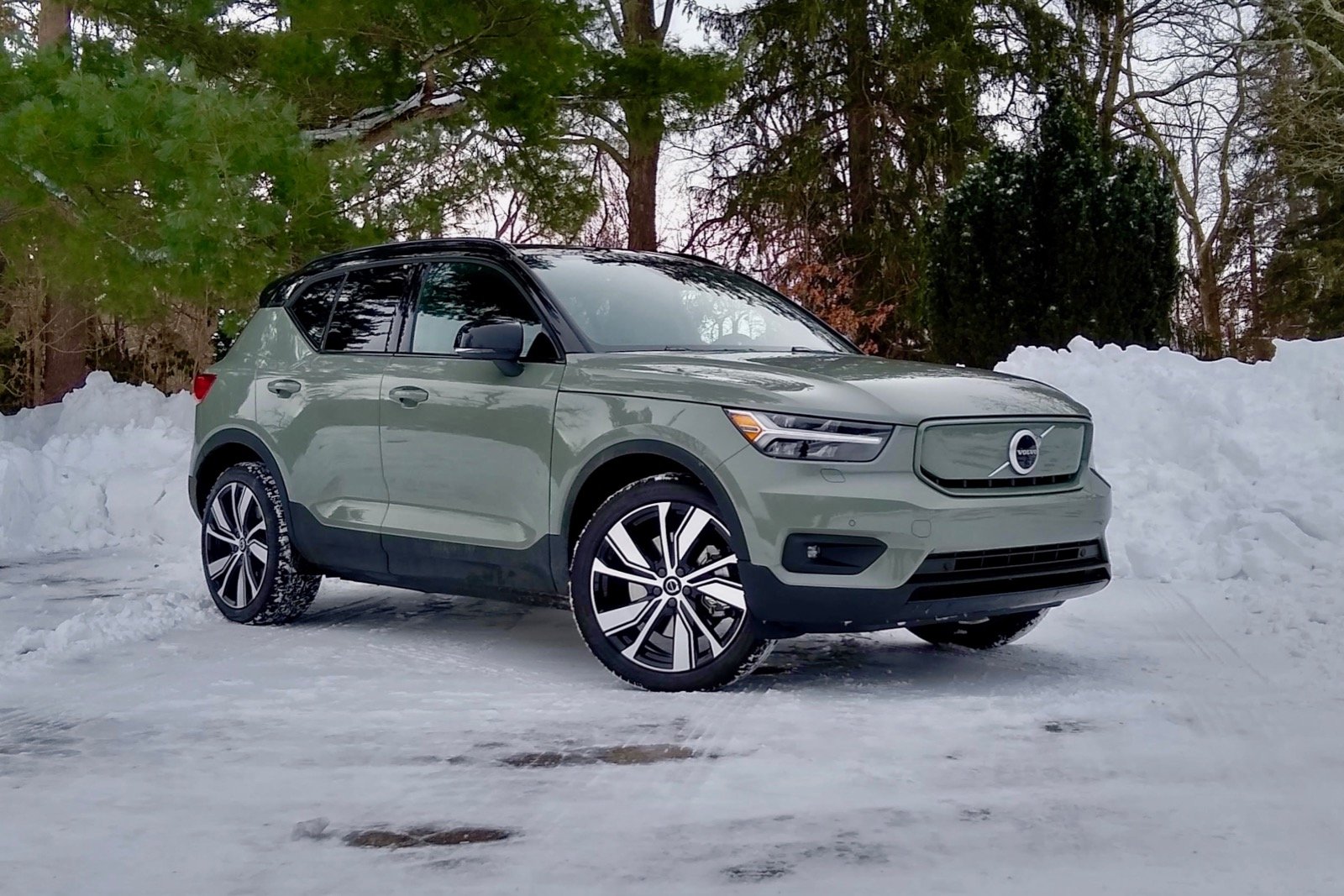
The 2021 Volvo XC40 presented a traditional SUV aesthetic, characterized by its tall, flat roof and upright rear hatch, aligning seamlessly with Volvo's design language, including the distinctive “Thor’s Hammer” LED headlights and a simple oval grille. Gasoline models offered a retro touch with an optional white contrasting roof. The XC40 Recharge differentiated itself with a blanked-off grille, subtle “Recharge” badging, and unique alloy wheels, alongside a gloss black roof and mirror caps. Its design changes were subtle, making it an appealing choice for those seeking an electric vehicle without overtly showcasing it. Inside, the XC40 boasted a minimalist yet premium interior, featuring real metal trim and a combination of Nappa leather and Nubuck textile upholstery. The cohesive design extended to the portrait-oriented touchscreen and air vents, offering a sophisticated feel uncommon in its segment.
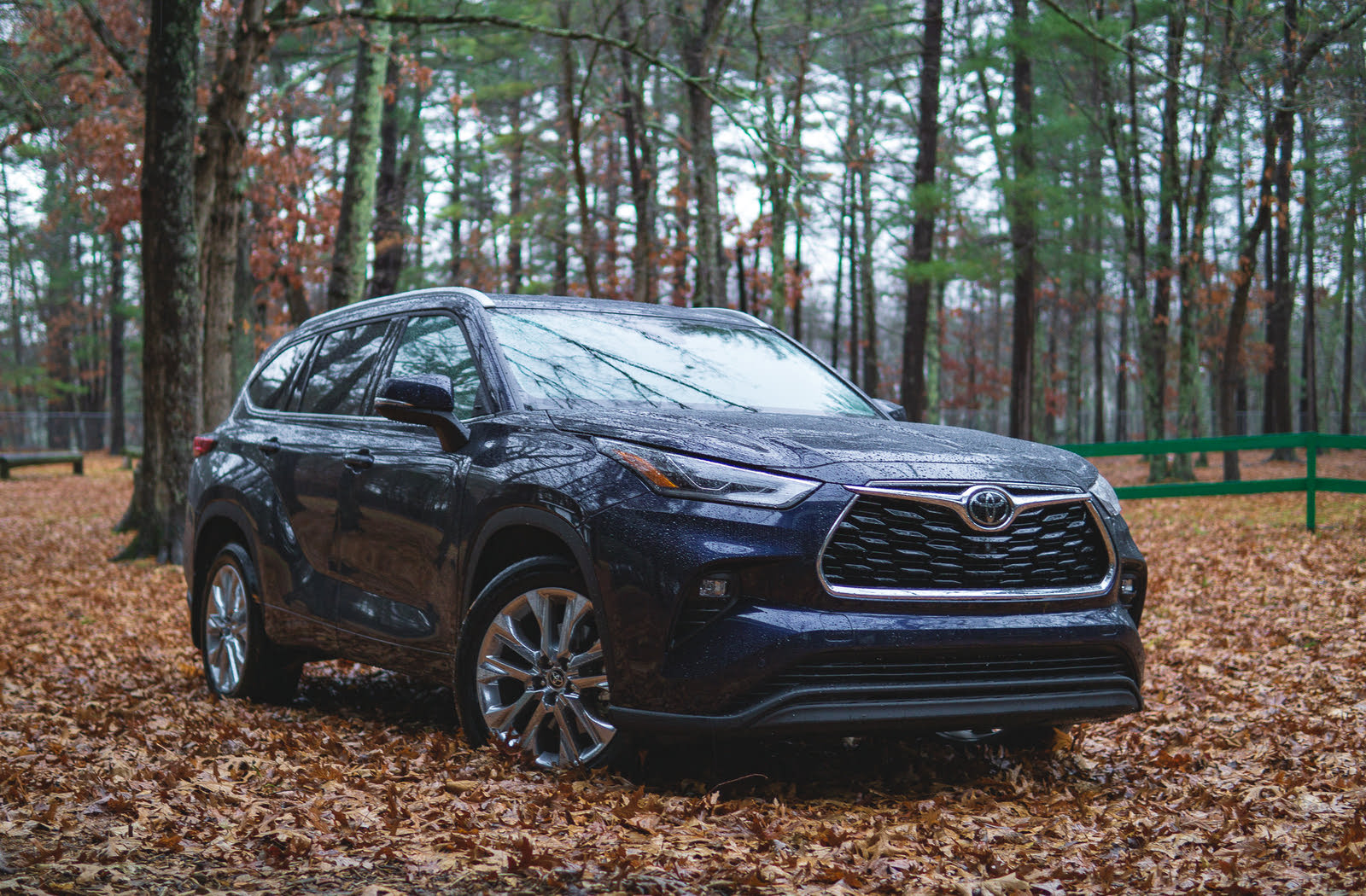
In contrast, the 2021 Toyota Highlander stood out with its bold design, featuring wide headlights, a long hood, and an assertive trapezoidal grille. Its side profile was accentuated by a character line reminiscent of the Supra sports car, while the rear taillights borrowed elements from Lexus models. The Highlander appeared longer and lower than its predecessor without compromising size. The introduction of the XSE trim added a sportier appearance with a restyled front end and 20-inch alloy wheels. The Limited trim, just below the Platinum, exuded an upscale vibe with chrome accents. Inside, the Highlander leaned towards luxury, with near-flawless fit and finish, tan leather seats, and dark brown trim. The wood details, though not real, added to the upscale feel, making it a comfortable choice for families prioritizing luxury over sportiness.


The 2021 Volvo XC40 offered a versatile powertrain lineup, with the electric Recharge model at the top. The gasoline variants featured a 2.0-litre turbocharged four-cylinder engine paired with an eight-speed automatic transmission. The base T4 produced 187 horsepower and 221 pound-feet of torque, while the T5 delivered 248 hp and 258 lb-ft. The Recharge model shared its powertrain with the Polestar 2, boasting dual electric motors for all-wheel drive, generating a combined 402 hp and 486 lb-ft. It housed a 78-kilowatt-hour battery pack, with 75 kWh usable capacity, enabling a 0 to 100 km/h sprint in 4.9 seconds. The T5 and T4 achieved the same in 6.4 and 8.5 seconds, respectively. All models were electronically limited to 180 km/h. The XC40 Recharge emphasized luxury with a quiet, comfortable ride, even on rough roads, and offered one-pedal driving for regenerative braking. It also had a towing capacity of 900 kilograms when properly equipped.
The 2021 Toyota Highlander, powered by a 3.5-litre V6 engine, delivered 295 horsepower and 263 pound-feet of torque, paired with an eight-speed automatic transmission. It offered both front-wheel and all-wheel drive options. While not designed for high-speed thrills, the Highlander provided smooth and reliable performance, suitable for family needs. It compared well with competitors like the Hyundai Palisade and Kia Telluride in terms of power, though it lagged behind the Ford Explorer ST. The Highlander’s suspension prioritized comfort, with the XSE trim offering a slightly sportier feel through retuned shock absorbers and a rear stabilizer bar. Despite its size, the Highlander handled predictably, making it a practical choice for families seeking comfort and reliability.
The 2021 Volvo XC40, both in its Recharge and gasoline variants, offered similar passenger and cargo space, though it was less spacious than competitors like the Tesla Model Y and Ford Mustang Mach-E. The Recharge’s frunk was small, with much of the space occupied by powertrain components. The gasoline XC40 was more competitive in interior space compared to rivals like the Audi Q3 and BMW X1. Volvo compensated for limited space with clever storage solutions, including a removable trash bin in the centre console and a bag hook in the glovebox door. The Harman Kardon audio system’s speakers were moved to the dashboard, allowing for larger door bins. A wireless charging pad was optional, with a single USB-C port standard, though second-row passengers lacked charging options.
The 2021 Toyota Highlander excelled in interior space, crucial for a three-row crossover. It featured shelves ahead of the front seats for easy access to phones, with a pass-through for charging cords. A wireless charging pad was standard on XSE and above, located within the centre console. Second-row passengers enjoyed ample legroom, with seats that could move to optimize space for the third row. The third row, while accommodating adults, required some compromise from second-row occupants. The Highlander offered 453 litres of cargo space behind the third row, expanding to 1,150 litres with the third row folded, and 2,245 litres with both rear rows down. However, rear-seat climate control vents were only ceiling-mounted, potentially uncomfortable for middle-row passengers.
The 2021 Volvo XC40 Recharge featured the Android Automotive OS infotainment system, integrating Google apps like Google Assistant and Google Maps. Gasoline models retained the previous system. The setup included a 9-inch touchscreen and a 12.3-inch digital instrument cluster, with top-notch graphics and menu layouts. The Recharge model introduced OTA update capability, allowing for software updates without dealership visits. It also lacked a start button, requiring only a key fob to shift out of park. The Polestar 2’s Digital Key feature was anticipated for the XC40, though not confirmed.
The 2021 Toyota Highlander offered an 8-inch touchscreen on lower trims, with a 12.3-inch screen available on the Platinum trim. Both systems were user-friendly, though navigation was only available from the Limited grade. While effective for specific addresses, the system struggled with points of interest, making Android Auto and Apple CarPlay essential. The 12.3-inch screen was visually impressive but limited in app display. A JBL audio system was standard from the Limited grade, providing good sound quality. The system included a volume and tuning knob, though navigation was restricted to an 8-inch display area.
The 2021 Volvo XC40 received top safety ratings, with the gasoline model earning a “Top Safety Pick+” from the IIHS and a five-star overall rating from the NHTSA. The electric Recharge model was expected to perform well in crash tests due to its safety cage and redesigned front structure. Standard safety features included lane-keep assist, blind-spot monitoring, automatic emergency braking, and more. Optional features included a 360-degree camera and Volvo’s Pilot Assist system. The Recharge model featured an advanced sensor suite, scalable for future driver aids.
The 2021 Toyota Highlander upgraded to Toyota Safety Sense 2.5+, including automatic emergency braking with pedestrian detection and intersection support. It also featured adaptive cruise control, lane-departure warning, lane-keeping assist, and automatic high beams. Blind spot monitoring was standard, with LED headlights and fog lights available from the XLE grade. The Highlander received a five-star rating from the NHTSA and was named a Top Safety Pick+ by the IIHS.
CarGurus highlights
According to CarGurus experts, the overall rating for the 2021 Volvo XC40 is 8.0 out of 10, while the 2021 Toyota Highlander scores 7.5 out of 10. Based on these ratings, the Volvo XC40 is recommended for those seeking a luxury SUV with advanced technology and safety features.
Choose the 2021 Volvo XC40 if:
- You prefer a luxury SUV with a minimalist, high-quality interior.
- You value advanced technology features like Android Automotive OS and OTA updates.
- You seek a vehicle with strong safety ratings and future-ready driver aids.


Choose the 2021 Toyota Highlander if:
- You need a spacious three-row crossover with flexible seating arrangements.
- You prioritize comfort and reliability for family transportation.
- You want a comprehensive suite of safety features with a proven track record.


CarGurus highlights
According to CarGurus experts, the overall rating for the 2021 Volvo XC40 is 8.0 out of 10, while the 2021 Toyota Highlander scores 7.5 out of 10. Based on these ratings, the Volvo XC40 is recommended for those seeking a luxury SUV with advanced technology and safety features.
Choose the 2021 Volvo XC40 if:
Shop Now- You prefer a luxury SUV with a minimalist, high-quality interior.
- You value advanced technology features like Android Automotive OS and OTA updates.
- You seek a vehicle with strong safety ratings and future-ready driver aids.


Choose the 2021 Toyota Highlander if:
Shop Now- You need a spacious three-row crossover with flexible seating arrangements.
- You prioritize comfort and reliability for family transportation.
- You want a comprehensive suite of safety features with a proven track record.


By: CarGurus + AI
At CarGurus, our team of experienced automotive writers remain at the heart of our content operation, conducting hands-on car tests and writing insightful guides that are backed by years of industry experience. To complement this, we are harnessing AI to make our content offering more diverse and more helpful to shoppers than ever. To achieve this, our AI systems are based exclusively on CarGurus content, ratings and data, so that what we produce is both unique to CarGurus, and uniquely helpful to car shoppers.

