2021 Toyota 4Runner vs 2021 Volkswagen ID.4
Overview | |
MSRP$36,765 | MSRP$39,995 |
Listings75 | Listings27 |
Ratings & Reviews | |
User Reviews | User Reviews |
Expert reviews6.2 out of 10 | Expert reviews7.3 out of 10 |
2021 Toyota 4Runner Reviews SummaryDespite its design age, poor fuel efficiency, rough ride, iffy handling, and marginal safety ratings, the current-generation Toyota 4Runner remains a popular choice in a midsize SUV. Why? Its reputation for reliability and resale value, coupled with its undeniable utility, rugged image, and go-anywhere and do-anything capability, are the selling points. And if that's why you want a 2021 Toyota 4Runner, it won't disappoint you as long as you accept its shortcomings. | |
2021 Volkswagen ID.4 Reviews SummaryThe “Dieselgate” emissions scandal forced Volkswagen to double down on electric cars, and now we’re finally seeing the first result of that: the 2021 Volkswagen ID.4 electric crossover. VW has made an electric car before, but its last attempt, the e-Golf, was built to satisfy emissions standards, not rack up sales. It was barely advertised, and it was sold only in certain locations. With the ID.4, it will launch in the three largest Canadian EV markets—British Columbia, Quebec, and Ontario—and will even be built in North America, in Chattanooga, Tennessee, starting in 2022. Volkswagen views the ID.4 as a rival not to other EVs, but to mainstream gasoline vehicles like the Honda CR-V and Toyota RAV4. Being late to the party means there are already several other EVs trying to coax new-car buyers away from internal combustion, however. If you want a reasonably priced EV, the Nissan Leaf, Hyundai Kona Electric, and Kia Niro EV already exist, and General Motors has the 2022 Chevrolet Bolt EUV—a new variant of the Chevy Bolt EV with a crossover body style similar to the Volkswagen. Our test car was an ID.4 1st Edition, a U.S.-only model released to commemorates the car’s launch. Its closest Canadian equivalent is the ID.4 RWD Pro with the Statement Package. | |
No video found | |
Popular Features & Specs | |
Engine4.0L 270 hp V6 | Engine201 hp Electric |
Drive Train4X2 | Drive TrainRWD |
Seating Capacity7 | Seating Capacity5 |
Horsepower270 hp @ 5600 rpm | Horsepower |
EV Battery Capacity | EV Battery Capacity82 kWh |
MPG City16 | MPG City104 |
MPG Highway19 | MPG Highway89 |
Battery Charge Time (240V) | Battery Charge Time (240V)8 hours |
Engine | |
Engine Name4.0L 270 hp V6 | Engine Name201 hp Electric |
Torque278 lb-ft @ 4400 rpm | Torque |
Horsepower270 hp @ 5600 rpm | Horsepower |
Battery Charge Time (240V) | Battery Charge Time (240V)8 hours |
Drivetrain4X2 | DrivetrainRWD |
Fuel Economy | |
EV Battery Capacity | EV Battery Capacity82 kWh |
MPG City16 | MPG City104 |
MPG Highway19 | MPG Highway89 |
Interior | |
Seating Capacity7 | Seating Capacity5 |
Safety | |
Front Crash Overall4 | Front Crash Overall5 |
Side Crash Overall5 | Side Crash Overall5 |
Dimensions & Capacity | |
Cargo Space47.2 cu ft | Cargo Space30.3 cu ft |
Curb Weight4400 lbs | Curb Weight4517 lbs |
Height71.5 in | Height64.4 in |
Length190.2 in | Length180.5 in |
Width75.8 in | Width72.9 in |
Wheelbase109.8 in | Wheelbase108.9 in |
Maximum Payload1700 lbs | Maximum Payload1347 lbs |
Number of doors4 | Number of doors4 |
Maximum Towing Capacity5000 lbs | Maximum Towing Capacity |
Standard Towing Capacity5000 lbs | Standard Towing Capacity |
Overview | ||
MSRP | $36,765 | $39,995 |
Listings | ||
Ratings & Reviews | ||
User reviews | ||
Expert reviews | 6.2 out of 10Read full review | 7.3 out of 10Read full review |
Pros & cons | ||
Summary | Despite its design age, poor fuel efficiency, rough ride, iffy handling, and marginal safety ratings, the current-generation Toyota 4Runner remains a popular choice in a midsize SUV. Why? Its reputation for reliability and resale value, coupled with its undeniable utility, rugged image, and go-anywhere and do-anything capability, are the selling points. And if that's why you want a 2021 Toyota 4Runner, it won't disappoint you as long as you accept its shortcomings. | The “Dieselgate” emissions scandal forced Volkswagen to double down on electric cars, and now we’re finally seeing the first result of that: the 2021 Volkswagen ID.4 electric crossover. VW has made an electric car before, but its last attempt, the e-Golf, was built to satisfy emissions standards, not rack up sales. It was barely advertised, and it was sold only in certain locations. With the ID.4, it will launch in the three largest Canadian EV markets—British Columbia, Quebec, and Ontario—and will even be built in North America, in Chattanooga, Tennessee, starting in 2022. Volkswagen views the ID.4 as a rival not to other EVs, but to mainstream gasoline vehicles like the Honda CR-V and Toyota RAV4. Being late to the party means there are already several other EVs trying to coax new-car buyers away from internal combustion, however. If you want a reasonably priced EV, the Nissan Leaf, Hyundai Kona Electric, and Kia Niro EV already exist, and General Motors has the 2022 Chevrolet Bolt EUV—a new variant of the Chevy Bolt EV with a crossover body style similar to the Volkswagen. Our test car was an ID.4 1st Edition, a U.S.-only model released to commemorates the car’s launch. Its closest Canadian equivalent is the ID.4 RWD Pro with the Statement Package. |
Video | No video found | |
Popular Features & Specs | ||
Engine | 4.0L 270 hp V6 | 201 hp Electric |
Drive Train | 4X2 | RWD |
Seating Capacity | 7 | 5 |
Horsepower | 270 hp @ 5600 rpm | |
EV Battery Capacity | 82 kWh | |
MPG City | 16 | 104 |
MPG Highway | 19 | 89 |
Battery Charge Time (240V) | 8 hours | |
Engine | ||
Engine Name | 4.0L 270 hp V6 | 201 hp Electric |
Torque | 278 lb-ft @ 4400 rpm | |
Horsepower | 270 hp @ 5600 rpm | |
Battery Charge Time (240V) | 8 hours | |
Drivetrain | 4X2 | RWD |
Fuel Economy | ||
EV Battery Capacity | 82 kWh | |
MPG City | 16 | 104 |
MPG Highway | 19 | 89 |
Interior | ||
Seating Capacity | 7 | 5 |
Safety | ||
Front Crash Overall | 4 | 5 |
Side Crash Overall | 5 | 5 |
Dimensions & Capacity | ||
Cargo Space | 47.2 cu ft | 30.3 cu ft |
Curb Weight | 4400 lbs | 4517 lbs |
Height | 71.5 in | 64.4 in |
Length | 190.2 in | 180.5 in |
Width | 75.8 in | 72.9 in |
Wheelbase | 109.8 in | 108.9 in |
Maximum Payload | 1700 lbs | 1347 lbs |
Number of doors | 4 | 4 |
Maximum Towing Capacity | 5000 lbs | |
Standard Towing Capacity | 5000 lbs | |
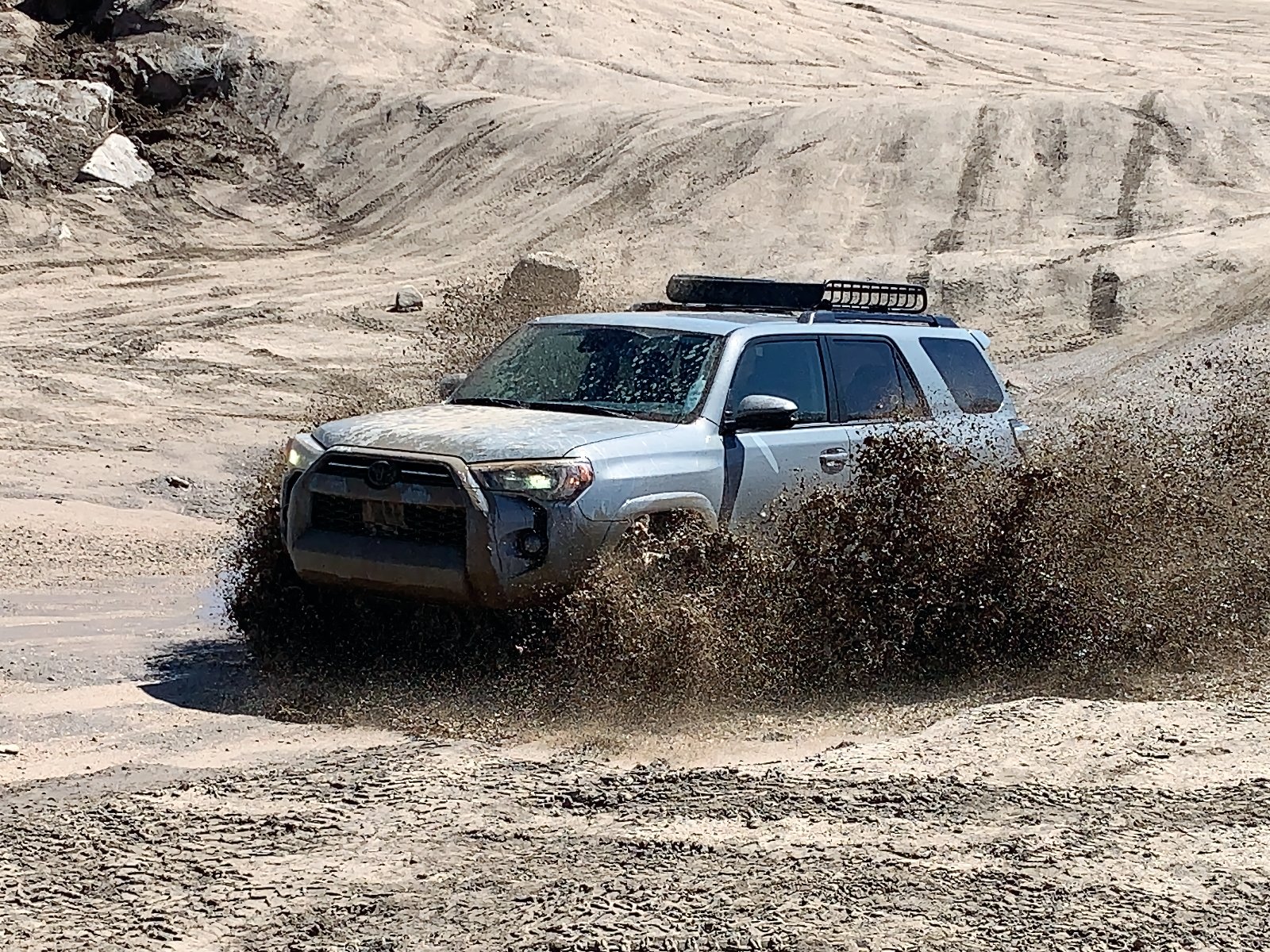
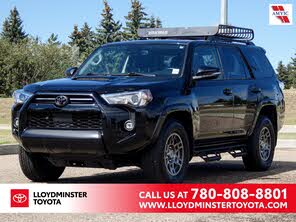
The 2021 Toyota 4Runner, despite its age, maintained a rugged charm that appealed to those seeking a durable and utilitarian vehicle. Its design, largely unchanged over the years, featured a two-box body with flared fenders and trapezoidal wheel arches, offering balanced proportions and timeless styling. While not conventionally attractive, the 4Runner's appearance was functional, akin to a reliable tool that didn't require frequent updates. The interior was straightforward, with hard plastic surfaces and an old-school dashboard, emphasizing practicality over luxury. The 4Runner's appeal lay in its simplicity and durability, making it a vehicle that could be driven for decades, provided gasoline remained available.
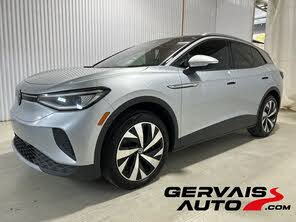
In contrast, the 2021 Volkswagen ID.4 showcased a modern and distinctive design, emphasizing its electric vehicle (EV) identity. Unlike some EVs that mimicked their gasoline counterparts, the ID.4 featured a streamlined profile with wheels pushed to the corners, setting it apart from the fake toughness of traditional crossovers. Built on VW's EV-specific MEB platform, the ID.4 prioritized a futuristic aesthetic with a blend of Volkswagen's minimalism and a smartphone-inspired interior. The cabin featured piano black and matte plastic surfaces, creating a tech-focused atmosphere. While the ID.4's design was innovative, it faced challenges in conveying an SUV-like presence, a common issue among EV crossovers.


The 2021 Toyota 4Runner excelled in off-road conditions, thanks to its A-Trac off-road traction control system. This feature allowed the 4Runner to navigate challenging terrains, such as mud, hills, and ruts, with ease. The SUV was powered by a 4.0-litre V6 engine, producing 270 horsepower and 278 pound-feet of torque, paired with a five-speed automatic transmission. While its off-road capabilities were impressive, the 4Runner felt slow and clunky on paved roads, with heavy steering and brakes. Its truck-like driving characteristics were part of its charm, but they also contributed to its high fuel consumption, averaging 14.0 L/100 km during testing.
The 2021 Volkswagen ID.4 offered two powertrain configurations: a rear-wheel drive (RWD) version with a single electric motor producing 201 horsepower and 229 pound-feet of torque, and an all-wheel drive (AWD) version with dual motors generating 295 horsepower and 339 pound-feet of torque. The ID.4 prioritized comfort over sportiness, with a smooth ride and balanced handling. Unlike many EVs, it did not offer aggressive regenerative braking, opting for a more traditional driving experience. The ID.4's electric motor provided ample power, making acceleration from stoplights enjoyable, while its RWD setup contributed to balanced handling.
The 2021 Toyota 4Runner offered a spacious and comfortable interior, with ample legroom and supportive seats in both the front and rear. Its high ground clearance could pose a challenge for shorter passengers, but once inside, the cabin provided good visibility and a sense of openness. Cargo space was generous, with up to 1,337 litres behind the rear seats and 2,540 litres with the seats folded down. The 4Runner's interior was practical, with decent storage options and a large roof rack for additional cargo.
The 2021 Volkswagen ID.4, while feeling more like a crossover compared to other EVs, offered competitive interior space. It provided more front and rear headroom than many EV rivals, though legroom was average. Cargo capacity was 858 litres with the rear seats in place and 1,818 litres with them folded, surpassing several EV competitors but falling short of traditional gasoline crossovers like the Honda CR-V and Toyota RAV4. The ID.4's interior felt spacious, with good forward visibility, though rearward visibility was hindered by thick pillars. The cabin featured a unique gear selector and efficient heating elements, enhancing comfort during cold weather.
The 2021 Toyota 4Runner's technology offerings were basic, especially in the entry-level Trail grade. It featured an 8-inch touchscreen infotainment system with Bluetooth, Apple CarPlay, Android Auto, and SiriusXM satellite radio. While the system's design was simple, it was functional, with physical buttons and knobs for easy operation. The 4Runner also included a windshield wiper de-icer and a 120-volt AC power outlet in the cargo area, adding to its practicality.
The 2021 Volkswagen ID.4 boasted a more advanced infotainment system, with a standard 10-inch touchscreen and optional 12-inch screen. It included wireless Apple CarPlay and Android Auto, along with a 5.3-inch display screen for the instrument cluster. However, the use of haptic touchpads in place of traditional controls proved challenging, lacking tactile feedback. The ID.4 also featured a natural-language voice-control system and the innovative ID.Light, which communicated information to the driver through a light strip. While some features felt gimmicky, the infotainment system was well-designed, with intuitive menus and smart graphics.
The 2021 Toyota 4Runner came equipped with Toyota Safety Sense P (TSS-P), which included adaptive cruise control, forward-collision warning, automatic emergency braking, lane departure warning, and automatic high-beam headlights. However, it lacked blind-spot monitoring and rear cross-traffic warning, which were notable omissions. The 4Runner received mixed safety ratings, with a three-star rollover resistance rating from the NHTSA and a "Marginal" rating for driver protection in small overlap frontal impacts from the IIHS.
The 2021 Volkswagen ID.4 received high safety ratings, with the IIHS naming it a Top Safety Pick+ and the NHTSA awarding the RWD version a five-star rating. It offered a comprehensive suite of driver aids, including forward-collision warning, automatic emergency braking, blind-spot monitoring, lane-keep assist, and adaptive cruise control. The ID.4 also introduced Travel Assist and Emergency Assist, enhancing its safety features. Travel Assist provided automated lane centring, while Emergency Assist could bring the car to a stop if the driver was incapacitated.
CarGurus highlights

According to CarGurus experts, the overall rating for the 2021 Toyota 4Runner is 6.2 out of 10, while the 2021 Volkswagen ID.4 scores 7.3 out of 10. Based on these ratings, the ID.4 is the recommended choice, offering a more modern design, advanced technology, and superior safety features.
Choose the 2021 Toyota 4Runner if:
- You prioritize off-road capability and rugged durability.
- You need a spacious interior with ample cargo capacity for outdoor adventures.
- You prefer a straightforward, old-school design with practical features.


Choose the 2021 Volkswagen ID.4 if:
- You want a modern, electric vehicle with a distinctive design.
- You value advanced technology and a comfortable, spacious interior.
- You seek a high safety rating with comprehensive driver assistance features.


CarGurus highlights
According to CarGurus experts, the overall rating for the 2021 Toyota 4Runner is 6.2 out of 10, while the 2021 Volkswagen ID.4 scores 7.3 out of 10. Based on these ratings, the ID.4 is the recommended choice, offering a more modern design, advanced technology, and superior safety features.
Choose the 2021 Toyota 4Runner if:
Shop Now- You prioritize off-road capability and rugged durability.
- You need a spacious interior with ample cargo capacity for outdoor adventures.
- You prefer a straightforward, old-school design with practical features.



Choose the 2021 Volkswagen ID.4 if:
Shop Now- You want a modern, electric vehicle with a distinctive design.
- You value advanced technology and a comfortable, spacious interior.
- You seek a high safety rating with comprehensive driver assistance features.



By: CarGurus + AI
At CarGurus, our team of experienced automotive writers remain at the heart of our content operation, conducting hands-on car tests and writing insightful guides that are backed by years of industry experience. To complement this, we are harnessing AI to make our content offering more diverse and more helpful to shoppers than ever. To achieve this, our AI systems are based exclusively on CarGurus content, ratings and data, so that what we produce is both unique to CarGurus, and uniquely helpful to car shoppers.

