2020 Toyota Camry vs 2021 BMW 5 Series
Overview | |
MSRP$24,425 | MSRP$54,200 |
Listings49 | Listings6 |
Ratings & Reviews | |
User Reviews | User Reviews |
Expert reviews7.5 out of 10 | Expert reviews8.0 out of 10 |
Pros
Cons
| |
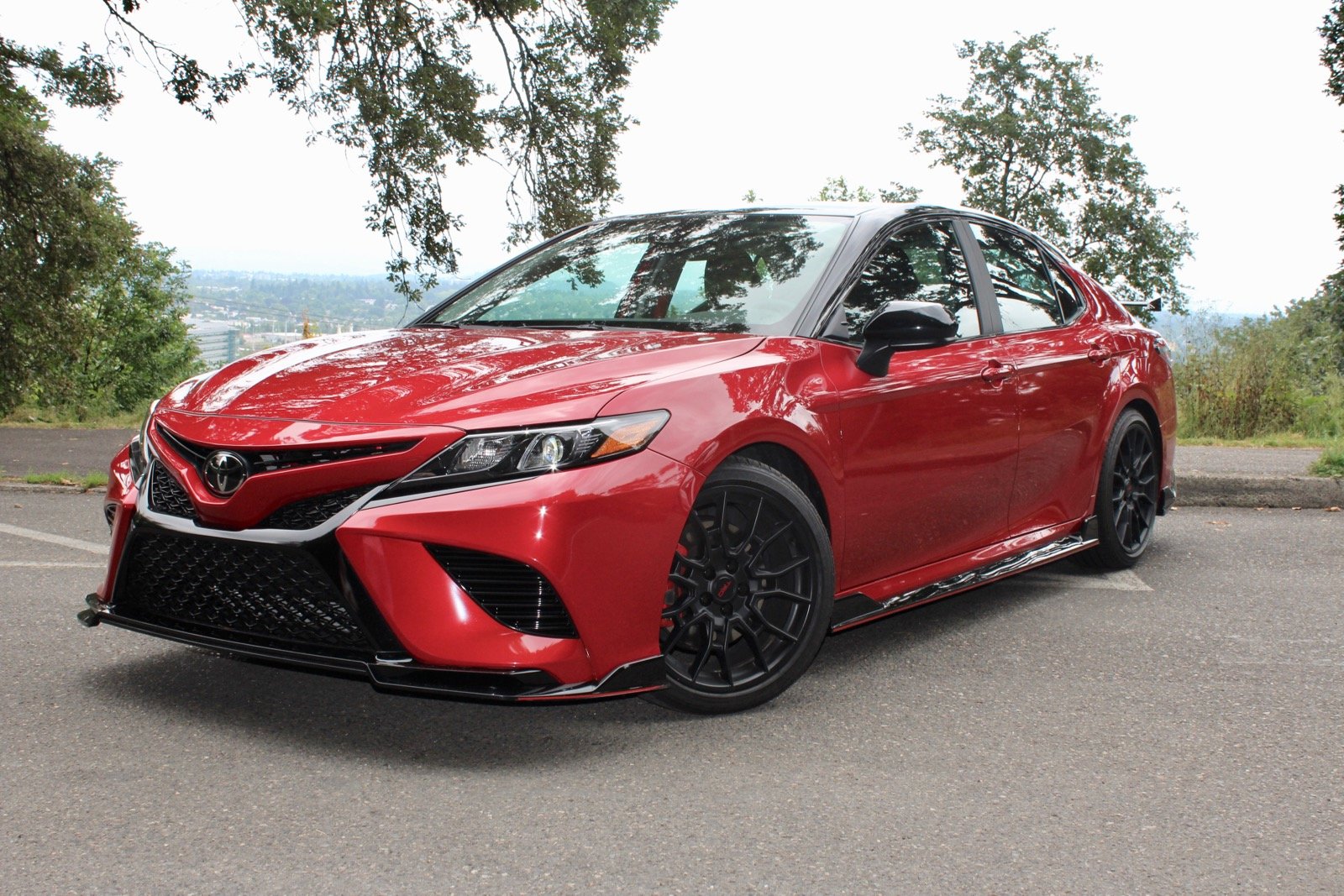
2020 Toyota Camry Reviews SummaryIf you can't beat them, join them. That seems to be Toyota's philosophy in updating the eighth generation of the Camry for the 2020 model year. This latest version debuted in 2017 as a 2018 model. As buyers continue to defect from cars into SUVs like Toyota's own RAV4, Toyota hopes to entice more shoppers to stick with its midsize sedan by offering all-wheel drive on the Camry for the first time since 1991. What's new for 2020 is the Camry TRD option package on the XSE V6, with 301 horsepower that make the case to a buyer who might never have considered a Camry. | |
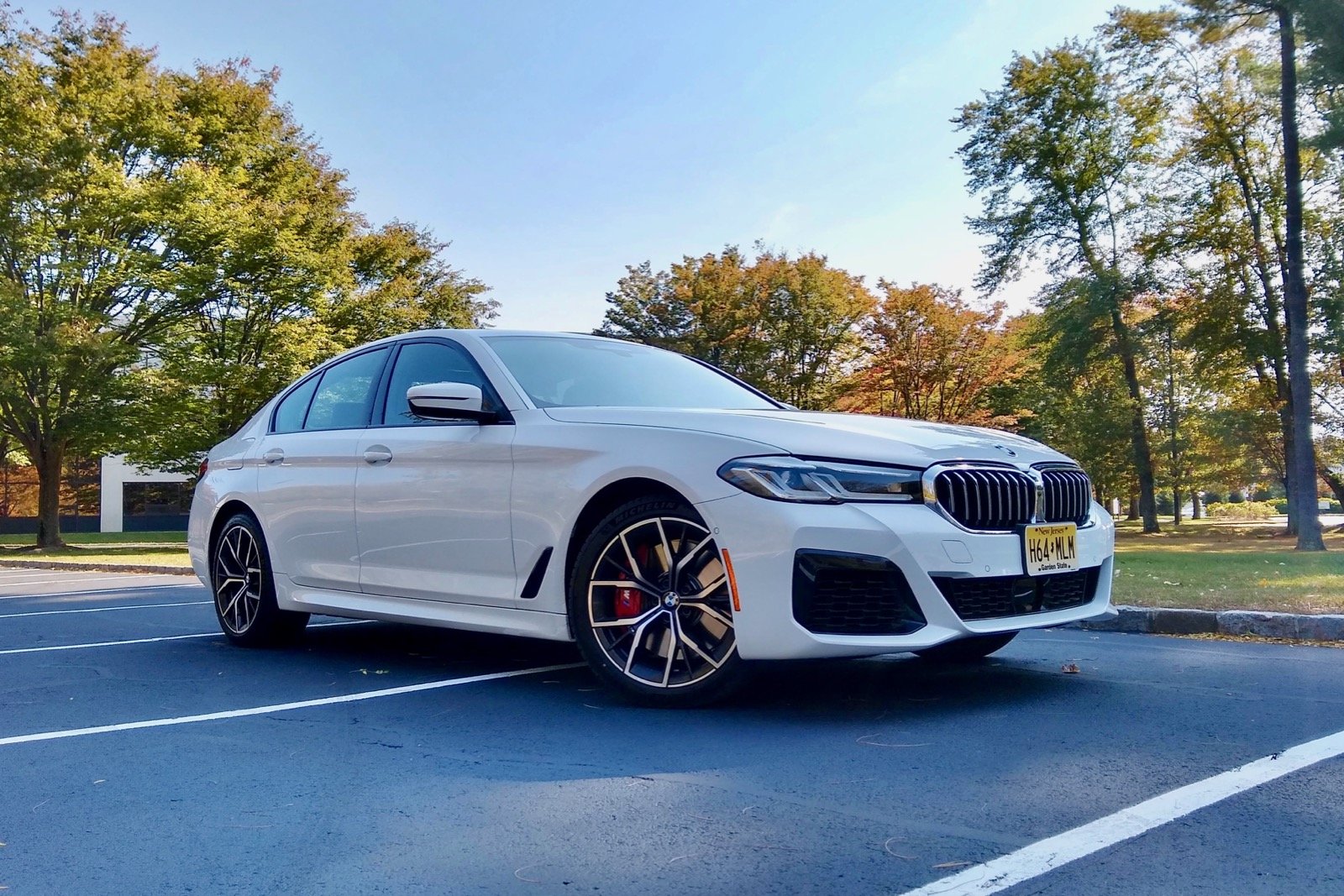
2021 BMW 5 Series Reviews SummaryBMW was once known for sports sedans, and the 5 Series was one of the most prolific of those sedans. Sitting between the 3 Series and 7 Series in size and price, previous generations of 5 Series were known for a balance of performance and luxury, with impeccable engineering throughout. Today, the BMW 5 Series is largely irrelevant. The 3 Series is now so big that there is less reason to upgrade, and most buyers are more interested in SUVs anyway. The competition—including the Audi A6, Jaguar XF, Mercedes-Benz E-Class, and Volvo S90—has also gotten better. That doesn’t mean BMW has given up on the 5 Series. The current generation (codename G30) arrived for the 2017 model year, but it gets a midcycle refresh (or LCI, short for “Life Cycle Impulse,” in BMW speak) for 2021. Major updates include a 48-volt mild-hybrid system, a bigger infotainment touchscreen, and subtle styling changes. The 2021 BMW 5 Series sedan is not like the 5 Series models of old. That may drive away hardcore car fans, but the 2021 model makes a strong case to new-car buyers, maintaining sportier-than-average driving dynamics, along with the tech and luxury features expected of a car in this segment. | |
No video found | No video found |
Popular Features & Specs | |
Engine2.5L 203 hp I4 | Engine2.0L 248 hp I4 |
DrivetrainFWD | DrivetrainRWD |
Seating Capacity5 | Seating Capacity5 |
Horsepower | Horsepower248 hp @ 5200 rpm |
MPG City29 | MPG City25 |
MPG Highway41 | MPG Highway33 |
Engine | |
Engine Name2.5L 203 hp I4 | Engine Name2.0L 248 hp I4 |
Torque | Torque257 lb-ft @ 1500 rpm |
Horsepower | Horsepower248 hp @ 5200 rpm |
DrivetrainFWD | DrivetrainRWD |
Fuel Economy | |
MPG City29 | MPG City25 |
MPG Highway41 | MPG Highway33 |
Interior | |
Seating Capacity5 | Seating Capacity5 |
Key Features | |
Navigation System | Navigation SystemStandard |
Sunroof/Moonroof | Sunroof/MoonroofStandard |
Safety | |
Front Crash Overall5 | Front Crash Overall |
Side Crash Overall5 | Side Crash Overall |
Dimensions & Capacity | |
Cargo Space14.1 cu ft | Cargo Space14.0 cu ft |
Curb Weight3241 lbs | Curb Weight3765 lbs |
Height56.9 in | Height58.2 in |
Length192.1 in | Length195.8 in |
Width72.4 in | Width83.7 in |
Wheelbase111.2 in | Wheelbase117.1 in |
Maximum Payload925 lbs | Maximum Payload800 lbs |
Number of doors4 | Number of doors4 |
Overview | ||
MSRP | $24,425 | $54,200 |
Listings | ||
Ratings & Reviews | ||
User reviews | ||
Expert reviews | 7.5 out of 10Read full review | 8.0 out of 10Read full review |
Pros & cons | Pros
Cons
| |
Summary | If you can't beat them, join them. That seems to be Toyota's philosophy in updating the eighth generation of the Camry for the 2020 model year. This latest version debuted in 2017 as a 2018 model. As buyers continue to defect from cars into SUVs like Toyota's own RAV4, Toyota hopes to entice more shoppers to stick with its midsize sedan by offering all-wheel drive on the Camry for the first time since 1991. What's new for 2020 is the Camry TRD option package on the XSE V6, with 301 horsepower that make the case to a buyer who might never have considered a Camry. | BMW was once known for sports sedans, and the 5 Series was one of the most prolific of those sedans. Sitting between the 3 Series and 7 Series in size and price, previous generations of 5 Series were known for a balance of performance and luxury, with impeccable engineering throughout. Today, the BMW 5 Series is largely irrelevant. The 3 Series is now so big that there is less reason to upgrade, and most buyers are more interested in SUVs anyway. The competition—including the Audi A6, Jaguar XF, Mercedes-Benz E-Class, and Volvo S90—has also gotten better. That doesn’t mean BMW has given up on the 5 Series. The current generation (codename G30) arrived for the 2017 model year, but it gets a midcycle refresh (or LCI, short for “Life Cycle Impulse,” in BMW speak) for 2021. Major updates include a 48-volt mild-hybrid system, a bigger infotainment touchscreen, and subtle styling changes. The 2021 BMW 5 Series sedan is not like the 5 Series models of old. That may drive away hardcore car fans, but the 2021 model makes a strong case to new-car buyers, maintaining sportier-than-average driving dynamics, along with the tech and luxury features expected of a car in this segment. |
Video | No video found | No video found |
Popular Features & Specs | ||
Engine | 2.5L 203 hp I4 | 2.0L 248 hp I4 |
Drivetrain | FWD | RWD |
Seating Capacity | 5 | 5 |
Horsepower | 248 hp @ 5200 rpm | |
MPG City | 29 | 25 |
MPG Highway | 41 | 33 |
Engine | ||
Engine Name | 2.5L 203 hp I4 | 2.0L 248 hp I4 |
Torque | 257 lb-ft @ 1500 rpm | |
Horsepower | 248 hp @ 5200 rpm | |
Drivetrain | FWD | RWD |
Fuel Economy | ||
MPG City | 29 | 25 |
MPG Highway | 41 | 33 |
Interior | ||
Seating Capacity | 5 | 5 |
Key Features | ||
Navigation System | Standard | |
Sunroof/Moonroof | Standard | |
Safety | ||
Front Crash Overall | 5 | |
Side Crash Overall | 5 | |
Dimensions & Capacity | ||
Cargo Space | 14.1 cu ft | 14.0 cu ft |
Curb Weight | 3241 lbs | 3765 lbs |
Height | 56.9 in | 58.2 in |
Length | 192.1 in | 195.8 in |
Width | 72.4 in | 83.7 in |
Wheelbase | 111.2 in | 117.1 in |
Maximum Payload | 925 lbs | 800 lbs |
Number of doors | 4 | 4 |
The 2020 Toyota Camry had a reputation for quality, reliability, and value, which it earned by consistently outperforming expectations. While earlier models were nearly indestructible and shared engineering with the Lexus brand, recent iterations had been criticized for feeling cheap compared to competitors. However, the latest generation saw a renewed focus on detail, elevating its quality and appeal. The styling was more expressive than ever, with a bold front fascia and taut lines that hinted at sportiness. The interior featured high-quality materials and a driver-focused dashboard, making even the base trims feel upscale. Although it wasn't a luxury car, the Camry's improvements were a step in the right direction.
In contrast, the 2021 BMW 5 Series was known for its restrained design, lacking the flourishes of the 3 Series or the imposing size of the 7 Series. The 2021 model received a minor styling refresh, with sleeker LED headlights and a larger, yet not oversized, twin-kidney grille. The interior maintained the familiar BMW layout, with specific design elements that reinforced the brand's identity. While the materials in lower trims weren't as luxurious, options like Nappa leather added a high-end feel. The 5 Series was more of a luxury car with sporty pretensions, offering precise handling and a smooth engine, but it wasn't the "Ultimate Driving Machine" it once claimed to be.


The 2020 Toyota Camry offered four powertrains, including a 2.5-litre four-cylinder engine with FWD or AWD, a 3.5-litre V6, and a hybrid option. The V6 produced 301 horsepower and was paired with an eight-speed automatic transmission, providing a smooth and powerful drive. The 2.5-litre four-cylinder delivered 203 hp (206 in XSE trim) and was lighter, offering a more engaging driving experience. The AWD system, similar to the RAV4's, could send up to half of the engine's 184 lb-ft of torque to the rear wheels, improving traction in slippery conditions. Fuel consumption varied, with the FWD V6 models managing 9.0 L/100 km, while the AWD four-cylinder models consumed 8.4 L/100 km.
The 2021 BMW 5 Series offered a range of powertrains, starting with the 530i's 2.0-litre turbocharged four-cylinder engine, producing 248 hp and 258 lb-ft of torque. The 540i featured a 3.0-litre turbocharged inline-six with a 48-volt mild hybrid system, generating 335 hp and 362 lb-ft of torque. The M550i xDrive boasted a 4.4-litre twin-turbo V8 with 523 hp, while the M5 offered 617 hp. The 530e plug-in hybrid combined a 2.0-litre engine with an electric motor, producing 288 hp and offering an electric range of 31 km. The 5 Series excelled in performance, with the 540i xDrive reaching 100 km/h in 4.7 seconds, but it felt more like a luxury car than a true driver's car.
The 2020 Toyota Camry was user-friendly, with controls that were easy to reach and operate. The front seats offered increased legroom and hip room, but the rear seat and trunk space were more limited compared to competitors. The trunk held 428 litres, similar to a Honda Civic, and the addition of AWD didn't compromise interior space.
The 2021 BMW 5 Series, available only as a sedan in Canada, offered spacious front seats and a slightly less roomy rear seat compared to rivals. The trunk provided 396 litres of space, with a 40/20/20 split-folding rear bench for longer items. The test car featured 16-way power front seats with various adjustments, but forward visibility was limited due to the long hood. A surround-view camera system helped with parking.
The 2020 Toyota Camry included Apple CarPlay and Android Auto as standard, along with Bluetooth and a three-month SiriusXM trial. The infotainment system, while functional, felt dated with low-resolution graphics. The standard 7-inch screen could be upgraded to 8 inches, and higher trims offered a 10-inch head-up display. Remote Connect allowed smartphone access for locking, unlocking, and remote starting.
The 2021 BMW 5 Series featured a 12.3-inch infotainment touchscreen with iDrive 7 and a 12.3-inch digital instrument cluster. Apple CarPlay, Android Auto, Bluetooth, and SiriusXM were standard. The infotainment system was easy to read, but the instrument cluster layout could be confusing. A rotary knob controlled infotainment functions, and voice and gesture controls were available, though the latter was less precise.
The 2020 Toyota Camry came with Toyota Safety Sense, including emergency braking, adaptive cruise control, lane-departure warning, and automatic high beams. Blind-spot monitoring was optional. The Camry received a five-star NHTSA rating and a Top Safety Pick+ from the IIHS. A recall for leaking engine coolant affected some models.
The 2021 BMW 5 Series had standard safety features like lane-departure warning, automatic emergency braking, and blind-spot monitoring. The Driving Assistance Plus Package added adaptive cruise control and other features. The 2020 model received a Top Safety Pick+ from the IIHS, but the NHTSA hadn't published recent ratings.
CarGurus highlights
According to CarGurus experts, the overall rating for the 2020 Toyota Camry is 7.5 out of 10, while the 2021 BMW 5 Series scores 8.0 out of 10. Based on these ratings, the 2021 BMW 5 Series is the recommended choice for those seeking a more luxurious and technologically advanced vehicle.
Choose the 2020 Toyota Camry if:
- You prioritize reliability and value in a sedan.
- You want a car with a smooth V6 engine and available AWD.
- You appreciate a user-friendly interior with straightforward controls.


Choose the 2021 BMW 5 Series if:
- You seek a luxury sedan with a range of powerful engine options.
- You value advanced technology and a high-quality infotainment system.
- You desire a spacious interior with premium materials and features.


CarGurus highlights
According to CarGurus experts, the overall rating for the 2020 Toyota Camry is 7.5 out of 10, while the 2021 BMW 5 Series scores 8.0 out of 10. Based on these ratings, the 2021 BMW 5 Series is the recommended choice for those seeking a more luxurious and technologically advanced vehicle.
Choose the 2020 Toyota Camry if:
Shop Now- You prioritize reliability and value in a sedan.
- You want a car with a smooth V6 engine and available AWD.
- You appreciate a user-friendly interior with straightforward controls.
Choose the 2021 BMW 5 Series if:
Shop Now- You seek a luxury sedan with a range of powerful engine options.
- You value advanced technology and a high-quality infotainment system.
- You desire a spacious interior with premium materials and features.

By: CarGurus + AI
At CarGurus, our team of experienced automotive writers remain at the heart of our content operation, conducting hands-on car tests and writing insightful guides that are backed by years of industry experience. To complement this, we are harnessing AI to make our content offering more diverse and more helpful to shoppers than ever. To achieve this, our AI systems are based exclusively on CarGurus content, ratings and data, so that what we produce is both unique to CarGurus, and uniquely helpful to car shoppers.
