2021 BMW 5 Series Reviews, Pricing & Specs
Write a review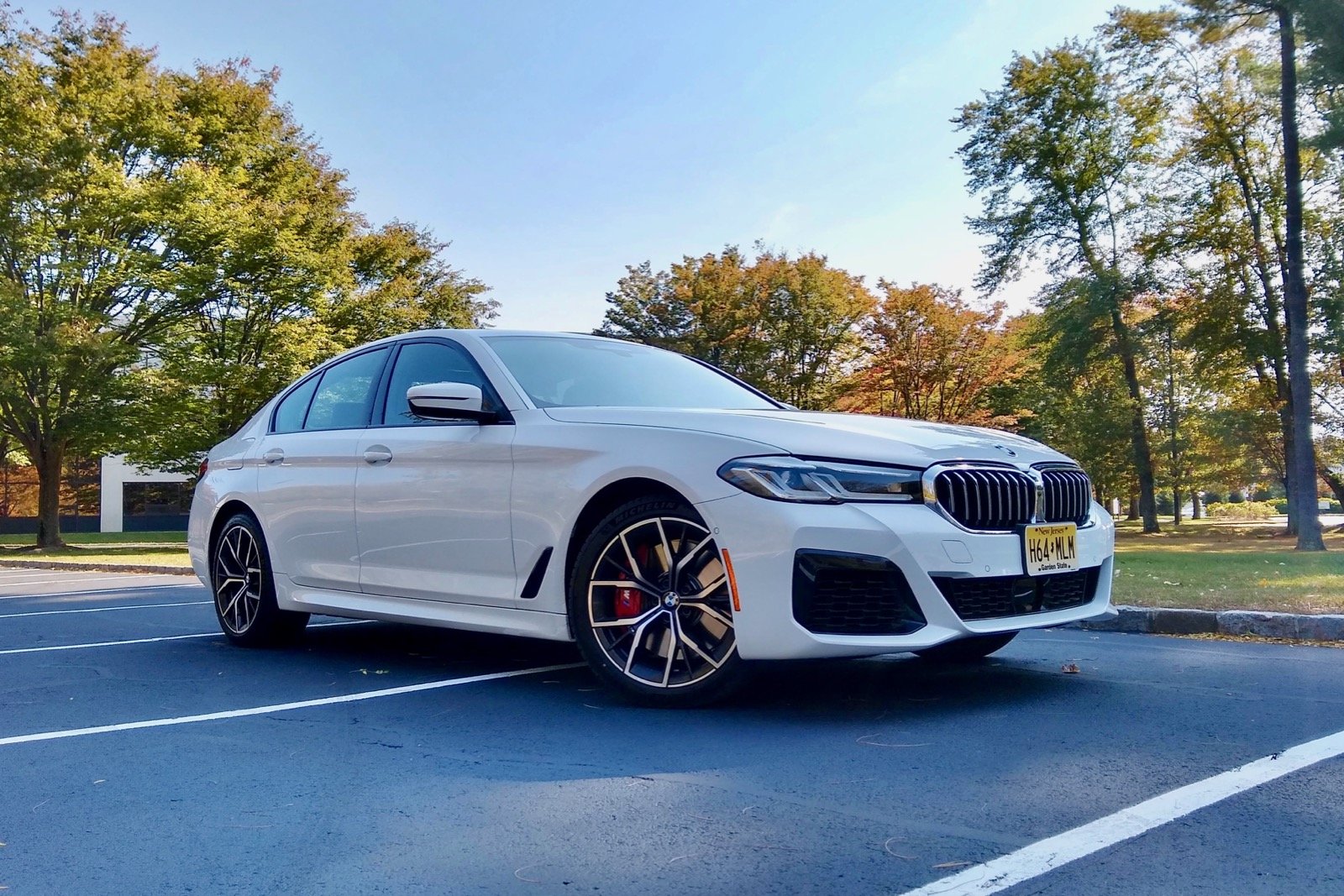
BMW’s 5-Series midsize luxury sedan changes with the times, leaving enthusiasts behind.
BMW was once known for sports sedans, and the 5 Series was one of the most prolific of those sedans. Sitting between the 3 Series and 7 Series in size and price, previous generations of 5 Series were known for a balance of performance and luxury, with impeccable engineering throughout.
Today, the BMW 5 Series is largely irrelevant. The 3 Series is now so big that there is less reason to upgrade, and most buyers are more interested in SUVs anyway. The competition—including the Audi A6, Jaguar XF, Mercedes-Benz E-Class, and Volvo S90—has also gotten better.
That doesn’t mean BMW has given up on the 5 Series. The current generation (codename G30) arrived for the 2017 model year, but it gets a midcycle refresh (or LCI, short for “Life Cycle Impulse,” in BMW speak) for 2021. Major updates include a 48-volt mild-hybrid system, a bigger infotainment touchscreen, and subtle styling changes.
The 2021 BMW 5 Series sedan is not like the 5 Series models of old. That may drive away hardcore car fans, but the 2021 model makes a strong case to new-car buyers, maintaining sportier-than-average driving dynamics, along with the tech and luxury features expected of a car in this segment.

The 5 Series has the most restrained design of any current BMW sedan. It doesn’t have the design flourishes of the 3 Series or the imposing size of the 7 Series. Where most luxury cars (and likely their drivers as well) are eager to show off, the 5 Series flies under the radar.
For the 2021 model year, the 5 Series gets a minor styling refresh that gives the sedan a sleeker look. The standard LED headlights are a bit more streamlined than the old versions, which stood slightly proud of the front end. BMW's signature twin-kidney grille is larger than before but not comically large like the massive protuberance on the 7 Series sedan.
Other changes include trapezoidal tailpipes, new L-shaped taillights, and new front and rear bumpers for the M Sport Package. BMW says the 5 Series is 30 millimetres longer than before, but still with a reasonably good drag coefficient of 0.27, allowing the car to slice through the air more efficiently.
The interior design hasn’t changed much from last year, keeping the familiar BMW layout. You could tape over the blue and white roundel on the steering wheel and still know from all of the other details that you were sitting in a BMW. From the positioning of the touchscreen to the unusual-looking shifter, to the typefaces and door chimes, everything has a specific BMW style. These details are now as important to the automaker’s identity as the driving dynamics of its cars.
As with other luxury cars, the prestigious badge doesn’t guarantee high-end materials. Lower trim levels get standard SensaTec upholstery rather than real leather, while two grades—Dakota leather and Nappa leather—are available at extra cost. Our 540i xDrive test car had Nappa leather in Mocha (a $1,500 option that also requires the $7,450 Premium Packaged Enhanced), which looked and felt great.
Aluminum trim with an unusual scale pattern added to the high-end feel, but the standard leather-wrapped “sport” steering wheel felt out of place. It was the only overtly-sporty element of the interior, and its rim thickness and overall diameter seemed too large, especially considering how little effort the electric power steering required.

BMW offers a wide array of powertrain options for the 2021 5 Series. The base 530i sedan gets a 2.0-litre turbocharged four-cylinder engine making 248 horsepower and 258 pound-feet of torque. It may be the entry-level 5 Series, but the 530i can still do zero to 100 km/h in 6.0 seconds, according to BMW. Top speed is electronically limited to 210 kilometres per hour with the standard tires, and 235 km/h with optional performance tires. An eight-speed automatic transmission and xDrive all-wheel drive are the standard drivetrain on all 5 Series models in Canada.
Next up is the 540i, which gets a 3.0-litre turbocharged inline-six engine and, for the 2021 model year, a 48-volt mild hybrid system. This adds a small battery pack that can power accessories like lights, climate control, and power windows, and also allows for a more aggressive engine start-stop system. However, despite the “hybrid” nomenclature, the 540i is not capable of driving solely on electric power. Rivals Audi and Mercedes have added similar systems to the A6 and E-Class, respectively.
The 540i boasts 335 hp and 362 lb-ft of torque, getting it from zero to 100 km/h in 4.7 seconds with xDrive all-wheel drive. As with the 530i, an 8-speed automatic is the only available transmission, and top speed is limited to 210 or 235 km/h, depending on what tires you choose.
Our test car was a 540i xDrive, which felt like a facsimile of an old BMW sedan made by a different company. The 540i felt appreciably sportier than most rivals, with wonderfully precise handling (thanks in part to the optional adaptive dampers) and an ultrasmooth six-cylinder engine. However, it’s not, as the BMW slogan used to say, an “Ultimate Driving Machine.” It’s just a bit too distant; more of a luxury car playing at being sporty than a true driver’s car.
Granted, BMW does offer sportier options further up the 5 Series hierarchy. The M550i xDrive sedan gets a 4.4-litre twin-turbo V8 making 523 hp and 553 lb-ft of torque, which shaves 0.9 seconds off the 540i xDrive’s zero-to-100 time. The legendary BMW M5 gets a more powerful version of the V8, with 617 hp in Competition spec. BMW says the M5 will do zero to 100 km/h in just 3.0 seconds, with a top speed of 305 km/h when equipped with the optional M Driver’s Package.
On a different note, BMW also offers the 530e plug-in hybrid, with a powertrain consisting of a 2.0-litre four-cylinder engine, eight-speed automatic transmission, and an electric motor. Combined output is 288 hp (40 hp more than before) and 310 lb-ft of torque. The BMW 530e xDrive can do zero to 100 km/h in 5.8 seconds, but is also capable of driving solely on electric power for significant distances. The 2020 model had a 31 km electric range; Natural Resources Canada reports the same range for the 2021 model.

In Canada, the 5 Series is available only as a four-door, five-seat sedan. Wagon variants of the Mercedes-Benz E-Class and Audi A6 are available here, as is the Volvo S90 sedan’s V90 wagon sibling, but BMW no longer offers a 5 Series wagon in this market.
The 5 Series sedan feels as spacious as its generous exterior proportions indicate. Front-seat space is competitive, and while the rear seats appear a bit less roomy than rivals on paper, they still offer plenty of room for occupants to stretch out. At 396 litres, the 540i has more trunk space than an Audi A6 or Mercedes-Benz E-Class, and the rear bench has a 40/20/20 split fold for longer items.
Our test car was equipped with 16-way power front seats with four-way lumbar support, driver memory, heating, and ventilation. Despite the array of features, these weren’t overstuffed luxury-car armchairs, offering plenty of supportive bolstering to augment the cushioning. Forward visibility over the long, high, hood was poor, making it difficult to place the car on the road and maneuver in parking lots. A surround-view camera system helped with the latter, at least.

For 2021, the 5 Series gets a standard 12.3-inch infotainment touchscreen (up from 10.2 inches before) with the latest iDrive 7 system, as well as a 12.3-inch Live Cockpit Professional digital instrument cluster. Apple CarPlay/Android Auto compatibility, Bluetooth, and SiriusXM satellite radio are also standard.
Graphics on both the instrument cluster and infotainment system were excellent, and the infotainment screen’s location atop the dashboard made it easy to read while driving. The layout of the instrument cluster could have been better, however. Unless you switch into sport mode, a power meter is shown in place of the tachometer. This is likely to indicate when the mild-hybrid system is active, but it will probably just confuse drivers who don’t know what it is.
As with other BMW models, a rotary knob is the default controller for infotainment functions. It provides the tactile feel missing from a touchscreen-only interface, and is much easier to figure out than, say, Mercedes’ touchpad controller. Voice control, which responds to the prompt “Hey BMW” is also available.
Alternatively, you can use gesture controls to, for example, raise the audio volume by twirling your finger. However, it’s hard to do this precisely, and you need to learn the specific gestures the system responds to. What’s so bad about a volume knob?

The Insurance Institute for Highway Safety (IIHS) hasn’t crash-tested the 2021 BMW 5 Series, but the virtually-identical 2020 model received a “Top Safety Pick+” award—the organization’s highest. That included top “good” scores in all crash tests, as well as front-crash prevention tests. The standard headlights were only rated “marginal,” however, but optional lights received the “good” rating.
The National Highway Traffic Safety Administration (NHTSA) hasn’t published any safety ratings for the 5 Series recently.
Standard safety features include lane-departure warning, automatic emergency braking, blind-spot monitoring with rear cross-traffic alert, and automatic high beams. The Driving Assistance Plus Package adds adaptive cruise control, traffic-jam assist, lane-keep assist, and emergency stop assist—which can help pull the car onto the shoulder if the driver is incapacitated.
Similar features are now offered as standard equipment on some less-expensive cars, but BMW distinguishes itself with the sophistication of its driver-assist tech, and smooth operation. The traffic-jam assist feature allows the car to accelerate and brake in stop-and-go traffic on highways, BMW claims, while at higher speeds the adaptive cruise control does a reasonable impression of a competent driver, with less-jerky inputs than systems from mainstream brands.
It’s hard to find good value when looking at most luxury cars, and that’s the case with the 2021 BMW 5 Series. Pricing starts at a Canadian MSRP of $64,050 for the base 530i model with standard xDrive all-wheel drive, but our 540i test car had an MSRP of $84,150 (Canadian, estimated). That reflects not only the bigger engine and all-wheel drive but also a long list of options.
Notable options included Nappa leather ($1,500; Premium Package Enhanced required), the Advanced Driver Assistance Package ($2,000), Premium Package Enhanced (remote start, power trunk lid, surround view monitor, Wi-Fi hotspot, four-zone automatic climate control, head-up display, heated rear seats, wireless charging, and Harman Kardon audio system for $7,450), Gesture Control ($250), and the M Performance Package ($2,000), which adds adaptive dampers. These features add a lot to the car’s price, but they’re also the features that make a 5 Series stand out from the competition and, more importantly, cars from more mainstream brands.
There’s no point in buying a loss-leader luxury car, and that means you must always be prepared to check a few option boxes. It’s the same case with most other luxury brands (Hyundai’s Genesis brand being a notable exception). If you want to equip a 2021 BMW 5 Series in a way that justifies stepping up to a new BMW, you need to spend considerably more than the base price.
Note: Images show a US model.
BMW’s standard warranty covers four years or 80,000 km, with four years of free roadside assistance.
On fuel consumption, the 2021 540i’s mild-hybrid powertrain only nets a small improvement. The 2021 model is rated at 9.1 litres per 100 kilometres combined (10.3 city, 7.6 highway), compared to 9.5 combined (10.7 city, 8.1 hwy) for the 2020 model.

User reviews for 2021 BMW 5 Series
Write a review2021 BMW 5 Series Pricing
Trims & specs
Air Conditioning
Active charcoal air filtration · Automatic climate control front air conditioning · Dual front air conditioning zones
Airbags
Dual front airbags · Dual front knee airbags · Passenger airbag deactivation: occupant sensing deactivation · Front side airbags · Front side curtain airbags
Audio System
Antenna Type: mast · Voice recognition audio system · USB auxiliary audio input · Internet radio app: Spotify · HD radio · Satellite Radio: SiriusXM · Total Number of Speakers: 12 · 205 watts
Brakes
ABS: 4-wheel · Braking assist: hill start assist · Electronic parking brake: auto off · Front brakes: ventilated disc · Rear brakes: ventilated disc
Comfort Features
Armrests: rear center folding with pass-thru · Center console trim: wood · Dash trim: wood · Door trim: wood · Floor Mat Material: carpet · Floor Material: cargo area carpet · Floor Mats: front · Interior accents: wood · Shift knob trim: alloy · Steering wheel trim: leather
Convenience Features
Ambient lighting: color-adjustable · Assist handle: front · Cargo area power outlet: 12V · Center console: front console with armrest and storage · Cupholders: front · Dimming rearview mirror: auto-dimming · Easy entry: power steering wheel · Footwell lights: color-adjustable · Memorized settings: driver seat · Multi-function remote: vehicle and key memory · One-touch windows: 4 · Power outlet(s): 12V front · Power steering: speed-proportional · Power windows: lockout button · Reading lights: rear · Rear power outlet: 12V · Steering wheel: power tilt and telescopic · Steering wheel mounted controls: cruise controls · Storage: cargo tie-down anchors and hooks · Universal garage door opener: Homelink · Vanity mirrors: dual illuminating
Driver Seat
Adjustable lumbar support: 4-way power · Power adjustments: 16
Drivetrain
Axle ratio: 2.81
Engine
Battery: maintenance-free
Exterior Features
Door handle color: body-color · Exhaust: dual exhaust tips · Exhaust tip color: chrome · Front bumper color: body-color · Grille color: black · Mirror color: body-color · Rear bumper color: body-color · Rocker panel color: body-color · Window trim: chrome
Headrests
Front headrests: adjustable · Number of front headrests: 2 · Number of rear headrests: 3
In Car Entertainment
Connected in-car apps: Google search · Infotainment screen size: 12.3 in. · Smartphone integration: wireless Android Auto
Instrumentation
Fuel economy display: MPG · Instrument cluster screen size: 12.3 in. · Warnings and reminders: low oil level
Lights
Daytime running lights: LED · Exterior entry lights: security approach lamps · Headlights: auto delay off · Tail and brake lights: LED · Taillights: adaptive
Mirrors
Exterior mirrors: integrated turn signals
Passenger Seat
Power adjustments: 16
Rear Seats
Type: 40-20-40 split bench
Roof
Moonroof: one-touch open/close · Moonroof / Sunroof: power sunshade
Safety
Active head restraints: driver · Automatic emergency braking: front · Camera system: rearview · Child seat anchors: LATCH system · Cross Traffic Alert: rear · Crumple zones: front · Impact sensor: alert system · Parking sensors: front · Pre-Collision Warning System: visual warning · Pre-collision warning system: pedestrian detection · Rearview monitor: in dash
Seatbelts
Emergency locking retractors: front · Front seatbelts: 3-point · Seatbelt force limiters: front · Seatbelt pretensioners: front · Seatbelt warning sensor: driver and passenger · Second row seatbelts: 3-point
Seats
Driver seat power adjustments: height · Front seat type: sport bucket · Passenger seat power adjustments: height · Rear headrests: adjustable · Rear seat folding: split · Upholstery: perforated
Security
Power door locks: anti-lockout
Steering
Steering ratio: 17
Suspension
Front Shock Type: twin-tube gas shock absorbers · Front Spring Type: coil springs · Front Suspension Classification: independent · Front Suspension Type: strut · Rear Shock Type: twin-tube gas shock absorbers · Rear Spring Type: coil springs · Rear Suspension Classification: independent · Rear Suspension Type: multi-link · Stabilizer bar(s): front
Telematics
Driver assistance app: roadside assistance · Electronic messaging assistance: with voice recognition · Navigation system: with voice recognition · Phone: voice activated · Phone wireless data link: Bluetooth · Satellite communications: BMW Assist · Smart device app compatibility: BMW ConnectedDrive · Smart device app function: vehicle location
Tires
Type: all season
Tires and Rims
Wheel type: aluminum alloy
Windows
Front wipers: rain sensing · Power windows: with safety reverse
Air Conditioning
Active charcoal air filtration · Automatic climate control front air conditioning · Dual front air conditioning zones
Airbags
Dual front airbags · Dual front knee airbags · Passenger airbag deactivation: occupant sensing deactivation · Front side airbags · Front side curtain airbags
Audio System
Antenna Type: diversity · Voice recognition audio system · USB auxiliary audio input · Internet radio app: Spotify · AM/FM radio · Satellite Radio: SiriusXM · Total Number of Speakers: 12 · 205 watts
Brakes
ABS: 4-wheel · Braking assist: hill start assist · Electronic parking brake: auto off · Front brakes: ventilated disc · Rear brakes: ventilated disc
Comfort Features
Armrests: rear center folding with pass-thru · Center console trim: wood · Dash trim: wood · Door trim: leatherette · Floor Mat Material: carpet · Floor Material: carpet · Floor Mats: front · Interior accents: wood · Shift knob trim: alloy · Steering wheel trim: leather
Convenience Features
Ambient lighting: color-adjustable · Assist handle: rear · Cargo area power outlet: 12V · Center console: front console with armrest and storage · Cupholders: rear · Dimming rearview mirror: auto-dimming · Easy entry: power steering wheel · Footwell lights: color-adjustable · Memorized settings: audio system · Multi-function remote: proximity entry system · One-touch windows: 4 · Power outlet(s): USB-C front · Power steering: speed-proportional · Power windows: lockout button · Reading lights: front · Rear power outlet: 12V · Steering wheel: power tilt and telescopic · Steering wheel mounted controls: phone · Storage: cargo tie-down anchors and hooks · Universal garage door opener: Homelink · Vanity mirrors: dual illuminating
Driver Seat
Adjustable lumbar support: 4-way power · Power adjustments: 16
Drivetrain
4WD Type: full time · Axle ratio: 2.81
Engine
Battery: maintenance-free
Exterior Features
Door handle color: body-color · Exhaust: integrated exhaust · Exhaust tip color: chrome · Front bumper color: body-color · Grille color: chrome surround · Mirror color: body-color · Rear bumper color: body-color · Rocker panel color: body-color · Window trim: chrome
Headrests
Front headrests: adjustable · Number of front headrests: 2 · Number of rear headrests: 3
In Car Entertainment
Connected in-car apps: Google search · Infotainment screen size: 12.3 in. · Smartphone integration: wireless Apple CarPlay
Instrumentation
Fuel economy display: range · Instrument cluster screen size: 12.3 in. · Warnings and reminders: maintenance reminder
Lights
Daytime running lights: LED · Exterior entry lights: puddle lamps · Headlights: Auto on/off · Tail and brake lights: LED · Taillights: adaptive
Mirrors
Exterior mirrors: integrated turn signals
Passenger Seat
Power adjustments: 16
Rear Seats
Type: 40-20-40 split bench
Roof
Moonroof: power glass · Moonroof / Sunroof: power sunshade
Safety
Active head restraints: driver · Automatic emergency braking: front pedestrian · Camera system: rearview · Child seat anchors: LATCH system · Cross Traffic Alert: rear · Crumple zones: front · Impact sensor: fuel cut-off · Parking sensors: front · Pre-Collision Warning System: vibrating steering wheel · Pre-collision warning system: pedestrian detection · Rearview monitor: in dash
Seatbelts
Emergency locking retractors: front · Front seatbelts: 3-point · Seatbelt force limiters: front and rear · Seatbelt pretensioners: front · Seatbelt warning sensor: driver and passenger · Second row seatbelts: 3-point
Seats
Driver seat power adjustments: height · Front seat type: sport bucket · Passenger seat power adjustments: reclining · Rear headrests: adjustable · Rear seat folding: split · Upholstery: perforated
Security
Power door locks: anti-lockout
Steering
Steering ratio: 16.5
Suspension
Front Shock Type: twin-tube gas shock absorbers · Front Spring Type: coil springs · Front Suspension Classification: independent · Front Suspension Type: double wishbones · Rear Shock Type: twin-tube gas shock absorbers · Rear Spring Type: coil springs · Rear Suspension Classification: independent · Rear Suspension Type: multi-link · Stabilizer bar(s): rear
Telematics
Driver assistance app: roadside assistance · Electronic messaging assistance: with voice recognition · Navigation system: with voice recognition · Phone: voice activated · Phone wireless data link: Bluetooth · Satellite communications: BMW Assist · Smart device app compatibility: BMW ConnectedDrive · Smart device app function: maintenance status
Tires
Type: all season
Tires and Rims
Wheel type: aluminum alloy
Windows
Front wipers: rain sensing · Power windows: with safety reverse
Air Conditioning
Active charcoal air filtration · Automatic climate control front air conditioning · Dual front air conditioning zones
Airbags
Dual front airbags · Dual front knee airbags · Passenger airbag deactivation: occupant sensing deactivation · Front side airbags · Rear side curtain airbags
Audio System
Antenna Type: diversity · Voice recognition audio system · USB auxiliary audio input · Internet radio app: Spotify · HD radio · Satellite Radio: SiriusXM · Total Number of Speakers: 12 · 205 watts
Brakes
ABS: 4-wheel · Braking assist: hill start assist · Electronic parking brake: auto off · Front brakes: ventilated disc · Rear brakes: ventilated disc
Comfort Features
Armrests: rear center folding with pass-thru · Center console trim: leatherette · Dash trim: wood · Door trim: wood · Floor Mat Material: carpet · Floor Material: cargo area carpet · Floor Mats: front · Interior accents: wood · Shift knob trim: alloy · Steering wheel trim: leather
Convenience Features
Ambient lighting: color-adjustable · Assist handle: front · Cargo area power outlet: 12V · Center console: front console with armrest and storage · Cupholders: front · Dimming rearview mirror: auto-dimming · Easy entry: power steering wheel · Footwell lights: color-adjustable · Memorized settings: driver seat · Multi-function remote: trunk release · One-touch windows: 4 · Power outlet(s): USB-C front · Power steering: speed-proportional · Power windows: lockout button · Reading lights: rear · Rear power outlet: 12V · Steering wheel: power tilt and telescopic · Steering wheel mounted controls: paddle shifter · Storage: door pockets · Universal garage door opener: Homelink · Vanity mirrors: dual illuminating
Driver Seat
Adjustable lumbar support: 4-way power · Power adjustments: 16
Drivetrain
Axle ratio: 3.23
Engine
Battery: maintenance-free · EV battery capacity: 12 kWh · Electric Charge Cord: 240 volt · Electric Motor Battery Type: lithium ion · Electric Motor HP: 107 · Electric Motor Power Output (Kilowatts): 80 · Electric Motor Torque: 195 · Electric motor charger connector: SAE J1772 · Electric motor charging time: 3 hours · Electric motor miles per charge: 21 · Hybrid Gas Engine HP: 181 · Hybrid Gas Engine HP@RPM: 3800 · Hybrid Gas Engine Torque: 258 · Hybrid gas Engine Torque@RPM: 1450
Exterior Features
Door handle color: body-color · Exhaust: dual exhaust tips · Exhaust tip color: chrome · Front bumper color: body-color · Grille color: black · Mirror color: body-color · Rear bumper color: body-color · Rocker panel color: body-color · Window trim: chrome
Headrests
Front headrests: adjustable · Number of front headrests: 2 · Number of rear headrests: 3
Hybrid
Starter Type: motor/generator
In Car Entertainment
Connected in-car apps: Google search · Infotainment screen size: 12.3 in. · Smartphone integration: wireless Android Auto
Instrumentation
Fuel economy display: range · Instrument cluster screen size: 12.3 in. · Warnings and reminders: low fuel level
Lights
Daytime running lights: LED · Exterior entry lights: puddle lamps · Headlights: self-leveling · Tail and brake lights: LED · Taillights: adaptive
Mirrors
Exterior mirrors: power
Passenger Seat
Power adjustments: 16
Rear Seats
Type: 40-20-40 split bench
Roof
Moonroof: tilt/slide · Moonroof / Sunroof: power sunshade
Safety
Active head restraints: driver · Automatic emergency braking: front pedestrian · Camera system: rearview · Child seat anchors: LATCH system · Cross Traffic Alert: rear · Crumple zones: front · Impact sensor: post-collision safety system · Parking sensors: rear · Pre-Collision Warning System: audible warning · Pre-collision warning system: pedestrian detection · Rearview monitor: in dash
Seatbelts
Emergency locking retractors: front · Front seatbelts: 3-point · Seatbelt force limiters: front · Seatbelt pretensioners: front · Seatbelt warning sensor: driver and passenger · Second row seatbelts: 3-point
Seats
Driver seat power adjustments: height · Front seat type: sport bucket · Passenger seat power adjustments: 4-way power lumbar · Rear headrests: adjustable · Rear seat folding: split · Upholstery: perforated
Security
Power door locks: anti-lockout
Steering
Steering ratio: 17
Suspension
Front Shock Type: twin-tube gas shock absorbers · Front Spring Type: coil springs · Front Suspension Classification: independent · Front Suspension Type: strut · Rear Shock Type: twin-tube gas shock absorbers · Rear Spring Type: coil springs · Rear Suspension Classification: independent · Rear Suspension Type: multi-link · Stabilizer bar(s): rear
Telematics
Driver assistance app: roadside assistance · Electronic messaging assistance: with voice recognition · Navigation system: hard drive navigation system · Phone: voice activated · Phone wireless data link: Bluetooth · Satellite communications: BMW Assist · Smart device app compatibility: BMW ConnectedDrive · Smart device app function: maintenance scheduling
Tires
Type: all season
Tires and Rims
Wheel type: aluminum alloy
Windows
Front wipers: speed sensitive · Power windows: remote operation
Air Conditioning
Active charcoal air filtration · Automatic climate control front air conditioning · Dual front air conditioning zones
Airbags
Dual front airbags · Dual front knee airbags · Passenger airbag deactivation: occupant sensing deactivation · Front side airbags · Front side curtain airbags
Audio System
Antenna Type: mast · Voice recognition audio system · Bluetooth auxiliary audio input · Internet radio app: Spotify · AM/FM radio · Satellite Radio: SiriusXM · Total Number of Speakers: 12 · 205 watts
Brakes
ABS: 4-wheel · Braking assist: hill start assist · Electronic parking brake: auto off · Front brakes: ventilated disc · Rear brakes: ventilated disc
Comfort Features
Armrests: rear center folding with pass-thru · Center console trim: wood · Dash trim: wood · Door trim: leatherette · Floor Mat Material: carpet · Floor Material: carpet · Floor Mats: front · Interior accents: wood · Shift knob trim: alloy · Steering wheel trim: leather
Convenience Features
Ambient lighting: color-adjustable · Assist handle: front · Cargo area power outlet: 12V · Center console: front console with armrest and storage · Cupholders: front · Dimming rearview mirror: auto-dimming · Easy entry: power steering wheel · Footwell lights: color-adjustable · Memorized settings: 2 driver · Multi-function remote: trunk release · One-touch windows: 4 · Power outlet(s): 12V front · Power steering: speed-proportional · Power windows: lockout button · Reading lights: rear · Rear power outlet: 12V · Steering wheel: power tilt and telescopic · Steering wheel mounted controls: voice recognition controls · Storage: cargo tie-down anchors and hooks · Universal garage door opener: Homelink · Vanity mirrors: dual illuminating
Driver Seat
Adjustable lumbar support: 4-way power · Power adjustments: 16
Drivetrain
Axle ratio: 2.93
Engine
Battery: maintenance-free · Electric Motor HP: 11 · Electric Motor Power Output (Kilowatts): 8 · Electric Motor Torque: 37 · Hybrid Gas Engine HP: 335 · Hybrid Gas Engine HP@RPM: 5500 · Hybrid Gas Engine Torque: 331 · Hybrid gas Engine Torque@RPM: 1500
Exterior Features
Door handle color: body-color · Exhaust: dual exhaust tips · Exhaust tip color: chrome · Front bumper color: body-color · Grille color: black · Mirror color: body-color · Rear bumper color: body-color · Rocker panel color: body-color · Window trim: chrome
Headrests
Front headrests: adjustable · Number of front headrests: 2 · Number of rear headrests: 3
Hybrid
Starter Type: starter/belt alternator
In Car Entertainment
Connected in-car apps: Google search · Infotainment screen size: 12.3 in. · Smartphone integration: wireless Apple CarPlay
Instrumentation
Fuel economy display: range · Instrument cluster screen size: 12.3 in. · Warnings and reminders: maintenance reminder
Lights
Daytime running lights: LED · Exterior entry lights: security approach lamps · Headlights: cornering · Tail and brake lights: LED · Taillights: adaptive
Mirrors
Exterior mirrors: driver side auto-dimming
Passenger Seat
Power adjustments: 16
Rear Seats
Type: 40-20-40 split bench
Roof
Moonroof: anti-trapping feature · Moonroof / Sunroof: power sunshade
Safety
Active head restraints: driver · Automatic emergency braking: front · Camera system: rearview · Child seat anchors: LATCH system · Cross Traffic Alert: rear · Crumple zones: front · Impact sensor: fuel cut-off · Parking sensors: front · Pre-Collision Warning System: vibrating steering wheel · Pre-collision warning system: pedestrian detection · Rearview monitor: in dash
Seatbelts
Emergency locking retractors: front and rear · Front seatbelts: 3-point · Seatbelt force limiters: front and rear · Seatbelt pretensioners: front · Seatbelt warning sensor: driver and passenger · Second row seatbelts: 3-point
Seats
Driver seat power adjustments: height · Front seat type: sport bucket · Passenger seat power adjustments: height · Rear headrests: adjustable · Rear seat folding: split · Upholstery: perforated
Security
Power door locks: anti-lockout
Steering
Steering ratio: 17
Suspension
Front Shock Type: twin-tube gas shock absorbers · Front Spring Type: coil springs · Front Suspension Classification: independent · Front Suspension Type: strut · Rear Shock Type: twin-tube gas shock absorbers · Rear Spring Type: coil springs · Rear Suspension Classification: independent · Rear Suspension Type: multi-link · Stabilizer bar(s): rear
Telematics
Driver assistance app: roadside assistance · Electronic messaging assistance: with voice recognition · Navigation system: hard drive navigation system · Phone: voice activated · Phone wireless data link: Bluetooth · Satellite communications: BMW Assist · Smart device app compatibility: BMW ConnectedDrive · Smart device app function: vehicle location
Tires
Type: all season
Tires and Rims
Wheel type: aluminum alloy
Windows
Front wipers: rain sensing · Power windows: remote operation
Air Conditioning
Active charcoal air filtration · Automatic climate control front air conditioning · Dual front air conditioning zones
Airbags
Dual front airbags · Dual front knee airbags · Passenger airbag deactivation: occupant sensing deactivation · Front side airbags · Front side curtain airbags
Audio System
Antenna Type: diversity · Voice recognition audio system · USB auxiliary audio input · Internet radio app: Spotify · Touch screen display radio · Satellite Radio: SiriusXM · Total Number of Speakers: 12 · 205 watts
Brakes
ABS: 4-wheel · Braking assist: hill start assist · Electronic parking brake: auto off · Front brakes: ventilated disc · Rear brakes: ventilated disc
Comfort Features
Armrests: rear center folding with pass-thru · Center console trim: leatherette · Dash trim: wood · Door trim: leatherette · Floor Mat Material: carpet · Floor Material: cargo area carpet · Floor Mats: front · Interior accents: wood · Shift knob trim: alloy · Steering wheel trim: leather
Convenience Features
Ambient lighting: color-adjustable · Assist handle: front · Cargo area power outlet: 12V · Center console: front console with armrest and storage · Cupholders: front · Dimming rearview mirror: auto-dimming · Easy entry: power steering wheel · Footwell lights: color-adjustable · Memorized settings: audio system · Multi-function remote: proximity entry system · One-touch windows: 4 · Power outlet(s): USB-C front · Power steering: speed-proportional · Power windows: lockout button · Reading lights: rear · Rear power outlet: 12V · Steering wheel: power tilt and telescopic · Steering wheel mounted controls: audio · Storage: front seatback · Universal garage door opener: Homelink · Vanity mirrors: dual illuminating
Driver Seat
Adjustable lumbar support: 4-way power · Power adjustments: 16
Drivetrain
4WD Type: full time · Axle ratio: 3.23
Engine
Battery: maintenance-free · EV battery capacity: 12 kWh · Electric Charge Cord: 240 volt · Electric Motor Battery Type: lithium ion · Electric Motor HP: 107 · Electric Motor Power Output (Kilowatts): 80 · Electric Motor Torque: 195 · Electric motor charger connector: SAE J1772 · Electric motor charging time: 3 hours · Electric motor miles per charge: 18 · Hybrid Gas Engine HP: 181 · Hybrid Gas Engine HP@RPM: 3800 · Hybrid Gas Engine Torque: 258 · Hybrid gas Engine Torque@RPM: 1450
Exterior Features
Door handle color: body-color · Exhaust: integrated exhaust · Exhaust tip color: chrome · Front bumper color: body-color · Grille color: black · Mirror color: body-color · Rear bumper color: body-color · Rocker panel color: body-color · Window trim: chrome
Headrests
Front headrests: adjustable · Number of front headrests: 2 · Number of rear headrests: 3
Hybrid
Starter Type: motor/generator
In Car Entertainment
Connected in-car apps: Google POIs · Infotainment screen size: 12.3 in. · Smartphone integration: wireless Android Auto
Instrumentation
Fuel economy display: range · Instrument cluster screen size: 12.3 in. · Warnings and reminders: lamp failure
Lights
Daytime running lights: LED · Exterior entry lights: security approach lamps · Headlights: Auto on/off · Tail and brake lights: LED · Taillights: adaptive
Mirrors
Exterior mirrors: integrated turn signals
Passenger Seat
Power adjustments: 16
Rear Seats
Type: 40-20-40 split bench
Roof
Moonroof: power glass · Moonroof / Sunroof: power sunshade
Safety
Active head restraints: driver · Automatic emergency braking: front pedestrian · Camera system: rearview · Child seat anchors: LATCH system · Cross Traffic Alert: rear · Crumple zones: front · Impact sensor: door unlock · Parking sensors: front · Pre-Collision Warning System: vibrating steering wheel · Pre-collision warning system: pedestrian detection · Rearview monitor: in dash
Seatbelts
Emergency locking retractors: front and rear · Front seatbelts: 3-point · Seatbelt force limiters: front and rear · Seatbelt pretensioners: front · Seatbelt warning sensor: driver and passenger · Second row seatbelts: 3-point
Seats
Driver seat power adjustments: height · Front seat type: sport bucket · Passenger seat power adjustments: height · Rear headrests: adjustable · Rear seat folding: split · Upholstery: leatherette
Security
Power door locks: anti-lockout
Steering
Steering ratio: 16.5
Suspension
Front Shock Type: twin-tube gas shock absorbers · Front Spring Type: coil springs · Front Suspension Classification: independent · Front Suspension Type: strut · Rear Shock Type: twin-tube gas shock absorbers · Rear Spring Type: coil springs · Rear Suspension Classification: independent · Rear Suspension Type: multi-link · Stabilizer bar(s): front
Telematics
Driver assistance app: roadside assistance · Electronic messaging assistance: with voice recognition · Navigation system: with voice recognition · Phone: voice activated · Phone wireless data link: Bluetooth · Satellite communications: BMW Assist · Smart device app compatibility: BMW ConnectedDrive · Smart device app function: vehicle location
Tires
Type: all season
Tires and Rims
Wheel type: aluminum alloy
Windows
Front wipers: speed sensitive · Power windows: remote operation
Air Conditioning
Active charcoal air filtration · Automatic climate control front air conditioning · Dual front air conditioning zones
Airbags
Dual front airbags · Dual front knee airbags · Passenger airbag deactivation: occupant sensing deactivation · Front side airbags · Front side curtain airbags
Audio System
Antenna Type: diversity · Voice recognition audio system · Bluetooth auxiliary audio input · Internet radio app: Spotify · HD radio · Satellite Radio: SiriusXM · Total Number of Speakers: 12 · 205 watts
Brakes
ABS: 4-wheel · Braking assist: hill start assist · Electronic parking brake: auto off · Front brakes: ventilated disc · Rear brakes: ventilated disc
Comfort Features
Armrests: rear center folding with pass-thru · Center console trim: leatherette · Dash trim: wood · Door trim: wood · Floor Mat Material: carpet · Floor Material: carpet · Floor Mats: front · Interior accents: wood · Shift knob trim: alloy · Steering wheel trim: leather
Convenience Features
Ambient lighting: color-adjustable · Assist handle: front · Cargo area power outlet: 12V · Center console: front console with armrest and storage · Cupholders: rear · Dimming rearview mirror: auto-dimming · Easy entry: power steering wheel · Footwell lights: color-adjustable · Memorized settings: side mirrors · Multi-function remote: proximity entry system · One-touch windows: 4 · Power outlet(s): USB front · Power steering: speed-proportional · Power windows: lockout button · Reading lights: front · Rear power outlet: 12V · Steering wheel: power tilt and telescopic · Steering wheel mounted controls: multi-function screen controls · Storage: door pockets · Universal garage door opener: Homelink · Vanity mirrors: dual illuminating
Driver Seat
Adjustable lumbar support: 4-way power · Power adjustments: 16
Drivetrain
4WD Type: full time · Axle ratio: 2.93
Engine
Battery: maintenance-free · Electric Motor HP: 11 · Electric Motor Power Output (Kilowatts): 8 · Electric Motor Torque: 37 · Hybrid Gas Engine HP: 335 · Hybrid Gas Engine HP@RPM: 5500 · Hybrid Gas Engine Torque: 331 · Hybrid gas Engine Torque@RPM: 1500
Exterior Features
Door handle color: body-color · Exhaust: dual exhaust tips · Exhaust tip color: chrome · Front bumper color: body-color · Grille color: black · Mirror color: body-color · Rear bumper color: body-color · Rocker panel color: body-color · Window trim: chrome
Headrests
Front headrests: adjustable · Number of front headrests: 2 · Number of rear headrests: 3
Hybrid
Starter Type: starter/belt alternator
In Car Entertainment
Connected in-car apps: Google POIs · Infotainment screen size: 12.3 in. · Smartphone integration: wireless Apple CarPlay
Instrumentation
Fuel economy display: range · Instrument cluster screen size: 12.3 in. · Warnings and reminders: maintenance reminder
Lights
Daytime running lights: LED · Exterior entry lights: security approach lamps · Headlights: auto delay off · Tail and brake lights: LED · Taillights: adaptive
Mirrors
Exterior mirrors: heated
Passenger Seat
Power adjustments: 16
Rear Seats
Type: 40-20-40 split bench
Roof
Moonroof: power glass · Moonroof / Sunroof: power sunshade
Safety
Active head restraints: driver · Automatic emergency braking: front pedestrian · Camera system: rearview · Child seat anchors: LATCH system · Cross Traffic Alert: rear · Crumple zones: front · Impact sensor: fuel cut-off · Parking sensors: front · Pre-Collision Warning System: vibrating steering wheel · Pre-collision warning system: pedestrian detection · Rearview monitor: in dash
Seatbelts
Emergency locking retractors: front · Front seatbelts: 3-point · Seatbelt force limiters: front · Seatbelt pretensioners: front · Seatbelt warning sensor: driver and passenger · Second row seatbelts: 3-point
Seats
Driver seat power adjustments: height · Front seat type: sport bucket · Passenger seat power adjustments: height · Rear headrests: adjustable · Rear seat folding: split · Upholstery: perforated
Security
Power door locks: anti-lockout
Steering
Steering ratio: 16.5
Suspension
Front Shock Type: twin-tube gas shock absorbers · Front Spring Type: coil springs · Front Suspension Classification: independent · Front Suspension Type: strut · Rear Shock Type: twin-tube gas shock absorbers · Rear Spring Type: coil springs · Rear Suspension Classification: independent · Rear Suspension Type: multi-link · Stabilizer bar(s): rear
Telematics
Driver assistance app: roadside assistance · Electronic messaging assistance: with voice recognition · Navigation system: with voice recognition · Phone: voice activated · Phone wireless data link: Bluetooth · Satellite communications: BMW Assist · Smart device app compatibility: BMW ConnectedDrive · Smart device app function: maintenance status
Tires
Type: all season
Tires and Rims
Wheel type: aluminum alloy
Windows
Front wipers: rain sensing · Power windows: with safety reverse
Air Conditioning
Active charcoal air filtration · Automatic climate control front air conditioning · Dual front air conditioning zones
Airbags
Dual front airbags · Dual front knee airbags · Passenger airbag deactivation: occupant sensing deactivation · Front side airbags · Rear side curtain airbags
Audio System
Antenna Type: mast · Voice recognition audio system · USB auxiliary audio input · Internet radio app: Spotify · Premium Brand: Harman-Kardon · HD radio · Satellite Radio: SiriusXM · 2 subwoofers · Surround audio: 5.1 · Total Number of Speakers: 14 · Watts: 464
Brakes
ABS: 4-wheel · Braking assist: hill start assist · Electronic parking brake: auto off · Front brakes: ventilated disc · Rear brakes: ventilated disc
Comfort Features
Armrests: rear center folding with pass-thru · Center console trim: aluminium · Dash Trim: Leatherette · Dash trim: aluminum · Door sill trim: illuminated scuff plate · Door trim: leather · Floor Mat Material: carpet · Floor Material: cargo area carpet · Floor Mats: front · Foot pedal trim: aluminum · Shift knob trim: alloy · Steering wheel trim: leather
Convenience Features
Ambient lighting: color-adjustable · Assist handle: front · Cargo area power outlet: 12V · Center console: front console with armrest and storage · Cupholders: rear · Dimming rearview mirror: auto-dimming · Easy entry: power steering wheel · Footwell lights: color-adjustable · Memorized settings: audio system · Multi-function remote: proximity entry system · One-touch windows: 4 · Power outlet(s): USB-C front · Power steering: speed-proportional · Power windows: lockout button · Reading lights: front · Rear power outlet: 12V · Steering wheel: power tilt and telescopic · Steering wheel mounted controls: paddle shifter · Storage: front seatback · Universal garage door opener: Homelink · Vanity mirrors: dual illuminating
Driver Seat
Adjustable lumbar support: 4-way power · Power adjustments: 20
Drivetrain
4WD Type: full time · Axle ratio: 2.81 · Locking differential: rear
Engine
Battery: maintenance-free
Exterior Features
Door handle color: body-color · Exhaust: integrated exhaust · Exhaust tip color: metallic · Front bumper color: body-color · Grille color: grey surround · Mirror color: silver-painted · Rear bumper color: body-color · Rear spoiler: lip · Rear spoiler color: body-color · Rear trunk/liftgate: sensor-activated · Rocker panel color: body-color · Window trim: black
Headrests
Front headrests: power adjustable · Number of front headrests: 2 · Number of rear headrests: 3
In Car Entertainment
Connected in-car apps: Google search · Infotainment screen size: 12.3 in. · Smartphone integration: wireless Android Auto
Instrumentation
Fuel economy display: MPG · Instrument cluster screen size: 12.3 in. · Warnings and reminders: low oil level
Lights
Daytime running lights: LED · Exterior entry lights: puddle lamps · Headlights: wiper activated · Tail and brake lights: LED · Taillights: adaptive
Mirrors
Exterior mirrors: power
Passenger Seat
Power adjustments: 20
Rear Seats
Type: 40-20-40 split bench
Roof
Moonroof: power glass · Moonroof / Sunroof: power sunshade
Safety
Active head restraints: driver · Automatic emergency braking: front pedestrian · Camera system: rearview · Child seat anchors: LATCH system · Cross Traffic Alert: rear · Crumple zones: front · Impact sensor: alert system · Parking sensors: rear · Pre-Collision Warning System: visual warning · Pre-collision warning system: pedestrian detection · Rearview monitor: in dash
Seatbelts
Emergency locking retractors: front · Front seatbelts: 3-point · Seatbelt force limiters: front · Seatbelt pretensioners: front · Seatbelt warning sensor: driver and passenger · Second row seatbelts: 3-point
Seats
Driver seat power adjustments: height · Front seat type: sport bucket · Passenger seat power adjustments: 4-way power lumbar · Rear headrests: adjustable · Rear seat folding: split · Upholstery: leather
Security
Power door locks: anti-lockout
Steering
Steering ratio: 16.5
Suspension
Driver Adjustable Suspension: ride control · Front Shock Type: twin-tube gas shock absorbers · Front Spring Type: coil springs · Front Suspension Classification: independent · Front Suspension Type: strut · Rear Shock Type: twin-tube gas shock absorbers · Rear Spring Type: coil springs · Rear Suspension Classification: independent · Rear Suspension Type: multi-link · Stabilizer bar(s): rear · Suspension control: electronic
Telematics
Driver assistance app: roadside assistance · Electronic messaging assistance: with voice recognition · Navigation system: with voice recognition · Phone: voice activated · Phone wireless data link: Bluetooth · Satellite communications: BMW Assist · Smart device app compatibility: BMW ConnectedDrive · Smart device app function: vehicle location · Wifi: hotspot
Tires
Type: performance
Tires and Rims
Wheels: painted aluminum
Windows
Front wipers: rain sensing · Power windows: remote operation

