2020 Toyota 4Runner vs 2020 Lincoln Navigator

Overview | |
MSRP$36,120 | MSRP$76,185 |
Listings40 | Listings8 |
Ratings & Reviews | |
User Reviews | User Reviews |
Expert reviews6.8 out of 10 | Expert reviews8.2 out of 10 |
Pros
Cons
| Pros
Cons
|
2020 Toyota 4Runner Reviews SummaryEven with its expensive Limited package, the Toyota 4Runner remains clearly purpose-built for tackling terrain. Whether on a dusty cow path or snowy mountain road, the 4Runner looks most in its element when its outside the typical car’s comfort zone. For 2020, Toyota keeps enough chrome and leather available to market the 4Runner as a rough-and-tumble luxury alternative, but shoppers considering one had better have a real need for 4-wheel drive. | |
2020 Lincoln Navigator Reviews SummaryFrom an impressive customer care program to a lineup of luxury vehicles focused on catering to and coddling its clients, Lincoln is carving a niche for itself in a space the automaker has referred to as “quiet luxury.” With the discontinuation of both the Continental and MKZ sedans after the 2020 model year, Lincoln will now rely on a lineup of four SUVs to continue its quest for success. Of those SUVs, the 2020 Lincoln Navigator is the flagship setting the course for the future. | |
No video found | No video found |
Popular Features & Specs | |
Engine4.0L 270 hp V6 | Engine3.5L 450 hp V6 |
Drive Train4X2 | Drive Train4X2 |
Seating Capacity7 | Seating Capacity8 |
Horsepower270 hp @ 5600 rpm | Horsepower450 hp @ 5500 rpm |
MPG City16 | MPG City16 |
MPG Highway19 | MPG Highway22 |
Engine | |
Engine Name4.0L 270 hp V6 | Engine Name3.5L 450 hp V6 |
Torque278 lb-ft @ 4400 rpm | Torque510 lb-ft @ 3000 rpm |
Horsepower270 hp @ 5600 rpm | Horsepower450 hp @ 5500 rpm |
Drivetrain4X2 | Drivetrain4X2 |
Fuel Economy | |
MPG City16 | MPG City16 |
MPG Highway19 | MPG Highway22 |
Interior | |
Leather Seats | Leather SeatsStandard |
Seating Capacity7 | Seating Capacity8 |
Key Features | |
Navigation System | Navigation SystemStandard |
Safety | |
Front Crash Overall4 | Front Crash Overall5 |
Side Crash Overall5 | Side Crash Overall5 |
Dimensions & Capacity | |
Cargo Space47.2 cu ft | Cargo Space20.9 cu ft |
Curb Weight4400 lbs | Curb Weight5673 lbs |
Height71.5 in | Height76.4 in |
Length190.2 in | Length210.0 in |
Width75.8 in | Width93.8 in |
Wheelbase109.8 in | Wheelbase122.5 in |
Maximum Payload1700 lbs | Maximum Payload1620 lbs |
Number of doors4 | Number of doors4 |
Maximum Towing Capacity5000 lbs | Maximum Towing Capacity8600 lbs |
Standard Towing Capacity5000 lbs | Standard Towing Capacity6200 lbs |
Overview | ||
MSRP | $36,120 | $76,185 |
Listings | ||
Ratings & Reviews | ||
User reviews | ||
Expert reviews | 6.8 out of 10Read full review | 8.2 out of 10Read full review |
Pros & cons | Pros
Cons
| Pros
Cons
|
Summary | Even with its expensive Limited package, the Toyota 4Runner remains clearly purpose-built for tackling terrain. Whether on a dusty cow path or snowy mountain road, the 4Runner looks most in its element when its outside the typical car’s comfort zone. For 2020, Toyota keeps enough chrome and leather available to market the 4Runner as a rough-and-tumble luxury alternative, but shoppers considering one had better have a real need for 4-wheel drive. | From an impressive customer care program to a lineup of luxury vehicles focused on catering to and coddling its clients, Lincoln is carving a niche for itself in a space the automaker has referred to as “quiet luxury.” With the discontinuation of both the Continental and MKZ sedans after the 2020 model year, Lincoln will now rely on a lineup of four SUVs to continue its quest for success. Of those SUVs, the 2020 Lincoln Navigator is the flagship setting the course for the future. |
Video | No video found | No video found |
Popular Features & Specs | ||
Engine | 4.0L 270 hp V6 | 3.5L 450 hp V6 |
Drive Train | 4X2 | 4X2 |
Seating Capacity | 7 | 8 |
Horsepower | 270 hp @ 5600 rpm | 450 hp @ 5500 rpm |
MPG City | 16 | 16 |
MPG Highway | 19 | 22 |
Engine | ||
Engine Name | 4.0L 270 hp V6 | 3.5L 450 hp V6 |
Torque | 278 lb-ft @ 4400 rpm | 510 lb-ft @ 3000 rpm |
Horsepower | 270 hp @ 5600 rpm | 450 hp @ 5500 rpm |
Drivetrain | 4X2 | 4X2 |
Fuel Economy | ||
MPG City | 16 | 16 |
MPG Highway | 19 | 22 |
Interior | ||
Leather Seats | Standard | |
Seating Capacity | 7 | 8 |
Key Features | ||
Navigation System | Standard | |
Safety | ||
Front Crash Overall | 4 | 5 |
Side Crash Overall | 5 | 5 |
Dimensions & Capacity | ||
Cargo Space | 47.2 cu ft | 20.9 cu ft |
Curb Weight | 4400 lbs | 5673 lbs |
Height | 71.5 in | 76.4 in |
Length | 190.2 in | 210.0 in |
Width | 75.8 in | 93.8 in |
Wheelbase | 109.8 in | 122.5 in |
Maximum Payload | 1700 lbs | 1620 lbs |
Number of doors | 4 | 4 |
Maximum Towing Capacity | 5000 lbs | 8600 lbs |
Standard Towing Capacity | 5000 lbs | 6200 lbs |
The 2020 Toyota 4Runner was characterized by its tall slab sides, high beltline, and short overhangs, contributing to its timeless design. Its utilitarian attitude was reminiscent of an XJ Jeep Cherokee, with flared wheel wells designed to accommodate off-road tires and short overhangs allowing it to tackle steep pitches. The hood scoop, a visual cue for the off-road-focused TRD trim, was one of the few non-functional elements. The front end featured small, angular headlights, and the grille varied across trims, with the TRD Pro boasting blacked-out accents and the Limited featuring chrome. The Canadian lineup was based on the SR5 trim with five packages, including the Limited package, which aimed at comfort with leather upholstery and an 8-inch touchscreen. Despite these features, the 4Runner Limited retained its utilitarian DNA, with a seating position designed for trails rather than highways.
In contrast, the 2020 Lincoln Navigator stood out with its chrome and brightwork, differentiating it from the Ford Expedition on which it was based. The Lincoln Embrace lighting system welcomed owners with sequential illumination, while the lattice-type grille and illuminated star logo added to its distinctiveness. The Navigator's design included Lincoln-specific elements like fender vents and full-width taillights, with black roof pillars creating a wraparound glass appearance. In Canada, it was available in the Reserve trim with standard 4WD. The interior, enhanced by the Luxury Package, featured 30-way Perfect Position front seats, a mid-century modern-styled dashboard, and a wide storage console. Digital instrumentation, a 10-inch infotainment touchscreen, and a panoramic glass roof added to its luxurious feel, making it a convincing flagship SUV.


The 2020 Toyota 4Runner was powered by a 4-litre V6 engine producing 270 horsepower and 278 lb-ft of torque, paired with a five-speed automatic transmission. This setup allowed for a towing capacity of up to 2,268 kilograms (5,000 pounds), though it was not known for fuel efficiency, with consumption rated at 14.8 L/100 km in the city and 12.5 L/100 km on the highway. The 4Runner excelled off-road, with its body-on-frame construction and advanced traction systems like crawl control and Multi-Terrain Select. On-road, it exhibited significant body roll and heavy steering, making it feel like a blast from the past.
The 2020 Lincoln Navigator featured a twin-turbocharged 3.5-litre V6 engine delivering 450 horsepower and 510 lb-ft of torque, paired with a 10-speed automatic transmission. It offered multiple drive modes, including Conserve, Normal, and Excite, and had a towing capacity of 3,764 kilograms (8,300 pounds) with Pro Trailer Backup Assist. The Navigator's acceleration was strong, though its fuel efficiency was rated at 14.3 L/100 km. Despite its size, the Navigator's adaptive damping suspension and body motion control provided a hint of athleticism, though it was best suited for open roads.
The 2020 Toyota 4Runner offered excellent outward visibility and a relatively tight turning radius of 5.6 metres. Inside, it featured large, chunky knobs for controls and an 8-inch touchscreen. The tall front seat position provided a commanding view, though climbing in and out could be tiring without power-retractable running boards. The optional third row was best for short, occasional use, with narrow and thin jump seats lacking legroom and comfort.
The 2020 Lincoln Navigator required climbing up to enter, but once inside, it offered ample room for passengers. The 30-way Perfect Position front seats were exceptionally comfortable, with power-adjustable pedals and steering wheel. The second row offered a choice between a bench or captain's chairs, with triple-zone climate control and heated rear seats. The third row provided class-leading legroom and thigh support. Cargo volumes were also class-leading, with the standard model offering up to 2,928 litres and the longer Navigator L offering up to 3,407 litres.
The 2020 Toyota 4Runner featured an 8-inch touchscreen infotainment system with Apple CarPlay and Android Auto compatibility. While Toyota's proprietary system was not difficult to understand, the onboard navigation system was less efficient than Google Maps. The 4Runner also included Bluetooth connectivity, a USB port, and subscription services like Sirius XM. However, it lagged behind competitors in terms of features and usability, with the most advanced features hidden in the powertrain.
The 2020 Lincoln Navigator's Sync 3 infotainment system was less impressive, with slow loading times. However, it offered Bluetooth, Apple CarPlay, Android Auto, and a 4G LTE Wi-Fi hotspot. "Phone As A Key" technology allowed smartphones to function as vehicle keys. The 20-speaker Revel Ultima audio system provided a compelling audio experience, and additional technologies included a surround-view camera system and a head-up display.
The 2020 Toyota 4Runner was equipped with Toyota Safety Sense P (TSS-P), including adaptive cruise control, lane-departure warning, and a pre-collision system with pedestrian detection. It had eight standard airbags and received a four-star overall safety rating from the NHTSA, though it scored three stars in the rollover test. The IIHS gave it a Good rating in most crash tests, except for a Marginal score in the small overlap front: driver-side test.
The 2020 Lincoln Navigator featured the Lincoln Co-Pilot360 collection of ADAS, including forward-collision warning, lane-keeping assist, and adaptive cruise control. The Navigator's adaptive cruise control operated with refinement, and the lane-keeping assistance system was effective. It received a five-star overall safety rating from the NHTSA, though the IIHS had not tested the 2020 model.
CarGurus highlights
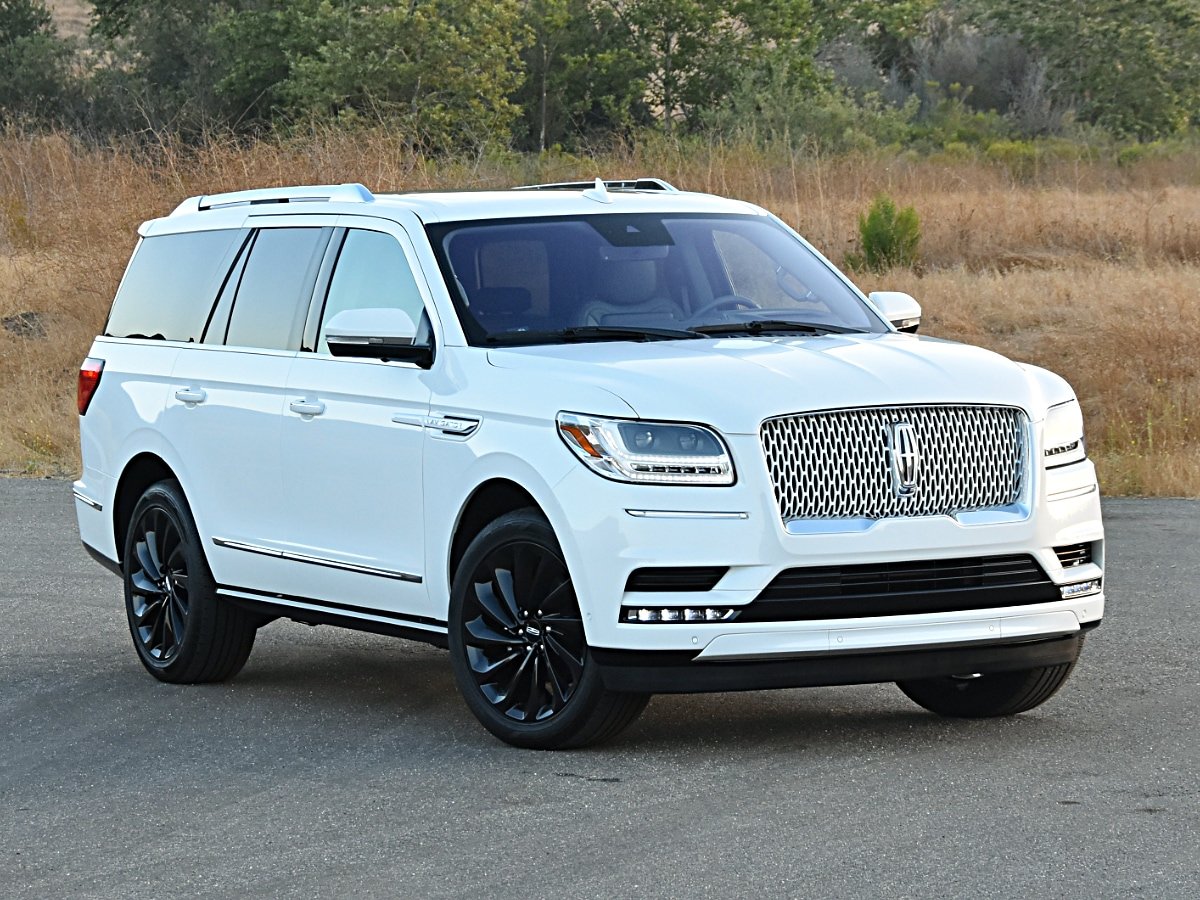
According to CarGurus experts, the overall rating for the 2020 Toyota 4Runner is 6.8 out of 10, while the 2020 Lincoln Navigator scores 8.2 out of 10. Based on these ratings, the 2020 Lincoln Navigator is the recommended choice for those seeking a luxurious, spacious, and technologically advanced SUV.
Choose the 2020 Toyota 4Runner if:
- You prioritize off-road capability and rugged design.
- You prefer a vehicle with a straightforward, utilitarian attitude.
- You value reliability and longevity in a V6 engine.


Choose the 2020 Lincoln Navigator if:
- You seek a luxurious and spacious interior with advanced comfort features.
- You require a high towing capacity and sophisticated towing assistance.
- You appreciate a comprehensive suite of safety and driver assistance technologies.


CarGurus highlights
According to CarGurus experts, the overall rating for the 2020 Toyota 4Runner is 6.8 out of 10, while the 2020 Lincoln Navigator scores 8.2 out of 10. Based on these ratings, the 2020 Lincoln Navigator is the recommended choice for those seeking a luxurious, spacious, and technologically advanced SUV.
Choose the 2020 Toyota 4Runner if:
Shop Now- You prioritize off-road capability and rugged design.
- You prefer a vehicle with a straightforward, utilitarian attitude.
- You value reliability and longevity in a V6 engine.


Choose the 2020 Lincoln Navigator if:
Shop Now- You seek a luxurious and spacious interior with advanced comfort features.
- You require a high towing capacity and sophisticated towing assistance.
- You appreciate a comprehensive suite of safety and driver assistance technologies.


By: CarGurus + AI
At CarGurus, our team of experienced automotive writers remain at the heart of our content operation, conducting hands-on car tests and writing insightful guides that are backed by years of industry experience. To complement this, we are harnessing AI to make our content offering more diverse and more helpful to shoppers than ever. To achieve this, our AI systems are based exclusively on CarGurus content, ratings and data, so that what we produce is both unique to CarGurus, and uniquely helpful to car shoppers.

