2020 Hyundai Kona vs 2020 Honda CR-V

Overview | |
MSRP$20,300 | MSRP$25,150 |
Listings180 | Listings220 |
Ratings & Reviews | |
User Reviews | User Reviews |
Expert reviews6.8 out of 10 | Expert reviews7.5 out of 10 |
Pros
Cons
| Pros
Cons
|
2020 Hyundai Kona Reviews SummaryThe Hyundai Kona subcompact SUV is one of the smallest cars you can buy with all-wheel drive. It competes in a class of four-door hatchbacks with the lifted suspensions and higher driving positions that crossover buyers want—and with the same generous list of convenience and safety features that come on larger crossovers. We last tested the Kona when it came out for 2018, but a new trim level and more standard driver assists are the major changes for 2020. For what Hyundai charges, the Kona is cramped and the interior disappoints, yet exterior style and on-road performance are spectacular. | |
2020 Honda CR-V Reviews SummaryHonda’s compact SUV has been satisfying buyers for more than two decades, with more than five million CR-V’s sold. Such a legacy means the CR-V has long had its wrinkles smoothed out into a comfortable and capable crossover package that’s only downside may be its sheer inoffensiveness. The 2020 model year saw engine and safety upgrades, which improve fuel efficiency and help to make Honda’s bestseller an even better value. | |
No video found | |
Popular Features & Specs | |
Engine2.0L 147 hp I4 | Engine1.5L 190 hp I4 |
Drive TrainFWD | Drive TrainFWD |
Seating Capacity5 | Seating Capacity5 |
Horsepower147 hp @ 6200 rpm | Horsepower190 hp @ 5600 rpm |
MPG City27 | MPG City28 |
MPG Highway33 | MPG Highway34 |
Engine | |
Engine Name2.0L 147 hp I4 | Engine Name1.5L 190 hp I4 |
Torque132 lb-ft @ 4500 rpm | Torque179 lb-ft @ 2000 rpm |
Horsepower147 hp @ 6200 rpm | Horsepower190 hp @ 5600 rpm |
DrivetrainFWD | DrivetrainFWD |
Fuel Economy | |
MPG City27 | MPG City28 |
MPG Highway33 | MPG Highway34 |
Interior | |
Seating Capacity5 | Seating Capacity5 |
Safety | |
Front Crash Overall5 | Front Crash Overall5 |
Side Crash Overall5 | Side Crash Overall5 |
Dimensions & Capacity | |
Cargo Space19.2 cu ft | Cargo Space39.2 cu ft |
Curb Weight2890 lbs | Curb Weight3337 lbs |
Height61.0 in | Height66.1 in |
Length164.0 in | Length182.1 in |
Width70.9 in | Width73.0 in |
Wheelbase102.4 in | Wheelbase104.8 in |
Maximum Payload1089 lbs | Maximum Payload1358 lbs |
Number of doors4 | Number of doors4 |
Maximum Towing Capacity | Maximum Towing Capacity1500 lbs |
Overview | ||
MSRP | $20,300 | $25,150 |
Listings | ||
Ratings & Reviews | ||
User reviews | ||
Expert reviews | 6.8 out of 10Read full review | 7.5 out of 10Read full review |
Pros & cons | Pros
Cons
| Pros
Cons
|
Summary | The Hyundai Kona subcompact SUV is one of the smallest cars you can buy with all-wheel drive. It competes in a class of four-door hatchbacks with the lifted suspensions and higher driving positions that crossover buyers want—and with the same generous list of convenience and safety features that come on larger crossovers. We last tested the Kona when it came out for 2018, but a new trim level and more standard driver assists are the major changes for 2020. For what Hyundai charges, the Kona is cramped and the interior disappoints, yet exterior style and on-road performance are spectacular. | Honda’s compact SUV has been satisfying buyers for more than two decades, with more than five million CR-V’s sold. Such a legacy means the CR-V has long had its wrinkles smoothed out into a comfortable and capable crossover package that’s only downside may be its sheer inoffensiveness. The 2020 model year saw engine and safety upgrades, which improve fuel efficiency and help to make Honda’s bestseller an even better value. |
Video | No video found | |
Popular Features & Specs | ||
Engine | 2.0L 147 hp I4 | 1.5L 190 hp I4 |
Drive Train | FWD | FWD |
Seating Capacity | 5 | 5 |
Horsepower | 147 hp @ 6200 rpm | 190 hp @ 5600 rpm |
MPG City | 27 | 28 |
MPG Highway | 33 | 34 |
Engine | ||
Engine Name | 2.0L 147 hp I4 | 1.5L 190 hp I4 |
Torque | 132 lb-ft @ 4500 rpm | 179 lb-ft @ 2000 rpm |
Horsepower | 147 hp @ 6200 rpm | 190 hp @ 5600 rpm |
Drivetrain | FWD | FWD |
Fuel Economy | ||
MPG City | 27 | 28 |
MPG Highway | 33 | 34 |
Interior | ||
Seating Capacity | 5 | 5 |
Safety | ||
Front Crash Overall | 5 | 5 |
Side Crash Overall | 5 | 5 |
Dimensions & Capacity | ||
Cargo Space | 19.2 cu ft | 39.2 cu ft |
Curb Weight | 2890 lbs | 3337 lbs |
Height | 61.0 in | 66.1 in |
Length | 164.0 in | 182.1 in |
Width | 70.9 in | 73.0 in |
Wheelbase | 102.4 in | 104.8 in |
Maximum Payload | 1089 lbs | 1358 lbs |
Number of doors | 4 | 4 |
Maximum Towing Capacity | 1500 lbs | |
The 2020 Hyundai Kona was a standout in its segment, boasting a sleek, sporty, and dramatic exterior that set it apart from its competitors. Despite being several millimetres shorter than rivals like the Honda HR-V and Toyota C-HR, the Kona's design cleverly masked its compact dimensions. The tiered lighting, tall grille, and matte plastic trim gave it a taller and wider appearance, while the slim LED running lamps and fender creases added to its visual appeal. The Kona's two-tone alloy wheels and gently sloping roof contributed to its premium vibe, making it a visually stimulating choice in the mass-market economy car category.
In contrast, the 2020 Honda CR-V's design was familiar yet fun, with a soft approach to its lines that leaned more towards a station wagon than an SUV. Its styling was car-like, with a family resemblance to Honda's sedan lineup. The CR-V's interior, however, was a mix of textures and materials, with upscale touches like wood-look trim and leather upholstery clashing with low-quality plastics. Despite this, the CR-V maintained a reputation for being a practical and modern family vehicle, offering a balance of style and functionality.


The 2020 Hyundai Kona surprised many with its impressive powertrain and chassis. Its 1.6-litre turbocharged inline-four engine delivered 175 horsepower and 195 pound-feet of torque, outperforming most competitors in its segment. The 7-speed dual-clutch transmission provided quick acceleration and a satisfying driving experience, especially in sport mode. However, only the Trend and Ultimate trims featured this turbo engine, while the standard 2.0-litre engine offered 147 horsepower and 132 pound-feet of torque. The Kona's handling was commendable, with fast steering and a stable suspension, though it was noisier and stiffer compared to rivals like the HR-V and CX-30. Fuel efficiency was average for its class, with AWD models consuming 9.0 L/100 km in the city and 8.0 on the highway.
The 2020 Honda CR-V came equipped with a 1.5-litre turbocharged engine across all trims, producing 190 horsepower and 179 pound-feet of torque. Paired with a continuously variable transmission (CVT), the CR-V offered a smooth and efficient driving experience. While the CVT took a moment to get going, it provided a credible imitation of a conventional automatic transmission. The CR-V's car-like road manners were evident in its nimble handling and firm yet comfortable chassis. Its lightweight design contributed to excellent fuel efficiency, with FWD models rated at 7.7 L/100 km combined and AWD models at 8.1, making it one of the most efficient non-hybrid options in its class.
The 2020 Hyundai Kona struggled with interior space, offering seating for four and a cramped cargo area. With only 544 litres of cargo space and 1,296 litres with the rear seats folded, it lagged behind competitors like the Honda HR-V and Kia Soul. Despite its easy-to-use controls and good sightlines, the Kona's utility was limited, resembling a small hatchback more than a true crossover.
In contrast, the 2020 Honda CR-V excelled in interior space and practicality. Its cabin was roomy, with excellent head- and legroom for both front and rear passengers. The CR-V's clever storage solutions, such as the deep centre console and two-position load floor, enhanced its versatility. With up to 1,110 litres of cargo space and smart design features, the CR-V was well-suited for families and those needing ample storage.
The 2020 Hyundai Kona offered a solid list of standard features, including a 7-inch touchscreen with Apple CarPlay and Android Auto, Bluetooth, and heated front seats. Higher trims like the Luxury and Ultimate added a sunroof, adaptive cruise control, and an 8-inch touchscreen with navigation. The Kona's lane-centring abilities impressed, though its adaptive cruise control lacked stop-and-go functionality.
The 2020 Honda CR-V's infotainment system showed its age, with a standard 7-inch touchscreen that felt small compared to competitors. The system lacked hard buttons, making it challenging to operate, and its integration of Apple CarPlay and Android Auto was less seamless. However, the CR-V offered plenty of USB ports and a wireless phone charger on higher trims, ensuring connectivity for all passengers.
The 2020 Hyundai Kona earned high safety ratings, with five stars from the NHTSA and a Top Safety Pick from the IIHS. Standard safety features included forward emergency braking, lane-keep assist, and a driver attention monitor. However, pedestrian detection was limited to the Ultimate trim, and the Kona lacked front knee and rear side airbags.
The 2020 Honda CR-V came standard with the Honda Sensing suite, offering forward-collision warning, lane departure warning, and adaptive cruise control across all trims. It received five stars from the NHTSA and a Top Safety Pick from the IIHS, though lower trims had less effective halogen headlights. A recall for a rear subframe issue affected a small number of vehicles.
CarGurus highlights
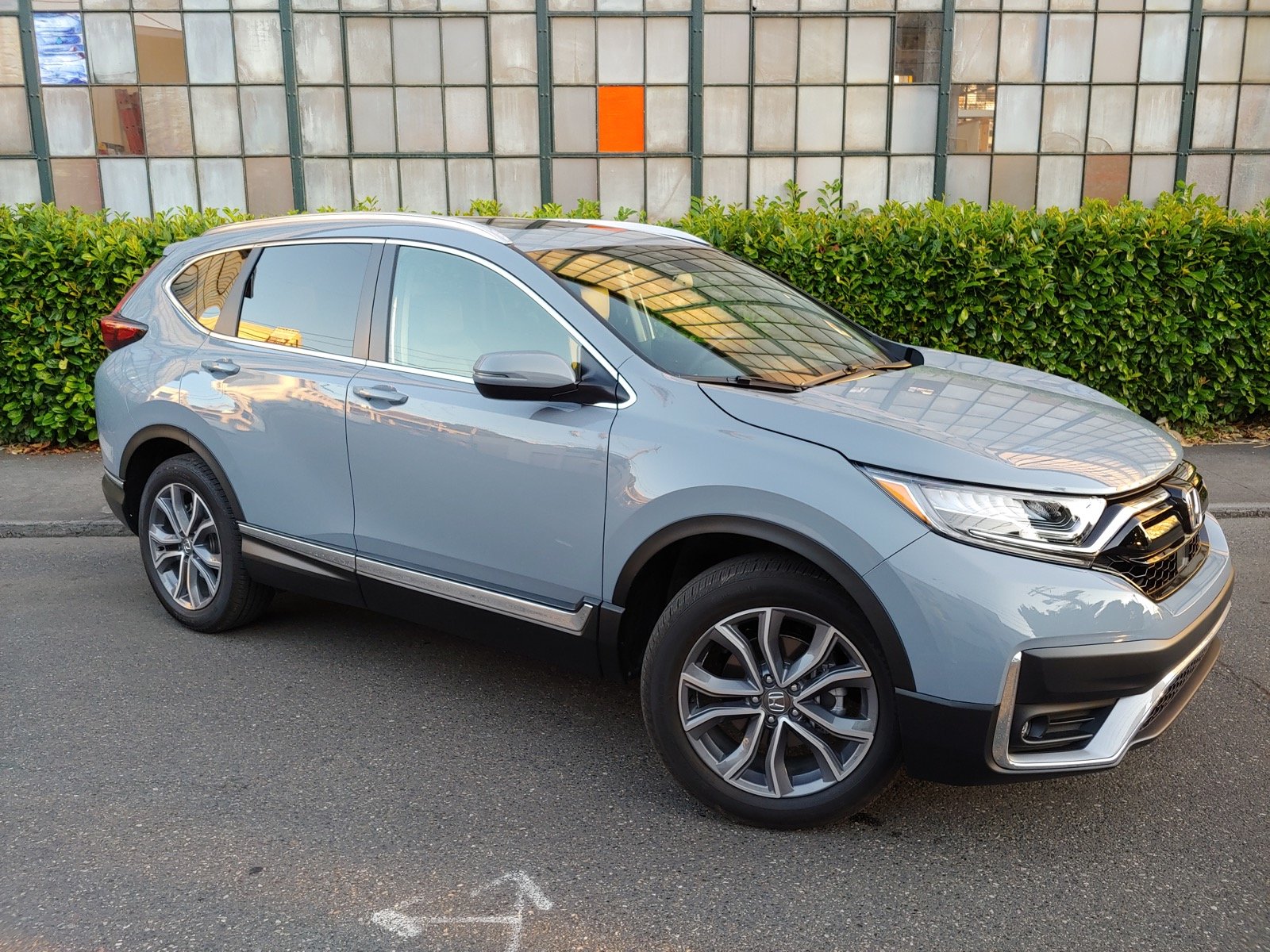
According to CarGurus experts, the overall rating for the 2020 Hyundai Kona is 6.8 out of 10, while the 2020 Honda CR-V scores 7.5 out of 10. Based on these ratings, the 2020 Honda CR-V is the recommended choice, offering a better balance of practicality, efficiency, and safety features.
Choose the 2020 Hyundai Kona if:
- You prioritize a sporty and visually appealing exterior design.
- You seek a powerful turbocharged engine with strong acceleration.
- You value a comprehensive list of standard features at an affordable price.


Choose the 2020 Honda CR-V if:
- You need a spacious and practical interior with ample cargo space.
- You prefer a smooth and efficient driving experience with excellent fuel economy.
- You want a comprehensive suite of standard safety features for peace of mind.


CarGurus highlights
According to CarGurus experts, the overall rating for the 2020 Hyundai Kona is 6.8 out of 10, while the 2020 Honda CR-V scores 7.5 out of 10. Based on these ratings, the 2020 Honda CR-V is the recommended choice, offering a better balance of practicality, efficiency, and safety features.
Choose the 2020 Hyundai Kona if:
Shop Now- You prioritize a sporty and visually appealing exterior design.
- You seek a powerful turbocharged engine with strong acceleration.
- You value a comprehensive list of standard features at an affordable price.


Choose the 2020 Honda CR-V if:
Shop Now- You need a spacious and practical interior with ample cargo space.
- You prefer a smooth and efficient driving experience with excellent fuel economy.
- You want a comprehensive suite of standard safety features for peace of mind.


By: CarGurus + AI
At CarGurus, our team of experienced automotive writers remain at the heart of our content operation, conducting hands-on car tests and writing insightful guides that are backed by years of industry experience. To complement this, we are harnessing AI to make our content offering more diverse and more helpful to shoppers than ever. To achieve this, our AI systems are based exclusively on CarGurus content, ratings and data, so that what we produce is both unique to CarGurus, and uniquely helpful to car shoppers.

