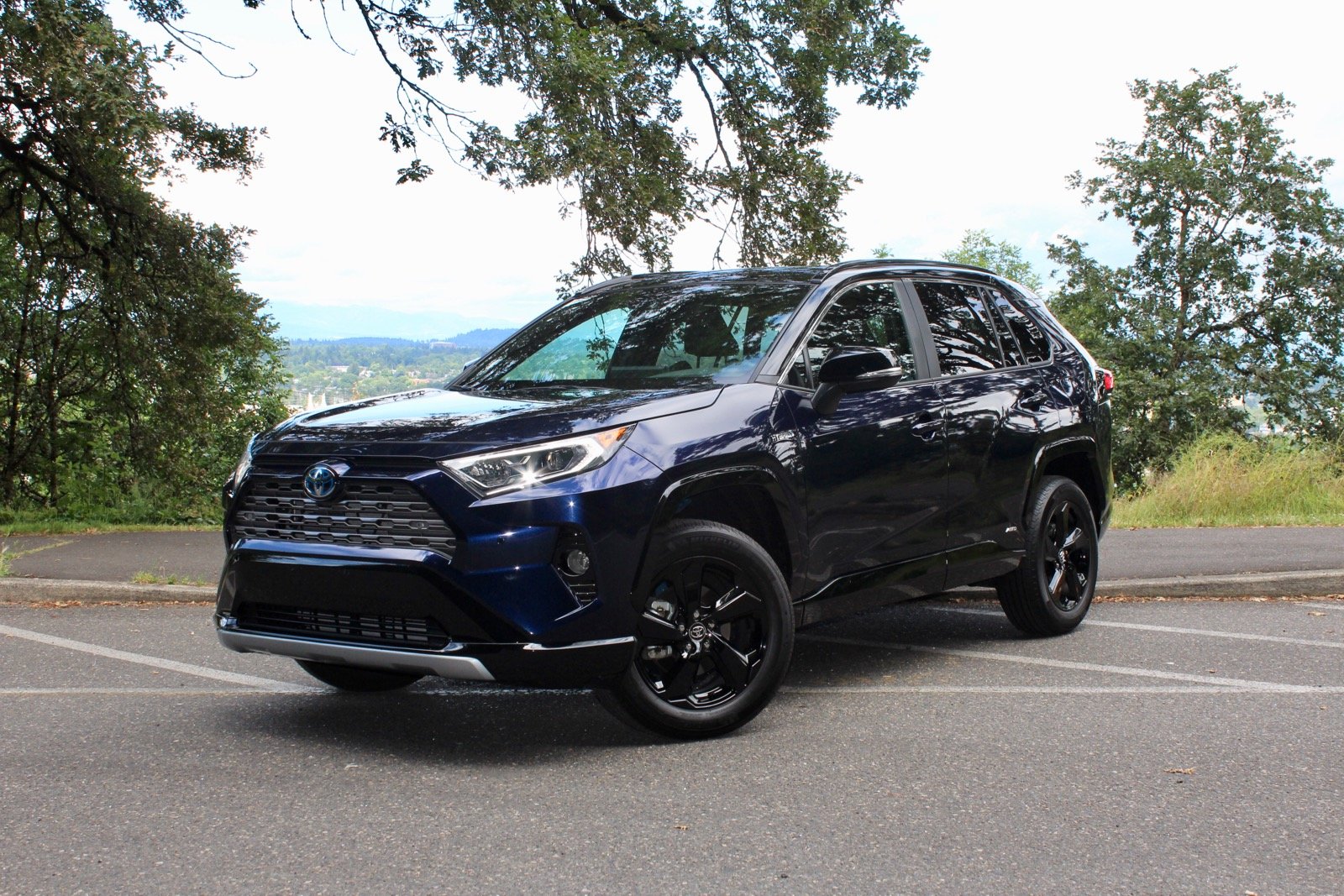
2020 Hyundai Kona Reviews, Pricing & Specs





Pros & cons
What we like
Stylish design
Fun to drive
What to consider
Poor value for money
Not much cargo space
The CarGurus verdict
Among subcompact crossovers, the 2020 Hyundai Kona is now the best to drive instead of being the best value.
The Hyundai Kona subcompact SUV is one of the smallest cars you can buy with all-wheel drive. It competes in a class of four-door hatchbacks with the lifted suspensions and higher driving positions that crossover buyers want—and with the same generous list of convenience and safety features that come on larger crossovers. We last tested the Kona when it came out for 2018, but a new trim level and more standard driver assists are the major changes for 2020. For what Hyundai charges, the Kona is cramped and the interior disappoints, yet exterior style and on-road performance are spectacular.
out of 10 expert review
Look & feel
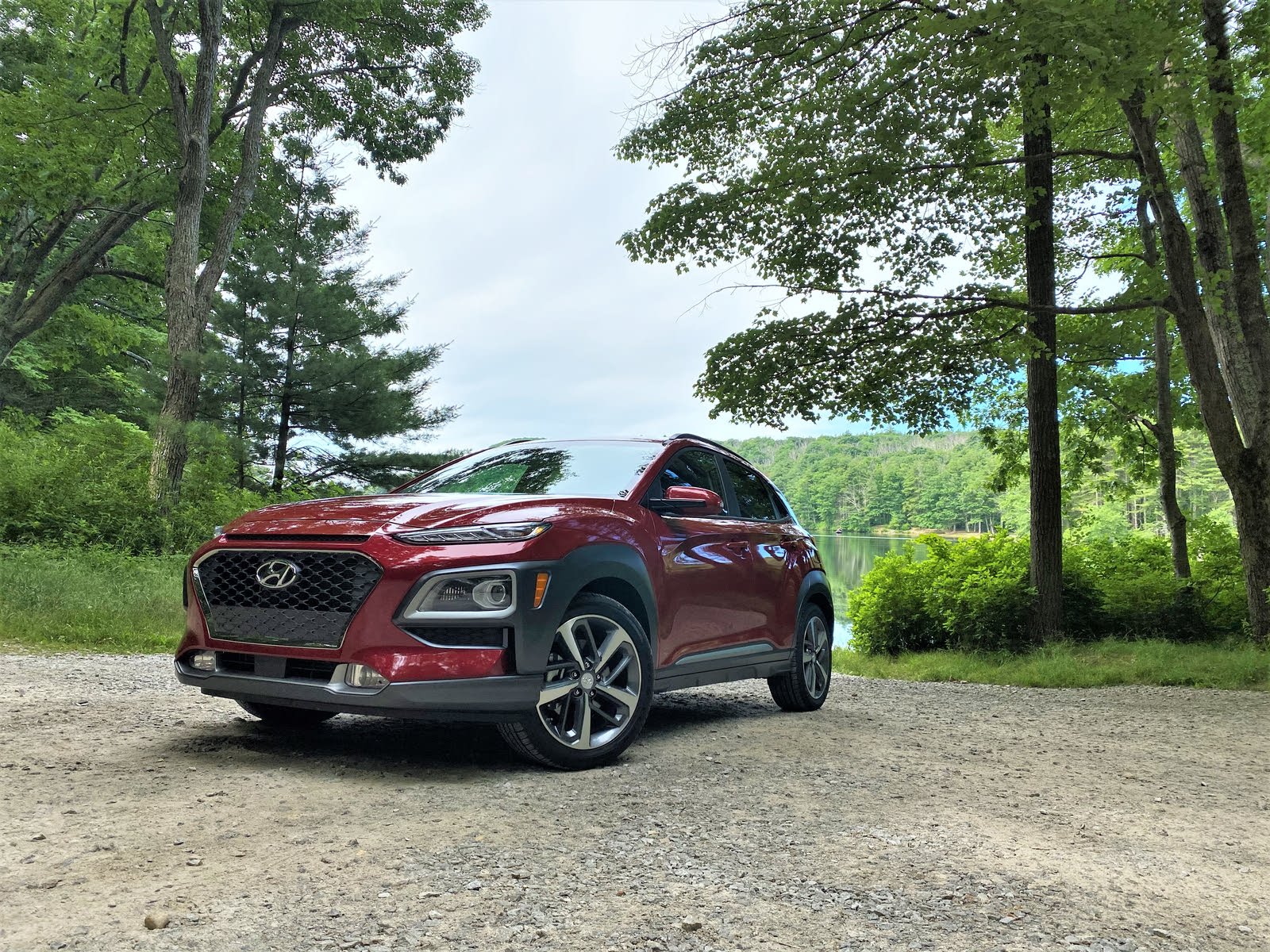
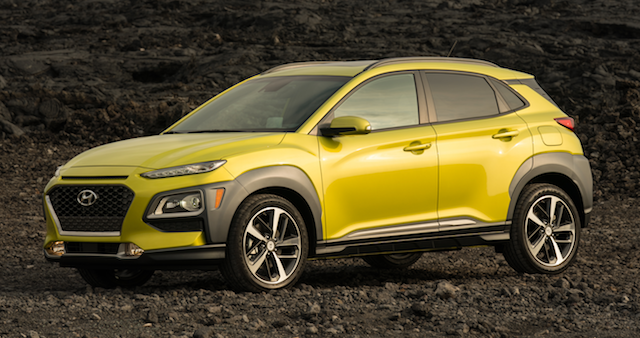
The Ford EcoSport is the smallest new car available with all-wheel drive (AWD), and it looks dreadful. Larger in every dimension, the Hyundai Kona looks exciting. Those extra millimetres aren't the reason. It's how Hyundai exploited the Kona's tiny footprint to produce a sleek, sporty, and dramatic exterior—for a mass-market economy car priced just above $20,000. The Kona is several millimetres shorter than all of its other competitors (Honda HR-V, Toyota C-HR, Mazda CX-30, Subaru Crosstrek, Nissan Kicks, Nissan Qashqai, Jeep Renegade, Buick Encore, Kia Seltos, and Kia Soul). Those cars are already petite. The challenge in making them attractive—to mask the inherent stubbiness of small, short-wheelbase vehicles with tall roofs—is a car designer's most difficult task. The Kona demonstrates the glaring difference between good and great car designs—and these days, it's a feat that doesn't require millions of extra dollars to get right.
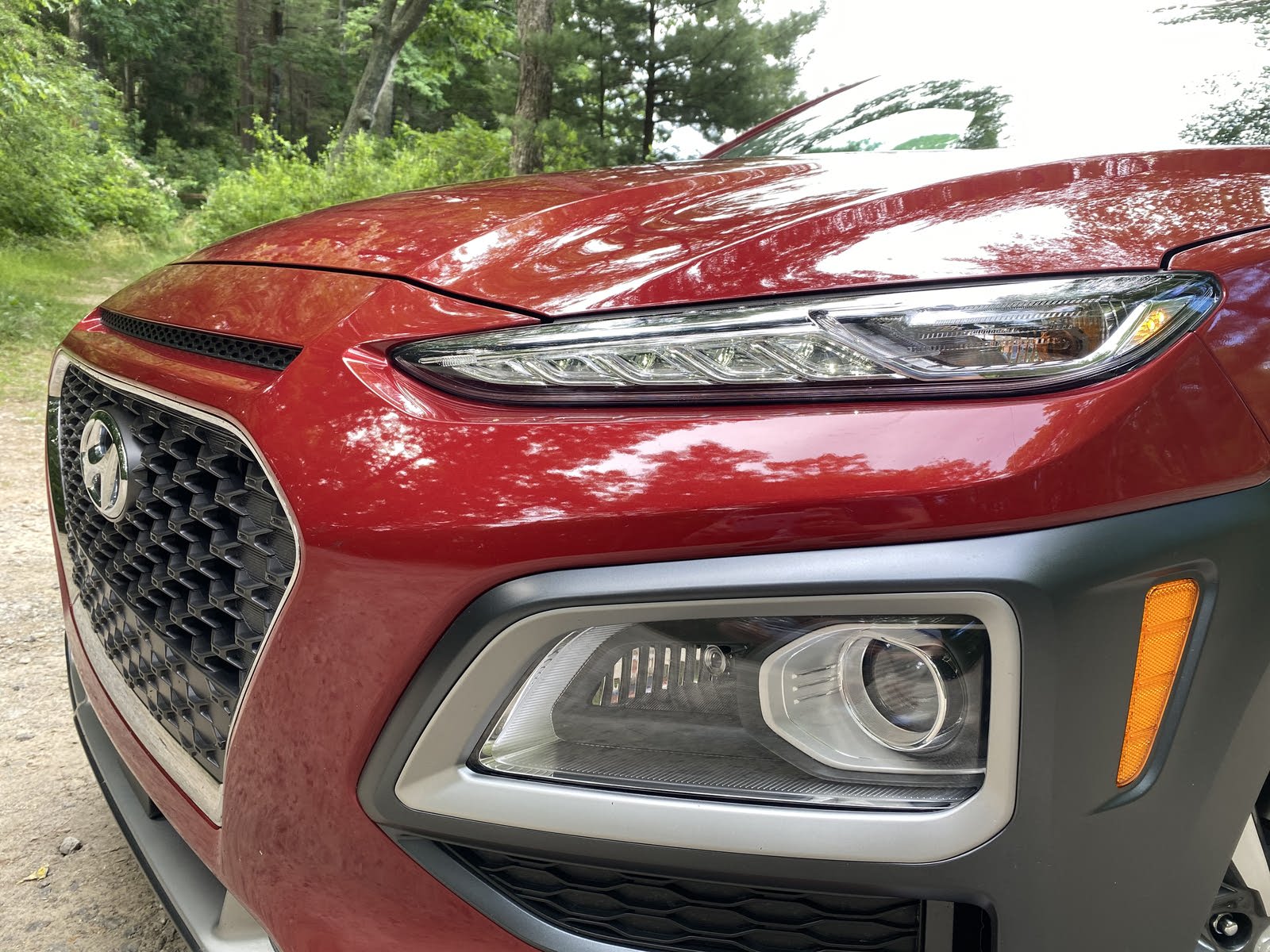
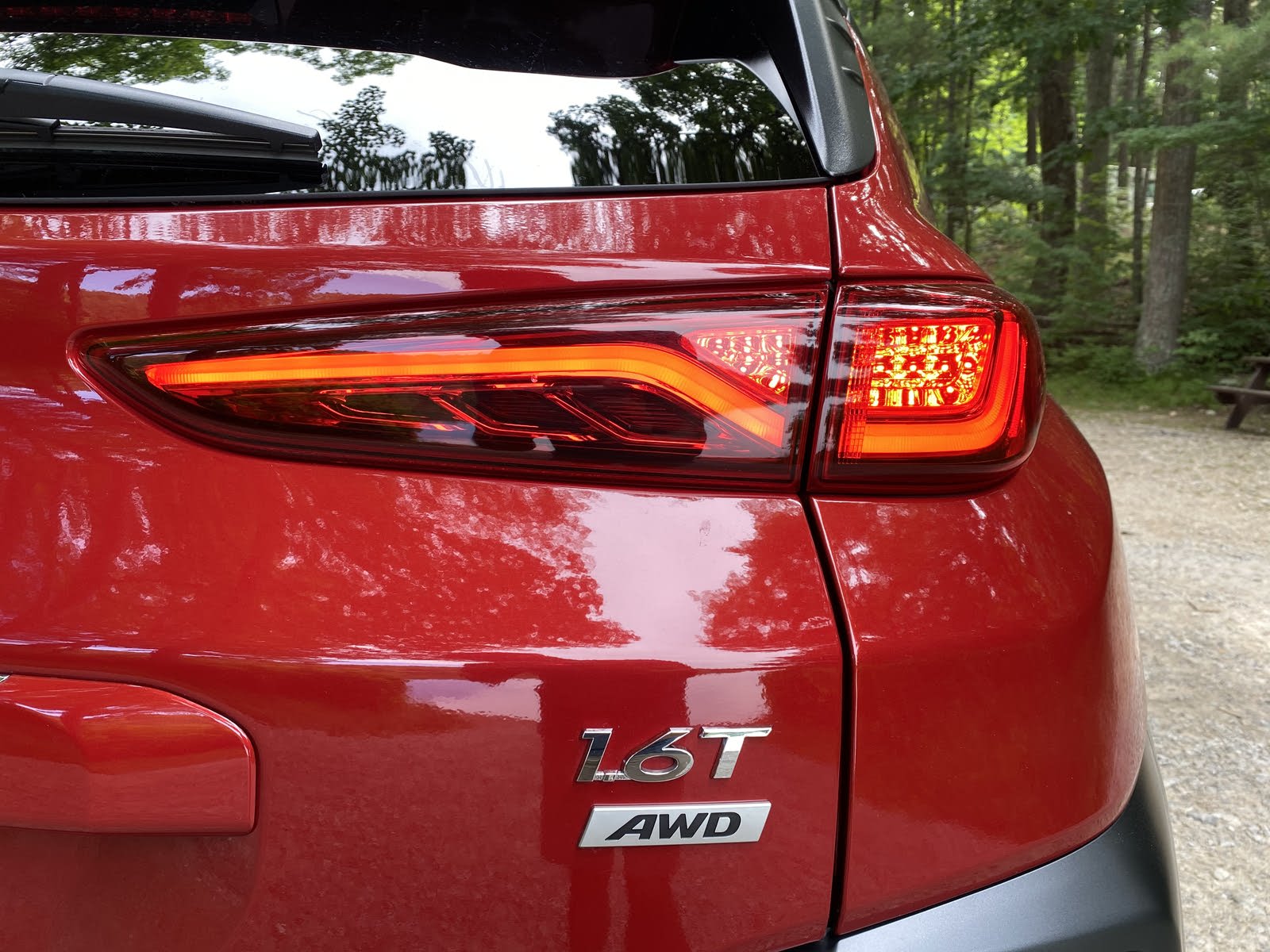
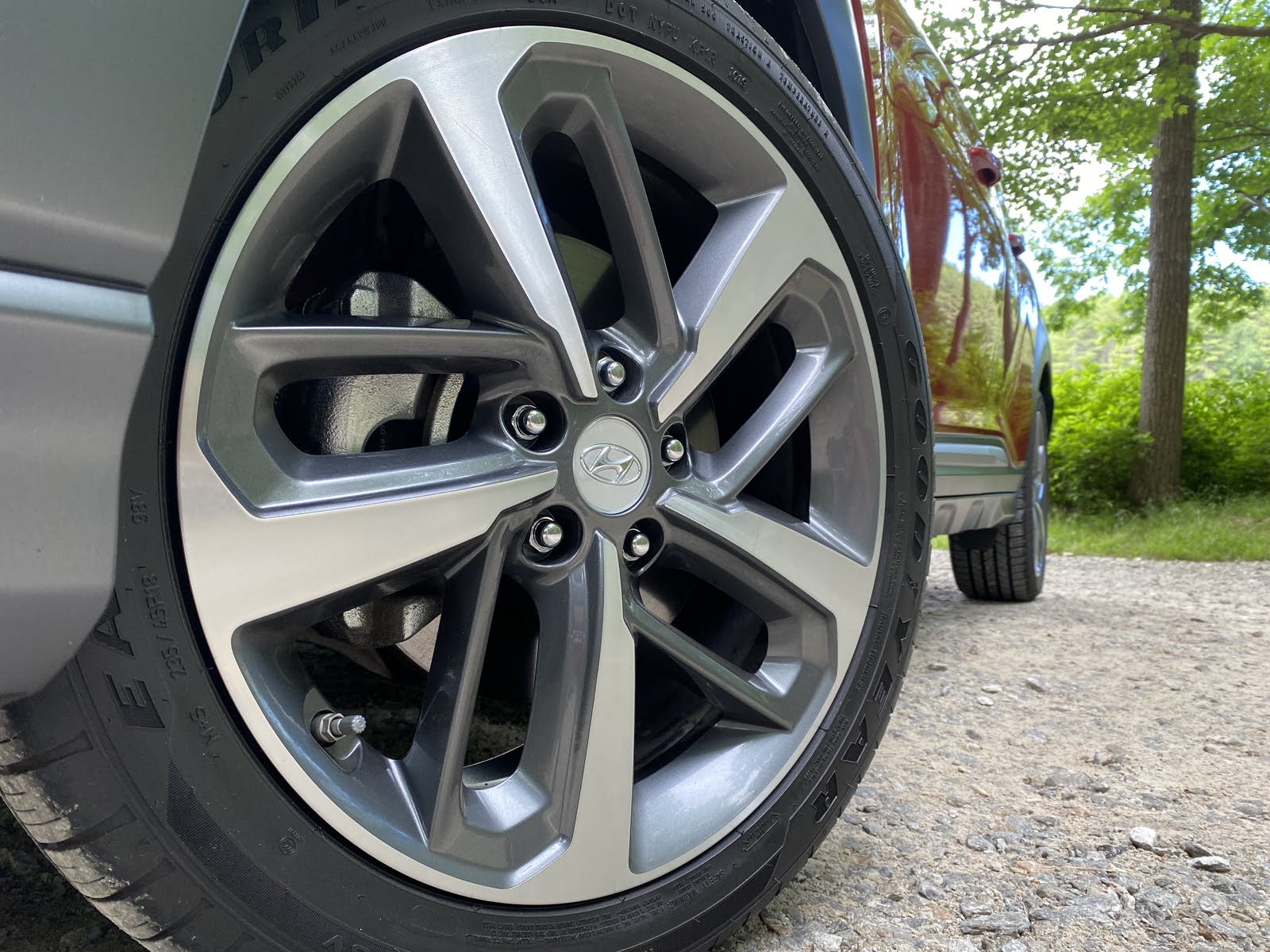
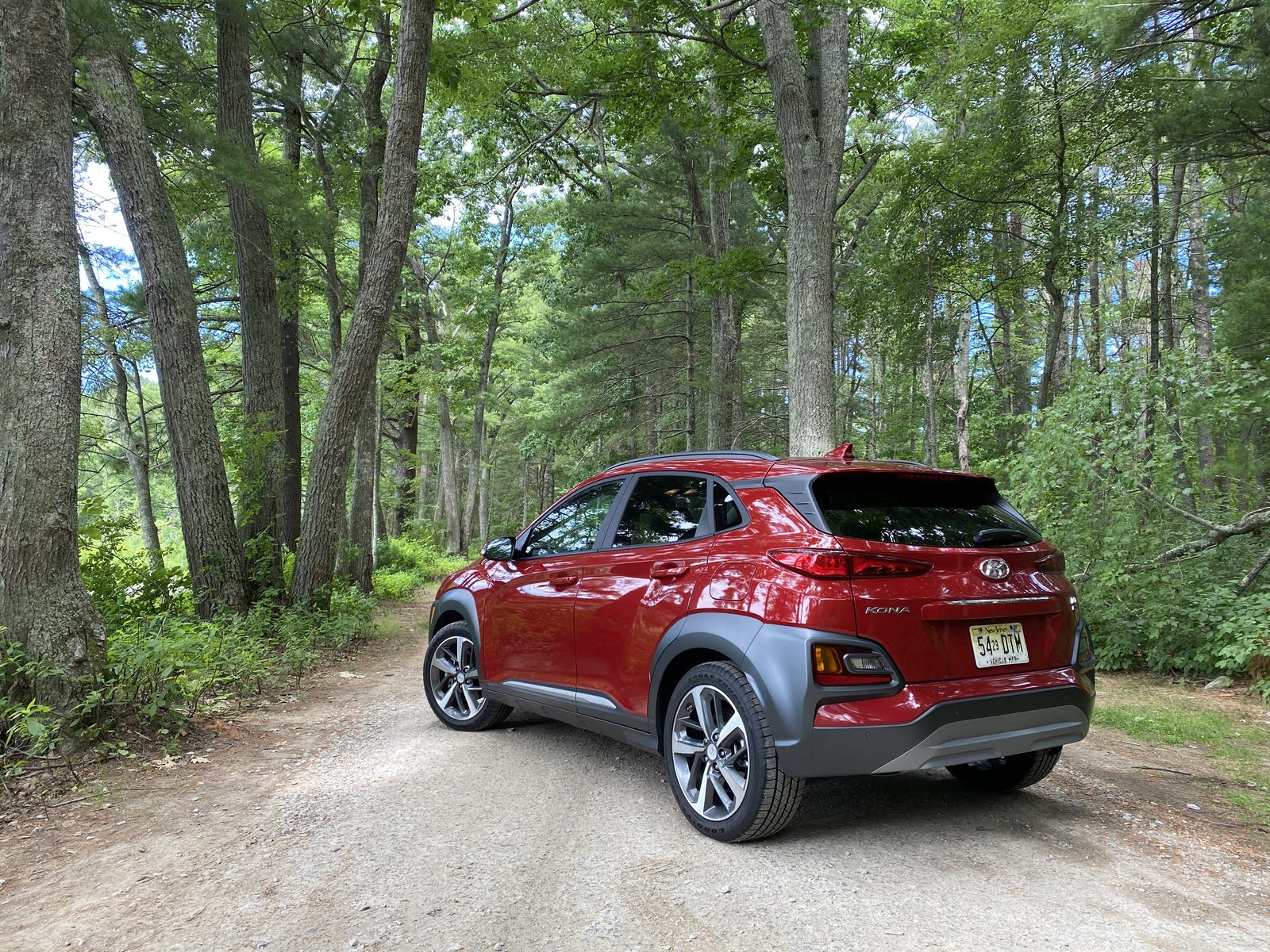
Everything about the Kona's exterior is visually stimulating. The tiered lighting up front, stacked around a tall grille and chunky matte plastic trim cutting into the body, makes the Kona appear taller and wider than it is. Slim LED running lamps above, headlights at the centre spaced to the car's edges, and two more optional fog lights positioned at the bumper's lowest edge create this effect. More details impress, like how the fender creases trace from the running lamps, fade at the front doors, and reemerge at the rear fenders to direct your eyes to the equally thin taillights. Black trim extends upward from the door sills, and darker black trim surrounds the upper rear hatch to help shrink the car's mass. Add two-tone alloy wheels (up to 18 inches), a gently sloping roof, a ground-hugging stance that's still high enough to feel like a small SUV, and you have a car that gives off a premium vibe from every angle. Trend and Ultimate models come with the larger wheels and additional gray trim to offset the black sills and rear bumper. The second-from-the-bottom Trend has a unique black-painted roof and pillars. Regardless, all trim levels look great.
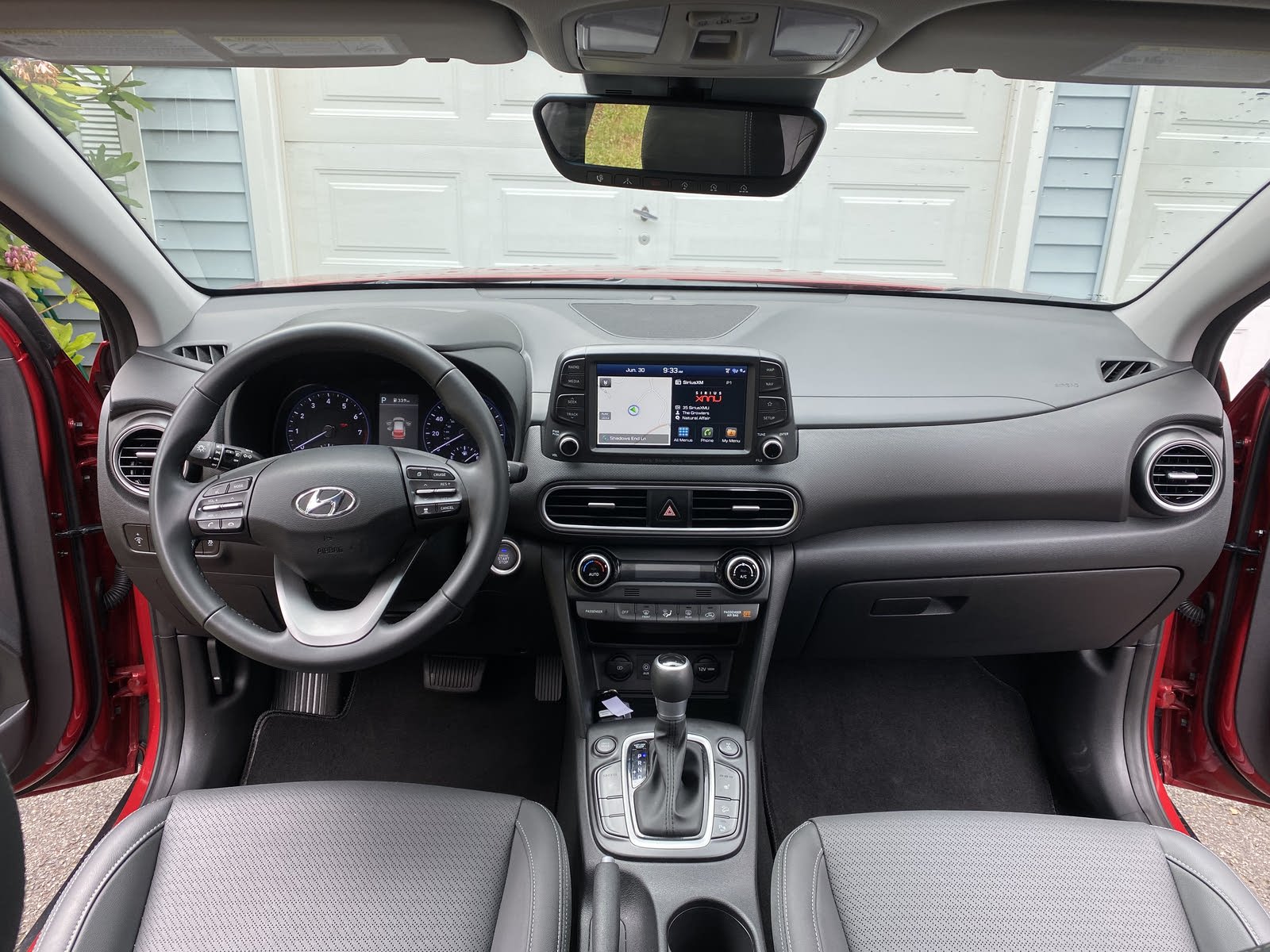
Unfortunately, just as we found in 2018, the interior can't match the exterior's emotion or quality. Hard, dull plastics and lackluster finishes pervade the plain cabin. Ordering the Kona Ultimate in Orange, Red, or Lime colour packs will paint the trim surrounding the air vents, gear selector, and engine start button in those bright colours. Plus, it adds the same colour for the steering wheel and seat stitching. The light gray seats, dash, and door colours are a no-cost, fancier option compared to my test car's all-black cabin, and the gray leather seats include black piping. The buttons and switchgear feel good, the screens are high-res, and the layout is acceptable. This is all good stuff. But when you compare the fit and finish of the CX-30, C-HR, or the HR-V, you'll recognize the Kona is many steps below in tactile quality and overall expression. Maybe that won't disappoint you. But if you liked the exterior as much as we did, it should.
Performance
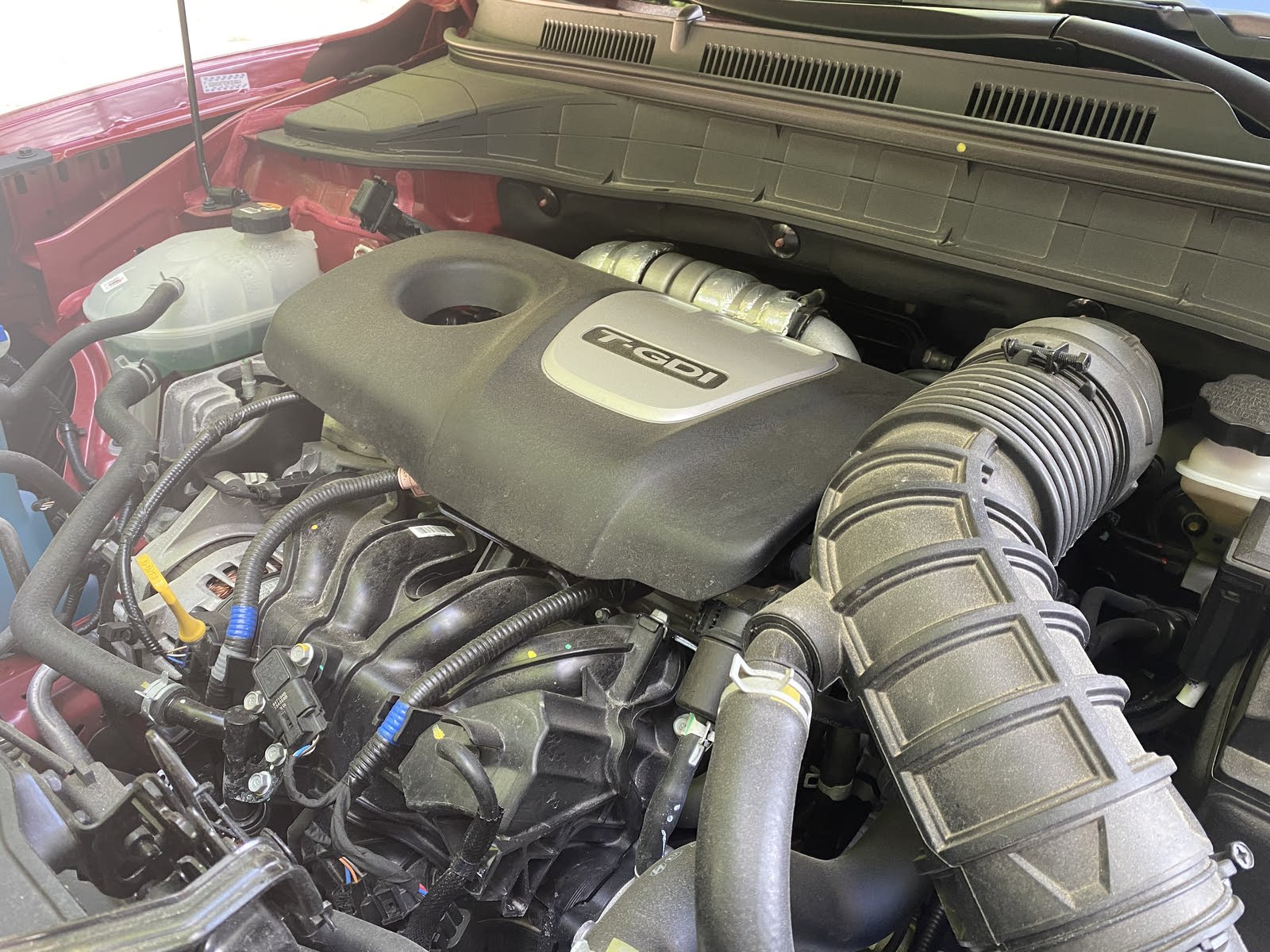
Would you expect Hyundai to bring the segment's best powertrain and chassis? Most believe that job belongs to Mazda and Honda. The Kona's 1.6-litre turbocharged inline-four cylinder engine is a big little bright spot, with 175 horsepower and 195 pound-feet of torque—way more than anything in the segment except its corporate cousin, the Kia Seltos Turbo. These are big numbers for small cars.
That torque, coupled through a 7-speed dual-clutch transmission (DCT), comes on early at 1,500 rpm and stays flat until 4,500. Remember, that's peak torque. Meaning that as soon as you step off idle, the Kona is already producing more of it than most of the competitors do with their engines racing at high revs. The result, in either normal or sport mode, is strong acceleration off the line, at mid-range, and when passing. It's so much better than any of the competitors and it instills complete confidence when merging onto highways. The DCT is fast to react and a great partner to an eager engine. Hearing the turbo whoosh in the lower gears accelerating up hills is satisfying, too. This engine doesn't quit, and it does all this on regular octane fuel.
However, only the Trend and Ultimate trims come with the turbo. The standard engine is on par with the slower, weaker competition: a naturally aspirated 2.0-litre inline-four with 147 hp and 132 lb-ft. Still, where most other cars offer a continuously variable transmission (CVT), Hyundai equips the non-turbo Kona models with a traditional (and more responsive) 6-speed automatic transmission. Front-wheel drive (FWD) is standard in Canada on the two entry-level grades, while all-wheel drive is optional on all grades with the 2.0-litre engine and standard with the 1.6-litre turbo. The drivetrain includes torque vectoring as equipment, which can brake the inner wheels to improve turn-in around tight corners. Paddle shifters are the one missing element, though you can shift manually with the gear selector.
From a noise perspective, these engines sure buzz and vibrate more than they ought to, plus the cabin isn't as well insulated, so the driving experience is always loud when compared to more refined cars like the HR-V and CX-30. The ride is stiffer, too. But the Kona surprises again when the road twists. The steering is fast and direct. The suspension is tight, stable, and allows minimal roll. The wide 235-mm tires on our test car offered lots of steady grip. AWD models pair with an independent rear suspension, instead of the torsion beam setup on FWD models, which pays dividends when driving swiftly on narrow back roads. With this setup, Hyundai proves it can achieve a similar level of handling and road feel as you'd find in a Mercedes-Benz GLA or a BMW X2—no joke, we've driven them both. Even on the highway at speed, the Kona tracks straight and isn't perturbed by expansion joints or cracks in the pavement. Clearly, a lot of R&D dollars went to the chassis, and we're amazed and gratified Hyundai went to the trouble. It's delightful.
Fuel efficiency isn't great for such a small car, but then again, no car in this class is exceptional here. If you're going to add AWD and lift the body, you're adding weight and drag. There's no getting around that. Over roughly 550 mostly highway kilometres, we averaged 8.1 litres per 100 kilometres. Natural Resources Canada estimates the Kona 1.6T AWD at 9.0 L/100 km city, 8.0 highway, and 8.6 combined. The 2.0 AWD returns 9.2 city/7.8 hwy/8.6 combined. To save more money, order FWD for 7.9 L/100 km combined (and as low as 7.0 L/100 km in highway driving). The battery-powered Kona Electric is covered separately.
Form & function
The Kona becomes a burden when it's time to move people and things other than yourself. Seating for four is fine. The rear has a scalloped roof for more headroom, and rear legroom is also about average for this class of car. That's to say that you can sit one adult behind another so long as neither is particularly tall. Where the Kona comes up short is in luggage space; it has one of the smallest cargo holds by significant margins. It offers 544 litres of cargo space and 1,296 litres with the rear seats folded.
The Honda HR-V is barely longer and swallows 688/1,665 litres, plus it has flip-up rear seats to fit extra-tall objects like bikes or plants. On the Buick Encore GX, the 665/1,422-litre space can take advantage of a front passenger seat that folds flat for extra-long objects. The tinier EcoSport swallows 592/1,414 litres, the Renegade can do up to 1,438 litres, and the Kicks has 1,546 litres (and 716 litres with the seats up). The Soul, up to 1,758 litres. This is the difference between taking your parents to the airport or sending them off in an Uber. The Kona can't hide how cramped it is inside.
Despite how easy it is to work the Kona's controls, its simple and fast infotainment system, and the good sightlines from the driver's seat, the Kona is supposed to be a utility vehicle. By pure function, it fails. Other cars with exterior dimensions falling within inches of the Kona have considerably more room inside. It's closer to a really small hatchback—the car most Americans don't want anymore—than a true crossover.
Technology
Every Kona has a good list of standard features. The base model comes with a 7-inch touchscreen that accepts Apple CarPlay and Android Auto and Bluetooth, plus proximity entry so you can leave the key fob in your pocket. Heated front seats and heated side mirrors also come standard.
The Kona Luxury and Ultimate trims includes a sunroof, and adaptive cruise control. The latter is new for 2020. On my Ultimate test car, which also includes an 8-inch touchscreen with navigation, we were impressed with the car's lane-centring abilities on the highway despite Hyundai not calling it Highway Driving Assistant as it does on more expensive models (because below 10 km/h, the adaptive cruise shuts off instead of allowing the Kona to stop and go).
Safety
Cost-effectiveness
What owners say
"Overall, drivers really like the 2020 Hyundai Kona for its fun driving experience, good features, and fuel efficiency. Many appreciate its responsive handling and stylish design. However, a few reviewers mentioned they were not fond of the hard plastic materials in the interior and some found the trunk space a bit small."
Features galore. Very clean used car including brand new tires and wipers. Great starter car for my last Son to begin his adventures with.
January 12, 2025The ONLY reason it got a 4 star is because I used have minivans. It's smaller, but AWESOME! Phone links right up and can use my driving apps and the seats are heated :) So easy to drive with all the safety features!
November 5, 2025I enjoy driving this car. I like the sunroof, the leather seats, all the electronics and of course the colour. I do think this car is good value, and have not found yet what it might be missing. I cant make comparisons as I dont know that much about cars.
May 16, 2024What owners say
Features galore. Very clean used car including brand new tires and wipers. Great starter car for my last Son to begin his adventures with.
January 12, 2025The ONLY reason it got a 4 star is because I used have minivans. It's smaller, but AWESOME! Phone links right up and can use my driving apps and the seats are heated :) So easy to drive with all the safety features!
November 5, 2025I enjoy driving this car. I like the sunroof, the leather seats, all the electronics and of course the colour. I do think this car is good value, and have not found yet what it might be missing. I cant make comparisons as I dont know that much about cars.
May 16, 2024Just bought one I found locally via cargurus.com. Drives beautifully, has all the features I was looking for.
September 23, 2023Love our Kona Ultimate found on CarGurus! She is like a baby shark fast smooth and agile. We were looking at Mazda cx30 and Tuscan but were around 10 grand more to get same features. We traded for our 2018 Hyundai Elantra Sport and I think the Kona would SMOKE and out handle the Elantra AND is AWD hopefully will be better in winter than Elantra. Kona also more comfy and space up front, smaller back seat and trunk but we dont need the space anyway and perfect option for 6ft husband with 5 Ft wife who both like fast cars. Thanks CarGurus!
November 20, 2023Great subcompact SUV. Smooth ride, all the features I could want at a very reasonable price for a used vehicle. The acceleration is a little slow at the star but then it kicks in and away I go!
April 24, 2023Great car. Fun to drive and handling is very responsive. The 1.6 turbo is surprisingly strong. The entertainment system is well designed and intuitive. A couple of minor nit picks: I wish it had a heated steering wheel and a little more storage space for the driver.
December 10, 2020Great SUV with good horsepower in the Turbo Ultimate Trim. Shame interiors have a lot of hard plastic areas.
July 2, 2020Great car... good size with ample storage- well appointed w/touch screen & apple car play... safety creatures such as side lane warnings and of course AWD... and peppy too. Compared to all other SUV’s this one is stylish and unique looking... great fit & finish too - and 5 yr 100k warranty!!!
March 3, 2021I’m looking for reasons to drive my car now. Gas mileage is better than they claim. The Ultimate model has every feature you need. Power seats adjust to max comfort. Sunroof is nice. The only feature they did not include is power tailgate, no big deal
September 6, 2023Trims & specs
Base MSRP $20,300 | Seating 5 |
Engine 2.0L 147 hp I4 | Cargo Capacity 19.2 cu ft |
Combined MPG 30 | Drivetrain FWD |
Base MSRP $21,700 | Seating 5 |
Engine 2.0L 147 hp I4 | Cargo Capacity 19.2 cu ft |
Combined MPG 28 | Drivetrain AWD |
Base MSRP $27,950 | Seating 5 |
Engine 1.6L 175 hp I4 | Cargo Capacity 19.2 cu ft |
Combined MPG 30 | Drivetrain FWD |
Base MSRP $29,350 | Seating 5 |
Engine 1.6L 175 hp I4 | Cargo Capacity 19.2 cu ft |
Combined MPG 27 | Drivetrain AWD |
Base MSRP N/A | Seating N/A |
Engine N/A | Cargo Capacity N/A |
Combined MPG N/A | Drivetrain N/A |
Base MSRP N/A | Seating N/A |
Engine N/A | Cargo Capacity N/A |
Combined MPG N/A | Drivetrain N/A |
Base MSRP N/A | Seating N/A |
Engine N/A | Cargo Capacity N/A |
Combined MPG N/A | Drivetrain N/A |
Base MSRP N/A | Seating N/A |
Engine N/A | Cargo Capacity N/A |
Combined MPG N/A | Drivetrain N/A |
Base MSRP N/A | Seating N/A |
Engine N/A | Cargo Capacity N/A |
Combined MPG N/A | Drivetrain N/A |
Base MSRP N/A | Seating N/A |
Engine N/A | Cargo Capacity N/A |
Combined MPG N/A | Drivetrain N/A |
Base MSRP $23,950 | Seating 5 |
Engine 2.0L 147 hp I4 | Cargo Capacity 19.2 cu ft |
Combined MPG 30 | Drivetrain FWD |
Base MSRP $25,350 | Seating 5 |
Engine 2.0L 147 hp I4 | Cargo Capacity 19.2 cu ft |
Combined MPG 28 | Drivetrain AWD |
Base MSRP $22,100 | Seating 5 |
Engine 2.0L 147 hp I4 | Cargo Capacity 19.2 cu ft |
Combined MPG 30 | Drivetrain FWD |
Base MSRP N/A | Seating 5 |
Engine 1.6L 175 hp I4 | Cargo Capacity 19.2 cu ft |
Combined MPG 30 | Drivetrain FWD |
Base MSRP $23,500 | Seating 5 |
Engine 2.0L 147 hp I4 | Cargo Capacity 19.2 cu ft |
Combined MPG 28 | Drivetrain AWD |
Base MSRP N/A | Seating 5 |
Engine 1.6L 175 hp I4 | Cargo Capacity 19.2 cu ft |
Combined MPG 27 | Drivetrain AWD |
Base MSRP $26,100 | Seating 5 |
Engine 1.6L 175 hp I4 | Cargo Capacity 19.2 cu ft |
Combined MPG 30 | Drivetrain FWD |
Base MSRP $27,500 | Seating 5 |
Engine 1.6L 175 hp I4 | Cargo Capacity 19.2 cu ft |
Combined MPG 27 | Drivetrain AWD |


Pricing trends
Current avg. market price
$17,208
Trending down by 1.5% this month
May 2026 - November 2026