2020 Ford Escape vs 2021 Toyota 4Runner
Overview | |
MSRP$24,885 | MSRP$36,765 |
Listings300 | Listings94 |
Ratings & Reviews | |
User Reviews | User Reviews |
Expert reviews8.0 out of 10 | Expert reviews6.2 out of 10 |
Pros
Cons
| |
2020 Ford Escape Reviews SummaryIn case you didn’t hear, Ford came out with an electric crossover, calling it the Mustang Mach-E. Ford could have called it something else, but the marketing department decided to leverage the famous Mustang name to capture headlines and, hopefully, shoppers. What should not be overlooked is the fact Ford chose to make its first-ever standalone electric vehicle a crossover. This choice is a testament to how far the sport utility vehicle has come. Paired with Ford's decision to phase out sedans and hatchbacks, it's clear the company is putting all of its eggs into its trucks, SUVs, and crossovers. Suffice it to say, there is just a bit of pressure on the redesigned 2020 Ford Escape. While the Escape has been around since 2000, it came into its own in 2013 when the “One Ford” philosophy was adopted, meaning that vehicles would be sold in multiple markets around the globe. As a result, the U.S. got Europe’s Ford Kuga, rebranded as the Escape—a high-tech, handsome, and surprisingly athletic small SUV. So, with all this mind, the new Escape needs to not only be an improvement over the previous generation to compete against the rest of the compact crossover segment, it also needs to win over would-be sedan and hatchback customers. Can the 2020 Escape rise to the occasion? | |
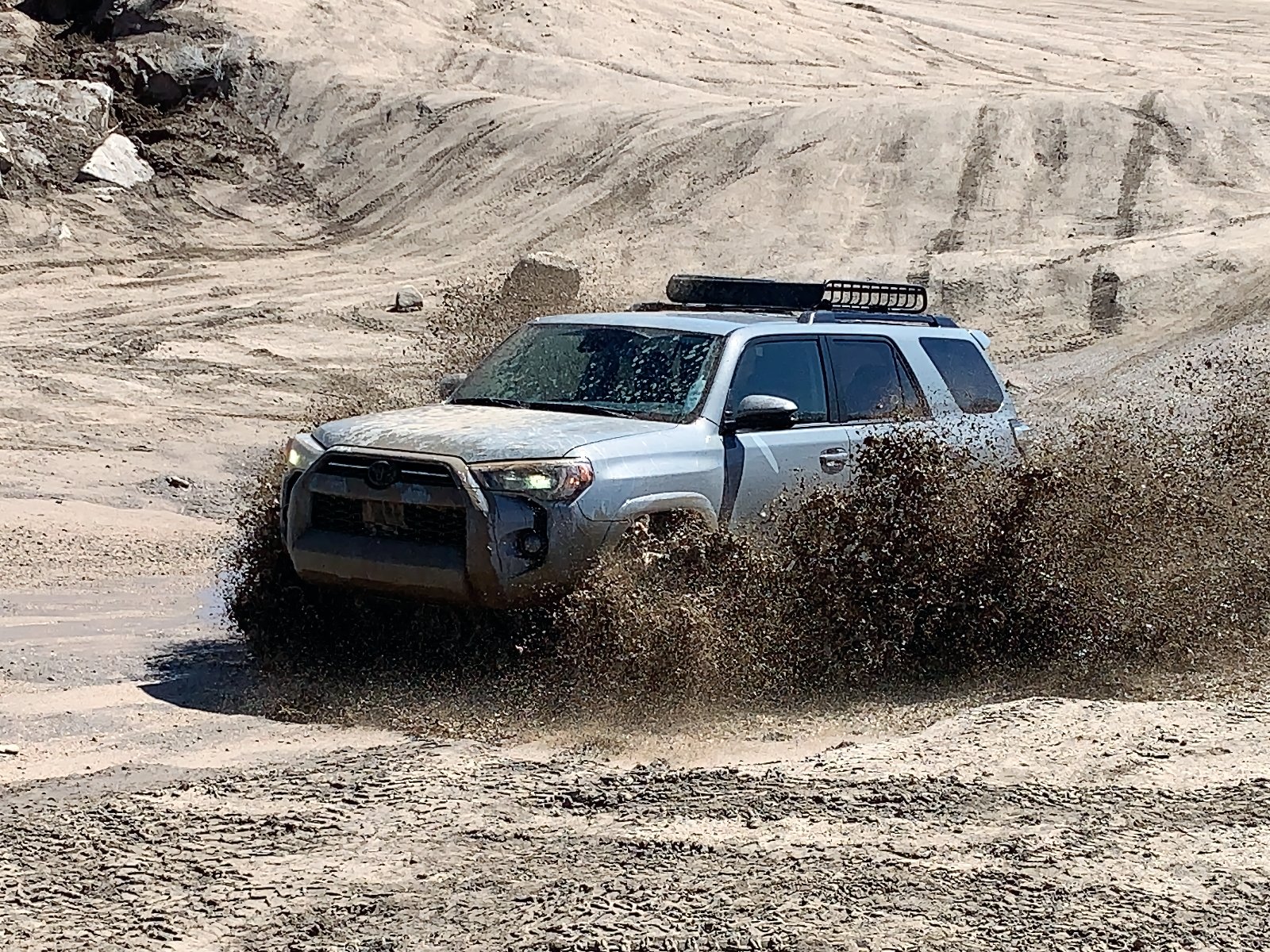
2021 Toyota 4Runner Reviews SummaryDespite its design age, poor fuel efficiency, rough ride, iffy handling, and marginal safety ratings, the current-generation Toyota 4Runner remains a popular choice in a midsize SUV. Why? Its reputation for reliability and resale value, coupled with its undeniable utility, rugged image, and go-anywhere and do-anything capability, are the selling points. And if that's why you want a 2021 Toyota 4Runner, it won't disappoint you as long as you accept its shortcomings. | |
No video found | No video found |
Popular Features & Specs | |
Engine1.5L 181 hp I3 | Engine4.0L 270 hp V6 |
Drive TrainFWD | Drive Train4X2 |
Seating Capacity5 | Seating Capacity7 |
Horsepower | Horsepower270 hp @ 5600 rpm |
MPG City27 | MPG City16 |
MPG Highway33 | MPG Highway19 |
Engine | |
Engine Name1.5L 181 hp I3 | Engine Name4.0L 270 hp V6 |
Torque | Torque278 lb-ft @ 4400 rpm |
Horsepower | Horsepower270 hp @ 5600 rpm |
DrivetrainFWD | Drivetrain4X2 |
Fuel Economy | |
MPG City27 | MPG City16 |
MPG Highway33 | MPG Highway19 |
Interior | |
Seating Capacity5 | Seating Capacity7 |
Safety | |
Front Crash Overall5 | Front Crash Overall4 |
Side Crash Overall5 | Side Crash Overall5 |
Dimensions & Capacity | |
Cargo Space37.5 cu ft | Cargo Space47.2 cu ft |
Curb Weight3299 lbs | Curb Weight4400 lbs |
Height66.1 in | Height71.5 in |
Length180.5 in | Length190.2 in |
Width85.6 in | Width75.8 in |
Wheelbase106.7 in | Wheelbase109.8 in |
Maximum Payload | Maximum Payload1700 lbs |
Number of doors4 | Number of doors4 |
Maximum Towing Capacity | Maximum Towing Capacity5000 lbs |
Standard Towing Capacity | Standard Towing Capacity5000 lbs |
Overview | ||
MSRP | $24,885 | $36,765 |
Listings | ||
Ratings & Reviews | ||
User reviews | ||
Expert reviews | 8.0 out of 10Read full review | 6.2 out of 10Read full review |
Pros & cons | Pros
Cons
| |
Summary | In case you didn’t hear, Ford came out with an electric crossover, calling it the Mustang Mach-E. Ford could have called it something else, but the marketing department decided to leverage the famous Mustang name to capture headlines and, hopefully, shoppers. What should not be overlooked is the fact Ford chose to make its first-ever standalone electric vehicle a crossover. This choice is a testament to how far the sport utility vehicle has come. Paired with Ford's decision to phase out sedans and hatchbacks, it's clear the company is putting all of its eggs into its trucks, SUVs, and crossovers. Suffice it to say, there is just a bit of pressure on the redesigned 2020 Ford Escape. While the Escape has been around since 2000, it came into its own in 2013 when the “One Ford” philosophy was adopted, meaning that vehicles would be sold in multiple markets around the globe. As a result, the U.S. got Europe’s Ford Kuga, rebranded as the Escape—a high-tech, handsome, and surprisingly athletic small SUV. So, with all this mind, the new Escape needs to not only be an improvement over the previous generation to compete against the rest of the compact crossover segment, it also needs to win over would-be sedan and hatchback customers. Can the 2020 Escape rise to the occasion? | Despite its design age, poor fuel efficiency, rough ride, iffy handling, and marginal safety ratings, the current-generation Toyota 4Runner remains a popular choice in a midsize SUV. Why? Its reputation for reliability and resale value, coupled with its undeniable utility, rugged image, and go-anywhere and do-anything capability, are the selling points. And if that's why you want a 2021 Toyota 4Runner, it won't disappoint you as long as you accept its shortcomings. |
Video | No video found | No video found |
Popular Features & Specs | ||
Engine | 1.5L 181 hp I3 | 4.0L 270 hp V6 |
Drive Train | FWD | 4X2 |
Seating Capacity | 5 | 7 |
Horsepower | 270 hp @ 5600 rpm | |
MPG City | 27 | 16 |
MPG Highway | 33 | 19 |
Engine | ||
Engine Name | 1.5L 181 hp I3 | 4.0L 270 hp V6 |
Torque | 278 lb-ft @ 4400 rpm | |
Horsepower | 270 hp @ 5600 rpm | |
Drivetrain | FWD | 4X2 |
Fuel Economy | ||
MPG City | 27 | 16 |
MPG Highway | 33 | 19 |
Interior | ||
Seating Capacity | 5 | 7 |
Safety | ||
Front Crash Overall | 5 | 4 |
Side Crash Overall | 5 | 5 |
Dimensions & Capacity | ||
Cargo Space | 37.5 cu ft | 47.2 cu ft |
Curb Weight | 3299 lbs | 4400 lbs |
Height | 66.1 in | 71.5 in |
Length | 180.5 in | 190.2 in |
Width | 85.6 in | 75.8 in |
Wheelbase | 106.7 in | 109.8 in |
Maximum Payload | 1700 lbs | |
Number of doors | 4 | 4 |
Maximum Towing Capacity | 5000 lbs | |
Standard Towing Capacity | 5000 lbs | |
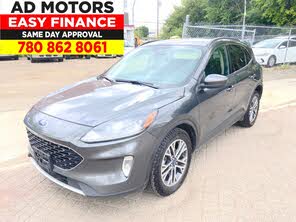
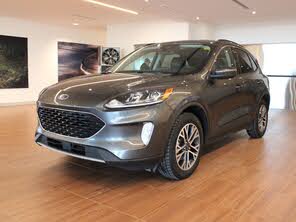
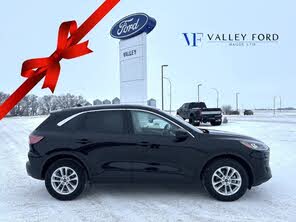
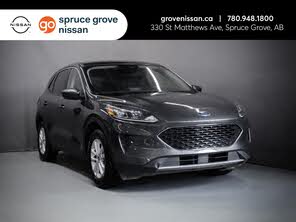
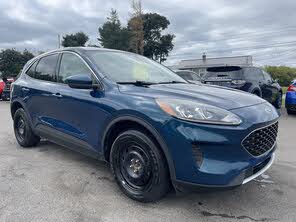
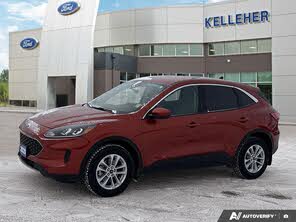
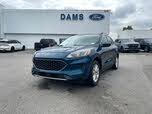
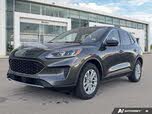
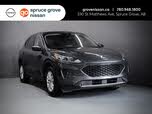
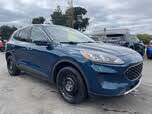
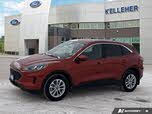
The 2020 Ford Escape was a striking compact crossover, borrowing design elements from the Ford GT supercar, with a large grille reminiscent of the Fiesta and Focus hatchbacks. Its curvaceous design marked a departure from the more upright rear end of its predecessor, which came at the cost of some practicality. Despite this, the Escape remained one of the most attractive small SUVs, trailing only behind the Mazda CX-5 and Jeep Cherokee. Inside, the Escape boasted a modern yet user-friendly cabin, featuring a fully digital instrument panel and a floating infotainment screen. The design was sleek and contemporary, with basic controls intuitively placed.
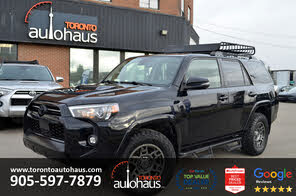
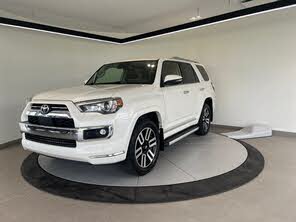
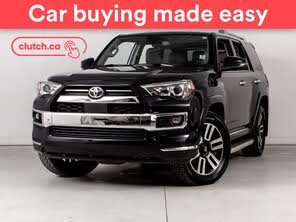
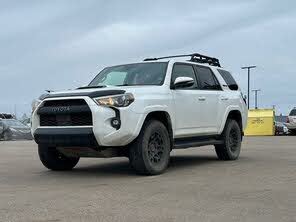
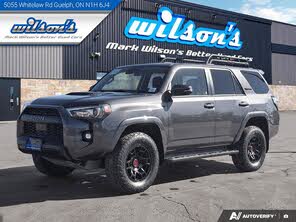
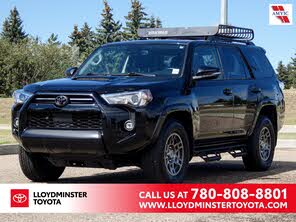
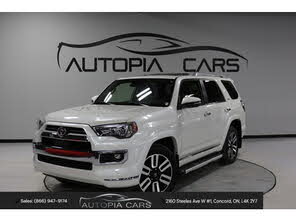
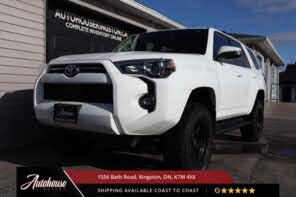
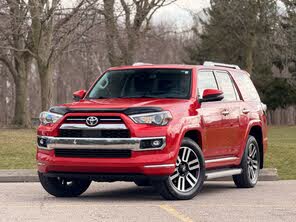
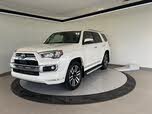
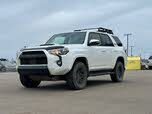
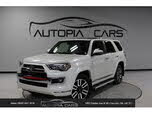
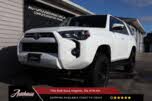
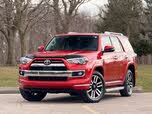
In contrast, the 2021 Toyota 4Runner retained a design that had aged well over its 12-year run, with a two-box body, flared fenders, and trapezoidal wheel arches that emphasized its utility. While not conventionally attractive, the 4Runner's design was functional and timeless, akin to a reliable tool. The interior was rugged, with hard plastics and a dashboard featuring large knobs and buttons, reflecting its utilitarian nature. The 4Runner's design was less about aesthetics and more about durability and practicality, appealing to those who valued function over form.


The 2020 Ford Escape offered a diverse range of powertrains, including a new three-cylinder engine producing 180 horsepower and 177 pound-feet of torque, standard in the S, SE, and SEL trims. Additionally, it featured a 2.0-litre turbocharged four-cylinder engine with 250 horsepower and 275 pound-feet of torque, available on the SEL and standard on the Titanium trim. The Escape also offered hybrid and plug-in hybrid options, with the hybrid producing 198 horsepower. The Escape's driving dynamics were sporty, with direct steering and responsive brakes, making it enjoyable to drive. Fuel efficiency was a highlight, with the hybrid achieving 5.4 litres per 100 kilometres in the city.
The 2021 Toyota 4Runner, equipped with a 4.0-litre V6 engine delivering 270 horsepower and 278 pound-feet of torque, excelled off-road. Its A-Trac system and optional off-road packages enhanced its capability in challenging terrains. However, on paved roads, the 4Runner felt heavy and cumbersome, with slow acceleration and clunky handling. Its five-speed automatic transmission and body-on-frame construction contributed to its truck-like driving characteristics. Fuel consumption was high, averaging 14.0 litres per 100 kilometres, reflecting its less efficient design compared to modern SUVs.
The 2020 Ford Escape's sleek design resulted in reduced cargo space, offering 974 litres behind the second row and up to 1,852 litres with the seats folded. This was less than competitors like the Honda CR-V and Subaru Forester. However, the Escape prioritized passenger space, providing ample headroom and legroom for second-row passengers. The front seats offered a commanding view, and the cabin featured numerous storage solutions, enhancing its practicality for everyday use.
The 2021 Toyota 4Runner, with its high ground clearance, provided a commanding view of the road. Its interior was spacious, with comfortable seating and ample legroom in the rear. The 4Runner offered up to 1,337 litres of cargo space behind the back seat and 2,540 litres with the seats folded, making it suitable for adventures. The interior storage was decent, and the back bumper served as a convenient seating area for outdoor activities.
The 2020 Ford Escape's base trim featured a small 4.2-inch screen, while the SE trim upgraded to an 8-inch Sync touchscreen with Apple CarPlay and Android Auto. The Titanium trim included a head-up display, although its design limited its effectiveness for taller drivers. The infotainment system was user-friendly, with the latest Sync version offering multitasking capabilities.
The 2021 Toyota 4Runner's entry-level Trail grade lacked advanced technology but included a windshield wiper de-icer and a 120-volt AC power outlet. The standard 8-inch touchscreen infotainment system featured Bluetooth, Apple CarPlay, Android Auto, and SiriusXM satellite radio. The system was easy to use, with physical buttons and knobs designed for operation with gloves. Upgraded audio systems added dynamic navigation and concierge services.
The 2020 Ford Escape came equipped with a comprehensive suite of safety features, including Ford Co-Pilot360, which offered forward-collision warning, automatic emergency braking, and lane-keeping assist. It also included blind-spot monitoring and rear cross-traffic alert. The Escape received a "Good" rating from the IIHS in all phases of testing.
The 2021 Toyota 4Runner featured Toyota Safety Sense P, which included adaptive cruise control, forward-collision warning, and automatic emergency braking. However, it lacked blind-spot monitoring and rear cross-traffic alert. The 4Runner received a three-star rollover resistance rating from the NHTSA and a "Good" roof crush strength rating from the IIHS. Its age was reflected in its lower safety ratings compared to modern SUVs.
CarGurus highlights

According to CarGurus experts, the overall rating for the 2020 Ford Escape is 8.0 out of 10, while the 2021 Toyota 4Runner scores 6.2 out of 10. Based on these ratings, the 2020 Ford Escape is the recommended choice, offering a better balance of performance, technology, and safety features for most consumers.
Choose the 2020 Ford Escape if:
- You prioritize fuel efficiency and a sporty driving experience.
- You value modern technology and infotainment features.
- You seek a compact SUV with a stylish design and comfortable passenger space.

Choose the 2021 Toyota 4Runner if:
- You need a rugged SUV with exceptional off-road capabilities.
- You require ample cargo space for outdoor adventures.
- You prefer a vehicle with a durable, utilitarian design.

CarGurus highlights
According to CarGurus experts, the overall rating for the 2020 Ford Escape is 8.0 out of 10, while the 2021 Toyota 4Runner scores 6.2 out of 10. Based on these ratings, the 2020 Ford Escape is the recommended choice, offering a better balance of performance, technology, and safety features for most consumers.
Choose the 2020 Ford Escape if:
Shop Now- You prioritize fuel efficiency and a sporty driving experience.
- You value modern technology and infotainment features.
- You seek a compact SUV with a stylish design and comfortable passenger space.





Choose the 2021 Toyota 4Runner if:
Shop Now- You need a rugged SUV with exceptional off-road capabilities.
- You require ample cargo space for outdoor adventures.
- You prefer a vehicle with a durable, utilitarian design.





By: CarGurus + AI
At CarGurus, our team of experienced automotive writers remain at the heart of our content operation, conducting hands-on car tests and writing insightful guides that are backed by years of industry experience. To complement this, we are harnessing AI to make our content offering more diverse and more helpful to shoppers than ever. To achieve this, our AI systems are based exclusively on CarGurus content, ratings and data, so that what we produce is both unique to CarGurus, and uniquely helpful to car shoppers.