Audi Q7 vs Chrysler Pacifica Hybrid
Overview | |
Listings717 | Listings143 |
Ratings & Reviews | |
User Reviews | User Reviews |
Expert reviews7.3 out of 10 | Expert reviews7.8 out of 10 |
Pros
Cons
| Pros
Cons
|
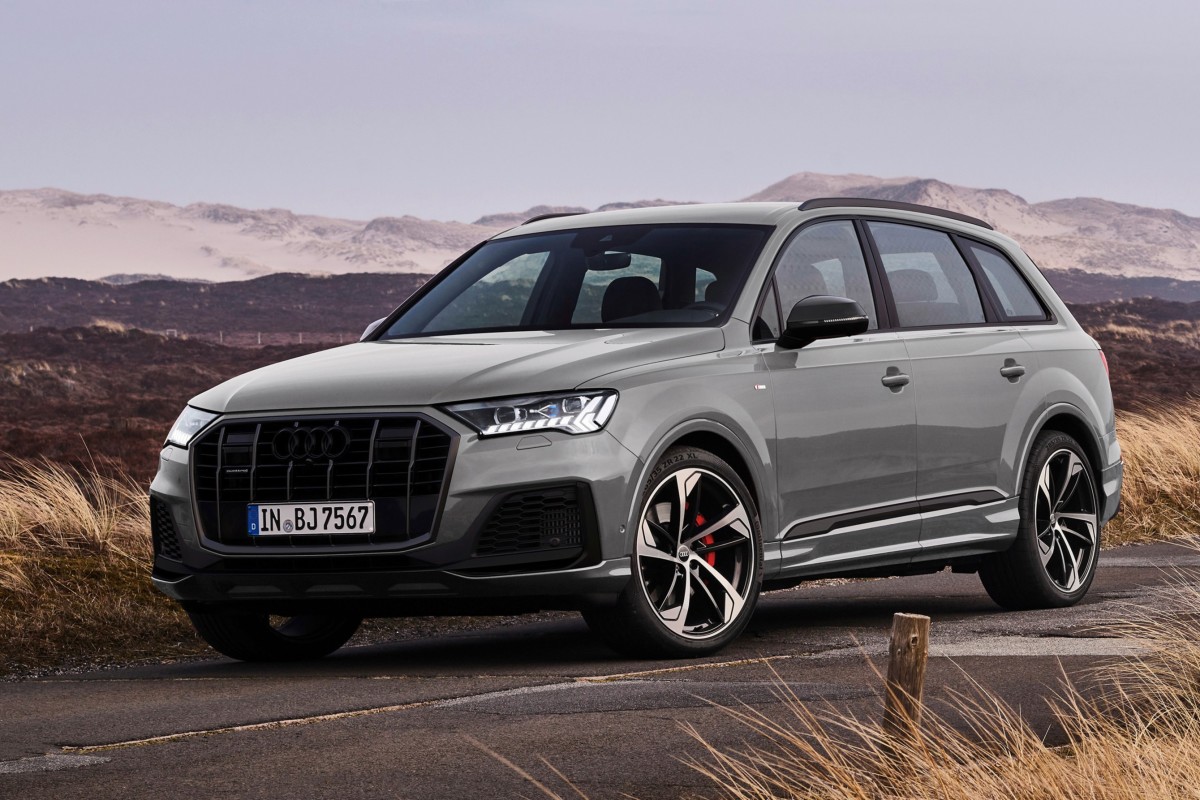
Reviews SummaryThe mid-size SUV has room for seven (barely). In Canada, it comes in base, Progressiv, and Technik trims. There are two different engine choices, but all Q7s, regardless of trim, are all-wheel-drive (AWD) with excellent handling characteristics. However, this second-generation Q7 has been around since 2017, and it shows in some key areas. Verdict: While the 2025 Audi Q7 has a lot going for it in terms of driving dynamics and engine prowess, it falls behind the competition when it comes to safety tech. Further, the third row is cramped for anyone but the smallest of humans, and the price can skyrocket as you move up the trim line. | |
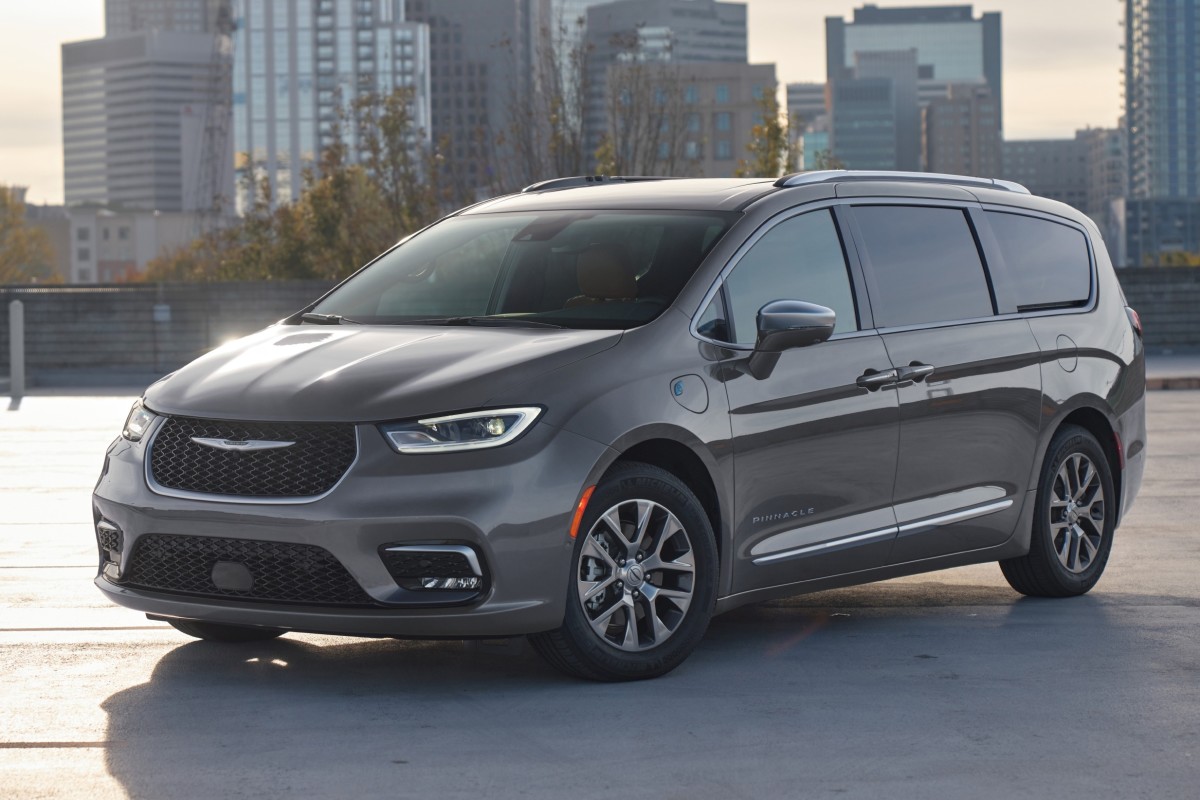
Reviews SummaryThe Chrysler Pacifica Hybrid remains a great option for families who want the benefits of electrification without adopting a fully electric-vehicle lifestyle. Introduced for the 2017 model year and essentially unchanged for 2024, the Pacifica Hybrid is the only minivan available in Canada with a plug-in hybrid powertrain. That gives it an emissions advantage over the rival Honda Odyssey, Kia Carnival, and Toyota Sienna. Verdict: A plug-in hybrid powertrain enhances a well-executed minivan. The Pacifica Hybrid is a niche choice, but we like it. | |
No video found | No video found |
Popular Features & Specs | |
Engine2.0L 261 hp I4 | Engine3.6L 260 hp V6 Hybrid |
DrivetrainAWD | DrivetrainFWD |
Seating Capacity7 | Seating Capacity7 |
Horsepower261 hp @ 5250 rpm | Horsepower |
EV Battery Capacity | EV Battery Capacity16 kWh |
Fuel Economy (City)11.8 L(e)/100 km | Fuel Economy (City)2.7 L(e)/100 km |
Fuel Economy (Highway)9.0 L(e)/100 km | Fuel Economy (Highway)3.1 L(e)/100 km |
Battery Charge Time (120V) | Battery Charge Time (120V)14 hours |
Battery Charge Time (240V) | Battery Charge Time (240V)2 hours |
Engine | |
Engine Name2.0L 261 hp I4 | Engine Name3.6L 260 hp V6 Hybrid |
Torque273 lb-ft @ 1600 rpm | Torque |
Horsepower261 hp @ 5250 rpm | Horsepower |
Battery Charge Time (120V) | Battery Charge Time (120V)14 hours |
Battery Charge Time (240V) | Battery Charge Time (240V)2 hours |
DrivetrainAWD | DrivetrainFWD |
Fuel Economy | |
EV Battery Capacity | EV Battery Capacity16 kWh |
Fuel Economy (City)11.8 L(e)/100 km | Fuel Economy (City)2.7 L(e)/100 km |
Fuel Economy (Highway)9.0 L(e)/100 km | Fuel Economy (Highway)3.1 L(e)/100 km |
Interior | |
Leather SeatsStandard | Leather SeatsStandard |
Seating Capacity7 | Seating Capacity7 |
Key Features | |
Navigation SystemStandard | Navigation SystemStandard |
Sunroof/MoonroofStandard | Sunroof/MoonroofStandard |
Safety | |
Front Crash Overall4 | Front Crash Overall4 |
Side Crash Overall5 | Side Crash Overall5 |
Dimensions & Capacity | |
Cargo Space385 L | Cargo Space915 L |
Curb Weight2245 kg | Curb Weight2272 kg |
Height1740 mm | Height1775 mm |
Length5070 mm | Length5189 mm |
Width2212 mm | Width2296 mm |
Wheelbase2995 mm | Wheelbase3089 mm |
Maximum Payload570 kg | Maximum Payload585 kg |
Number of doors4 | Number of doors4 |
Maximum Towing Capacity1996 kg | Maximum Towing Capacity |
Overview | ||
Listings | ||
Ratings & Reviews | ||
User reviews | ||
Expert reviews | 7.3 out of 10Read full review | 7.8 out of 10Read full review |
Pros & cons | Pros
Cons
| Pros
Cons
|
Summary | The mid-size SUV has room for seven (barely). In Canada, it comes in base, Progressiv, and Technik trims. There are two different engine choices, but all Q7s, regardless of trim, are all-wheel-drive (AWD) with excellent handling characteristics. However, this second-generation Q7 has been around since 2017, and it shows in some key areas. Verdict: While the 2025 Audi Q7 has a lot going for it in terms of driving dynamics and engine prowess, it falls behind the competition when it comes to safety tech. Further, the third row is cramped for anyone but the smallest of humans, and the price can skyrocket as you move up the trim line. | The Chrysler Pacifica Hybrid remains a great option for families who want the benefits of electrification without adopting a fully electric-vehicle lifestyle. Introduced for the 2017 model year and essentially unchanged for 2024, the Pacifica Hybrid is the only minivan available in Canada with a plug-in hybrid powertrain. That gives it an emissions advantage over the rival Honda Odyssey, Kia Carnival, and Toyota Sienna. Verdict: A plug-in hybrid powertrain enhances a well-executed minivan. The Pacifica Hybrid is a niche choice, but we like it. |
Video | No video found | No video found |
Popular Features & Specs | ||
Engine | 2.0L 261 hp I4 | 3.6L 260 hp V6 Hybrid |
Drivetrain | AWD | FWD |
Seating Capacity | 7 | 7 |
Horsepower | 261 hp @ 5250 rpm | |
EV Battery Capacity | 16 kWh | |
Fuel Economy (City) | 11.8 L(e)/100 km | 2.7 L(e)/100 km |
Fuel Economy (Highway) | 9.0 L(e)/100 km | 3.1 L(e)/100 km |
Battery Charge Time (120V) | 14 hours | |
Battery Charge Time (240V) | 2 hours | |
Engine | ||
Engine Name | 2.0L 261 hp I4 | 3.6L 260 hp V6 Hybrid |
Torque | 273 lb-ft @ 1600 rpm | |
Horsepower | 261 hp @ 5250 rpm | |
Battery Charge Time (120V) | 14 hours | |
Battery Charge Time (240V) | 2 hours | |
Drivetrain | AWD | FWD |
Fuel Economy | ||
EV Battery Capacity | 16 kWh | |
Fuel Economy (City) | 11.8 L(e)/100 km | 2.7 L(e)/100 km |
Fuel Economy (Highway) | 9.0 L(e)/100 km | 3.1 L(e)/100 km |
Interior | ||
Leather Seats | Standard | Standard |
Seating Capacity | 7 | 7 |
Key Features | ||
Navigation System | Standard | Standard |
Sunroof/Moonroof | Standard | Standard |
Safety | ||
Front Crash Overall | 4 | 4 |
Side Crash Overall | 5 | 5 |
Dimensions & Capacity | ||
Cargo Space | 385 L | 915 L |
Curb Weight | 2245 kg | 2272 kg |
Height | 1740 mm | 1775 mm |
Length | 5070 mm | 5189 mm |
Width | 2212 mm | 2296 mm |
Wheelbase | 2995 mm | 3089 mm |
Maximum Payload | 570 kg | 585 kg |
Number of doors | 4 | 4 |
Maximum Towing Capacity | 1996 kg | |
2025 Audi Q7 for Sale


2024 Chrysler Pacifica Hybrid for Sale


By: CarGurus + AI
At CarGurus, our team of experienced automotive writers remain at the heart of our content operation, conducting hands-on car tests and writing insightful guides that are backed by years of industry experience. To complement this, we are harnessing AI to make our content offering more diverse and more helpful to shoppers than ever. To achieve this, our AI systems are based exclusively on CarGurus content, ratings and data, so that what we produce is both unique to CarGurus, and uniquely helpful to car shoppers.
