2026 Toyota bZ vs 2026 INFINITI QX80
Overview | |
Listings47 | Listings62 |
Ratings & Reviews | |
User Reviews | User Reviews |
Expert reviews6.5 out of 10 | Expert reviews7.7 out of 10 |
Pros
Cons
| Pros
Cons
|
2026 Toyota bZ Reviews SummaryReaders are looking at the electric vehicle formerly known as the bZ4X. It wears a shorter name for 2026, but that’s not the big news. More power, up to 468 kilometres of range, a standard NACS charging port (with a CCS adapter), and Plug & Charge capability are all major improvements. Toyota has also tidied up the styling inside and out and added a larger infotainment screen. Verdict: With the refreshed 2026 bZ, Toyota has fixed the bZ4X’s most significant flaws, making this a genuinely competitive model at a comparatively affordable price. | |
2026 INFINITI QX80 Reviews SummaryThe traditional body-on-frame SUV is rarely a wise choice these days. These vehicles are heavy and inefficient. However, they can be the right option for buyers who need to carry lots of passengers and either tow trailers or go off-roading. The 2026 Infiniti QX80 carries up to seven people and can tow up to 3,850 kilograms (8,500 pounds) while also adding luxury and some thoughtful features that help it stand out against competitors such as the Cadillac Escalade and the Lincoln Navigator. Redesigned for the 2025 model year, the 2026 QX80 is unchanged except for a new Sport trim level. Verdict: The 2026 Infiniti QX80 appeals for luxury, space, technology, and towing capacity, but poor fuel economy and cumbersome handling mean more nimble crossover SUVs are better for most families. | |
No video found | No video found |
Popular Features & Specs | |
Engine168 hp Electric | Engine |
DrivetrainFWD | Drivetrain |
Seating Capacity5 | Seating Capacity8 |
EV Battery Capacity57.7 kWh | EV Battery Capacity |
Fuel Economy (City)1.6 L(e)/100 km | Fuel Economy (City) |
Fuel Economy (Highway)2.0 L(e)/100 km | Fuel Economy (Highway) |
Battery Charge Time (240V)6 hours | Battery Charge Time (240V) |
Engine | |
Engine Name168 hp Electric | Engine Name |
Battery Charge Time (240V)6 hours | Battery Charge Time (240V) |
DrivetrainFWD | Drivetrain |
Fuel Economy | |
EV Battery Capacity57.7 kWh | EV Battery Capacity |
Fuel Economy (City)1.6 L(e)/100 km | Fuel Economy (City) |
Fuel Economy (Highway)2.0 L(e)/100 km | Fuel Economy (Highway) |
Interior | |
Seating Capacity5 | Seating Capacity8 |
Key Features | |
Navigation SystemOptional | Navigation SystemStandard |
Sunroof/Moonroof | Sunroof/MoonroofStandard |
Safety | |
Front Crash Overall4 | Front Crash Overall |
Side Crash Overall5 | Side Crash Overall |
Dimensions & Capacity | |
Cargo Space784 L | Cargo Space578 L |
Curb Weight1840 kg | Curb Weight2638 kg |
Height1651 mm | Height1953 mm |
Length4689 mm | Length5364 mm |
Width1859 mm | Width2350 mm |
Wheelbase2850 mm | Wheelbase3076 mm |
Maximum Payload474 kg | Maximum Payload660 kg |
Number of doors4 | Number of doors4 |
Maximum Towing Capacity | Maximum Towing Capacity3856 kg |
Standard Towing Capacity | Standard Towing Capacity3856 kg |
Overview | ||
Listings | ||
Ratings & Reviews | ||
User reviews | ||
Expert reviews | 6.5 out of 10Read full review | 7.7 out of 10Read full review |
Pros & cons | Pros
Cons
| Pros
Cons
|
Summary | Readers are looking at the electric vehicle formerly known as the bZ4X. It wears a shorter name for 2026, but that’s not the big news. More power, up to 468 kilometres of range, a standard NACS charging port (with a CCS adapter), and Plug & Charge capability are all major improvements. Toyota has also tidied up the styling inside and out and added a larger infotainment screen. Verdict: With the refreshed 2026 bZ, Toyota has fixed the bZ4X’s most significant flaws, making this a genuinely competitive model at a comparatively affordable price. | The traditional body-on-frame SUV is rarely a wise choice these days. These vehicles are heavy and inefficient. However, they can be the right option for buyers who need to carry lots of passengers and either tow trailers or go off-roading. The 2026 Infiniti QX80 carries up to seven people and can tow up to 3,850 kilograms (8,500 pounds) while also adding luxury and some thoughtful features that help it stand out against competitors such as the Cadillac Escalade and the Lincoln Navigator. Redesigned for the 2025 model year, the 2026 QX80 is unchanged except for a new Sport trim level. Verdict: The 2026 Infiniti QX80 appeals for luxury, space, technology, and towing capacity, but poor fuel economy and cumbersome handling mean more nimble crossover SUVs are better for most families. |
Video | No video found | No video found |
Popular Features & Specs | ||
Engine | 168 hp Electric | |
Drivetrain | FWD | |
Seating Capacity | 5 | 8 |
EV Battery Capacity | 57.7 kWh | |
Fuel Economy (City) | 1.6 L(e)/100 km | |
Fuel Economy (Highway) | 2.0 L(e)/100 km | |
Battery Charge Time (240V) | 6 hours | |
Engine | ||
Engine Name | 168 hp Electric | |
Battery Charge Time (240V) | 6 hours | |
Drivetrain | FWD | |
Fuel Economy | ||
EV Battery Capacity | 57.7 kWh | |
Fuel Economy (City) | 1.6 L(e)/100 km | |
Fuel Economy (Highway) | 2.0 L(e)/100 km | |
Interior | ||
Seating Capacity | 5 | 8 |
Key Features | ||
Navigation System | Optional | Standard |
Sunroof/Moonroof | Standard | |
Safety | ||
Front Crash Overall | 4 | |
Side Crash Overall | 5 | |
Dimensions & Capacity | ||
Cargo Space | 784 L | 578 L |
Curb Weight | 1840 kg | 2638 kg |
Height | 1651 mm | 1953 mm |
Length | 4689 mm | 5364 mm |
Width | 1859 mm | 2350 mm |
Wheelbase | 2850 mm | 3076 mm |
Maximum Payload | 474 kg | 660 kg |
Number of doors | 4 | 4 |
Maximum Towing Capacity | 3856 kg | |
Standard Towing Capacity | 3856 kg | |
The 2026 Toyota bZ was available in XLE and Limited trims, offering both single-motor front-wheel drive (FWD) and dual-motor all-wheel drive (AWD) configurations, with two battery sizes to choose from. The larger battery provided enhanced power, performance, and range, albeit at a higher cost. Canadian pricing ranged from $47,920 to $63,620, inclusive of a $1,930 destination charge. Notably, the XLE FWD and XLE AWD models qualified for a $5,000 federal EV rebate. The U.S.-specification XLE test vehicle featured FWD and the larger battery, a combination unavailable in Canada. The 2026 bZ's restyled exterior, especially with body-colour trim, was a significant improvement over its predecessor, the bZ4X. Inside, the redesigned dashboard and centre console offered a cleaner appearance and higher quality feel, with the XLE’s fabric seats boasting an upscale pattern. The 14-inch centre touchscreen integrated climate control, which, despite initial concerns, proved user-friendly with large icons and adjustment dials. However, the digital instrument cluster's placement and size remained a drawback, as it was difficult to read and could be obscured by the steering wheel.
The 2026 INFINITI QX80 embraced a bold, blocky design typical of body-on-frame SUVs, featuring high shoulder lines, a simple two-box profile, and standard 22-inch wheels. Its distinctive front end showcased a two-part grille inspired by a bamboo forest, flanked by LED headlights and piano-key daytime running lights. At the rear, a taillight light bar echoed this design, sitting above wide Infiniti lettering. The QX80 Sport trim introduced a wider mesh grille and dark matte chrome exterior trim. Inside, the QX80 exuded modern luxury, with four screens, including one for rear passengers, softened by real leather and high-quality materials like aluminum and open-pore wood trim. The Sport models featured a Dusk Blue interior theme. The QX80's interior was spacious and luxurious, with technology seamlessly integrated into its design.
The 2026 Toyota bZ offered a choice between a single electric motor with a 57.7-kWh battery pack, delivering 168 horsepower and 198 pound-feet of torque, and dual-motor models with a 74.7-kWh battery producing 338 hp. The FWD XLE had a range of 380 kilometres and an efficiency rating of 16.1 kWh/100 km, while the AWD XLE offered 468 km of range. Recharging the bZ using a DC fast charger took about 30 minutes to reach 80% from 10%, and the switch to a NACS port allowed compatibility with certain Tesla Superchargers. The larger battery required seven hours to recharge using a Level 2 home charger. The bZ excelled in efficiency tests, averaging 13.7 kWh/100 km in Eco mode. However, the digital instrument cluster's placement and size remained a drawback, as it was difficult to read and could be obscured by the steering wheel. The bZ's ride was comfortable but could be choppy on undulating pavement, and its handling was not suited for winding roads due to all-season tires and lifeless steering.
The 2026 INFINITI QX80 transitioned from a 5.6-litre V8 to a twin-turbocharged 3.5-litre V6, boosting power to 450 hp and 516 lb-ft of torque. The engine was paired with a nine-speed automatic transmission, and full-time 4WD was standard in Canada. The QX80's body-on-frame platform offered increased torsional rigidity and lateral stiffness, maintaining a towing capacity of 3,850 kilograms. The suspension system included air springs and adaptive dampers, providing adjustable ground clearance. Despite its size and mass, the QX80 delivered a comfortable ride, though body lean was notable. The steering was direct but heavy, and the firmer damper settings in Sport mode made the ride jiggly on broken pavement. The QX80's size also posed challenges for parking and maneuvering in tight spaces.
The 2026 Toyota bZ, built on a skateboard-style EV platform, offered 21.1 centimetres of ground clearance with FWD and 20.6 cm with AWD. The interior featured standard height-adjustable front seats, with eight-way power adjustment for both driver and front passenger in the Limited trim. Heated front seats, a heated steering wheel, and heated exterior mirrors were standard, with the Limited adding ventilated front seats and a front radiant foot and leg heater. The bZ lacked a traditional glove compartment but compensated with ample storage options, including a large bin under the centre armrest and a sizeable tray beneath the centre console. Rear passengers enjoyed generous legroom, though foot space was tight. Cargo space measured 784 litres behind the rear seats, expanding to 1,611 litres with the seats folded.
The 2026 INFINITI QX80 boasted a spacious interior, measuring 5,365 millimetres in length on a 3,075-mm wheelbase. Standard features included leather upholstery, 10-way power-adjustable front seats, and heated and ventilated front and outboard second-row seats. The Sport and Autograph trims offered semi-aniline leather and a massage function for the front seats. The second-row captain’s chairs in these trims had power adjustments, with the Autograph trim adding massaging seats. The third-row bench was larger than most, accommodating adults comfortably. Cargo space was generous, with 623 litres behind the third row, 1,670 litres behind the second row, and 2,860 litres behind the first row.
The 2026 Toyota bZ featured a 7-inch digital instrument cluster and a new 14-inch touchscreen infotainment display. The instrument cluster's placement and size were drawbacks, as it was difficult to read and could be obscured by the steering wheel. The infotainment system, running Toyota Audio Multimedia, was generally user-friendly but lacked a home screen for simultaneous data display. It supported wireless Apple CarPlay and Android Auto, with complimentary connected service plans. The Intelligent Assistant voice command system worked well, though it stumbled on one testing prompt.
The 2026 INFINITI QX80 was equipped with a pair of 14.3-inch screens for the digital instrument cluster and infotainment system. The infotainment system incorporated Google built-in, wireless Apple CarPlay and Android Auto, and Amazon Alexa compatibility. A 5G connection provided an in-vehicle Wi-Fi hotspot. The infotainment screen was user-friendly, but the lower screen, handling climate controls and other settings, required navigating submenus. The QX80 excelled with surprise-and-delight features, including a 14-speaker Klipsch audio system, a biometric cooling system, and a head-up display. A surround-view camera system offered nine camera views, enhancing safety and convenience.
The 2026 Toyota bZ came standard with Toyota Safety Sense 3.0, including high beam assist, forward collision warning, automatic emergency braking, lane departure warning, lane keep assist, lane centring assist, and adaptive cruise control. Proactive Driving Assist added subtle braking and steering inputs for safety. Other features included blind spot monitoring, rear cross-traffic alert, and front and rear parking sensors. The Limited trim added Traffic Jam Assist and other advanced features. The bZ received mixed safety ratings from the IIHS, with Good ratings for front crash avoidance but Poor ratings for headlights.
The 2026 INFINITI QX80 offered a comprehensive suite of driver assistance technology, including automatic emergency braking, adaptive cruise control, ProPilot Assist 1.1, and a surround-view camera system. The Autograph trim featured ProPilot Assist 2.1 for hands-free driving on certain highways. The QX80 earned an IIHS Top Safety Pick+ designation, though NHTSA ratings were unavailable at the time of publication.
CarGurus highlights
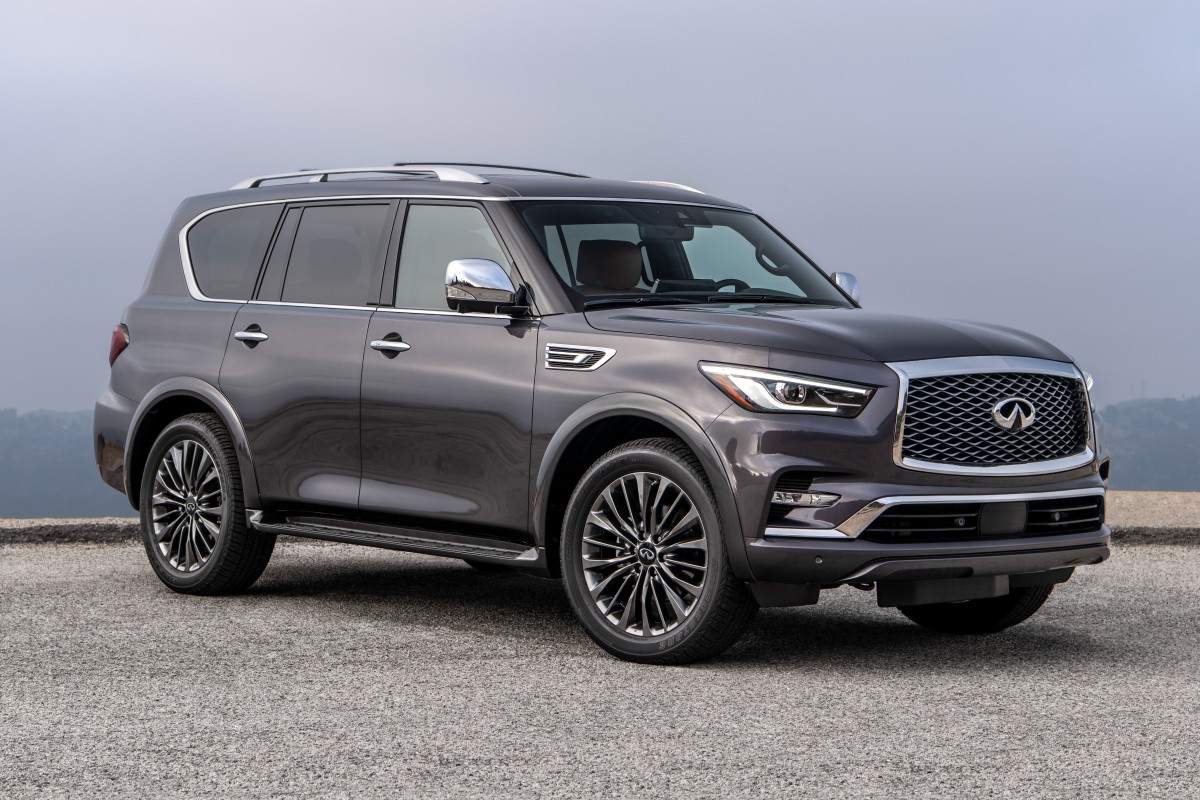
According to CarGurus experts, the overall rating for the 2026 Toyota bZ is 6.5 out of 10, while the 2026 INFINITI QX80 scores 7.7 out of 10. Based on these ratings, the 2026 INFINITI QX80 is the recommended choice for those seeking a luxurious, powerful, and technologically advanced SUV with top safety ratings.
Choose the 2026 Toyota bZ if:
- You prioritize an electric vehicle with a lower starting price and federal EV rebate eligibility.
- You value a comfortable and efficient city commuter with good outward visibility.
- You appreciate a user-friendly infotainment system with wireless smartphone integration.


Choose the 2026 INFINITI QX80 if:
- You desire a powerful and luxurious SUV with ample interior space and advanced technology.
- You need a vehicle with strong towing capacity and adjustable suspension for varied driving conditions.
- You prioritize top safety ratings and comprehensive driver assistance features.


CarGurus highlights
According to CarGurus experts, the overall rating for the 2026 Toyota bZ is 6.5 out of 10, while the 2026 INFINITI QX80 scores 7.7 out of 10. Based on these ratings, the 2026 INFINITI QX80 is the recommended choice for those seeking a luxurious, powerful, and technologically advanced SUV with top safety ratings.
Choose the 2026 Toyota bZ if:
Shop Now- You prioritize an electric vehicle with a lower starting price and federal EV rebate eligibility.
- You value a comfortable and efficient city commuter with good outward visibility.
- You appreciate a user-friendly infotainment system with wireless smartphone integration.
Choose the 2026 INFINITI QX80 if:
Shop Now- You desire a powerful and luxurious SUV with ample interior space and advanced technology.
- You need a vehicle with strong towing capacity and adjustable suspension for varied driving conditions.
- You prioritize top safety ratings and comprehensive driver assistance features.

By: CarGurus + AI
At CarGurus, our team of experienced automotive writers remain at the heart of our content operation, conducting hands-on car tests and writing insightful guides that are backed by years of industry experience. To complement this, we are harnessing AI to make our content offering more diverse and more helpful to shoppers than ever. To achieve this, our AI systems are based exclusively on CarGurus content, ratings and data, so that what we produce is both unique to CarGurus, and uniquely helpful to car shoppers.
