2025 Volvo XC90 vs 2026 Toyota bZ
Overview | |
Listings64 | Listings42 |
Ratings & Reviews | |
User Reviews | User Reviews |
Expert reviews8.3 out of 10 | Expert reviews6.5 out of 10 |
Pros
Cons
| Pros
Cons
|
2025 Volvo XC90 Reviews SummaryThe second-generation XC90 gets its second substantial refresh for the 2025 model year. It’s still offered in Core trim with Plus and Ultra packages and with a choice of mild-hybrid and plug-in hybrid powertrains. However, Volvo has upped the ante. The midsize three-row gets updated styling, materials, and feature offerings, as well as some mechanical tweaks that aim to improve ride comfort and handling. We had the opportunity to experience two powertrains, both in Ultra specification, on a Volvo drive program in Europe. Verdict: The Volvo XC90 was already quite a good vehicle. It’s earned its position as Volvo’s flagship SUV with oft-praised style and substance. For 2025, it has been made even better. | |
2026 Toyota bZ Reviews SummaryReaders are looking at the electric vehicle formerly known as the bZ4X. It wears a shorter name for 2026, but that’s not the big news. More power, up to 468 kilometres of range, a standard NACS charging port (with a CCS adapter), and Plug & Charge capability are all major improvements. Toyota has also tidied up the styling inside and out and added a larger infotainment screen. Verdict: With the refreshed 2026 bZ, Toyota has fixed the bZ4X’s most significant flaws, making this a genuinely competitive model at a comparatively affordable price. | |
No video found | No video found |
Popular Features & Specs | |
Engine2.0L 247 hp I4 | Engine168 hp Electric |
DrivetrainAWD | DrivetrainFWD |
Seating Capacity7 | Seating Capacity5 |
Horsepower247 hp @ 5400 rpm | Horsepower |
EV Battery Capacity | EV Battery Capacity57.7 kWh |
Fuel Economy (City)10.2 L(e)/100 km | Fuel Economy (City)1.6 L(e)/100 km |
Fuel Economy (Highway)7.8 L(e)/100 km | Fuel Economy (Highway)2.0 L(e)/100 km |
Battery Charge Time (240V) | Battery Charge Time (240V)6 hours |
Engine | |
Engine Name2.0L 247 hp I4 | Engine Name168 hp Electric |
Torque266 lb-ft @ 2000 rpm | Torque |
Horsepower247 hp @ 5400 rpm | Horsepower |
Battery Charge Time (240V) | Battery Charge Time (240V)6 hours |
DrivetrainAWD | DrivetrainFWD |
Fuel Economy | |
EV Battery Capacity | EV Battery Capacity57.7 kWh |
Fuel Economy (City)10.2 L(e)/100 km | Fuel Economy (City)1.6 L(e)/100 km |
Fuel Economy (Highway)7.8 L(e)/100 km | Fuel Economy (Highway)2.0 L(e)/100 km |
Interior | |
Seating Capacity7 | Seating Capacity5 |
Key Features | |
Navigation SystemStandard | Navigation SystemOptional |
Sunroof/MoonroofStandard | Sunroof/Moonroof |
Safety | |
Front Crash Overall5 | Front Crash Overall4 |
Side Crash Overall5 | Side Crash Overall5 |
Dimensions & Capacity | |
Cargo Space303 L | Cargo Space784 L |
Curb Weight2082 kg | Curb Weight1840 kg |
Height1775 mm | Height1651 mm |
Length4953 mm | Length4689 mm |
Width2141 mm | Width1859 mm |
Wheelbase2985 mm | Wheelbase2850 mm |
Maximum Payload526 kg | Maximum Payload474 kg |
Number of doors4 | Number of doors4 |
Maximum Towing Capacity2268 kg | Maximum Towing Capacity |
Overview | ||
Listings | ||
Ratings & Reviews | ||
User reviews | ||
Expert reviews | 8.3 out of 10Read full review | 6.5 out of 10Read full review |
Pros & cons | Pros
Cons
| Pros
Cons
|
Summary | The second-generation XC90 gets its second substantial refresh for the 2025 model year. It’s still offered in Core trim with Plus and Ultra packages and with a choice of mild-hybrid and plug-in hybrid powertrains. However, Volvo has upped the ante. The midsize three-row gets updated styling, materials, and feature offerings, as well as some mechanical tweaks that aim to improve ride comfort and handling. We had the opportunity to experience two powertrains, both in Ultra specification, on a Volvo drive program in Europe. Verdict: The Volvo XC90 was already quite a good vehicle. It’s earned its position as Volvo’s flagship SUV with oft-praised style and substance. For 2025, it has been made even better. | Readers are looking at the electric vehicle formerly known as the bZ4X. It wears a shorter name for 2026, but that’s not the big news. More power, up to 468 kilometres of range, a standard NACS charging port (with a CCS adapter), and Plug & Charge capability are all major improvements. Toyota has also tidied up the styling inside and out and added a larger infotainment screen. Verdict: With the refreshed 2026 bZ, Toyota has fixed the bZ4X’s most significant flaws, making this a genuinely competitive model at a comparatively affordable price. |
Video | No video found | No video found |
Popular Features & Specs | ||
Engine | 2.0L 247 hp I4 | 168 hp Electric |
Drivetrain | AWD | FWD |
Seating Capacity | 7 | 5 |
Horsepower | 247 hp @ 5400 rpm | |
EV Battery Capacity | 57.7 kWh | |
Fuel Economy (City) | 10.2 L(e)/100 km | 1.6 L(e)/100 km |
Fuel Economy (Highway) | 7.8 L(e)/100 km | 2.0 L(e)/100 km |
Battery Charge Time (240V) | 6 hours | |
Engine | ||
Engine Name | 2.0L 247 hp I4 | 168 hp Electric |
Torque | 266 lb-ft @ 2000 rpm | |
Horsepower | 247 hp @ 5400 rpm | |
Battery Charge Time (240V) | 6 hours | |
Drivetrain | AWD | FWD |
Fuel Economy | ||
EV Battery Capacity | 57.7 kWh | |
Fuel Economy (City) | 10.2 L(e)/100 km | 1.6 L(e)/100 km |
Fuel Economy (Highway) | 7.8 L(e)/100 km | 2.0 L(e)/100 km |
Interior | ||
Seating Capacity | 7 | 5 |
Key Features | ||
Navigation System | Standard | Optional |
Sunroof/Moonroof | Standard | |
Safety | ||
Front Crash Overall | 5 | 4 |
Side Crash Overall | 5 | 5 |
Dimensions & Capacity | ||
Cargo Space | 303 L | 784 L |
Curb Weight | 2082 kg | 1840 kg |
Height | 1775 mm | 1651 mm |
Length | 4953 mm | 4689 mm |
Width | 2141 mm | 1859 mm |
Wheelbase | 2985 mm | 2850 mm |
Maximum Payload | 526 kg | 474 kg |
Number of doors | 4 | 4 |
Maximum Towing Capacity | 2268 kg | |
The 2025 Volvo XC90 maintained its reputation for timeless elegance with a refresh that subtly modernized its design without losing its classic appeal. The updated "Thor’s Hammer" headlights appeared more robust, and the grille's new asymmetrical, woven design added sophistication. The B5 AWD mild hybrid in Denim Blue and the T8 eAWD PHEV in Bright Dusk both showcased Volvo's "Bright" exterior theme, emphasizing chrome trim over fleeting trends. Large wheels filled the arches, enhancing the vehicle's stance. Inside, the XC90 offered a comfortable, understated space with updates like a more prominent infotainment screen and a reconfigured centre console for improved symmetry and space. The interior materials, including quilted Nordico, perforated Nappa leather, and a new herringbone weave textile, provided a Swedish touch, with the latter being a sustainable option made from recycled polyester.
The 2026 Toyota bZ presented a more expressive design, especially in colours like Blueprint or Supersonic Red, with body-colour trim preferred over black overfender trim. Inside, the dashboard and centre console were redesigned for a cleaner look, with fabric seats featuring an upscale pattern. The 14-inch centre touchscreen integrated climate controls, with large dials and buttons for easy access. However, the digital instrument cluster's placement near the windshield and its small size made it challenging to read. The bZ's interior offered comfort with eight-way power-adjustable front seats, heated features, and ample storage options. Rear passengers enjoyed good legroom, though foot space was limited. Cargo space was generous, with 784 litres behind the rear seats and 1,611 litres with them folded, though the rear window's angle limited maximum capacity.
The 2025 Volvo XC90 offered two powertrains in Canada, both with standard AWD and an eight-speed automatic transmission. The B6 mild hybrid, a four-cylinder engine with turbo- and e-supercharging, delivered 295 hp and 310 lb-ft of torque. The T8 PHEV combined a four-cylinder engine with an electric motor and an 18.8-kWh battery, producing a total of 455 hp and 523 lb-ft of torque. The PHEV offered up to 53 kilometres of pure electric range, with Charge mode available to boost the battery using the gas engine. The B6 was more user-friendly, not requiring charging infrastructure. The XC90's suspension featured Frequency Selective Damping (FSD) technology for improved ride comfort and stability, with an optional air suspension for an even smoother ride.
The 2026 Toyota bZ offered a choice between single-motor FWD with a 57.7-kWh battery, providing 168 hp and 198 lb-ft of torque, and dual-motor AWD with a 74.7-kWh battery, producing 338 hp. The FWD model had a range of 380 kilometres, while the AWD offered 468 kilometres. Recharging with a DC fast charger took about 30 minutes from 10% to 80%, and a Level 2 home charger required seven hours for the larger battery. Efficiency tests showed the FWD bZ averaged 13.7 kWh/100 km in Eco mode and 15.9 kWh/100 km in Normal mode. The bZ's handling was agreeable for city driving, but the FWD model struggled with traction and steering on winding roads. The ride was comfortable on highways but choppy on uneven surfaces.
The 2025 Volvo XC90's centre console redesign improved practicality, moving the wireless charging pad below the centre stack to free up space for cupholders. This change kept phones out of sunlight and secure during drives. Standard USB-C ports were available in the first and second rows, while third-row passengers had dedicated cupholders and a panoramic roof view. The XC90's third-row space was tight, with 922 mm of headroom and 810 mm of legroom, but it outperformed competitors like the Acura MDX, Audi Q7, and Infiniti QX60 in this segment. Front and second-row occupants enjoyed more generous dimensions, with 987 mm of headroom and 1,038 mm of legroom in the front.
The 2026 Toyota bZ, built on a skateboard-style EV platform, offered easy access with 21.1 cm of ground clearance for FWD and 20.6 cm for AWD. The front seats featured standard height adjustment, with eight-way power adjustment for both driver and passenger in the Limited trim. Heated front seats, a heated steering wheel, and heated mirrors were standard, with ventilated front seats and a radiant foot heater in the Limited. The bZ lacked a traditional glove compartment but compensated with ample storage options, including a large bin under the centre armrest and a tray beneath the console. Rear passengers had good legroom, though foot space was limited. The bZ offered 784 litres of cargo space, expandable to 1,611 litres with the rear seats folded.
The 2025 Volvo XC90's infotainment system featured a larger touchscreen with sharper resolution and a new user interface, emphasizing fewer taps and more accessible functions. The Android-based system with Google Built-In supported Apple CarPlay, allowing seamless connectivity. The Ultra package added a head-up display, while the optional 19-speaker Bowers & Wilkins audio system offered four distinct listening modes for audiophiles.
The 2026 Toyota bZ came with a 7-inch digital instrument cluster and a new 14-inch touchscreen infotainment display. The cluster's placement and small size made it difficult to read, while the infotainment system lacked a home screen for simultaneous data display. Wireless Apple CarPlay and Android Auto were supported, along with SiriusXM satellite radio. Four connected service plans were complimentary, with Drive Connect powering navigation and the Intelligent Assistant voice assistant.
The 2025 Volvo XC90 earned a Top Safety Pick+ award from the IIHS, with standard advanced driver-assistance systems (ADAS) like adaptive cruise control, lane-keeping aid, and blind-spot information. The XC90 lacked a hands-free highway-driving system, unlike competitors like the Kia Telluride and Hyundai Palisade.
The 2026 Toyota bZ featured Toyota Safety Sense 3.0, including high beam assist, forward collision warning, and adaptive cruise control. Proactive Driving Assist added subtle braking and steering inputs. The Limited trim offered Traffic Jam Assist and Advanced Park. The IIHS rated the bZ's front crash avoidance tech as Good, but the headlights received a Poor rating, and frontal-impact crash tests were rated Acceptable.
CarGurus highlights
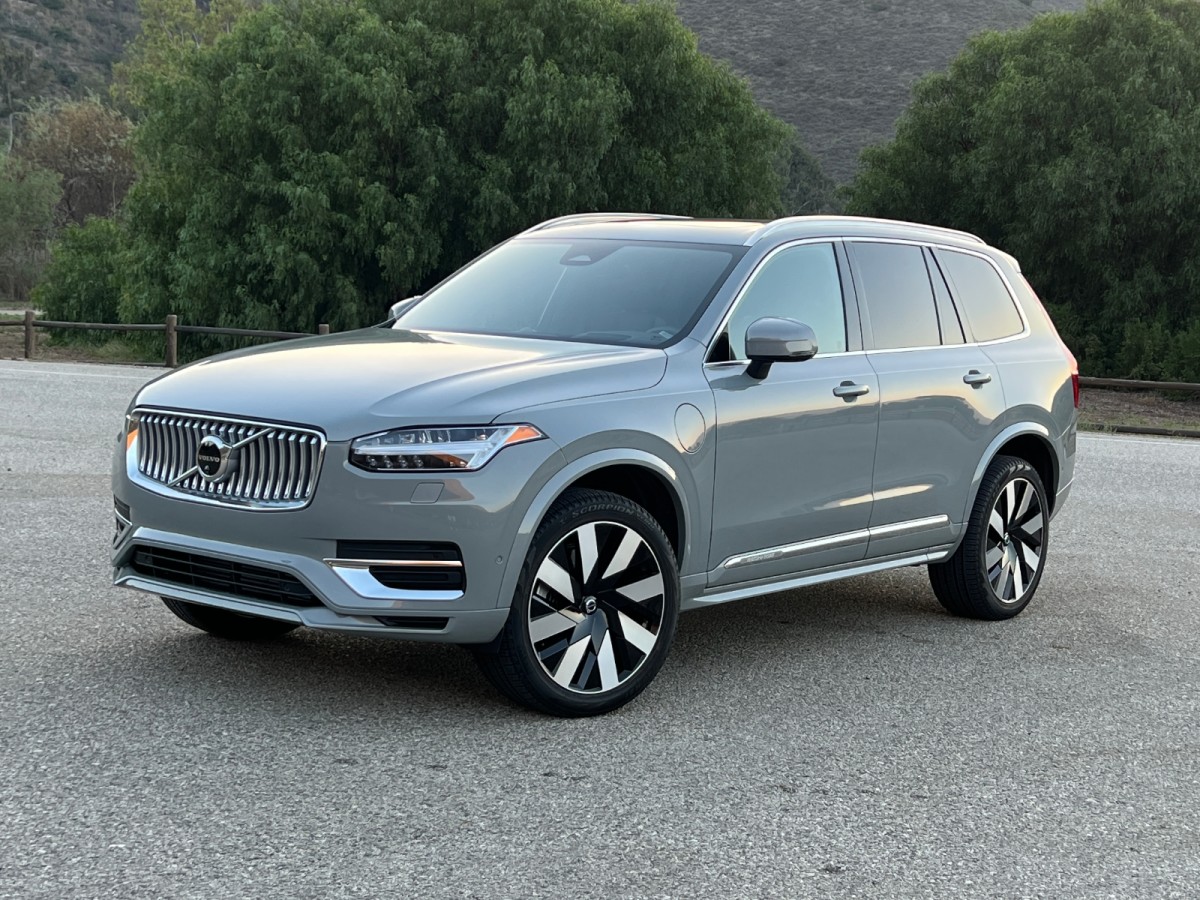
According to CarGurus experts, the overall rating for the 2025 Volvo XC90 is 8.3 out of 10, while the 2026 Toyota bZ scores 6.5 out of 10. Based on these ratings, the Volvo XC90 is the recommended choice for those seeking a luxurious, powerful, and safe vehicle with a timeless design.
Choose the 2025 Volvo XC90 if:
- You prioritize a luxurious and timeless design with modern updates.
- You value a powerful and versatile powertrain with impressive hybrid capabilities.
- You seek a vehicle with top safety ratings and advanced driver-assistance systems.


Choose the 2026 Toyota bZ if:
- You want an electric vehicle with a choice of battery sizes and good range.
- You appreciate a spacious interior with modern technology and storage solutions.
- You prefer a vehicle with comprehensive safety features and hands-free driving aids.


CarGurus highlights
According to CarGurus experts, the overall rating for the 2025 Volvo XC90 is 8.3 out of 10, while the 2026 Toyota bZ scores 6.5 out of 10. Based on these ratings, the Volvo XC90 is the recommended choice for those seeking a luxurious, powerful, and safe vehicle with a timeless design.
Choose the 2025 Volvo XC90 if:
Shop Now- You prioritize a luxurious and timeless design with modern updates.
- You value a powerful and versatile powertrain with impressive hybrid capabilities.
- You seek a vehicle with top safety ratings and advanced driver-assistance systems.
Choose the 2026 Toyota bZ if:
Shop Now- You want an electric vehicle with a choice of battery sizes and good range.
- You appreciate a spacious interior with modern technology and storage solutions.
- You prefer a vehicle with comprehensive safety features and hands-free driving aids.

By: CarGurus + AI
At CarGurus, our team of experienced automotive writers remain at the heart of our content operation, conducting hands-on car tests and writing insightful guides that are backed by years of industry experience. To complement this, we are harnessing AI to make our content offering more diverse and more helpful to shoppers than ever. To achieve this, our AI systems are based exclusively on CarGurus content, ratings and data, so that what we produce is both unique to CarGurus, and uniquely helpful to car shoppers.
