2025 Genesis GV80 vs 2026 Toyota bZ
Overview | |
Listings32 | Listings47 |
Ratings & Reviews | |
User Reviews | User Reviews |
Expert reviews8.0 out of 10 | Expert reviews6.5 out of 10 |
Pros
Cons
| Pros
Cons
|
2025 Genesis GV80 Reviews SummaryThe Genesis GV80 was introduced in 2021 and has proved itself to be a strong contender as a luxury crossover. Although the powertrain remains the same for 2025, the mid-size SUV gets a redesign both inside and out, adding a bit more sophistication, two new exterior colours and some sumptuous interior materials. We’ll see a sporty GV80 Coupe with a supercharged engine later in 2025, but for now this traditional crossover is the company’s answer to luxury at an affordable price. Verdict: Genesis improved the technology of the GV80 for 2025 by adding wireless Apple CarPlay and Android Auto, but the SUV returns poor fuel economy and the seats are far from comfortable. Still, the GV80 undercuts its European counterparts on price and definitely deserves a test drive. | |
2026 Toyota bZ Reviews SummaryReaders are looking at the electric vehicle formerly known as the bZ4X. It wears a shorter name for 2026, but that’s not the big news. More power, up to 468 kilometres of range, a standard NACS charging port (with a CCS adapter), and Plug & Charge capability are all major improvements. Toyota has also tidied up the styling inside and out and added a larger infotainment screen. Verdict: With the refreshed 2026 bZ, Toyota has fixed the bZ4X’s most significant flaws, making this a genuinely competitive model at a comparatively affordable price. | |
No video found | No video found |
Popular Features & Specs | |
Engine2.5L 300 hp I4 | Engine168 hp Electric |
DrivetrainAWD | DrivetrainFWD |
Seating Capacity5 | Seating Capacity5 |
Horsepower300 hp @ 5800 rpm | Horsepower |
EV Battery Capacity | EV Battery Capacity57.7 kWh |
Fuel Economy (City)12.4 L(e)/100 km | Fuel Economy (City)1.6 L(e)/100 km |
Fuel Economy (Highway)9.8 L(e)/100 km | Fuel Economy (Highway)2.0 L(e)/100 km |
Battery Charge Time (240V) | Battery Charge Time (240V)6 hours |
Engine | |
Engine Name2.5L 300 hp I4 | Engine Name168 hp Electric |
Torque311 lb-ft @ 1650 rpm | Torque |
Horsepower300 hp @ 5800 rpm | Horsepower |
Battery Charge Time (240V) | Battery Charge Time (240V)6 hours |
DrivetrainAWD | DrivetrainFWD |
Fuel Economy | |
EV Battery Capacity | EV Battery Capacity57.7 kWh |
Fuel Economy (City)12.4 L(e)/100 km | Fuel Economy (City)1.6 L(e)/100 km |
Fuel Economy (Highway)9.8 L(e)/100 km | Fuel Economy (Highway)2.0 L(e)/100 km |
Interior | |
Seating Capacity5 | Seating Capacity5 |
Key Features | |
Navigation SystemStandard | Navigation SystemOptional |
Safety | |
Front Crash Overall4 | Front Crash Overall4 |
Side Crash Overall5 | Side Crash Overall5 |
Dimensions & Capacity | |
Cargo Space988 L | Cargo Space784 L |
Curb Weight2200 kg | Curb Weight1840 kg |
Height1715 mm | Height1651 mm |
Length4940 mm | Length4689 mm |
Width1976 mm | Width1859 mm |
Wheelbase2954 mm | Wheelbase2850 mm |
Maximum Payload535 kg | Maximum Payload474 kg |
Number of doors4 | Number of doors4 |
Maximum Towing Capacity2722 kg | Maximum Towing Capacity |
Overview | ||
Listings | ||
Ratings & Reviews | ||
User reviews | ||
Expert reviews | 8.0 out of 10Read full review | 6.5 out of 10Read full review |
Pros & cons | Pros
Cons
| Pros
Cons
|
Summary | The Genesis GV80 was introduced in 2021 and has proved itself to be a strong contender as a luxury crossover. Although the powertrain remains the same for 2025, the mid-size SUV gets a redesign both inside and out, adding a bit more sophistication, two new exterior colours and some sumptuous interior materials. We’ll see a sporty GV80 Coupe with a supercharged engine later in 2025, but for now this traditional crossover is the company’s answer to luxury at an affordable price. Verdict: Genesis improved the technology of the GV80 for 2025 by adding wireless Apple CarPlay and Android Auto, but the SUV returns poor fuel economy and the seats are far from comfortable. Still, the GV80 undercuts its European counterparts on price and definitely deserves a test drive. | Readers are looking at the electric vehicle formerly known as the bZ4X. It wears a shorter name for 2026, but that’s not the big news. More power, up to 468 kilometres of range, a standard NACS charging port (with a CCS adapter), and Plug & Charge capability are all major improvements. Toyota has also tidied up the styling inside and out and added a larger infotainment screen. Verdict: With the refreshed 2026 bZ, Toyota has fixed the bZ4X’s most significant flaws, making this a genuinely competitive model at a comparatively affordable price. |
Video | No video found | No video found |
Popular Features & Specs | ||
Engine | 2.5L 300 hp I4 | 168 hp Electric |
Drivetrain | AWD | FWD |
Seating Capacity | 5 | 5 |
Horsepower | 300 hp @ 5800 rpm | |
EV Battery Capacity | 57.7 kWh | |
Fuel Economy (City) | 12.4 L(e)/100 km | 1.6 L(e)/100 km |
Fuel Economy (Highway) | 9.8 L(e)/100 km | 2.0 L(e)/100 km |
Battery Charge Time (240V) | 6 hours | |
Engine | ||
Engine Name | 2.5L 300 hp I4 | 168 hp Electric |
Torque | 311 lb-ft @ 1650 rpm | |
Horsepower | 300 hp @ 5800 rpm | |
Battery Charge Time (240V) | 6 hours | |
Drivetrain | AWD | FWD |
Fuel Economy | ||
EV Battery Capacity | 57.7 kWh | |
Fuel Economy (City) | 12.4 L(e)/100 km | 1.6 L(e)/100 km |
Fuel Economy (Highway) | 9.8 L(e)/100 km | 2.0 L(e)/100 km |
Interior | ||
Seating Capacity | 5 | 5 |
Key Features | ||
Navigation System | Standard | Optional |
Safety | ||
Front Crash Overall | 4 | 4 |
Side Crash Overall | 5 | 5 |
Dimensions & Capacity | ||
Cargo Space | 988 L | 784 L |
Curb Weight | 2200 kg | 1840 kg |
Height | 1715 mm | 1651 mm |
Length | 4940 mm | 4689 mm |
Width | 1976 mm | 1859 mm |
Wheelbase | 2954 mm | 2850 mm |
Maximum Payload | 535 kg | 474 kg |
Number of doors | 4 | 4 |
Maximum Towing Capacity | 2722 kg | |
The 2025 Genesis GV80 was a testament to sophisticated design, offering a refined aesthetic that was both pleasing to the eye and delightful to the senses. The redesign maintained the traditional two horizontal bar headlights, now enhanced with a micro lens array, and a more aggressive lower bumper. The grille gained depth, and the Genesis logo received a subtle tweak. The exterior colours were mostly muted, but the new Storr Green stood out as a striking addition. Inside, the GV80 continued its luxurious theme with quilted Nappa leather seats and unique interior accents, including options like basalt or recycled newspaper trim. The centre console was thoughtfully designed with tactile dials for gear selection, drive modes, and infotainment control, though the latter seemed redundant given the ease of using the touchscreen.
The 2026 Toyota bZ, meanwhile, presented a more streamlined and modern look, especially with body-colour trim replacing the previously off-putting black overfender trim. The restyled exterior was more appealing, particularly in colours like Blueprint or Supersonic Red. Inside, the bZ featured a cleaner dashboard and centre console, enhancing the sense of quality and organization. The fabric seats in the XLE trim had an upscale pattern that was both distinctive and practical for hiding dirt. The centre touchscreen was enlarged to 14 inches, integrating climate control functions, which, despite initial concerns, proved user-friendly with large icons and physical dials for temperature adjustments. However, the digital instrument cluster's placement and design remained a point of contention, as it was difficult to read and could be obscured by the steering wheel.
The 2025 Genesis GV80 retained its powertrain options, offering a standard 2.5-litre turbocharged four-cylinder engine with 300 horsepower and 311 pound-feet of torque. The top Prestige trim featured a more robust 3.5-litre twin-turbocharged six-cylinder engine, delivering 375 horsepower and 391 lb-ft of torque. All trims came with standard all-wheel drive, capable of sending up to 100% of torque to the rear wheels, optimizing fuel economy. The GV80's acceleration was satisfying, with a burly sound from the six-cylinder engine at full throttle. While the Sport mode enhanced suspension and throttle response, the vehicle was best suited for comfortable cruising rather than sporty driving. The brakes were firm and reliable, ensuring confident stops even on rough roads.
In contrast, the 2026 Toyota bZ offered a choice between single-motor front-wheel drive and dual-motor all-wheel drive configurations. The FWD model with a 57.7-kWh battery produced 168 horsepower and 198 lb-ft of torque, with a range of 380 kilometres. The AWD version, equipped with a 74.7-kWh battery, delivered a combined 338 horsepower and a range of up to 468 kilometres. The bZ's recharging capabilities were impressive, with a DC fast charger bringing the battery from 10% to 80% in about 30 minutes. On the road, the bZ was an agreeable city vehicle, though its mid-range passing power on the highway was limited. The ride could be choppy on uneven surfaces, and the FWD model struggled with traction in tight corners, making it less suitable for spirited driving.
The 2025 Genesis GV80 was well-equipped with features like power-adjustable heated front seats, heated rear seats, and a heated steering wheel. The top trim added four-zone climate control and ventilated seats. However, the seats were notably firm, which could be uncomfortable on long trips. The second row offered ample legroom, and a third row was available in the Prestige trim, though it was best suited for children due to limited space. Cargo capacity was expected to be similar to the previous model's 990 litres, and the GV80 could tow up to 2,720 kilograms.
The 2026 Toyota bZ, built on a skateboard-style EV platform, offered easy access with its ground clearance and standard height-adjustable front seats. The seats were comfortable, with eight-way power adjustment available in both trims. The bZ lacked a traditional glove compartment but compensated with ample storage solutions, including a large bin under the centre armrest and a tray beneath the console. Rear passengers enjoyed generous legroom, though foot space was limited. The bZ provided 784 litres of cargo space, expandable to 1,611 litres with the rear seats folded, though the sloped rear window limited maximum capacity.
The 2025 Genesis GV80 featured a 27-inch OLED screen combining a digital gauge cluster and infotainment system. Wireless Apple CarPlay and Android Auto were available, though delayed. The infotainment system was visually appealing but could be cumbersome to navigate due to its menu structure. A programmable favourite button offered some customization, but a dedicated Apple CarPlay button would have been appreciated. The GV80 also included wireless charging, USB-C ports, and an optional 18-speaker Bang & Olufsen stereo system, providing a sophisticated audio experience.
The 2026 Toyota bZ came with a 7-inch digital instrument cluster and a new 14-inch touchscreen infotainment display. The infotainment system was generally user-friendly, though it lacked a home screen for simultaneous data display and had readability issues in daytime mode. Wireless Apple CarPlay and Android Auto were supported, along with SiriusXM radio and complimentary connected service plans. The Drive Connect system powered navigation and voice assistant features, which performed well overall, though occasional hiccups were noted.
The 2025 Genesis GV80 was equipped with advanced driver aids, including lane keeping assist, forward collision avoidance, and blind-spot monitoring. Upper trims added features like remote smart parking and a 360-degree camera system. The Highway Drive Assist II system included an attention monitor, though it struggled with certain sunglasses. The GV80 had not been rated by the NHTSA or IIHS for 2025, but the previous model received high marks for safety.
The 2026 Toyota bZ featured Toyota Safety Sense 3.0, offering a comprehensive suite of safety technologies. Proactive Driving Assist provided additional braking and steering inputs, enhancing safety without being intrusive. The Limited trim added Traffic Jam Assist and other advanced features. The bZ's adaptive cruise control was inconsistent in traffic, and the driver monitoring system was overly sensitive. The IIHS rated the bZ's front crash avoidance tech highly, but its headlights received a Poor rating, and frontal-impact crash tests were rated Acceptable.
CarGurus highlights
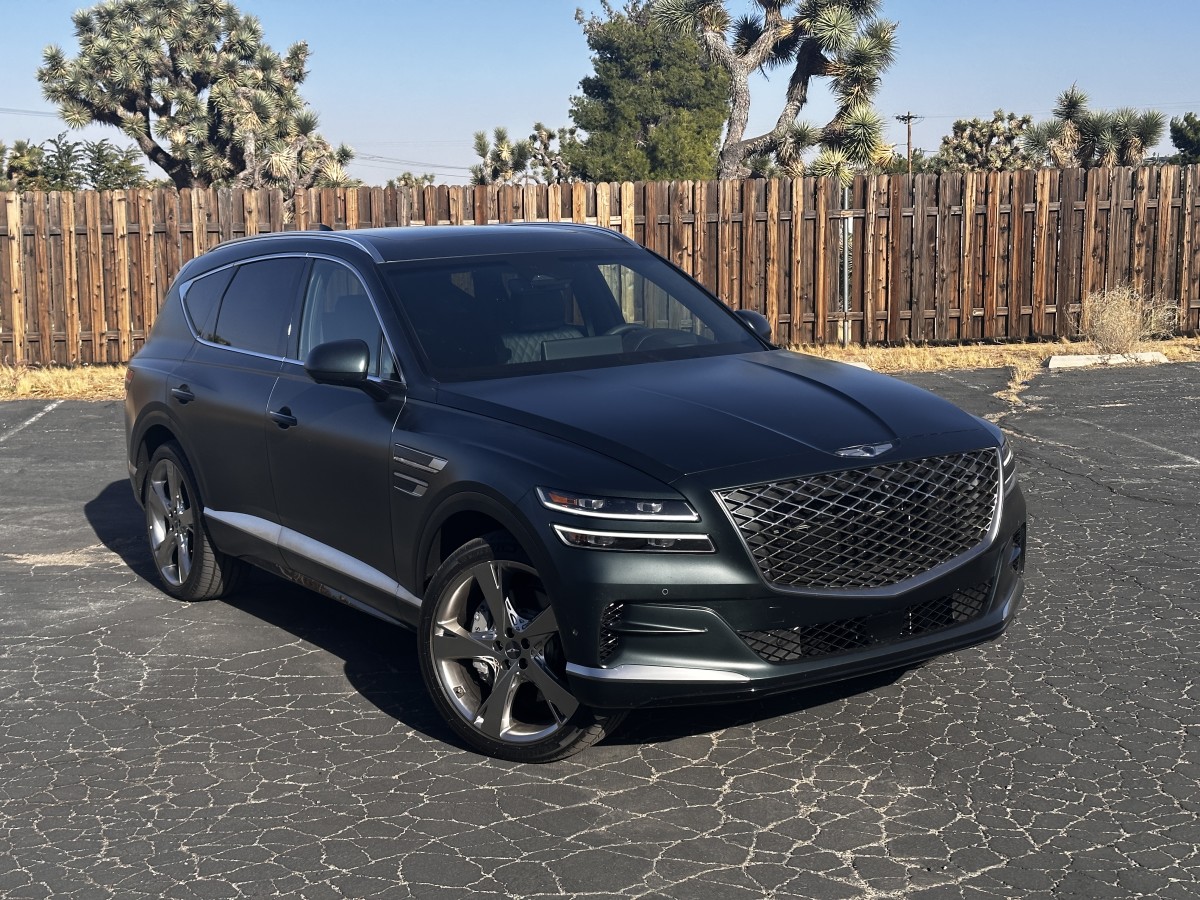
According to CarGurus experts, the overall rating for the 2025 Genesis GV80 is 8.0 out of 10, while the 2026 Toyota bZ scores 6.5 out of 10. Based on these ratings, the Genesis GV80 is the recommended choice for those seeking a luxurious and well-rounded SUV with advanced technology and performance capabilities.
Choose the 2025 Genesis GV80 if:
- You prioritize a luxurious and sophisticated design with high-quality interior materials.
- You need a powerful engine with all-wheel drive for confident performance and towing capability.
- You value advanced technology features, including a large OLED screen and premium audio system.


Choose the 2026 Toyota bZ if:
- You are looking for an electric vehicle with impressive range and fast charging capabilities.
- You prefer a modern and streamlined design with practical interior storage solutions.
- You want a comprehensive suite of safety features, including advanced driver aids and Proactive Driving Assist.


CarGurus highlights
According to CarGurus experts, the overall rating for the 2025 Genesis GV80 is 8.0 out of 10, while the 2026 Toyota bZ scores 6.5 out of 10. Based on these ratings, the Genesis GV80 is the recommended choice for those seeking a luxurious and well-rounded SUV with advanced technology and performance capabilities.
Choose the 2025 Genesis GV80 if:
Shop Now- You prioritize a luxurious and sophisticated design with high-quality interior materials.
- You need a powerful engine with all-wheel drive for confident performance and towing capability.
- You value advanced technology features, including a large OLED screen and premium audio system.
Choose the 2026 Toyota bZ if:
Shop Now- You are looking for an electric vehicle with impressive range and fast charging capabilities.
- You prefer a modern and streamlined design with practical interior storage solutions.
- You want a comprehensive suite of safety features, including advanced driver aids and Proactive Driving Assist.

By: CarGurus + AI
At CarGurus, our team of experienced automotive writers remain at the heart of our content operation, conducting hands-on car tests and writing insightful guides that are backed by years of industry experience. To complement this, we are harnessing AI to make our content offering more diverse and more helpful to shoppers than ever. To achieve this, our AI systems are based exclusively on CarGurus content, ratings and data, so that what we produce is both unique to CarGurus, and uniquely helpful to car shoppers.
