2020 Toyota 4Runner vs 2020 Toyota RAV4

Overview | |
MSRP$25,950 | MSRP$36,120 |
Listings170 | Listings49 |
Ratings & Reviews | |
User Reviews | User Reviews |
Expert reviews8.7 out of 10 | Expert reviews6.8 out of 10 |
Pros
Cons
| |
2020 Toyota RAV4 Reviews SummaryWhen you live with a Toyota RAV4 for a while, it’s easy to understand why so many people buy this Canadian-made SUV. Available with a gasoline four-cylinder engine or a gas-electric hybrid powertrain (covered as a separate model), and in a wide range of configurations including sporty XSE, luxurious Limited, and rugged Trail, the 2020 RAV4 meets a variety of customer wants and needs. | |
2020 Toyota 4Runner Reviews SummaryEven with its expensive Limited package, the Toyota 4Runner remains clearly purpose-built for tackling terrain. Whether on a dusty cow path or snowy mountain road, the 4Runner looks most in its element when its outside the typical car’s comfort zone. For 2020, Toyota keeps enough chrome and leather available to market the 4Runner as a rough-and-tumble luxury alternative, but shoppers considering one had better have a real need for 4-wheel drive. | |
No video found | No video found |
Popular Features & Specs | |
Engine2.5L 203 hp I4 | Engine4.0L 270 hp V6 |
Drive TrainFWD | Drive Train4X2 |
Seating Capacity5 | Seating Capacity7 |
Horsepower | Horsepower270 hp @ 5600 rpm |
MPG City27 | MPG City16 |
MPG Highway35 | MPG Highway19 |
Engine | |
Engine Name2.5L 203 hp I4 | Engine Name4.0L 270 hp V6 |
Torque | Torque278 lb-ft @ 4400 rpm |
Horsepower | Horsepower270 hp @ 5600 rpm |
DrivetrainFWD | Drivetrain4X2 |
Fuel Economy | |
MPG City27 | MPG City16 |
MPG Highway35 | MPG Highway19 |
Interior | |
Seating Capacity5 | Seating Capacity7 |
Safety | |
Front Crash Overall4 | Front Crash Overall4 |
Side Crash Overall5 | Side Crash Overall5 |
Dimensions & Capacity | |
Cargo Space37.6 cu ft | Cargo Space47.2 cu ft |
Curb Weight3370 lbs | Curb Weight4400 lbs |
Height67.0 in | Height71.5 in |
Length180.9 in | Length190.2 in |
Width73.0 in | Width75.8 in |
Wheelbase105.9 in | Wheelbase109.8 in |
Maximum Payload1240 lbs | Maximum Payload1700 lbs |
Number of doors4 | Number of doors4 |
Maximum Towing Capacity1500 lbs | Maximum Towing Capacity5000 lbs |
Standard Towing Capacity | Standard Towing Capacity5000 lbs |
Overview | ||
MSRP | $25,950 | $36,120 |
Listings | ||
Ratings & Reviews | ||
User reviews | ||
Expert reviews | 8.7 out of 10Read full review | 6.8 out of 10Read full review |
Pros & cons | Pros
Cons
| |
Summary | When you live with a Toyota RAV4 for a while, it’s easy to understand why so many people buy this Canadian-made SUV. Available with a gasoline four-cylinder engine or a gas-electric hybrid powertrain (covered as a separate model), and in a wide range of configurations including sporty XSE, luxurious Limited, and rugged Trail, the 2020 RAV4 meets a variety of customer wants and needs. | Even with its expensive Limited package, the Toyota 4Runner remains clearly purpose-built for tackling terrain. Whether on a dusty cow path or snowy mountain road, the 4Runner looks most in its element when its outside the typical car’s comfort zone. For 2020, Toyota keeps enough chrome and leather available to market the 4Runner as a rough-and-tumble luxury alternative, but shoppers considering one had better have a real need for 4-wheel drive. |
Video | No video found | No video found |
Popular Features & Specs | ||
Engine | 2.5L 203 hp I4 | 4.0L 270 hp V6 |
Drive Train | FWD | 4X2 |
Seating Capacity | 5 | 7 |
Horsepower | 270 hp @ 5600 rpm | |
MPG City | 27 | 16 |
MPG Highway | 35 | 19 |
Engine | ||
Engine Name | 2.5L 203 hp I4 | 4.0L 270 hp V6 |
Torque | 278 lb-ft @ 4400 rpm | |
Horsepower | 270 hp @ 5600 rpm | |
Drivetrain | FWD | 4X2 |
Fuel Economy | ||
MPG City | 27 | 16 |
MPG Highway | 35 | 19 |
Interior | ||
Seating Capacity | 5 | 7 |
Safety | ||
Front Crash Overall | 4 | 4 |
Side Crash Overall | 5 | 5 |
Dimensions & Capacity | ||
Cargo Space | 37.6 cu ft | 47.2 cu ft |
Curb Weight | 3370 lbs | 4400 lbs |
Height | 67.0 in | 71.5 in |
Length | 180.9 in | 190.2 in |
Width | 73.0 in | 75.8 in |
Wheelbase | 105.9 in | 109.8 in |
Maximum Payload | 1240 lbs | 1700 lbs |
Number of doors | 4 | 4 |
Maximum Towing Capacity | 1500 lbs | 5000 lbs |
Standard Towing Capacity | 5000 lbs | |
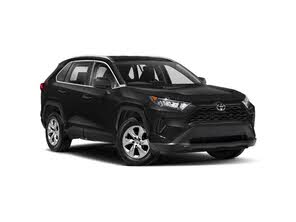
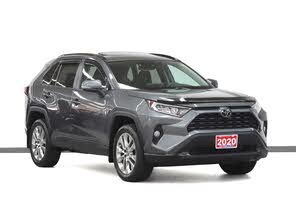
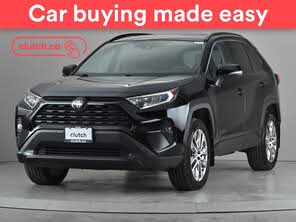
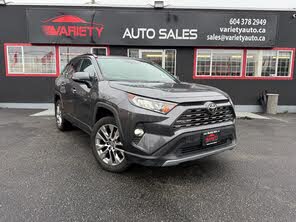
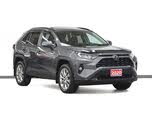
The 2020 Toyota RAV4, following its 2019 redesign, presented a bolder and more angular appearance, setting itself apart from its competitors like the Mazda CX-5 and Honda CR-V. This redesign aimed to match its rugged durability with a tougher look. The RAV4 Trail trim, introduced in the previous year, enhanced its off-roading capabilities with a torque-vectoring all-wheel-drive system, multiple driving modes, and downhill assist control. The 2020 model continued this trend with the TRD Off-Road package, featuring matte-black 18-inch alloy wheels, all-terrain tires, and a TRD suspension setup, making it a versatile choice for various terrains. The TRD Off-Road's distinct features, such as its wheels and badges, complemented its rugged aesthetic, while the interior boasted TRD logos, rubber floor mats, and a mix of quality materials.
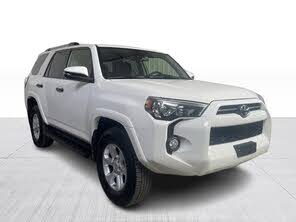
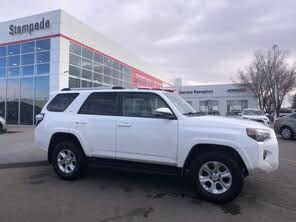
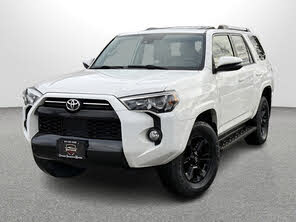
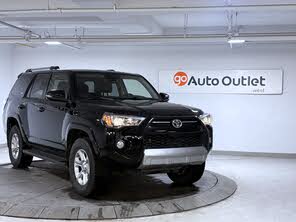
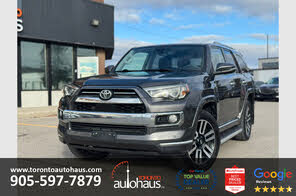
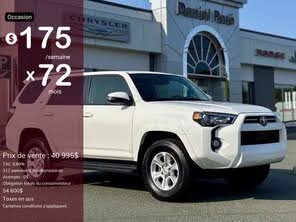
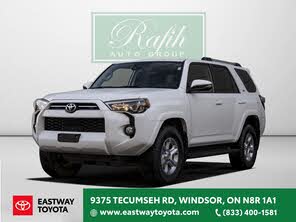
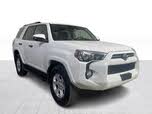
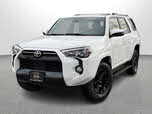
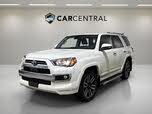
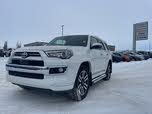
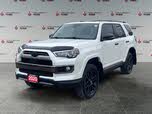
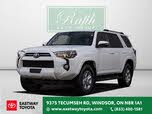
In contrast, the 2020 Toyota 4Runner maintained its timeless design with tall slab sides, a high beltline, and short overhangs, emphasizing its utilitarian attitude. The 4Runner's design prioritized functionality, with flared wheel wells for off-road tires and short overhangs for tackling steep terrains. The TRD Pro trim featured a hood scoop, although non-functional, and blacked-out grille accents. The 4Runner's lineup in Canada included the SR5 trim with various packages like TRD Off-Road, Venture, TRD Pro, Limited, and Nightshade. Our test model, the Limited package, focused on comfort with leather upholstery and an 8-inch touchscreen. Despite its chrome and leather touches, the 4Runner's utilitarian roots were evident, with plastic elements and a seating position designed for off-road adventures.


The 2020 Toyota RAV4 was equipped with a 2.5-litre 4-cylinder engine producing 203 horsepower and 184 pound-feet of torque. While a hybrid version offered 219 horsepower and impressive fuel efficiency, the TRD Off-Road package was not available for it. The RAV4's non-turbo, non-hybrid powertrain delivered satisfactory performance, especially in Sport mode, although a turbocharged engine would have been preferable for high-altitude driving. An eight-speed automatic transmission managed power delivery, though it occasionally struggled with gear selection. The TRD Off-Road model featured a torque-vectoring AWD system, multi-terrain select settings, and downhill assist control, making it adept at handling various terrains. Despite averaging 10.0 L/100 km, the RAV4 excelled in urban environments, with its suspension smoothing out speed humps and a 360-degree camera aiding in parking.
The 2020 Toyota 4Runner, built on a truck chassis, featured a 4-litre V6 engine with 270 horsepower and 278 pound-feet of torque, paired with a five-speed automatic transmission. This engine prioritized durability and off-road capability over fuel efficiency, with a towing capacity of up to 2,268 kilograms. The 4Runner's fuel consumption was estimated at 14.8 L/100 km in the city and 13.8 combined, though our test achieved 13.3 L/100 km. The 4Runner excelled off-road, with its body-on-frame construction and advanced traction systems like crawl control and Multi-Terrain Select. On-road, it exhibited significant body roll and imprecise steering, but its part-time 4WD system handled challenging terrains with ease.
The 2020 Toyota RAV4 offered easy entry and exit, with a low and sporty driving position in a 4-way power-adjustable driver's seat. The front passenger seat lacked height adjustment but provided good support. The RAV4 Trail featured SofTex upholstery, heated and ventilated front seats, and a heated steering wheel. Rear passengers enjoyed generous legroom, air conditioning vents, and USB ports. Interior storage was ample, with a dashboard shelf and cargo space of 1,062 litres behind the back seat, expandable to 1,974 litres with the seats folded. Roof rails and a roof rack with crossbars enhanced its utility.
The 2020 Toyota 4Runner prioritized outward visibility, with a tidy turning radius of 5.6 metres. The interior featured large knobs for HVAC and stereo controls, with an 8-inch touchscreen and steering wheel controls. The tall front seat position, aided by power-retractable running boards, provided a commanding view. The 4Runner offered an optional third row of seats, though best suited for short use, with limited legroom and comfort. The design of these seats required them to be narrow and thin, emphasizing the 4Runner's off-road focus.
The 2020 Toyota RAV4's technology was user-friendly, with a 7- or 8-inch touchscreen display, Bluetooth, Apple CarPlay, Android Auto, and SiriusXM satellite radio. The Trail trim featured an 8-inch system with menu shortcut buttons and separate climate controls. Upgrades included navigation and a JBL premium sound system. The TRD Off-Road's voice-recognition technology impressed, and wireless smartphone charging, a 360-degree camera, and a digital rear-view mirror were available.
The 2020 Toyota 4Runner received an 8-inch touchscreen infotainment system with Apple CarPlay and Android Auto. While Toyota's system was manageable, the onboard navigation was challenging compared to Android Auto's efficiency. The 4Runner included Bluetooth, a USB port, and subscription services like Sirius XM. Despite technological advancements, the 4Runner lagged behind competitors in features and usability, with its strengths lying in off-road capabilities.
The 2020 Toyota RAV4 included Toyota Safety Sense 2.0, featuring automatic emergency braking, adaptive cruise control, lane departure warning, and automatic high beams. Blind spot monitoring and rear cross-traffic alert were standard. The RAV4 received a Top Safety Pick rating from the IIHS, with top marks for crash protection and ADAS performance, though headlight performance varied.
The 2020 Toyota 4Runner featured Toyota Safety Sense P, with adaptive cruise control, lane-departure warning, a pre-collision system, and automatic high beams. It included eight airbags, enhancing safety compared to previous models. The NHTSA awarded it four out of five stars overall, with three stars in the rollover test. The IIHS rated it Good in most crash tests, except for a Marginal score in the small overlap front: driver-side test. The adaptive cruise control worked well, though a more active lane-keeping assist system would have been preferred.
CarGurus highlights

According to CarGurus experts, the overall rating for the 2020 Toyota RAV4 is 8.7 out of 10, while the 2020 Toyota 4Runner scores 6.8 out of 10. Based on these ratings, the 2020 Toyota RAV4 is the recommended choice for those seeking a well-rounded, efficient, and technologically advanced SUV.
Choose the 2020 Toyota 4Runner if:
- You need a rugged SUV with exceptional off-road capabilities.
- You value a commanding driving position and utilitarian design.
- You require a vehicle with a proven track record of durability and reliability.



Choose the 2020 Toyota RAV4 if:
- You prioritize fuel efficiency and a more modern driving experience.
- You seek a compact SUV with advanced technology and safety features.
- You desire a versatile vehicle for both urban and off-road adventures.





CarGurus highlights
According to CarGurus experts, the overall rating for the 2020 Toyota RAV4 is 8.7 out of 10, while the 2020 Toyota 4Runner scores 6.8 out of 10. Based on these ratings, the 2020 Toyota RAV4 is the recommended choice for those seeking a well-rounded, efficient, and technologically advanced SUV.
Choose the 2020 Toyota 4Runner if:
Shop Now- You need a rugged SUV with exceptional off-road capabilities.
- You value a commanding driving position and utilitarian design.
- You require a vehicle with a proven track record of durability and reliability.



Choose the 2020 Toyota RAV4 if:
Shop Now- You prioritize fuel efficiency and a more modern driving experience.
- You seek a compact SUV with advanced technology and safety features.
- You desire a versatile vehicle for both urban and off-road adventures.









By: CarGurus + AI
At CarGurus, our team of experienced automotive writers remain at the heart of our content operation, conducting hands-on car tests and writing insightful guides that are backed by years of industry experience. To complement this, we are harnessing AI to make our content offering more diverse and more helpful to shoppers than ever. To achieve this, our AI systems are based exclusively on CarGurus content, ratings and data, so that what we produce is both unique to CarGurus, and uniquely helpful to car shoppers.