2020 Ford Explorer vs 2020 Toyota 4Runner

Overview | |
MSRP$32,765 | MSRP$36,120 |
Listings156 | Listings31 |
Ratings & Reviews | |
User Reviews | User Reviews |
Expert reviews7.2 out of 10 | Expert reviews6.8 out of 10 |
Pros
Cons
| Pros
Cons
|
2020 Ford Explorer Reviews SummaryFor nearly 30 years, the Ford Explorer has settled into the American lexicon like Cheerios. We've gobbled up millions of them, from the rock-crawling Eddie Bauers of the 1990s to the brand-new Ford Explorer ST that can take down sports cars. The 2020 Explorer brings an all-new chassis, cranks up the technology, and introduces hybrid and high-performance powertrains in a space the size of a small living room. The Explorer's also getting very expensive while other automakers catch on to Ford's winning formula—for a lot less money. | |
2020 Toyota 4Runner Reviews SummaryEven with its expensive Limited package, the Toyota 4Runner remains clearly purpose-built for tackling terrain. Whether on a dusty cow path or snowy mountain road, the 4Runner looks most in its element when its outside the typical car’s comfort zone. For 2020, Toyota keeps enough chrome and leather available to market the 4Runner as a rough-and-tumble luxury alternative, but shoppers considering one had better have a real need for 4-wheel drive. | |
No video found | No video found |
Popular Features & Specs | |
Engine2.3L 300 hp I4 | Engine4.0L 270 hp V6 |
DrivetrainRWD | Drivetrain4X2 |
Seating Capacity7 | Seating Capacity7 |
Horsepower | Horsepower270 hp @ 5600 rpm |
MPG City21 | MPG City16 |
MPG Highway28 | MPG Highway19 |
Engine | |
Engine Name2.3L 300 hp I4 | Engine Name4.0L 270 hp V6 |
Torque | Torque278 lb-ft @ 4400 rpm |
Horsepower | Horsepower270 hp @ 5600 rpm |
DrivetrainRWD | Drivetrain4X2 |
Fuel Economy | |
MPG City21 | MPG City16 |
MPG Highway28 | MPG Highway19 |
Interior | |
Seating Capacity7 | Seating Capacity7 |
Safety | |
Front Crash Overall5 | Front Crash Overall4 |
Side Crash Overall5 | Side Crash Overall5 |
Dimensions & Capacity | |
Cargo Space18.2 cu ft | Cargo Space47.2 cu ft |
Curb Weight4345 lbs | Curb Weight4400 lbs |
Height69.9 in | Height71.5 in |
Length198.8 in | Length190.2 in |
Width89.3 in | Width75.8 in |
Wheelbase119.1 in | Wheelbase109.8 in |
Maximum Payload1425 lbs | Maximum Payload1700 lbs |
Number of doors4 | Number of doors4 |
Maximum Towing Capacity5300 lbs | Maximum Towing Capacity5000 lbs |
Standard Towing Capacity | Standard Towing Capacity5000 lbs |
Overview | ||
MSRP | $32,765 | $36,120 |
Listings | ||
Ratings & Reviews | ||
User reviews | ||
Expert reviews | 7.2 out of 10Read full review | 6.8 out of 10Read full review |
Pros & cons | Pros
Cons
| Pros
Cons
|
Summary | For nearly 30 years, the Ford Explorer has settled into the American lexicon like Cheerios. We've gobbled up millions of them, from the rock-crawling Eddie Bauers of the 1990s to the brand-new Ford Explorer ST that can take down sports cars. The 2020 Explorer brings an all-new chassis, cranks up the technology, and introduces hybrid and high-performance powertrains in a space the size of a small living room. The Explorer's also getting very expensive while other automakers catch on to Ford's winning formula—for a lot less money. | Even with its expensive Limited package, the Toyota 4Runner remains clearly purpose-built for tackling terrain. Whether on a dusty cow path or snowy mountain road, the 4Runner looks most in its element when its outside the typical car’s comfort zone. For 2020, Toyota keeps enough chrome and leather available to market the 4Runner as a rough-and-tumble luxury alternative, but shoppers considering one had better have a real need for 4-wheel drive. |
Video | No video found | No video found |
Popular Features & Specs | ||
Engine | 2.3L 300 hp I4 | 4.0L 270 hp V6 |
Drivetrain | RWD | 4X2 |
Seating Capacity | 7 | 7 |
Horsepower | 270 hp @ 5600 rpm | |
MPG City | 21 | 16 |
MPG Highway | 28 | 19 |
Engine | ||
Engine Name | 2.3L 300 hp I4 | 4.0L 270 hp V6 |
Torque | 278 lb-ft @ 4400 rpm | |
Horsepower | 270 hp @ 5600 rpm | |
Drivetrain | RWD | 4X2 |
Fuel Economy | ||
MPG City | 21 | 16 |
MPG Highway | 28 | 19 |
Interior | ||
Seating Capacity | 7 | 7 |
Safety | ||
Front Crash Overall | 5 | 4 |
Side Crash Overall | 5 | 5 |
Dimensions & Capacity | ||
Cargo Space | 18.2 cu ft | 47.2 cu ft |
Curb Weight | 4345 lbs | 4400 lbs |
Height | 69.9 in | 71.5 in |
Length | 198.8 in | 190.2 in |
Width | 89.3 in | 75.8 in |
Wheelbase | 119.1 in | 109.8 in |
Maximum Payload | 1425 lbs | 1700 lbs |
Number of doors | 4 | 4 |
Maximum Towing Capacity | 5300 lbs | 5000 lbs |
Standard Towing Capacity | 5000 lbs | |
The 2020 Ford Explorer was a striking vehicle, boasting a refined, upscale design that made it more attractive than its competitors. Its athletic appearance was enhanced by widened headlights, a large grille, and distinctive "Explorer" lettering on the hood. The ST version, with its black rims and red brake calipers, was particularly eye-catching. However, the interior did not match the exterior's appeal. Despite its high price, the materials felt subpar, with low-grade leather and hard plastics dominating the cabin. The Explorer's interior struggled to justify its cost, especially when compared to more luxurious options available at similar price points.
In contrast, the 2020 Toyota 4Runner maintained a timeless, utilitarian design with its tall slab sides and high beltline. Its off-road capabilities were evident in its flared wheel wells and short overhangs, although the hood scoop was purely aesthetic. The 4Runner's interior was functional, with large knobs and buttons for easy control, but it lacked the luxury feel of more modern SUVs. The Limited package added leather upholstery and chrome accents, but the overall feel remained utilitarian. The 4Runner's design prioritized off-road performance over luxury, making it a practical choice for adventure seekers.


The 2020 Ford Explorer offered a range of powerful engines and a rear-wheel-drive chassis that provided balanced weight distribution. The ST trim featured a 3.0-litre EcoBoost twin-turbo V6 engine with 400 horsepower and 415 pound-feet of torque, delivering smooth and addictive power. The Explorer's handling was nimble, with precise steering and flat cornering, making it a standout in its class. The 2.3-litre turbo inline four-cylinder engine, producing 300 hp, was also available, along with a hybrid option. The Explorer's towing capacity varied from 2,268 to 2,540 kilograms, depending on the engine choice. With seven drive modes, the Explorer catered to various driving conditions, enhancing its versatility.
The 2020 Toyota 4Runner, built on a truck chassis, featured a 4-litre V6 engine with 270 horsepower and 278 pound-feet of torque, paired with a five-speed automatic transmission. While not designed for fuel efficiency, the 4Runner excelled in off-road performance, thanks to its body-on-frame construction and advanced traction systems like crawl control and Multi-Terrain Select. The 4Runner's towing capacity matched the Explorer's hybrid option at 2,268 kilograms. On-road, the 4Runner exhibited significant body roll and vague steering, but its off-road prowess made it a favourite among adventure enthusiasts.
The 2020 Ford Explorer provided ample interior space, with generous headroom and legroom for passengers. The second row offered a first-class experience with air vents, USB ports, and a panoramic moonroof. The third row accommodated six-foot-tall adults for short trips, although the bench was flat for long-distance comfort. Cargo space was slightly reduced behind the third row but remained one of the largest in its class. The Explorer's intuitive controls and physical knobs made driving stress-free, despite some visibility issues caused by thick D-pillars and fuzzy cameras.
The 2020 Toyota 4Runner offered excellent outward visibility, essential for off-roading. Its tall front seat position provided a commanding view, although climbing in and out could be challenging without power-retractable running boards. The 4Runner's optional third row was best suited for short and occasional use, with limited legroom and comfort. The dashboard featured large, easy-to-use controls, but the steering-wheel buttons lacked illumination, making them difficult to use in the dark. The 4Runner's interior prioritized functionality over luxury, appealing to those seeking adventure over comfort.
The 2020 Ford Explorer came standard with an 8-inch touchscreen featuring Sync 3 infotainment, Apple CarPlay, Android Auto, and a 4G Wi-Fi hotspot. The Premium Technology Package added a 10-inch vertical touchscreen and a 12-inch digital instrument cluster, enhancing the user experience. However, the system lacked customization options, and the Co-Pilot360 Assist+ semi-automated driving system needed improvement. Despite these shortcomings, the Explorer's tech was on the verge of greatness with potential software updates.
The 2020 Toyota 4Runner received a much-needed tech update with an 8-inch touchscreen infotainment system compatible with Apple CarPlay and Android Auto. While Toyota's proprietary system was user-friendly, the onboard navigation system was less efficient than smartphone alternatives. The 4Runner also offered Bluetooth connectivity, a USB port, and subscription services like Sirius XM. Although the 4Runner's tech lagged behind competitors, its advanced off-road features were its true strength, catering to those who prioritized adventure over in-car technology.
The 2020 Ford Explorer featured Ford Co-Pilot 360, which included forward automatic emergency braking, blind-spot monitoring, rear cross-traffic alert, auto high beams, and lane-keep assist. Adaptive cruise control with steering assist and reverse braking were also standard. The Explorer received a five-star safety rating from the NHTSA and was rated as a Top Safety Pick+ by the IIHS.
The 2020 Toyota 4Runner was equipped with Toyota Safety Sense P (TSS-P), which included adaptive cruise control, lane-departure warning, a pre-collision system with pedestrian detection, and automatic high beams. The 4Runner had eight standard airbags and received a four-star overall safety rating from the NHTSA, with a three-star rating in the rollover test. The IIHS rated it Good in most crash tests, except for a Marginal score in the small overlap front: driver-side test.
CarGurus highlights
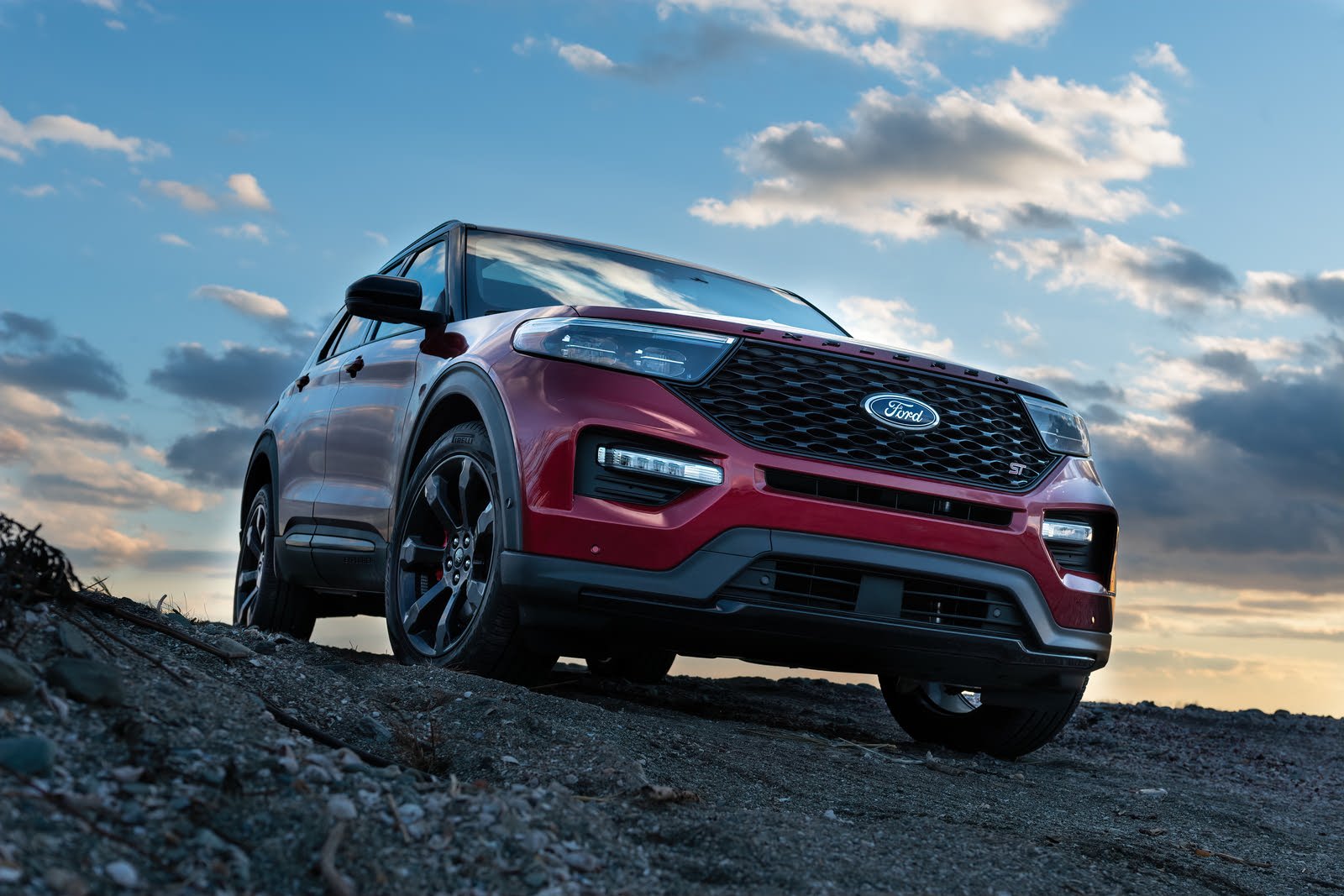
According to CarGurus experts, the overall rating for the 2020 Ford Explorer is 7.2 out of 10, while the 2020 Toyota 4Runner scores 6.8 out of 10. Based on these ratings, the Ford Explorer is the recommended choice for those seeking a well-rounded SUV with advanced technology and a powerful engine. However, for off-road enthusiasts, the Toyota 4Runner remains a strong contender with its rugged capabilities and utilitarian design.
Choose the 2020 Ford Explorer if:
- You prioritize a powerful engine and nimble handling for on-road driving.
- You need ample interior space and cargo capacity for family trips.
- You value advanced technology and infotainment features.





Choose the 2020 Toyota 4Runner if:
- You seek a vehicle with exceptional off-road capabilities.
- You prefer a utilitarian design with a commanding driving position.
- You value reliability and durability in a rugged SUV.


CarGurus highlights
According to CarGurus experts, the overall rating for the 2020 Ford Explorer is 7.2 out of 10, while the 2020 Toyota 4Runner scores 6.8 out of 10. Based on these ratings, the Ford Explorer is the recommended choice for those seeking a well-rounded SUV with advanced technology and a powerful engine. However, for off-road enthusiasts, the Toyota 4Runner remains a strong contender with its rugged capabilities and utilitarian design.
Choose the 2020 Ford Explorer if:
Shop Now- You prioritize a powerful engine and nimble handling for on-road driving.
- You need ample interior space and cargo capacity for family trips.
- You value advanced technology and infotainment features.
Choose the 2020 Toyota 4Runner if:
Shop Now- You seek a vehicle with exceptional off-road capabilities.
- You prefer a utilitarian design with a commanding driving position.
- You value reliability and durability in a rugged SUV.

By: CarGurus + AI
At CarGurus, our team of experienced automotive writers remain at the heart of our content operation, conducting hands-on car tests and writing insightful guides that are backed by years of industry experience. To complement this, we are harnessing AI to make our content offering more diverse and more helpful to shoppers than ever. To achieve this, our AI systems are based exclusively on CarGurus content, ratings and data, so that what we produce is both unique to CarGurus, and uniquely helpful to car shoppers.
