2022 Mitsubishi Outlander Reviews, Pricing & Specs
Write a review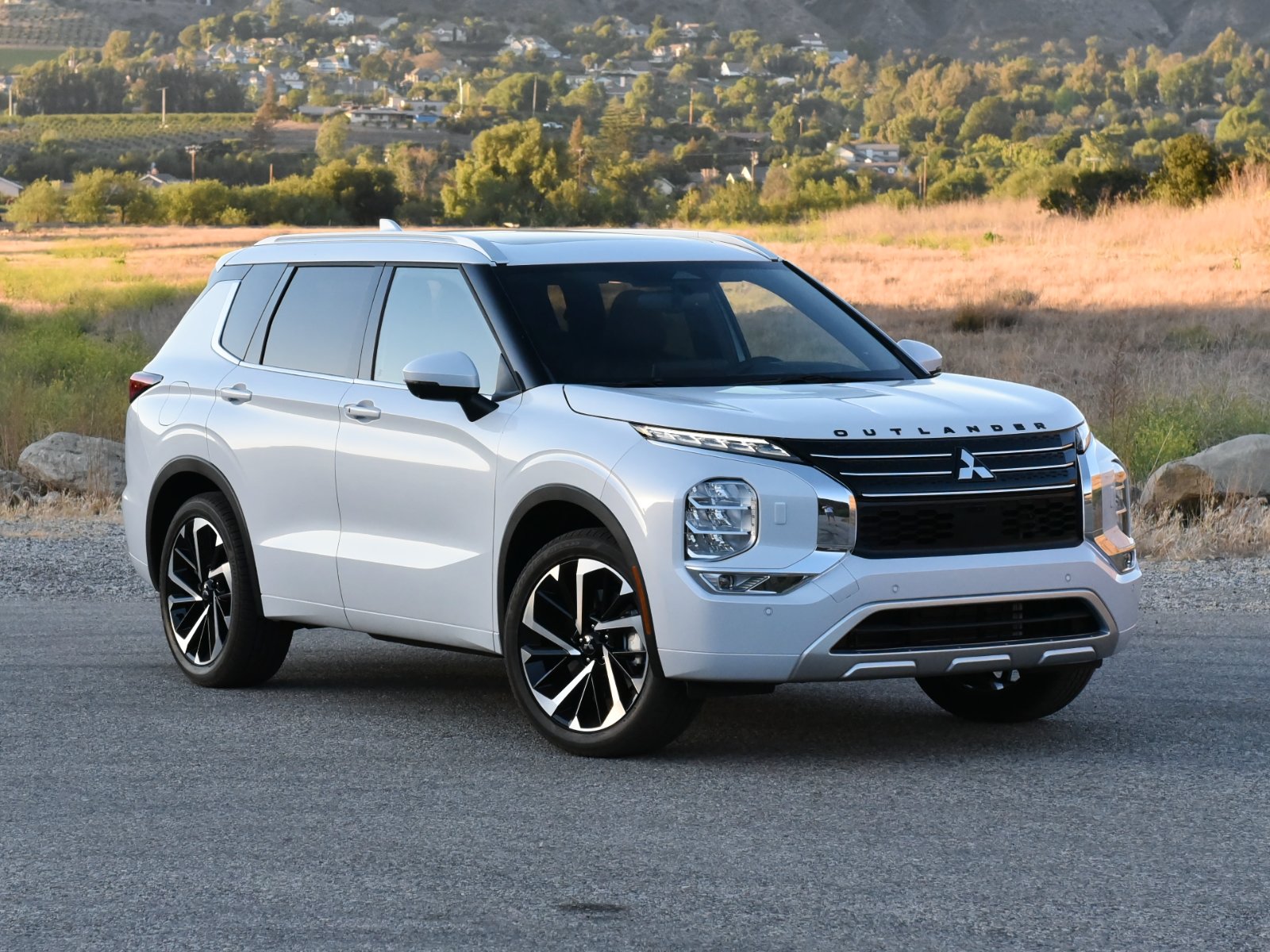
It’s been a long time since Mitsubishi sold a competitive vehicle, but with the arrival of the redesigned and all-new 2022 Outlander, you officially have a good reason to visit a dealership with red-diamond signage out in front.
Globalization is as transformative a trend within the automotive industry as electrification. To keep cars, trucks, and SUVs competitive and affordable, automakers partner up to share platforms, powertrains, and parts while distinguishing between brands through design, packaging, and dynamic tuning. Thanks to the Renault-Nissan-Mitsubishi alliance, the 2022 Mitsubishi Outlander is a new vehicle that is an undisputed beneficiary of this trend.
The Mitsubishi Outlander PHEV, a plug-in hybrid that is a popular model in Canada, was not included in the redesign. This review applies only to non-electrified models.

To ensure a unique identity for the new Outlander, designers employed what some people might think is outlandish front styling. Featuring the automaker’s “Dynamic Shield” grille and lighting concept, the Outlander puts a bold face forward, but everything from the front wheels to the rear bumper displays a tasteful, balanced, and appealing design.
In Canada, Mitsubishi sells the 2022 Outlander in ES, SE, LE, LE Premium, SEL, GT, and GT Premium trim levels, with 18-inch alloy wheels on the lower two grades and handsome 20-inch wheels as standard on the rest. Prices range from an MSRP of $31,998 to $42,178, with all-wheel drive (AWD) standard on all trims (front-wheel drive (FWD) is not offered). The destination charge is $1,900, which pays for shipment from the Japanese factory building the Outlander.
Our U.S.-spec test vehicle was the equivalent of Canada’s GT Premium trim, bringing the total price to $44,654, including the destination charge (Canadian, estimated).
With GT Premium, Mitsubishi luxuriously outfits the Outlander with premium semi-aniline leather in black and Saddle Tan with quilting and contrast stitching. Matching simulated leather door panel inserts complete the upscale look, and this version of the crossover also boasts a head-up display (HUD) and a premium sound system. A power panoramic glass sunroof, standard on most grades, adds to the interior ambiance.
The interior design adheres to the tenets of minimalism, executed in black with authentic aluminum accents and gloss black trim. As you might expect in the compact crossover SUV segment, some interior plastics remind you of where the Outlander resides in the overall SUV pecking order. Still, Mitsubishi avoids the use of obviously inexpensive bits and pieces.

Mitsubishi equips the 2022 Outlander with a 2.5-litre four-cylinder engine making 181 horsepower at 6,000 rpm and 181 pound-feet of torque at 3,600 rpm. A continuously variable transmission (CVT) powers Mitsubishi’s Super All-Wheel Control (S-AWC) AWD system.
We’re not sure what makes S-AWC “super,” since the Outlander uses a brake-induced, rather than a mechanical, torque-vectoring system. Paddle shifters offer manual control over the CVT’s eight stepped ratios, but they similarly promise more driving satisfaction than they ultimately deliver.
Drivers can choose from Eco, Normal, Tarmac, Gravel, Snow, and Mud driving modes. As you might expect, Eco makes the Outlander feel sluggish, while Tarmac seems to simply hold engine revs higher without making the Outlander more rewarding to drive.
With peak torque available at relatively low rpm (for a non-turbocharged engine), and a CVT that makes the best use of the available power, the Outlander feels most responsive in lower-speed urban and suburban environments. Sharper bumps, cracks, and holes in the pavement crash through the taut suspension into the cabin, though.
Accelerate down an on-ramp onto a highway, and you’re likely to wish for a turbocharger—especially if the ramp is a short one or climbs a hill. The Outlander simply isn’t strong enough to give a driver confidence. This is also true when contemplating a pass on a two-lane road or considering taking advantage of holes in traffic. Sure, you can do these things, but there isn’t much motive force in reserve when you need it.
As speeds rise, other dissatisfying dynamic traits become evident. For example, even without the steering assistance or lane-departure prevention systems active, the Outlander’s steering feels vague and disconnected on-centre and imprecise and sticky off-centre. With the steering-assistance technology turned on, the situation is even worse unless you engage the Outlander’s advanced driving-assistance system.
Meanwhile, the suspension continues to feel too firm and unyielding over the more minor pavement anomalies that scar almost every road in the nation. This SUV demonstrates remarkable composure over school-zone speed humps and the undulating pavement of a lumpy rural road. But otherwise, on anything except perfectly smooth pavement, it behaves in a brittle, almost fragile manner.
Generally, the Outlander’s ride and handling qualities are the opposite of expectations. Aside from the Outlander’s power deficit, the quirky ride-and-handling traits require a good de-quirking.
The Outlander returned 9.4 litres per 100 kilometres on our testing route, coming up short against Natural Resources Canada’s official fuel consumption rating of 8.9 L/100 km combined for AWD drivetrain models.

For the most part, the Outlander excels at form and function. For starters, the front seats are roomy and comfortable, and deeply padded armrests add extra comfort. The Outlander GT and GT Premium’s driver’s seat features a 10-way power adjustment, and heated front seats and a thick-rimmed heated steering wheel are equipped on all or most grades, respectively.
Controls are intuitive, and the displays impress, especially the digital instrumentation and the HUD. Clean, uncluttered design is the rule, and Mitsubishi’s electronic transmission shifter is both stylish and easy to use.
However, there is plenty of wasted real estate on and underneath the Outlander’s centre console. Mitsubishi hasn’t leveraged one of the benefits of using a shift-by-wire transmission design, leaving the SUV with less storage than many competitors.
The rear seat room is generous, giving even taller adults plenty of head and legroom. The seat is comfortable, too, with the bottom cushion providing good thigh support, the backrest ensuring a proper seating position, and seat heaters ready to ward off a winter chill. It is mounted on tracks and can slide forward and back to make more or less room behind it as you deem necessary.
Mitsubishi crams a third-row seat into the cargo hold as well. Adults cannot sit here because there isn’t enough head and leg space. Kids will fit, but because the third row is so close to the tailgate, this isn’t the safest place for children to ride.
Besides, the Outlander can hold no more than 331 litres of cargo with the third-row seat in use. Fold it down, and the SUV accommodates 948 litres of luggage behind the second-row seat. Maximum cargo capacity measures 2,256 litres unless you get the panoramic sunroof. With that feature, the Outlander offers 2,217 litres of cargo room.

Three pieces of technology stand out within the Outlander GT and GT Premium.
The first is the 12.3-inch digital instrumentation display. Though these are increasingly common and are no longer strictly limited to luxury models, it’s nevertheless surprising and delightful that a Mitsubishi supplies this type of technology.
The second is the HUD equipped on GT Premium. Not only is this a large size among HUDs, but it shows a significant amount of detail all at the same time. Better yet, it remains perfectly visible when the driver is wearing polarized sunglasses, making it superior to HUDs found in some SUVs costing twice the price or more.
The third is the available 9-inch touchscreen infotainment system, standard on LE and up. It includes stereo volume and tuning knobs and equips the Outlander with Bluetooth and wireless Apple CarPlay (Android Auto requires a wire).
Wireless smartphone charging is also standard on all Outlanders above the base model. And the GT Premium test vehicle had a 10-speaker Bose premium audio system, which delivered uncharacteristically good sound for the brand.
If there is room for improvement here, it’s related to the voice-recognition technology. When driving, it had a harder time understanding me than when using it while the SUV was parked. Road noise and tire slap are almost constant companions at speed, so perhaps that was the issue.

One of my favourite things about driving the 2022 Outlander was its driver-assist system. This is essentially the same thing as Nissan’s ProPilot Assist, and the technology works with commendable refinement, smoothness, and accuracy. It is a hands-on Level 2 system, though, so you must keep your hands on the steering wheel at all times.
With this system active, the Outlander’s intrusive steering assistance and lane-departure prevention systems are not problematic because you expect them to control the steering. In other situations, they add a layer of aggravation to the Outlander’s already unnatural steering feel. To turn them off, you must use the touchscreen's driving assistance menu, as Mitsubishi does not provide a button on the steering wheel or dashboard to make this task easier.
In addition to this, the new 2022 Outlander includes the increasingly common safety features and driver-assist tech, relating to forward collision mitigation, safe reversing, lane-keeping assist and lane departure warning, and blind-spot warning and rear cross-traffic alert. Aside from the steering aggravation, they work as expected.
The Insurance Institute for Highway Safety (IIHS) gives the 2022 Outlander its Top Safety Pick+ rating, though it should be noted that headlights on units built before July 2021 receive a Poor rating. The National Highway Traffic Safety Administration (NHTSA) gives the new Outlander a five-star overall rating with four-star ratings on frontal crash and rollover performance.

The model year 2022 Mitsubishi Outlander is worthy of consideration. There are few flaws here, but since most of them pertain to driving dynamics, you’ll need to test-drive one for yourself to decide if you like the way this SUV accelerates, rides, and handles.
If you like what you see and feel during the test drive, Mitsubishi sweetens the deal with a 10-year/160,000-kilometre powertrain warranty, a five-year/100,000-kilometre standard warranty, and five years of free roadside assistance.
Beyond the deal, the design, the premium interior fittings, the impressive technology, the accommodating cabin, and the roomy cargo area, the best thing about the 2022 Mitsubishi Outlander is that it’s the best vehicle the company has produced in what seems like forever.

User reviews for 2022 Mitsubishi Outlander
Write a review2022 Mitsubishi Outlander Pricing
Trims & specs
Air Conditioning
Automatic climate control front air conditioning · Dual front air conditioning zones
Airbags
Dual front airbags · Dual front knee airbags · Passenger airbag deactivation: occupant sensing deactivation · Rear side airbags · Rear side curtain airbags
Audio System
Antenna Type: diversity · Voice recognition audio system · USB auxiliary audio input · Touch screen display radio · Satellite Radio: SiriusXM · Total Number of Speakers: 6
Brakes
ABS: 4-wheel · Braking assist: hill start assist · Electronic parking brake: auto off · Front brake diameter: 13.8 · Front brakes: ventilated disc · Rear brake diameter: 13.0 · Rear brakes: ventilated disc
Comfort Features
Armrests: rear center with cupholders · Door trim: cloth · Floor Material: carpet · Shift knob trim: urethane · Steering wheel trim: urethane
Convenience Features
Assist handle: front · Cargo area power outlet: 12V · Center console: front console with armrest and storage · Cupholders: front · Easy entry: manual rear seat · Multi-function remote: keyless entry · One-touch windows: 1 · Power outlet(s): 12V front · Power steering: electric · Power windows: lockout button · Reading lights: front · Steering wheel: tilt and telescopic · Steering wheel mounted controls: phone · Storage: door pockets · Vanity mirrors: dual illuminating
Driver Seat
Adjustable lumbar support: power · Manual adjustments: 6
Drivetrain
Axle ratio: 5.69
Engine
Alternator: 120 amps · Battery: maintenance-free
Exterior Features
Door handle color: body-color · Exhaust tip color: stainless-steel · Fender lip moldings: black · Front bumper color: body-color · Grille color: black with chrome accents · Mirror color: body-color · Rear bumper color: body-color · Rear spoiler: roofline spoiler · Rear spoiler color: body-color · Rear trunk/liftgate: liftgate · Rocker panel color: black · Window trim: chrome
Headrests
Front headrests: adjustable · Number of front headrests: 2 · Number of rear headrests: 3 · Number of third row headrests: 2
In Car Entertainment
Connected in-car apps: Google search · Infotainment: Android Auto ready · Infotainment screen size: 8 in.
Instrumentation
Fuel economy display: range · Instrument cluster screen size: 7 in. · Warnings and reminders: low fuel level
Lights
Daytime running lights: LED · Headlights: auto delay off · Tail and brake lights: LED
Mirrors
Exterior mirrors: power · Inside rearview mirror: manual day/night
Passenger Seat
Manual Adjustments: 4
Rear Seats
Type: 40-20-40 split bench
Safety
Automatic emergency braking: rear · Camera system: rearview · Child seat anchors: LATCH system · Cross Traffic Alert: rear · Crumple zones: rear · Parking sensors: rear · Pre-Collision Warning System: visual warning · Pre-collision warning system: pedestrian detection · Rearview monitor: in dash
Seatbelts
Emergency locking retractors: front · Front seatbelts: 3-point · Seatbelt force limiters: front · Seatbelt pretensioners: front · Seatbelt warning sensor: driver and passenger · Second row seatbelts: 3-point · Third row seatbelts: 3-point
Seats
Driver seat manual adjustments: reclining · Front seat type: bucket · Passenger seat manual adjustments: reclining · Rear headrests: adjustable · Rear seat folding: split · Rear seat manual adjustments: reclining · Third row seat folding: split · Upholstery: cloth
Security
Power door locks: anti-lockout
Spare Tire
Kit: inflator kit
Stability and Traction
Traction control: with trailer stability control
Steering
Steering ratio: 14.2 · Turns lock-to-lock: 2.6
Suspension
Front Arm Type: lower control arms · Front Shock Type: gas shock absorbers · Front Spring Type: coil springs · Front Suspension Classification: independent · Front Suspension Type: MacPherson struts · Rear Shock Type: gas shock absorbers · Rear Spring Type: coil springs · Rear Suspension Classification: independent · Rear Suspension Type: multi-link · Stabilizer bar(s): rear
Telematics
Electronic messaging assistance: with voice recognition · Phone: voice activated · Phone wireless data link: Bluetooth
Third Row Seat
Type: 50-50 split bench
Tires
Type: all season
Tires and Rims
Wheel type: aluminum alloy
Windows
Front wipers: integrated washer jets · Liftgate window: fixed · Power windows: with safety reverse · Rear wiper: with washer
Air Conditioning
Automatic climate control front air conditioning · Dual front air conditioning zones
Airbags
Dual front airbags · Dual front knee airbags · Passenger airbag deactivation: occupant sensing deactivation · Front side airbags · Rear side curtain airbags
Audio System
Antenna Type: diversity · Voice recognition audio system · Bluetooth auxiliary audio input · Touch screen display radio · Satellite Radio: SiriusXM · Total Number of Speakers: 6
Brakes
ABS: 4-wheel · Braking assist: hill start assist · Electronic parking brake: auto off · Front brake diameter: 13.8 · Front brakes: ventilated disc · Rear brake diameter: 13.0 · Rear brakes: ventilated disc
Comfort Features
Armrests: rear center with cupholders · Door trim: cloth · Floor Material: carpet · Shift knob trim: urethane · Steering wheel trim: urethane
Convenience Features
Assist handle: rear · Cargo area power outlet: 12V · Center console: front console with armrest and storage · Cupholders: rear · Easy entry: manual rear seat · Multi-function remote: keyless entry with panic alarm · One-touch windows: 1 · Power outlet(s): USB front · Power steering: electric · Power windows: lockout button · Reading lights: front · Steering wheel: tilt and telescopic · Steering wheel mounted controls: paddle shifter · Storage: in-floor · Vanity mirrors: dual illuminating
Driver Seat
Adjustable lumbar support: power · Manual adjustments: 6
Drivetrain
4WD Type: on demand · Axle ratio: 5.69
Engine
Alternator: 120 amps · Battery: maintenance-free
Exterior Features
Door handle color: body-color · Exhaust tip color: stainless-steel · Fender lip moldings: black · Front bumper color: body-color · Grille color: black with chrome accents · Mirror color: body-color · Rear bumper color: body-color · Rear spoiler: roofline spoiler · Rear spoiler color: body-color · Rear trunk/liftgate: liftgate · Rocker panel color: black · Window trim: chrome
Headrests
Front headrests: adjustable · Number of front headrests: 2 · Number of rear headrests: 3 · Number of third row headrests: 2
In Car Entertainment
Connected in-car apps: Google POIs · Infotainment: Android Auto ready · Infotainment screen size: 8 in.
Instrumentation
Fuel economy display: range · Instrument cluster screen size: 7 in. · Warnings and reminders: low oil pressure
Lights
Daytime running lights: LED · Headlights: automatic high beam dimmer · Tail and brake lights: LED
Mirrors
Exterior mirrors: manual folding · Inside rearview mirror: manual day/night
Passenger Seat
Manual Adjustments: 4
Rear Seats
Type: 40-20-40 split bench
Safety
Automatic emergency braking: front · Camera system: rearview · Child seat anchors: LATCH system · Cross Traffic Alert: rear · Crumple zones: front · Parking sensors: rear · Pre-Collision Warning System: audible warning · Pre-collision warning system: pedestrian detection · Rearview monitor: in dash
Seatbelts
Emergency locking retractors: front, rear, third, and fourth row · Front seatbelts: 3-point · Seatbelt force limiters: front · Seatbelt pretensioners: front and rear · Seatbelt warning sensor: driver and passenger · Second row seatbelts: 3-point · Third row seatbelts: 3-point
Seats
Driver seat manual adjustments: reclining · Front seat type: bucket · Passenger seat manual adjustments: reclining · Rear headrests: adjustable · Rear seat folding: split · Rear seat manual adjustments: reclining · Third row seat folding: split · Upholstery: cloth
Security
Power door locks: anti-lockout
Spare Tire
Kit: tire sealant
Stability and Traction
Traction control: with trailer stability control
Steering
Steering ratio: 14.2 · Turns lock-to-lock: 2.6
Suspension
Front Arm Type: lower control arms · Front Shock Type: gas shock absorbers · Front Spring Type: coil springs · Front Suspension Classification: independent · Front Suspension Type: MacPherson struts · Rear Shock Type: gas shock absorbers · Rear Spring Type: coil springs · Rear Suspension Classification: independent · Rear Suspension Type: multi-link · Stabilizer bar(s): front
Telematics
Electronic messaging assistance: with voice recognition · Phone: voice activated · Phone wireless data link: Bluetooth
Third Row Seat
Type: 50-50 split bench
Tires
Type: all season
Tires and Rims
Wheel type: aluminum alloy
Windows
Front wipers: variable intermittent · Liftgate window: fixed · Power windows: with safety reverse · Rear wiper: with washer
Air Conditioning
Automatic climate control front air conditioning · Dual front air conditioning zones
Airbags
Dual front airbags · Dual front knee airbags · Passenger airbag deactivation: occupant sensing deactivation · Rear side airbags · Front side curtain airbags
Audio System
Antenna Type: mast · Voice recognition audio system · Bluetooth auxiliary audio input · Premium Brand: Bose · Touch screen display radio · Satellite Radio: SiriusXM · 1 subwoofer · Total Number of Speakers: 9
Brakes
ABS: 4-wheel · Braking assist: hill start assist · Electronic parking brake: auto off · Front brake diameter: 13.8 · Front brakes: ventilated disc · Rear brake diameter: 13.0 · Rear brakes: disc
Comfort Features
Armrests: rear center with cupholders · Door trim: leatherette · Floor Material: carpet · Shift knob trim: leather · Steering wheel trim: leather
Convenience Features
Assist handle: rear · Cargo area power outlet: 12V · Center console: front console with armrest and storage · Cruise control: adaptive · Cupholders: front, rear and third row · Dimming rearview mirror: auto-dimming · Easy entry: manual rear seat · Memorized settings: liftgate · Multi-function remote: proximity entry system · One-touch windows: 4 · Power outlet(s): USB-C front · Power steering: electric · Power windows: lockout button · Reading lights: front · Rear view camera: multi-view · Steering wheel: tilt and telescopic · Steering wheel mounted controls: cruise controls · Storage: sunglasses holder · Vanity mirrors: dual illuminating
Driver Seat
Adjustable lumbar support: power · Power adjustments: 8
Drivetrain
Axle ratio: 5.69
Engine
Alternator: 120 amps · Battery: maintenance-free
Exterior Features
Door handle color: body-color · Exhaust tip color: stainless-steel · Fender lip moldings: black · Front bumper color: body-color · Grille color: black with chrome accents · Mirror color: body-color · Rear bumper color: body-color · Rear spoiler: roofline spoiler · Rear spoiler color: body-color · Rear trunk/liftgate: sensor-activated · Rocker panel color: black · Window trim: chrome
Headrests
Front headrests: adjustable · Number of front headrests: 2 · Number of rear headrests: 3 · Number of third row headrests: 2
In Car Entertainment
Connected in-car apps: Google POIs · Infotainment: Android Auto ready · Infotainment screen size: 9 in.
Instrumentation
Fuel economy display: MPG · Instrument cluster screen size: 12.3 in. · Warnings and reminders: low oil pressure
Lights
Daytime running lights: LED · Front fog lights: LED · Headlights: Auto on/off · Tail and brake lights: LED
Mirrors
Exterior mirrors: heated
Passenger Seat
Manual Adjustments: 4
Rear Seats
Type: 40-20-40 split bench
Roof
Moonroof: anti-trapping feature
Safety
Automatic emergency braking: rear · Child seat anchors: LATCH system · Cross Traffic Alert: rear · Crumple zones: rear · Parking sensors: front · Pre-Collision Warning System: visual warning · Pre-collision warning system: pedestrian detection · Rearview monitor: in dash
Seatbelts
Emergency locking retractors: front · Front seatbelts: 3-point · Seatbelt force limiters: front · Seatbelt pretensioners: front and rear · Seatbelt warning sensor: driver and passenger · Second row seatbelts: 3-point · Third row seatbelts: 3-point
Seats
Driver seat power adjustments: height · Front seat type: bucket · Passenger seat manual adjustments: reclining · Rear headrests: adjustable · Rear seat folding: split · Rear seat manual adjustments: reclining · Third row seat folding: split · Upholstery: leatherette
Security
Power door locks: anti-lockout
Spare Tire
Kit: inflator kit
Stability and Traction
Traction control: with trailer stability control
Steering
Steering ratio: 14.2 · Turns lock-to-lock: 2.6
Suspension
Front Arm Type: lower control arms · Front Shock Type: gas shock absorbers · Front Spring Type: coil springs · Front Suspension Classification: independent · Front Suspension Type: MacPherson struts · Rear Shock Type: gas shock absorbers · Rear Spring Type: coil springs · Rear Suspension Classification: independent · Rear Suspension Type: multi-link · Stabilizer bar(s): front
Telematics
Driver assistance app: roadside assistance · Electronic messaging assistance: with read function · Navigation system: with voice recognition · Phone: voice activated · Phone wireless data link: Bluetooth · Satellite communications: Mitsubishi Connect · Smart device app compatibility: My Mitsubishi Connect · Smart device app function: engine start
Third Row Seat
Type: 50-50 split bench
Tires
Type: all season
Tires and Rims
Wheels: painted aluminum
Windows
Front wipers: rain sensing · Liftgate window: fixed · Power windows: with safety reverse · Rear wiper: intermittent
Air Conditioning
Automatic climate control front air conditioning · Dual front air conditioning zones
Airbags
Dual front airbags · Dual front knee airbags · Passenger airbag deactivation: occupant sensing deactivation · Front side airbags · Front side curtain airbags
Audio System
Antenna Type: diversity · Voice recognition audio system · Bluetooth auxiliary audio input · HD radio · Satellite Radio: SiriusXM · Total Number of Speakers: 6
Brakes
ABS: 4-wheel · Braking assist: hill start assist · Electronic parking brake: auto off · Front brake diameter: 13.8 · Front brakes: ventilated disc · Rear brake diameter: 13.0 · Rear brakes: ventilated disc
Comfort Features
Armrests: rear center with cupholders · Door trim: leatherette · Floor Material: carpet · Shift knob trim: leather · Steering wheel trim: leather
Convenience Features
Adaptive stop and go cruise control: semi-automatic · Assist handle: rear · Autonomous lane guidance: lane centering · Cargo area power outlet: 12V · Center console: front console with armrest and storage · Cruise control: adaptive · Cupholders: rear · Easy entry: manual rear seat · Memorized settings: liftgate · Multi-function remote: proximity entry system · One-touch windows: 4 · Power outlet(s): USB rear · Power steering: electric · Power windows: lockout button · Reading lights: front · Rear view camera: multi-view · Steering wheel: tilt and telescopic · Steering wheel mounted controls: voice recognition controls · Storage: in-floor · Vanity mirrors: dual illuminating
Driver Seat
Adjustable lumbar support: power · Power adjustments: 8
Drivetrain
Axle ratio: 5.69
Engine
Alternator: 120 amps · Battery: maintenance-free
Exterior Features
Door handle color: body-color · Exhaust tip color: stainless-steel · Fender lip moldings: black · Front bumper color: body-color · Grille color: black with chrome accents · Mirror color: body-color · Rear bumper color: body-color · Rear spoiler: roofline spoiler · Rear spoiler color: body-color · Rear trunk/liftgate: liftgate · Rocker panel color: black · Window trim: chrome
Headrests
Front headrests: adjustable · Number of front headrests: 2 · Number of rear headrests: 3 · Number of third row headrests: 2
In Car Entertainment
Connected in-car apps: Google POIs · Infotainment: Smartphone Link Display Audio · Infotainment screen size: 9 in.
Instrumentation
Fuel economy display: MPG · Instrument cluster screen size: 7 in. · Warnings and reminders: low oil pressure
Lights
Daytime running lights: LED · Front fog lights: LED · Headlights: automatic high beam dimmer · Tail and brake lights: LED
Mirrors
Exterior mirrors: manual folding · Inside rearview mirror: manual day/night
Passenger Seat
Manual Adjustments: 4
Rear Seats
Type: 40-20-40 split bench
Safety
Automatic emergency braking: front · Child seat anchors: LATCH system · Cross Traffic Alert: rear · Crumple zones: front · Parking sensors: front · Pre-Collision Warning System: audible warning · Pre-collision warning system: pedestrian detection · Rearview monitor: in dash
Seatbelts
Emergency locking retractors: front and rear · Front seatbelts: 3-point · Seatbelt force limiters: front · Seatbelt pretensioners: front · Seatbelt warning sensor: driver and passenger · Second row seatbelts: 3-point · Third row seatbelts: 3-point
Seats
Driver seat power adjustments: reclining · Front seat type: bucket · Passenger seat manual adjustments: reclining · Rear headrests: adjustable · Rear seat folding: split · Rear seat manual adjustments: reclining · Third row seat folding: flat · Upholstery: leatherette
Security
Power door locks: anti-lockout
Spare Tire
Kit: tire sealant
Stability and Traction
Traction control: with trailer stability control
Steering
Steering ratio: 14.2 · Turns lock-to-lock: 2.6
Suspension
Front Arm Type: lower control arms · Front Shock Type: gas shock absorbers · Front Spring Type: coil springs · Front Suspension Classification: independent · Front Suspension Type: MacPherson struts · Rear Shock Type: gas shock absorbers · Rear Spring Type: coil springs · Rear Suspension Classification: independent · Rear Suspension Type: multi-link · Stabilizer bar(s): front
Telematics
Driver assistance app: roadside assistance · Electronic messaging assistance: with read function · Navigation system: with voice recognition · Phone: voice activated · Phone wireless data link: Bluetooth · Satellite communications: Mitsubishi Connect · Smart device app compatibility: My Mitsubishi Connect · Smart device app function: horn/light operation
Third Row Seat
Type: 50-50 split bench
Tires
Type: all season
Tires and Rims
Wheels: aluminum with painted accents
Windows
Front wipers: integrated washer jets · Liftgate window: fixed · Power windows: with safety reverse · Rear wiper: with washer
Air Conditioning
Automatic climate control front air conditioning · Dual front air conditioning zones
Airbags
Dual front airbags · Dual front knee airbags · Passenger airbag deactivation: occupant sensing deactivation · Front side airbags · Front side curtain airbags
Audio System
Antenna Type: diversity · Voice recognition audio system · USB auxiliary audio input · AM/FM radio · Satellite Radio: SiriusXM · Total Number of Speakers: 6
Brakes
ABS: 4-wheel · Braking assist: hill start assist · Electronic parking brake: auto off · Front brake diameter: 13.8 · Front brakes: ventilated disc · Rear brake diameter: 13.0 · Rear brakes: ventilated disc
Comfort Features
Armrests: rear center with cupholders · Door trim: leatherette · Floor Material: carpet · Shift knob trim: leather · Steering wheel trim: leather
Convenience Features
Assist handle: rear · Cargo area power outlet: 12V · Center console: front console with armrest and storage · Cruise control: adaptive · Cupholders: front · Easy entry: manual rear seat · Memorized settings: liftgate · Multi-function remote: keyless entry with panic alarm · One-touch windows: 1 · Power outlet(s): 12V front · Power steering: electric · Power windows: lockout button · Reading lights: front · Steering wheel: tilt and telescopic · Steering wheel mounted controls: cruise controls · Storage: cargo tie-down anchors and hooks · Vanity mirrors: dual illuminating
Driver Seat
Adjustable lumbar support: power · Power adjustments: 8
Drivetrain
Axle ratio: 5.69
Engine
Alternator: 120 amps · Battery: maintenance-free
Exterior Features
Door handle color: body-color · Exhaust tip color: stainless-steel · Fender lip moldings: black · Front bumper color: body-color · Grille color: black with chrome accents · Mirror color: black · Rear bumper color: body-color · Rear spoiler: roofline spoiler · Rear spoiler color: body-color · Rear trunk/liftgate: liftgate · Rocker panel color: black · Window trim: chrome
Headrests
Front headrests: adjustable · Number of front headrests: 2 · Number of rear headrests: 3 · Number of third row headrests: 2
In Car Entertainment
Connected in-car apps: Google search · Infotainment: Smartphone Link Display Audio · Infotainment screen size: 8 in.
Instrumentation
Fuel economy display: range · Instrument cluster screen size: 7 in. · Warnings and reminders: coolant temperature warning
Lights
Daytime running lights: LED · Front fog lights: LED · Headlights: LED · Tail and brake lights: LED
Mirrors
Exterior mirrors: manual folding · Inside rearview mirror: manual day/night
Passenger Seat
Manual Adjustments: 4
Rear Seats
Type: 40-20-40 split bench
Roof
Moonroof: anti-trapping feature
Safety
Automatic emergency braking: front pedestrian · Camera system: rearview · Child seat anchors: LATCH system · Cross Traffic Alert: rear · Crumple zones: front · Parking sensors: rear · Pre-Collision Warning System: visual warning · Pre-collision warning system: pedestrian detection · Rearview monitor: in dash
Seatbelts
Emergency locking retractors: front, rear, third, and fourth row · Front seatbelts: 3-point · Seatbelt force limiters: front · Seatbelt pretensioners: front and rear · Seatbelt warning sensor: driver and passenger · Second row seatbelts: 3-point · Third row seatbelts: 3-point
Seats
Driver seat power adjustments: height · Front seat type: bucket · Passenger seat manual adjustments: reclining · Rear headrests: adjustable · Rear seat folding: split · Rear seat manual adjustments: reclining · Third row seat folding: flat · Upholstery: leatherette
Security
Power door locks: anti-lockout
Spare Tire
Kit: tire sealant
Stability and Traction
Traction control: with trailer stability control
Steering
Steering ratio: 14.2 · Turns lock-to-lock: 2.6
Suspension
Front Arm Type: lower control arms · Front Shock Type: gas shock absorbers · Front Spring Type: coil springs · Front Suspension Classification: independent · Front Suspension Type: MacPherson struts · Rear Shock Type: gas shock absorbers · Rear Spring Type: coil springs · Rear Suspension Classification: independent · Rear Suspension Type: multi-link · Stabilizer bar(s): front
Telematics
Driver assistance app: roadside assistance · Electronic messaging assistance: with read function · Phone: voice activated · Phone wireless data link: Bluetooth · Satellite communications: Mitsubishi Connect · Smart device app compatibility: My Mitsubishi Connect · Smart device app function: lock operation
Third Row Seat
Type: 50-50 split bench
Tires
Type: all season
Tires and Rims
Wheels: painted aluminum
Wheels
Wheel locks: front and rear
Windows
Front wipers: variable intermittent · Liftgate window: fixed · Power windows: with safety reverse · Rear wiper: intermittent
Air Conditioning
Automatic climate control front air conditioning · Dual front air conditioning zones
Airbags
Dual front airbags · Dual front knee airbags · Passenger airbag deactivation: occupant sensing deactivation · Rear side airbags · Rear side curtain airbags
Audio System
Antenna Type: diversity · Voice recognition audio system · Bluetooth auxiliary audio input · Premium Brand: Bose · HD radio · Satellite Radio: SiriusXM · 1 subwoofer · Total Number of Speakers: 9
Brakes
ABS: 4-wheel · Braking assist: hill start assist · Electronic parking brake: auto off · Front brake diameter: 13.8 · Front brakes: ventilated disc · Rear brake diameter: 13.0 · Rear brakes: disc
Comfort Features
Armrests: rear center with cupholders · Door trim: leatherette · Floor Material: carpet · Shift knob trim: leather · Steering wheel trim: leather
Convenience Features
Assist handle: front · Cargo area power outlet: 12V · Center console: front console with armrest and storage · Cruise control: adaptive · Cupholders: front, rear and third row · Dimming rearview mirror: auto-dimming · Easy entry: manual rear seat · Memorized settings: liftgate · Multi-function remote: trunk release · One-touch windows: 4 · Power outlet(s): 12V front · Power steering: electric · Power windows: lockout button · Reading lights: front · Rear view camera: multi-view · Steering wheel: tilt and telescopic · Steering wheel mounted controls: multi-function screen controls · Storage: door pockets · Vanity mirrors: dual illuminating
Driver Seat
Adjustable lumbar support: power · Power adjustments: 8
Drivetrain
4WD Type: on demand · Axle ratio: 5.69
Engine
Alternator: 120 amps · Battery: maintenance-free
Exterior Features
Door handle color: body-color · Exhaust tip color: stainless-steel · Fender lip moldings: black · Front bumper color: body-color · Grille color: black with chrome accents · Mirror color: body-color · Rear bumper color: body-color · Rear spoiler: roofline spoiler · Rear spoiler color: body-color · Rear trunk/liftgate: liftgate · Rocker panel color: black · Window trim: chrome
Headrests
Front headrests: adjustable · Number of front headrests: 2 · Number of rear headrests: 3 · Number of third row headrests: 2
In Car Entertainment
Connected in-car apps: Google POIs · Infotainment: Smartphone Link Display Audio · Infotainment screen size: 9 in.
Instrumentation
Fuel economy display: MPG · Instrument cluster screen size: 12.3 in. · Warnings and reminders: maintenance reminder
Lights
Daytime running lights: LED · Front fog lights: LED · Headlights: Auto on/off · Tail and brake lights: LED
Mirrors
Exterior mirrors: power
Passenger Seat
Manual Adjustments: 4
Rear Seats
Type: 40-20-40 split bench
Roof
Moonroof: power panoramic
Safety
Automatic emergency braking: front pedestrian · Child seat anchors: LATCH system · Cross Traffic Alert: rear · Crumple zones: rear · Parking sensors: rear · Pre-Collision Warning System: visual warning · Pre-collision warning system: pedestrian detection · Rearview monitor: in dash
Seatbelts
Emergency locking retractors: front, rear, third, and fourth row · Front seatbelts: 3-point · Seatbelt force limiters: front · Seatbelt pretensioners: front · Seatbelt warning sensor: driver and passenger · Second row seatbelts: 3-point · Third row seatbelts: 3-point
Seats
Driver seat power adjustments: reclining · Front seat type: bucket · Passenger seat manual adjustments: reclining · Rear headrests: adjustable · Rear seat folding: split · Rear seat manual adjustments: reclining · Third row seat folding: split · Upholstery: leatherette
Security
Power door locks: anti-lockout
Spare Tire
Kit: inflator kit
Stability and Traction
Traction control: with trailer stability control
Steering
Steering ratio: 14.2 · Turns lock-to-lock: 2.6
Suspension
Front Arm Type: lower control arms · Front Shock Type: gas shock absorbers · Front Spring Type: coil springs · Front Suspension Classification: independent · Front Suspension Type: MacPherson struts · Rear Shock Type: gas shock absorbers · Rear Spring Type: coil springs · Rear Suspension Classification: independent · Rear Suspension Type: multi-link · Stabilizer bar(s): rear
Telematics
Driver assistance app: roadside assistance · Electronic messaging assistance: with voice recognition · Navigation system: with voice recognition · Phone: voice activated · Phone wireless data link: Bluetooth · Satellite communications: Mitsubishi Connect · Smart device app compatibility: My Mitsubishi Connect · Smart device app function: maintenance status
Third Row Seat
Type: 50-50 split bench
Tires
Type: all season
Tires and Rims
Wheels: painted aluminum
Windows
Front wipers: rain sensing · Liftgate window: fixed · Power windows: with safety reverse · Rear wiper: with washer
Air Conditioning
Automatic climate control front air conditioning · Dual front air conditioning zones
Airbags
Dual front airbags · Dual front knee airbags · Passenger airbag deactivation: occupant sensing deactivation · Front side airbags · Rear side curtain airbags
Audio System
Antenna Type: mast · Voice recognition audio system · Bluetooth auxiliary audio input · AM/FM radio · Satellite Radio: SiriusXM · Total Number of Speakers: 6
Brakes
ABS: 4-wheel · Braking assist: hill start assist · Electronic parking brake: auto off · Front brake diameter: 13.8 · Front brakes: ventilated disc · Rear brake diameter: 13.0 · Rear brakes: ventilated disc
Comfort Features
Armrests: rear center with cupholders · Door trim: leatherette · Floor Material: carpet · Shift knob trim: leather · Steering wheel trim: leather
Convenience Features
Adaptive stop and go cruise control: semi-automatic · Assist handle: rear · Autonomous lane guidance: lane centering · Cargo area power outlet: 12V · Center console: front console with armrest and storage · Cruise control: adaptive · Cupholders: rear · Easy entry: manual rear seat · Memorized settings: liftgate · Multi-function remote: keyless entry with panic alarm · One-touch windows: 4 · Power outlet(s): USB rear · Power steering: electric · Power windows: lockout button · Reading lights: front · Rear view camera: multi-view · Steering wheel: tilt and telescopic · Steering wheel mounted controls: audio · Storage: in-floor · Vanity mirrors: dual illuminating
Driver Seat
Adjustable lumbar support: power · Power adjustments: 8
Drivetrain
4WD Type: on demand · Axle ratio: 5.69
Engine
Alternator: 120 amps · Battery: maintenance-free
Exterior Features
Door handle color: body-color · Exhaust tip color: stainless-steel · Fender lip moldings: black · Front bumper color: body-color · Grille color: black with chrome accents · Mirror color: body-color · Rear bumper color: body-color · Rear spoiler: roofline spoiler · Rear spoiler color: body-color · Rear trunk/liftgate: sensor-activated · Rocker panel color: black · Window trim: chrome
Headrests
Front headrests: adjustable · Number of front headrests: 2 · Number of rear headrests: 3 · Number of third row headrests: 2
In Car Entertainment
Connected in-car apps: Google POIs · Infotainment: Smartphone Link Display Audio · Infotainment screen size: 9 in.
Instrumentation
Fuel economy display: range · Instrument cluster screen size: 7 in. · Warnings and reminders: lamp failure
Lights
Daytime running lights: LED · Front fog lights: LED · Headlights: automatic high beam dimmer · Tail and brake lights: LED
Mirrors
Exterior mirrors: integrated turn signals · Inside rearview mirror: manual day/night
Passenger Seat
Manual Adjustments: 4
Rear Seats
Type: 40-20-40 split bench
Safety
Automatic emergency braking: front pedestrian · Child seat anchors: LATCH system · Cross Traffic Alert: rear · Crumple zones: front · Parking sensors: front · Pre-Collision Warning System: audible warning · Pre-collision warning system: pedestrian detection · Rearview monitor: in dash
Seatbelts
Emergency locking retractors: front, rear, third, and fourth row · Front seatbelts: 3-point · Seatbelt force limiters: front · Seatbelt pretensioners: front and rear · Seatbelt warning sensor: driver and passenger · Second row seatbelts: 3-point · Third row seatbelts: 3-point
Seats
Driver seat power adjustments: reclining · Front seat type: bucket · Passenger seat manual adjustments: reclining · Rear headrests: adjustable · Rear seat folding: split · Rear seat manual adjustments: reclining · Third row seat folding: split · Upholstery: leatherette
Security
Power door locks: anti-lockout
Spare Tire
Kit: tire sealant
Stability and Traction
Traction control: with trailer stability control
Steering
Steering ratio: 14.2 · Turns lock-to-lock: 2.6
Suspension
Front Arm Type: lower control arms · Front Shock Type: gas shock absorbers · Front Spring Type: coil springs · Front Suspension Classification: independent · Front Suspension Type: MacPherson struts · Rear Shock Type: gas shock absorbers · Rear Spring Type: coil springs · Rear Suspension Classification: independent · Rear Suspension Type: multi-link · Stabilizer bar(s): front
Telematics
Driver assistance app: roadside assistance · Electronic messaging assistance: with voice recognition · Navigation system: touch screen display · Phone: voice activated · Phone wireless data link: Bluetooth · Satellite communications: Mitsubishi Connect · Smart device app compatibility: My Mitsubishi Connect · Smart device app function: engine start
Third Row Seat
Type: 50-50 split bench
Tires
Type: all season
Tires and Rims
Wheels: aluminum with painted accents
Windows
Front wipers: variable intermittent · Liftgate window: fixed · Power windows: with safety reverse · Rear wiper: intermittent
Air Conditioning
Automatic climate control front air conditioning · Dual front air conditioning zones
Airbags
Dual front airbags · Dual front knee airbags · Passenger airbag deactivation: occupant sensing deactivation · Rear side airbags · Rear side curtain airbags
Audio System
Antenna Type: diversity · Voice recognition audio system · Bluetooth auxiliary audio input · AM/FM radio · Satellite Radio: SiriusXM · Total Number of Speakers: 6
Brakes
ABS: 4-wheel · Braking assist: hill start assist · Electronic parking brake: auto off · Front brake diameter: 13.8 · Front brakes: ventilated disc · Rear brake diameter: 13.0 · Rear brakes: ventilated disc
Comfort Features
Armrests: rear center with cupholders · Door trim: leatherette · Floor Material: carpet · Shift knob trim: leather · Steering wheel trim: leather
Convenience Features
Assist handle: front · Cargo area power outlet: 12V · Center console: front console with armrest and storage · Cruise control: adaptive · Cupholders: rear · Easy entry: manual rear seat · Memorized settings: liftgate · Multi-function remote: proximity entry system · One-touch windows: 1 · Power outlet(s): USB-C front · Power steering: electric · Power windows: lockout button · Reading lights: front · Steering wheel: tilt and telescopic · Steering wheel mounted controls: paddle shifter · Storage: accessory hook · Vanity mirrors: dual illuminating
Driver Seat
Adjustable lumbar support: power · Power adjustments: 8
Drivetrain
4WD Type: on demand · Axle ratio: 5.69
Engine
Alternator: 120 amps · Battery: maintenance-free
Exterior Features
Door handle color: body-color · Exhaust tip color: stainless-steel · Fender lip moldings: black · Front bumper color: body-color · Grille color: black with chrome accents · Mirror color: black · Rear bumper color: body-color · Rear spoiler: roofline spoiler · Rear spoiler color: body-color · Rear trunk/liftgate: liftgate · Rocker panel color: black · Window trim: chrome
Headrests
Front headrests: adjustable · Number of front headrests: 2 · Number of rear headrests: 3 · Number of third row headrests: 2
In Car Entertainment
Connected in-car apps: Google search · Infotainment: Android Auto ready · Infotainment screen size: 8 in.
Instrumentation
Fuel economy display: range · Instrument cluster screen size: 7 in. · Warnings and reminders: low fuel level
Lights
Daytime running lights: LED · Front fog lights: LED · Headlights: Auto on/off · Tail and brake lights: LED
Mirrors
Exterior mirrors: integrated turn signals · Inside rearview mirror: manual day/night
Passenger Seat
Manual Adjustments: 4
Rear Seats
Type: 40-20-40 split bench
Roof
Moonroof: power panoramic
Safety
Automatic emergency braking: front · Camera system: rearview · Child seat anchors: LATCH system · Cross Traffic Alert: rear · Crumple zones: rear · Parking sensors: rear · Pre-Collision Warning System: audible warning · Pre-collision warning system: pedestrian detection · Rearview monitor: in dash
Seatbelts
Emergency locking retractors: front · Front seatbelts: 3-point · Seatbelt force limiters: front · Seatbelt pretensioners: front and rear · Seatbelt warning sensor: driver and passenger · Second row seatbelts: 3-point · Third row seatbelts: 3-point
Seats
Driver seat power adjustments: reclining · Front seat type: bucket · Passenger seat manual adjustments: reclining · Rear headrests: adjustable · Rear seat folding: split · Rear seat manual adjustments: reclining · Third row seat folding: flat · Upholstery: leatherette
Security
Power door locks: anti-lockout
Spare Tire
Kit: tire sealant
Stability and Traction
Traction control: with trailer stability control
Steering
Steering ratio: 14.2 · Turns lock-to-lock: 2.6
Suspension
Front Arm Type: lower control arms · Front Shock Type: gas shock absorbers · Front Spring Type: coil springs · Front Suspension Classification: independent · Front Suspension Type: MacPherson struts · Rear Shock Type: gas shock absorbers · Rear Spring Type: coil springs · Rear Suspension Classification: independent · Rear Suspension Type: multi-link · Stabilizer bar(s): rear
Telematics
Driver assistance app: roadside assistance · Electronic messaging assistance: with voice recognition · Phone: voice activated · Phone wireless data link: Bluetooth · Satellite communications: Mitsubishi Connect · Smart device app compatibility: My Mitsubishi Connect · Smart device app function: vehicle location
Third Row Seat
Type: 50-50 split bench
Tires
Type: all season
Tires and Rims
Wheels: painted aluminum
Wheels
Wheel locks: front and rear
Windows
Front wipers: speed sensitive · Liftgate window: fixed · Power windows: with safety reverse · Rear wiper: with washer
Air Conditioning
Automatic climate control front air conditioning · Dual front air conditioning zones · Automatic climate control rear air conditioning · Single rear air conditioning zones
Airbags
Dual front airbags · Dual front knee airbags · Passenger airbag deactivation: occupant sensing deactivation · Rear side airbags · Rear side curtain airbags
Audio System
Antenna Type: diversity · Voice recognition audio system · USB auxiliary audio input · AM/FM radio · Satellite Radio: SiriusXM · Total Number of Speakers: 6
Brakes
ABS: 4-wheel · Braking assist: hill start assist · Electronic parking brake: auto off · Front brake diameter: 13.8 · Front brakes: ventilated disc · Rear brake diameter: 13.0 · Rear brakes: ventilated disc
Comfort Features
Armrests: rear center with cupholders · Door trim: leatherette · Floor Material: carpet · Shift knob trim: leather · Steering wheel trim: leather
Convenience Features
Adaptive stop and go cruise control: semi-automatic · Assist handle: rear · Autonomous lane guidance: lane centering · Cargo area power outlet: 12V · Center console: front console with armrest and storage · Cruise control: adaptive · Cupholders: front, rear and third row · Dimming rearview mirror: auto-dimming · Easy entry: manual rear seat · Memorized settings: liftgate · Multi-function remote: proximity entry system · One-touch windows: 4 · Power outlet(s): 12V front · Power steering: electric · Power windows: lockout button · Reading lights: front · Rear view camera: multi-view · Steering wheel: tilt and telescopic · Steering wheel mounted controls: paddle shifter · Storage: cargo tie-down anchors and hooks · Vanity mirrors: dual illuminating
Driver Seat
Adjustable lumbar support: power · Power adjustments: 8
Drivetrain
Axle ratio: 5.69
Engine
Alternator: 120 amps · Battery: maintenance-free
Exterior Features
Door handle color: body-color · Exhaust tip color: stainless-steel · Fender lip moldings: black · Front bumper color: body-color · Grille color: black with chrome accents · Mirror color: body-color · Rear bumper color: body-color · Rear spoiler: roofline spoiler · Rear spoiler color: body-color · Rear trunk/liftgate: liftgate · Rocker panel color: body-color · Window trim: chrome
Headrests
Front headrests: adjustable · Number of front headrests: 2 · Number of rear headrests: 3 · Number of third row headrests: 2
In Car Entertainment
Connected in-car apps: Google search · Infotainment: Android Auto ready · Infotainment screen size: 9 in.
Instrumentation
Fuel economy display: range · Instrument cluster screen size: 12.3 in. · Warnings and reminders: maintenance reminder
Lights
Daytime running lights: LED · Front fog lights: LED · Headlights: Auto on/off · Tail and brake lights: LED
Mirrors
Exterior mirrors: heated
Passenger Seat
Power adjustments: 4
Rear Seats
Type: 40-20-40 split bench
Roof
Roof rails: silver
Safety
Automatic emergency braking: rear · Child seat anchors: LATCH system · Cross Traffic Alert: rear · Crumple zones: rear · Parking sensors: front · Pre-Collision Warning System: visual warning · Pre-collision warning system: pedestrian detection · Rearview monitor: in dash
Seatbelts
Emergency locking retractors: front · Front seatbelts: 3-point · Seatbelt force limiters: front · Seatbelt pretensioners: front · Seatbelt warning sensor: driver and passenger · Second row seatbelts: 3-point · Third row seatbelts: 3-point
Seats
Driver seat power adjustments: height · Front seat type: bucket · Passenger seat power adjustments: reclining · Rear headrests: adjustable · Rear seat folding: split · Rear seat manual adjustments: reclining · Third row seat folding: split · Upholstery: leather-trimmed
Security
Power door locks: anti-lockout
Spare Tire
Kit: inflator kit
Stability and Traction
Traction control: with trailer stability control
Steering
Steering ratio: 14.2 · Turns lock-to-lock: 2.6
Suspension
Front Arm Type: lower control arms · Front Shock Type: gas shock absorbers · Front Spring Type: coil springs · Front Suspension Classification: independent · Front Suspension Type: MacPherson struts · Rear Shock Type: gas shock absorbers · Rear Spring Type: coil springs · Rear Suspension Classification: independent · Rear Suspension Type: multi-link · Stabilizer bar(s): front
Telematics
Driver assistance app: roadside assistance · Electronic messaging assistance: with voice recognition · Navigation system: with voice recognition · Phone: voice activated · Phone wireless data link: Bluetooth · Satellite communications: Mitsubishi Connect · Smart device app compatibility: My Mitsubishi Connect · Smart device app function: maintenance status
Third Row Seat
Type: 50-50 split bench
Tires
Type: all season
Tires and Rims
Wheels: aluminum with painted accents
Windows
Front wipers: rain sensing · Liftgate window: fixed · Power windows: with safety reverse · Rear wiper: with washer
Air Conditioning
Automatic climate control front air conditioning · Dual front air conditioning zones · Rear air conditioning: with independent controls · Single rear air conditioning zones
Airbags
Dual front airbags · Dual front knee airbags · Passenger airbag deactivation: occupant sensing deactivation · Rear side airbags · Rear side curtain airbags
Audio System
Antenna Type: diversity · Voice recognition audio system · Bluetooth auxiliary audio input · AM/FM radio · Satellite Radio: SiriusXM · Total Number of Speakers: 6
Brakes
ABS: 4-wheel · Braking assist: hill start assist · Electronic parking brake: auto off · Front brake diameter: 13.8 · Front brakes: ventilated disc · Rear brake diameter: 13.0 · Rear brakes: disc
Comfort Features
Armrests: rear center with cupholders · Door trim: leatherette · Floor Material: carpet · Shift knob trim: leather · Steering wheel trim: leather
Convenience Features
Adaptive stop and go cruise control: semi-automatic · Assist handle: front · Autonomous lane guidance: lane centering · Cargo area power outlet: 12V · Center console: front console with armrest and storage · Cruise control: adaptive · Cupholders: front · Dimming rearview mirror: auto-dimming · Easy entry: manual rear seat · Memorized settings: liftgate · Multi-function remote: keyless entry with panic alarm · One-touch windows: 4 · Power outlet(s): USB rear · Power steering: electric · Power windows: lockout button · Reading lights: front · Rear view camera: multi-view · Steering wheel: tilt and telescopic · Steering wheel mounted controls: audio · Storage: front seatback · Vanity mirrors: dual illuminating
Driver Seat
Adjustable lumbar support: power · Power adjustments: 8
Drivetrain
Axle ratio: 5.69
Engine
Alternator: 120 amps · Battery: maintenance-free
Exterior Features
Door handle color: body-color · Exhaust tip color: stainless-steel · Fender lip moldings: black · Front bumper color: body-color · Grille color: black with chrome accents · Mirror color: body-color · Rear bumper color: body-color · Rear spoiler: roofline spoiler · Rear spoiler color: body-color · Rear trunk/liftgate: power operated · Rocker panel color: body-color · Window trim: chrome
Headrests
Front headrests: adjustable · Number of front headrests: 2 · Number of rear headrests: 3 · Number of third row headrests: 2
In Car Entertainment
Connected in-car apps: Google search · Infotainment: Smartphone Link Display Audio · Infotainment screen size: 9 in.
Instrumentation
Fuel economy display: range · Instrument cluster screen size: 7 in. · Warnings and reminders: low oil pressure
Lights
Daytime running lights: LED · Front fog lights: LED · Headlights: automatic high beam dimmer · Tail and brake lights: LED
Mirrors
Exterior mirrors: integrated turn signals
Passenger Seat
Power adjustments: 4
Rear Seats
Type: 40-20-40 split bench
Roof
Roof rails: silver
Safety
Automatic emergency braking: front pedestrian · Child seat anchors: LATCH system · Cross Traffic Alert: rear · Crumple zones: front · Parking sensors: front · Pre-Collision Warning System: audible warning · Pre-collision warning system: pedestrian detection · Rearview monitor: in dash
Seatbelts
Emergency locking retractors: front, rear, third, and fourth row · Front seatbelts: 3-point · Seatbelt force limiters: front · Seatbelt pretensioners: front and rear · Seatbelt warning sensor: driver and passenger · Second row seatbelts: 3-point · Third row seatbelts: 3-point
Seats
Driver seat power adjustments: height · Front seat type: bucket · Passenger seat power adjustments: reclining · Rear headrests: adjustable · Rear seat folding: split · Rear seat manual adjustments: reclining · Third row seat folding: split · Upholstery: leather-trimmed
Security
Power door locks: anti-lockout
Spare Tire
Kit: inflator kit
Stability and Traction
Traction control: with trailer stability control
Steering
Steering ratio: 14.2 · Turns lock-to-lock: 2.6
Suspension
Front Arm Type: lower control arms · Front Shock Type: gas shock absorbers · Front Spring Type: coil springs · Front Suspension Classification: independent · Front Suspension Type: MacPherson struts · Rear Shock Type: gas shock absorbers · Rear Spring Type: coil springs · Rear Suspension Classification: independent · Rear Suspension Type: multi-link · Stabilizer bar(s): rear
Telematics
Driver assistance app: roadside assistance · Electronic messaging assistance: with voice recognition · Navigation system: touch screen display · Phone: voice activated · Phone wireless data link: Bluetooth · Satellite communications: Mitsubishi Connect · Smart device app compatibility: My Mitsubishi Connect · Smart device app function: maintenance scheduling
Third Row Seat
Type: 50-50 split bench
Tires
Type: all season
Tires and Rims
Wheels: painted aluminum
Windows
Front wipers: variable intermittent · Liftgate window: fixed · Power windows: with safety reverse · Rear wiper: with washer
Air Conditioning
Automatic climate control front air conditioning · Dual front air conditioning zones · Automatic climate control rear air conditioning · Single rear air conditioning zones
Airbags
Dual front airbags · Dual front knee airbags · Passenger airbag deactivation: occupant sensing deactivation · Rear side airbags · Front side curtain airbags
Audio System
Antenna Type: mast · Voice recognition audio system · Bluetooth auxiliary audio input · HD radio · Satellite Radio: SiriusXM · Total Number of Speakers: 6
Brakes
ABS: 4-wheel · Braking assist: hill start assist · Electronic parking brake: auto off · Front brake diameter: 13.8 · Front brakes: ventilated disc · Rear brake diameter: 13.0 · Rear brakes: ventilated disc
Comfort Features
Armrests: rear center with cupholders · Door trim: leatherette · Floor Material: carpet · Shift knob trim: leather · Steering wheel trim: leather
Convenience Features
Adaptive stop and go cruise control: semi-automatic · Assist handle: front · Autonomous lane guidance: lane centering · Cargo area power outlet: 12V · Center console: front console with armrest and storage · Cruise control: adaptive · Cupholders: rear · Dimming rearview mirror: auto-dimming · Easy entry: manual rear seat · Memorized settings: side mirrors · Multi-function remote: proximity entry system · One-touch windows: 4 · Power outlet(s): USB front · Power steering: electric · Power windows: lockout button · Reading lights: front · Rear view camera: multi-view · Steering wheel: tilt and telescopic · Steering wheel mounted controls: paddle shifter · Storage: door pockets · Vanity mirrors: dual illuminating
Driver Seat
Adjustable lumbar support: power · Power adjustments: 8
Drivetrain
4WD Type: on demand · Axle ratio: 5.69
Engine
Alternator: 120 amps · Battery: maintenance-free
Exterior Features
Door handle color: body-color · Exhaust tip color: stainless-steel · Fender lip moldings: black · Front bumper color: body-color · Grille color: black with chrome accents · Mirror color: body-color · Rear bumper color: body-color · Rear spoiler: roofline spoiler · Rear spoiler color: body-color · Rear trunk/liftgate: liftgate · Rocker panel color: body-color · Window trim: chrome
Headrests
Front headrests: adjustable · Number of front headrests: 2 · Number of rear headrests: 3 · Number of third row headrests: 2
In Car Entertainment
Connected in-car apps: Google POIs · Infotainment: Apply CarPlay ready · Infotainment screen size: 9 in.
Instrumentation
Fuel economy display: range · Instrument cluster screen size: 12.3 in. · Warnings and reminders: coolant temperature warning
Lights
Daytime running lights: LED · Front fog lights: LED · Headlights: Auto on/off · Tail and brake lights: LED
Mirrors
Exterior mirrors: integrated turn signals
Passenger Seat
Power adjustments: 4
Rear Seats
Type: 40-20-40 split bench
Roof
Roof rails: silver
Safety
Automatic emergency braking: front · Child seat anchors: LATCH system · Cross Traffic Alert: rear · Crumple zones: front · Parking sensors: rear · Pre-Collision Warning System: visual warning · Pre-collision warning system: pedestrian detection · Rearview monitor: in dash
Seatbelts
Emergency locking retractors: front and rear · Front seatbelts: 3-point · Seatbelt force limiters: front · Seatbelt pretensioners: front · Seatbelt warning sensor: driver and passenger · Second row seatbelts: 3-point · Third row seatbelts: 3-point
Seats
Driver seat power adjustments: height · Front seat type: bucket · Passenger seat power adjustments: reclining · Rear headrests: adjustable · Rear seat folding: split · Rear seat manual adjustments: reclining · Third row seat folding: flat · Upholstery: leather-trimmed
Security
Power door locks: anti-lockout
Spare Tire
Kit: tire sealant
Stability and Traction
Traction control: with trailer stability control
Steering
Steering ratio: 14.2 · Turns lock-to-lock: 2.6
Suspension
Front Arm Type: lower control arms · Front Shock Type: gas shock absorbers · Front Spring Type: coil springs · Front Suspension Classification: independent · Front Suspension Type: MacPherson struts · Rear Shock Type: gas shock absorbers · Rear Spring Type: coil springs · Rear Suspension Classification: independent · Rear Suspension Type: multi-link · Stabilizer bar(s): rear
Telematics
Driver assistance app: roadside assistance · Electronic messaging assistance: with read function · Navigation system: with voice recognition · Phone: voice activated · Phone wireless data link: Bluetooth · Satellite communications: Mitsubishi Connect · Smart device app compatibility: My Mitsubishi Connect · Smart device app function: maintenance status
Third Row Seat
Type: 50-50 split bench
Tires
Type: all season
Tires and Rims
Wheels: aluminum with painted accents
Windows
Front wipers: speed sensitive · Liftgate window: fixed · Power windows: with safety reverse · Rear wiper: with washer
Air Conditioning
Automatic climate control front air conditioning · Dual front air conditioning zones · Automatic climate control rear air conditioning · Single rear air conditioning zones
Airbags
Dual front airbags · Dual front knee airbags · Passenger airbag deactivation: occupant sensing deactivation · Front side airbags · Front side curtain airbags
Audio System
Antenna Type: diversity · Voice recognition audio system · Bluetooth auxiliary audio input · Touch screen display radio · Satellite Radio: SiriusXM · Total Number of Speakers: 6
Brakes
ABS: 4-wheel · Braking assist: hill start assist · Electronic parking brake: auto off · Front brake diameter: 13.8 · Front brakes: ventilated disc · Rear brake diameter: 13.0 · Rear brakes: disc
Comfort Features
Armrests: rear center with cupholders · Door trim: leatherette · Floor Material: carpet · Shift knob trim: leather · Steering wheel trim: leather
Convenience Features
Adaptive stop and go cruise control: semi-automatic · Assist handle: rear · Autonomous lane guidance: lane centering · Cargo area power outlet: 12V · Center console: front console with armrest and storage · Cruise control: adaptive · Cupholders: front, rear and third row · Dimming rearview mirror: auto-dimming · Easy entry: manual rear seat · Memorized settings: side mirrors · Multi-function remote: trunk release · One-touch windows: 4 · Power outlet(s): 12V front · Power steering: electric · Power windows: lockout button · Reading lights: front · Rear view camera: multi-view · Steering wheel: tilt and telescopic · Steering wheel mounted controls: voice recognition controls · Storage: accessory hook · Vanity mirrors: dual illuminating
Driver Seat
Adjustable lumbar support: power · Power adjustments: 8
Drivetrain
4WD Type: on demand · Axle ratio: 5.69
Engine
Alternator: 120 amps · Battery: maintenance-free
Exterior Features
Door handle color: body-color · Exhaust tip color: stainless-steel · Fender lip moldings: black · Front bumper color: body-color · Grille color: black with chrome accents · Mirror color: body-color · Rear bumper color: body-color · Rear spoiler: roofline spoiler · Rear spoiler color: body-color · Rear trunk/liftgate: liftgate · Rocker panel color: body-color · Window trim: chrome
Headrests
Front headrests: adjustable · Number of front headrests: 2 · Number of rear headrests: 3 · Number of third row headrests: 2
In Car Entertainment
Connected in-car apps: Google search · Infotainment: Apply CarPlay ready · Infotainment screen size: 9 in.
Instrumentation
Fuel economy display: MPG · Instrument cluster screen size: 7 in. · Warnings and reminders: low oil pressure
Lights
Daytime running lights: LED · Front fog lights: LED · Headlights: auto delay off · Tail and brake lights: LED
Mirrors
Exterior mirrors: heated
Passenger Seat
Power adjustments: 4
Rear Seats
Type: 40-20-40 split bench
Roof
Roof rails: silver
Safety
Automatic emergency braking: front pedestrian · Child seat anchors: LATCH system · Cross Traffic Alert: rear · Crumple zones: rear · Parking sensors: rear · Pre-Collision Warning System: visual warning · Pre-collision warning system: pedestrian detection · Rearview monitor: in dash
Seatbelts
Emergency locking retractors: front, rear, third, and fourth row · Front seatbelts: 3-point · Seatbelt force limiters: front · Seatbelt pretensioners: front and rear · Seatbelt warning sensor: driver and passenger · Second row seatbelts: 3-point · Third row seatbelts: 3-point
Seats
Driver seat power adjustments: reclining · Front seat type: bucket · Passenger seat power adjustments: reclining · Rear headrests: adjustable · Rear seat folding: split · Rear seat manual adjustments: reclining · Third row seat folding: split · Upholstery: leather-trimmed
Security
Power door locks: anti-lockout
Spare Tire
Kit: inflator kit
Stability and Traction
Traction control: with trailer stability control
Steering
Steering ratio: 14.2 · Turns lock-to-lock: 2.6
Suspension
Front Arm Type: lower control arms · Front Shock Type: gas shock absorbers · Front Spring Type: coil springs · Front Suspension Classification: independent · Front Suspension Type: MacPherson struts · Rear Shock Type: gas shock absorbers · Rear Spring Type: coil springs · Rear Suspension Classification: independent · Rear Suspension Type: multi-link · Stabilizer bar(s): front
Telematics
Driver assistance app: roadside assistance · Electronic messaging assistance: with voice recognition · Navigation system: touch screen display · Phone: voice activated · Phone wireless data link: Bluetooth · Satellite communications: Mitsubishi Connect · Smart device app compatibility: My Mitsubishi Connect · Smart device app function: horn/light operation
Third Row Seat
Type: 50-50 split bench
Tires
Type: all season
Tires and Rims
Wheels: painted aluminum
Windows
Front wipers: rain sensing · Liftgate window: fixed · Power windows: with safety reverse · Rear wiper: intermittent
Air Conditioning
Automatic climate control front air conditioning · Dual front air conditioning zones · Automatic climate control rear air conditioning · Single rear air conditioning zones
Airbags
Dual front airbags · Dual front knee airbags · Passenger airbag deactivation: occupant sensing deactivation · Front side airbags · Front side curtain airbags
Audio System
Antenna Type: diversity · Voice recognition audio system · Bluetooth auxiliary audio input · Premium Brand: Bose · AM/FM radio · Satellite Radio: SiriusXM · 1 subwoofer · Total Number of Speakers: 9
Brakes
ABS: 4-wheel · Braking assist: hill start assist · Electronic parking brake: auto off · Front brake diameter: 13.8 · Front brakes: ventilated disc · Rear brake diameter: 13.0 · Rear brakes: disc
Comfort Features
Armrests: rear center with cupholders · Door trim: leatherette · Floor Material: carpet · Shift knob trim: leather · Steering wheel trim: leather
Convenience Features
Assist handle: rear · Cargo area power outlet: 12V · Center console: front console with armrest and storage · Cruise control: adaptive · Cupholders: rear · Dimming rearview mirror: auto-dimming · Easy entry: manual rear seat · Memorized settings: 2 driver · Multi-function remote: keyless entry with panic alarm · One-touch windows: 4 · Power outlet(s): USB-C rear · Power steering: electric · Power windows: lockout button · Reading lights: front · Rear view camera: multi-view · Steering wheel: tilt and telescopic · Steering wheel mounted controls: multi-function screen controls · Storage: accessory hook · Sunshade: side window · Vanity mirrors: dual illuminating
Driver Seat
Adjustable lumbar support: power · Power adjustments: 8
Drivetrain
4WD Type: on demand · Axle ratio: 5.69
Engine
Alternator: 120 amps · Battery: maintenance-free
Exterior Features
Door handle color: body-color · Exhaust tip color: stainless-steel · Fender lip moldings: black · Front bumper color: body-color · Grille color: black with chrome accents · Mirror color: body-color · Rear bumper color: body-color · Rear spoiler: roofline spoiler · Rear spoiler color: body-color · Rear trunk/liftgate: sensor-activated · Rocker panel color: body-color · Window trim: chrome
Headrests
Front headrests: adjustable · Number of front headrests: 2 · Number of rear headrests: 3 · Number of third row headrests: 2
In Car Entertainment
Connected in-car apps: Google search · Infotainment: Smartphone Link Display Audio · Infotainment screen size: 9 in.
Instrumentation
Fuel economy display: range · Instrument cluster screen size: 12.3 in. · Warnings and reminders: low oil pressure
Lights
Daytime running lights: LED · Front fog lights: LED · Headlights: automatic high beam dimmer · Tail and brake lights: LED
Mirrors
Exterior mirrors: power
Passenger Seat
Power adjustments: 4
Rear Seats
Type: 40-20-40 split bench
Roof
Moonroof: tilt/slide · Roof rails: silver
Safety
Automatic emergency braking: front · Child seat anchors: LATCH system · Cross Traffic Alert: rear · Crumple zones: front · Parking sensors: front · Pre-Collision Warning System: visual warning · Pre-collision warning system: pedestrian detection · Rearview monitor: in dash
Seatbelts
Emergency locking retractors: front, rear, third, and fourth row · Front seatbelts: 3-point · Seatbelt force limiters: front · Seatbelt pretensioners: front · Seatbelt warning sensor: driver and passenger · Second row seatbelts: 3-point · Third row seatbelts: 3-point
Seats
Driver seat power adjustments: reclining · Front seat type: bucket · Passenger seat power adjustments: reclining · Rear headrests: adjustable · Rear seat folding: split · Rear seat manual adjustments: reclining · Third row seat folding: flat · Upholstery: semi-aniline leather
Security
Power door locks: anti-lockout
Spare Tire
Kit: tire sealant
Stability and Traction
Traction control: with trailer stability control
Steering
Steering ratio: 14.2 · Turns lock-to-lock: 2.6
Suspension
Front Arm Type: lower control arms · Front Shock Type: gas shock absorbers · Front Spring Type: coil springs · Front Suspension Classification: independent · Front Suspension Type: MacPherson struts · Rear Shock Type: gas shock absorbers · Rear Spring Type: coil springs · Rear Suspension Classification: independent · Rear Suspension Type: multi-link · Stabilizer bar(s): front
Telematics
Driver assistance app: roadside assistance · Electronic messaging assistance: with read function · Navigation system: touch screen display · Phone: voice activated · Phone wireless data link: Bluetooth · Satellite communications: Mitsubishi Connect · Smart device app compatibility: My Mitsubishi Connect · Smart device app function: security event/collision alert
Third Row Seat
Type: 50-50 split bench
Tires
Type: all season
Tires and Rims
Wheels: painted aluminum
Windows
Front wipers: integrated washer jets · Liftgate window: fixed · Power windows: with safety reverse · Rear wiper: intermittent

