2021 Hyundai Elantra Reviews, Pricing & Specs







The CarGurus verdict
With a stunning blend of style, sophistication, space, and sportiness, the redesigned 2021 Hyundai Elantra excels well beyond its station within the automotive ecosystem.
Compact cars are no longer compact. Cheap cars are no longer cheap. And it is no longer necessary to buy a luxury vehicle for performance, technology, and sophistication. The redesigned 2021 Hyundai Elantra sedan proves it.
out of 10 expert review
Look & feel
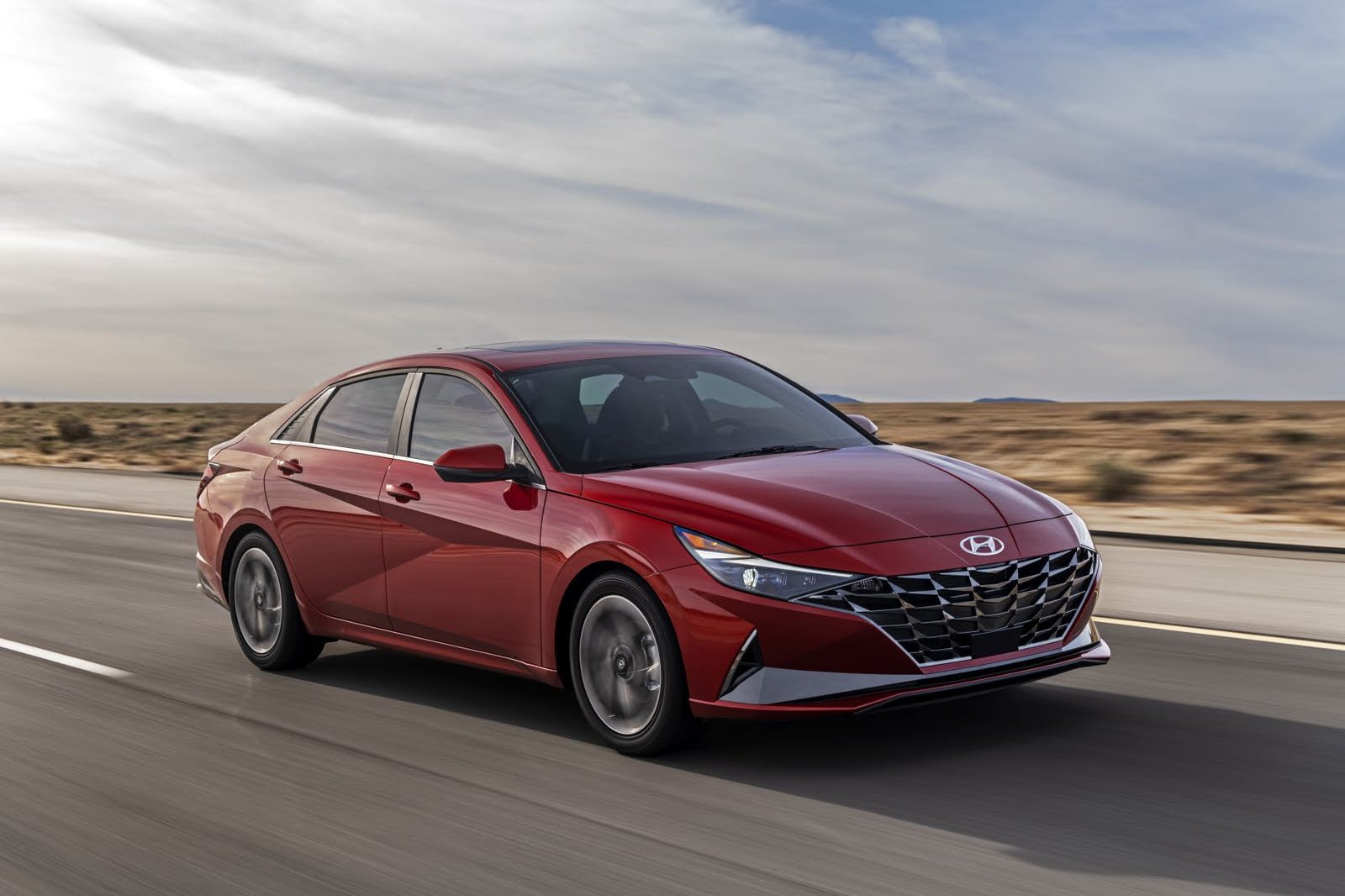
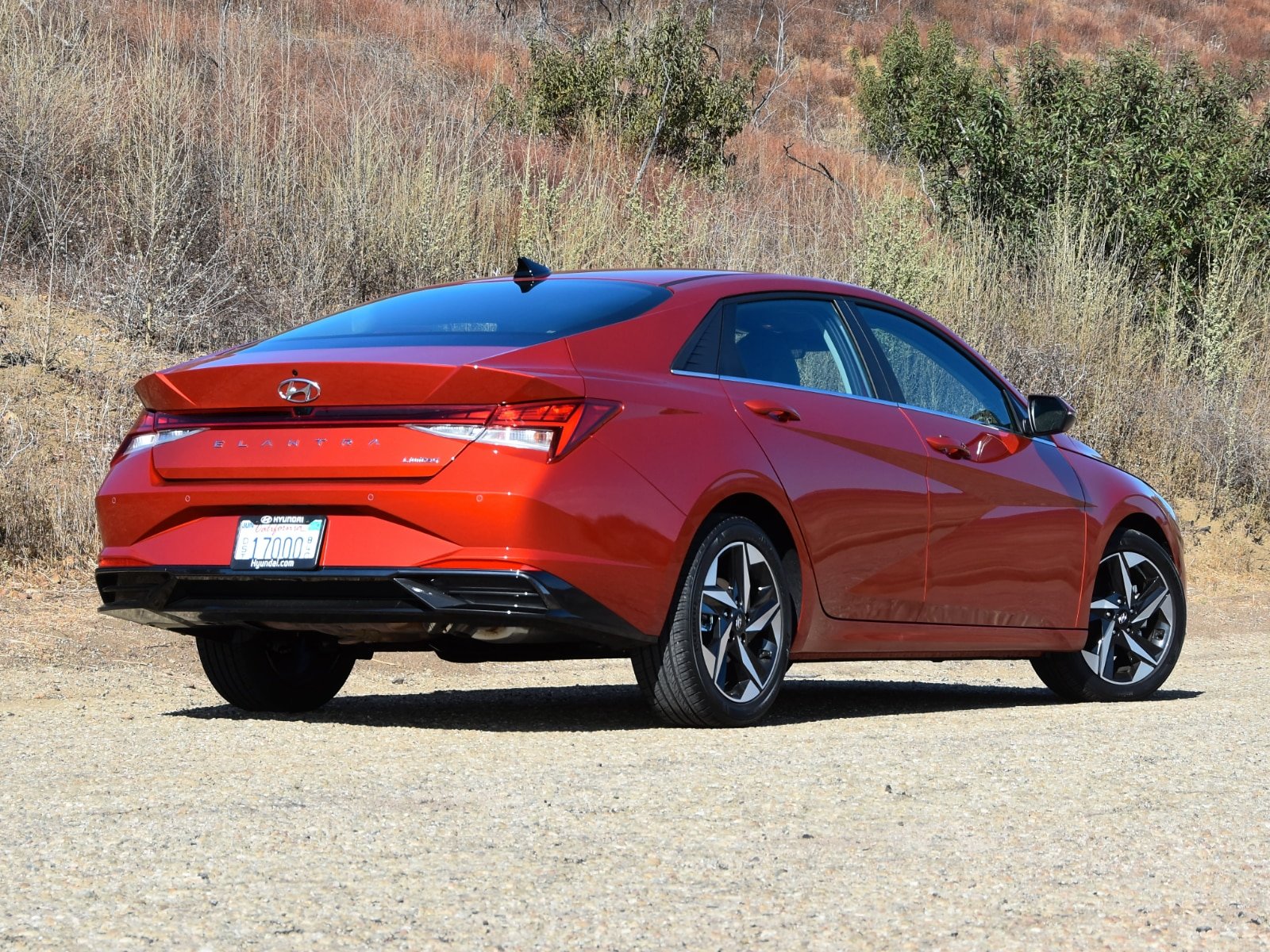
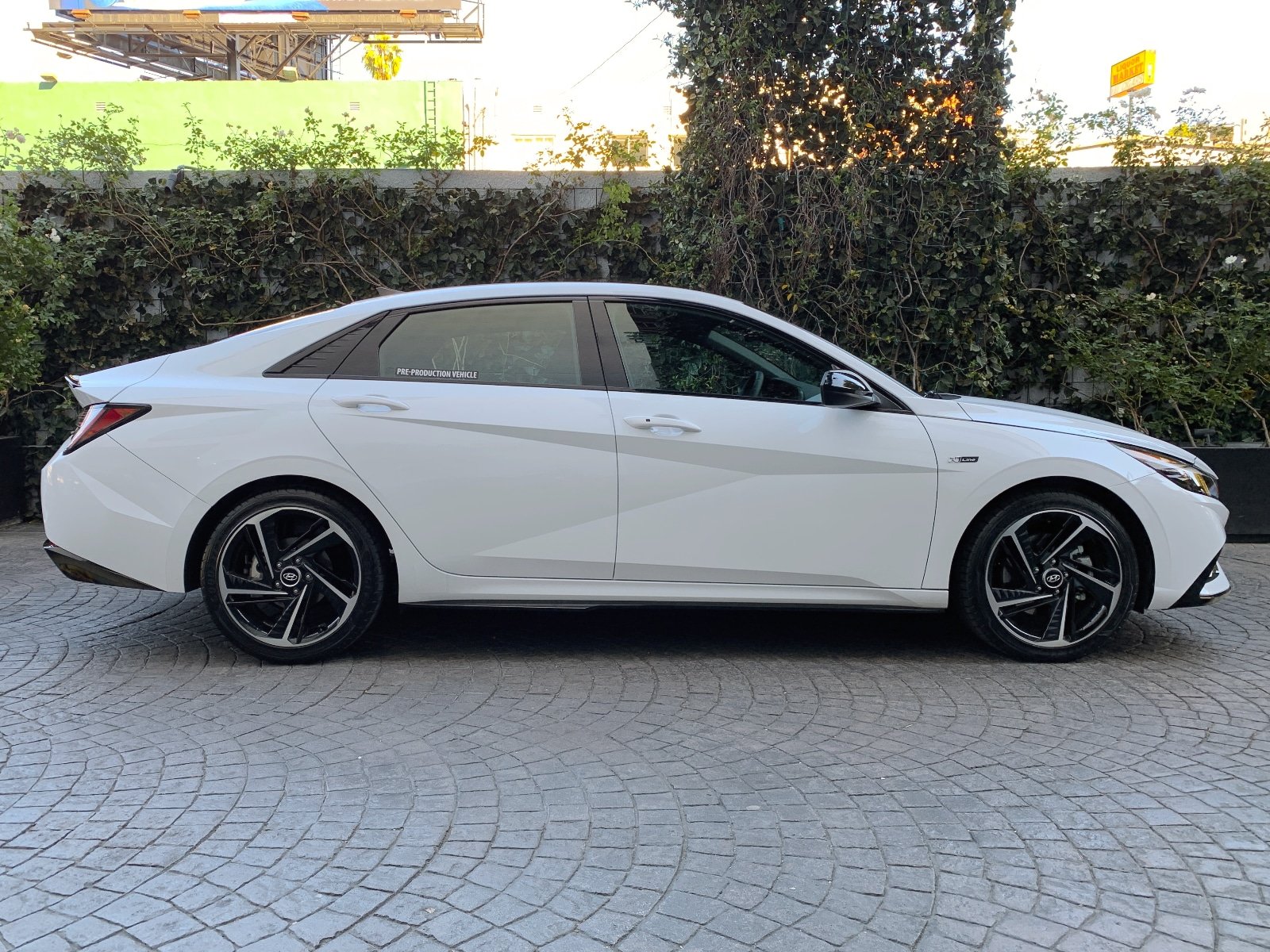
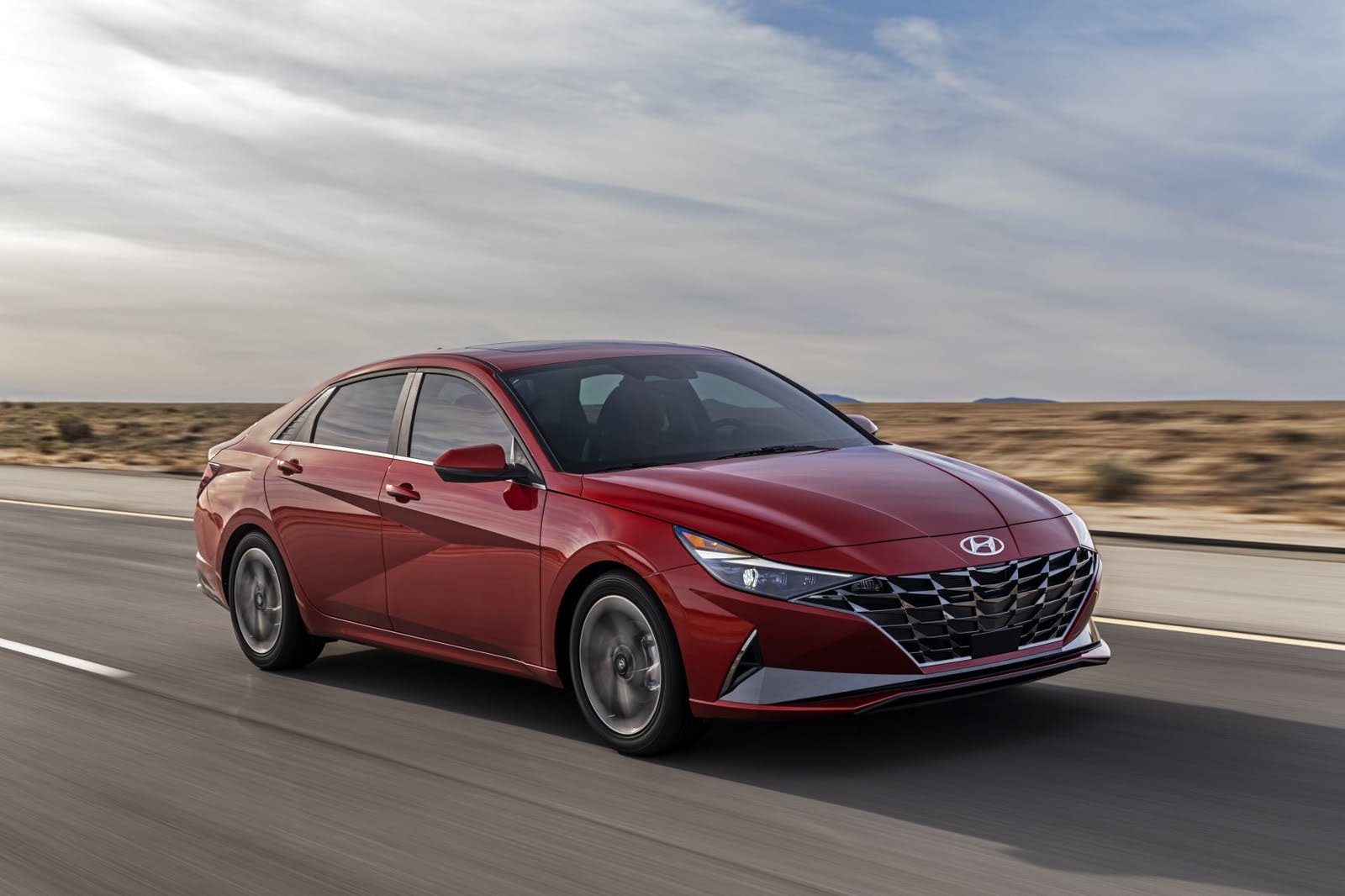
You’re not going to mistake the 2021 Hyundai Elantra for any other compact sedan. The latest recipient of Hyundai’s Sensuous Sportiness design language, complete with Parametric surfacing for details inside and out, the 2021 Elantra's styling is a collection of sharp creases and dramatic angles that produces a distinctive and appealing look.
But what of that Z-shaped dent in the car’s doors? Davis Lee, a senior designer at Hyundai, says it is there to help the Elantra stand out, and it breaks conventional automotive design rules to give the car a unique character. Think what you will of this controversial design cue on an already boldly penned vehicle, but we believe it works to the Elantra’s benefit.
Naturally, the new Elantra looks better the more you spend on one. It comes in Essential, Preferred, N Line, and Ultimate trim, and Hyundai offers the hybrid powertrain in the Preferred and Ultimate grades for a $2,800 and $1,400 premium respectively. Pricing ranges from an MSRP of $17,899 Canadian for the base model with a 6-speed manual transmission ($19,799 with the CVT) to $27,599 for the N Line, not including destination charges of $1,725.
Early next year, the high-performance Elantra N debuts, packing serious power and Nurburgring-tuned handling. Prices are not set, but a Hyundai spokesperson said that doing the math between the standard Veloster and the Veloster N would help to ballpark a price. Therefore, expect the Elantra N to cost less than $40,000 when it goes on sale.
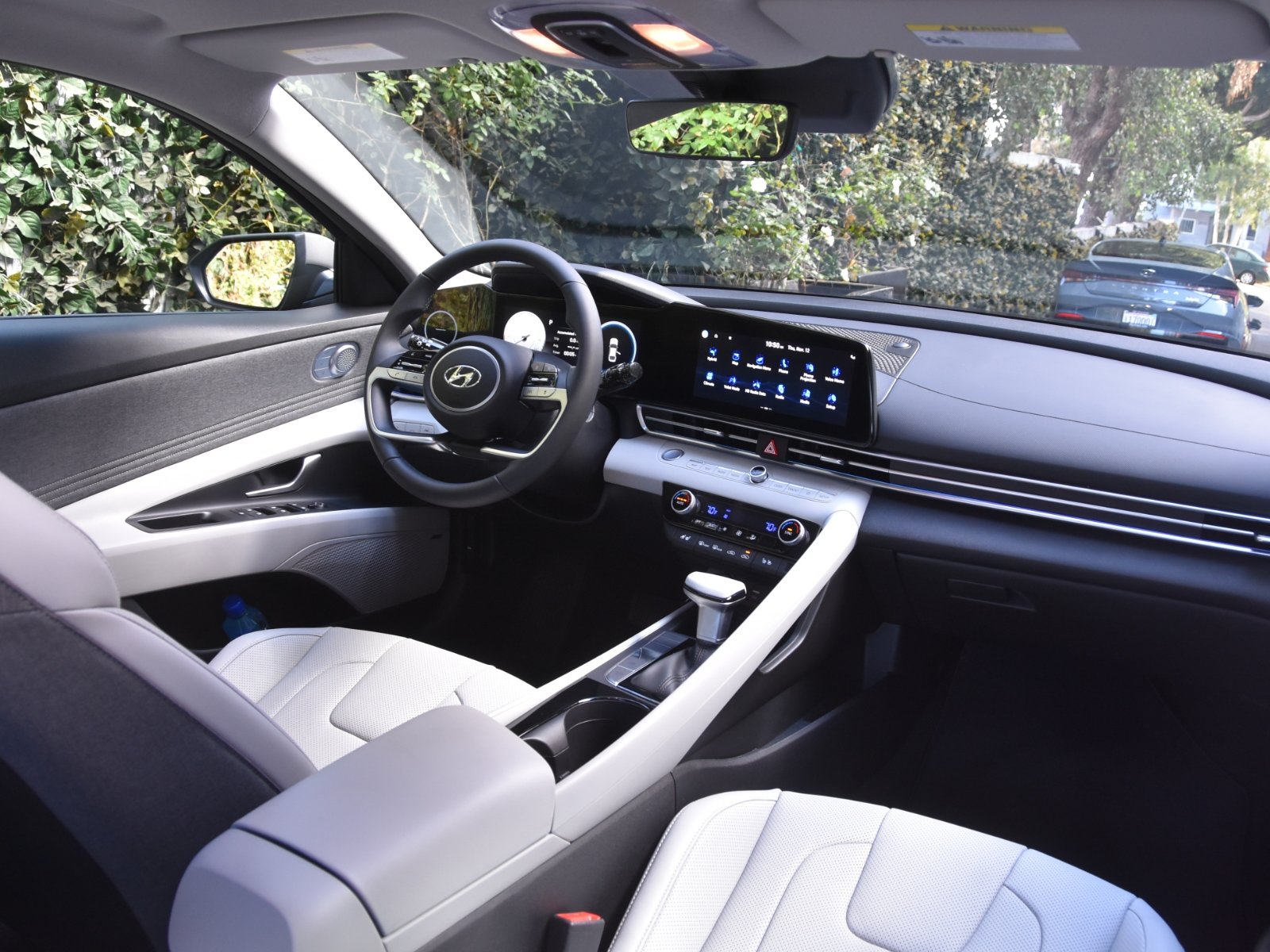
Inside, the new Elantra has a driver-focused dashboard and centre console, with an angled passenger cornering grip marking a clear delineation between the driver and passenger areas. The higher up the trim level ladder you climb, the nicer and higher-tech the Elantra’s cabin gets.
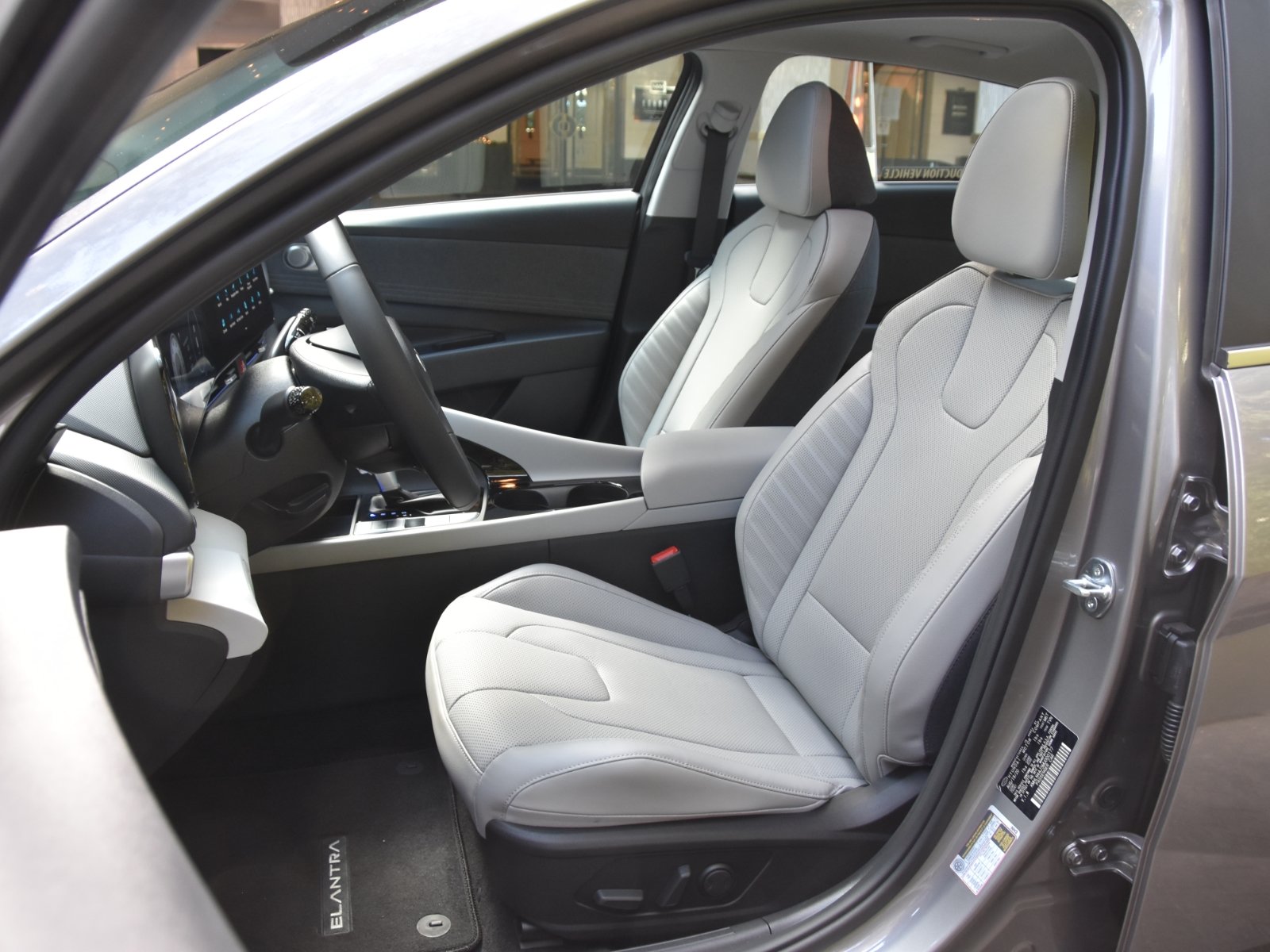
From a design and materials standpoint, our favourite interior is the Ultimate in Gray. The light gray seats, dashboard, and door panel trim offer stark contrast against the otherwise black cabin and colour-match to the gray roof pillar covers and headliner.
Plus, the gray colour helps to hide some of the car’s cheaper plastic panels, and the gray stitched fabric door panel inserts are almost Scandinavian in their look and feel. The end result is a modern and upscale look and feel that makes you happy to be behind the wheel. In lower-grade black interiors with leatherette door panel inserts, comparatively speaking, the interior is drab and the sometimes glossy black plastic is easier to notice and harder to forgive.
Performance
For this review, we spent hundreds of miles driving nearly every one of the Elantra’s powertrain combinations, including the high-performance Elantra N. The rating for this section is an average of them, with the standard engine ranking lower (7) and the Elantra N ranking higher (10).
Under the hood of the standard Elantra, a 2.0-litre 4-cylinder engine making 147 horsepower and 132 pound-feet of torque is paired to a continuously variable transmission (CVT) driving the car’s front wheels. A six-speed manual transmission is the default on the base model, and the CVT employed otherwise uses a chain-type variator and employs step-gear programming for superior responsiveness, feel, and sound. Indeed, it is among the better CVTs available in a compact car.
According to Natural Resources Canada, entry-level Elantras are supposed to return 7.8 litres per 100 kilometres in combined driving with the manual transmission and 6.4 with the CVT, while upper grades use 6.7 L/100 km combined. We got 7.5 L/100 km with the car in its Normal driving mode the majority of the time. Other driving modes include Smart and Sport.
With this drivetrain, power is fine around town, the front-wheel-drive Elantra feeling athletic and nimble in urban, high-traffic situations. Ask for highway merging or passing power, and it feels comparatively gutless, making more noise than it does additional forward momentum. The engine note isn’t particularly pleasant, but it is evident only when you’re mashing your right foot down on the accelerator pedal. The rest of the time, the car is remarkably quiet.
Unlike upmarket Elantra models, the standard versions use a beam-axle rear suspension instead of the more sophisticated independent multi-link setup in the Hybrid, N Line, and N. Most people won’t notice the difference, because Hyundai has expertly tuned the beam axle suspension to eliminate the weird rear-end bouncing evident in the previous-generation Elantra. If you know what you’re looking for, you can still tell the difference, but this more basic and affordable suspension solution is not the ride and handling liability it used to be.
With the Ultimate grade, the Elantra gets handsome 17-inch alloy wheels. They help to improve the car’s appearance and, likely, its handling. They may have also increased the amount of road noise on concrete and rough-aggregate road surfaces. On smooth blacktop, the Elantra is quite quiet even at 100 km/h.
Elantra Limited Hybrid Driving Impressions
Hybrids use a 1.6-litre Atkinson-cycle four-cylinder engine, an electric motor, an electric starter/generator, and a 1.32-kWh lithium-ion air-cooled battery mounted under the back seat. Together, these components make 139 horsepower, and the Elantra Hybrid uses a six-speed dry dual-clutch automatic transmission (DCT). It has an EV mode allowing it to operate solely on electricity at lower speeds or while coasting, and the battery recharges when the car is coasting and braking.
Both grades are rated to consume 4.4 L/100 km in combined driving. We averaged 5.6 L/100 km in the Elantra Ultimate Hybrid.
Why didn’t we hit the expected number? Mountains. During the city and coastal portion of the drive, the car averaged 4.6 L/100 km. But then we ascended to nearly 2,000 feet of elevation in a matter of minutes, shaving a full litre per 100 kilometres off of that average by the time we reached the mountaintop
The Elantra Hybrid is more satisfying to drive thanks to its instant electric motor torque and its six-speed DCT. The brake pedal can feel a little heavy and numb when the driver rapidly applies the regenerative brakes, but they never feel grabby in traffic.
While driving at a rapid clip on a writhing mountain decent, some pavement undulations fully extended the suspension. At the same time, the car exhibited a flat cornering attitude, and the steering felt good in the driver’s hands. Best of all, there wasn’t any indication of the added weight of the hybrid components.
Overall, the Elantra Hybrid is an impressive car, but in terms of fuel savings, it will take years for an owner to recoup the extra cost of the powertrain. Instead, choose it for the immediate torque, the DCT, and the independent rear suspension, and you’ll be happier with the decision.
Elantra N Line Driving Impressions
Our time with the sporty Hyundai Elantra N Line was brief because Hyundai put us behind the wheel of something even better instead. During a mid-day lunch break, we grabbed the keys to an Elantra N Line.
The N Line replaces the Sport in the Elantra lineup. Similar to the Elantra Sport, the redesigned Elantra N Line has a turbocharged 1.6-litre four-cylinder engine making 201 horsepower at 6,000 rpm and 195 pound-feet of torque from 1,500 rpm to 4,500 rpm. A seven-speed dry DCT with paddle shifters is the standard transmission in Canada.
Additionally, the N Line gets a full sport suspension tune, quicker steering, and larger front brakes. It sits on 18-inch wheels wrapped in 235/40 tires.
We put 22.5 km on the N Line, all mountain driving on two-lane roads, which likely explains our 10.2 L/100 km fuel use average. That’s well short of the Natural Resources Canada rating of 7.6 L/100 km in combined driving.
With its sport tuning, multi-link rear suspension, and thick torque band, the Elantra N Line was fun to drive. But not nearly as much fun as the Elantra N.
Elantra N Driving Impressions
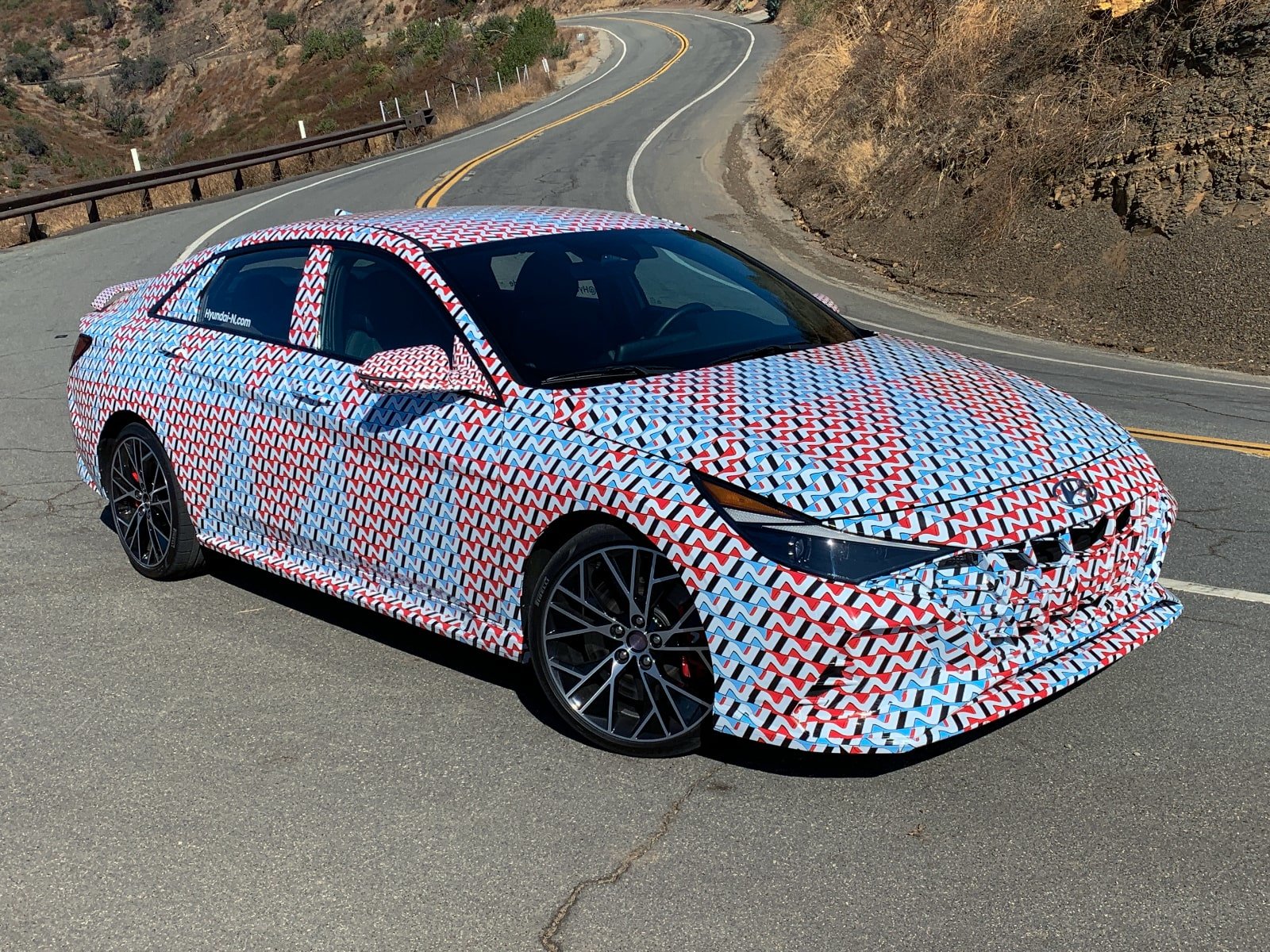
Hyundai needed someone to test drive its camouflaged Elantra N high-performance models from a hotel to a lunch spot in the mountains, and the company assigned us to take the one with the eight-speed wet DCT transmission on the 75 km journey.
To characterize this as a memorable experience is an understatement.
A turbocharged 2.0-litre 4-cylinder engine generates 276 horsepower and 289 lb-ft of torque, and pairs with a six-speed manual or eight-speed wet DCT. An electronic limited-slip differential (eLSD), which Hyundai calls an N Corner Carving Differential, helps to ensure the power gets to the ground as effectively as is possible. Natural Resources Canada hasn’t rated the Elantra N, but we averaged 12.1 L/100 km in a mix of city, speedy mountain road, and highway driving.
The steering wheel, lifted from the Veloster N, has a Drive Mode button and N Button (the one with the flag on it). Push the N button to call up a standard N performance configuration for the car. Or, select N Custom to choose settings for the engine response, transmission rev matching, eLSD behaviour, steering effort, suspension firmness, and exhaust sound. With the DCT, there is also a red steering wheel button marked NGS, which stands for N Grin Shift.
Additionally, the Elantra N has an electronically controlled suspension, 34.5 cm front and 31.5 cm rear brakes, a variable-valve exhaust system with larger outlets, and 19-inch wheels wrapped in 235/35 summer performance tires.
In a nutshell, the Hyundai Elantra N drives like a Hyundai Veloster N, but with a four-door sedan body style and an extra layer of refinement. Depending on how you set the car up, it can be quiet and docile or cacophonous and dynamic. Regardless of setting, it rides firmly. And when you push hard on the accelerator, the raspy exhaust makes its presence known.
With the car in its default N mode, we took a rousing run up and down a canyon road that was a lumpy mess of ribboned pavement fraught with narrow lanes, rockfall, decreasing radius corners, tight hairpin turns, and endless sets of S-curves. It is the perfect environment for a car like the Elantra N.
At Hyundai, N stands for both Namyang, where the company develops vehicles, and the Nurburgring, where the company tunes its sport and performance cars. That badge earns its place on the Elantra N, which exhibits truly astounding capability out in the wild.
From instantaneous powertrain response and the wet DCT’s immediate and forceful shift character to stout brakes and fast, laser-accurate steering, the Elantra N is a driving enthusiast’s dream accompanied by a snap, crackle, and pop soundtrack. Best of all, the car’s consistent behavior, from grip and balance to the indefatigable brakes, engenders the trust necessary between the driver and the machine to maximize velocity.
Did we love driving the Elantra N? Oh, you bet. All it’s missing is a torque-vectoring all-wheel-drive system.
Form & function
According to Natural Resources Canada, the new Elantra is a midsize car. From the driver’s seat, it certainly seems roomy enough to qualify.
Each test car offered a height-adjustable driver’s seat and a tilt/telescopic steering wheel, making it easy to get comfortable. They all had heated front seats, too.
One of the nice things about the previous Elantra was its height adjustable front passenger’s seat. Inexplicably, that’s gone for 2021. Hyundai’s continued use of hard plastic for the upper door panels is another mistake since that’s where drivers are likely to place an elbow while cruising on the highway.
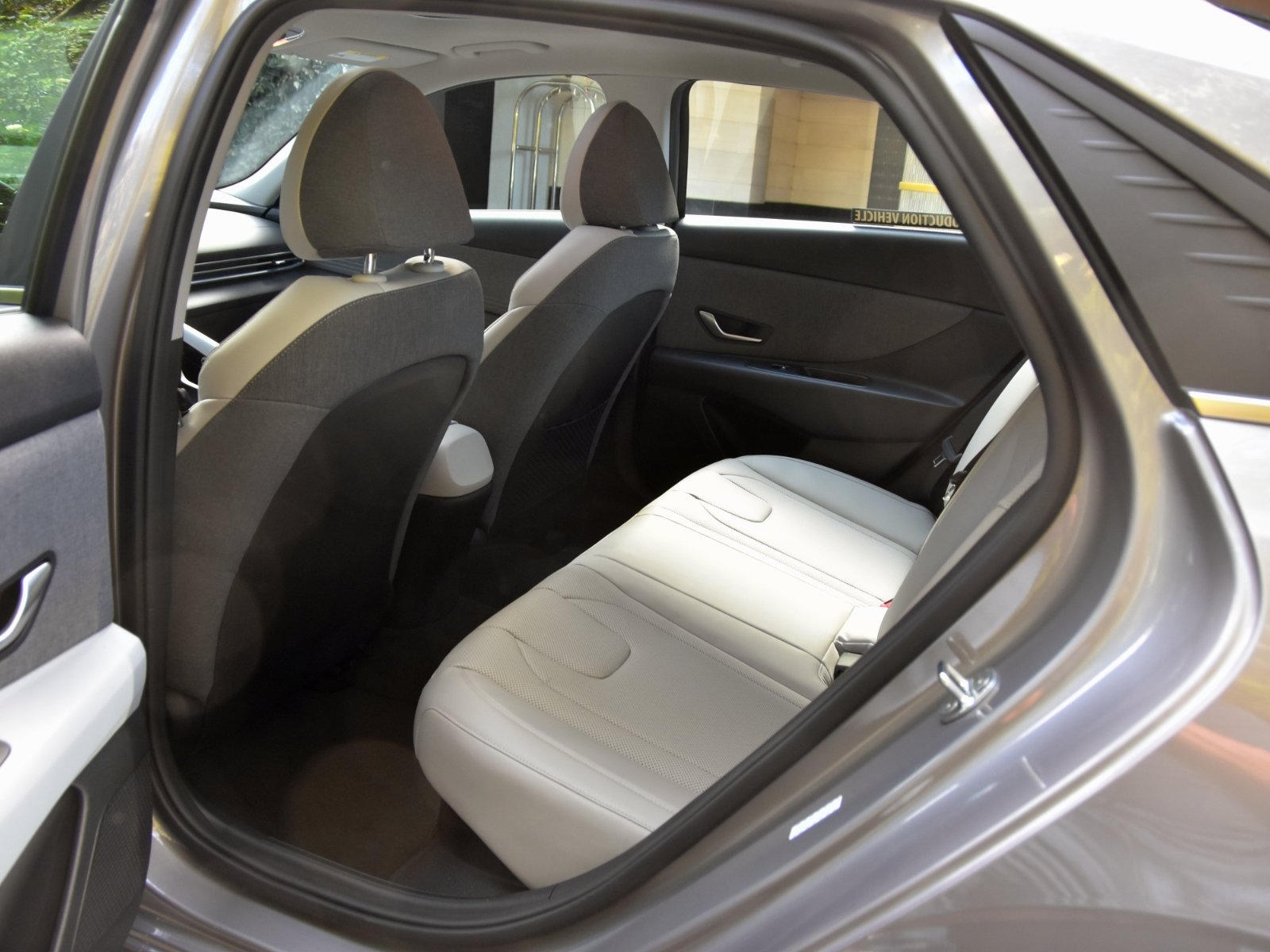
Hyundai says the Elantra offers best-in-class rear-seat legroom. We found it to be nearly as roomy as Hyundai’s larger Sonata sedan. There is plenty of leg clearance and foot space for adults, and the bottom seat cushion sits high for good leg support. However, the backrest shape and angle left us without any upper back support. Also, the Elantra does not offer air conditioning vents or USB charging ports for rear-seat riders.
Storage space is useful, and dual-stage adjustable cupholders accommodate different size beverages. The trunk measures 402 litres, and a 60/40-split folding rear seat enhances the car’s utility. Some versions of the car include a hands-free trunk lid release.
Hyundai no longer supplies a grab handle inside of the Elantra’s trunk, joining the manual passenger’s seat height adjuster as another casualty for 2021. Instead, you must put your fingertips on the dirty exterior surface of the lid to close it.
Technology
Most Elantra models include traditional instrumentation with a centre-mounted speedometer. An 8-inch touchscreen infotainment system equips the car with volume and tuning knobs, menu shortcut buttons, and wireless Apple CarPlay and Android Auto connectivity. Satellite radio, Bluetooth, and Blue Link connected services are optional on Preferred and standard on Ultimate, N Line, and hybrid trims, and the Ultimate and N Line grades include wireless charging.
Step up to Ultimate trim, and the Elantra has an optional 10.25-inch touchscreen infotainment system with navigation, paired with a 10.25-inch digital instrumentation screen. This instrument cluster, but not the larger infotainment screen, can be found on the Ultimate Hybrid. Both reside under a single piece of glass, just like in a Mercedes-Benz. The infotainment screen is angled a bit toward the driver, and Hyundai offers a 64-colour ambient cabin lighting system in Elantras equipped with this version of the technology.
This upgrade carries a significant wow factor, and in addition to navigation, the car includes a dynamic natural voice recognition system and a Sounds of Nature function that is a curiosity until you use it as a stress reducer. Note that you lose wireless smartphone integration with the 10.25-inch screen, but you gain full-screen or split-screen Apple CarPlay and Android Auto functionality.
In the Ultimate Hybrid, the voice recognition system performed inconsistently, but it also kept reminding me that an active Blue Link subscription would produce better results, so perhaps that was the problem. Later, during a walk-through of the infotainment system with a Hyundai spokesperson, the voice recognition in a different car responded to most of my standard test prompts with flying colours.
A new Bose premium audio system is available for the new Elantra, and it includes fancy tweeter speaker grilles on the front door panels. People buying at this price point will be impressed by the audio quality.
Safety
Hyundai builds the redesigned Elantra on a new platform. It is engineered with multiple structural collision energy pathways to absorb, channel, and disperse collision energy away from the cabin.
Every 2021 Elantra except the base model is equipped with SmartSense, Hyundai’s name for its collection of advanced driving assistance systems (ADAS). These safety features include forward collision-avoidance assist with pedestrian detection, automatic emergency braking, lane-departure warning, lane-keeping assist, lane-centring assistance, automatic high-beam headlights, and a driver attention warning system.
Additionally, Hyundai includes a blind-spot warning and rear cross-traffic warning system on every version of the Elantra but the base model, and Safe Exit Warning lets you know if it's unsafe to open the door and get out of the car because traffic is approaching from behind.
Safety-related upgrades include cyclist detection, a junction turning assistance system, adaptive cruise control with stop-and-go capability, rear automatic braking, and Hyundai’s Level 2 ADAS, called Highway Drive Assist. Highway Drive Assist is impressive, and especially in the Elantra’s compact car segment. The level of smoothness, accuracy, and refinement is remarkably good.
Cost-effectiveness
If you’re still wondering if the 2021 Hyundai Elantra is a cost-effective solution to your compact car requirements, may we remind you of the automaker’s 5-year/100,000 km limited warranty for the entire car?
Not enticing enough? Don’t forget the five years of free roadside assistance, with no kilometre restrictions.
Simply put, the 2021 Elantra is a raging bargain of a new car. Best of all, these warranty programs represent nothing more than the yummy icing on what is already a delicious vehicular cake.
What owners say
"Overall, owners really appreciate the 2021 Hyundai Elantra for its smooth ride, great fuel economy, and comfortable seating. Many feel it offers great value for the price and boasts attractive features. However, some owners wish for additional features like a moonroof on higher models and think the design could be a bit more stylish."
The car is good but, a part of the front bumper is detached, both of the right rims are in severe condition, with one missing 6 inches of the rim, and the other severely scratched and dented and the tires don’t fit on the rims.
March 31, 2026The features are great, they work well when driving and definitely makes the car worth it.
February 9, 2021I love this car! Rides so smooth and has power too. Gets great gas mileage and feels like u are in a much more expensive car. The seats are comfortable and it truly is a very pleasant driving experience. This is the type of car that makes u want to go for a drive for no reason. Def would recommend this car to anyone!!
May 9, 2022What owners say
The car is good but, a part of the front bumper is detached, both of the right rims are in severe condition, with one missing 6 inches of the rim, and the other severely scratched and dented and the tires don’t fit on the rims.
March 31, 2026The features are great, they work well when driving and definitely makes the car worth it.
February 9, 2021I love this car! Rides so smooth and has power too. Gets great gas mileage and feels like u are in a much more expensive car. The seats are comfortable and it truly is a very pleasant driving experience. This is the type of car that makes u want to go for a drive for no reason. Def would recommend this car to anyone!!
May 9, 2022It gets great mileage, is roomy, comfortable to drive, looks really good, etc. For its price it’s a great value. I do not regret my purchase whatsoever.
February 27, 2024Great car for a good price. Good maintenance. Highly recommended
June 28, 2023The features arent the standard features of a base model, the design is solid & stylish.. The car is a good value & has come a long way from previous models... it could be a little more stylish & a moonroof/sunroof should come standard in the sel models... I would compare it to the Civic... Corolla... & Sentra
February 8, 2023Trims & specs
Base MSRP N/A | Seating 5 |
Engine N/A | Cargo Capacity 14.4 cu ft |
Combined MPG N/A | Drivetrain N/A |
Base MSRP $25,450 | Seating 5 |
Engine 2.0L 147 hp I4 | Cargo Capacity 14.2 cu ft |
Combined MPG 36 | Drivetrain FWD |
Base MSRP $24,100 | Seating 5 |
Engine 1.6L 201 hp I4 | Cargo Capacity 14.2 cu ft |
Combined MPG 29 | Drivetrain FWD |
Base MSRP N/A | Seating N/A |
Engine N/A | Cargo Capacity N/A |
Combined MPG N/A | Drivetrain N/A |
Base MSRP N/A | Seating N/A |
Engine N/A | Cargo Capacity N/A |
Combined MPG N/A | Drivetrain N/A |
Base MSRP N/A | Seating N/A |
Engine N/A | Cargo Capacity N/A |
Combined MPG N/A | Drivetrain N/A |
Base MSRP N/A | Seating N/A |
Engine N/A | Cargo Capacity N/A |
Combined MPG N/A | Drivetrain N/A |
Base MSRP $19,650 | Seating 5 |
Engine 2.0L 147 hp I4 | Cargo Capacity 14.2 cu ft |
Combined MPG 36 | Drivetrain FWD |
Base MSRP N/A | Seating N/A |
Engine N/A | Cargo Capacity N/A |
Combined MPG N/A | Drivetrain N/A |
Base MSRP $20,900 | Seating 5 |
Engine 2.0L 147 hp I4 | Cargo Capacity 14.2 cu ft |
Combined MPG 36 | Drivetrain FWD |


