Volvo XC40 vs Hyundai Ioniq 9
Overview | |
Years produced2019-2026 | Years produced2026-Present |
MSRP$36,350 | MSRP$58,995 |
Listings396 | Listings150 |
Ratings & Reviews | |
User Reviews | User Reviews |
Expert reviews7.5 out of 10 | Expert reviews7.3 out of 10 |
Pros
Cons
| Pros
Cons
|
Reviews SummaryIn Volvo speak, “40” denotes an entry-level model. While the Swedish automaker no longer rosters the S40 sedan or V40 wagon in North America, the XC40 subcompact crossover remains to compete with the likes of the Audi Q3, the BMW X1, the Lexus UX, and the Mercedes-Benz GLA for aspiring luxury-car owners’ dollars. The XC40 was unveiled in 2017, arriving as a 2019 model, and it hasn’t undergone a redesign since. An all-electric Volvo XC40 Recharge variant joined the lineup as a 2021 model. Volvo’s other current EV, the C40 Recharge, is also broadly similar to the XC40 models, but with a coupe-like body style. For 2023, Volvo gave the XC40 several notable updates, including new mild-hybrid powertrains, revised styling, and the Android-based infotainment system previously seen on the XC40 Recharge and other Volvo models. The mild-hybrid lineup includes base Core, mid-level Plus, and top Ultimate trim levels, with standard B5 all-wheel drive (AWD) drivetrains (the B4 front-wheel drive, or FWD, version offered in the US is not available in Canada). This Volvo XC40 review is based on the Ultimate trim in B5 AWD spec. | |
Reviews SummaryAlthough the 2026 Hyundai Ioniq 9 isn’t the first three-row electric SUV through the door, it may be the best choice for most shoppers. With a starting price of $59,999 before fees and qualifying for EV rebates where they still exist, it’s much more affordable than a Tesla Model X or a Rivian R1S. And its standard 110.3-kWh battery pack provides a long range compared to a base-model Kia EV9. Verdict: The Hyundai Ioniq 9 isn’t a perfect vehicle, but it offers terrific passenger space, good tech, and family-friendly features. Shoppers may find its design polarizing — you could easily say the same about the Hyundai Ioniq 5 or the Ioniq 6 — but families interested in electric vehicles will do well to test drive this new option. | |
No video found | |
Popular Features & Specs | |
Engine2.0L 194 hp I4 | Engine215 hp Electric |
DrivetrainFWD | DrivetrainRWD |
Seating Capacity5 | Seating Capacity7 |
Horsepower194 hp @ 4800 rpm | Horsepower |
EV Battery Capacity | EV Battery Capacity110 kWh |
MPG City24 | MPG City103 |
MPG Highway32 | MPG Highway81 |
Battery Charge Time (120V) | Battery Charge Time (120V)93 hours |
Battery Charge Time (240V) | Battery Charge Time (240V)9.7 hours |
Engine | |
Engine Name2.0L 194 hp I4 | Engine Name215 hp Electric |
Torque221 lb-ft @ 1500 rpm | Torque |
Horsepower194 hp @ 4800 rpm | Horsepower |
Battery Charge Time (120V) | Battery Charge Time (120V)93 hours |
Battery Charge Time (240V) | Battery Charge Time (240V)9.7 hours |
DrivetrainFWD | DrivetrainRWD |
Fuel Economy | |
EV Battery Capacity | EV Battery Capacity110 kWh |
MPG City24 | MPG City103 |
MPG Highway32 | MPG Highway81 |
Interior | |
Leather SeatsStandard | Leather Seats |
Seating Capacity5 | Seating Capacity7 |
Key Features | |
Navigation SystemStandard | Navigation SystemStandard |
Safety | |
Front Crash Overall5 | Front Crash Overall5 |
Side Crash Overall5 | Side Crash Overall5 |
Dimensions & Capacity | |
Cargo Space21.7 cu ft | Cargo Space21.9 cu ft |
Curb Weight3726 lbs | Curb Weight5507 lbs |
Height65.2 in | Height70.5 in |
Length174.8 in | Length199.2 in |
Width80.1 in | Width78.0 in |
Wheelbase106.4 in | Wheelbase123.2 in |
Maximum Payload925 lbs | Maximum Payload1393 lbs |
Number of doors4 | Number of doors4 |
Maximum Towing Capacity3500 lbs | Maximum Towing Capacity3500 lbs |
Overview | ||
Years produced | 2019-2026 | 2026-Present |
MSRP | $36,350 | $58,995 |
Listings | ||
Ratings & Reviews | ||
User reviews | ||
Expert reviews | 7.5 out of 10Read full review | 7.3 out of 10Read full review |
Pros & cons | Pros
Cons
| Pros
Cons
|
Summary | In Volvo speak, “40” denotes an entry-level model. While the Swedish automaker no longer rosters the S40 sedan or V40 wagon in North America, the XC40 subcompact crossover remains to compete with the likes of the Audi Q3, the BMW X1, the Lexus UX, and the Mercedes-Benz GLA for aspiring luxury-car owners’ dollars. The XC40 was unveiled in 2017, arriving as a 2019 model, and it hasn’t undergone a redesign since. An all-electric Volvo XC40 Recharge variant joined the lineup as a 2021 model. Volvo’s other current EV, the C40 Recharge, is also broadly similar to the XC40 models, but with a coupe-like body style. For 2023, Volvo gave the XC40 several notable updates, including new mild-hybrid powertrains, revised styling, and the Android-based infotainment system previously seen on the XC40 Recharge and other Volvo models. The mild-hybrid lineup includes base Core, mid-level Plus, and top Ultimate trim levels, with standard B5 all-wheel drive (AWD) drivetrains (the B4 front-wheel drive, or FWD, version offered in the US is not available in Canada). This Volvo XC40 review is based on the Ultimate trim in B5 AWD spec. | Although the 2026 Hyundai Ioniq 9 isn’t the first three-row electric SUV through the door, it may be the best choice for most shoppers. With a starting price of $59,999 before fees and qualifying for EV rebates where they still exist, it’s much more affordable than a Tesla Model X or a Rivian R1S. And its standard 110.3-kWh battery pack provides a long range compared to a base-model Kia EV9. Verdict: The Hyundai Ioniq 9 isn’t a perfect vehicle, but it offers terrific passenger space, good tech, and family-friendly features. Shoppers may find its design polarizing — you could easily say the same about the Hyundai Ioniq 5 or the Ioniq 6 — but families interested in electric vehicles will do well to test drive this new option. |
Video | No video found | |
Popular Features & Specs | ||
Engine | 2.0L 194 hp I4 | 215 hp Electric |
Drivetrain | FWD | RWD |
Seating Capacity | 5 | 7 |
Horsepower | 194 hp @ 4800 rpm | |
EV Battery Capacity | 110 kWh | |
MPG City | 24 | 103 |
MPG Highway | 32 | 81 |
Battery Charge Time (120V) | 93 hours | |
Battery Charge Time (240V) | 9.7 hours | |
Engine | ||
Engine Name | 2.0L 194 hp I4 | 215 hp Electric |
Torque | 221 lb-ft @ 1500 rpm | |
Horsepower | 194 hp @ 4800 rpm | |
Battery Charge Time (120V) | 93 hours | |
Battery Charge Time (240V) | 9.7 hours | |
Drivetrain | FWD | RWD |
Fuel Economy | ||
EV Battery Capacity | 110 kWh | |
MPG City | 24 | 103 |
MPG Highway | 32 | 81 |
Interior | ||
Leather Seats | Standard | |
Seating Capacity | 5 | 7 |
Key Features | ||
Navigation System | Standard | Standard |
Safety | ||
Front Crash Overall | 5 | 5 |
Side Crash Overall | 5 | 5 |
Dimensions & Capacity | ||
Cargo Space | 21.7 cu ft | 21.9 cu ft |
Curb Weight | 3726 lbs | 5507 lbs |
Height | 65.2 in | 70.5 in |
Length | 174.8 in | 199.2 in |
Width | 80.1 in | 78.0 in |
Wheelbase | 106.4 in | 123.2 in |
Maximum Payload | 925 lbs | 1393 lbs |
Number of doors | 4 | 4 |
Maximum Towing Capacity | 3500 lbs | 3500 lbs |
The 2023 Volvo XC40 maintained its distinctive SUV-like profile, characterized by a flat-roofed design and a clean exterior that avoided unnecessary detailing. Volvo's commitment to electrification was evident in the hidden tailpipes of gasoline models, while fog lights were standard on Plus and Ultimate trims. For 2023, Volvo introduced subtle updates, including pixelated "Thor’s Hammer" headlights, a more angular front bumper, and new wheel designs. The XC40 Recharge was easily identifiable by its new sealed-off grille. Inside, the XC40 featured a minimalist design with thin air vents, scalloped door elements, and dual-zone automatic climate control. Leather upholstery was available, with vegan leather for Recharge models. The XC40 Ultimate test vehicle included options like a panoramic moonroof and an Orrefors crystal shift knob, though the all-black interior felt somewhat utilitarian.
The 2026 Hyundai Ioniq 9 presented a bold design that divided opinions. Its aerodynamic shape, inspired by smooth pebbles and midcentury modern sofas, aimed to house seven passengers comfortably. Measuring 5,060 mm in length with a 3,130 mm wheelbase, the Ioniq 9 offered impressive interior volume. Despite its size, it achieved a 0.27 drag coefficient, enhancing its aerodynamic efficiency. The design featured a swooping roofline and a stubby rear end, with LED taillights wrapping around the rear. Available in seven paint colours, the Ioniq 9 offered trim-specific options. Wheel sizes ranged from 19 to 21 inches, with unique designs for higher trims. Inside, the Ioniq 9 boasted a spacious and airy cabin, with flat floors and a sliding centre console. The interior featured high-quality plastics and a panoramic sunroof in higher trims, though the seats lacked thigh support.

The 2023 Volvo XC40 introduced mild-hybrid powertrains, incorporating a 48-volt electrical system and a 13-horsepower integrated starter generator. This system assisted the gasoline engine, improving fuel economy and power delivery smoothness. The B5 models in Canada featured a 2.0-litre turbo-four-cylinder engine with 247 hp and 258 lb-ft of torque, paired with an eight-speed automatic transmission. The B5 models accelerated from zero to 60 mph in 6.1 seconds, outperforming the Audi Q3. The XC40 Recharge, with its dual electric motors, delivered 402 hp and 486 lb-ft of torque, achieving zero to 60 mph in 4.7 seconds and offering a 359-kilometre range. The Recharge also had a higher towing capacity of 2,000 kg compared to the B5 AWD model's 1,587 kg. The XC40's chassis provided a refined ride, absorbing bumps and handling corners with composure, though it lacked a sport driving mode.
The 2026 Hyundai Ioniq 9 featured a 110.3-kWh battery pack on the e-GMP platform. The base Essential trim had a single rear-mounted 160-kW motor, producing 215 hp, while other trims had dual-motor AWD systems. The Preferred AWD generated 303 hp, and the Preferred AWD+ produced 422 hp. The Ioniq 9 demonstrated impressive energy efficiency, often exceeding its 500-kilometre range estimate. The vehicle's weight and soft suspension provided a smooth ride, though it lacked agility in corners. The Ioniq 9 was exceptionally quiet, with active noise cancellation and sound-absorbing tires. Towing capacity was 1,587 kg for the RWD Essential and 2,268 kg for AWD models. Charging options included Tesla-style NACS superchargers and CCS-port Level 3 chargers, with charging times ranging from 24 to 40 minutes for fast charging and 9 hours 40 minutes for Level 2 home charging.
The 2023 Volvo XC40, while marketed as an SUV, was compact and better suited for solo commuting than carpooling. It offered reasonable space among its competitors, with ample rear-seat headroom and average legroom. The XC40 provided 566 litres of cargo space with rear seats up and 1,328 litres with them folded, less than the BMW X1 and Audi Q3. A power tailgate and keyless entry were standard. Interior storage was well-designed, with scalloped door panels and a spacious centre console storage bin.
The 2026 Hyundai Ioniq 9 focused on family-SUV practicality, seating seven with a middle-row bench or six with captain’s chairs in the Ultimate Calligraphy Package. The sliding centre console improved access for middle-row passengers. The Ioniq 9 offered 1,086 mm of middle-row legroom and 813 mm in the third row, comparable to the Hyundai Palisade. The rear doors provided easy access, and dual-zone climate control with air vents in all rows was standard. Cargo space was 620 litres behind the third row, expanding to 1,323 and 2,462 litres with seats folded. The small front trunk was best for storing the charging cable and adapter.
The 2023 Volvo XC40 featured an Android-based infotainment system with Google apps, including Google Maps and Google Assistant. A 12.3-inch digital instrument cluster and 9-inch touchscreen were standard, with a 13-speaker Harman Kardon audio system in the Ultimate trim. The system offered Apple CarPlay and Bluetooth support, though it lacked analog controls, relying on the touchscreen for most functions.
The 2026 Hyundai Ioniq 9 had dual curved 12.3-inch displays, similar to higher-level Hyundai models. It included SiriusXM, wireless Android Auto, and Apple CarPlay. A wireless charging pad was standard, though it struggled to keep up with high-demand devices. Six USB-C ports provided ample charging options. The 14-speaker Bose audio system in higher trims delivered impressive sound quality.
The 2023 Volvo XC40 offered a comprehensive suite of standard safety features, including lane-keep assist, automatic emergency braking, and blind-spot monitoring. Upgrading to higher trims added features like adaptive cruise control and Pilot Assist. The XC40 received top safety ratings from the IIHS and NHTSA, though it had an "Acceptable" rating in the updated side-impact test.
The 2026 Hyundai Ioniq 9 included advanced driver assistance systems as standard, such as collision avoidance and lane-guidance technologies. Highway Driving Assist 2 provided supervised hands-free driving. Higher trims added features like a surround-view monitor and blind-spot view monitor. Crash-test ratings were not yet available.
CarGurus highlights
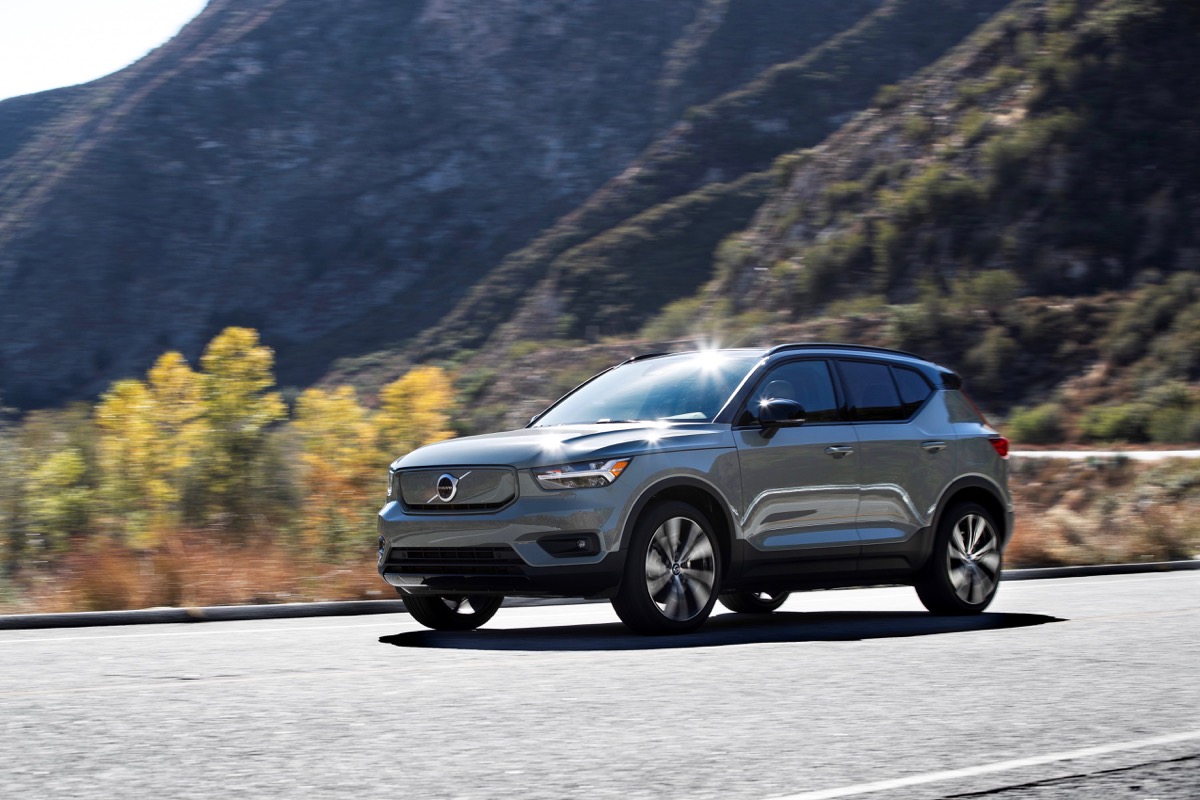
According to CarGurus experts, the overall rating for the 2023 Volvo XC40 is 7.5 out of 10, while the 2026 Hyundai Ioniq 9 scores 7.3 out of 10. Based on these ratings, the 2023 Volvo XC40 is recommended for its superior refinement, safety features, and overall value.
Choose the 2026 Hyundai Ioniq 9 if:
- You need a spacious family SUV with flexible seating configurations and ample cargo space.
- You appreciate advanced technology features, including dual curved displays and a high-quality audio system.
- You seek a smooth and quiet ride with impressive energy efficiency and charging options.


Choose the 2023 Volvo XC40 if:
- You prioritize a refined ride and high level of interior refinement.
- You value Volvo's reputation for safety and comprehensive standard safety features.
- You prefer a compact SUV with a minimalist design and practical interior storage.


CarGurus highlights
According to CarGurus experts, the overall rating for the 2023 Volvo XC40 is 7.5 out of 10, while the 2026 Hyundai Ioniq 9 scores 7.3 out of 10. Based on these ratings, the 2023 Volvo XC40 is recommended for its superior refinement, safety features, and overall value.
Choose the 2026 Hyundai Ioniq 9 if:
Shop Now- You need a spacious family SUV with flexible seating configurations and ample cargo space.
- You appreciate advanced technology features, including dual curved displays and a high-quality audio system.
- You seek a smooth and quiet ride with impressive energy efficiency and charging options.
Choose the 2023 Volvo XC40 if:
Shop Now- You prioritize a refined ride and high level of interior refinement.
- You value Volvo's reputation for safety and comprehensive standard safety features.
- You prefer a compact SUV with a minimalist design and practical interior storage.

By: CarGurus + AI
At CarGurus, our team of experienced automotive writers remain at the heart of our content operation, conducting hands-on car tests and writing insightful guides that are backed by years of industry experience. To complement this, we are harnessing AI to make our content offering more diverse and more helpful to shoppers than ever. To achieve this, our AI systems are based exclusively on CarGurus content, ratings and data, so that what we produce is both unique to CarGurus, and uniquely helpful to car shoppers.
