2026 INFINITI QX60 Reviews, Pricing & Specs

Pros & cons
What we like
Quiet cabin
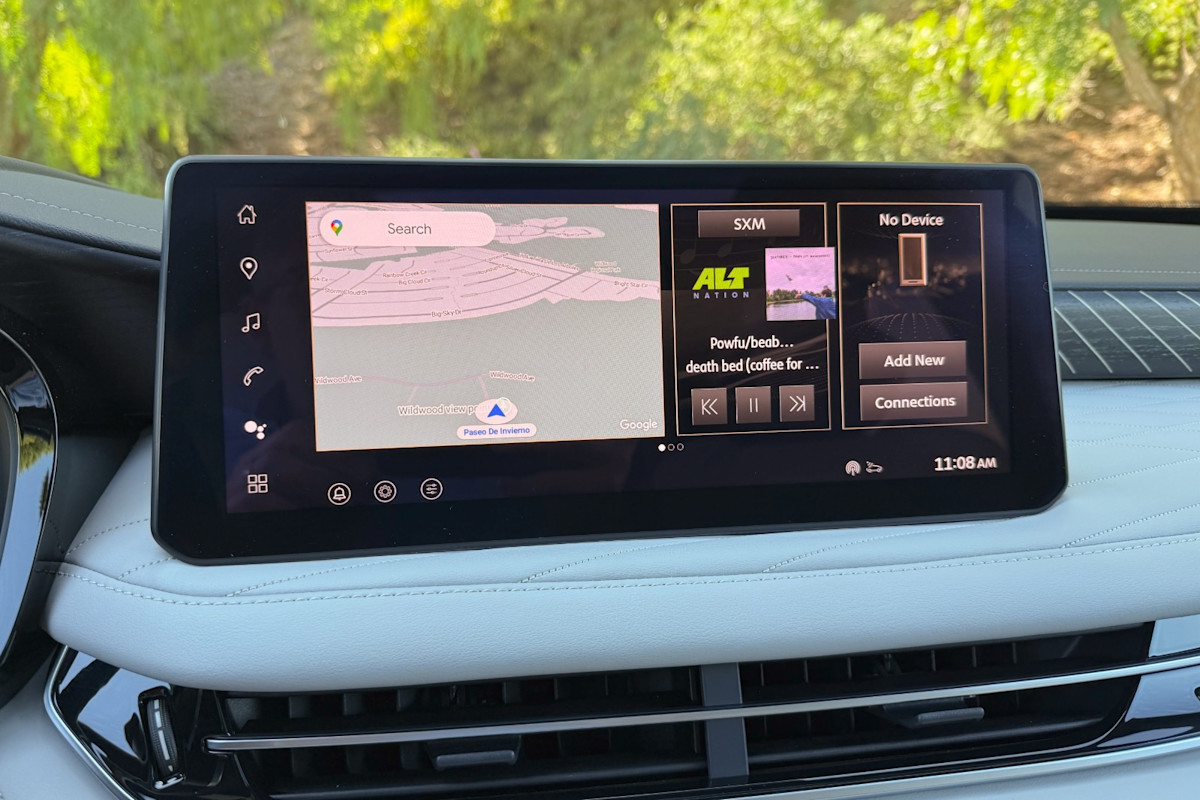
Google Built-in infotainment system
Low base price
What to consider
Poor fuel economy
Uninspired driving dynamics
Cramped third row
Expert review
The 2026 Infiniti QX60 is the most affordable midsize three-row luxury SUV for a reason.
Based on the Nissan Pathfinder, the QX60 is neither compelling nor competitive, meeting the barest of expectations in the midsize luxury SUV segment. Moreover, it looks and feels entirely disconnected from Infiniti’s history of building stylish, fun-to-drive vehicles. Updates to the 2026 QX60 don’t help, either, though its technology now meets the class standards. Reportedly, Infiniti is planning a renaissance, drawing on its roots and its most successful past models. That can’t happen fast enough.
Verdict: If you want a soft-riding and quiet luxury three-row SUV that meets most of your technology expectations, an Infiniti QX60 in Luxe trim makes sense if the three-year lease payment undercuts the competition. Otherwise, get a loaded Nissan Pathfinder or spend extra to drive one of this Infiniti’s many rivals.
out of 10 expert review
Look & feel
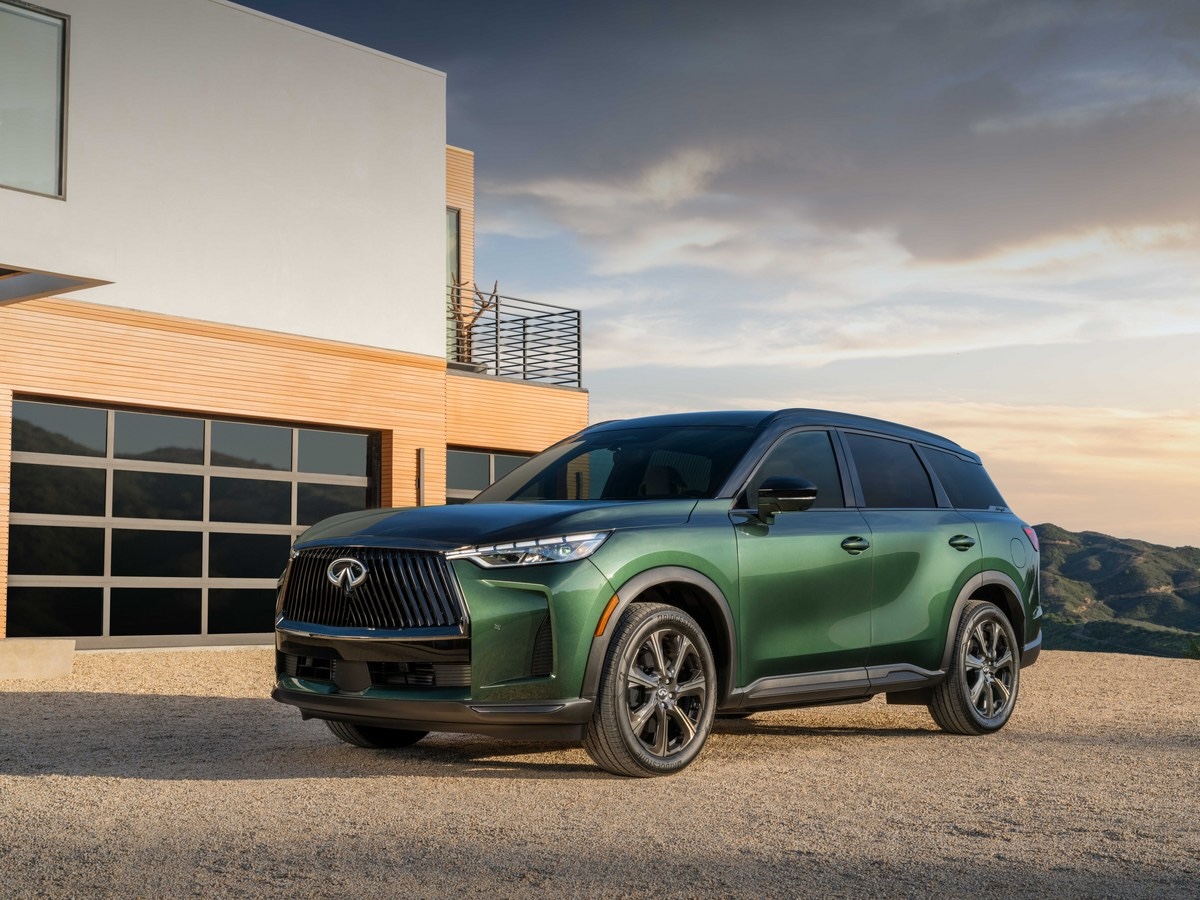
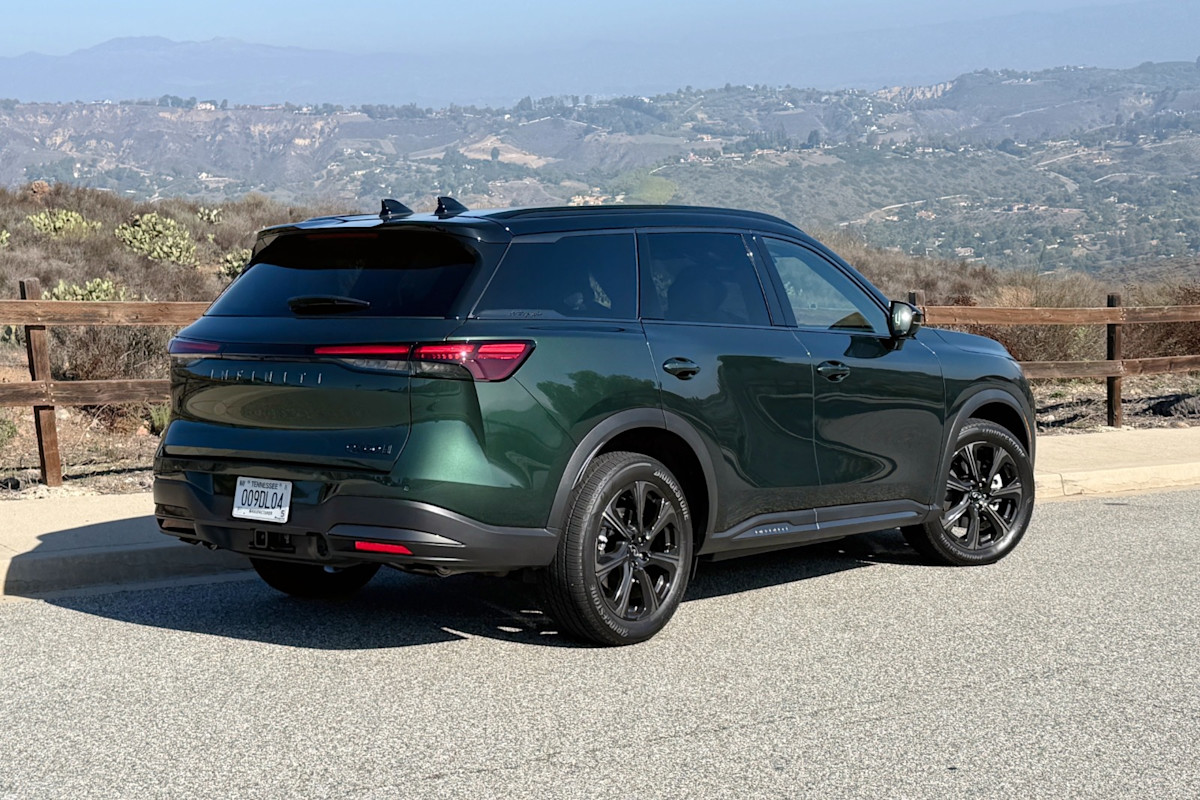
In Canada, Infiniti offers the 2026 QX60 in Luxe, Sport, and Autograph trim levels, meaning the more affordable Pure trim level has been dropped. Prices now range from $70,573 to $84,573, including the $2,495 destination charge and other fees. Our test vehicle arrived in Autograph trim with the new Deep Emerald colour and a Black Obsidian roof. The manufacturer’s suggested retail price (MSRP) for this configuration is CAD $85,773 including fees.
If nothing else, Infinitis have almost always been stylish and distinctive. A notable exception was the Nissan Maxima-based Infiniti I30 sedan, though its lack of imagination didn’t hurt sales. The QX60 is to the Nissan Pathfinder what the I30 was to the Nissan Maxima. For the 2026 QX60, Infiniti updates the exterior design to better align it with the only other vehicle in the company’s shriveled lineup, the hulking Infiniti QX80, itself based on the Nissan Armada.
In addition to a new Sport trim level with the requisite gloss black wheels and blacked-out trim, a new grille design leads the way. Infiniti claims it is “inspired by the intersecting shapes of a serene bamboo forest”. We would have guessed it was modeled on the character Sheriff from the Pixar “Cars” movie franchise. Sport models have a more appealing diamond-mesh grille pattern. Below it, a new lower front fascia features daytime running lights in what Infiniti describes as a piano-key pattern.
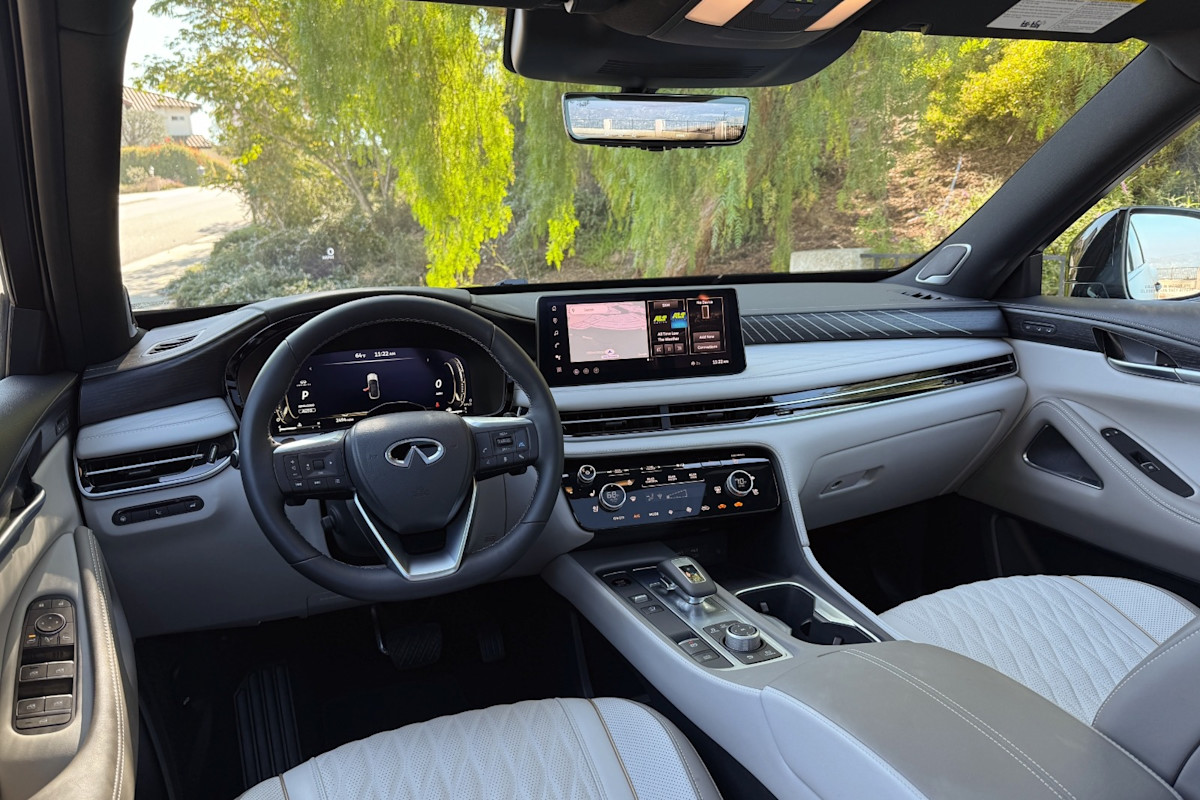
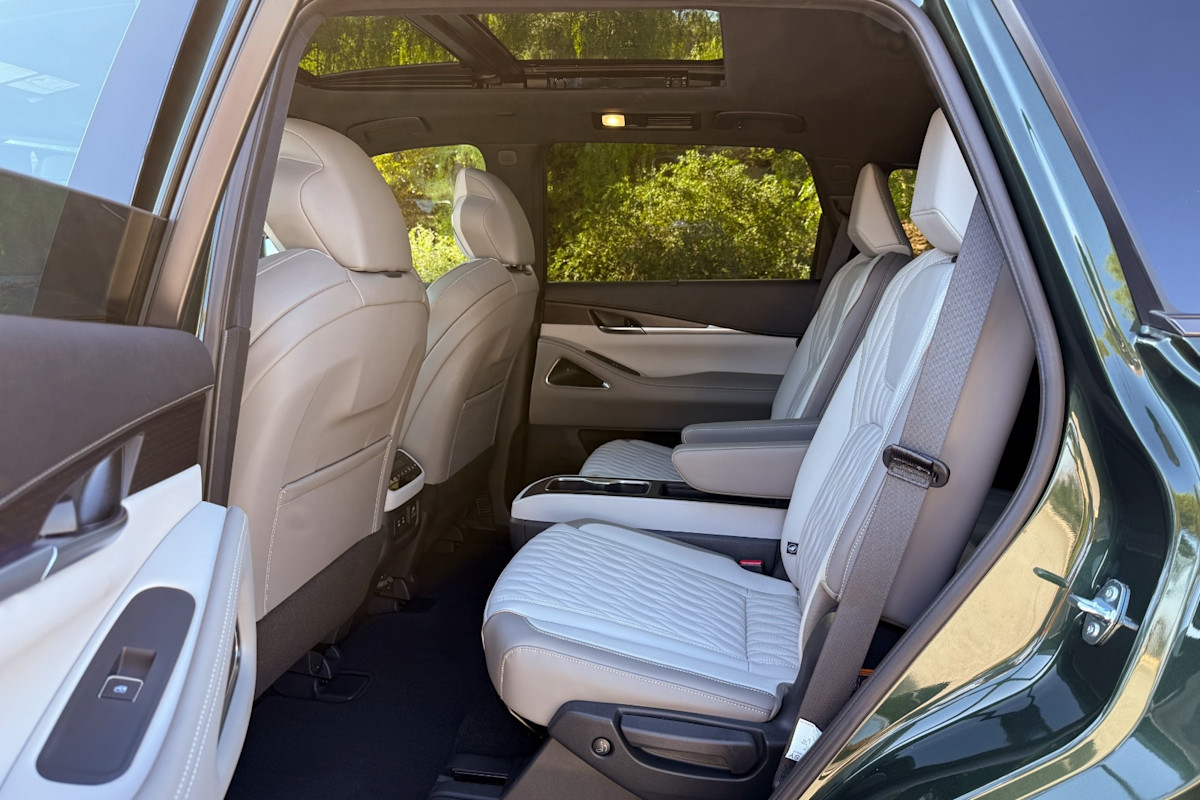
Inside, QX60 buyers can select a new Stone Grey colour in addition to Graphite. The Sport trim comes with a unique Dusk Blue interior, while the QX60 Autograph features an exclusive Saddle Brown in addition to the grey and black colours. Infiniti uses its TailorFit artificial leather (made from 65% recycled materials, Infiniti says) in all but the QX60 Autograph. In keeping with its position at the top of the lineup, the Autograph features premium semi-aniline leather in a diamond-stitched pattern, real open-pore wood, fancy detailing, and top-quality materials. It is convincingly luxurious.
No matter which version you get, the QX60 has an upscale cabin with digital displays and a touch-sensing dashboard control panel. It’s not as irritating as expected thanks to clear labeling, haptic feedback to inputs, and analog volume and cabin temperature knobs. Also, it resisted—to an uncanny degree—the accumulation of dust and fingerprints.
Performance
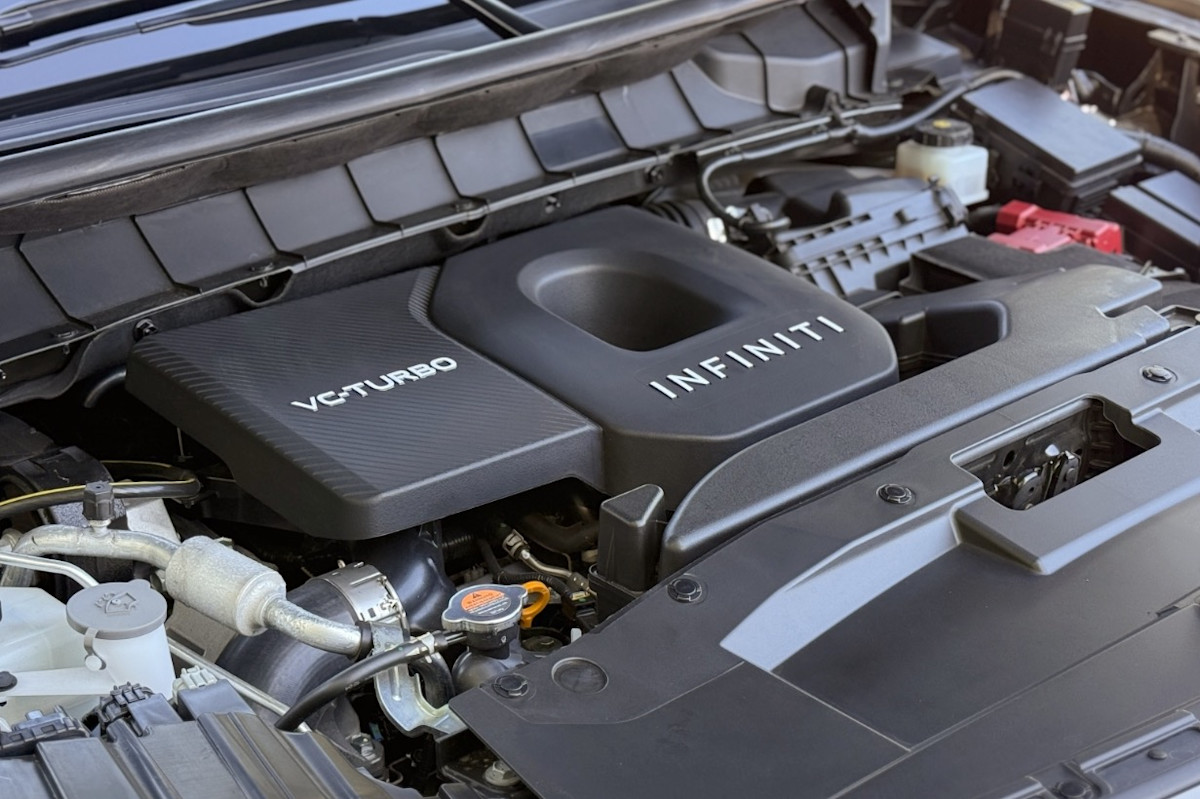
Infiniti equips the QX60 with a turbocharged four-cylinder engine, a significant point of distinction from the V6-powered Nissan Pathfinder. It is the company’s VC-Turbo engine, a turbocharged 2.0-litre inline-four equipped with variable-compression-ratio technology, which is supposed to deliver power when you need it and superior fuel economy when you don’t.
The VC-Turbo makes 268 horsepower and 286 pound-feet of torque on premium fuel. Compare that to the Pathfinder, which offers 284 hp and 259 lb-ft of torque (295 hp and 270 lb-ft in Rock Creek trim) from a naturally aspirated 3.5-litre V6. As in the Nissan, the Infiniti features a nine-speed automatic transmission and up to 2,720 kilograms (6,000 pounds) of towing capacity.
According to Natural Resources Canada, the QX60 will average 9.9 litres per 100 kilometres with its standard AWD. The Pathfinder is rated at 10.8 L/100 km in combined driving, and the Nissan’s V6 takes regular gas. The Pathfinder Rock Creek is less efficient at 11.2 L/100 km combined, but Infiniti doesn’t offer an equivalent off-road version of the QX60, which has a scant 17.4 centimetres of ground clearance.
On our evaluation loop, the QX60 averaged 11.6 L/100 km in Auto mode. A Pathfinder Rock Creek driven on that same loop in 2025 returned 12.7 L/100 km. So, there is a fuel economy benefit to the VC-Turbo engine, but the premium fuel requirement to enjoy maximum power effectively erases it from a cost perspective.
In addition to Auto mode, the QX60 offers Sport, Eco, Snow, and Tow settings. We prefer Auto mode at all times as Sport mode produces unwanted, unbecoming power surges and clumsy gear changes. In Auto mode, the QX60 is smooth, refined, and more fuel-efficient. The VC-Turbo engine even sounds good when revving. This Infiniti can be quick, too, zooming up to highway speeds much faster than we expected. Unfortunately, the AWD system lacks sophistication. When making a right turn and accelerating hard, it allowed too much front wheel slip before engaging.
When driving in urban and suburban areas, the QX60 is quiet. At lower speeds on broken pavement, the suspension clearly telegraphs small, sharp bumps and cracks in the road, but it effectively dulls the sound of impact. At higher speeds, the QX60 feels too soft. While we appreciated its ability to blaze over speed humps at up to 65 km/h, the mushy suspension otherwise suffers too much unwanted body motion and roll on anything but glass-flat road surfaces. Still, if your idea of luxury is a marshmallowy ride, this Infiniti demands your attention.
Driving the QX60 with enthusiasm on mountain roads is a fool’s errand. Gone are the days of the Infiniti FX, which could tackle the twisties with the best luxury SUVs from Germany. In this setting, the QX60 feels ponderous, heavy, and uncommunicative.
Form & function
Seven-passenger seating is standard on the Luxe and Sport trim levels. The Autograph has standard captain’s chairs in the second row, dropping seating capacity to six. Every QX60 has heated eight-way power-adjustable front seats and a heated steering wheel, heated side mirrors and washer nozzles, and heated outboard second-row seats. The Autograph trim includes ventilated front seats and a massage function. A triple-zone automatic climate control system is standard with Plasmacluster air purification in the QX60 Autograph.
We struggled to find a satisfying driving position in our Autograph test vehicle. The seat didn’t raise high enough, and the relationship between the bottom cushion and the backrest angle created an unnaturally low, reclined position behind the steering wheel.
We found the second-row captain’s chairs to be much more comfortable. They’re mounted high in the cabin, stadium-style compared to the front chairs. They also power tip-and-slide to provide access to the third row, helpful since our test vehicle had a fixed centre console between the captain’s chairs.
The QX60’s third-row seats are tight for adults. We couldn’t fit both feet under the second-row captain’s chairs, and the fixed console further interfered with comfort. The seat cushion itself is low and flat, and it lacks thigh support. When exiting, it’s easy to stumble on the second-row seat tracks and the lumpy floor.
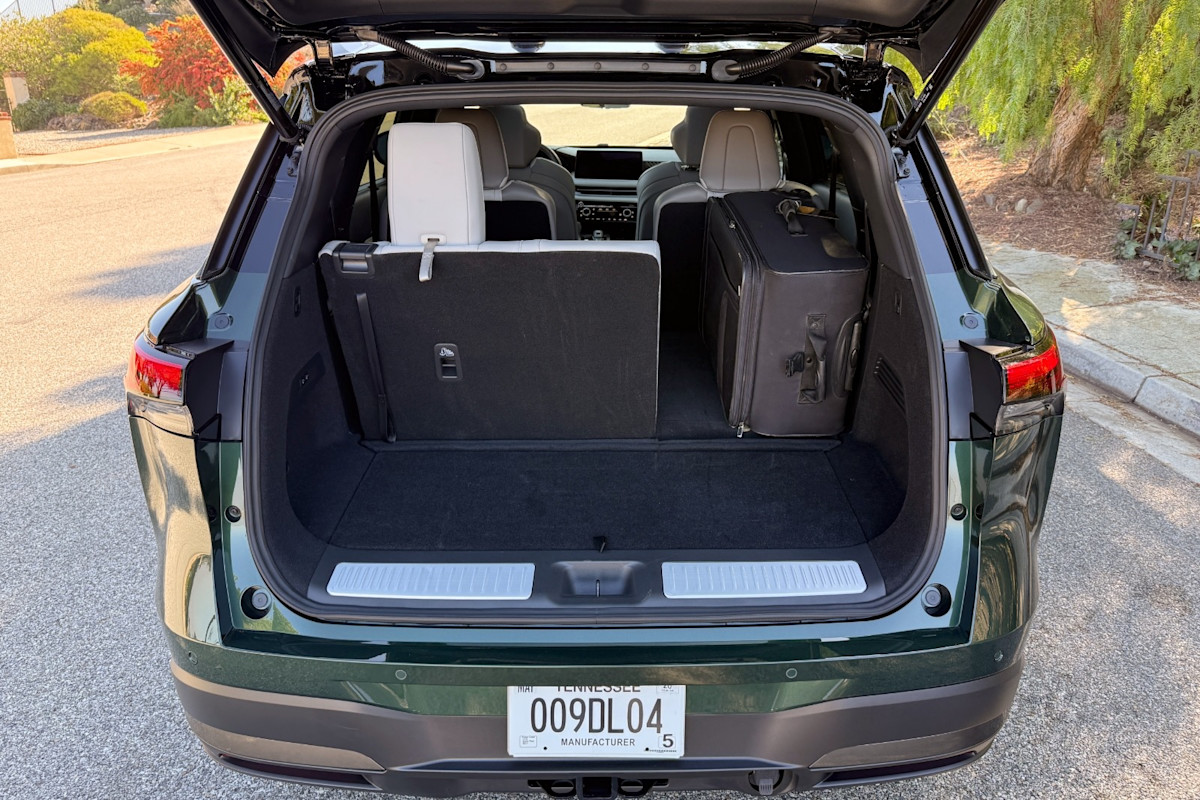
Open the liftgate, and the QX60 offers 411 litres of cargo space behind the third row. That’s less than many rivals, though the Infiniti does have a huge compartment underneath the load floor as well. Helpfully, the lid stays up, making it perfect for hauling bags of groceries. Fold the third-row seat and the QX60 provides 1,178 litres of cargo space. The maximum available behind the front seats is 2,135 litres.
Technology
Perhaps the most important change to the 2026 Infiniti QX60 is its new Google built-in infotainment system. Displayed on a 12.3-inch centre touchscreen, it offers Google Assistant, Google Maps, and access to apps through the Google Play Store. In addition, wireless Apple CarPlay and Android Auto are standard as well as SiriusXM 360L satellite radio and Infiniti InTouch connected services with access to a 5G Wi-Fi hotspot.
The infotainment system is graphically pleasing, well-organized, and easy to use. During one trip, Google Maps failed to load properly and remained stuck on our departing location. However, Google Assistant worked almost flawlessly, quickly and accurately responding to all our testing commands.
Infiniti is switching to Klipsch premium audio systems. For 2026, the QX60 Sport has a 16-speaker system, while the Autograph features a Klipsch Reference Premiere setup with 20 speakers. The latter’s Individual Audio technology allows the driver to take phone calls, hear navigation directions, and listen to music without disturbing passengers.
True audiophiles might disagree, but we didn’t find the Autograph’s high-end Klipsch system satisfying. After rummaging through the infotainment system to find the audio settings and centring everything, it sounded loud but lacked fidelity. Crisp, brassy, hissing highs and thin, reedy, muddy bass produced a mediocre listening experience. Bang & Olufsen, Bowers & Wilkins, or Burmester systems offered by competitor brands are easier on our ears.
Drivers face a 12.3-inch digital instrument cluster that matches the centre touchscreen in size. A 10.8-inch head-up display is also equipped on the Autograph model. Additionally, our test vehicle had a camera-based digital rearview mirror that was affected by glare and reflections. MyQ Connected Garage technology can automatically close your garage door when you leave home and open it when you return and comes with a five-year trial.
Safety
Infiniti equips the QX60 with the baseline driver assistance systems we expect to find in a modern luxury SUV. Standard features on the base QX60 Luxe include: forward collision warning, automatic emergency braking, blind-spot monitors, rear cross-traffic alert with rear automatic braking, lane-departure warning, and lane-keep assist.
ProPilot Assist 1.1 is also standard, which includes adaptive cruise control and lane centring assist. The base Luxe trim level also includes a surround-view camera system with moving object detection and a new-for-2026 transparent Invisible Hood View. Also new for 2026 is ProPilot Assist 2.1, which offers hands-free driving capability and is included with the Infiniti QX60 Autograph.
Based on our experience, Infiniti needs to improve the driver assist tech so it operates more transparently and also better communicates with the driver. During testing, driver aids would cycle on and off without a clear indication of why that was happening. We did receive a warning when driving directly into late afternoon fall sunlight that the driver aids were unavailable, but that was the exception rather than the rule.
Additionally, during a transition from a four-lane highway to a limited-access highway, the hands-free driving feature did not activate until we were nearly at our exit. Compared to other hands-free systems we’ve tested on the same stretch, that represented a significant delay.
Later, when using the hands-free technology on a major highway, it remained active on a transition ramp. That’s not what happened in the Infiniti QX80 with the same system; it turned off and did not recognize the second highway as an approved highway. So, we assumed Infiniti had made an improvement. But then the ProPilot Assist shut down before reaching the first exit, telling us the map was “under maintenance”.
Beyond these quirks, the handoff from ProPilot Assist to the driver is too abrupt and awkward. For example, when using version 1.1, the steering can feel heavy and leaden in the driver’s hands. If the driver needs to override the automated inputs, the system seems to momentarily fight, then suddenly relents. When that happens mid-curve, the steering instantly goes light and slack, causing the driver to overcorrect and leading to erratic driving.
As for the Autograph’s available ProPilot Assist 2.1, the hands-free system could not navigate some tighter curves at the foot of a mountain grade, slowed the QX60 down too much in other curves, and did not execute hands-free lane changes. Overall, ProPilot Assist seems to be a work in progress.
The Insurance Institute for Highway Safety (IIHS) had not released crash-test ratings for the 2026 QX60 at the time of publication. But the U.S. National Highway Traffic Safety Administration (NHTSA) gave the 2026 QX60 a five-star overall rating.
Cost-effectiveness
The 2026 Infiniti QX60 has the lowest base price of any midsize three-row luxury SUV. You also get four to five years of complimentary connected services, and the QX60’s warranty covers the entire vehicle for four years or 100,000 kilometres, while the powertrain warranty is good for six years or 110,000 kilometres. The latter figure is slightly longer than usual for a luxury brand.
Despite these perks, our test vehicle did not achieve the promised fuel economy, and the VC-Turbo engine requires premium fuel to deliver its maximum power. Having recently driven the slightly more expensive but slightly less efficient Acura MDX, we’re inclined to recommend it over the Infiniti. And the Acura offers an available Bang & Olufsen audio system that we prefer to the Infiniti’s Klipsch system.
Another alternative is the Nissan Pathfinder, which Infiniti uses as the basis for the QX60. It gets a refresh for 2026 and, in the loaded Platinum trim level, offers nearly as much luxury and technology at a significant discount. If you can live without a third-row seat, the Nissan Murano Platinum is a luxury SUV in all but (brand) name. If you ask us, the Murano should have been an Infiniti in the first place.

What owners say
Trims & specs
Base MSRP $62,190 | Seating 6 |
Engine 2.0L 268 hp I4 | Cargo Capacity 14.5 cu ft |
Combined MPG 24 | Drivetrain AWD |
Base MSRP $56,990 | Seating 7 |
Engine 2.0L 268 hp I4 | Cargo Capacity 14.5 cu ft |
Combined MPG 25 | Drivetrain FWD |
Base MSRP $59,090 | Seating 7 |
Engine 2.0L 268 hp I4 | Cargo Capacity 14.5 cu ft |
Combined MPG 24 | Drivetrain AWD |
Base MSRP $51,590 | Seating 7 |
Engine 2.0L 268 hp I4 | Cargo Capacity 14.5 cu ft |
Combined MPG 25 | Drivetrain FWD |
Base MSRP $53,690 | Seating 7 |
Engine 2.0L 268 hp I4 | Cargo Capacity 14.5 cu ft |
Combined MPG 24 | Drivetrain AWD |
Base MSRP $66,690 | Seating 6 |
Engine 2.0L 268 hp I4 | Cargo Capacity 14.5 cu ft |
Combined MPG 24 | Drivetrain AWD |


Pricing trends
MSRP range
$51,590 - $66,690
Current avg. market price
$69,028
Trending down by 1.4% this month
May 2026 - October 2026