2026 Lexus RX Hybrid vs 2026 Toyota bZ
Overview | |
Listings42 | Listings159 |
Ratings & Reviews | |
User Reviews | User Reviews |
Expert reviews6.5 out of 10 | Expert reviews7.5 out of 10 |
Pros
Cons
| Pros
Cons
|
2026 Toyota bZ Reviews SummaryReaders are looking at the electric vehicle formerly known as the bZ4X. It wears a shorter name for 2026, but that’s not the big news. More power, up to 468 kilometres of range, a standard NACS charging port (with a CCS adapter), and Plug & Charge capability are all major improvements. Toyota has also tidied up the styling inside and out and added a larger infotainment screen. Verdict: With the refreshed 2026 bZ, Toyota has fixed the bZ4X’s most significant flaws, making this a genuinely competitive model at a comparatively affordable price. | |
2026 Lexus RX Hybrid Reviews SummaryBuyers have high expectations of luxury crossovers. They want arresting design, comfortable interiors, the latest technology, and powerful engines. Several automakers employ turbocharged six-cylinder engines to get that power, but Lexus is going a different way with its most potent RX model, the RX 500h F Sport Performance. It still uses a turbocharger but also employs hybrid technology to boost power and cut acceleration times while improving fuel economy. It’s one of two 2026 Lexus RX Hybrid models, along with the tamer RX 350h. Verdict: The RX 500h F Sport Performance may be the most powerful RX, but it’s not as powerful or quick as most rivals. Despite the F Sport badge, there isn’t much real “sport” to be had. While it does have good fuel economy ratings, we found them hard to match in the real world. | |
No video found | No video found |
Popular Features & Specs | |
Engine168 hp Electric | Engine2.5L 246 hp I4 Hybrid |
DrivetrainFWD | DrivetrainAWD |
Seating Capacity5 | Seating Capacity5 |
Horsepower | Horsepower246 hp @ 6000 rpm |
EV Battery Capacity57.7 kWh | EV Battery Capacity |
Fuel Economy (City)1.6 L(e)/100 km | Fuel Economy (City)6.4 L(e)/100 km |
Fuel Economy (Highway)2.0 L(e)/100 km | Fuel Economy (Highway)6.9 L(e)/100 km |
Battery Charge Time (240V)6 hours | Battery Charge Time (240V) |
Engine | |
Engine Name168 hp Electric | Engine Name2.5L 246 hp I4 Hybrid |
Torque | Torque233 lb-ft @ 4300 rpm |
Horsepower | Horsepower246 hp @ 6000 rpm |
Battery Charge Time (240V)6 hours | Battery Charge Time (240V) |
DrivetrainFWD | DrivetrainAWD |
Fuel Economy | |
EV Battery Capacity57.7 kWh | EV Battery Capacity |
Fuel Economy (City)1.6 L(e)/100 km | Fuel Economy (City)6.4 L(e)/100 km |
Fuel Economy (Highway)2.0 L(e)/100 km | Fuel Economy (Highway)6.9 L(e)/100 km |
Interior | |
Seating Capacity5 | Seating Capacity5 |
Key Features | |
Navigation SystemOptional | Navigation SystemStandard |
Safety | |
Front Crash Overall4 | Front Crash Overall4 |
Side Crash Overall5 | Side Crash Overall5 |
Dimensions & Capacity | |
Cargo Space784 L | Cargo Space838 L |
Curb Weight1840 kg | Curb Weight2021 kg |
Height1651 mm | Height1709 mm |
Length4689 mm | Length4890 mm |
Width1859 mm | Width1920 mm |
Wheelbase2850 mm | Wheelbase2850 mm |
Maximum Payload474 kg | Maximum Payload |
Number of doors4 | Number of doors4 |
Maximum Towing Capacity | Maximum Towing Capacity1588 kg |
Overview | ||
Listings | ||
Ratings & Reviews | ||
User reviews | ||
Expert reviews | 6.5 out of 10Read full review | 7.5 out of 10Read full review |
Pros & cons | Pros
Cons
| Pros
Cons
|
Summary | Readers are looking at the electric vehicle formerly known as the bZ4X. It wears a shorter name for 2026, but that’s not the big news. More power, up to 468 kilometres of range, a standard NACS charging port (with a CCS adapter), and Plug & Charge capability are all major improvements. Toyota has also tidied up the styling inside and out and added a larger infotainment screen. Verdict: With the refreshed 2026 bZ, Toyota has fixed the bZ4X’s most significant flaws, making this a genuinely competitive model at a comparatively affordable price. | Buyers have high expectations of luxury crossovers. They want arresting design, comfortable interiors, the latest technology, and powerful engines. Several automakers employ turbocharged six-cylinder engines to get that power, but Lexus is going a different way with its most potent RX model, the RX 500h F Sport Performance. It still uses a turbocharger but also employs hybrid technology to boost power and cut acceleration times while improving fuel economy. It’s one of two 2026 Lexus RX Hybrid models, along with the tamer RX 350h. Verdict: The RX 500h F Sport Performance may be the most powerful RX, but it’s not as powerful or quick as most rivals. Despite the F Sport badge, there isn’t much real “sport” to be had. While it does have good fuel economy ratings, we found them hard to match in the real world. |
Video | No video found | No video found |
Popular Features & Specs | ||
Engine | 168 hp Electric | 2.5L 246 hp I4 Hybrid |
Drivetrain | FWD | AWD |
Seating Capacity | 5 | 5 |
Horsepower | 246 hp @ 6000 rpm | |
EV Battery Capacity | 57.7 kWh | |
Fuel Economy (City) | 1.6 L(e)/100 km | 6.4 L(e)/100 km |
Fuel Economy (Highway) | 2.0 L(e)/100 km | 6.9 L(e)/100 km |
Battery Charge Time (240V) | 6 hours | |
Engine | ||
Engine Name | 168 hp Electric | 2.5L 246 hp I4 Hybrid |
Torque | 233 lb-ft @ 4300 rpm | |
Horsepower | 246 hp @ 6000 rpm | |
Battery Charge Time (240V) | 6 hours | |
Drivetrain | FWD | AWD |
Fuel Economy | ||
EV Battery Capacity | 57.7 kWh | |
Fuel Economy (City) | 1.6 L(e)/100 km | 6.4 L(e)/100 km |
Fuel Economy (Highway) | 2.0 L(e)/100 km | 6.9 L(e)/100 km |
Interior | ||
Seating Capacity | 5 | 5 |
Key Features | ||
Navigation System | Optional | Standard |
Safety | ||
Front Crash Overall | 4 | 4 |
Side Crash Overall | 5 | 5 |
Dimensions & Capacity | ||
Cargo Space | 784 L | 838 L |
Curb Weight | 1840 kg | 2021 kg |
Height | 1651 mm | 1709 mm |
Length | 4689 mm | 4890 mm |
Width | 1859 mm | 1920 mm |
Wheelbase | 2850 mm | 2850 mm |
Maximum Payload | 474 kg | |
Number of doors | 4 | 4 |
Maximum Towing Capacity | 1588 kg | |
The 2026 Toyota bZ was available in XLE and Limited trims, offering both single-motor front-wheel drive (FWD) and dual-motor all-wheel drive (AWD) configurations, with two battery sizes to choose from. The larger battery, while more expensive, provided enhanced power, performance, and range. Canadian pricing ranged from $47,920 to $63,620, inclusive of a $1,930 destination charge. Notably, the XLE FWD and XLE AWD models qualified for a $5,000 federal EV rebate. The U.S.-specification XLE test vehicle featured FWD and the larger battery, a combination unavailable in Canada. The 2026 bZ's restyled exterior, particularly with body-colour trim, was an improvement over its predecessor, although some colours retained the black overfender trim. Inside, the redesigned dashboard and centre console offered a cleaner look and higher quality feel, with the XLE’s fabric seats boasting an upscale pattern. The centre touchscreen was enlarged to 14 inches, integrating climate control, which included user-friendly temperature dials and buttons for essential functions. However, the digital instrument cluster's placement and size remained a concern, as it was difficult to read and could be obstructed by the steering wheel.
The 2026 Lexus RX Hybrid aimed for high style with the RX 500h F Sport Performance, though its design was sometimes considered overly flamboyant. The front featured a large, black trapezoidal grille, slim headlights, and air intakes, creating a bold, stylized appearance. The profile was stylish yet more restrained, with flat wheel flares and a character line suggesting motion. The floating roofline and rear spoiler added to its sporty look, complemented by 21-inch wheels and dark trim. Inside, the RX 500h offered Dark Graphite or Rioja Red leather, with the latter adding a sporty touch. The interior featured a perforated leather-wrapped steering wheel, aluminum pedals, and digital screens, surrounded by soft-touch materials, creating a luxurious and sporty environment.
The 2026 Toyota bZ offered a choice between a single-motor FWD and a dual-motor AWD setup. The FWD model featured a 57.7-kWh battery, delivering 168 horsepower and 198 pound-feet of torque, with an estimated range of 380 kilometres and an efficiency rating of 16.1 kWh/100 km. The AWD models, equipped with a 74.7-kWh battery, produced a combined 338 horsepower, with 198 lb-ft at the front and 125 lb-ft at the rear. The XLE AWD offered a range of 468 km with an efficiency of 17.3 kWh/100 km, while the Limited variant could travel 436 km at 18.6 kWh/100 km. Recharging the bZ using a DC fast charger took about 30 minutes to go from 10% to 80%, and the switch to a NACS port allowed compatibility with certain Tesla Superchargers. The larger battery required seven hours to recharge using a 240-volt, 48-amp Level 2 home charger, while the smaller battery took five hours and 30 minutes. Efficiency tests showed the FWD bZ averaged 13.7 kWh/100 km in Eco mode and 15.9 kWh/100 km in Normal mode. The bZ was a comfortable and quiet cruiser, though its mid-range passing power was limited, and it struggled on winding roads due to its all-season tires and lifeless steering.
The 2026 Lexus RX Hybrid, specifically the RX 500h, delivered 366 horsepower and 406 pound-feet of torque through a turbocharged 2.4-litre four-cylinder engine and a hybrid system. The engine produced 271 horsepower, while two electric motors contributed the remaining 95 hp. The front motor was positioned between the engine and the six-speed automatic transmission, and the rear motor was part of an eAxle providing AWD. The RX 500h achieved a 0-96 km/h time of 5.9 seconds, with smooth power delivery and seamless transitions between electric and gas propulsion. The RX 500h featured standard adaptive dampers, rear-axle steering, and a firmer suspension, along with larger front brakes and 21-inch wheels. While the RX 500h offered a firmer ride, it wasn't significantly sportier, with direct but not overly quick steering and limited grip from the all-season tires. The SUV leaned in turns, and the Sport setting for the dampers made the ride overly firm on bumpy roads. A Custom mode allowed drivers to adjust suspension, powertrain, steering, and air conditioning settings, but for a truly sporty experience, other luxury SUVs were recommended.
The 2026 Toyota bZ, built on a skateboard-style EV platform, offered 21.1 centimetres of ground clearance with FWD and 20.6 cm with AWD, making it easy to enter and exit. Both front seats featured standard height adjustment, with eight-way power adjustment available in XLE and Limited trims, providing variable lumbar and thigh support. The Limited trim included matching eight-way power adjustment for the front passenger. Heated front seats, a heated steering wheel, and heated exterior mirrors were standard, with the Limited adding ventilated front seats and a front radiant foot and leg heater. The bZ lacked a traditional glove compartment but compensated with a large bin under the centre armrest and a sizeable tray beneath the centre console control panel. Rear seat passengers enjoyed ample legroom, though foot space under the front seats was tight. The bZ offered 784 litres of cargo space behind the power rear liftgate, with an underfloor storage well and a maximum cargo space of 1,611 litres with the back seats folded.
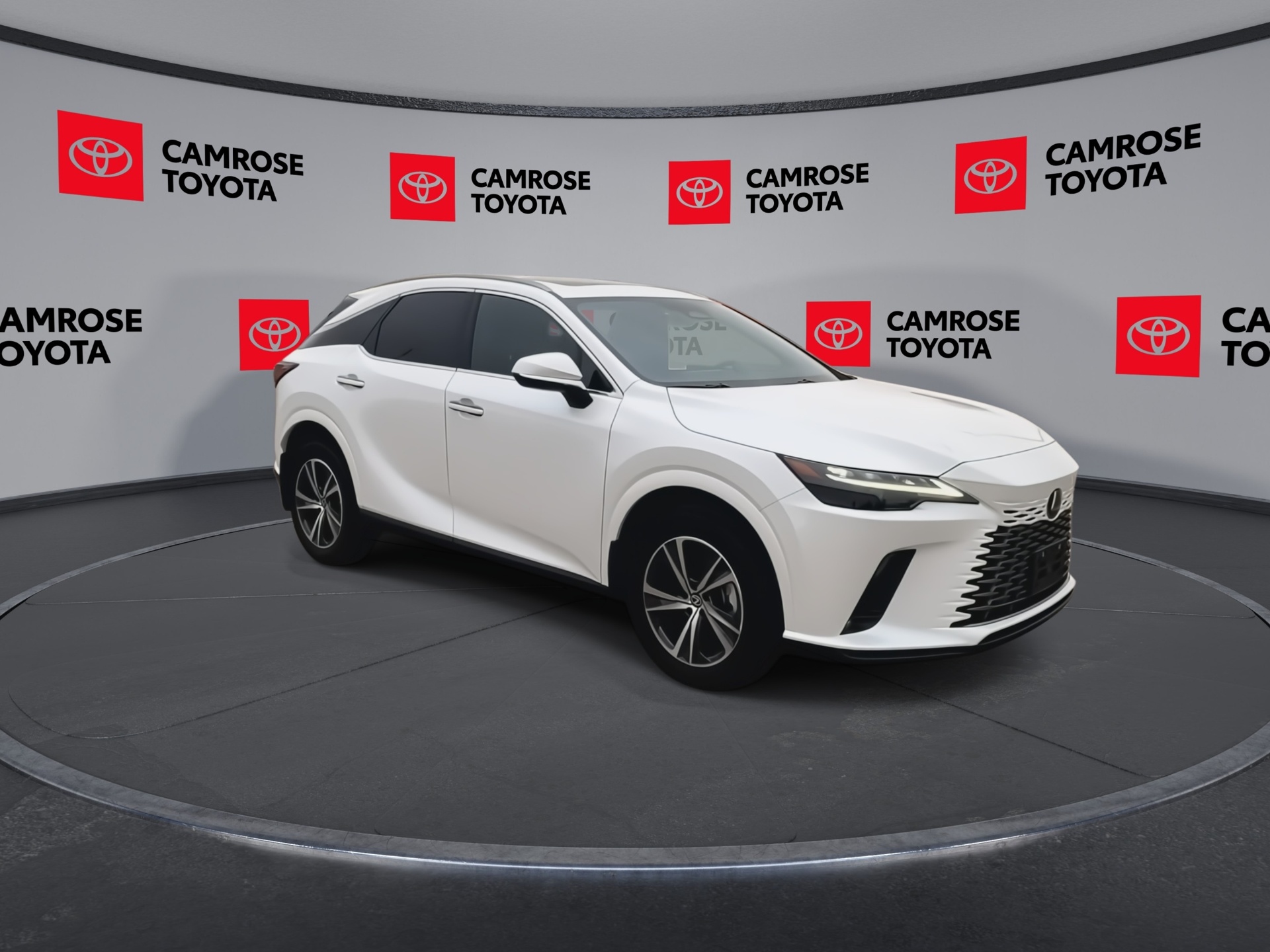
The 2026 Lexus RX Hybrid provided a comfortable interior, with front-seat occupants benefiting from eight-way power-adjustable sport seats with standard heating and cooling. The seats were thickly bolstered for support yet spacious enough for larger frames. The steering wheel was heated, and a panoramic sunroof was standard. Rear seats offered good legroom, though accommodating three adults was uncomfortable. The RX 500h had 838 litres of cargo space with the second row up, and 1,308 litres with the seats folded down via power controls, which was average for the class.
The 2026 Toyota bZ featured a 7-inch digital instrument cluster and a new 14-inch touchscreen infotainment display. The 7-inch driver display was positioned too far away and crammed too much data into a small space, making it difficult to read and potentially obstructed by the steering wheel. The 14-inch display ran the Toyota Audio Multimedia infotainment system, which was generally easy to use but lacked a home screen for displaying multiple data panels simultaneously. The system supported wireless Apple CarPlay and Android Auto, offered SiriusXM satellite radio with a three-month trial, and included four complimentary connected service plans. The Drive Connect powered the native navigation system and the Intelligent Assistant voice assistant, which performed well during testing.
The 2026 Lexus RX Hybrid in Canada came with a 12.3-inch digital instrument cluster, a 14-inch touchscreen, and a standard head-up display. The infotainment system included wireless Apple CarPlay and Android Auto, as well as Lexus Intelligent Assist for voice commands. The touchscreen was tilted toward the driver and responded quickly to touch inputs, a significant improvement over the previous system. However, the steering wheel’s touch-sensitive pads were frustrating, as they controlled multiple functions and were often distracting. Lexus provided a three-year Drive Connect subscription with Google points of interest and real-time traffic information.
The 2026 Toyota bZ came standard with Toyota Safety Sense 3.0, which included high beam assist, forward collision warning with pedestrian detection, automatic emergency braking, lane departure warning, lane keep assist, lane centring assist, and adaptive cruise control. Proactive Driving Assist added subtle braking and steering inputs for extra safety. Other standard features included blind spot monitoring, rear cross-traffic alert, safe exit assist, and front and rear parking sensors with automatic low-speed braking. The Limited trim added Traffic Jam Assist, lane change assist, front cross-traffic alert, and an Advanced Park system. The bZ received mixed safety ratings, with the IIHS giving its front crash avoidance tech a Good rating but a Poor rating for headlights. Frontal-impact crash tests earned Acceptable ratings, falling short of a Top Safety Pick award.
The 2026 Lexus RX Hybrid was equipped with Lexus Safety System+ 3.0, featuring forward collision warning, automatic emergency braking with pedestrian detection and intersection assist, adaptive cruise control, lane keep assist, high beam assist, traffic sign recognition, and emergency steering assist. Standard features included front and rear parking sensors, blind spot monitoring, and rear cross-traffic alert. Optional features included automatic parking, remote automatic parking, a surround-view camera system, and traffic jam assist. The RX received a perfect five-star rating from the NHTSA but a Poor rating in the updated moderate front overlap test from the IIHS, preventing it from earning a Top Safety Pick award.
CarGurus highlights
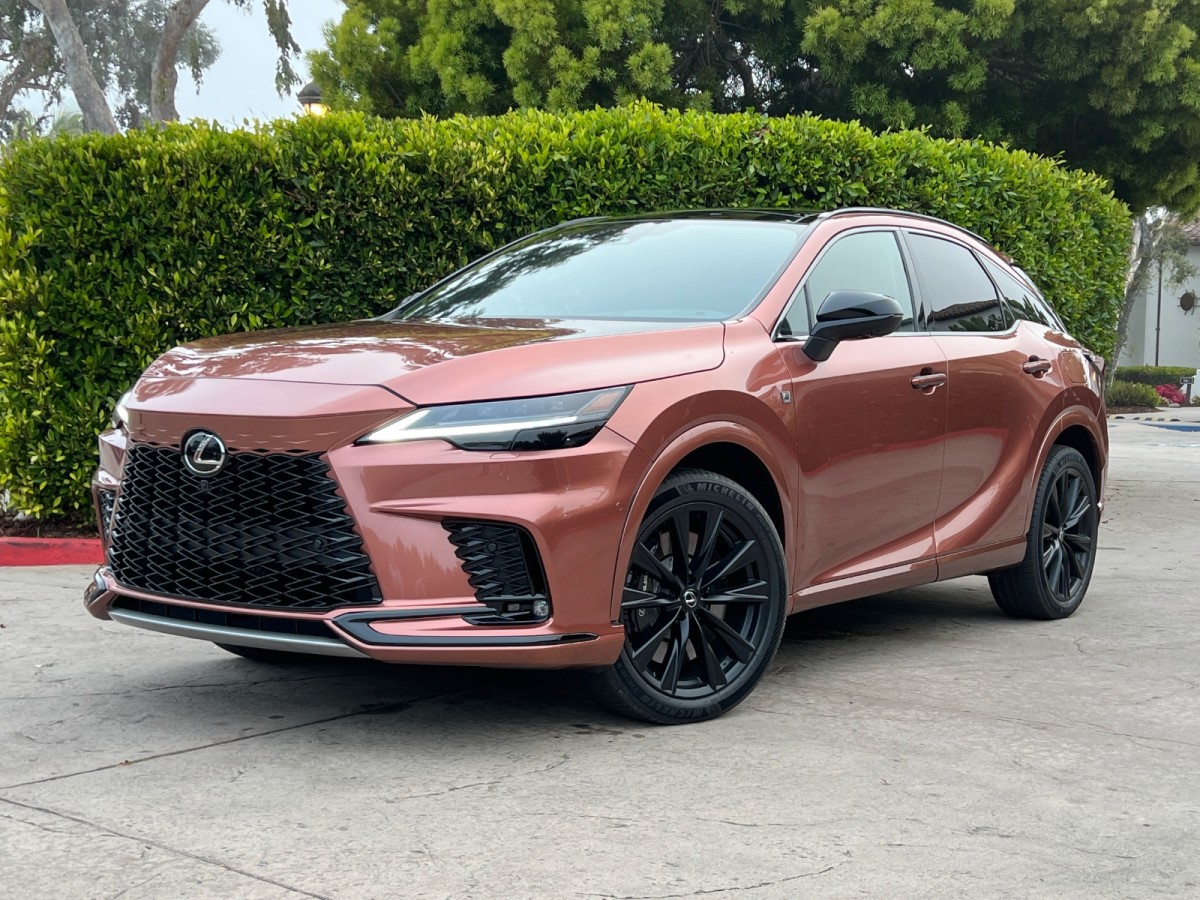
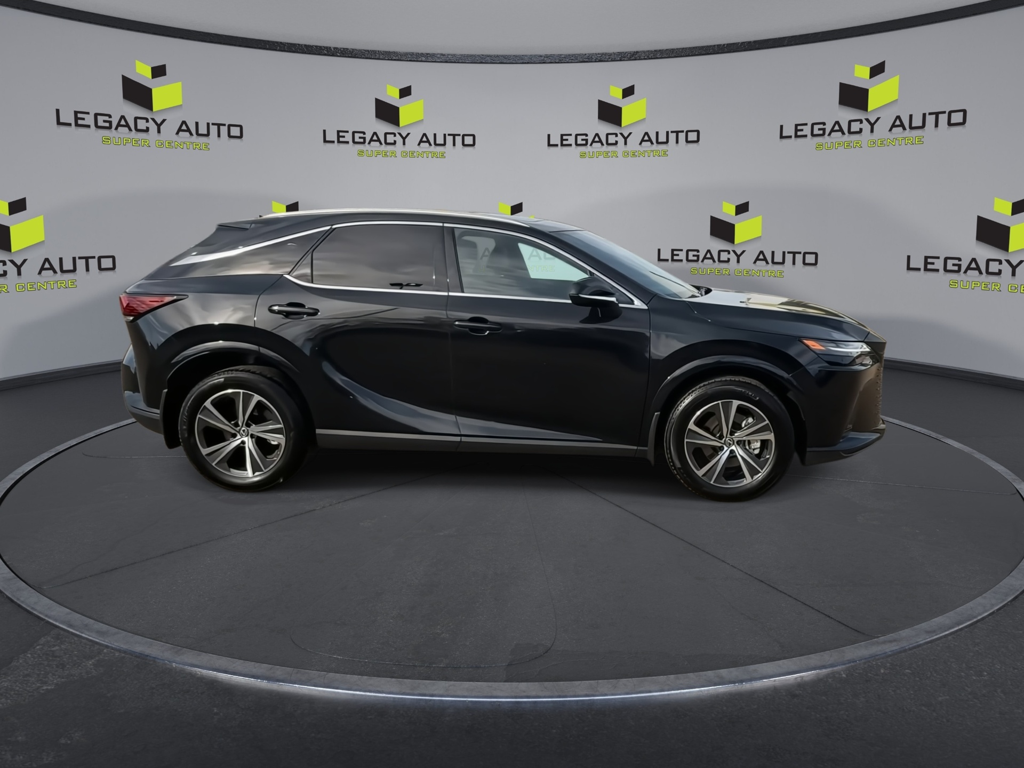
According to CarGurus experts, the overall rating for the 2026 Toyota bZ was 6.5 out of 10, while the 2026 Lexus RX Hybrid scored 7.5 out of 10. Based on these ratings, the 2026 Lexus RX Hybrid is the recommended choice for those seeking a more luxurious and powerful vehicle with advanced features and a higher overall rating.
Choose the 2026 Lexus RX Hybrid if:
- You desire a luxury SUV with a powerful hybrid system and AWD.
- You appreciate a stylish and sporty design with a comfortable interior.
- You want advanced safety features and a comprehensive infotainment system.




Choose the 2026 Toyota bZ if:
- You prioritize a more affordable electric vehicle with federal rebate eligibility.
- You value a spacious interior with ample cargo capacity.
- You prefer a vehicle with a straightforward infotainment system and effective voice assistant.


CarGurus highlights
According to CarGurus experts, the overall rating for the 2026 Toyota bZ was 6.5 out of 10, while the 2026 Lexus RX Hybrid scored 7.5 out of 10. Based on these ratings, the 2026 Lexus RX Hybrid is the recommended choice for those seeking a more luxurious and powerful vehicle with advanced features and a higher overall rating.
Choose the 2026 Lexus RX Hybrid if:
Shop Now- You desire a luxury SUV with a powerful hybrid system and AWD.
- You appreciate a stylish and sporty design with a comfortable interior.
- You want advanced safety features and a comprehensive infotainment system.
Choose the 2026 Toyota bZ if:
Shop Now- You prioritize a more affordable electric vehicle with federal rebate eligibility.
- You value a spacious interior with ample cargo capacity.
- You prefer a vehicle with a straightforward infotainment system and effective voice assistant.

By: CarGurus + AI
At CarGurus, our team of experienced automotive writers remain at the heart of our content operation, conducting hands-on car tests and writing insightful guides that are backed by years of industry experience. To complement this, we are harnessing AI to make our content offering more diverse and more helpful to shoppers than ever. To achieve this, our AI systems are based exclusively on CarGurus content, ratings and data, so that what we produce is both unique to CarGurus, and uniquely helpful to car shoppers.
