2026 Honda Pilot vs 2026 Toyota bZ
Overview | |
Listings47 | Listings588 |
Ratings & Reviews | |
User Reviews | User Reviews |
Expert reviews6.5 out of 10 | Expert reviews7.0 out of 10 |
Pros
Cons
| Pros
Cons
|
2026 Toyota bZ Reviews SummaryReaders are looking at the electric vehicle formerly known as the bZ4X. It wears a shorter name for 2026, but that’s not the big news. More power, up to 468 kilometres of range, a standard NACS charging port (with a CCS adapter), and Plug & Charge capability are all major improvements. Toyota has also tidied up the styling inside and out and added a larger infotainment screen. Verdict: With the refreshed 2026 bZ, Toyota has fixed the bZ4X’s most significant flaws, making this a genuinely competitive model at a comparatively affordable price. | |
2026 Honda Pilot Reviews SummaryWhile it has a more truck-like presence, the 2026 Honda Pilot remains fundamentally the same as before—and that's a good thing. It's the automaker's midsize three-row crossover SUV, competing against family-focused models such as the Toyota Grand Highlander and the Ford Explorer. Verdict: Clever features help the Pilot stand out from other three-row SUVs. Our only major complaint is the lack of a more fuel-efficient model. | |
No video found | |
Popular Features & Specs | |
Engine168 hp Electric | Engine |
DrivetrainFWD | Drivetrain |
Seating Capacity5 | Seating Capacity8 |
EV Battery Capacity57.7 kWh | EV Battery Capacity |
Fuel Economy (City)1.6 L(e)/100 km | Fuel Economy (City) |
Fuel Economy (Highway)2.0 L(e)/100 km | Fuel Economy (Highway) |
Battery Charge Time (240V)6 hours | Battery Charge Time (240V) |
Engine | |
Engine Name168 hp Electric | Engine Name |
Battery Charge Time (240V)6 hours | Battery Charge Time (240V) |
DrivetrainFWD | Drivetrain |
Fuel Economy | |
EV Battery Capacity57.7 kWh | EV Battery Capacity |
Fuel Economy (City)1.6 L(e)/100 km | Fuel Economy (City) |
Fuel Economy (Highway)2.0 L(e)/100 km | Fuel Economy (Highway) |
Interior | |
Seating Capacity5 | Seating Capacity8 |
Key Features | |
Navigation SystemOptional | Navigation SystemStandard |
Safety | |
Front Crash Overall4 | Front Crash Overall4 |
Side Crash Overall5 | Side Crash Overall5 |
Dimensions & Capacity | |
Cargo Space784 L | Cargo Space527 L |
Curb Weight1840 kg | Curb Weight1967 kg |
Height1651 mm | Height1803 mm |
Length4689 mm | Length5083 mm |
Width1859 mm | Width1994 mm |
Wheelbase2850 mm | Wheelbase2891 mm |
Maximum Payload474 kg | Maximum Payload608 kg |
Number of doors4 | Number of doors4 |
Maximum Towing Capacity | Maximum Towing Capacity1588 kg |
Overview | ||
Listings | ||
Ratings & Reviews | ||
User reviews | ||
Expert reviews | 6.5 out of 10Read full review | 7.0 out of 10Read full review |
Pros & cons | Pros
Cons
| Pros
Cons
|
Summary | Readers are looking at the electric vehicle formerly known as the bZ4X. It wears a shorter name for 2026, but that’s not the big news. More power, up to 468 kilometres of range, a standard NACS charging port (with a CCS adapter), and Plug & Charge capability are all major improvements. Toyota has also tidied up the styling inside and out and added a larger infotainment screen. Verdict: With the refreshed 2026 bZ, Toyota has fixed the bZ4X’s most significant flaws, making this a genuinely competitive model at a comparatively affordable price. | While it has a more truck-like presence, the 2026 Honda Pilot remains fundamentally the same as before—and that's a good thing. It's the automaker's midsize three-row crossover SUV, competing against family-focused models such as the Toyota Grand Highlander and the Ford Explorer. Verdict: Clever features help the Pilot stand out from other three-row SUVs. Our only major complaint is the lack of a more fuel-efficient model. |
Video | No video found | |
Popular Features & Specs | ||
Engine | 168 hp Electric | |
Drivetrain | FWD | |
Seating Capacity | 5 | 8 |
EV Battery Capacity | 57.7 kWh | |
Fuel Economy (City) | 1.6 L(e)/100 km | |
Fuel Economy (Highway) | 2.0 L(e)/100 km | |
Battery Charge Time (240V) | 6 hours | |
Engine | ||
Engine Name | 168 hp Electric | |
Battery Charge Time (240V) | 6 hours | |
Drivetrain | FWD | |
Fuel Economy | ||
EV Battery Capacity | 57.7 kWh | |
Fuel Economy (City) | 1.6 L(e)/100 km | |
Fuel Economy (Highway) | 2.0 L(e)/100 km | |
Interior | ||
Seating Capacity | 5 | 8 |
Key Features | ||
Navigation System | Optional | Standard |
Safety | ||
Front Crash Overall | 4 | 4 |
Side Crash Overall | 5 | 5 |
Dimensions & Capacity | ||
Cargo Space | 784 L | 527 L |
Curb Weight | 1840 kg | 1967 kg |
Height | 1651 mm | 1803 mm |
Length | 4689 mm | 5083 mm |
Width | 1859 mm | 1994 mm |
Wheelbase | 2850 mm | 2891 mm |
Maximum Payload | 474 kg | 608 kg |
Number of doors | 4 | 4 |
Maximum Towing Capacity | 1588 kg | |
The 2026 Toyota bZ was offered in XLE and Limited trims, with options for single-motor front-wheel drive (FWD) or dual-motor all-wheel drive (AWD), and two battery sizes. Models with the larger battery were priced higher but provided enhanced power, performance, and range. Canadian prices ranged from $47,920 to $63,620, inclusive of a $1,930 destination charge. Both the XLE FWD and XLE AWD qualified for a $5,000 federal EV rebate. The U.S.-specification XLE test vehicle featured FWD and the larger battery, a combination unavailable in Canada. The 2026 bZ's restyled exterior, especially with body-colour trim, was an improvement over previous models, although some colours retained the black overfender trim. Inside, the dashboard and centre console were redesigned for a cleaner look, with a 14-inch centre touchscreen and integrated climate controls. The digital instrument cluster, however, remained a point of contention due to its placement and readability issues.
The 2026 Honda Pilot underwent a makeover, adopting a more truck-like appearance with a larger, blockier grille and grey plastic scuff plates. The exterior updates aligned with the rugged design direction introduced three years prior. Inside, the Pilot retained its familiar layout but featured larger infotainment and digital instrument panels. The top trims received upgrades like diamond quilting on the seats and contrast stitching. The Pilot's interior continued to impress with its practicality and material quality, maintaining its status as a well-designed midsize SUV.
The 2026 Toyota bZ offered a choice between a single electric motor with a 57.7-kWh battery, delivering 168 horsepower and 198 lb-ft of torque, and dual-motor models with a 74.7-kWh battery, producing 338 hp. The XLE AWD variant provided a range of 468 km, while the Limited offered 436 km. Recharging the bZ using a DC fast charger took about 30 minutes to go from 10% to 80%. The FWD bZ averaged 13.7 kWh/100 km in Eco mode during testing, outperforming the NRCan estimate. However, the bZ's handling on winding roads was less impressive, with front wheelspin issues and lifeless steering.
The 2026 Honda Pilot retained its 3.5-litre V6 engine, producing 285 horsepower and 262 lb-ft of torque, paired with a 10-speed automatic transmission. AWD was standard in Canada. The Pilot's acceleration was adequate, and it handled highway merging and passing with ease. The steering improvements for 2026 provided better feedback and stability. While the Pilot wasn't sporty, it offered confident handling in curves, making it a reliable family SUV.
The 2026 Toyota bZ featured a skateboard-style EV platform with 21.1 cm of ground clearance for FWD and 20.6 cm for AWD. The interior offered comfortable seating with eight-way power adjustment for both driver and front passenger in the Limited trim. Heated front seats, a heated steering wheel, and heated exterior mirrors were standard. The bZ lacked a traditional glove compartment but compensated with ample storage options. Rear passengers enjoyed good legroom, though foot space was limited. Cargo space measured 784 litres, expandable to 1,611 litres with the rear seats folded.
The 2026 Honda Pilot's cabin remained spacious and versatile, with a removable second-row centre seat that could be stowed under the cargo floor. The second-row seats offered ample legroom and comfort, while the third row provided adequate space for smaller adults. Cargo capacity was impressive, with up to 3,219 litres available with both rear rows folded. The Pilot's interior featured generous storage options, including a long tray and large centre armrest bin.
The 2026 Toyota bZ came with a 7-inch digital instrument cluster and a new 14-inch touchscreen infotainment display. The infotainment system supported wireless Apple CarPlay and Android Auto, along with SiriusXM satellite radio. The system's lack of a home screen and low-contrast daytime mode were drawbacks. The Drive Connect feature powered the navigation system and voice assistant, which performed well in testing.
The 2026 Honda Pilot upgraded to a 12.3-inch infotainment touchscreen and a 10.2-inch digital instrument panel. The system was responsive and easy to use, with customizable shortcuts. Wireless Apple CarPlay and Android Auto were included, though the wireless phone charger required precise positioning. The Pilot retained unique features like multiple camera angles and the CabinTalk intercom system.
The 2026 Toyota bZ featured Toyota Safety Sense 3.0, including forward collision warning, lane departure warning, and adaptive cruise control. Proactive Driving Assist added subtle braking and steering inputs. The bZ's safety ratings from the IIHS were mixed, with a Good rating for front crash avoidance but a Poor rating for headlights.
The 2026 Honda Pilot's safety features included the Honda Sensing suite, with forward collision warning, lane-keep assist, and adaptive cruise control. The Pilot's safety features generally performed well, though the forward collision warning was overly sensitive. The 2025 Pilot received high safety ratings, and similar scores were expected for the 2026 model.
CarGurus highlights
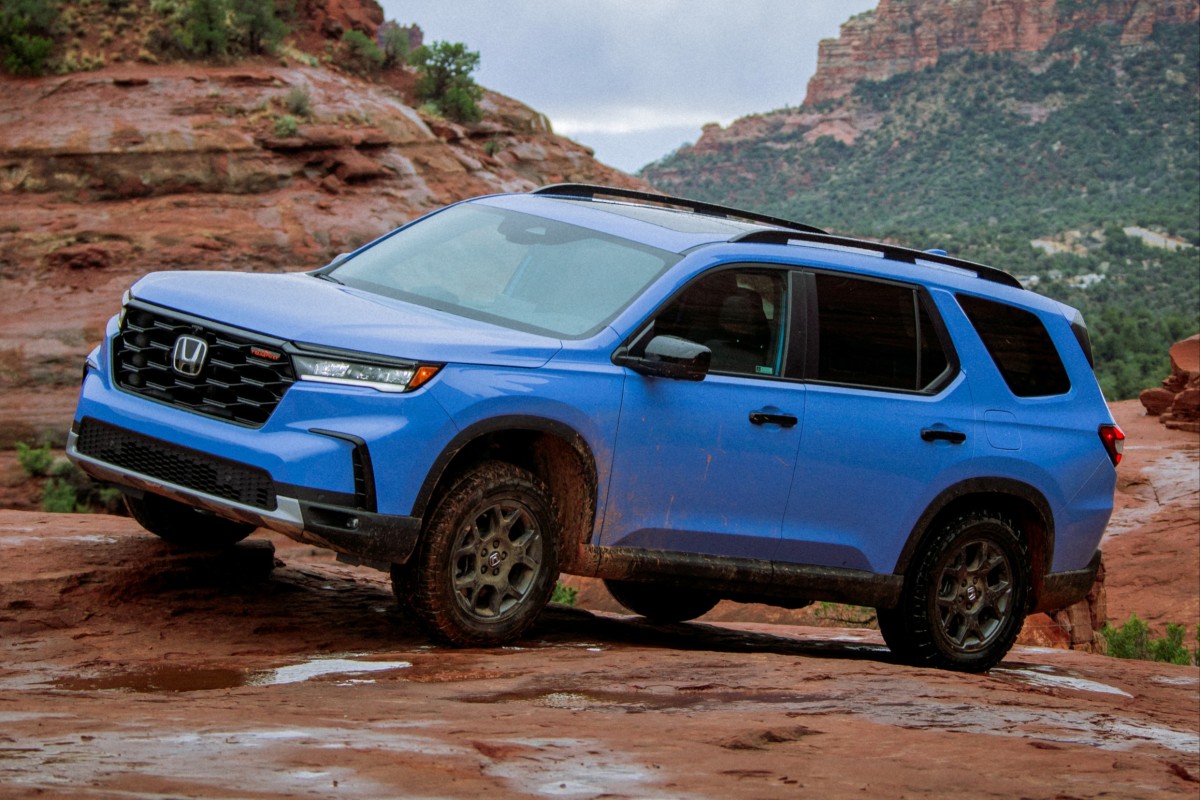
According to CarGurus experts, the overall rating for the 2026 Toyota bZ is 6.5 out of 10, while the 2026 Honda Pilot scores 7.0 out of 10. Based on these ratings, the 2026 Honda Pilot is the recommended choice for its superior practicality, performance, and safety features.
Choose the 2026 Honda Pilot if:
- You need a spacious and versatile interior for family use.
- You prefer a traditional V6 engine with confident highway performance.
- You appreciate advanced safety features and high safety ratings.


Choose the 2026 Toyota bZ if:
- You prioritize an electric vehicle with a federal rebate.
- You value a modern interior with a large touchscreen display.
- You seek a vehicle with good around-town efficiency.


CarGurus highlights
According to CarGurus experts, the overall rating for the 2026 Toyota bZ is 6.5 out of 10, while the 2026 Honda Pilot scores 7.0 out of 10. Based on these ratings, the 2026 Honda Pilot is the recommended choice for its superior practicality, performance, and safety features.
Choose the 2026 Honda Pilot if:
Shop Now- You need a spacious and versatile interior for family use.
- You prefer a traditional V6 engine with confident highway performance.
- You appreciate advanced safety features and high safety ratings.
Choose the 2026 Toyota bZ if:
Shop Now- You prioritize an electric vehicle with a federal rebate.
- You value a modern interior with a large touchscreen display.
- You seek a vehicle with good around-town efficiency.

By: CarGurus + AI
At CarGurus, our team of experienced automotive writers remain at the heart of our content operation, conducting hands-on car tests and writing insightful guides that are backed by years of industry experience. To complement this, we are harnessing AI to make our content offering more diverse and more helpful to shoppers than ever. To achieve this, our AI systems are based exclusively on CarGurus content, ratings and data, so that what we produce is both unique to CarGurus, and uniquely helpful to car shoppers.
