2025 Genesis GV80 vs 2026 Hyundai Ioniq 5
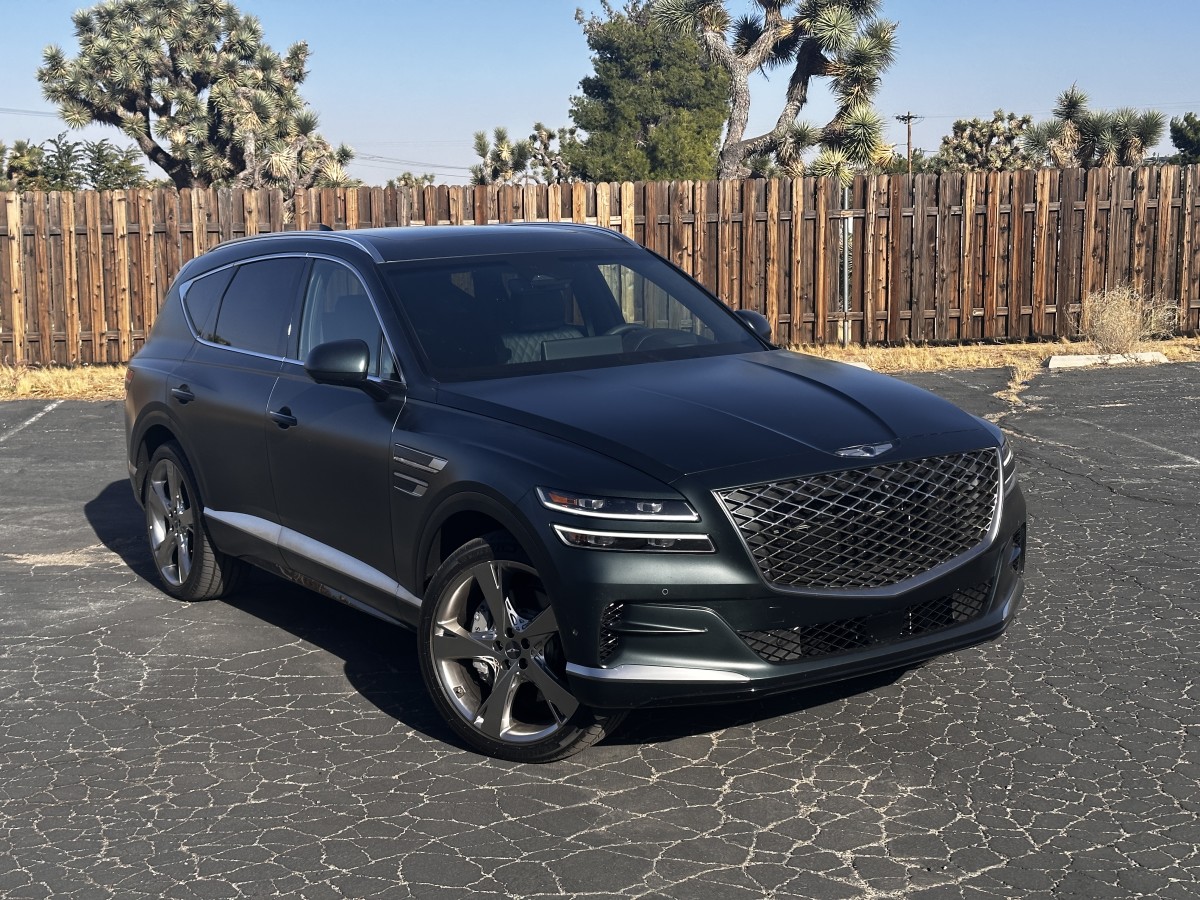

Overview | |
MSRP$58,200 | MSRP$35,000 |
Listings26 | Listings280 |
Ratings & Reviews | |
User Reviews | User Reviews |
Expert reviews8.0 out of 10 | Expert reviews |
Pros
Cons
| |
2025 Genesis GV80 Reviews SummaryThe Genesis GV80 was introduced in 2021 and has proved itself to be a strong contender as a luxury crossover. Although the powertrain remains the same for 2025, the mid-size SUV gets a redesign both inside and out, adding a bit more sophistication, two new exterior colours and some sumptuous interior materials. We’ll see a sporty GV80 Coupe with a supercharged engine later in 2025, but for now this traditional crossover is the company’s answer to luxury at an affordable price. Verdict: Genesis improved the technology of the GV80 for 2025 by adding wireless Apple CarPlay and Android Auto, but the SUV returns poor fuel economy and the seats are far from comfortable. Still, the GV80 undercuts its European counterparts on price and definitely deserves a test drive. | |
2026 Hyundai Ioniq 5 Reviews Summary | |
No video found | No video found |
Popular Features & Specs | |
Engine2.5L 300 hp I4 | Engine168 hp Electric |
Drive TrainAWD | Drive TrainRWD |
Seating Capacity5 | Seating Capacity5 |
Horsepower300 hp @ 5800 rpm | Horsepower |
EV Battery Capacity | EV Battery Capacity63 kWh |
MPG City19 | MPG City131 |
MPG Highway24 | MPG Highway100 |
Battery Charge Time (120V) | Battery Charge Time (120V)54 hours |
Battery Charge Time (240V) | Battery Charge Time (240V)5.7 hours |
Engine | |
Engine Name2.5L 300 hp I4 | Engine Name168 hp Electric |
Torque311 lb-ft @ 1650 rpm | Torque |
Horsepower300 hp @ 5800 rpm | Horsepower |
Battery Charge Time (120V) | Battery Charge Time (120V)54 hours |
Battery Charge Time (240V) | Battery Charge Time (240V)5.7 hours |
DrivetrainAWD | DrivetrainRWD |
Fuel Economy | |
EV Battery Capacity | EV Battery Capacity63 kWh |
MPG City19 | MPG City131 |
MPG Highway24 | MPG Highway100 |
Interior | |
Seating Capacity5 | Seating Capacity5 |
Key Features | |
Navigation SystemStandard | Navigation SystemStandard |
Safety | |
Front Crash Overall4 | Front Crash Overall |
Side Crash Overall5 | Side Crash Overall |
Dimensions & Capacity | |
Cargo Space34.9 cu ft | Cargo Space26.3 cu ft |
Curb Weight4850 lbs | Curb Weight4145 lbs |
Height67.5 in | Height63.0 in |
Length194.5 in | Length183.3 in |
Width77.8 in | Width74.4 in |
Wheelbase116.3 in | Wheelbase118.1 in |
Maximum Payload1180 lbs | Maximum Payload1080 lbs |
Number of doors4 | Number of doors4 |
Maximum Towing Capacity6000 lbs | Maximum Towing Capacity |
Overview | ||
MSRP | $58,200 | $35,000 |
Listings | ||
Ratings & Reviews | ||
User reviews | ||
Expert reviews | 8.0 out of 10Read full review | |
Pros & cons | Pros
Cons
| |
Summary | The Genesis GV80 was introduced in 2021 and has proved itself to be a strong contender as a luxury crossover. Although the powertrain remains the same for 2025, the mid-size SUV gets a redesign both inside and out, adding a bit more sophistication, two new exterior colours and some sumptuous interior materials. We’ll see a sporty GV80 Coupe with a supercharged engine later in 2025, but for now this traditional crossover is the company’s answer to luxury at an affordable price. Verdict: Genesis improved the technology of the GV80 for 2025 by adding wireless Apple CarPlay and Android Auto, but the SUV returns poor fuel economy and the seats are far from comfortable. Still, the GV80 undercuts its European counterparts on price and definitely deserves a test drive. | |
Video | No video found | No video found |
Popular Features & Specs | ||
Engine | 2.5L 300 hp I4 | 168 hp Electric |
Drive Train | AWD | RWD |
Seating Capacity | 5 | 5 |
Horsepower | 300 hp @ 5800 rpm | |
EV Battery Capacity | 63 kWh | |
MPG City | 19 | 131 |
MPG Highway | 24 | 100 |
Battery Charge Time (120V) | 54 hours | |
Battery Charge Time (240V) | 5.7 hours | |
Engine | ||
Engine Name | 2.5L 300 hp I4 | 168 hp Electric |
Torque | 311 lb-ft @ 1650 rpm | |
Horsepower | 300 hp @ 5800 rpm | |
Battery Charge Time (120V) | 54 hours | |
Battery Charge Time (240V) | 5.7 hours | |
Drivetrain | AWD | RWD |
Fuel Economy | ||
EV Battery Capacity | 63 kWh | |
MPG City | 19 | 131 |
MPG Highway | 24 | 100 |
Interior | ||
Seating Capacity | 5 | 5 |
Key Features | ||
Navigation System | Standard | Standard |
Safety | ||
Front Crash Overall | 4 | |
Side Crash Overall | 5 | |
Dimensions & Capacity | ||
Cargo Space | 34.9 cu ft | 26.3 cu ft |
Curb Weight | 4850 lbs | 4145 lbs |
Height | 67.5 in | 63.0 in |
Length | 194.5 in | 183.3 in |
Width | 77.8 in | 74.4 in |
Wheelbase | 116.3 in | 118.1 in |
Maximum Payload | 1180 lbs | 1080 lbs |
Number of doors | 4 | 4 |
Maximum Towing Capacity | 6000 lbs | |


By: CarGurus + AI
At CarGurus, our team of experienced automotive writers remain at the heart of our content operation, conducting hands-on car tests and writing insightful guides that are backed by years of industry experience. To complement this, we are harnessing AI to make our content offering more diverse and more helpful to shoppers than ever. To achieve this, our AI systems are based exclusively on CarGurus content, ratings and data, so that what we produce is both unique to CarGurus, and uniquely helpful to car shoppers.

