2025 Ford Explorer vs 2025 Lincoln Aviator
Overview | |
MSRP$40,050 | MSRP$57,830 |
Listings202 | Listings38 |
Ratings & Reviews | |
User Reviews | User Reviews |
Expert reviews8.0 out of 10 | Expert reviews7.8 out of 10 |
Pros
Cons
| Pros
Cons
|
2025 Ford Explorer Reviews SummaryThanks to numerous changes for 2025, the Ford Explorer is a more appealing alternative to the seemingly countless choices in the midsize three-row SUV segment. Highlights include sophisticated new infotainment and safety technologies, improved interior quality, bolder styling, and a simplified lineup offering Active, ST-Line, Platinum, and ST trim levels. Also, as the prices of rivals have risen, the 2025 Ford Explorer seems properly priced in comparison. Verdict: Ford’s updates to the Explorer for the 2025 model year have a positive effect on the SUV’s desirability. It looks tougher, it feels nicer inside, and the family-friendly SUV leaps forward technologically. Turbocharged power and a rear-drive platform add driving enjoyment. All that’s missing is a more comfortable third-row seat, an electrified powertrain option, and an off-road trim level. | |
2025 Lincoln Aviator Reviews SummaryIn the midsize three-row luxury SUV segment, the 2025 Aviator embraces the mid-century modern cues of the past while delivering a calm, unhurried sanctuary for the present. Yet starting in 2025, this Lincoln simultaneously contains some of the most advanced technology in its segment. Fresh styling and new thematic packages are also available. However, the previously offered plug-in hybrid model has not been reintroduced to the lineup, leaving a twin-turbocharged V6 as the sole engine option. Verdict: Distinctive without resorting to polarization, the 2025 Lincoln Aviator is a compelling choice for people seeking a powerful, quiet, and comfortable luxury SUV. It’s been around since 2019, yet you can’t consider this Lincoln to be a relic thanks to its undeniable technological sophistication. | |
No video found | |
Popular Features & Specs | |
Engine2.3L 300 hp I4 | Engine3.0L 400 hp V6 |
DrivetrainRWD | DrivetrainRWD |
Seating Capacity7 | Seating Capacity7 |
Horsepower300 hp @ 5500 rpm | Horsepower |
MPG City20 | MPG City18 |
MPG Highway29 | MPG Highway25 |
Engine | |
Engine Name2.3L 300 hp I4 | Engine Name3.0L 400 hp V6 |
Torque310 lb-ft @ 3500 rpm | Torque |
Horsepower300 hp @ 5500 rpm | Horsepower |
DrivetrainRWD | DrivetrainRWD |
Fuel Economy | |
MPG City20 | MPG City18 |
MPG Highway29 | MPG Highway25 |
Interior | |
Seating Capacity7 | Seating Capacity7 |
Key Features | |
Navigation SystemStandard | Navigation SystemStandard |
Sunroof/Moonroof | Sunroof/MoonroofStandard |
Safety | |
Front Crash Overall5 | Front Crash Overall5 |
Side Crash Overall5 | Side Crash Overall5 |
Dimensions & Capacity | |
Cargo Space16.3 cu ft | Cargo Space16.5 cu ft |
Curb Weight4303 lbs | Curb Weight4745 lbs |
Height69.6 in | Height69.2 in |
Length198.7 in | Length199.7 in |
Width89.3 in | Width89.9 in |
Wheelbase119.1 in | Wheelbase119.1 in |
Maximum Payload1467 lbs | Maximum Payload1615 lbs |
Number of doors4 | Number of doors4 |
Maximum Towing Capacity5000 lbs | Maximum Towing Capacity5000 lbs |
Standard Towing Capacity5000 lbs | Standard Towing Capacity |
Overview | ||
MSRP | $40,050 | $57,830 |
Listings | ||
Ratings & Reviews | ||
User reviews | ||
Expert reviews | 8.0 out of 10Read full review | 7.8 out of 10Read full review |
Pros & cons | Pros
Cons
| Pros
Cons
|
Summary | Thanks to numerous changes for 2025, the Ford Explorer is a more appealing alternative to the seemingly countless choices in the midsize three-row SUV segment. Highlights include sophisticated new infotainment and safety technologies, improved interior quality, bolder styling, and a simplified lineup offering Active, ST-Line, Platinum, and ST trim levels. Also, as the prices of rivals have risen, the 2025 Ford Explorer seems properly priced in comparison. Verdict: Ford’s updates to the Explorer for the 2025 model year have a positive effect on the SUV’s desirability. It looks tougher, it feels nicer inside, and the family-friendly SUV leaps forward technologically. Turbocharged power and a rear-drive platform add driving enjoyment. All that’s missing is a more comfortable third-row seat, an electrified powertrain option, and an off-road trim level. | In the midsize three-row luxury SUV segment, the 2025 Aviator embraces the mid-century modern cues of the past while delivering a calm, unhurried sanctuary for the present. Yet starting in 2025, this Lincoln simultaneously contains some of the most advanced technology in its segment. Fresh styling and new thematic packages are also available. However, the previously offered plug-in hybrid model has not been reintroduced to the lineup, leaving a twin-turbocharged V6 as the sole engine option. Verdict: Distinctive without resorting to polarization, the 2025 Lincoln Aviator is a compelling choice for people seeking a powerful, quiet, and comfortable luxury SUV. It’s been around since 2019, yet you can’t consider this Lincoln to be a relic thanks to its undeniable technological sophistication. |
Video | No video found | |
Popular Features & Specs | ||
Engine | 2.3L 300 hp I4 | 3.0L 400 hp V6 |
Drivetrain | RWD | RWD |
Seating Capacity | 7 | 7 |
Horsepower | 300 hp @ 5500 rpm | |
MPG City | 20 | 18 |
MPG Highway | 29 | 25 |
Engine | ||
Engine Name | 2.3L 300 hp I4 | 3.0L 400 hp V6 |
Torque | 310 lb-ft @ 3500 rpm | |
Horsepower | 300 hp @ 5500 rpm | |
Drivetrain | RWD | RWD |
Fuel Economy | ||
MPG City | 20 | 18 |
MPG Highway | 29 | 25 |
Interior | ||
Seating Capacity | 7 | 7 |
Key Features | ||
Navigation System | Standard | Standard |
Sunroof/Moonroof | Standard | |
Safety | ||
Front Crash Overall | 5 | 5 |
Side Crash Overall | 5 | 5 |
Dimensions & Capacity | ||
Cargo Space | 16.3 cu ft | 16.5 cu ft |
Curb Weight | 4303 lbs | 4745 lbs |
Height | 69.6 in | 69.2 in |
Length | 198.7 in | 199.7 in |
Width | 89.3 in | 89.9 in |
Wheelbase | 119.1 in | 119.1 in |
Maximum Payload | 1467 lbs | 1615 lbs |
Number of doors | 4 | 4 |
Maximum Towing Capacity | 5000 lbs | 5000 lbs |
Standard Towing Capacity | 5000 lbs | |
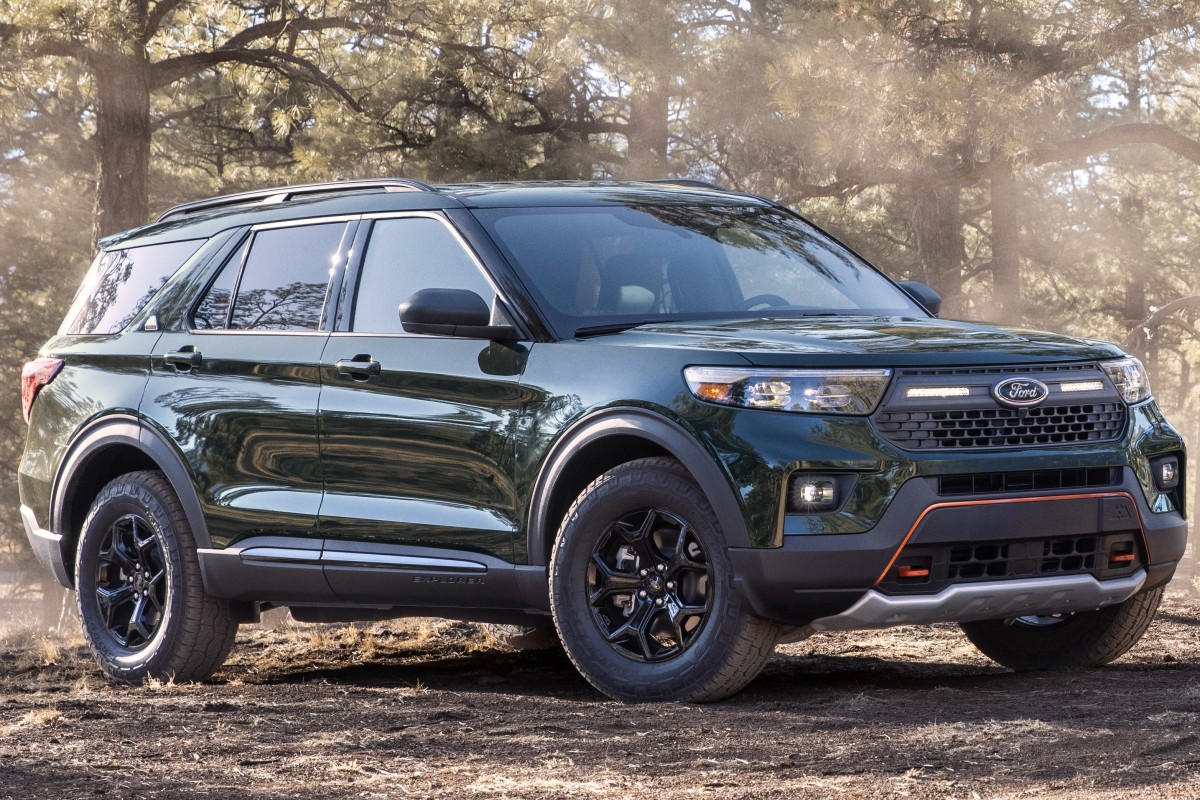
The 2025 Ford Explorer continued to build on its previous redesign, which had shifted the SUV from a front-wheel-drive to a rear-wheel-drive platform. This change had already given the Explorer a more balanced and sleek appearance, with a "floating" roof and a greenhouse that tapered into the liftgate. The refreshed 2025 model further enhanced this design with a restyled front end, making it appear wider and more ruggedly handsome. New LED taillights and a strip of trim connecting them added to its modern look, while a variety of new wheel designs offered additional customization options. Inside, the Explorer saw significant improvements in materials, design, and technology, making it more competitive in its segment. The trim levels in Canada were reduced from six to four, with prices ranging from $52,830 to $71,430, including the destination charge.
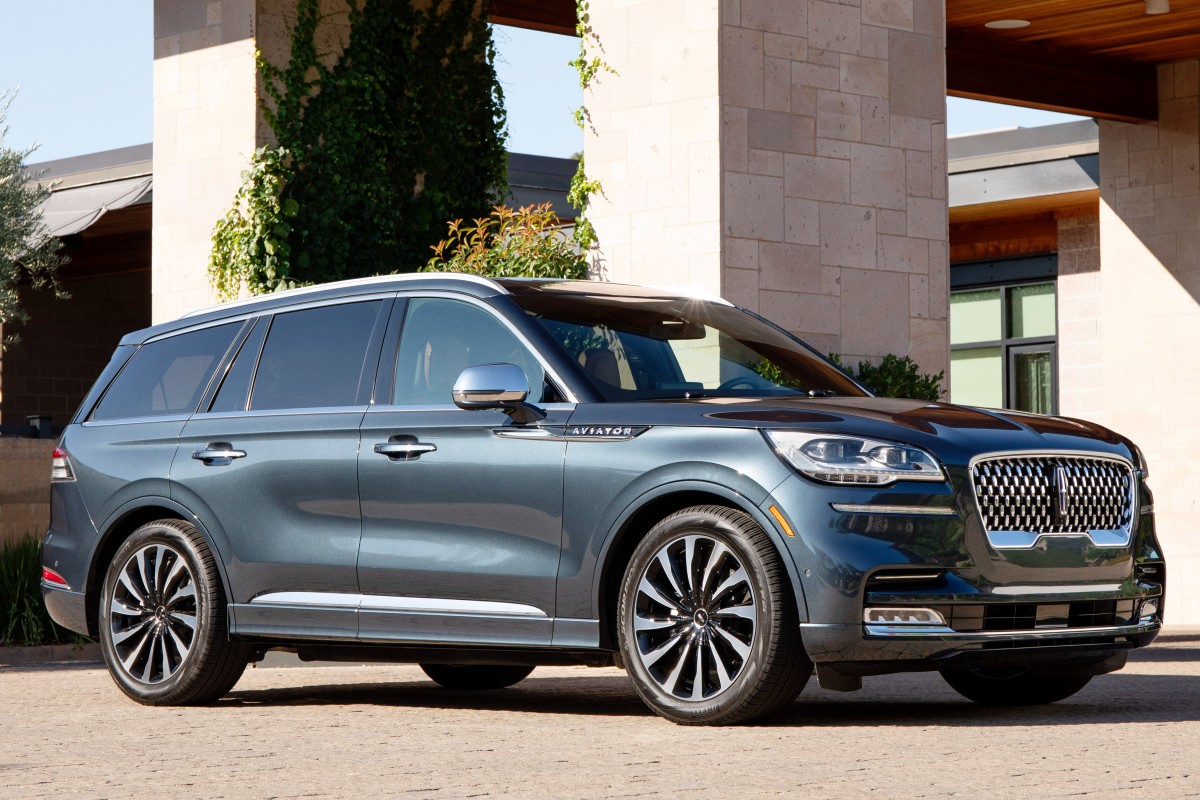
The 2025 Lincoln Aviator shared its rear-wheel-drive platform with the Ford Explorer, benefiting from classic design proportions. It featured a blunt nose, short front overhang, and a tapered roofline, creating an alluring silhouette. However, the 2025 styling updates made it appear less elegant and more generic, especially with the optional Jet Appearance Package. Inside, the Aviator offered a plush interior with a classic architectural sensibility, avoiding the trend of overwhelming screens. The Aviator's remote keyless entry fob was a disappointment, but the Phone as a Key technology and touchpad entry system offered modern alternatives. In Canada, the Aviator was available in Premiere and Reserve trims, with prices ranging from $79,595 to $81,695, including the destination charge. Our test vehicle, equipped with several option packages, carried an MSRP of $96,295.
The 2025 Ford Explorer offered two EcoBoost engine options. Most trims featured a turbocharged 2.3-litre four-cylinder engine producing 300 horsepower and 310 pound-feet of torque. The Explorer ST and optionally the Platinum trim came with a twin-turbocharged 3.0-litre V6, delivering 400 horsepower and 415 lb-ft of torque. All Canadian models had a 10-speed automatic transmission and all-wheel drive. The Explorer's driving modes included Eco, Normal, Sport, Slippery, Trail, Tow/Haul, and Deep Snow/Sand. Fuel economy ratings for the base engine were 11.9 L/100 km city, 8.7 highway, and 10.4 combined. The V6 in the Platinum trim consumed 13.0 L/100 km city, 9.3 highway, and 11.3 combined, while the ST trim averaged 13.3 city, 9.6 highway, and 11.6 combined. The Explorer's turbo four provided quick acceleration, and the 10-speed automatic offered decisive shifts. The ST-Line's performance enhancements included larger wheels, but the focus was on aesthetics rather than performance. The Explorer ST showcased its capabilities on a short autocross course, while the Platinum trim demonstrated fast acceleration and a pleasant engine sound. The Explorer handled off-road trails with ease, but it was not designed for serious off-roading.
The 2025 Lincoln Aviator came with a single powertrain option: a twin-turbocharged 3.0-litre V6 engine producing 400 horsepower and 415 lb-ft of torque, paired with a 10-speed automatic transmission. The Aviator offered driving modes such as Excite, Conserve, Normal, Slippery, and Deep Conditions. Our test vehicle featured an optional adaptive air suspension, which firmed up in Excite mode. The Aviator excelled in providing a comfortable ride rather than sporty performance. The V6 engine delivered ample power for acceleration and passing, but fuel economy was disappointing at 13.3 L/100 km on a mountainous testing loop. The Aviator offered excellent visibility, aided by thin windshield pillars and large side mirrors. In urban settings, the ride quality was pleasant, but larger bumps and road imperfections were noticeable due to the heavy 22-inch wheels and thin tires. On highways, the adaptive air suspension couldn't entirely filter out road noise. The Aviator's driving character was more about comfort and composure than athleticism, with the adaptive Air Glide suspension ensuring a secure and calming ride.
The 2025 Ford Explorer accommodated six passengers in its standard configuration, with an optional second-row bench seat increasing capacity to seven. The ST-Line test vehicle featured a heated steering wheel, heated power-adjustable front seats, and the optional Premium Package, which added ambient lighting, memory front seats, heated second-row seats, and a wireless charging pad. The front seats were comfortable, with breathable fabric inserts, while the second-row captain's chairs offered similar comfort. Accessing the third row was challenging for adults, and the seats were low and flat, making them uncomfortable for long journeys. Storage space was ample, with a useful dashboard tray and competitive cargo capacity: 461 litres behind the third row, 1,302 litres behind the second row, and a maximum of 2,429 litres.
The 2025 Lincoln Aviator's Perfect Position front seats offered 30-way adjustability, heating, ventilation, and massage functions, providing exceptional comfort. The second-row captain's chairs were roomy and supportive, with available heating and ventilation. However, the third-row seats were low and unsupportive, with limited legroom even when the second-row passengers moved forward. Storage space was excellent, with a smartphone charging pad, hidden trays, and deep door pockets. The Aviator offered 466 litres of cargo space behind the third row, 1,131 litres with the third row folded, and a maximum of 2,149 litres. The optional second-row console added convenience, but side window sunshades were notably absent.
The 2025 Ford Explorer featured a 12.3-inch digital instrumentation panel and a new 13.2-inch touchscreen infotainment system called Ford Digital Experience. This system included Google Built-in, Amazon Alexa Built-in, wireless Apple CarPlay, wireless Android Auto, SiriusXM 360L satellite radio, and streaming apps. A 5G LTE Wi-Fi hotspot was available, and the system was user-friendly, with excellent Google Maps integration. The Explorer offered B&O sound systems by Bang & Olufsen, with 10 speakers in the ST-Line and 14 speakers with 980 watts in the Platinum and ST trims. Audiophiles were encouraged to upgrade, as the ST-Line's sound system was unimpressive by Bang & Olufsen standards.
The 2025 Lincoln Aviator featured a 12.4-inch digital instrument cluster and a 13.2-inch touchscreen infotainment system powered by Lincoln Digital Experience. This system included Google Built-in, Alexa Built-in, wireless Apple CarPlay, and Android Auto. However, the Google Assistant in our test vehicle struggled with voice prompts, though wireless Apple CarPlay and Siri worked well. The system included an app called Elevated Journey, offering mindfulness coaching for the road. The 28-speaker Revel Ultima 3D sound system provided excellent audio quality, and the head-up display offered a widescreen presentation of data, including lane departure warnings and blind-spot alerts.
The 2025 Ford Explorer came with Ford CoPilot 360 Assist+, which included adaptive cruise control with lane-centring assist and other driver assistance systems. ST-Line trims and higher featured Ford CoPilot 360 2.0, adding a surround-view camera system and BlueCruise, Ford's hands-free highway driving system. BlueCruise performed well in testing, though it occasionally required driver intervention in tight curves or heavy traffic. The 2025 Explorer had not been fully rated by the NHTSA, but it earned five-star side-impact and four-star rollover resistance ratings. The IIHS rated its crash performance well but criticized the headlights on some trims.
The 2025 Lincoln Aviator included Lincoln Co-Pilot360 Drive 2.0, offering a comprehensive suite of advanced driver assistance systems. Notable features included active blind-spot monitoring with trailer coverage, intersection assist, evasive steering assist, and reverse braking assist. Adaptive cruise control and lane-centring assist worked well, and BlueCruise was standard, offering hands-free driving on approved highways. BlueCruise proactively handed control to the driver when necessary, and it notified the driver of available lane changes. The Aviator earned five-star ratings from the NHTSA and Good ratings from the IIHS, indicating strong safety performance.
CarGurus highlights
According to CarGurus experts, the overall rating for the 2025 Ford Explorer is 8.0 out of 10, while the 2025 Lincoln Aviator scores 7.8 out of 10. Based on these ratings, the Ford Explorer is the recommended choice for those seeking a well-rounded SUV with a balance of performance, technology, and affordability.
Choose the 2025 Ford Explorer if:
- You prioritize a more affordable price range with competitive features.
- You need a versatile SUV with ample cargo space and seating for up to seven passengers.
- You appreciate a user-friendly infotainment system with Google Built-in and other modern tech features.


Choose the 2025 Lincoln Aviator if:
- You desire a luxury SUV with exceptional comfort and advanced seating options.
- You value a comprehensive suite of advanced driver assistance systems, including BlueCruise.
- You prefer a quieter, more composed ride with a focus on comfort and luxury.


CarGurus highlights
According to CarGurus experts, the overall rating for the 2025 Ford Explorer is 8.0 out of 10, while the 2025 Lincoln Aviator scores 7.8 out of 10. Based on these ratings, the Ford Explorer is the recommended choice for those seeking a well-rounded SUV with a balance of performance, technology, and affordability.
Choose the 2025 Ford Explorer if:
Shop Now- You prioritize a more affordable price range with competitive features.
- You need a versatile SUV with ample cargo space and seating for up to seven passengers.
- You appreciate a user-friendly infotainment system with Google Built-in and other modern tech features.
Choose the 2025 Lincoln Aviator if:
Shop Now- You desire a luxury SUV with exceptional comfort and advanced seating options.
- You value a comprehensive suite of advanced driver assistance systems, including BlueCruise.
- You prefer a quieter, more composed ride with a focus on comfort and luxury.

By: CarGurus + AI
At CarGurus, our team of experienced automotive writers remain at the heart of our content operation, conducting hands-on car tests and writing insightful guides that are backed by years of industry experience. To complement this, we are harnessing AI to make our content offering more diverse and more helpful to shoppers than ever. To achieve this, our AI systems are based exclusively on CarGurus content, ratings and data, so that what we produce is both unique to CarGurus, and uniquely helpful to car shoppers.
