2021 Volkswagen ID.4 vs 2021 Volvo XC90

Overview | |
MSRP$49,000 | MSRP$39,995 |
Listings26 | Listings27 |
Ratings & Reviews | |
User Reviews | User Reviews |
Expert reviews7.7 out of 10 | Expert reviews7.3 out of 10 |
2021 Volvo XC90 Reviews SummaryVolvo may be known for sensible station wagons, but the XC90 SUV is the Swedish automaker’s de facto flagship. The current generation debuted design features, technology, and powertrains that have since found their way into most other Volvo models. Several years into the current-generation model’s lifecycle, the XC90 is no longer a trendsetter, but remains Volvo’s contender in the competitive midsize luxury SUV segment, with the automaker’s typical emphasis on safety features. The current-generation XC90 launched for the 2016 model year, so most competitors—including the Audi Q7, Acura MDX, BMW X5, and Mercedes-Benz GLE—have been updated or redesigned since then. The Cadillac XT6 and Lincoln Aviator didn’t even exist when this generation of XC90 launched. A redesigned version is expected to arrive soon, so changes to the 2021 XC90 are minimal. All 2021 Volvo models are now limited to 180 kilometres per hour for safety reasons. The XC90 also gets a handful of newly standard tech features, and some small cosmetic changes. Volvo offers the XC90 in three trim levels—Momentum, R-Design, and Inscription—with three powertrain options: T5 and T6 gasoline engines, and the T8 plug-in hybrid. Our test car was a range-topping T8 Recharge Inscription, combining the top Inscription trim level with the plug-in hybrid powertrain, which has the highest output of the three. | |
2021 Volkswagen ID.4 Reviews SummaryThe “Dieselgate” emissions scandal forced Volkswagen to double down on electric cars, and now we’re finally seeing the first result of that: the 2021 Volkswagen ID.4 electric crossover. VW has made an electric car before, but its last attempt, the e-Golf, was built to satisfy emissions standards, not rack up sales. It was barely advertised, and it was sold only in certain locations. With the ID.4, it will launch in the three largest Canadian EV markets—British Columbia, Quebec, and Ontario—and will even be built in North America, in Chattanooga, Tennessee, starting in 2022. Volkswagen views the ID.4 as a rival not to other EVs, but to mainstream gasoline vehicles like the Honda CR-V and Toyota RAV4. Being late to the party means there are already several other EVs trying to coax new-car buyers away from internal combustion, however. If you want a reasonably priced EV, the Nissan Leaf, Hyundai Kona Electric, and Kia Niro EV already exist, and General Motors has the 2022 Chevrolet Bolt EUV—a new variant of the Chevy Bolt EV with a crossover body style similar to the Volkswagen. Our test car was an ID.4 1st Edition, a U.S.-only model released to commemorates the car’s launch. Its closest Canadian equivalent is the ID.4 RWD Pro with the Statement Package. | |
No video found | |
Popular Features & Specs | |
Engine2.0L 250 hp I4 | Engine201 hp Electric |
Drive TrainFWD | Drive TrainRWD |
Seating Capacity7 | Seating Capacity5 |
Horsepower250 hp @ 5500 rpm | Horsepower |
EV Battery Capacity | EV Battery Capacity82 kWh |
MPG City21 | MPG City104 |
MPG Highway30 | MPG Highway89 |
Battery Charge Time (240V) | Battery Charge Time (240V)8 hours |
Engine | |
Engine Name2.0L 250 hp I4 | Engine Name201 hp Electric |
Torque258 lb-ft @ 1500 rpm | Torque |
Horsepower250 hp @ 5500 rpm | Horsepower |
Battery Charge Time (240V) | Battery Charge Time (240V)8 hours |
DrivetrainFWD | DrivetrainRWD |
Fuel Economy | |
EV Battery Capacity | EV Battery Capacity82 kWh |
MPG City21 | MPG City104 |
MPG Highway30 | MPG Highway89 |
Interior | |
Seating Capacity7 | Seating Capacity5 |
Key Features | |
Sunroof/MoonroofStandard | Sunroof/Moonroof |
Safety | |
Front Crash Overall5 | Front Crash Overall5 |
Side Crash Overall5 | Side Crash Overall5 |
Dimensions & Capacity | |
Cargo Space10.7 cu ft | Cargo Space30.3 cu ft |
Curb Weight4374 lbs | Curb Weight4517 lbs |
Height69.9 in | Height64.4 in |
Length195.0 in | Length180.5 in |
Width84.3 in | Width72.9 in |
Wheelbase117.5 in | Wheelbase108.9 in |
Maximum Payload1631 lbs | Maximum Payload1347 lbs |
Number of doors4 | Number of doors4 |
Maximum Towing Capacity4000 lbs | Maximum Towing Capacity |
Overview | ||
MSRP | $49,000 | $39,995 |
Listings | ||
Ratings & Reviews | ||
User reviews | ||
Expert reviews | 7.7 out of 10Read full review | 7.3 out of 10Read full review |
Pros & cons | ||
Summary | Volvo may be known for sensible station wagons, but the XC90 SUV is the Swedish automaker’s de facto flagship. The current generation debuted design features, technology, and powertrains that have since found their way into most other Volvo models. Several years into the current-generation model’s lifecycle, the XC90 is no longer a trendsetter, but remains Volvo’s contender in the competitive midsize luxury SUV segment, with the automaker’s typical emphasis on safety features. The current-generation XC90 launched for the 2016 model year, so most competitors—including the Audi Q7, Acura MDX, BMW X5, and Mercedes-Benz GLE—have been updated or redesigned since then. The Cadillac XT6 and Lincoln Aviator didn’t even exist when this generation of XC90 launched. A redesigned version is expected to arrive soon, so changes to the 2021 XC90 are minimal. All 2021 Volvo models are now limited to 180 kilometres per hour for safety reasons. The XC90 also gets a handful of newly standard tech features, and some small cosmetic changes. Volvo offers the XC90 in three trim levels—Momentum, R-Design, and Inscription—with three powertrain options: T5 and T6 gasoline engines, and the T8 plug-in hybrid. Our test car was a range-topping T8 Recharge Inscription, combining the top Inscription trim level with the plug-in hybrid powertrain, which has the highest output of the three. | The “Dieselgate” emissions scandal forced Volkswagen to double down on electric cars, and now we’re finally seeing the first result of that: the 2021 Volkswagen ID.4 electric crossover. VW has made an electric car before, but its last attempt, the e-Golf, was built to satisfy emissions standards, not rack up sales. It was barely advertised, and it was sold only in certain locations. With the ID.4, it will launch in the three largest Canadian EV markets—British Columbia, Quebec, and Ontario—and will even be built in North America, in Chattanooga, Tennessee, starting in 2022. Volkswagen views the ID.4 as a rival not to other EVs, but to mainstream gasoline vehicles like the Honda CR-V and Toyota RAV4. Being late to the party means there are already several other EVs trying to coax new-car buyers away from internal combustion, however. If you want a reasonably priced EV, the Nissan Leaf, Hyundai Kona Electric, and Kia Niro EV already exist, and General Motors has the 2022 Chevrolet Bolt EUV—a new variant of the Chevy Bolt EV with a crossover body style similar to the Volkswagen. Our test car was an ID.4 1st Edition, a U.S.-only model released to commemorates the car’s launch. Its closest Canadian equivalent is the ID.4 RWD Pro with the Statement Package. |
Video | No video found | |
Popular Features & Specs | ||
Engine | 2.0L 250 hp I4 | 201 hp Electric |
Drive Train | FWD | RWD |
Seating Capacity | 7 | 5 |
Horsepower | 250 hp @ 5500 rpm | |
EV Battery Capacity | 82 kWh | |
MPG City | 21 | 104 |
MPG Highway | 30 | 89 |
Battery Charge Time (240V) | 8 hours | |
Engine | ||
Engine Name | 2.0L 250 hp I4 | 201 hp Electric |
Torque | 258 lb-ft @ 1500 rpm | |
Horsepower | 250 hp @ 5500 rpm | |
Battery Charge Time (240V) | 8 hours | |
Drivetrain | FWD | RWD |
Fuel Economy | ||
EV Battery Capacity | 82 kWh | |
MPG City | 21 | 104 |
MPG Highway | 30 | 89 |
Interior | ||
Seating Capacity | 7 | 5 |
Key Features | ||
Sunroof/Moonroof | Standard | |
Safety | ||
Front Crash Overall | 5 | 5 |
Side Crash Overall | 5 | 5 |
Dimensions & Capacity | ||
Cargo Space | 10.7 cu ft | 30.3 cu ft |
Curb Weight | 4374 lbs | 4517 lbs |
Height | 69.9 in | 64.4 in |
Length | 195.0 in | 180.5 in |
Width | 84.3 in | 72.9 in |
Wheelbase | 117.5 in | 108.9 in |
Maximum Payload | 1631 lbs | 1347 lbs |
Number of doors | 4 | 4 |
Maximum Towing Capacity | 4000 lbs | |
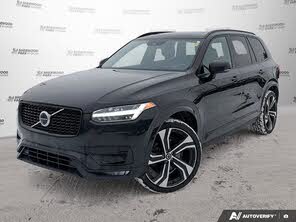
The 2021 Volvo XC90 marked a significant shift in Volvo's design philosophy, maintaining its traditional styling while introducing a more characterful appearance. The XC90 retained Volvo's signature boxy profile and rectangular grille but softened its lines and added chrome accents, creating a more refined look. The LED headlights with "Thor's Hammer" daytime running lights were a distinctive feature that blended seamlessly with the overall design. The Inscription trim level, with its extra chrome trim and optional 21-inch alloy wheels, was the most visually striking, while the R-Design and Momentum trims offered sportier and more understated looks, respectively. Inside, the XC90 embraced Swedish minimalism, featuring high-quality materials and a thoughtfully arranged interior. The matte-finish wood trim and optional wool upholstery added a touch of elegance, while the Orrefors crystal shifter provided a high-end touch.
In contrast, the 2021 Volkswagen ID.4 was designed from the ground up as an electric vehicle, showcasing a distinctive look that set it apart from Volkswagen's gasoline models. The ID.4 featured a streamlined profile with wheels pushed out to the corners, eschewing the fake toughness of traditional crossovers. Based on VW's EV-specific MEB platform, the ID.4 followed the European-market ID.3 hatchback, offering a more crossover-like appearance. However, its styling didn't quite convey the SUV image, similar to other EV crossovers like the Chevy Bolt EUV and Hyundai Kona Electric. Inside, the ID.4 combined Volkswagen's minimalism with a smartphone aesthetic, featuring piano black and matte plastic elements. The interior felt spacious, with good forward visibility, but rearward visibility was hindered by thick rear pillars. The ID.4's interior design prioritized cabin space over a "frunk," and while it offered a comfortable ride, the driver's seat lacked thigh support.


The 2021 Volvo XC90 offered three powertrain options, all centred around a 2.0-litre four-cylinder engine paired with an eight-speed automatic transmission. The base T5 model featured a turbocharged engine producing 250 horsepower and 258 pound-feet of torque. The T6 variant added a supercharger, boosting output to 316 horsepower and 295 pound-feet of torque. The T8 Twin Engine plug-in hybrid, also known as Recharge, combined the T6 engine with electric assist, delivering a total of 400 horsepower and 472 pound-feet of torque. In Canada, all XC90 models came with all-wheel drive as standard. Despite the impressive power figures, the XC90's small engine struggled to provide the flexibility of larger engines found in competitor SUVs. The XC90 excelled in ride quality, thanks to an optional air-suspension system, and offered a quiet cabin. It also had a respectable towing capacity of 2,250 kilograms.
The 2021 Volkswagen ID.4 was available in two powertrain configurations. The base rear-wheel-drive version featured a single rear-mounted electric motor producing 201 horsepower and 229 pound-feet of torque, powered by an 82-kilowatt-hour battery pack. An all-wheel-drive version added a second electric motor for a total output of 295 horsepower and 339 pound-feet of torque. The ID.4's rear-wheel-drive setup provided balanced handling, but the vehicle was tuned for comfort rather than sporty performance. The electric motor delivered ample power, and the ID.4 offered a smooth ride over bumps. Unlike many electric cars, the ID.4 didn't emphasize regenerative braking, opting for a more traditional driving experience. This decision aimed to provide a familiar feel for drivers transitioning from gasoline vehicles.
The 2021 Volvo XC90 was a three-row SUV available in six-seat or seven-seat configurations, depending on the choice of second-row captain's chairs or a bench seat. While headroom and legroom were average for the segment, the third row was tight for adults, and the seats lacked support. The optional power sunroof and upright roof profile contributed to a spacious feel. The XC90 offered standard four-zone climate control with an optional filtration system. Up front, the Inscription trim featured 10-way power-adjustable heated and ventilated front seats with backrest massage, but a power-adjustable steering wheel was not available. Cargo space was limited, with 317 litres with all seats in place, 965 litres with the rear seats folded, and 1,815 litres with the second and third rows folded.
The 2021 Volkswagen ID.4 felt like a crossover compared to other EVs, offering more front and rear headroom than competitor EVs, although legroom was average. The ID.4 provided 858 litres of cargo space with the rear seats in place and 1,818 litres with the rear seats folded. While it lacked a "frunk," the interior felt spacious, and forward visibility was good. The ID.4 featured a unique twist-grip gear selector on the dashboard, freeing up space on the centre console. However, the console was narrow, limiting storage options. The ID.4 included standard heated steering wheel and front seats, which proved effective during cold weather testing. The seats offered good cushioning, but the driver's seat lacked thigh support.
The 2021 Volvo XC90 featured the Sensus infotainment system, which emphasized simplicity and functionality. It came standard with a 9-inch touchscreen, 12.3-inch digital instrument cluster, Apple CarPlay/Android Auto compatibility, and Bluetooth. The touchscreen was easy to use, with a portrait orientation that allowed for intuitive navigation. However, the amount of text and typeface made reading menus difficult while driving. The XC90 also offered a 19-speaker Bowers & Wilkins premium audio system and a head-up display as options. The wireless charging pad added for 2021 was too small for most phones, and the lack of front USB-C ports was a drawback.
The 2021 Volkswagen ID.4's standard infotainment system included a 10-inch touchscreen, with a 12-inch screen available as an option. It featured wireless Apple CarPlay and Android Auto, along with a 5.3-inch display screen for the instrument cluster. The ID.4 used haptic touchpads instead of traditional switchgear, which proved challenging to use due to the lack of tactile feedback. The control setup required drivers to relearn simple tasks, and the natural-language voice-control system, while useful, was slow to respond. The ID.4 also introduced ID.Light, a light strip at the base of the windshield that communicated information to the driver. While some features felt gimmicky, the touchscreen was well-positioned, with smart graphics and easy-to-navigate menus.
The 2021 Volvo XC90 received the highest "Top Safety Pick+" rating from the Insurance Institute for Highway Safety (IIHS) for non-hybrid models, with top "Good" scores in all crash tests. It also received a "Superior" rating for front-crash prevention in vehicle-to-vehicle testing and an "Advanced" rating in vehicle-to-pedestrian testing. The National Highway Traffic Safety Administration (NHTSA) awarded all XC90 models a five-star overall safety rating. The XC90 offered a comprehensive suite of standard driver assistance features, including lane-keep assist, lane departure warning, driver-attention monitor, traffic-sign recognition, blind-spot monitoring, rear cross-traffic alert, automatic emergency braking, and adaptive cruise control.
The 2021 Volkswagen ID.4 was rated as a Top Safety Pick+ by the IIHS, with points docked for certain headlights. The NHTSA gave RWD versions a five-star safety rating, while AWD versions had not been tested. The ID.4 offered a range of driver aids, including forward-collision warning, automatic emergency braking, blind-spot monitoring, lane-keep assist, park distance control, automatic high beams, and adaptive cruise control. It also introduced Travel Assist, which added automated lane centring to adaptive cruise control, and Emergency Assist, designed to stop the car if the driver is incapacitated. Travel Assist performed well, smoothly following curves and responding to acceleration and deceleration.
CarGurus highlights

According to CarGurus experts, the overall rating for the 2021 Volvo XC90 is 7.7 out of 10, while the 2021 Volkswagen ID.4 scores 7.3 out of 10. Based on these ratings, the Volvo XC90 is the recommended choice, offering a more luxurious interior, comprehensive safety features, and a higher overall rating.
Choose the 2021 Volkswagen ID.4 if:
- You are looking for an all-electric vehicle with a distinctive design and spacious interior.
- You prefer a vehicle with a smooth and comfortable ride, ideal for daily commuting.
- You value modern technology features, including a well-positioned touchscreen and natural-language voice control.


Choose the 2021 Volvo XC90 if:
- You prioritize a luxurious and minimalist interior with high-quality materials.
- You need a vehicle with a strong focus on safety and a comprehensive suite of driver assistance features.
- You require a vehicle with a respectable towing capacity for occasional hauling.




CarGurus highlights
According to CarGurus experts, the overall rating for the 2021 Volvo XC90 is 7.7 out of 10, while the 2021 Volkswagen ID.4 scores 7.3 out of 10. Based on these ratings, the Volvo XC90 is the recommended choice, offering a more luxurious interior, comprehensive safety features, and a higher overall rating.
Choose the 2021 Volkswagen ID.4 if:
Shop Now- You are looking for an all-electric vehicle with a distinctive design and spacious interior.
- You prefer a vehicle with a smooth and comfortable ride, ideal for daily commuting.
- You value modern technology features, including a well-positioned touchscreen and natural-language voice control.


Choose the 2021 Volvo XC90 if:
Shop Now- You prioritize a luxurious and minimalist interior with high-quality materials.
- You need a vehicle with a strong focus on safety and a comprehensive suite of driver assistance features.
- You require a vehicle with a respectable towing capacity for occasional hauling.





By: CarGurus + AI
At CarGurus, our team of experienced automotive writers remain at the heart of our content operation, conducting hands-on car tests and writing insightful guides that are backed by years of industry experience. To complement this, we are harnessing AI to make our content offering more diverse and more helpful to shoppers than ever. To achieve this, our AI systems are based exclusively on CarGurus content, ratings and data, so that what we produce is both unique to CarGurus, and uniquely helpful to car shoppers.

