2021 Volvo XC40 vs 2022 Hyundai Ioniq 5
Overview | |
MSRP$33,700 | MSRP$39,700 |
Listings26 | Listings46 |
Ratings & Reviews | |
User Reviews | User Reviews |
Expert reviews8.0 out of 10 | Expert reviews9.0 out of 10 |
2021 Volvo XC40 Reviews SummaryIntroduced for the 2019 model year, the Volvo XC40 enters 2021 with one major change—the addition of an all-electric powertrain option. The 2021 Volvo XC40 Recharge is the Scandinavian automaker’s first mass-market pure electric vehicle, in fact. The Recharge will be sold alongside gasoline versions of the XC40, which carry over largely unchanged, and compete against small luxury crossovers like the Audi Q3, BMW X1, Mercedes-Benz GLA-Class, and Lexus UX. With its electric powertrain, the Recharge is a de facto Tesla Model Y competitor. It’s also priced similar to high-end versions of the Ford Mustang Mach-E, although the two electric crossovers have somewhat different philosophies. In addition to that zero-emission powertrain, the Recharge gets an Android-based operating system, over-the-air (OTA) software update capability for all vehicle systems, and some updates to driver-assist tech. These changes don’t apply to gasoline 2021 XC40 models, but Volvo does plan to add the Android operating system to more vehicles in the future. Since the Recharge is the main new thing for the 2021 XC40, that’s what we focused on for this review. While the gasoline XC40 is available in three trim levels—Momentum, R-Design, and Inscription—with standard all-wheel drive (AWD) in Canada, the Recharge is only offered in a single trim level. | |
2022 Hyundai Ioniq 5 Reviews SummaryThe Hyundai Ioniq 5 is the automaker’s debut electric vehicle from its new sub-brand that focuses solely on battery electric-powered and eco-friendly mobility. The all-new Ioniq 5 is chock full of battery technology, smart car connectivity, advanced safety, and unique design all at a price point that appeals to the masses. | |
No video found | No video found |
Popular Features & Specs | |
Engine2.0L 187 hp I4 | Engine168 hp Electric |
Drive TrainFWD | Drive TrainRWD |
Seating Capacity5 | Seating Capacity5 |
Horsepower187 hp @ 4700 rpm | Horsepower |
EV Battery Capacity | EV Battery Capacity58 kWh |
MPG City23 | MPG City127 |
MPG Highway32 | MPG Highway94 |
Engine | |
Engine Name2.0L 187 hp I4 | Engine Name168 hp Electric |
Torque221 lb-ft @ 1400 rpm | Torque |
Horsepower187 hp @ 4700 rpm | Horsepower |
DrivetrainFWD | DrivetrainRWD |
Fuel Economy | |
EV Battery Capacity | EV Battery Capacity58 kWh |
MPG City23 | MPG City127 |
MPG Highway32 | MPG Highway94 |
Interior | |
Leather SeatsStandard | Leather Seats |
Seating Capacity5 | Seating Capacity5 |
Key Features | |
Navigation System | Navigation SystemStandard |
Safety | |
Front Crash Overall5 | Front Crash Overall4 |
Side Crash Overall5 | Side Crash Overall5 |
Dimensions & Capacity | |
Cargo Space20.7 cu ft | Cargo Space27.2 cu ft |
Curb Weight3627 lbs | Curb Weight4200 lbs |
Height65.3 in | Height63.0 in |
Length174.2 in | Length182.5 in |
Width80.1 in | Width74.4 in |
Wheelbase106.4 in | Wheelbase118.1 in |
Maximum Payload1133 lbs | Maximum Payload1157 lbs |
Number of doors4 | Number of doors4 |
Maximum Towing Capacity3500 lbs | Maximum Towing Capacity |
Overview | ||
MSRP | $33,700 | $39,700 |
Listings | ||
Ratings & Reviews | ||
User reviews | ||
Expert reviews | 8.0 out of 10Read full review | 9.0 out of 10Read full review |
Pros & cons | ||
Summary | Introduced for the 2019 model year, the Volvo XC40 enters 2021 with one major change—the addition of an all-electric powertrain option. The 2021 Volvo XC40 Recharge is the Scandinavian automaker’s first mass-market pure electric vehicle, in fact. The Recharge will be sold alongside gasoline versions of the XC40, which carry over largely unchanged, and compete against small luxury crossovers like the Audi Q3, BMW X1, Mercedes-Benz GLA-Class, and Lexus UX. With its electric powertrain, the Recharge is a de facto Tesla Model Y competitor. It’s also priced similar to high-end versions of the Ford Mustang Mach-E, although the two electric crossovers have somewhat different philosophies. In addition to that zero-emission powertrain, the Recharge gets an Android-based operating system, over-the-air (OTA) software update capability for all vehicle systems, and some updates to driver-assist tech. These changes don’t apply to gasoline 2021 XC40 models, but Volvo does plan to add the Android operating system to more vehicles in the future. Since the Recharge is the main new thing for the 2021 XC40, that’s what we focused on for this review. While the gasoline XC40 is available in three trim levels—Momentum, R-Design, and Inscription—with standard all-wheel drive (AWD) in Canada, the Recharge is only offered in a single trim level. | The Hyundai Ioniq 5 is the automaker’s debut electric vehicle from its new sub-brand that focuses solely on battery electric-powered and eco-friendly mobility. The all-new Ioniq 5 is chock full of battery technology, smart car connectivity, advanced safety, and unique design all at a price point that appeals to the masses. |
Video | No video found | No video found |
Popular Features & Specs | ||
Engine | 2.0L 187 hp I4 | 168 hp Electric |
Drive Train | FWD | RWD |
Seating Capacity | 5 | 5 |
Horsepower | 187 hp @ 4700 rpm | |
EV Battery Capacity | 58 kWh | |
MPG City | 23 | 127 |
MPG Highway | 32 | 94 |
Engine | ||
Engine Name | 2.0L 187 hp I4 | 168 hp Electric |
Torque | 221 lb-ft @ 1400 rpm | |
Horsepower | 187 hp @ 4700 rpm | |
Drivetrain | FWD | RWD |
Fuel Economy | ||
EV Battery Capacity | 58 kWh | |
MPG City | 23 | 127 |
MPG Highway | 32 | 94 |
Interior | ||
Leather Seats | Standard | |
Seating Capacity | 5 | 5 |
Key Features | ||
Navigation System | Standard | |
Safety | ||
Front Crash Overall | 5 | 4 |
Side Crash Overall | 5 | 5 |
Dimensions & Capacity | ||
Cargo Space | 20.7 cu ft | 27.2 cu ft |
Curb Weight | 3627 lbs | 4200 lbs |
Height | 65.3 in | 63.0 in |
Length | 174.2 in | 182.5 in |
Width | 80.1 in | 74.4 in |
Wheelbase | 106.4 in | 118.1 in |
Maximum Payload | 1133 lbs | 1157 lbs |
Number of doors | 4 | 4 |
Maximum Towing Capacity | 3500 lbs | |
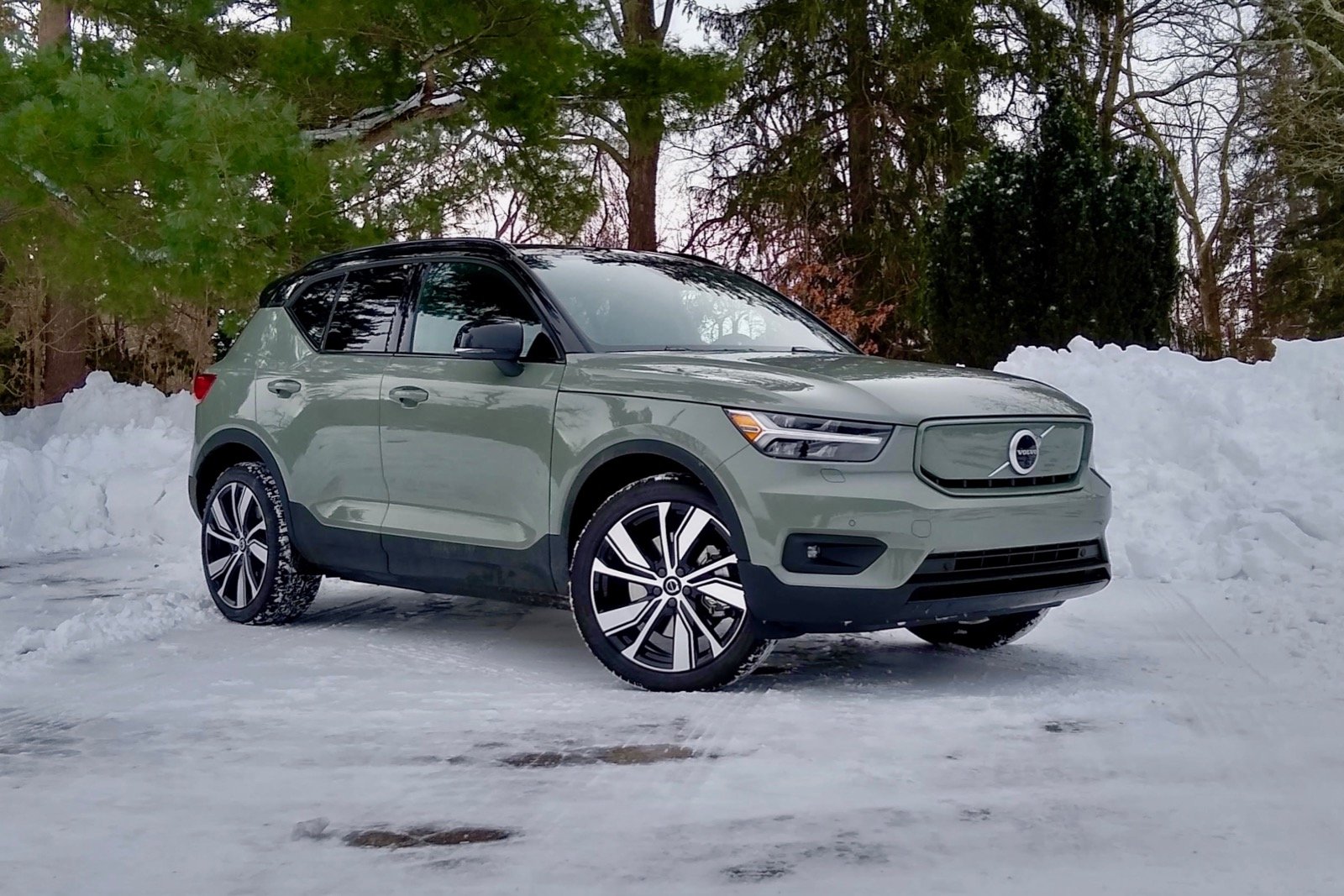
The 2021 Volvo XC40 presented a more traditional SUV aesthetic, characterized by its tall, flat roof and upright rear hatch, aligning seamlessly with the rest of Volvo's lineup. Signature design elements like the “Thor’s Hammer” LED headlights and a simple oval grille contributed to its classic appeal. The gasoline models offered a retro touch with a white contrasting roof. The XC40 Recharge, however, distinguished itself with a blanked-off grille, subtle “Recharge” badging, and unique alloy wheels. It featured a gloss black roof and mirror caps, a modified rear bumper, and a model-exclusive Sage Green Metallic colour. The interior was minimalist yet luxurious, with high-quality materials such as Nappa leather and Nubuck textile, and a coherent design that integrated elements like the portrait-oriented touchscreen and air vents into a harmonious whole.
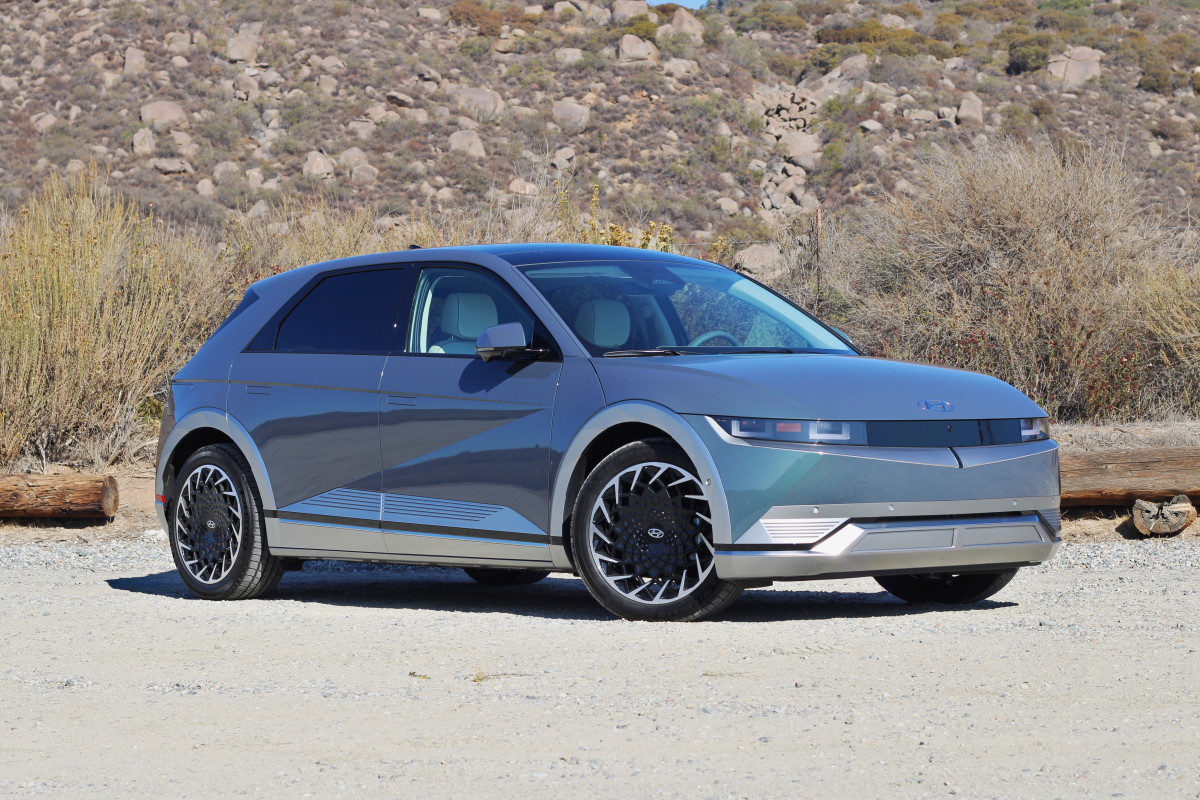
In contrast, the 2022 Hyundai Ioniq 5 was a bold leap into the future of electrified mobility, with a design that was both polished and concept-like. Its exterior was a study in minimalism, with character lines that were subtle yet impactful. The Parametric Pixel design was a standout feature, with pixelated LED lights creating a futuristic aesthetic. The interior, however, was a sanctuary of calm, embodying Hyundai's “Living Space” theme. It offered a mellow yet comfortable environment, with features like a “Relaxation” mode for the driver’s seat and sustainable materials throughout. The Ioniq 5's cabin was designed for comfort and utility, with a flat floor and a moveable centre console that enhanced its spaciousness.


The 2021 Volvo XC40 offered a versatile powertrain lineup, with the electric Recharge model at the top. The gasoline variants featured a 2.0-litre turbocharged four-cylinder engine, with the T4 producing 187 horsepower and 221 pound-feet of torque, and the T5 delivering 248 hp and 258 lb-ft. The Recharge model shared its powertrain with the Polestar 2, boasting dual electric motors for all-wheel drive, a combined 402 hp, and 486 lb-ft of torque. It was powered by a 78-kilowatt-hour battery pack, providing a 0 to 100 km/h time of 4.9 seconds. The XC40 emphasized luxury and comfort, with excellent ride quality and the option for one-pedal driving. It also had a towing capacity of 900 kilograms.
The 2022 Hyundai Ioniq 5, available in Canada with two drive configurations and three powertrains, offered a base model with a single 125-kW rear-mounted electric motor, producing 168 horsepower and a range of 354 kilometres. The Preferred long-range variant featured a 168-kW rear motor with 225 hp and 258 lb-ft of torque, offering a range of 488 kilometres. The AWD version had a dual-motor system with a total power of 320 hp and 446 lb-ft of torque, with a range of 414 km. The Ioniq 5 was equipped with four drive modes, including Sport, which added excitement but reduced range. It featured paddle shifters for adjusting regenerative braking and focused on reducing noise, vibration, and harshness for a quiet ride.
The 2021 Volvo XC40, while not particularly spacious, offered clever storage solutions to compensate for its limited interior space. It had less legroom and headroom compared to competitors like the Tesla Model Y and Ford Mustang Mach-E. The XC40's frunk was small, with much of the space occupied by powertrain hardware. However, Volvo's innovative storage solutions included a removable trash bin in the centre console, a bag hook in the glovebox door, and extra-large door bins due to the relocation of the audio system's speakers.
The 2022 Hyundai Ioniq 5, built on the Electric Global Modular Platform (E-GMP), maximized interior space with a longer wheelbase than the seven-passenger Palisade. It offered a total interior volume of 3,786 litres, surpassing competitors like the Ford Mustang Mach-E and Volkswagen ID.4. The Ioniq 5 prioritized passenger comfort with features like a moveable centre console and a flat floor, allowing for easy entry and exit. The leatherette seats were comfortable and supportive, catering to both slim and larger drivers.
The 2021 Volvo XC40 Recharge featured the Android Automotive OS infotainment system, offering Google apps like Google Assistant and Google Maps. It included a 9-inch touchscreen and a 12.3-inch digital instrument cluster, with top-notch graphics and menu layouts. The Recharge model also had OTA update capability, allowing for software updates without visiting a dealership. It lacked a start button, instead relying on a key fob for operation.
The 2022 Hyundai Ioniq 5 boasted advanced technology, including a high-voltage, energy-dense system with vehicle-to-load capabilities. It supported ultra-fast charging, reaching 80 percent battery capacity in 18 minutes. The Ioniq 5 featured a redesigned Blue Link app, Android Auto, Apple CarPlay, and over-the-air updates. Its 12.3-inch screens for the instrument cluster and infotainment system were elegant and intuitive, with an anti-glare coating for clear visibility.
The 2021 Volvo XC40 received top safety ratings, with the gasoline model earning a “Top Safety Pick+” from the IIHS and a five-star overall rating from the NHTSA. It came with a comprehensive list of standard safety features, including lane-keep assist, blind-spot monitoring, and automatic emergency braking. The Recharge model featured Volvo’s latest sensor suite, scalable for future driver aids.
The 2022 Hyundai Ioniq 5 was equipped with Hyundai SmartSense, a suite of advanced driving assistance systems. It included features like lane keeping assist, blind-spot monitoring, and forward collision avoidance. The Ioniq 5 also offered Hyundai Highway Drive Assist I, a Level 2 semi-autonomous driving system with machine-learning adaptive cruise control. It featured a head-up display with augmented reality overlays, although it could be distracting in use.
CarGurus highlights
According to CarGurus experts, the overall rating for the 2021 Volvo XC40 is 8.0 out of 10, while the 2022 Hyundai Ioniq 5 scores 9.0 out of 10. Based on these ratings, the Hyundai Ioniq 5 is the recommended choice, offering a more advanced and spacious electric vehicle experience with cutting-edge technology and safety features.
Choose the 2021 Volvo XC40 if:
- You prioritize a traditional luxury SUV design with a minimalist, high-quality interior.
- You value a versatile powertrain lineup, including a powerful electric option with towing capability.
- You appreciate innovative storage solutions and a comprehensive suite of safety features.





Choose the 2022 Hyundai Ioniq 5 if:
- You seek a futuristic design with advanced technology and ultra-fast charging capabilities.
- You prioritize interior space and comfort, with a focus on passenger experience.
- You value a comprehensive suite of advanced driving assistance systems and innovative safety features.


CarGurus highlights
According to CarGurus experts, the overall rating for the 2021 Volvo XC40 is 8.0 out of 10, while the 2022 Hyundai Ioniq 5 scores 9.0 out of 10. Based on these ratings, the Hyundai Ioniq 5 is the recommended choice, offering a more advanced and spacious electric vehicle experience with cutting-edge technology and safety features.
Choose the 2021 Volvo XC40 if:
Shop Now- You prioritize a traditional luxury SUV design with a minimalist, high-quality interior.
- You value a versatile powertrain lineup, including a powerful electric option with towing capability.
- You appreciate innovative storage solutions and a comprehensive suite of safety features.





Choose the 2022 Hyundai Ioniq 5 if:
Shop Now- You seek a futuristic design with advanced technology and ultra-fast charging capabilities.
- You prioritize interior space and comfort, with a focus on passenger experience.
- You value a comprehensive suite of advanced driving assistance systems and innovative safety features.


By: CarGurus + AI
At CarGurus, our team of experienced automotive writers remain at the heart of our content operation, conducting hands-on car tests and writing insightful guides that are backed by years of industry experience. To complement this, we are harnessing AI to make our content offering more diverse and more helpful to shoppers than ever. To achieve this, our AI systems are based exclusively on CarGurus content, ratings and data, so that what we produce is both unique to CarGurus, and uniquely helpful to car shoppers.

