2020 Ford Edge vs 2021 GMC Yukon XL


Overview | |
Listings123 | Listings21 |
Ratings & Reviews | |
User Reviews | User Reviews |
Expert reviews8.0 out of 10 | Expert reviews |
Pros
Cons
| |
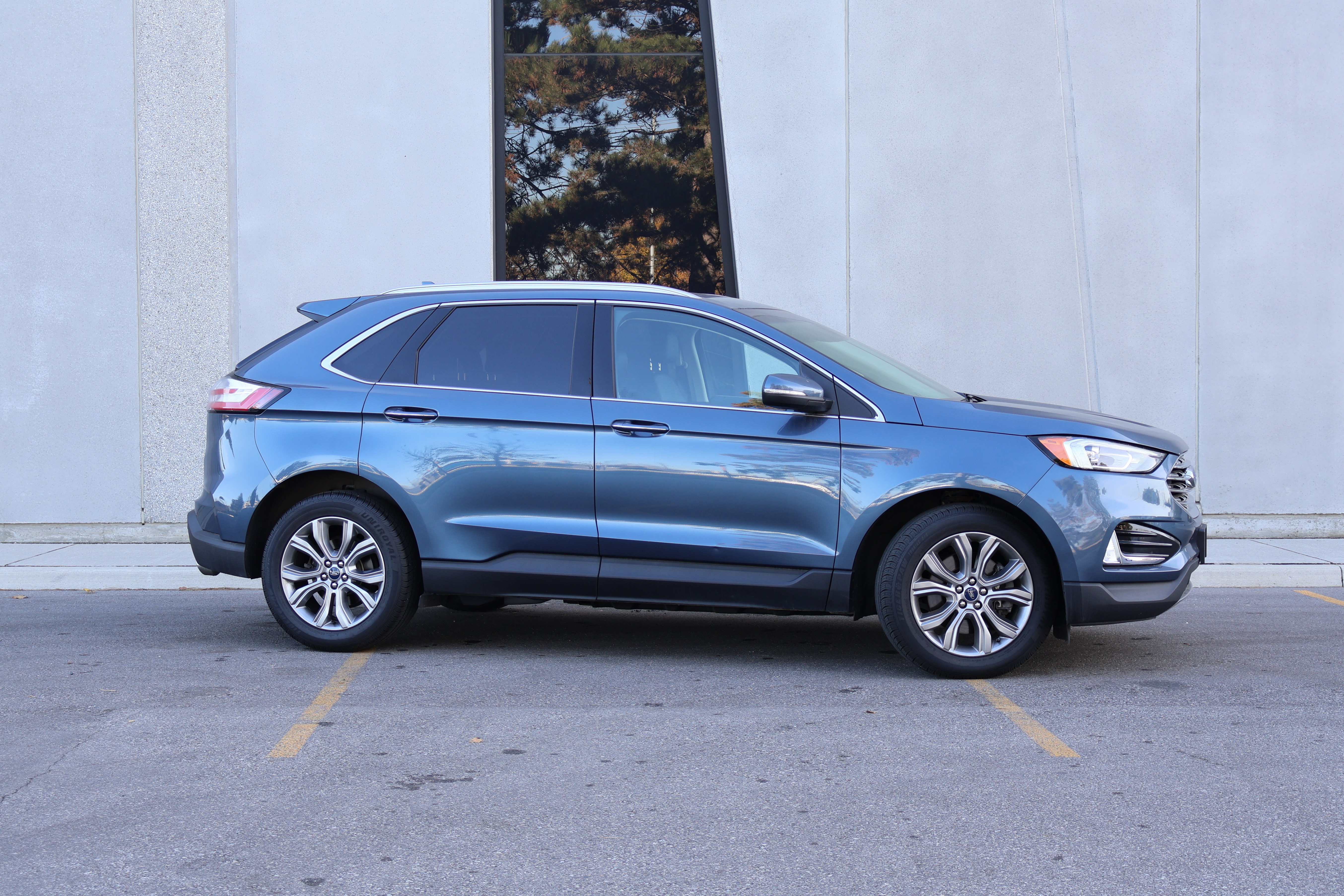
2020 Ford Edge Reviews SummaryThe Ford Edge isn’t exactly memorable, which isn’t a bad thing. It isn’t a good thing either. Cars can be remembered for attractive design, fun driving dynamics, or being a solid value. They can also be remembered in a negative light for a polarizing design, poor build quality, or being unsafe to the point of scandal. But the 2020 Ford Edge is just... there. It is a midsize two-row SUV that doesn’t offend, but also doesn’t “wow.” But just as critically, the Edge is getting long in the tooth. In the SUV segment, constant iteration is necessary for survival, and the Edge is in need of a redesign. But in lieu of new blood, Ford has done well to keep the Edge fitted with the latest infotainment and safety technology. It also offers a performance variant, called the Edge ST. This is something that you won’t find in the Edge’s competitors, the Nissan Murano and Honda Passport. But is it enough to keep the Edge relevant against its more contemporary rivals? Read on to find out. | |
2021 GMC Yukon XL Reviews Summary | |
No video found | No video found |
Popular Features & Specs | |
Engine2.0L 250 hp I4 | Engine5.3L 355 hp V8 |
DrivetrainFWD | Drivetrain4X2 |
Seating Capacity5 | Seating Capacity9 |
Horsepower250 hp @ 5500 rpm | Horsepower355 hp @ 5600 rpm |
Fuel Economy (City)11.2 L(e)/100 km | Fuel Economy (City)15.7 L(e)/100 km |
Fuel Economy (Highway)8.1 L(e)/100 km | Fuel Economy (Highway)11.8 L(e)/100 km |
Engine | |
Engine Name2.0L 250 hp I4 | Engine Name5.3L 355 hp V8 |
Torque280 lb-ft @ 3000 rpm | Torque383 lb-ft @ 4100 rpm |
Horsepower250 hp @ 5500 rpm | Horsepower355 hp @ 5600 rpm |
DrivetrainFWD | Drivetrain4X2 |
Fuel Economy | |
Fuel Economy (City)11.2 L(e)/100 km | Fuel Economy (City)15.7 L(e)/100 km |
Fuel Economy (Highway)8.1 L(e)/100 km | Fuel Economy (Highway)11.8 L(e)/100 km |
Interior | |
Seating Capacity5 | Seating Capacity9 |
Safety | |
Front Crash Overall5 | Front Crash Overall4 |
Side Crash Overall5 | Side Crash Overall5 |
Dimensions & Capacity | |
Cargo Space1110 L | Cargo Space1175 L |
Curb Weight1827 kg | Curb Weight2555 kg |
Height1735 mm | Height1943 mm |
Length4796 mm | Length5720 mm |
Width2179 mm | Width2057 mm |
Wheelbase2850 mm | Wheelbase3406 mm |
Maximum Payload564 kg | Maximum Payload765 kg |
Number of doors4 | Number of doors4 |
Maximum Towing Capacity680 kg | Maximum Towing Capacity3765 kg |
Standard Towing Capacity | Standard Towing Capacity3538 kg |
Overview | ||
Listings | ||
Ratings & Reviews | ||
User reviews | ||
Expert reviews | 8.0 out of 10Read full review | |
Pros & cons | Pros
Cons
| |
Summary | The Ford Edge isn’t exactly memorable, which isn’t a bad thing. It isn’t a good thing either. Cars can be remembered for attractive design, fun driving dynamics, or being a solid value. They can also be remembered in a negative light for a polarizing design, poor build quality, or being unsafe to the point of scandal. But the 2020 Ford Edge is just... there. It is a midsize two-row SUV that doesn’t offend, but also doesn’t “wow.” But just as critically, the Edge is getting long in the tooth. In the SUV segment, constant iteration is necessary for survival, and the Edge is in need of a redesign. But in lieu of new blood, Ford has done well to keep the Edge fitted with the latest infotainment and safety technology. It also offers a performance variant, called the Edge ST. This is something that you won’t find in the Edge’s competitors, the Nissan Murano and Honda Passport. But is it enough to keep the Edge relevant against its more contemporary rivals? Read on to find out. | |
Video | No video found | No video found |
Popular Features & Specs | ||
Engine | 2.0L 250 hp I4 | 5.3L 355 hp V8 |
Drivetrain | FWD | 4X2 |
Seating Capacity | 5 | 9 |
Horsepower | 250 hp @ 5500 rpm | 355 hp @ 5600 rpm |
Fuel Economy (City) | 11.2 L(e)/100 km | 15.7 L(e)/100 km |
Fuel Economy (Highway) | 8.1 L(e)/100 km | 11.8 L(e)/100 km |
Engine | ||
Engine Name | 2.0L 250 hp I4 | 5.3L 355 hp V8 |
Torque | 280 lb-ft @ 3000 rpm | 383 lb-ft @ 4100 rpm |
Horsepower | 250 hp @ 5500 rpm | 355 hp @ 5600 rpm |
Drivetrain | FWD | 4X2 |
Fuel Economy | ||
Fuel Economy (City) | 11.2 L(e)/100 km | 15.7 L(e)/100 km |
Fuel Economy (Highway) | 8.1 L(e)/100 km | 11.8 L(e)/100 km |
Interior | ||
Seating Capacity | 5 | 9 |
Safety | ||
Front Crash Overall | 5 | 4 |
Side Crash Overall | 5 | 5 |
Dimensions & Capacity | ||
Cargo Space | 1110 L | 1175 L |
Curb Weight | 1827 kg | 2555 kg |
Height | 1735 mm | 1943 mm |
Length | 4796 mm | 5720 mm |
Width | 2179 mm | 2057 mm |
Wheelbase | 2850 mm | 3406 mm |
Maximum Payload | 564 kg | 765 kg |
Number of doors | 4 | 4 |
Maximum Towing Capacity | 680 kg | 3765 kg |
Standard Towing Capacity | 3538 kg | |
2020 Ford Edge for Sale




2021 GMC Yukon XL for Sale


By: CarGurus + AI
At CarGurus, our team of experienced automotive writers remain at the heart of our content operation, conducting hands-on car tests and writing insightful guides that are backed by years of industry experience. To complement this, we are harnessing AI to make our content offering more diverse and more helpful to shoppers than ever. To achieve this, our AI systems are based exclusively on CarGurus content, ratings and data, so that what we produce is both unique to CarGurus, and uniquely helpful to car shoppers.
