2019 Toyota RAV4 vs 2020 Mazda CX-5
Overview | |
MSRP$25,650 | MSRP$25,190 |
Listings155 | Listings98 |
Ratings & Reviews | |
User Reviews | User Reviews |
Expert reviews8.0 out of 10 | Expert reviews7.7 out of 10 |
Pros
Cons
| Pros
Cons
|
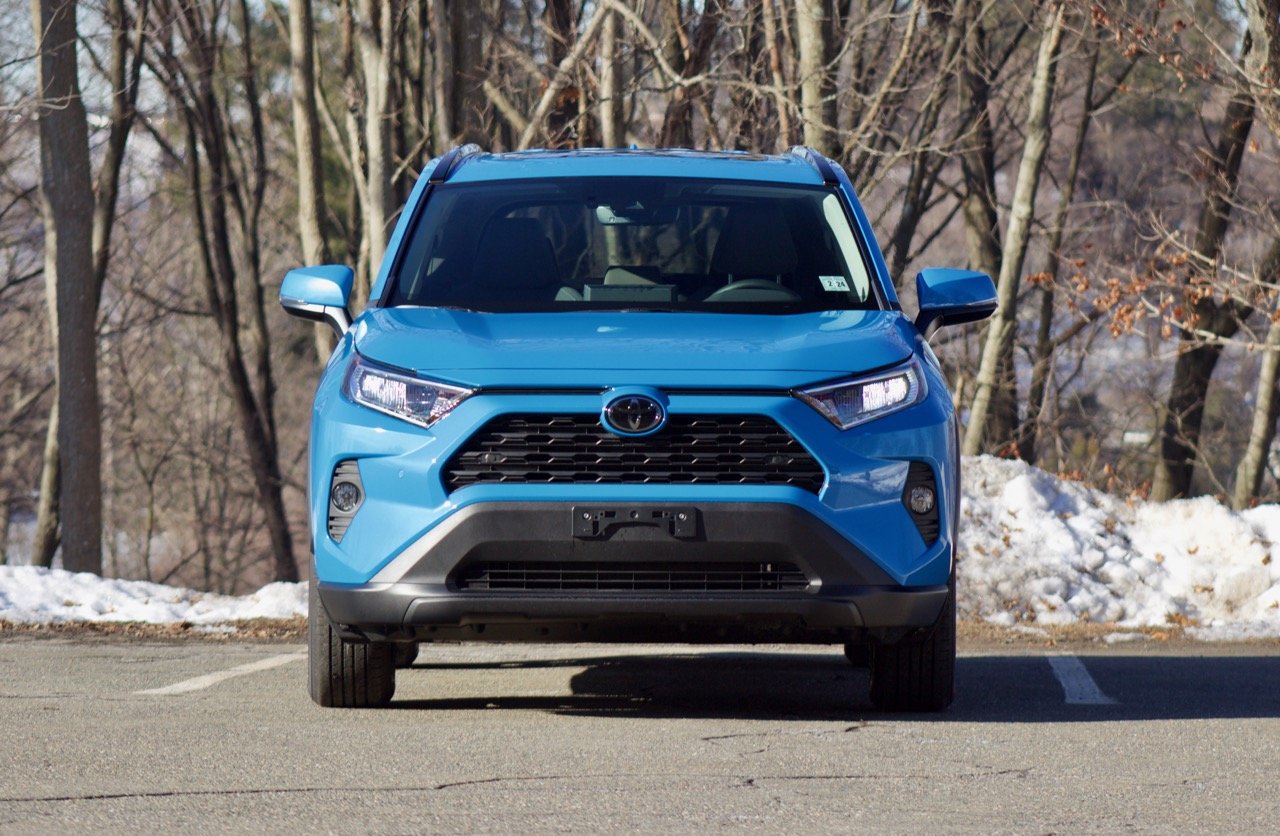
2019 Toyota RAV4 Reviews SummaryThere’s a reason small SUVs like the 2019 Toyota RAV4 are among the most popular vehicles on the new car market. Consider the RAV4 and its rivals, the Honda CR-V, the Mazda CX-5, and the Ford Escape—what do they have in common? To put it simply, these vehicles are asked to do it all. Daily commuter car? Check. Family-hauler to school, practice, and the mall? Check, check, and check. Road-trip vehicle? Yeah, that too. On top of it all, these vehicles have to be affordable, efficient, and reliable. Sales of traditional sedans have been dwindling, but if sedans could do as much as crossovers can, they would still be popular vehicles. The RAV4 is one of the oldest vehicles in the segment, and its story tells us how these small SUVs became so popular. The previous RAV4 was an extremely competent vehicle for Toyota, covering all the things we ask of compact SUVs. But the new 2019 RAV4 goes a few steps further. It has standout Tonka-truck styling, a surprisingly upscale interior, and something that it had lost since debuting more than two decades ago: a bit of off-road ability. We’ll see whether this makes it better than the RAV4 it replaces, and if it allows the 2019 RAV4 to stand out in a crowded small SUV market. | |
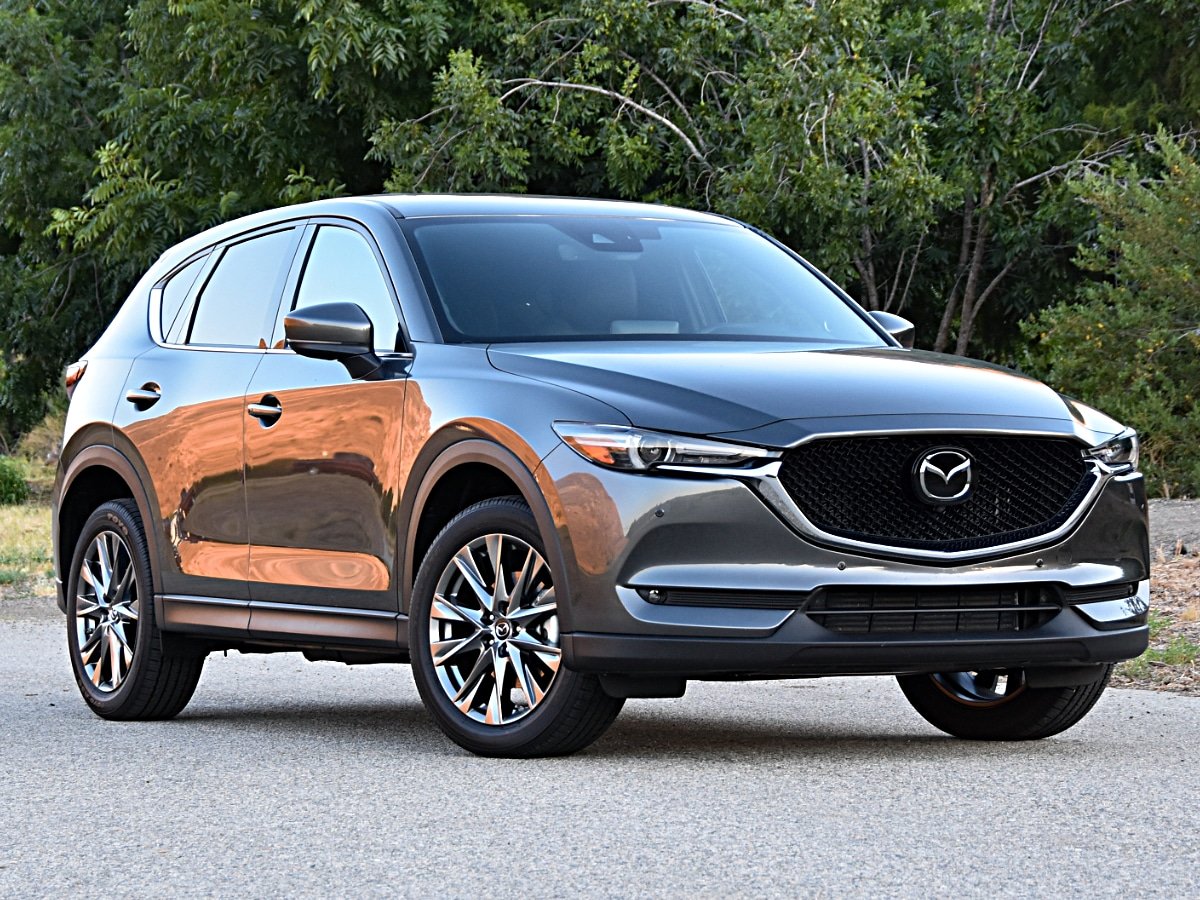
2020 Mazda CX-5 Reviews SummaryAccording to a Harvard Business Review marketing study, there is such a thing as too much choice. And when the marketplace presents consumers with too much choice, there is a chance they won’t buy anything at all. For the 2020 model year, there are more than 40 small or compact SUVs available, half of them sold by luxury brands. Small and scrappy Mazda offers three of them: the CX-3, the CX-30, and the CX-5. However, in a marketplace awash in Chevys, Fords, Hondas, and Toyotas, Mazda has trouble standing apart from the established crowd. What’s the solution? Move upscale into “premium” territory. Premium is where Buick, Fiat, GMC, Jeep, Mini, and Volkswagen play to varying levels of success. Combining the value inherent in a mainstream brand with the design, materials, and technology common to luxury brands, these premium vehicles attempt to provide more than mainstream for less than luxury. At the same time, less is more. Because the 2020 Mazda CX-5 has but four similarly sized competitors in the premium class, that makes it easier for a consumer to choose, and more likely that a consumer will buy. The trick is convincing people that Mazda is a premium brand, and the automaker is taking a pragmatic approach to this emotionally charged solution. | |
No video found | |
Popular Features & Specs | |
Engine2.5L 203 hp I4 | Engine2.5L 187 hp I4 |
Drive TrainFWD | Drive TrainFWD |
Seating Capacity5 | Seating Capacity5 |
Horsepower203 hp @ 6000 rpm | Horsepower187 hp @ 6000 rpm |
MPG City26 | MPG City25 |
MPG Highway35 | MPG Highway31 |
Engine | |
Engine Name2.5L 203 hp I4 | Engine Name2.5L 187 hp I4 |
Torque184 lb-ft @ 5000 rpm | Torque186 lb-ft @ 4000 rpm |
Horsepower203 hp @ 6000 rpm | Horsepower187 hp @ 6000 rpm |
DrivetrainFWD | DrivetrainFWD |
Fuel Economy | |
MPG City26 | MPG City25 |
MPG Highway35 | MPG Highway31 |
Interior | |
Seating Capacity5 | Seating Capacity5 |
Safety | |
Front Crash Overall4 | Front Crash Overall5 |
Side Crash Overall5 | Side Crash Overall5 |
Dimensions & Capacity | |
Cargo Space37.6 cu ft | Cargo Space30.9 cu ft |
Curb Weight3370 lbs | Curb Weight3541 lbs |
Height67.0 in | Height66.2 in |
Length180.9 in | Length179.1 in |
Width73.0 in | Width83.3 in |
Wheelbase105.9 in | Wheelbase106.2 in |
Maximum Payload1240 lbs | Maximum Payload1034 lbs |
Number of doors4 | Number of doors4 |
Maximum Towing Capacity1500 lbs | Maximum Towing Capacity2000 lbs |
Overview | ||
MSRP | $25,650 | $25,190 |
Listings | ||
Ratings & Reviews | ||
User reviews | ||
Expert reviews | 8.0 out of 10Read full review | 7.7 out of 10Read full review |
Pros & cons | Pros
Cons
| Pros
Cons
|
Summary | There’s a reason small SUVs like the 2019 Toyota RAV4 are among the most popular vehicles on the new car market. Consider the RAV4 and its rivals, the Honda CR-V, the Mazda CX-5, and the Ford Escape—what do they have in common? To put it simply, these vehicles are asked to do it all. Daily commuter car? Check. Family-hauler to school, practice, and the mall? Check, check, and check. Road-trip vehicle? Yeah, that too. On top of it all, these vehicles have to be affordable, efficient, and reliable. Sales of traditional sedans have been dwindling, but if sedans could do as much as crossovers can, they would still be popular vehicles. The RAV4 is one of the oldest vehicles in the segment, and its story tells us how these small SUVs became so popular. The previous RAV4 was an extremely competent vehicle for Toyota, covering all the things we ask of compact SUVs. But the new 2019 RAV4 goes a few steps further. It has standout Tonka-truck styling, a surprisingly upscale interior, and something that it had lost since debuting more than two decades ago: a bit of off-road ability. We’ll see whether this makes it better than the RAV4 it replaces, and if it allows the 2019 RAV4 to stand out in a crowded small SUV market. | According to a Harvard Business Review marketing study, there is such a thing as too much choice. And when the marketplace presents consumers with too much choice, there is a chance they won’t buy anything at all. For the 2020 model year, there are more than 40 small or compact SUVs available, half of them sold by luxury brands. Small and scrappy Mazda offers three of them: the CX-3, the CX-30, and the CX-5. However, in a marketplace awash in Chevys, Fords, Hondas, and Toyotas, Mazda has trouble standing apart from the established crowd. What’s the solution? Move upscale into “premium” territory. Premium is where Buick, Fiat, GMC, Jeep, Mini, and Volkswagen play to varying levels of success. Combining the value inherent in a mainstream brand with the design, materials, and technology common to luxury brands, these premium vehicles attempt to provide more than mainstream for less than luxury. At the same time, less is more. Because the 2020 Mazda CX-5 has but four similarly sized competitors in the premium class, that makes it easier for a consumer to choose, and more likely that a consumer will buy. The trick is convincing people that Mazda is a premium brand, and the automaker is taking a pragmatic approach to this emotionally charged solution. |
Video | No video found | |
Popular Features & Specs | ||
Engine | 2.5L 203 hp I4 | 2.5L 187 hp I4 |
Drive Train | FWD | FWD |
Seating Capacity | 5 | 5 |
Horsepower | 203 hp @ 6000 rpm | 187 hp @ 6000 rpm |
MPG City | 26 | 25 |
MPG Highway | 35 | 31 |
Engine | ||
Engine Name | 2.5L 203 hp I4 | 2.5L 187 hp I4 |
Torque | 184 lb-ft @ 5000 rpm | 186 lb-ft @ 4000 rpm |
Horsepower | 203 hp @ 6000 rpm | 187 hp @ 6000 rpm |
Drivetrain | FWD | FWD |
Fuel Economy | ||
MPG City | 26 | 25 |
MPG Highway | 35 | 31 |
Interior | ||
Seating Capacity | 5 | 5 |
Safety | ||
Front Crash Overall | 4 | 5 |
Side Crash Overall | 5 | 5 |
Dimensions & Capacity | ||
Cargo Space | 37.6 cu ft | 30.9 cu ft |
Curb Weight | 3370 lbs | 3541 lbs |
Height | 67.0 in | 66.2 in |
Length | 180.9 in | 179.1 in |
Width | 73.0 in | 83.3 in |
Wheelbase | 105.9 in | 106.2 in |
Maximum Payload | 1240 lbs | 1034 lbs |
Number of doors | 4 | 4 |
Maximum Towing Capacity | 1500 lbs | 2000 lbs |
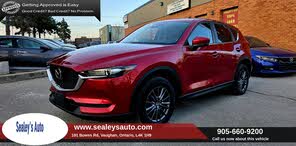
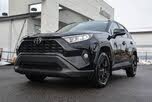
The 2019 Toyota RAV4 presented a bold and aggressive exterior design, drawing inspiration from the Toyota Tacoma pickup. Its chunky build and sharp edges gave it a futuristic and robust appearance, with taillights reminiscent of Toyota's luxury brand, Lexus. The RAV4's design included a character line on the rear C-pillar, which was a common trait among new vehicles, though not always visually appealing. The RAV4 offered a variety of colour options, including two-tone schemes that featured a contrasting roof, adding to its distinctive look. Inside, the RAV4's cabin was surprisingly simple and elegant, with a floating touchscreen and a well-organized control pod.
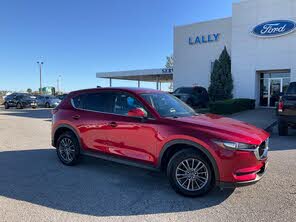
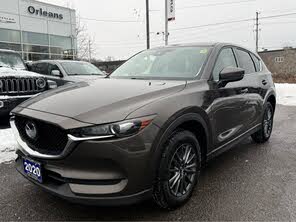
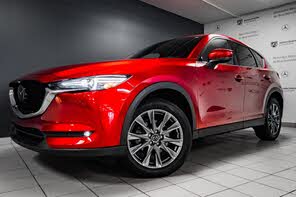
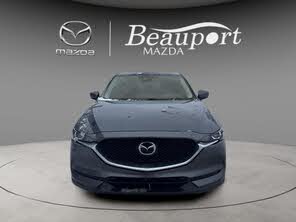
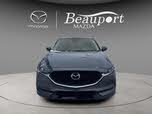
In contrast, the 2020 Mazda CX-5 aimed to deliver a premium experience, with captivating style and continual product improvements. The CX-5 featured more standard equipment, revised instrumentation, and modifications to reduce noise and vibration. Its turbocharged engine offered increased torque, and AWD models gained an off-road traction assistance feature. The CX-5's design, rooted in Mazda's "Kodo" styling themes, remained appealing and upscale. Inside, the CX-5 Signature trim boasted premium Nappa leather upholstery, real wood, and a black headliner, creating a luxurious atmosphere. However, the Caturra Brown leather was almost indistinguishable from the black cabin, reducing contrast.


The 2019 Toyota RAV4 was equipped with a 2.5-litre four-cylinder engine producing 203 horsepower and 184 pound-feet of torque, paired with an eight-speed automatic transmission. It offered both FWD and AWD options, with the latter available in two versions: a base AWD and a more advanced torque-vectoring AWD. The RAV4's engine provided decent highway acceleration but struggled with low-end power, making it feel sluggish in stop-and-go traffic. The ride quality was generally good, though the steering felt twitchy, and there was noticeable body roll. The RAV4's fuel efficiency was commendable, with the AWD model achieving a combined consumption of 8.0 L/100 km.
The 2020 Mazda CX-5 came standard with a 2.5-litre four-cylinder engine delivering 187 horsepower and 186 pound-feet of torque, mated to a six-speed automatic transmission. The turbocharged version, available in GT Turbo and Signature trims, offered up to 250 horsepower and 320 pound-feet of torque with premium fuel. The CX-5's turbocharged engine provided strong acceleration, but its fuel efficiency was lower, averaging 10.6 L/100 km. The CX-5 featured G-Vectoring Control Plus technology, enhancing its driving dynamics. However, excessive body motions and a high centre of gravity affected its handling, making it less thrilling than other Mazdas.
The 2019 Toyota RAV4's cabin was designed for practicality and comfort, with spacious seating and ample cargo space. The centre stack pod housed climate controls, a large tray, drive-mode controls, and a shifter. The RAV4 offered 1,064 litres of cargo space with the rear seats up, expanding to 1,976 litres when folded. It featured deep centre-console trays and bins for storage, along with a fold-out rear armrest with cupholders.
The 2020 Mazda CX-5 focused on an upscale cabin with a generous list of standard equipment. Despite its stylish interior, the CX-5 was more cramped than competitors like the RAV4. The CX-5 offered 875 litres of cargo space behind the rear seat, expanding to 1,687 litres with the seats folded. The Signature trim added luxury touches like Nappa leather and genuine wood trim. However, rear legroom was limited, and the air conditioning took time to cool the cabin on hot days.
The 2019 Toyota RAV4 featured the Entune 3.0 infotainment system with a 7-inch touchscreen, offering Apple CarPlay but not Android Auto. The XLE trim added multiple USB ports, while the Trail and Limited trims offered larger screens and optional premium audio. The system's layout was user-friendly, with hard dials for major functions.
The 2020 Mazda CX-5's Mazda Connect infotainment system aimed for an upscale impression but required acclimation. It featured a 7-inch touchscreen, Apple CarPlay, and Android Auto. The GT trim added SiriusXM, a Bose sound system, and navigation, while the Signature trim included a surround-view camera. Interaction options included the touchscreen, centre console controls, and voice recognition, though the latter was not ideal.
The 2019 Toyota RAV4 came with a comprehensive suite of safety features, including Toyota Safety Sense 2.0, which offered forward-collision warning, emergency braking, lane-departure warning, and adaptive cruise control. Blind-spot monitoring and rear cross-traffic alert were also standard.
The 2020 Mazda CX-5 excelled in safety, with standard ADAS features like smart city brake support, blind-spot monitoring, and rear cross-traffic alert. Higher trims added adaptive cruise control, forward collision warning, and lane-keep assist. The CX-5 earned a Top Safety Pick+ rating from the IIHS and a five-star overall rating from the NHTSA.
CarGurus highlights
According to CarGurus experts, the overall rating for the 2019 Toyota RAV4 is 8.0 out of 10, while the 2020 Mazda CX-5 scores 7.7 out of 10. Based on these ratings, the 2019 Toyota RAV4 is the recommended choice, offering a balance of practicality, safety, and user-friendly technology.
Choose the 2019 Toyota RAV4 if:
- You prioritize a spacious interior with ample cargo capacity.
- You value a user-friendly infotainment system with straightforward controls.
- You seek a vehicle with a comprehensive suite of standard safety features.






Choose the 2020 Mazda CX-5 if:
- You desire a premium interior with upscale materials and design.
- You appreciate engaging driving dynamics and strong turbocharged performance.
- You prioritize top-tier safety ratings and advanced driver assistance features.



CarGurus highlights
According to CarGurus experts, the overall rating for the 2019 Toyota RAV4 is 8.0 out of 10, while the 2020 Mazda CX-5 scores 7.7 out of 10. Based on these ratings, the 2019 Toyota RAV4 is the recommended choice, offering a balance of practicality, safety, and user-friendly technology.
Choose the 2019 Toyota RAV4 if:
Shop Now- You prioritize a spacious interior with ample cargo capacity.
- You value a user-friendly infotainment system with straightforward controls.
- You seek a vehicle with a comprehensive suite of standard safety features.








Choose the 2020 Mazda CX-5 if:
Shop Now- You desire a premium interior with upscale materials and design.
- You appreciate engaging driving dynamics and strong turbocharged performance.
- You prioritize top-tier safety ratings and advanced driver assistance features.








By: CarGurus + AI
At CarGurus, our team of experienced automotive writers remain at the heart of our content operation, conducting hands-on car tests and writing insightful guides that are backed by years of industry experience. To complement this, we are harnessing AI to make our content offering more diverse and more helpful to shoppers than ever. To achieve this, our AI systems are based exclusively on CarGurus content, ratings and data, so that what we produce is both unique to CarGurus, and uniquely helpful to car shoppers.