2020 Porsche 911 Reviews, Pricing & Specs



Pros & cons
What we like
Fun to drive
Stylish design
Manual transmission available
What to consider
Interior materials feel cheap
Advanced safety features are not standard
The CarGurus verdict
The Porsche 911 is one of the world's most famous sports cars. In 2020 guise, it's also one of the best.
A new Porsche 911 is a historic event deserving a ticker-tape parade. Its humble, altogether feeble beginnings as the Porsche 356, a Volkswagen Beetle offshoot, have progressed over six decades as the reigning champion of all sports cars. The 911 is the standard for exacting engineering, performance, and an iconic design that copies no other car in the world. Praise! Most cars aren't so deserving. There are some drawbacks to the 2020 911, the eighth-generation model known to enthusiasts as the 992. But sorry, negative Nancies, there aren't many.
out of 10 expert review
Look & feel
I rented a Porsche 911 in Miami because I wanted to be like Will Smith, who had way too much fun shooting "Bad Boys For Life" in a 911, in Miami. Normally, for any new Test Drive Review on CarGurus, we request loaners from the manufacturers. But for this one, and channeling the cool-headed sensibility of co-star Martin Lawrence, I walked into Hertz.
I expected to grab a late-model 911 from a couple of years ago. So when my key unlocked a 2020 Carrera S with 2,000 miles on the clock, in a similar dark blue like the movie car, a car I hadn't even seen on the road yet, it got me howling "Woooooo!" with the windows down over Biscayne Bay. But it wasn't until I pulled up to my hotel on South Beach for the first time that I began swooning over this new 992.
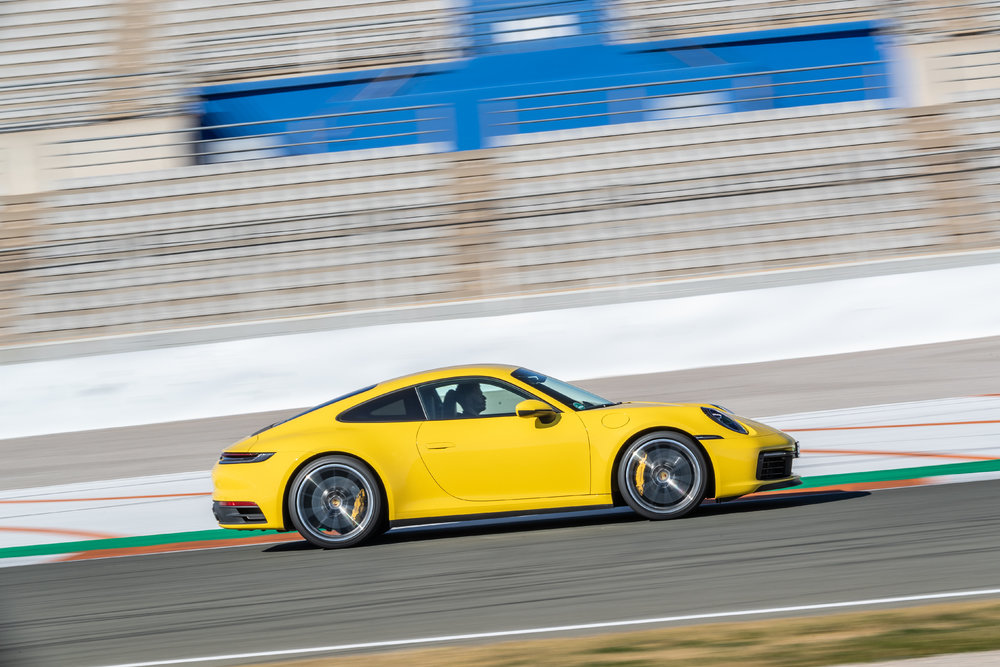
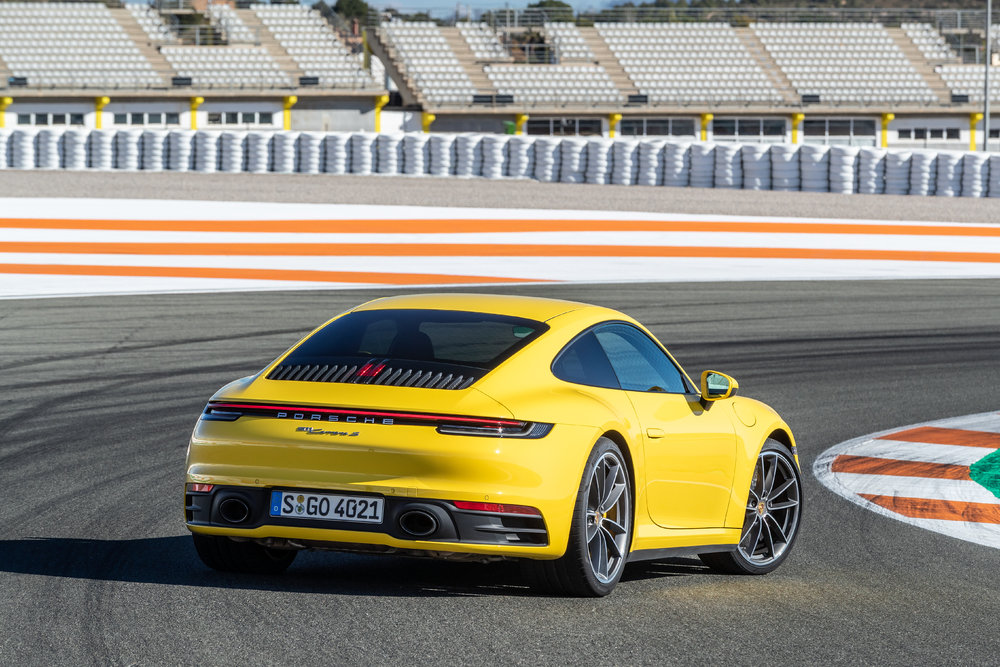
Just when you think the 911 can't look any different or better than how it's been for 56 years, Porsche pulls a few fast ones. Thanks to the 992, now I no longer enjoy the 991. It's the rear, that beautiful, sexy section of metal and glass swells and rises past the available 21-inch wheels. All new 911 models have the widebody styling formerly reserved for the S models that stretches the back girth a few inches to spectacular effect. Now there are vertical slats on the engine cover, two vertical strips for the centre brake light, a single thin taillight wrapping around the back, and a thick bumper with giant exhaust pipes integrated into the diffuser.
Together with the fluid shapes of the low, sloping roof, the huge tires, and a stance so athletic and pure it would make Lebron James feel out of shape, the 911 is perfect. The front incorporates squared-off edges for the lower air intakes and the front trunk opening. The side has flatter door handles with optional ones that pop-out upon unlocking.
Else, the dimensions are near identical. The headlights are round, the engine's in the back, and there's a small rear seat. That's the timeless charm of a Porsche 911. What's wonderful about them is how gorgeous and totally conventional they appear. Even in bright colours and fitted with a rear spoiler, the 911 is hardly ostentatious for a six-figure sports car. Whether in coupe body style, convertible, or the half-convertible 911 Targa (a 2021 model), it has the rare talent of being seen and hidden in plain sight.
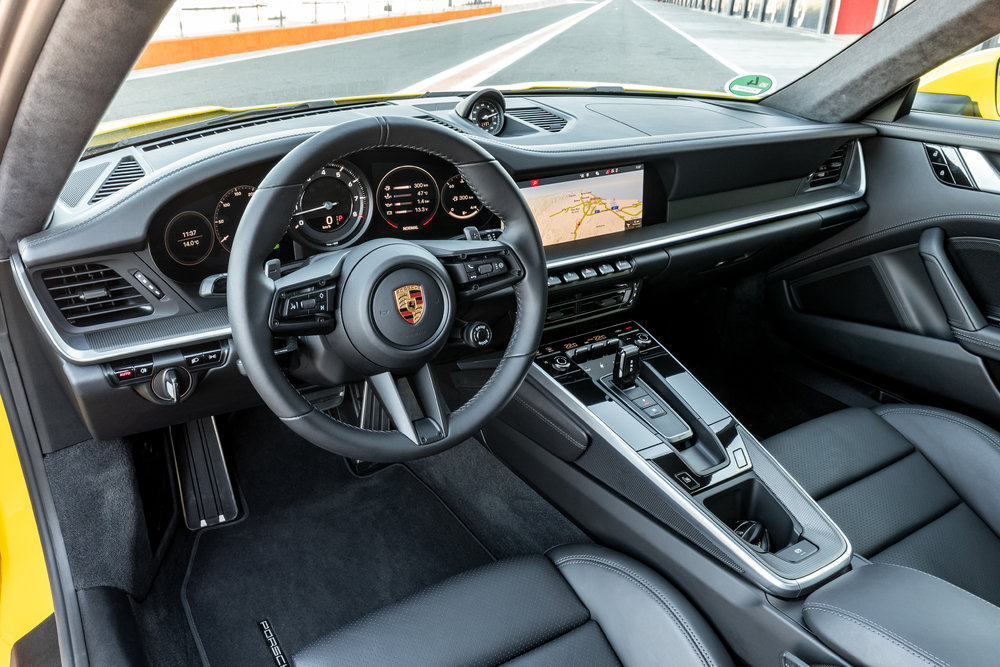
The interior sticks to that theme. The oldest instrument cluster elements are the tachometer and optional stopwatch on the dash, true analog timepieces set among screens and drive-mode switches. The newest element is a central cupholder, the likes of which have never been seen in a 911.
Even with that luxury, the cabin is minimalist and continues the low, arrow-shaped centre console of before, but removes most of the buttons for empty, black plastic. There's a ledge across the dash that can be finished in matte wood. Ordered in one of the dozens of colour combos, the 911's interior can be as exquisite as your mind can handle—leather covering the air vent slats, the steering-wheel column, even the stitching of the covers holding the owner's manual and key fob. It can look decadent.
Without any interior upgrades (like on my rental), it's cheap. For a car with an MSRP of $134,600 Canadian including destination, you would expect my tester to have soft leather on the dash and door tops, but instead, I got fat rubber slabs like those in a Dodge Durango. Reach under the seat to slide forward, just like a base Corolla, and don't ask for lumbar or bolsters. The steering wheel's spokes are plastic-fantastic, and the nubby automatic gear selector is embarrassing to grab. My Jaguar F-Type has a nicer interior—so what's the deal? Porsche assumes every customer will go wild on options and never touch the base interior. I did, and I am not impressed.
Performance
In every performance measure, the 911 is flawless, its chassis unbendable. It can beat supercars with V8s and 600-plus horsepower off the line, thanks to immense rear grip—thank the rear engine over the axle for that—the low weight, and the gearing and software to bring all that power to boil. Think what it'd be like to sprint with a full glass of water and not spill a drop. That's how the 911 behaves when you slam the gas and turn the wheel. It's docile yet super-tactile when required, able to glide silently in traffic or blitz the quarterback in a half-second.
My car didn't have the optional rear-axle steering, lowered sport suspension, adaptive dampers, or electrohydraulic anti-roll links at each wheel. Florida roads don't demand anything that hardcore. Regardless of your setup, the 911 is always well-mannered and confident, at times superhuman in its reflexes, in every situation. Will Smith didn't make this look good—Porsche did.
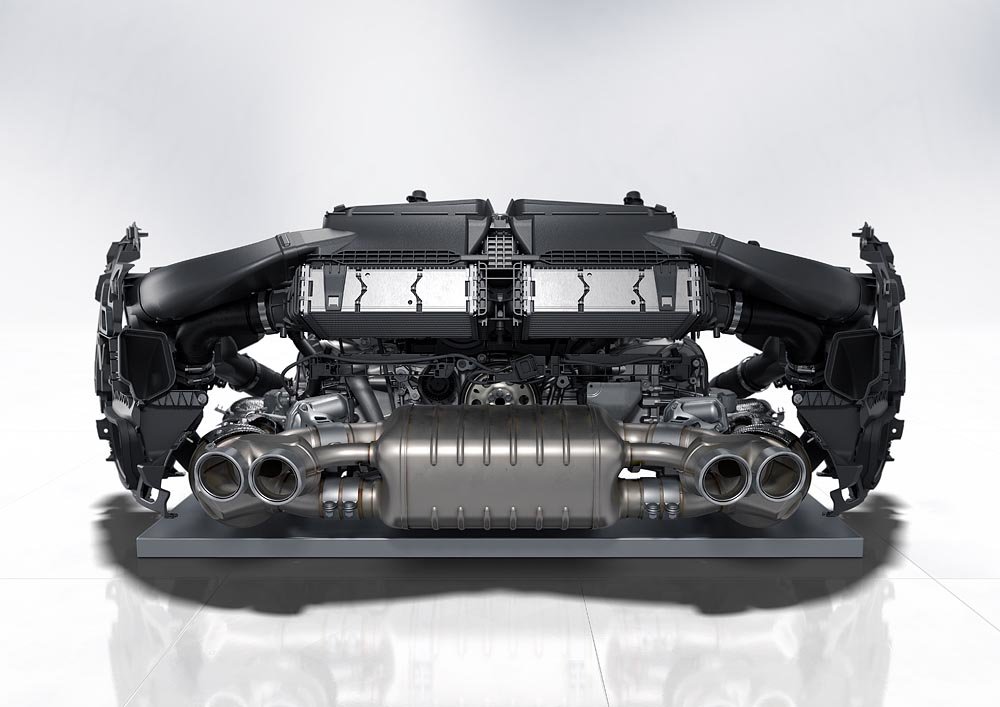
Under the tiny hatch is one of two 3.0-litre flat-six engines fed by two turbochargers. It's a homely little lump that sits on fluid-filled mounts that can change stiffness in milliseconds, yet another handling trick. The Porsche 911 Carrera and Carrera 4 twin-turbo powertrains come with 379 horsepower and 331 pound-feet of torque. That's up a few ticks from last year, and don't think it's a beginner's choice.
Even better are the 911 Carrera S and 911 Carrera 4S, with 443 hp and 390 lb-ft of torque. Immediate thrust, minimal lag, throaty sound—at any speed. Just cruising Ocean Drive in first gear was enough of a thrill. But for some people, they want more. The Porsche 911 Turbo models came into the line-up as a 2021 model with a power boost to 572 hp and 553 lb-ft of torque. For track enthusiasts there's the GT3.
Ordering the Sport Chrono package places a Formula 1-style overboost button on the steering wheel that serves up more power for up to 20 seconds. An eight-speed dual-clutch automatic transmission called PDK is standard, where before it was a $3,200 option. Porsche won't discount the seven-speed manual transmission anymore, and for 2020, it's on only the S and 4S models. Sure, it's slower and doesn't include launch control. But true sports car buyers demand it, and I've no reason to think Porsche has ruined its precise feel. The PDK gearbox has been great since it came out in 2009, and it makes you a hero out of the box. With the manual transmission, even with auto rev-matching, you're doing the work—but with a car this special, I'd rather.
Just as widebodies have become the norm in the 911 lineup, so have staggered-diameter tires. They used to be limited to extreme track models like the GT2 and GT3, but now, the 911 is standard with 19-inch front and 20-inch rear tires (20/21 on my rental—thank you Hertz!). Porsche makes a weird claim that the larger wheels provide more comfort, and this is wrong. Ride quality is choppy over expansion joints and uneven surfaces, just as you'd expect. Harsh like an AMG Mercedes, no. But it's firm. I would advise against the sport suspension, which drops the body by almost a half-inch, unless you're going to order the front axle lift to avoid scraping driveways.
Rough play aside, the 911 is an otherwise comfy machine because it has to be. Older folk typically buy the car, and people of all ages commute with them and, with the all-wheel-drive (AWD) 4 and 4S drivetrains, keep them out all year. Don't think you need AWD in a car with this much grip. It's there more for inclement weather than all-out dry traction. Fuel efficiency is also decent, if you're easy on the gas. My rear-wheel-drive Carrera S with the PDK has a Natural Resources Canada estimated rating of 12.9 litres per 100 kilometres in the city, 10.2 highway, and 11.7 combined.
Form & function
As a true touring car, the Porsche 911 has supportive, comfortable front seats with large windows for easy visibility. My car had the optional 360-degree cameras, a must since you can't see how close that sloped nose is to the curb. The cabin's simplicity helps you focus on driving, with only a few toggle switches for the climate, stereo, and seat heating/cooling on the centre stack and console, and just a few more to control the two screens on the instrument panel.
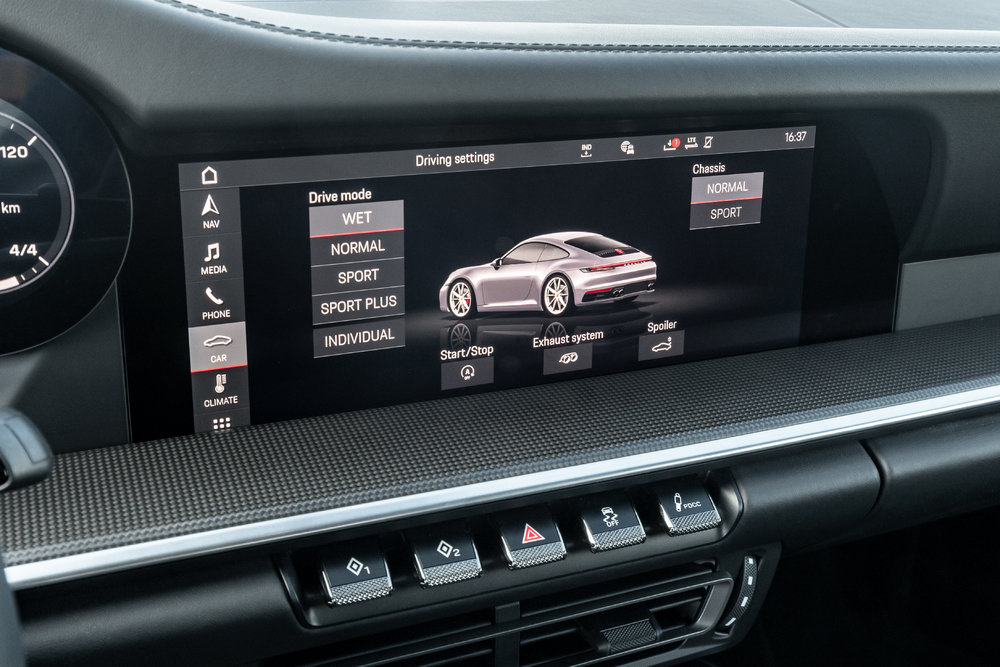
The infotainment system is fast and easy to use. It uses a motion sensor to detect when your hand is near and then makes more menu choices available. Certain features, like the auto engine stop-start, are buried in the screen when they should be buttons. What's aggravating is the blank plate around the shifter that has plenty of real estate for buttons like that. It's just a big waste of space. There are more blanks on the window switches because they're shared with the four-door Porsche Panamera. They're located in such a way that you have to tilt your wrist backward just slightly to reach them. The previous 991 never had these ergonomic problems.
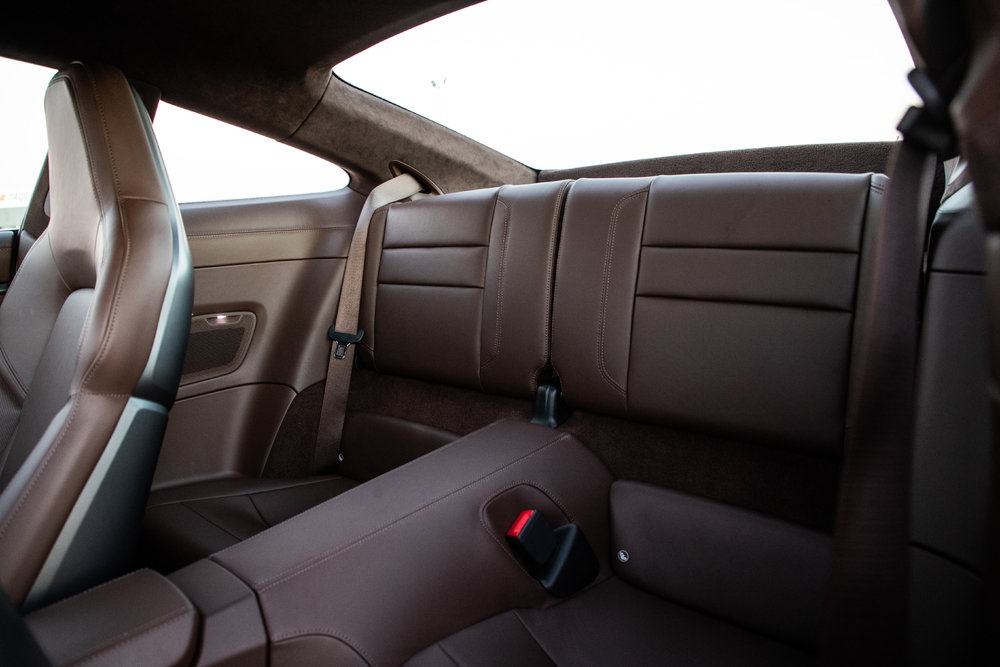
At least you can fit 132 litres of small luggage under the front trunk and can fold down the rear seats for another 264 litres. The back seat doesn't even look nice, but it's a weird 911 tradition and very small children might enjoy it for 20 minutes. The convertible (cabriolet) can lower or raise its soft-top in 12 seconds at up to 50 kilometres per hour, very handy when you're moving the roof at a stoplight or if the skies suddenly open up. Overall, the 911 is built like a normal car. There are no thick door sills, no extreme door cutouts, no contorting your body in the act of looking cool. It's easy to use, park, and drive every single day.
Technology
Navigation comes standard, as does Apple CarPlay (wireless!), Android Auto, and all the crisp, high-resolution touchscreens that go with them. Porsche Connect capability comes standard as a smartphone app with remote functions and onboard LTE WiFi. But the 911 continues another weird tradition with the world's worst car stereo. The no-name, 150-watt stereo belongs in a 1985 Mitsubishi. So do the four-way power seats that slide manually and go without lumbar or bolster adjustments. Swiveling headlights and auto high beams aren't included. Neither are ambient lighting or power-folding mirrors. My car had most of those features as part of the Premium package, which also includes the 360 cameras, a Bose stereo, blind-spot monitoring, and ventilated front seats. It had a sunroof, too.
But the 911 can do more. A night-vision camera displays a black-and-white image on the instrument panel. Porsche InnoDrive will accelerate, brake, and steer on marked highways and use the GPS coordinates, topography, and traffic data up to 2.9 kilometres ahead to compensate for changing conditions. Rain sensors in the front wheel wells will detect moisture and automatically suggest activating the car's wet mode to reduce power and increase traction. Carbon-ceramic brakes, sport exhaust, and all the insane suspension options I mentioned earlier are what really make the 911's tech shine. It's just annoying that some basic features you'd use and appreciate every day are high-cost extras.
Safety
Cost-effectiveness
The 2020 Porsche 911 Carrera starts at $116,500 Canadian including delivery fees, but then again, it doesn't. No one, again, will want to sell you such a base-level new car. The 911 Cabriolet starts at $131,100. Add AWD, the S, or both, and you're at or over $125,000. I had one of the lightest-optioned cars there are, and at $137,610 with destination (Canadian, estimated), the price causes heart palpitations. But the Porsche 911 has one of the strongest resale values in the industry. It also does everything so perfectly, and is so desirable, that a car like this is truly an investment. Worth it? Every last dollar, yes.
Note: Images show a US model.
What owners say
"Overall, owners are highly enthusiastic about the 2020 Porsche 911, praising its stunning design, exceptional performance, and thrilling drive. They appreciate the comfort and build quality as well. However, many mention that it is on the pricier side, and some have noted issues with road noise and the Bose sound system."
It is excellent car, one of the best ever created
September 17, 2023New owner and only about 300 miles so far. Love the new 992S! Styling, fit, finish, and performance are superb! Obviously Porsche is a premium luxury performance brand and commands a premium price. However compared to other premium brands, I believe Porsche are designed and meant to be driven, not to be saved and admired only in the garage or car shows.
December 1, 2020Great car, incredible power and handling. It’s quite pricey, but has great value.
October 3, 2021What owners say
It is excellent car, one of the best ever created
September 17, 2023New owner and only about 300 miles so far. Love the new 992S! Styling, fit, finish, and performance are superb! Obviously Porsche is a premium luxury performance brand and commands a premium price. However compared to other premium brands, I believe Porsche are designed and meant to be driven, not to be saved and admired only in the garage or car shows.
December 1, 2020Great car, incredible power and handling. It’s quite pricey, but has great value.
October 3, 2021I love the 992. It is the best 911 so far in my opinion. I prefer the S version for additional power. It is an expensive car but the experience is like no other.
May 7, 2021Best 911 I have driven! I absolutely loved this car.
April 11, 2023My 2020 911S is the most thrilling fun car I have ever owned. The build quality and reliability is exceptional. It is the first 911 I have found to be truly beautiful. My only complaints are the amount of road noise that come into the cabin. I fixed that problem by having the entire interior treated with Dynamat and, reducing tire pressure to comfort setting. The Bose sound system is disappointing. I will have it upgraded.
September 15, 2022It is a perfect car on all respects . Fun to drive. I look for excuses. And comfortable.
September 14, 2020Im sold on Porsche quality, performance, and comfort. Over the years Ive owned 8 of them......never had any issues.
April 28, 2022This is a beautiful machine but is overpriced vs the c8 corvette
April 21, 2020Trims & specs
Base MSRP N/A | Seating N/A |
Engine N/A | Cargo Capacity N/A |
Combined MPG N/A | Drivetrain N/A |
Base MSRP $133,400 | Seating 4 |
Engine 3.0L 443 hp H6 | Cargo Capacity 4.6 cu ft |
Combined MPG 20 | Drivetrain AWD |
Base MSRP $104,700 | Seating 4 |
Engine 3.0L 379 hp H6 | Cargo Capacity 4.6 cu ft |
Combined MPG 21 | Drivetrain AWD |
Base MSRP $120,600 | Seating 4 |
Engine 3.0L 443 hp H6 | Cargo Capacity 4.6 cu ft |
Combined MPG 20 | Drivetrain AWD |
Base MSRP $117,500 | Seating 4 |
Engine 3.0L 379 hp H6 | Cargo Capacity 4.6 cu ft |
Combined MPG 21 | Drivetrain AWD |
Base MSRP $126,100 | Seating 4 |
Engine 3.0L 443 hp H6 | Cargo Capacity 4.6 cu ft |
Combined MPG 20 | Drivetrain RWD |
Base MSRP $274,500 | Seating 2 |
Engine N/A | Cargo Capacity 4.4 cu ft |
Combined MPG N/A | Drivetrain N/A |
Base MSRP $203,500 | Seating 4 |
Engine N/A | Cargo Capacity 4.5 cu ft |
Combined MPG N/A | Drivetrain N/A |
Base MSRP $216,300 | Seating 4 |
Engine N/A | Cargo Capacity 4.5 cu ft |
Combined MPG N/A | Drivetrain N/A |
Base MSRP $110,200 | Seating 4 |
Engine 3.0L 379 hp H6 | Cargo Capacity 4.6 cu ft |
Combined MPG 20 | Drivetrain RWD |
Base MSRP $97,400 | Seating 4 |
Engine 3.0L 379 hp H6 | Cargo Capacity 4.6 cu ft |
Combined MPG 21 | Drivetrain RWD |
Base MSRP $113,300 | Seating 4 |
Engine 3.0L 443 hp H6 | Cargo Capacity 4.6 cu ft |
Combined MPG 21 | Drivetrain RWD |


