2019 Ford Ranger Reviews, Pricing & Specs




Expert review
The Ford Ranger returns to North America with some impressive numbers and a very attractive price.
Everyone is talking about the all-new Ranger, but there’s just one problem: It’s not all new. The last Ranger was a staple of Ford’s lineup, but it was pulled from North America in 2011, although it’s remained on sale elsewhere in the world ever since. Refreshed for 2015, it’s now returned to the US and Canada to contend with the likes of the Chevrolet Colorado, the GMC Canyon, and the Toyota Tacoma, which haven’t exactly been relaxing during the Ranger’s absence. So, how does the Ranger intend to insert itself back into this already well-established midsize pickup category? Price and power. While the Colorado and the Tacoma both offer multiple powertrain options, Ford is leaning into its recent penchant for simplicity, offering a single engine and transmission: its 2.3-litre EcoBoost paired with a 10-speed automatic transmission.
out of 10 expert review
Look & feel
The Ranger may have started its life as a compact pickup, but it returns as a midsize truck that’s shockingly close to the dimensions its bigger brother, the Ford F-150, sported when the Ranger last graced our shores. Thankfully, power has also increased to match its added heft. With an astonishing 3,400-kilogram (7,500-pound) towing capacity with the tow package equipped and an 843-kilogram (1,860-pound) maximum payload, the Ranger now comes within a couple hundred pounds of the V6 F-150’s numbers, and other than the much more expensive turbodiesel-powered Colorado, it’s an undisputed class leader. That’s thanks to the 2.3-litre EcoBoost engine’s power specs of 270 horsepower and 310 pound-feet of torque.
Ford has made some augmentations to the Ranger for North America. Ford claims to have revised the sheet-metal stampings slightly in order to provide tighter panel gaps for the discerning consumer, and to meet US regulations, the frame has been fortified to offer solid steel bumper mounts in the front and rear.
Now the big news here is price, as Ford is setting up the Ranger for fleet duty. In its cheapest—and most capable—configuration, the Ranger XL starts at just $31,069, not including a $1,900 destination charge. That’ll get you standard four-wheel drive (4WD) in Canada (a rear-wheel drive (RWD) drivetrain is not offered in our market), a 6-foot bed, and the SuperCab configuration with rear jump seats. And while this is the base XL trim with some of the usual “base” features you’d expect, like steel 16-inch wheels, a manual-locking tailgate, cloth upholstery, and a spartan four-speaker stereo, you'll also get a rear-view camera, USB port, and forward-collision warning with automatic emergency braking. Plus, there are some useful packages you can add here. Group 101A adds cruise control, power side-view mirrors, an anti-theft system, and a remote key fob that locks and unlocks the tailgate. Or Ford’s Co-Pilot360 system adds auto high beams, a blind-spot monitoring system with rear cross-traffic alert and trailer tow monitoring, lane-keep warning and assist, forward and reverse parking sensors, and a 110-volt power outlet.
Much of that comes with the $35,639 Ford Ranger XLT, not to mention adding 17-inch alloys, a 4.2-inch centre screen with Ford Sync, an extra USB, and an upgraded six-speaker stereo. And just so everyone knows you spent a little more, you get a unique grille, too. The big advantage at this level is the ability to add the Ford Sync3 system, which will unlock Android Auto and Apple CarPlay as well as Sirius XM, and toss in a leather-wrapped steering wheel and shifter. Navigation and adaptive cruise control can be added for another extra charge. Other than a long list of appearance packages, it’s the 302A group that should tempt; it adds eight-way power front seats with power lumbar support, remote start, the Sport Appearance package, and the important manual sliding rear window. My week with the Ranger was spent in an XLT SuperCab with these add-ons, plus an extra-cost chrome appearance package, technology package, chrome running boards, and a spray-in bed liner.
Want to get fancy? You can move up to the Ford Ranger Lariat for $42,389, which in addition to the features mentioned above will get you LEDs front and back (including an LED cargo lamp), leather upholstery, dual-zone auto climate control, an upgraded 8-inch touchscreen, and 18-inch alloys. This trim is sold in the SuperCrew configuration only.
Performance
The 2.3-litre EcoBoost turbo engine is the same basic unit we’ve seen in the Focus RS and the Mustang already—modified here for truck duty—and the 10-speed transmission is shared with GM and has recently been used in many different vehicles. Don’t be scared of the head-gasket issues you may have heard about surrounding this engine—those were in the early Focus RS application, and they’ve long been resolved. I obviously can’t speak to how a turbocharged four-cylinder engine will handle hauling 3,400 kilos over an extended period, but so far we have no indication of any issues.
The Natural Resources Canada-estimated fuel economy of 10.9 litres per 100 kilometres combined, with 11.8 city and 9.8 highway, puts the Ranger in some very competitive territory, most importantly beating the Tacoma’s V6, which should prove to be its most aggressive competition. It’s a stout, eager engine that works best in Sport mode, as it’s a little underwhelming otherwise. It’s the 10-speed transmission that’s holding things back here, which is a bit confusing. In other applications I’ve tested, it’s been quick and responsive, if a little indecisive. Here it feels almost reluctant to shift unless it’s in Sport mode. That said, if you drop the transmission into Sport and pin the pedal, you’ll hit 60 mph in under seven seconds, with some tests showing closer to the low six-second range. That’s impressive. (Zero to 100 km/h figures are not available.)
That’s about where the good news ends, however. Steering and braking are both pretty numb, though you shouldn’t expect sports-car performance from a pickup. And while the suspension tune has been nicely optimized for on-road duty (meaning you won’t get banged around with every bump and ripple in the road), things can get a bit floaty over uneven surfaces. Likewise, if it’s off-road excursions you’re interested in, the Ranger does fall a little flat. There’s just not enough articulation in this suspension to handle anything really aggressive. Any really rough terrain will have one wheel come off the ground and see you spinning.
Form & function
Are you looking for an ultra-affordable pickup that can handle everything but the biggest loads? You can have that. How about something with a little more luxury but without the often-unmanageable girth of today’s unwieldy full-size offerings. You can have that as well. It just depends on what you want and what you’re willing to pay. But let’s be clear, this can’t do everything. If it’s off-roading that interests you, look at the Tacoma instead. And while this certainly isn’t the worst offender in a long list of Fords with awful interiors, there are better options out there with regard to style and class.
It’s also important to note that if you are interested in those best-in-class numbers, the SuperCrew cab (with its bigger rear seat) will drop maximum payload by a couple hundred pounds. That’s worth thinking about, because the SuperCab configuration has so little second-row legroom that it isn’t really suitable for anything other than luggage or smaller dogs. I’d also recommend taking some time to drive the Ranger for longer than your typical test drive if you can manage it, as I had several passengers start feeling sick when we drove over less-than-pristine roads, as the softer suspension tune had the truck floating up and down quite a bit.
Technology
Safety
The National Highway Traffic Safety Administration (NHTSA) gives the 2019 Ford Ranger with 4WD a four-star safety rating. The Insurance Institute for Highway Safety (IIHS) scores it as Good in most tests except the small front-overlap on the passenger side, where it scores Acceptable, and the headlights, which score as Marginal. The vehicle-to-pedestrian front crash prevention did not receive a perfect score in IIHS testing. Ford traditionally neglects to publish braking distances, but I can report that I found no fade after repeated hard stops.
There has been one recall so far for the 2019 Ford Ranger, which has affected 3,500 North American-sold vehicles, 3,000 in the US and 500 in Canada. This defect has been described as resulting from an improper installation of the wiring sub-harness for the shifter that could come in conflict with the bezel, resulting in a vehicle that could shift out of Park even with the vehicle off.
Cost-effectiveness
Given that it gives you best-in-class numbers for significantly less than its closest competitor, the Ranger does very well on a cost-effectiveness basis. It’s when you start rising in the trim levels and adding options that things get a little more fuzzy. When you’re paying the same amount as for a V6 Tacoma, some people are less willing to shell out the same cash for a four-cylinder—even one as impressive as the EcoBoost. Let’s be honest—for the most part, truck buyers are definitely part of the “bigger is better” camp, after all. But for a cheap, capable pickup truck, it’s hard to beat the Ranger.
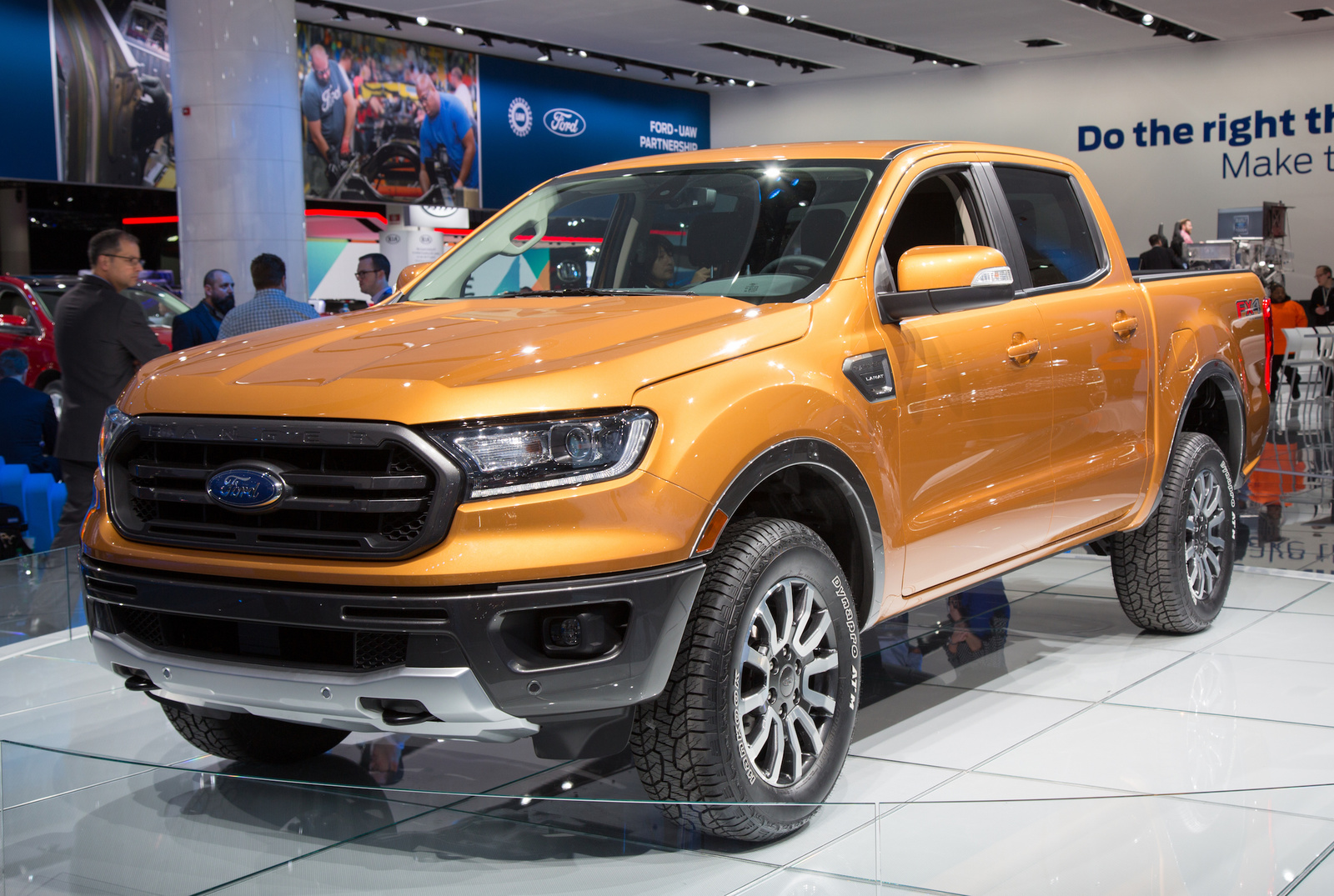
Note: Images and video show a US model.

What owners say
"Overall, owners of the 2019 Ford Ranger appreciate its robust performance, advanced technology, and good fuel economy. Many drivers highlighted the responsive engine and towing capacity as standout features. However, some also expressed dissatisfaction with the pricing, some production flaws, and the desire for a six-cylinder option. Comfort in the interior and certain design choices received mixed reviews."
I think the ranger is the best compact truck for the money right now.
June 2, 2020Impressed with the space and interior roominess. The engine is crisp and responsive with good gas mileage. Build quality is excellent. Very pleased
March 10, 2024Better than expected, runs like a Sports car, Towing capacity is 7500, tongue wt up to 750lbs. So far 23mpg in town. Cant think of another vehicle that matches the value and versatility of this truck...
November 5, 2022What owners say
I think the ranger is the best compact truck for the money right now.
June 2, 2020Impressed with the space and interior roominess. The engine is crisp and responsive with good gas mileage. Build quality is excellent. Very pleased
March 10, 2024Better than expected, runs like a Sports car, Towing capacity is 7500, tongue wt up to 750lbs. So far 23mpg in town. Cant think of another vehicle that matches the value and versatility of this truck...
November 5, 2022A fuel efficient, rugged and good looking truck. Best truck for the price in the mid-sized sector. IMO.
January 1, 2023Excellent truck, very robust and beautiful. The technology included in my Ranger is very advanced and the off-road features are equivalent to some high-enf jeep wrangler.
June 21, 2021Great Truck for the price was considering a tacoma but got into the ranger and was impressed
February 19, 2021High tech safety and a very responsive engine.nice riding vehicle.
February 20, 2020It has so many technical features that it could be the next space shuttle. It has every creature comfort you can imagine and a few you probably never heard of. It rides very well and is easy to drive once you figure out the controls. It also accelerates amazingly well and its not to bad on gas for a truck with a lot of towing capacity.
March 17, 2023Crisp acceleration and handling... A bit noiser ride than I expected but not a deal breaker.
November 12, 2022I downsized from a Nissan Titan to this Ranger. Really happy with the truck and its ability to pull up to 7500#. Great ride with good gas mileage 27MPG.
June 16, 2021Trims & specs
Base MSRP $30,860 | Seating 5 |
Engine 2.3L 270 hp I4 | Cargo Capacity N/A |
Combined MPG 22 | Drivetrain 4X4 |
Base MSRP $26,700 | Seating 5 |
Engine 2.3L 270 hp I4 | Cargo Capacity N/A |
Combined MPG 23 | Drivetrain 4X2 |
Base MSRP $36,390 | Seating 4 |
Engine 2.3L 270 hp I4 | Cargo Capacity N/A |
Combined MPG 22 | Drivetrain 4X4 |
Base MSRP $32,390 | Seating 4 |
Engine 2.3L 270 hp I4 | Cargo Capacity N/A |
Combined MPG 23 | Drivetrain 4X2 |
Base MSRP $24,300 | Seating 4 |
Engine 2.3L 270 hp I4 | Cargo Capacity N/A |
Combined MPG 23 | Drivetrain 4X2 |
Base MSRP $38,565 | Seating 5 |
Engine 2.3L 270 hp I4 | Cargo Capacity N/A |
Combined MPG 22 | Drivetrain 4X4 |
Base MSRP $34,295 | Seating 5 |
Engine 2.3L 270 hp I4 | Cargo Capacity N/A |
Combined MPG 22 | Drivetrain 4X4 |
Base MSRP $30,295 | Seating 5 |
Engine 2.3L 270 hp I4 | Cargo Capacity N/A |
Combined MPG 23 | Drivetrain 4X2 |
Base MSRP $32,120 | Seating 4 |
Engine 2.3L 270 hp I4 | Cargo Capacity N/A |
Combined MPG 22 | Drivetrain 4X4 |
Base MSRP $28,120 | Seating 4 |
Engine 2.3L 270 hp I4 | Cargo Capacity N/A |
Combined MPG 23 | Drivetrain 4X2 |
Base MSRP $28,460 | Seating 4 |
Engine 2.3L 270 hp I4 | Cargo Capacity N/A |
Combined MPG 22 | Drivetrain 4X4 |
Base MSRP $34,565 | Seating 5 |
Engine 2.3L 270 hp I4 | Cargo Capacity N/A |
Combined MPG 23 | Drivetrain 4X2 |


Pricing trends
MSRP range
$24,300 - $38,565
Current avg. market price
$27,472
Trending down by 0.2% this month
May 2026 - October 2026

