Honda HR-V vs Hyundai Ioniq 5
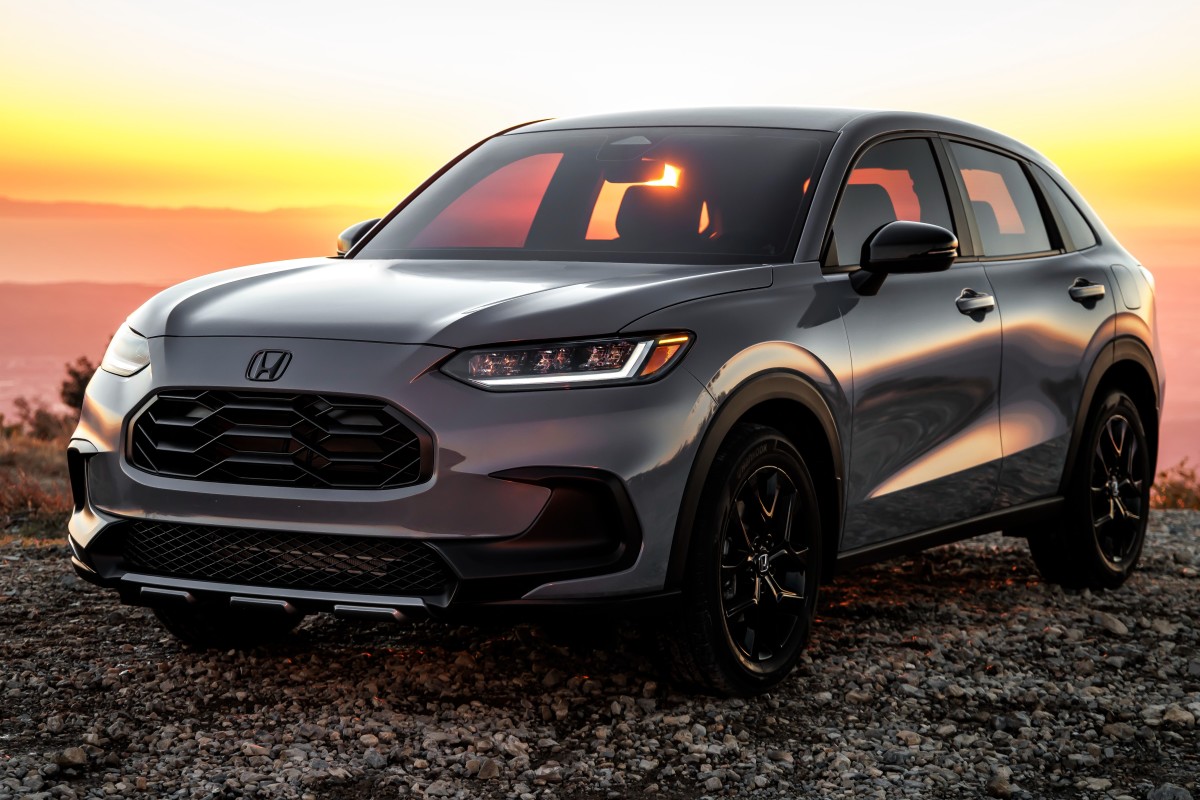

Overview | |
MSRP$26,500 | MSRP$42,600 |
Listings1040 | Listings707 |
Ratings & Reviews | |
User Reviews | User Reviews |
Expert reviews5.3 out of 10 | Expert reviews |
Pros
Cons
| |
Reviews SummaryAvailable in three trim levels equipped with an underpowered engine and optional all-wheel drive (AWD), the HR-V is an unremarkable subcompact SUV. A refresh for the 2026 model year adds an improved standard infotainment system and minor styling and interior modifications, but nothing that addresses this model’s primary shortcomings. The changes include a larger touchscreen with faster response times, wireless Apple CarPlay and Android Auto, and wireless smartphone charging. Verdict: Simply put, the 2026 Honda HR-V is not one of the best subcompact SUVs. It is dreadfully slow and disappointingly inefficient, and it barely meets the minimum technological expectations of the young people who might want to buy it. Plus, it demonstrates none of the innovation seen in the original HR-V and in some competitors in the small SUV segment. | |
Reviews Summary | |
No video found | No video found |
Popular Features & Specs | |
Engine2.0L 158 hp I4 | Engine168 hp Electric |
Drive TrainFWD | Drive TrainRWD |
Seating Capacity5 | Seating Capacity5 |
Horsepower158 hp @ 6500 rpm | Horsepower |
EV Battery Capacity | EV Battery Capacity63 kWh |
MPG City26 | MPG City131 |
MPG Highway32 | MPG Highway100 |
Battery Charge Time (120V) | Battery Charge Time (120V)54 hours |
Battery Charge Time (240V) | Battery Charge Time (240V)5.7 hours |
Engine | |
Engine Name2.0L 158 hp I4 | Engine Name168 hp Electric |
Torque138 lb-ft @ 4200 rpm | Torque |
Horsepower158 hp @ 6500 rpm | Horsepower |
Battery Charge Time (120V) | Battery Charge Time (120V)54 hours |
Battery Charge Time (240V) | Battery Charge Time (240V)5.7 hours |
DrivetrainFWD | DrivetrainRWD |
Fuel Economy | |
EV Battery Capacity | EV Battery Capacity63 kWh |
MPG City26 | MPG City131 |
MPG Highway32 | MPG Highway100 |
Interior | |
Seating Capacity5 | Seating Capacity5 |
Key Features | |
Navigation System | Navigation SystemStandard |
Safety | |
Front Crash Overall5 | Front Crash Overall |
Side Crash Overall5 | Side Crash Overall |
Dimensions & Capacity | |
Cargo Space24.4 cu ft | Cargo Space26.3 cu ft |
Curb Weight3159 lbs | Curb Weight4144 lbs |
Height63.4 in | Height63.0 in |
Length179.8 in | Length183.3 in |
Width72.4 in | Width74.4 in |
Wheelbase104.5 in | Wheelbase118.1 in |
Maximum Payload | Maximum Payload1081 lbs |
Number of doors4 | Number of doors4 |
Overview | ||
MSRP | $26,500 | $42,600 |
Listings | ||
Ratings & Reviews | ||
User reviews | ||
Expert reviews | 5.3 out of 10Read full review | |
Pros & cons | Pros
Cons
| |
Summary | Available in three trim levels equipped with an underpowered engine and optional all-wheel drive (AWD), the HR-V is an unremarkable subcompact SUV. A refresh for the 2026 model year adds an improved standard infotainment system and minor styling and interior modifications, but nothing that addresses this model’s primary shortcomings. The changes include a larger touchscreen with faster response times, wireless Apple CarPlay and Android Auto, and wireless smartphone charging. Verdict: Simply put, the 2026 Honda HR-V is not one of the best subcompact SUVs. It is dreadfully slow and disappointingly inefficient, and it barely meets the minimum technological expectations of the young people who might want to buy it. Plus, it demonstrates none of the innovation seen in the original HR-V and in some competitors in the small SUV segment. | |
Video | No video found | No video found |
Popular Features & Specs | ||
Engine | 2.0L 158 hp I4 | 168 hp Electric |
Drive Train | FWD | RWD |
Seating Capacity | 5 | 5 |
Horsepower | 158 hp @ 6500 rpm | |
EV Battery Capacity | 63 kWh | |
MPG City | 26 | 131 |
MPG Highway | 32 | 100 |
Battery Charge Time (120V) | 54 hours | |
Battery Charge Time (240V) | 5.7 hours | |
Engine | ||
Engine Name | 2.0L 158 hp I4 | 168 hp Electric |
Torque | 138 lb-ft @ 4200 rpm | |
Horsepower | 158 hp @ 6500 rpm | |
Battery Charge Time (120V) | 54 hours | |
Battery Charge Time (240V) | 5.7 hours | |
Drivetrain | FWD | RWD |
Fuel Economy | ||
EV Battery Capacity | 63 kWh | |
MPG City | 26 | 131 |
MPG Highway | 32 | 100 |
Interior | ||
Seating Capacity | 5 | 5 |
Key Features | ||
Navigation System | Standard | |
Safety | ||
Front Crash Overall | 5 | |
Side Crash Overall | 5 | |
Dimensions & Capacity | ||
Cargo Space | 24.4 cu ft | 26.3 cu ft |
Curb Weight | 3159 lbs | 4144 lbs |
Height | 63.4 in | 63.0 in |
Length | 179.8 in | 183.3 in |
Width | 72.4 in | 74.4 in |
Wheelbase | 104.5 in | 118.1 in |
Maximum Payload | 1081 lbs | |
Number of doors | 4 | 4 |








By: CarGurus + AI
At CarGurus, our team of experienced automotive writers remain at the heart of our content operation, conducting hands-on car tests and writing insightful guides that are backed by years of industry experience. To complement this, we are harnessing AI to make our content offering more diverse and more helpful to shoppers than ever. To achieve this, our AI systems are based exclusively on CarGurus content, ratings and data, so that what we produce is both unique to CarGurus, and uniquely helpful to car shoppers.

