“I need a new car, but I have no idea what to buy”. It’s a line we hear constantly at CarGurus. Almost everyone starts out with a vague sense of what they want, but turning that into an actual shortlist is the part that trips people up.
In theory, it shouldn’t be this hard. Our search page carries 20 primary filters, so there’s no shortage of ways to research vehicles, but there are more than 300,000 used cars on CarGurus.ca, spanning nine body styles and seven fuel types, with fresh makes, models, and trim levels showing up all the time—and that’s before you’ve even started thinking about price, age, or mileage. Put it all together and the scale of choice becomes the problem rather than the solution.
That’s the gap artificial intelligence is built to close. Guru, our AI tool, takes a fuzzy starting point and turns it into a workable shortlist by asking the right questions and nudging buyers toward a clearer sense of what they actually need. Here’s how it plays out.
How AI Car Search Tools Work (and How to Use One to Find Your Next Car)
- Quick Answer: How Does AI Car Search Work?
- Why the Old Way of Car Shopping Is Fading Out
- Guru: AI Search Built Around Real Inventory
- Getting the Best Out of an AI Car Search
- The Bottom Line
Quick Answer: How Does AI Car Search Work?
Skip the drop-down filters entirely. Type a rough description of the car you’re after, and you’ll get a shortlist of matching listings.
- How it works: Describe what you want in plain language, out loud or typed. There’s no need for precision, at least not to begin with.
- Real results: Unlike a general chatbot, Guru is CarGurus’ personalized AI agent, wired straight into live used car listings.
- Keep refining: Every listing shows CarGurus’ Instant Market Value, so you always know if a price stacks up.
- Transparent pricing: Every listing includes CarGurus' Instant Market Value so you know if you're getting a good deal.
- Return anytime: Each search creates its own link, letting you step away and pick things up later.
Why the Old Way of Car Shopping Is Fading Out
Drowning in Options
Take a common search: an SUV. At the time of writing, CarGurus.ca listed nearly 97,000 of them. Plenty of those will suit you, but “I want an SUV” alone won’t get you any closer to knowing which one. Even if you narrow it down to an individual model—say a BMW X7—there were still 120 of those listed on the site when we checked, which is a lot of wading.
Filter Overload
Filters seem like the natural fix, and price is a straightforward one since most car buyers usually have a rough budget in mind. The remaining 19 filters, though—each splitting into further sub-options—can quickly become a lot to handle. They’re genuinely useful for those who already know what they want out of the car-buying process; less so for everyone else.
Wanting Versus Needing
Everyone’s caught themselves staring at a car and thinking, “that’s gorgeous”. Sometimes that reaction really should drive the decision—our list of the best used luxury sports cars in Canada is proof of that—but for most buyers, what they want and what they actually need aren’t quite the same thing, and it’s worth pinning down which one matters more before committing.
Going in Without Expertise
People who follow the car world closely tend to already know roughly what their next vehicle will be, but most buyers aren’t in that camp. That’s completely normal, and there’s no expectation that you should be. This is precisely the gap a tool like this is meant to fill.
Running Out of Patience
Scrolling through page after page of listings is enjoyable if you’re a car enthusiast. For most people, though, hunting for something dependable that’ll get them from A to B is either a chore or simply more time than they have to spare. Sometimes both.

Guru: AI Search Built Around Real Inventory
Guru At a Glance
- Search using ordinary, everyday language
- Draws on more than 300,000 real listings
- Delivers results instantly
- Lets you save a search to revisit later
- Skips drop-down filters entirely
Type the Way You Actually Speak
Precision used to be the price of entry for car shopping; either you already knew exactly what you wanted, or you worked your way through endless filters and dropdowns until something clicked, but Guru flips that. Start with whatever’s actually in your head, whether that’s “I’m after a reliable used car for under $15,000,” “something cheap and cheerful with a decent stereo,” or “a seven-seater that won’t cost a fortune to run”.
Real Listings, Not Just Suggestions
Here’s where Guru pulls ahead of the AI tools most people already use day to day, such as Gemini or ChatGPT, because it connects directly to used cars currently for sale on CarGurus. A typical chatbot can offer ideas, comparisons, and general guidance, but it can’t hand you a link to an actual car sitting on a lot that matches your description. Guru can, and does.
Keep Talking Until You Land on the Right Car
There’s no pressure to get it exactly right the first time. If the initial results miss the mark, just carry on with the conversation, which is really the whole idea behind an AI-powered search. You feed it a starting point, and it keeps refining until you end up with a set of personalized rankings that genuinely fit. React to what it shows you, add more detail, and you’ll quickly move from a loose idea to a real shortlist of vehicle recommendations.
Pause and Resume Whenever You Need To
Every search you run with Guru gets its own dedicated link, so there’s no risk of losing progress if you need to step away. All that’s required to save it is being logged into a free CarGurus account.
Grounded in Real Pricing and Deal Data
CarGurus listings are built around accurate pricing and deal ratings, and every result Guru returns will show plainly whether it’s a good deal when comparing vehicles. That comes straight from our used car pricing trends data, which anyone can look through; it covers the market broadly, then breaks things down further by make, model, and body style. Genuine dealership feedback rounds it out, since buyers regularly leave reviews based on their own experiences.
What AI Actually Changes About Car Shopping
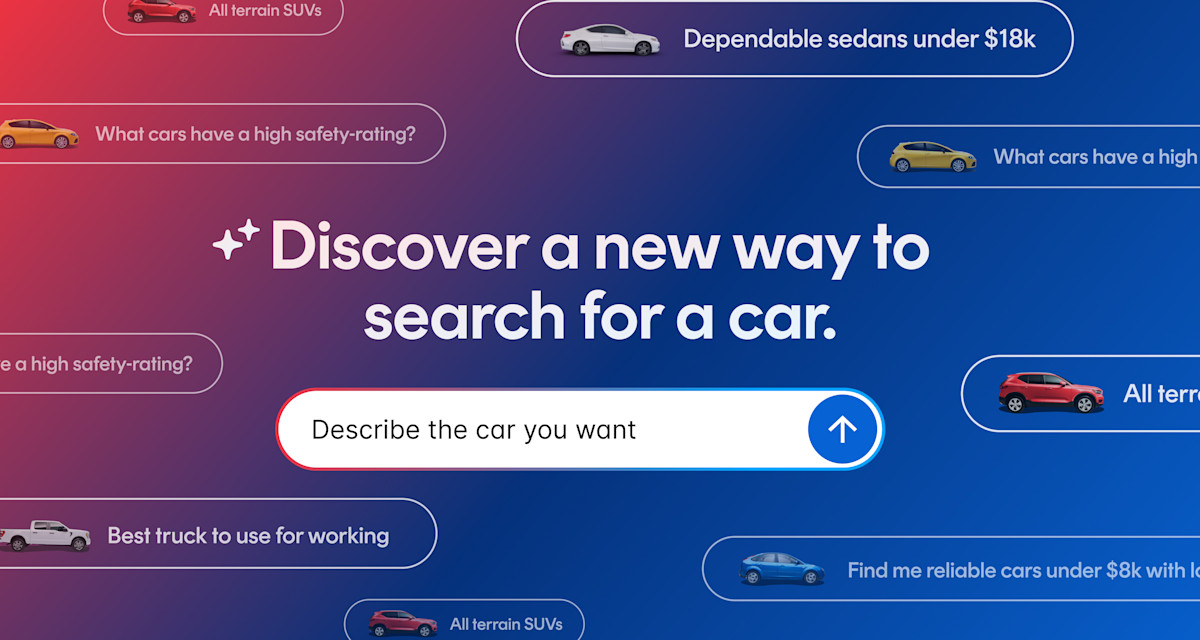
A traditional filter reacts to nothing—pick a make and model, and you get exactly that and nothing else—whereas an AI search responds to what you actually say. Ask it to “find SUVs with strong safety ratings under $20,000,” and it takes that instruction and runs with it.
Why Conversation Matters
That ability to respond to plain language is what really sets Guru apart, because it takes a process that used to require prior knowledge and opens it up to anyone. You can now simply start asking questions, and there’s no need to know a single make or model in advance.
Seeing the Difference in Action
Trying Guru yourself is the clearest way to understand what it does, but here’s a taste of how it compares with a conventional filter-based search.
Imagine you want a compact SUV; something reliable, with good safety ratings, and no more than five years old. It’s a common enough car to look for, but a filter-based search would force you to get specific from the word go, right down to picking an exact make and model:
• Make: Honda
• Model: CR-V
• Year: 2021–2025
• Price: $20,000–$30,000
• Mileage limit: 100,000 km
• Distance: 100 km
With an AI search, that same request becomes:
“I want a compact SUV that’s reliable, has good safety ratings, and is no more than five years old”.
That’s plenty to get the ball rolling, and assuming there’s inventory to match, you’ll likely see a Honda CR-V and several comparable options right away. From there, you might narrow it further with something like:
“My budget is $30,000, but I’d rather stay closer to $20,000 if I can. Keep it under 100,000 km, and only show me cars within 100 km of my postal code”.
That’s genuinely all it takes. No background knowledge required.
Getting the Best Out of an AI Car Search
Say What Actually Matters
Car knowledge isn’t a prerequisite here, but the quality of results still depends on the quality of your description. Naming the specific things you care about gives the tool far more to work with, so extra detail almost always pays off.
Picture explaining what you want to a friend who’s really into cars—the kind of person you’d naturally ask before starting a search. Say you want an SUV, which is barely a starting point, given how common that body style is. Add that it needs to be reliable, safe, and no more than five years old, and suddenly they’ve got a brief to work with.
AI search operates on that same principle. You’re not expected to bring any car expertise to the table, but the more detail you offer about what you want from a car, the more focused and relevant the results will be.
Bring in the Bigger Picture
Your description doesn’t have to stick to bare specifications. Guru pulls from CarGurus’ large collection of reviews, buying guides, and expert advice, so extra context only improves its odds of finding the right match.
Mentioning something like, “I need an SUV with lots of space, since I’ve got three kids,” nudges the results toward roomier options. Anything that hints at how you’ll actually use the car, and why, helps to sharpen what comes back.
Mention Specific Features
This is the one area where a bit of car knowledge helps, so if you’ve got it, use it. You don’t need to be a gearhead to know you want Apple CarPlay and Android Auto, or that all-wheel drive matters if you’re regularly driving on rough or icy roads. Any concrete feature you know you’re after is worth including.
Draw Your Own Lines
If there’s a hard budget ceiling, say so. If you’re not willing to drive far to see a car, say that, too. Clear boundaries like these are easy for Guru to work with, and spelling them out only polishes the results.
There Are No Bad Questions
Nothing has to land perfectly on the first attempt, and asking more questions is actively encouraged. Sometimes a single message nails it; more often, a bit of back-and-forth is simply how you land on the strongest options. It might look something like this in practice:
Example:
• You: “I need a reliable family car with good safety features for under $25,000”
• AI: (Shows results)
• You: “What about a seven-seater?”
• AI: (Shows results)
• You: “Which of these is the most fuel-efficient?”
• AI: (Shows results)
The Bottom Line
The real shift AI search brings is that you don’t need to walk in already knowing what car you want. Buyers can talk to it the way they’d talk to a knowledgeable friend, opening with something like “I need a car for…” or “I want something safe with plenty of room inside…” and building from there.
That kind of back-and-forth simply wasn’t an option with the old filter-based method. There’s nothing wrong with filters, and they aren’t disappearing—they just suit buyers who already have a clear idea of what they want and some background knowledge.
If you’re shopping for a used car and still working out exactly what that should be, give Guru a try.