Buying a first car is a milestone moment, but it can also feel overwhelming. Between balancing a budget, finding something reliable enough to handle Canadian winters, and ensuring it has the safety tech to build confidence behind the wheel, there's a lot to weigh up before signing on the dotted line. The good news is that today's entry-level vehicles offer more standard equipment, better fuel economy, and stronger safety credentials than ever.
To narrow down the search, we've rounded up the best first cars available in Canada right now. From efficient compact sedans built for city commuting to versatile subcompact crossovers ready for road trips and ski weekends, this list covers a range of practical, affordable, and dependable options that any new driver can feel good about owning.
About this guide
The cars in this guide have been selected to represent the best options currently available. Our recommendations are the result of a unique three-part scoring system that takes into account real-world tests from our team of expert reviewers, ratings from real-life owners who live with these cars every day, and an analysis of market data from CarGurus to identify which models offer the highest percentage of good and great deals. This combined approach ensures our list highlights cars that are not only great to own but also good value to buy. For more information, scroll to the bottom of this page.
Best First Cars in Canada in 2026

CarGurus expert rating: 8.0 out of 10
CarGurus user rating: 4.8 out of 5
Percentage of good/great deals available on CarGurus: 31.8%
Overall CarGurus rating: 4.6 out of 5
| Pros |
Cons |
| Plenty of cargo space |
Fairly pedestrian performance |
| Standard advanced safety features |
Potentially polarizing design |
| Spacious |
|
The 2025 Hyundai Kona is an exceptional choice for a first car in Canada, offering a blend of practicality, standout safety features, and a surprisingly spacious interior. For new drivers, safety is paramount, and the Kona delivers with standard advanced driver assistance systems across all trims, including automatic emergency braking, lane-keeping assist, and a blind-spot monitor. It also boasts a Top Safety Pick+ rating from the IIHS. Despite its subcompact footprint, which makes it easy to park and maneuver in city spaces, the Kona provides a generous 723 litres of cargo capacity behind the rear seats, expanding to 1,803 litres when folded down—perfect for hauling sports gear or moving into a first apartment.
Under the hood, the entry-level Essential and Preferred trims are powered by a 2.0-litre four-cylinder engine producing 147 horsepower, paired with an Intelligent Variable Transmission that maximizes fuel efficiency at an estimated 7.5 L/100 km combined. For those facing harsh Canadian winters, all-wheel drive is available for an additional $2,000 and includes a dedicated Snow mode for added confidence. Inside, the Kona impresses tech-savvy new drivers with a standard 12.3-inch touchscreen featuring wireless Apple CarPlay and Android Auto. With a starting price of $26,249 and the reassurance of Hyundai's five-year or 100,000-kilometre comprehensive warranty, it represents a smart, cost-effective investment for first-time buyers.
The CarGurus Verdict: "The second-generation Kona remains a great subcompact SUV that delivers impressive value, standard safety tech, and practicality in an increasingly busy part of the market. It is an undeniably fit-for-purpose crossover that will serve new drivers exceptionally well." - Chris Knapman, CarGurus Global Director of Editorial Content
Read our full Hyundai Kona review

CarGurus expert rating: 7.5 out of 10
CarGurus user rating: 4.3 out of 5
Percentage of good/great deals available on CarGurus: 30.5%
Overall CarGurus rating: 4.5 out of 5
| Pros |
Cons |
| Comfortable |
Poor fuel economy |
| Impressive technology |
Noisy |
| Standard advanced safety features |
Sub-par stereo |
Few nameplates carry the kind of bulletproof reputation of the Toyota Corolla, which makes it a fantastic launching pad for any new driver. Every trim comes equipped with Toyota Safety Sense 3.0, giving first-timers the backing of forward collision warning, automatic emergency braking, and lane-keep assist as standard kit. The cabin is refreshingly straightforward, with a user-friendly touchscreen that includes wireless Apple CarPlay and Android Auto—a welcome touch for young drivers who want to stay connected without fumbling for cables.
The standard 2.0-litre four-cylinder produces 169 horsepower, which is plenty for confident highway merging without being so much that it intimidates a novice. A continuously variable transmission helps return up to 6.7 L/100 km combined, keeping fuel costs in check for drivers on a budget. Trunk space measures 371 litres, which is deep enough to swallow hockey bags, suitcases, or a big grocery run with room to spare.
The CarGurus Verdict: "The Toyota Corolla rightfully has a reputation for being boring. However, the current 12th-generation model is also more stylish, technologically advanced, and rewarding to drive than previous Corollas." - Christian Wardlaw, CarGurus contributor
Read our full Toyota Corolla review
CarGurus expert rating: 7.8 out of 10
CarGurus user rating: 4.5 out of 5
Percentage of good/great deals available on CarGurus: 31.7%
Overall CarGurus rating: 4.5 out of 5
| Pros |
Cons |
| Stylish design |
Underwhelming base engine |
| Fuel-efficient |
No power seat adjustment |
| Excellent value for the money |
Uncomfortable wind buffeting |
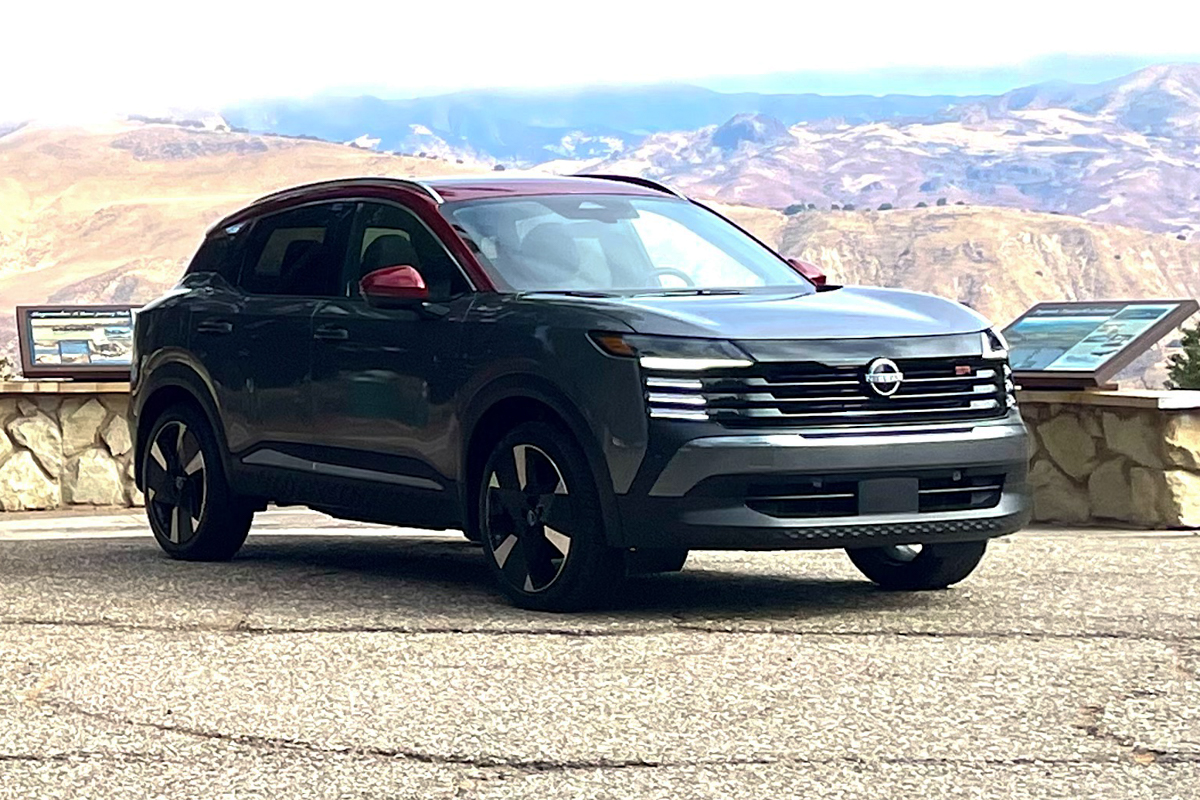
Stepping in to fill the void left by the discontinued Qashqai, the Nissan Kicks brings genuine value to the subcompact crossover segment. The big news for Canadian buyers is the introduction of available all-wheel drive, which transforms the Kicks into a much more capable winter companion. Heated front seats are standard and cargo capacity is impressive, ranging from 676 litres in AWD models up to 849 litres in front-wheel-drive versions.
Power comes from a 2.0-litre four-cylinder making 141 horsepower and 140 pound-feet of torque, sent through a smooth CVT. It's not a rocket, but the powertrain feels balanced and energetic enough for navigating urban traffic while sipping fuel at 7.4 L/100 km combined in FWD form. The standard Nissan Safety Shield 360 safey package includes automatic emergency braking, blind-spot monitors, and lane-departure warning—exactly the kind of tech that helps new drivers stay out of trouble.
The CarGurus Verdict: "The Nissan Kicks is poised to put rivals on notice with its fantastic value, great standard features, and premium options." - Cherise Threewitt, CarGurus contributor
Read our full Nissan Kicks review

CarGurus expert rating: 7.2 out of 10
CarGurus user rating: 4.4 out of 5
Percentage of good/great deals available on CarGurus: 30.1%
Overall CarGurus rating: 4.5 out of 5
| Pros |
Cons |
| Fuel-efficient |
Frustrating controls |
| Fun to drive |
No hybrid option |
| Spacious |
All-wheel drive is not available |
With its affordable base price, the Volkswagen Jetta is one of the more compelling value plays in the compact sedan segment. A recent refresh has elevated the styling so it looks more expensive than it actually is, and the upgraded cabin materials, plus a standard 8-inch touchscreen, deliver a properly modern experience. Passenger space is generous for a car this size, and the 399-litre trunk easily handles weekend luggage or a Costco run.
The turbocharged 1.5-litre four-cylinder churns out 158 horsepower and 184 pound-feet of torque, routed through an eight-speed automatic that shifts cleanly and quickly. Power delivery is brisk enough to make on-ramps stress-free, and Natural Resources Canada rates combined consumption at 7.4 L/100 km. Every Jetta also includes VW's IQ.Drive suite, bundling in blind-spot monitors with active collision avoidance, lane-keep assist, and other features that can build new drivers' confidence.
The CarGurus Verdict: "The 2025 Volkswagen Jetta offers plenty of passenger space, a large trunk, and a fuel-efficient engine with plenty of zip. Its sensible German design and engineering shine through, giving it a distinctive driving experience unlike other compact cars." - Christian Wardlaw, CarGurus contributor
Read our full Volkswagen Jetta review
CarGurus expert rating: 7.8 out of 10
CarGurus user rating: 4.3 out of 5
Percentage of good/great deals available on CarGurus: 30.8%
Overall CarGurus rating: 4.5 out of 5
| Pros |
Cons |
| Impressive tech for the price |
Lackluster performance |
| Comfortable zero-gravity seats |
Tight rear-seat legroom |
| Great value for money |
|
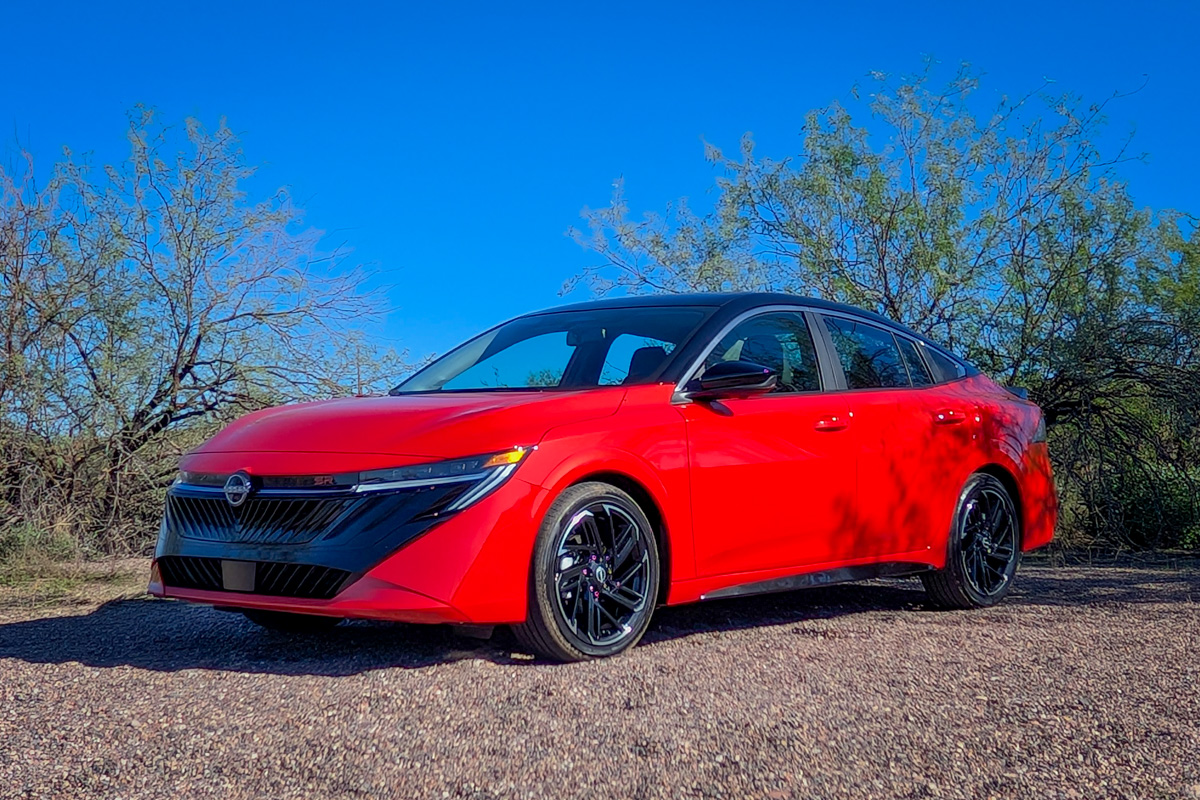
A fresh design and a generous helping of standard tech make the Nissan Sentra a smart pick for first-time buyers who want more than just basic transportation. Nissan Safety Shield 360 is included on every trim, bringing automatic emergency braking, a lane departure warning, and blind spot monitors along for the ride. The cabin punches well above its price point, thanks to a bright 12.3-inch centre touchscreen with wireless Apple CarPlay and Android Auto, and a redesigned 405-litre trunk now features a wider opening and lower load floor for easier loading.
A naturally aspirated 2.0-litre four-cylinder produces 149 horsepower and 146 pound-feet of torque, working with a CVT to deliver predictable, stable performance that suits commuter duty perfectly. Natural Resources Canada estimates up to 7.1 L/100 km combined in the S and SV trims, keeping pump visits to a minimum. Nissan's signature zero-gravity seats and a notably quiet cabin add a premium feel that belies the affordable sticker price.
The CarGurus Verdict: "The Nissan Sentra is a stylish and safe compact sedan that delivers impressive technology at an attractive, affordable price. It's not the most thrilling car in its segment, but it nevertheless delivers premium, in-demand features." - Matt Smith, CarGurus Head of Content
Read our full Nissan Sentra review

CarGurus expert rating: 6.8 out of 10
CarGurus user rating: 4.5 out of 5
Percentage of good/great deals available on CarGurus: 28.7%
Overall CarGurus rating: 4.4 out of 5
| Pros |
Cons |
| Choice of body styles |
All-wheel drive not available |
| Enjoyable to drive |
Noisy at speed |
| Premium interior materials |
Outdated technology |
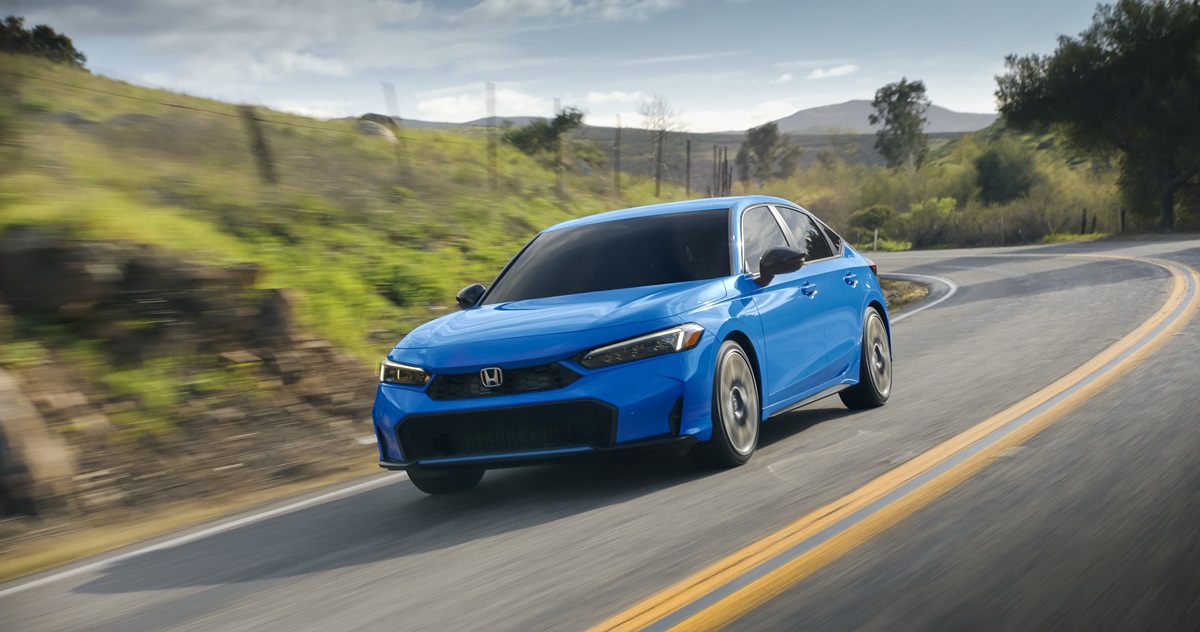
Built right here in Alliston, Ontario, the Honda Civic is practically a Canadian institution—and it's a stellar candidate for a first car. The standard 2.0-litre four-cylinder produces a manageable 150 horsepower, paired with a CVT that keeps things smooth and predictable whether drivers are navigating downtown traffic or merging onto the 401. Fuel economy lands at a frugal 6.9 L/100 km combined, so trips to the gas station won't dent in a tight budget.
Inside, the Civic earns major points for its logical control layout and physical knobs for climate and audio, which keep distractions to a minimum. Apple CarPlay and Android Auto are standard, and the trunk swallows a useful 419 litres of cargo. Every Civic also comes with the Honda Sensing suite of driver aids, including automatic emergency braking and lane keeping assist—reassuring safety nets for anyone still finding their feet behind the wheel.
The CarGurus Verdict: "While there are better deals in the compact car class, few are as satisfying to drive, and that's true even when the Civic is equipped with its base engine." - Christian Wardlaw, CarGurus contributor
Read our full Honda Civic review
CarGurus expert rating: 6.2 out of 10
CarGurus user rating: 4.6 out of 5
Percentage of good/great deals available on CarGurus: 27.0%
Overall CarGurus rating: 4.4 out of 5
| Pros |
Cons |
| Available all-wheel drive |
Underwhelming base engine |
| Stylish design |
Cramped back seat |
| Fun to drive |
Outdated technology |
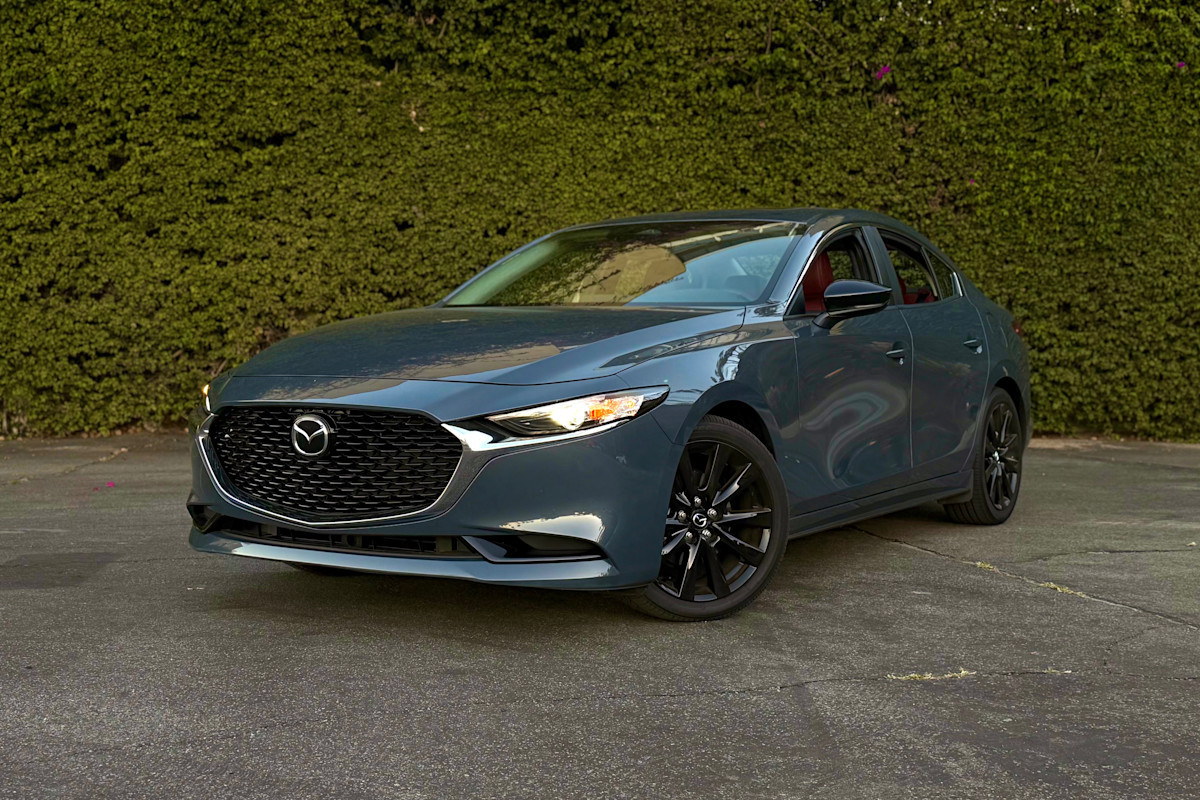
For buyers looking for a first car that's a cut above the segment norm, the Mazda MAZDA3 is hard to beat. The interior materials and design rival those of entry-level luxury vehicles, and the available i-Activ all-wheel-drive system is a rare and welcome feature in this class—a real bonus for surviving Canadian winters. The standard 2.5-litre four-cylinder produces 186 horsepower, delivering smooth, predictable performance that helps new drivers build confidence without feeling overwhelmed.
Practicality is well-covered, whether buyers choose the sedan or the hatchback. The sedan offers 374 litres of trunk space, while the Mazda3 Sport hatchback ups that to 569 litres—enough room for a serious road trip haul. Standard advanced safety features include automatic emergency braking and blind-spot monitors, and the Mazda3 earns top-tier safety scores from both the NHTSA and IIHS.
The CarGurus Verdict: "The Mazda3 proves that small cars don't have to be boring. It brings style and athleticism to an otherwise boring class." - Mark Takahashi, CarGurus contributor
Read our full Mazda MAZDA3 review
CarGurus expert rating: 6.5 out of 10
CarGurus user rating: 4.4 out of 5
Percentage of good/great deals available on CarGurus: 29.6%
Overall CarGurus rating: 4.3 out of 5
| Pros |
Cons |
| Stylish design |
All-wheel drive not available |
| Great handling |
Poor ergonomic design |
| Impressive technology |
Advanced safety features are not standard |
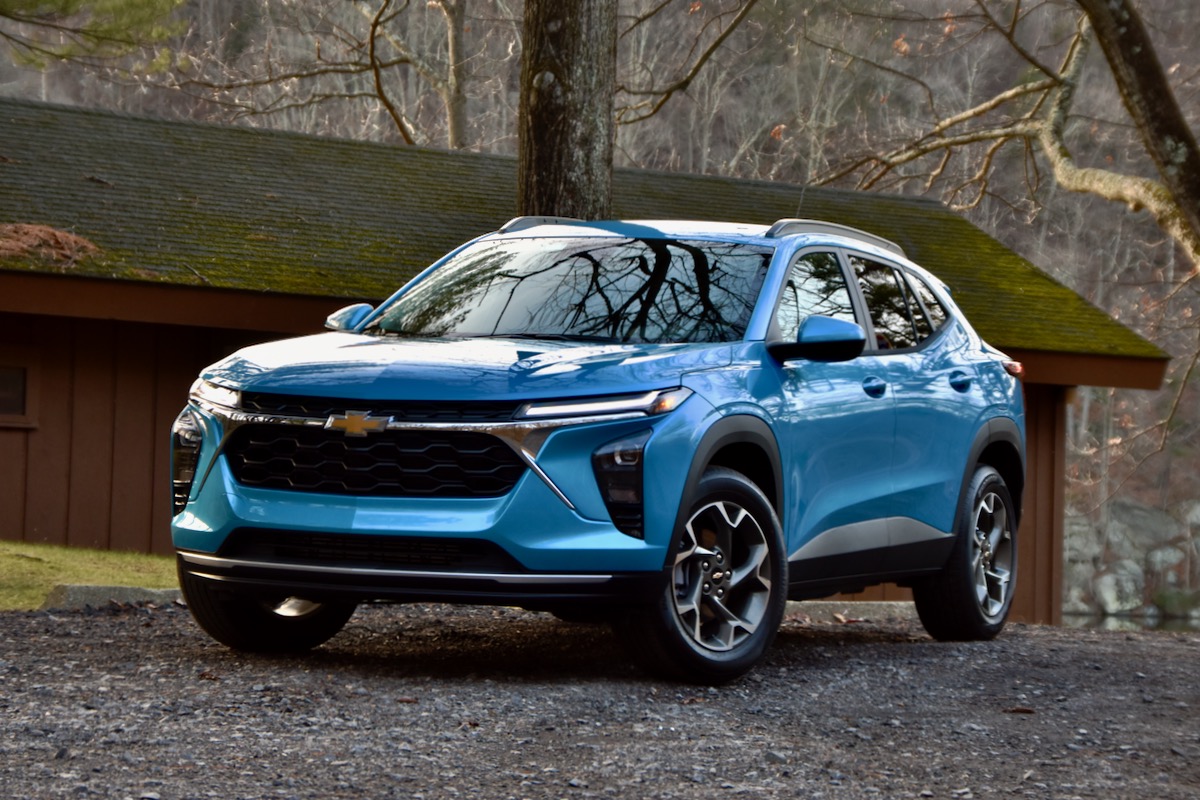
Splitting the difference between a compact car and a crossover SUV, the Chevrolet Trax is a clever pick for first-time buyers who want utility without sacrificing affordability. Parents will appreciate the standard Teen Driver monitoring system, which allows them to set parameters and review driving habits while automatically engaging available safety tech. Cargo capacity is impressive, too, with 725 litres behind the rear seats expanding to 1,532 litres when they're folded.
A 1.2-litre turbocharged three-cylinder produces 137 horsepower and 162 pound-feet of torque, sent through a conventional six-speed automatic instead of a CVT. The result is responsive, eager acceleration that doesn't feel strained. Front-wheel drive is the only configuration on offer, but the Trax feels surprisingly composed through corners and rides comfortably. Wireless Apple CarPlay and Android Auto come standard through an intuitive touchscreen, ticking the connectivity boxes new drivers care about.
The CarGurus Verdict: "Blending elements of compact cars and crossover SUVs, the Trax hits a sweet spot of utility and affordability." - Stephen Edelstein, CarGurus contributor
Read our full Chevrolet Trax review

CarGurus expert rating: 7.8 out of 10
CarGurus user rating: 5.0 out of 5
Percentage of good/great deals available on CarGurus: 19.4%
Overall CarGurus rating: 4.3 out of 5
| Pros |
Cons |
| Excellent cargo space |
Underwhelming powertrains |
| Impressive tech features |
|
| Affordable price |
|
Stepping in as the replacement for the long-running Forte, the Kia K4 brings fastback styling and a generous list of standard features to the compact sedan class. A 413-litre trunk and class-leading rear legroom mean it works just as well for hauling friends to a concert as it does for a road trip. The standard 2.0-litre four-cylinder produces 147 horsepower and 132 pound-feet of torque, paired with a CVT and front-wheel drive—a setup that prioritizes predictability and an efficient 7.3 L/100 km combined.
Tech-savvy buyers will appreciate the standard 12.3-inch touchscreen, wireless Apple CarPlay and Android Auto, and a smattering of USB-C ports throughout the cabin. On the safety front, the K4 earns a Top Safety Pick+ rating from the IIHS and comes standard with lane-keep assist, adaptive cruise control, and forward collision warning. With a starting price well below the segment average, it offers serious bang for buck.
The CarGurus Verdict: "The 2025 Kia K4 is better than the outgoing Kia Forte. It offers more impressive tech, more standard safety features, more passenger space, and more cargo space." - Matt Smith, CarGurus Head of Content
Read our full Kia K4 review
CarGurus expert rating: 6.2 out of 10
CarGurus user rating: 5.0 out of 5
Percentage of good/great deals available on CarGurus: 27.4%
Overall CarGurus rating: 4.2 out of 5
| Pros |
Cons |
| Stylish design |
Inconsistent power delivery |
| Fuel-efficient |
Sluggish performance |
| Great warranty |
Interior materials feel cheap |
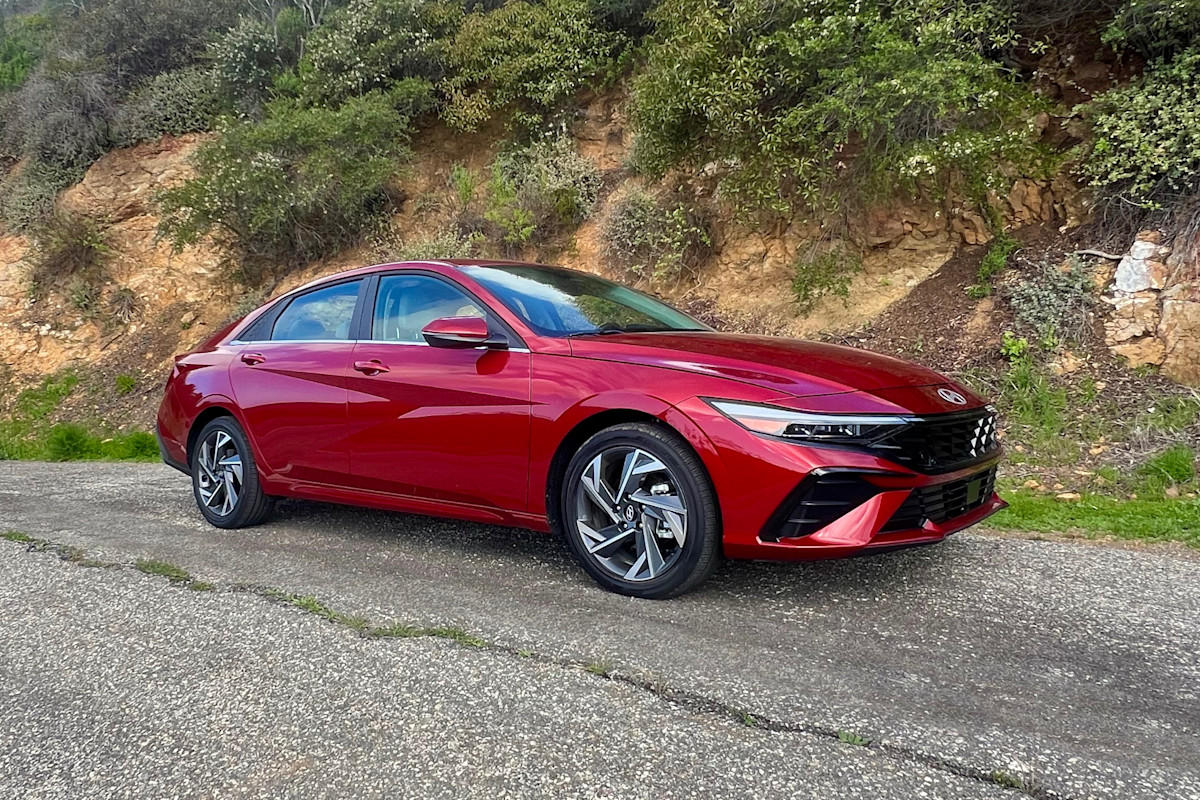
For new drivers who want to keep fuel costs to an absolute minimum, the Hyundai Elantra Hybrid is tough to ignore. Its sharp, angular styling sets it apart from the typically conservative compact sedan crowd, and the cabin features a standard 10.25-inch digital instrument panel and touchscreen, plus physical climate controls to minimize distractions. The interior is roomy enough for four adults, and the trunk offers 402 litres of capacity.
The hybrid powertrain combines a 1.6-litre four-cylinder with an electric motor for a total output of 139 horsepower, channelled through a six-speed dual-clutch automatic. It won't set anyone's hair on fire, but daily commuting and highway merging are well within its abilities. The real magic is the estimated 4.7 L/100 km combined fuel economy. Add in a stellar five-year/100,000-km warranty and a generous suite of standard safety features—forward collision warning, blind-spot monitors, and safe passenger exit sensors among them—and it adds up to a sensible package for budget-conscious first-time buyers.
The CarGurus Verdict: "The Elantra Hybrid is a great value, but its unrefined hybrid powertrain and cheap-feeling interior have it following, rather than leading, the class." - Mark Takahashi, CarGurus contributor
Read our full Hyundai Elantra Hybrid review
Search for Hyundai Elantra Hybrid
See all
FAQ
What should I look for in a first car?
The most important factors for a first car are safety, reliability, affordability, and ease of use. Buyers should look for vehicles with standard advanced driver assistance systems such as automatic emergency braking, lane-keep assist, and blind-spot monitors. Strong fuel economy will help keep running costs down, while a manageable horsepower figure—typically between 140 and 170 hp—offers enough power for highway driving without being intimidating.
Is a new or used car better for a first-time buyer?
Both options have merit. A new car offers the latest safety technology, full warranty coverage, and zero mechanical history to worry about, but it costs more upfront and depreciates quickly. A lightly used vehicle (one to three years old) can deliver significant savings while still providing modern safety features and remaining manufacturer warranty coverage. CarGurus' deal ratings can help shoppers spot the best value on either side.
Should a first car have all-wheel drive in Canada?
All-wheel drive is a worthwhile feature for Canadian drivers, especially in regions with heavy snowfall. That said, a good set of dedicated winter tires on a front-wheel-drive vehicle will outperform an all-wheel-drive equivalent running all-season tires in most winter conditions. Several cars on this list, including the Hyundai Kona, the Nissan Kicks, and the Mazda3, offer AWD as an option.
What is the most fuel-efficient first car?
The Hyundai Elantra Hybrid is the most fuel-efficient option in this guide, with an estimated combined consumption of 4.7 L/100 km. Among non-hybrid options, the Toyota Corolla and the Honda Civic deliver strong fuel economy, returning around 6.7 and 6.9 L/100 km combined, respectively.
How much should I budget for a first car?
Most of the vehicles in this guide start between $20,000 and $30,000 CAD before taxes and fees. Beyond the purchase price, shoppers should budget for insurance (which can be high for new drivers), fuel, regular maintenance, winter tires, and potential repairs. A common guideline is that total monthly car expenses—including loan payments, insurance, and fuel—should not exceed 15% to 20% of a buyer's take-home pay.
Are sedans or small SUVs better as a first car?
Both body styles work well for first-time buyers, and the right choice depends on individual needs. Sedans such as the Toyota Corolla, the Honda Civic, and the Volkswagen Jetta typically offer better fuel economy, lower prices, and a lower centre of gravity that makes them easier to handle. Small SUVs such as the Hyundai Kona, the Nissan Kicks, and the Chevrolet Trax provide higher seating positions for better visibility, more cargo flexibility, and—in some cases—available all-wheel drive for winter confidence.
What Makes CarGurus Best Cars Guides Different?
Most car-buying websites publish lists of the best cars across a variety of categories, with recommendations driven primarily by editorial expertise. Here's what makes our best cars guides different: we combine the insights and verdicts of our team of car-testing experts with other factors that we know matter to buyers—real owner experiences and current market value.
Our expert reviewers come from some of North America and Canada's most trusted automotive publications, bringing hands-on experience testing vehicles. They put each car through its paces and create detailed reviews covering everything from form and function to performance and cost effectiveness.
But we don't stop there. We also analyze hundreds of thousands of used car listings on CarGurus.ca to track which models consistently offer the highest percentage of great deals relative to how many are listed for sale. Then we factor in user reviews and ratings gathered on CarGurus to hear from people who actually live with these cars every day. Our best cars algorithm combines expert ratings, user reviews, and the percentage of listings rated as good or great deals into a final Overall CarGurus Rating—a three-way approach that reveals not just which cars excel on paper, but which ones deliver real satisfaction and value when you're ready to buy.
*The CarGurus market data in this guide was last updated in June 2026. Values were accurate at time of publication and should be used as a guide only.*
Related Topics: