2025 Kia K4 Reviews, Pricing & Specs


Pros & cons
What we like
Excellent cargo space
Impressive tech features
Affordable price
What to consider
Underwhelming powertrains
Expert review
With a new name and a new look, can the 2025 Kia K4 challenge the Honda Civic?
Kia’s new compact sedan replaces the oft-overlooked Kia Forte, an option that traded on value more than merit. Although the Forte provided practical packaging and decent performance (particularly in GT trim), shoppers driving home in a Forte were usually doing so because it was cheaper, rather than better, than the competition. With a revamped design and an impressive suite of standard tech, the new 2025 Kia K5 doubles down on the Forte’s fortes — particularly cargo space — while adding attractive features, retaining fuel efficiency, and keeping its affordable price tag.
Verdict: The 2025 Kia K4 is better than the outgoing Kia Forte. It offers more impressive tech, more standard safety features, more passenger space, and more cargo space. It’s still not quite as satisfying to drive as the segment leader, but with a starting price hovering around $24,000 Canadian before fees, it’s a far sight less expensive, too.
out of 10 expert review
Look & feel
Crossovers and SUVs may be headlining at car dealerships, but sedans remain a very compelling warm-up act. Particularly with younger buyers or shoppers in the market for a second car, vehicles like the 2025 Kia K4 offer tons of appeal. They’re inexpensive to buy and cheap to run, which are reasons enough that the humble sedan still accounts for roughly 15% of the Canadian market’s new-vehicle sales.
Further, transaction prices on new cars continue to climb, at times cresting $50,000 over the last couple of years. The 2025 Kia K4’s starting price of $26,956 (including a destination charge of $1,850 plus other fees) should be enough of a sales pitch on its own. And yet, this compact sedan offers so much more than just a slim price tag.
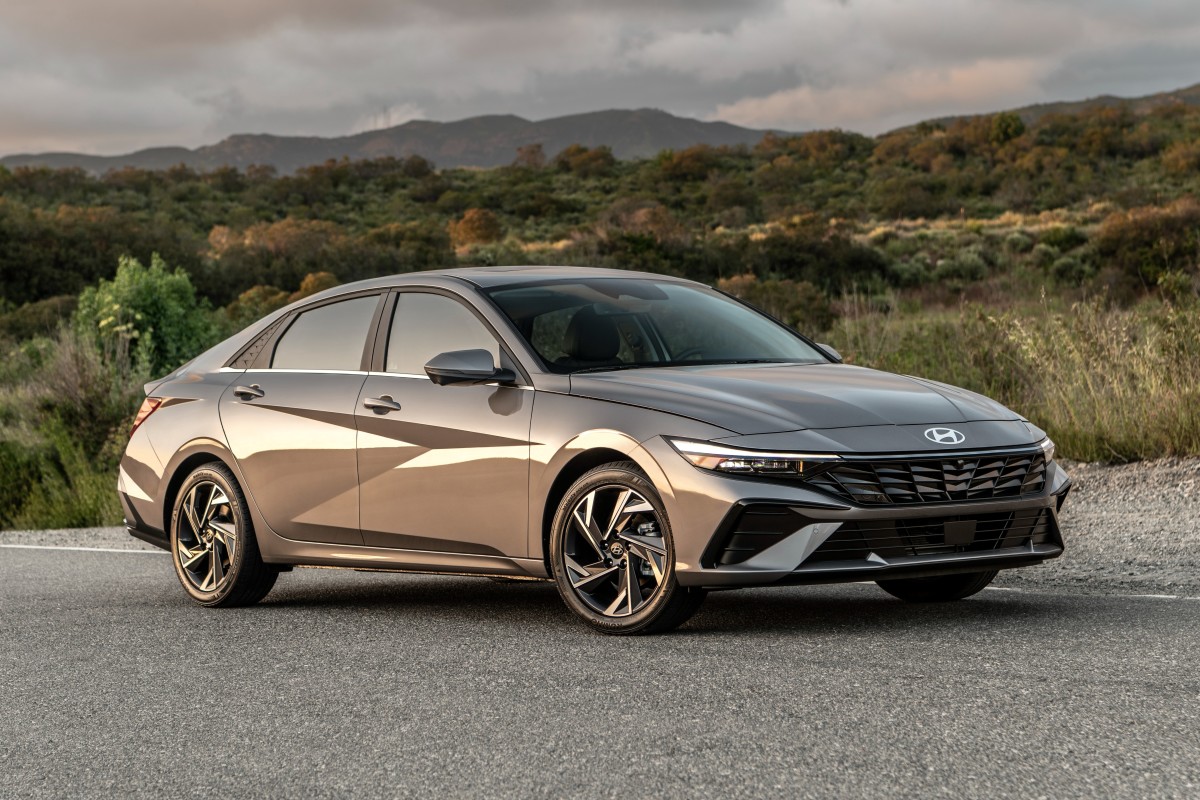
The new K4 is much sleeker than the outgoing Forte. While remnants of Kia’s tiger-nose front grille remain, the new front end looks less snub-nosed than before. Likewise, the fastback silhouette helps visually stretch the car’s length. The wheelbase is a scant 2 centimetres longer, and overall the K4 is only 6.8 cm longer than the Forte was. Yet, it carries itself more like a midsize car than a compact.
The amber daytime running lights (DRLs), aggressive wheel designs, and C-pillar-integrated door handles all join to give the new K4 an upscale look. It’s not quite elegant, but more of an exclusive and undeniably showy vibe.
Inside, touchpoints below the beltline give away the K4 as a bargain-cost sedan. There’s plenty of plastic adorning the interior, although it shouldn’t come as a surprise and we won’t fault Kia for it. Other than the Mazda3, no other car in the compact sedan segment has a markedly better interior than the K4.
Effectively sold in five trim levels, including an optional engine upgrade, the K4 ranges from $26,956 to $37,456 Canadian, fees in. At the bottom of the ladder is the LX, followed by the EX, EX+, GT-Line Turbo, and the GT-Line Turbo Limited.
Every K4 comes standard with a 12.3-inch touchscreen display, four USB-C ports, and a traditional PRNDL gear shifter. Lower trims use a bank of physical buttons for climate controls, while the GT-Line trims employ a 5-inch touchscreen controller placed between the gauge cluster and the infotainment display. GT-Line trims also swap out the two-spoke steering wheel for a two-tone, three-spoke wheel.
The K4 is comfortable, but we were happy to be driving the GT-Line trims, both of which come standard with lumbar adjustments for the driver’s seat. Without a little extra support on the lower back, a long drive in a K4 will leave you achy.

Performance
Certainly in non-Turbo trims, the 2025 Kia K4 looks faster than it is. The standard 2.0-litre naturally aspirated four-cylinder engine makes 147 horsepower and 132 pound-feet of torque, managed by a continuously variable transmission (CVT). All versions of the 2025 Kia K4 are front-wheel drive (FWD). On their own, those specifications aren’t damning; the base 2025 Honda Civic boasts a 2.0-litre four-cylinder with 150 hp and 133 lb-ft, plus a CVT, and it’s one of the better-driving sedans on the market. However, the non-turbo Kia K4 never felt as engaging or as exciting to drive as a Civic.
Steering is well-weighted but there’s limited feedback provided through the wheel, making it feel a bit disconnected from the road. Similarly, to feel any sort of rapid acceleration, you’ll need to bury the throttle, which invites quite a racket from the CVT, but that’s about it. We never drove the Kia K4 in a situation that would properly test the brakes. They work fine in everyday driving scenarios and can likely handle any sort of performance the K4 can manage.
The GT-Line Turbo and GT-Line Turbo Limited are simply better versions of the K4. The 1.6-litre turbocharged four-cylinder found under the hood makes 190 hp and 195 lb-ft of torque, and it comes paired to an eight-speed automatic transmission instead of the CVT. The K4 Turbo’s power figures are down compared with the Forte GT (which made 201 hp), likely a result of more stringent emissions.
Pin the accelerator and the K4 GT-Line Turbo can chirp its tires (and occasionally coax the eight-speed transmission into fumbling some gear shifts). In Sport mode and using the paddle shifters to keep RPMs high, this car accelerates out of corners with gusto, although it can’t match the precision feel of a Civic Si. That’s largely due to the steering feel which, like the naturally aspirated K4, is nicely weighted but relatively numb.
The GT-Line trims are both equipped with a multi-link rear suspension system, but lower trim levels come with a simpler torsion-beam setup.
By the end of our test, it was clear that despite the K4’s racy looks, it’s best off as a sensible commuter car. It’s more like a Nissan Sentra or Toyota Corolla alternative than a competitive driver, such as the Honda Civic or the Mazda3. That notion is backed up by the K4’s fuel economy, which measures a Natural Resources Canada-rated 8.4 litres per 100 kilometres in the city, 6.0 highway, and 7.3 combined with the 2.0-litre engine, and 9.2 L/100 km city, 6.6 highway, and 8.0 combined with the turbo. It’s further underscored by the sedan’s impressive functionality.

Form & function
Considering the K4 is a compact sedan, Kia has truly made the most of its proportions. In the trunk, you’ll find 413 litres of cargo space, easily accessed thanks to a wide opening. The Civic sedan claims 419 litres, but otherwise this K4 looks to be best-in-class for trunk space.
Moving forward, back-seat passengers are treated to an especially roomy maximum of 964 millimetres of rear legroom, a frankly massive figure matched only by the K4’s Korean stablemate, the Hyundai Elantra. Headroom is almost as impressive, measuring 990 mm without the sunroof, 947 mm with it.
Outside our need for a little extra lumbar support, the seats are comfortable and we found the faux-leather SynTex upholstery pretty nice to touch and good to look at. Between the front seats, Kia’s using the same adjustable cupholder design in the K4 that it uses in the Kia Telluride and other vehicles. They’re nifty, swiveling contraptions designed to hold beverages of varying sizes, but there is a size minimum and, unfortunately, that minimum is larger than a standard to-go coffee cup. While the cupholders managed a square-shaped Fiji water bottle just fine, they wouldn’t secure a steaming cup of hot coffee.
All told, the 2025 Kia K4 is a massive win for shoppers who value practicality, spacious rear seats, and affordable transportation. With more cargo space than most small sedans and enough interior capacity for five adults, it’s a no-brainer for the utilitarian shopper.

Technology
Our GT-Line first drive testers both came with a standard wireless charging pad nestled below the centre stack, to go along with four standard USB-C charging ports. Wireless phone projection — be it wireless Apple CarPlay or Android Auto — is also included as standard, and there’s a handy switch on one of the USB-C ports to swap between wired projection and just charging capability, meaning you can plug in four phones without overriding the wireless connection. Sometimes, it’s these little details that make the big difference.
Both GT-Line trims in Canada come standard with Kia’s navigation system, which now includes in-vehicle Google Points of Interest (POI) search. This is undoubtedly a helpful feature add, and it lessens the driver’s reliance on using Google Maps via Android Auto or Apple CarPlay. It’s also worth noting that the GT-Line Turbo Limited features a particularly swish Harman Kardon auto system.

Safety
The Insurance Institute for Highway Safety (IIHS) gives the 2025 Kia K4 a Top Safety Pick+ rating, its highest honour. The Kia K4 is still new enough that the National Highway Traffic Safety Administration (NHTSA) hasn’t crash tested it yet as of this writing.
Every Kia K4 comes equipped with driver assistance features including lane-keeping assist and lane-following assist, a driver attention warning, and the steering wheel provides haptic warnings as needed. The K4 also includes forward collision warning and assistance, complete with car/pedestrian/cyclist detection and capable of recognizing turning vehicles at junctions. Adaptive cruise control with stop and go capability is also included as standard.
In terms of optional equipment, Kia offers blind-spot warning and rear cross-traffic alert (two items we would have expected to see on the list of standard features) and its exceptional surround-view monitor and blind-spot view monitor. Of note, the cameras on the K4 are exceptionally bright and crisp, quite nearly as good as looking in a mirror.
You can also upgrade the forward collision systems to recognize junction crossings, on-coming and passing lane-change scenarios, and it can handle evasive steering when needed. Finally, the K4 can be equipped with Kia’s Highway Drive Assist 2, which offers a hands-on semi-autonomous driving experience. These final features are all available only on the GT-Line Turbo Limited.

Cost-effectiveness
As of this writing, Kia has priced the K4 very aggressively, with every trim available below the $40,000 threshold. As noted earlier, the base LX trim level opens at $26,956 (including destination). The EX starts at $29,456, the EX+ at $30,956, and the GT-Line Turbo at $34,456. The GT-Line Turbo Limited is priced at $37,456.
Even the top-tier K4 looks like a great deal, undercutting most of the segment. A base Toyota Corolla or Nissan Sentra is roughly on par and a Volkswagen Jetta or Mazda3 will start slightly higher than the K4, but the least expensive Honda Civic costs thousands more. Shoppers can look at the subcompact Nissan Versa for an even cheaper alternative, but it won’t feel as well-equipped as the new Kia. The 2025 Hyundai Elantra looks like the 2025 Kia K4’s stiffest competition, with a price that just barely undercuts it and a pair of powertrains largely identical to outgoing Forte’s.
Shoppers who want a stylish and practical compact sedan and are willing to sacrifice performance for a great price should consider the Kia K4. The latest option on the market, it’s a sensible commuter car perfect for new owners or folks looking to add a second vehicle to their garage, and it’s priced appropriately for either type of buyer.
Note: Images show a US model.


What owners say
I think this cars value is good for the price. It has its cons but the pros outweigh the cons by a lot! The visibility is something you get used to. It is a compact sedan so I’m am driving a lot lower than I’m used too. The seats are manual meaning there’s levers you pull to adjust it not buttons. The trunk space is 10/10. Infotainment system 10/10 works very fast. Car feels great! It’s a nice ride! I’d recommended it as a first car! If you’re a student and it’ll only be you driving it. It isn’t a family car the back seats aren’t very spacious. If your going to and from work maybe doing a few road trips by yourself or with someone else I’d, you don’t care about speed or acceleration just leasure and getting from point A to point B I recommend it.
March 28, 2026Trims & specs
Base MSRP $25,590 | Seating 5 |
Engine N/A | Cargo Capacity 14.6 cu ft |
Combined MPG N/A | Drivetrain N/A |
Base MSRP $22,390 | Seating 5 |
Engine N/A | Cargo Capacity 14.6 cu ft |
Combined MPG N/A | Drivetrain N/A |
Base MSRP $23,590 | Seating 5 |
Engine N/A | Cargo Capacity 14.6 cu ft |
Combined MPG N/A | Drivetrain N/A |
Base MSRP $24,590 | Seating 5 |
Engine N/A | Cargo Capacity 14.6 cu ft |
Combined MPG N/A | Drivetrain N/A |
Base MSRP $28,490 | Seating 5 |
Engine 1.6L 190 hp I4 | Cargo Capacity 14.6 cu ft |
Combined MPG 29 | Drivetrain FWD |


Pricing trends
MSRP range
$21,990 - $28,090
Current avg. market price
$24,706
Trending down by 2.1% this month
May 2026 - November 2026