2027 Chrysler Pacifica Reviews, Pricing & Specs


Pros & cons
What we like
Stow 'n Go seating offers unmatched cargo flexibility
Confidence-inspiring V6 power
Good third-row legroom
What to consider
New front-end styling is polarizing
Real-world fuel economy trails EPA estimates
Tech feels outdated
The CarGurus verdict
A lackluster refresh gives the Chrysler Pacifica a new face, but the minivan’s strengths and weaknesses remain unchanged.
Chrysler’s biggest changes for 2027 are the discontinuation of the Pacifica PHEV and the remaining all-gas Pacifica’s new face. But don’t let a polarizing new design fool you. This minivan remains a practical and powerful option for families.
Verdict: It features a new fascia and lighting signature, but otherwise it will be hard to notice many changes between the 2026 Pacifica and this new 2027 model. Stow 'n Go seating remains the Pacifica's signature advantage over its competitors, and this van remains the only option in the segment that offers V6 power and all-wheel drive.
out of 10 expert review
Look & feel
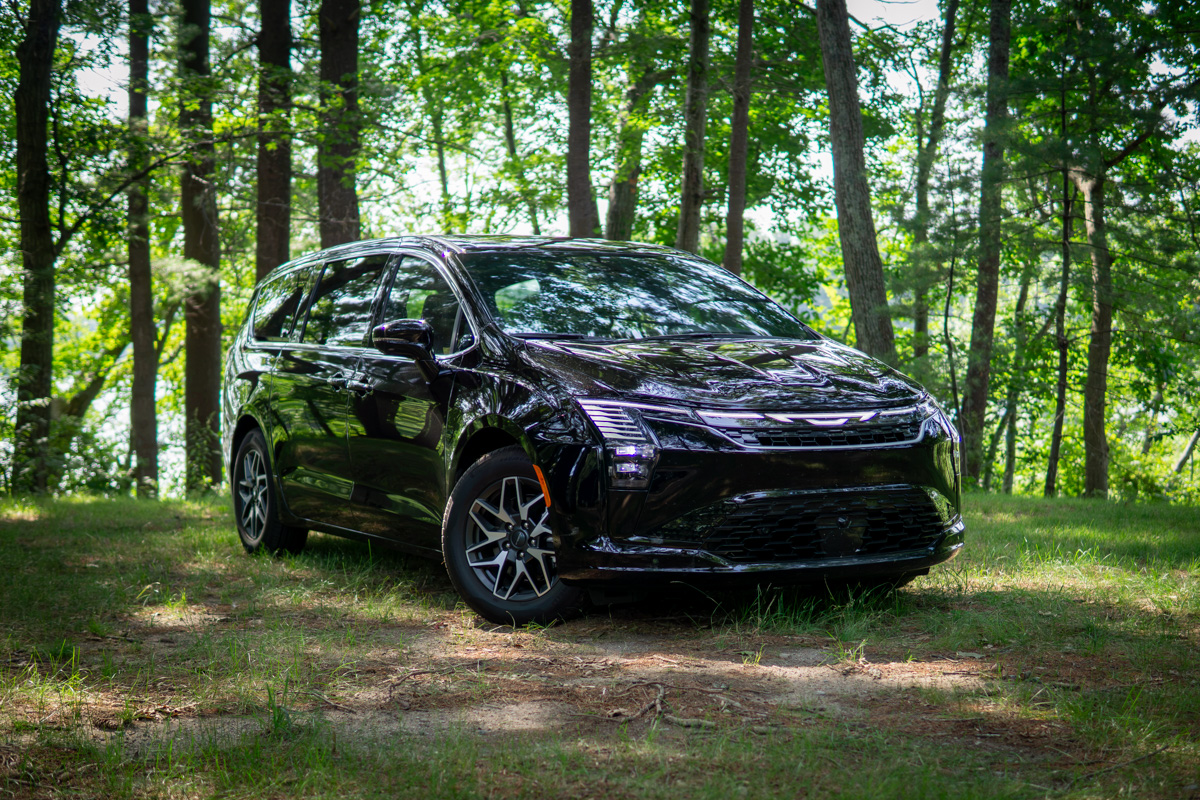
Chrysler has given the 2027 Pacifica a new face, and not everyone is going to love it. The lit-up logo and the sharper and more aggressive lighting signature grace every trim sold in Canada. We like the new badge on its own, especially paired with the Chrysler wordmark below it. It's the execution around it we haven't warmed up to. All those sharp angles and lines feel like a step down from the calmer and classier front end this van used to wear.
The more affordable Chrysler Grand Caravan, which is essentially a defeatured version of the Pacifica, skips the theatrics entirely. It keeps the older logo, a more reserved fascia, and simpler headlights. It's cleaner, if a step down in hardware, and it's the version we'd point styling purists toward.
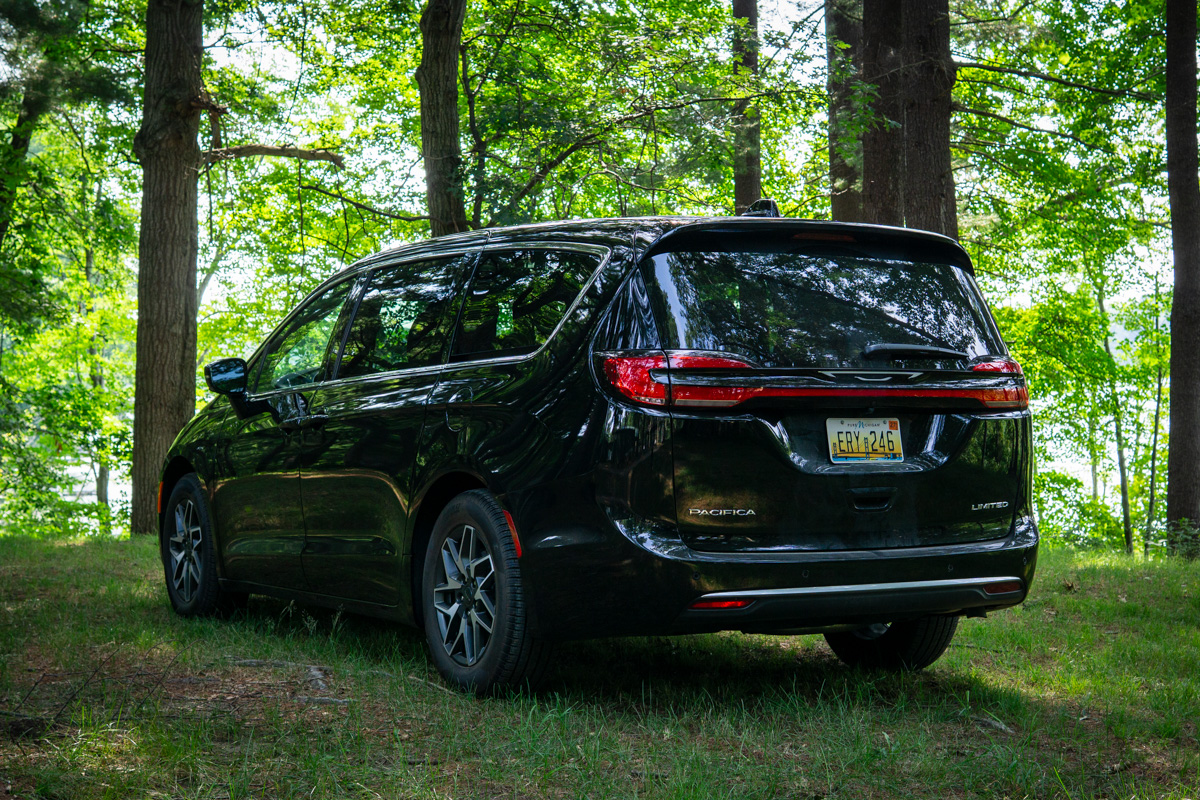
The side profile is unchanged, and at just over five metres long, the Pacifica isn't trying to hide what it is. New two-tone wheels, finished in dark grey and silver, add just enough visual interest without looking overdone. Around back, Chrysler keeps things simple. One long light bar spans the tailgate, and without the busy lighting up front to compete with, it looks clean and modern. This is easily the Pacifica's best angle.
The Pacifica has always been a handsome minivan, and that hasn't changed. It's sleeker than the boxier Honda Odyssey and less in-your-face than the Toyota Sienna. The Kia Carnival gets credit for trying something different, but it looks like it's trying not to look like a minivan, and it doesn't quite pull that off. In contrast, the Pacifica looks like a great minivan because it knows it's a minivan.
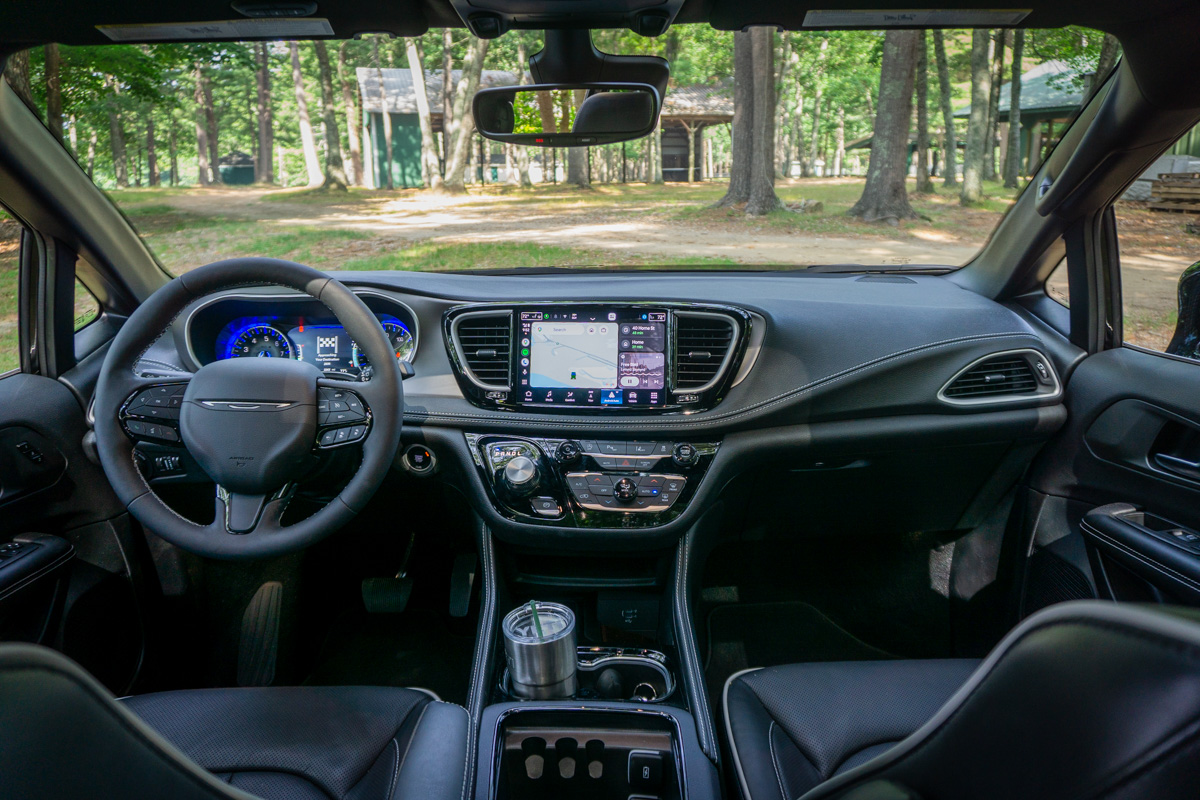
Inside, this is largely the same cabin from last year's refresh, and it shows in both the good and bad ways. The seats themselves are comfortable, available with clean white piping and individual armrests, and every trim includes driver seat memory. That's a small but useful feature if two parents in the same household aren't the same height. The materials are soft anywhere hands or knees regularly land, and Chrysler clearly spent its budget there.
But get below hip level and the story changes fast. There's a lot of plastic down low, and it's not just the piano black stuff that draws fingerprints and dust within days. Chrysler already knows the fix. The matte finishes around the gauge cluster and door cards stay looking clean far longer, and we'd like to see more of that material carried lower into the cabin.
Performance
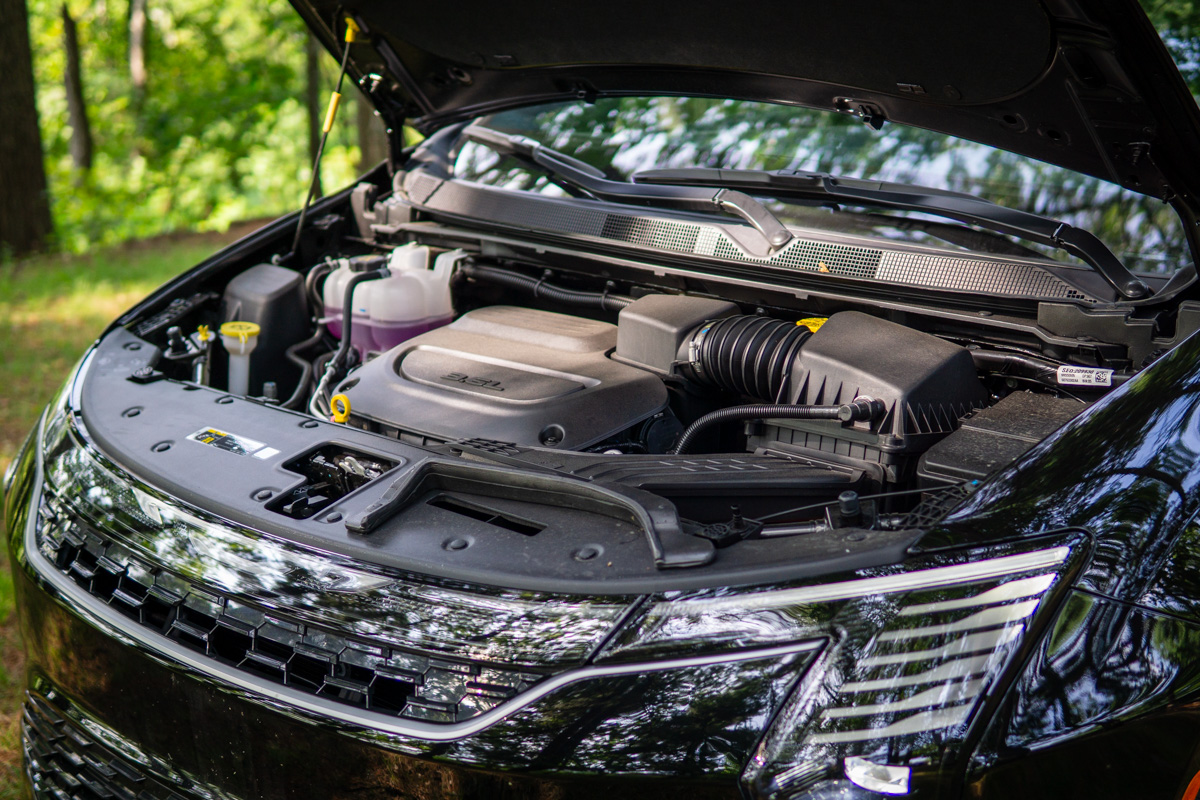
The Pacifica's 3.6-litre Pentastar V6 makes 287 horsepower and 262 lb-ft of torque, paired with a nine-speed automatic. There’s no continuously variable transmission (CVT) in sight. That's plenty of power for the segment, and it's noticeably stronger than the Toyota Sienna's four-cylinder hybrid setup.
But raw output doesn't tell the whole story. Outside of that power delivery, the engine isn't particularly satisfying to live with. The exhaust note comes across as hoarse rather than refined, and this minivan isn't especially well insulated against noise, vibration, and harshness. Punch the throttle and it gets loud in a hurry.
Front-wheel drive (FWD) is standard, and all-wheel drive (AWD) is available on both the Select and Limited trims for $5,000 and is standard on the Pinnacle. That combination of V6 power and AWD is unique in the segment. The Odyssey and Carnival are FWD only, and the Sienna trades V6 power for the fuel efficiency of a hybrid four-cylinder. If you want both power and all-wheel traction, the Pacifica is the only minivan that offers it.
In corners, the Pacifica handles with more composure than expected for a minivan, aided by a low centre of gravity and a wide stance. That composure doesn't fully carry over to rough pavement, though, where we'd like to see the ride settle down more. Between that and the road and wind noise that creeps into the cabin at speed, overall refinement is the Pacifica's weak spot in this section.
The bigger news for 2027 is what's gone. Chrysler has discontinued the plug-in hybrid Pacifica entirely, leaving the V6 as the only powertrain in the lineup. Natural Resources Canada estimates for the FWD V6 sit at 12.4 litres per 100 kilometres in the city, 8.4 highway, and 10.6 combined, effectively matching the FWD V6-powered Honda Odyssey. AWD increases those numbers in the Pacifica to 14.1 L/100 km city, 9.4 highway, and 12.0 combined.
Although the V6’s power is nice and the AWD option is practical, the Pacifica can’t compete with hybrid minivans on fuel economy. The Toyota Sienna leads the segment at 6.6 L/100 km combined in front-wheel drive, and even its AWD version returns 6.8 L/100 km combined (6.8 city, 6.7 highway). The Kia Carnival Hybrid checks in at 7.2 L/100 km combined (6.9 city, 7.5 highway). Both hybrids beat the Pacifica by a wide margin, but neither offers a V6, and only the Sienna offers AWD alongside its hybrid powertrain.
Adding insult to injury, we didn't meet the Pacifica's NRCan numbers in the real world. Mountain roads returned 15.2 L/100 km, and even nearly 3,000 kilometres of mostly long highway driving only brought our total figure down to 9.8 L/100 km. A lighter foot should help close that gap, but don't expect to hit NRCan's combined number without real effort.
Form & function
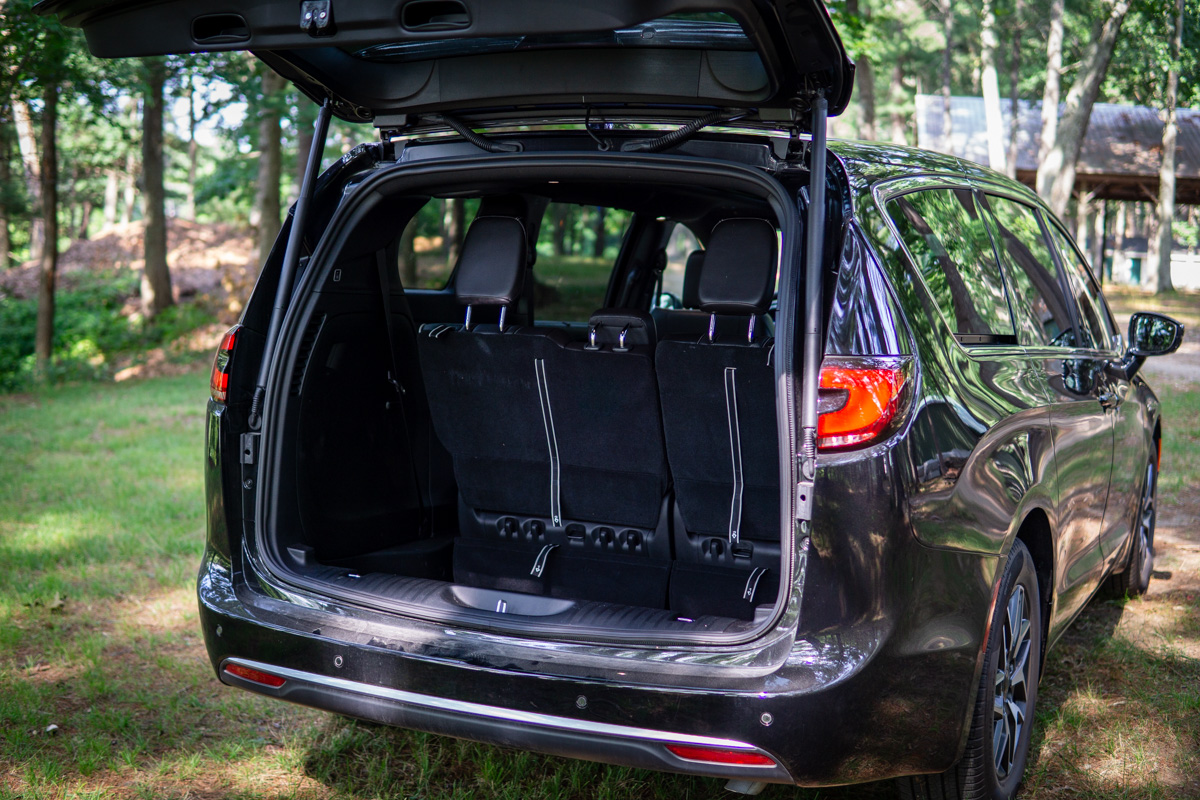
The math behind minivan cargo space can be misleading. Behind the third row, the Pacifica offers 915 litres, the smallest figure among the segment's big four minivans and less than a Honda CR-V. But the shape of that space matters more than the number suggests. The area behind the third row is deep and tub-like, built to swallow strollers, coolers, and luggage in ways a boxier SUV trunk never quite manages.
And the Pacifica's real advantage appears when you need to reconfigure the cabin. Those third-row seats fold backward into the basin of that tub-like cargo area, and Stow 'n Go seating lets the second-row seats fold flat into the floor in seconds with no lifting or storing required. The Honda Odyssey and Kia Carnival both offer more total cargo volume on paper, topping out ahead of the Pacifica's 3,979 litres, but you have to physically remove their middle-row seats and store them somewhere else. The Toyota Sienna doesn't even offer the option; its middle seats stay put, and its max cargo tops out at 2,860 litres, dead last in the group.
If you need to flip between passenger and cargo duty regularly, nothing in the segment matches the Pacifica's speed and simplicity. But be aware: step up to the range-topping Pinnacle trim and Stow 'n Go disappears from the second row due to the power adjustment (rather than manual) of those middle seats.
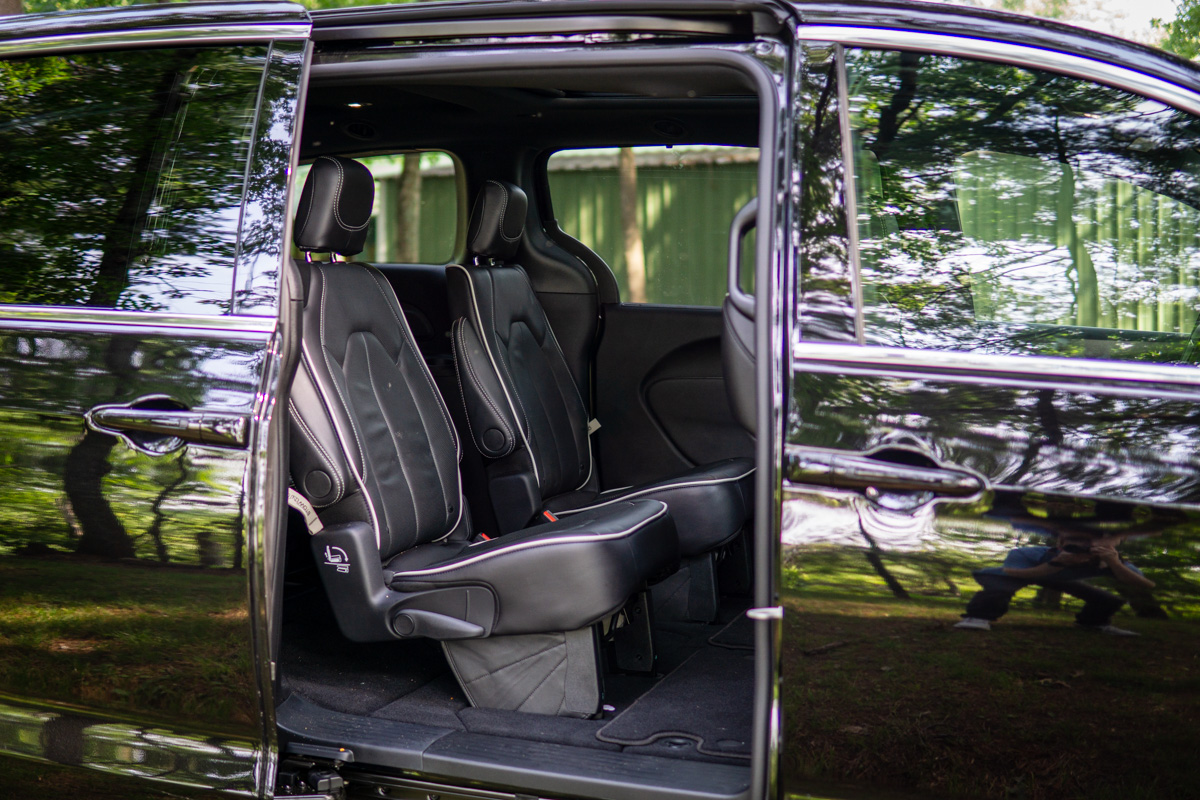
Though they’re hardly unique to the Pacifica, sliding side doors remain one of the minivan format's best arguments over an SUV, especially in tight parking lots where a swinging door isn't an option. Seating in our Limited-trim tester came configured with second-row captain's chairs for seven total seats. At five-foot-eleven, we had all the legroom we needed in the second row, and even the third row offered enough space to be usable, if a little tighter.
Storage throughout the cabin is thoughtful. Up front, an available ventilated wireless charging pad sits alongside a concealed storage shelf and two USB-C ports. The centre console includes a closing door with a separate cubby and cupholders for second-row passengers tucked behind it. A passthrough beneath the entire console runs from front to back and is wide enough for a purse or bag. Even the door panels get a three-tier layout with cupholders on the bottom, a middle storage section, and an enclosed upper pocket. For a family van, very little cabin space goes to waste.
Technology
The instrument cluster is a sticking point. Every trim of the 2027 Pacifica sticks with fully analog gauges, a tachometer and speedometer flanking a mid-size trip computer screen in the middle. It's a comfortable and familiar layout for anyone who prefers old-school dials, but it feels out of step for a 2027 family vehicle when so many rivals have moved to fully digital configurable displays. Stellantis already has the answer sitting in its own lineup. Top trims of the new Dodge Charger have a genuinely excellent driver display, and a reskinned version of it would have gone a long way toward modernizing this refresh.
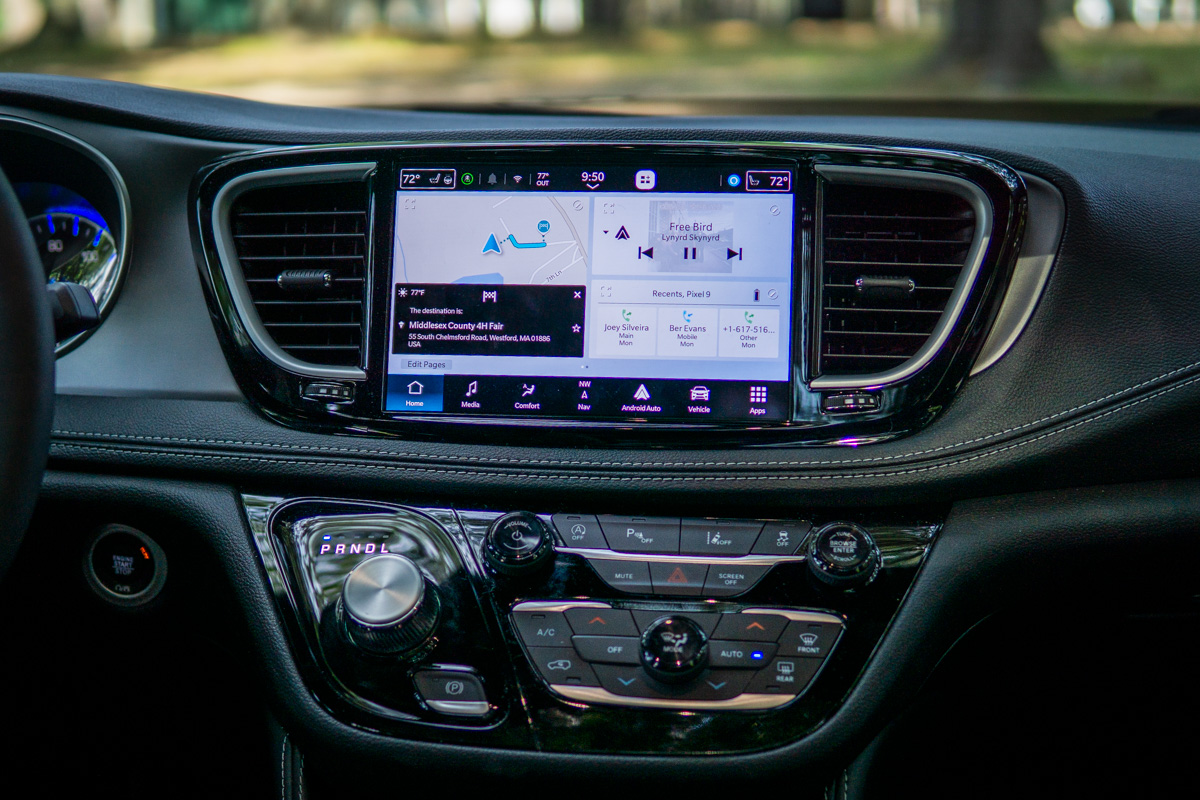
The main touchscreen is a 10.1-inch unit running Uconnect 5, standard across every trim, and the size and placement are fine. It looks well proportioned, not oversized, and Chrysler cleanly integrates it into the dash. But the graphics feel underwhelming and lack the polish and visual sharpness buyers have come to expect in a 2027-model-year vehicle. Wireless Apple CarPlay and Android Auto come standard, which helps. The built-in navigation offers no compelling reason to choose it over Google Maps.
One tech feature bridges the gap into safety but deserves mention here. The blind spot camera system activates automatically with the turn signal, swapping a live view of that side of the vehicle onto the centre screen. It works well, but it takes over the full display, so a driver navigating with the same screen needs to plan turns a step ahead. (A fully digital driver information display could solve this!)
Elsewhere, the physical climate controls are a highlight. A full array of buttons handles temperature and fan adjustments without needing to touch the screen. Though the layout isn't the most elegant, it's easy to learn. Heated seats come standard and ventilated seats join starting at the Limited trim. Both are accessible on the touchscreen as well, though a dedicated button for either would be a welcome shortcut.
Safety
Standard equipment across every 2027 Pacifica trim includes full-speed forward collision warning with automatic emergency braking, ParkSense rear park assist with stop, blind spot monitoring, and rear cross-traffic alert. Stepping up to the optional Sphere Package, available on Select and Limited and standard on Pinnacle, adds a surround-view camera and two features detailed in the Technology section: a turn-signal-activated blind spot camera and a ParkSense-activated front camera.
Our Limited-trim tester came equipped with this package, and both features worked well in daily use. The blind spot camera swaps a live feed of either side onto the centre display the moment the turn signal activates, effectively eliminating the traditional blind spot. The front camera does the same as the Pacifica creeps toward an obstacle while parking, a genuinely useful feature given how large this van is to maneuver.
Crash test results are a mixed bag. The U.S. National Highway Traffic Safety Administration (NHTSA) last rated the Pacifica in 2026, awarding it a full five stars, though the agency hasn't yet published a rating specific to the 2027 model. The Insurance Institute for Highway Safety (IIHS) is less flattering. In 2025 testing, the Pacifica earned a Good rating in the small overlap front test and an Acceptable rating in the updated side crash test. It scored only a Marginal in the updated moderate overlap front test, and it fell short of a Top Safety Pick designation as a result.
That's a real weakness for a family vehicle, but context matters. No minivan on sale beat the Pacifica's Marginal score in that same test, and the Honda Odyssey fared worse, coming away with a Poor rating.
Cost-effectiveness
Chrysler trimmed Canadian prices slightly across the 2027 Pacifica lineup. Destination is a flat $2,195 across the board. The base Select trim level begins at $52,895, and AWD costs $5,000 more. The Limited trim starts at $58,895 including destination, and the range-topping Pinnacle with standard AWD begins at $72,895. In Canada, though, the Chrysler Grand Caravan effectively acts as the base model to the Pacifica. It has a starting price of $49,895 with the same destination charge, and AWD is unavailable.
The Pacifica has typically been the sales leader in the minivan segment, but the Toyota Sienna might be the most appealing for the widest range of shoppers. Its pricing spans a similar range from $52,350 to $74,148 including its $1,930 destination charge. All-wheel drive adds less than $2,000 on trims where it’s an option.
More importantly, buyers will notice a gap between the two at the gas pump. NRCan puts the cost per year to fuel a FWD Pacifica at $2,226 versus $1,980 for a FWD Sienna. The gap is even wider for the AWD versions at $2,520 and $2,040 respectively.
Where the Pacifica earns its keep is in flexibility rather than outright savings. It's the only minivan on sale that pairs V6 power with available AWD. Buyers chasing better fuel economy instead of outright power have two hybrid options, the Sienna and the Kia Carnival Hybrid, but only the Sienna offers AWD alongside its hybrid powertrain. For families who want that combination of efficiency and traction, Toyota remains the only game in town.
For everyone else, the decision comes down to two forks: how much do you value all-wheel drive, and how much are you willing to give up in fuel economy for V6 power? If your answer to these questions is “plenty,” the Pacifica is the van you’re after.
What owners say
Trims & specs
Base MSRP N/A | Seating 7 |
Engine 3.6L 287 hp V6 | Cargo Capacity 915 L |
Combined MPG 23 | Drivetrain FWD |
Base MSRP N/A | Seating 7 |
Engine 3.6L 287 hp V6 | Cargo Capacity 915 L |
Combined MPG 21 | Drivetrain AWD |
Base MSRP N/A | Seating 7 |
Engine 3.6L 287 hp V6 | Cargo Capacity 915 L |
Combined MPG 23 | Drivetrain FWD |
Base MSRP N/A | Seating 7 |
Engine 3.6L 287 hp V6 | Cargo Capacity 915 L |
Combined MPG 21 | Drivetrain AWD |
Base MSRP N/A | Seating 8 |
Engine 3.6L 287 hp V6 | Cargo Capacity 915 L |
Combined MPG 23 | Drivetrain FWD |
Base MSRP N/A | Seating 7 |
Engine 3.6L 287 hp V6 | Cargo Capacity 915 L |
Combined MPG 21 | Drivetrain AWD |
Base MSRP N/A | Seating 7 |
Engine 3.6L 287 hp V6 | Cargo Capacity 915 L |
Combined MPG 23 | Drivetrain FWD |


Pricing trends
Current avg. market price
$54,234
Trending down by 3.0% this month
September 2026 - November 2026

