Canada’s electric SUV landscape has broadened considerably over the last couple of years. From new and redesigned affordable subcompacts to family-friendly three-row electric SUVs, there’s now an electric vehicle out there for every household size and budget. Many EVs sold in Canada also include features that help with cold weather range efficiency, such as on-board heat pumps and battery conditioning systems.
With gas prices climbing across the country and more new EVs offering Tesla-style North American Charging Standard (NACS) charging ports, interest in electric driving is making a comeback. In this article, we’ve listed the best electric SUVs in Canada in 2026. These EVs have been selected for their combination of range, practicality, consumer appeal, and overall value. We’ve kept our list to electric SUVs available new, but if you’re interested in a used electric SUV, you can scan the CarGurus.ca used vehicle listings for recently discontinued models such as the Kia EV6, the Volkswagen ID.4, and the Tesla Model X.
Prices include the manufacturer’s suggested retail price (MSRP) as well as destination charges but not dealer fees, options, or taxes. Where indicated, some vehicles qualify for rebates from the federal government’s Electric Vehicle Affordability Program (EVAP) as well as provincial programs where they still exist. For a look at electric cars such as the Fiat 500e, BMW i4, Dodge Charger Daytona, and the redesigned 2026 Nissan Leaf, see our article on the best electric cars in Canada.
Best Electric SUVs in Canada in 2026
- BMW iX3
- Cadillac Escalade IQ
- Chevrolet Bolt
- Ford Mustang Mach-e
- Genesis GV60
- Hyundai Ioniq 9
- Kia EV5
- Lucid Gravity
- Toyota bZ
- Frequently Asked Questions
BMW iX3
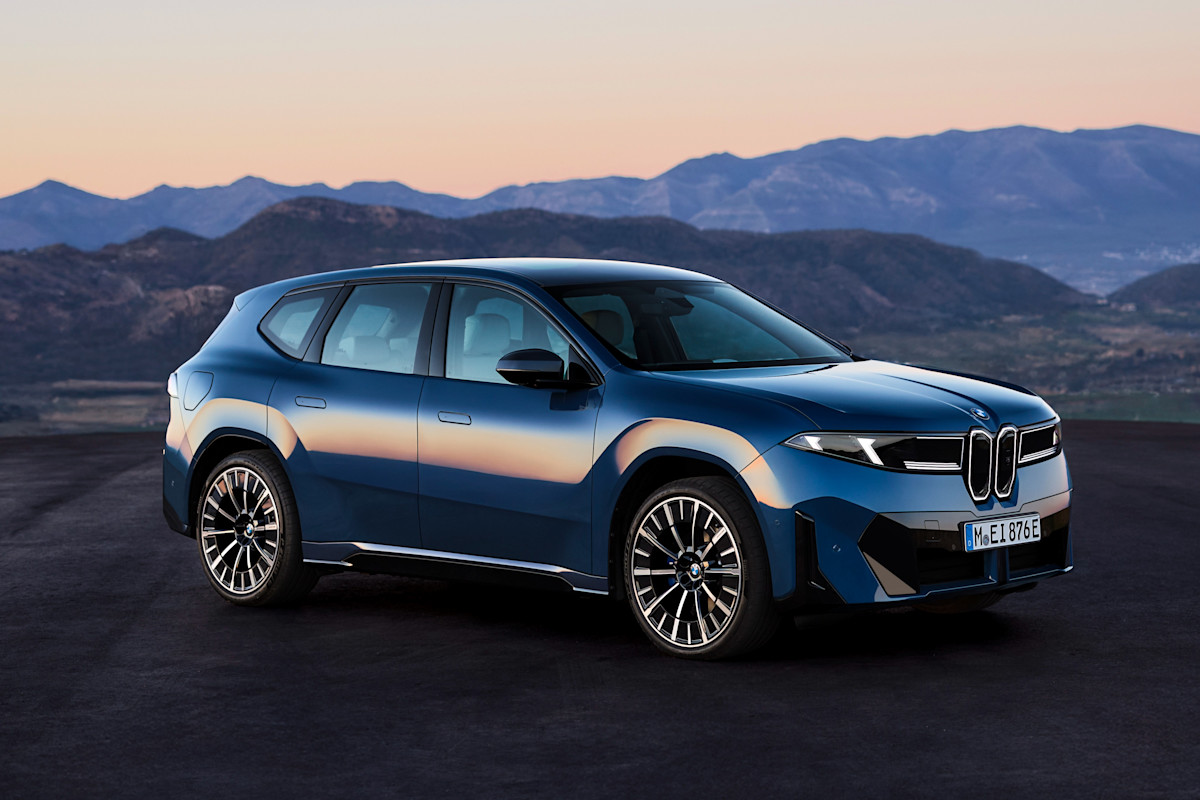
If you’ve been waiting for BMW to launch a smaller and more affordable electric SUV than the BMW iX, good news: that time has arrived. The BMW iX3 began arriving in dealerships in spring 2026 its launch format, the iX3 50 xDrive.
The new iX3 delivers an estimated 698 kilometres of range from its 112.2-kWh battery. It’s capable of charging at speeds of up to 400 kW—that’s more than most chargers in North America can currently deliver—and BMW says it can recover up to 297 km of charge in 10 minutes. Equipped with an NACS charging port, the BMW iX3 can access select Tesla Supercharger stations without an adapter.
Two electric motors produce a combined power output of 469 hp and 475 lb-ft of torque, giving the iX3 a 0-100 km/h time of 4.9 seconds and a top speed of 210 km/h. All-wheel drive (AWD) is standard and distributed through the front and rear electric motors. Cargo capacity is tight, though, at 520 litres with the rear seatbacks upright and 1,750 litres with them folded.
In Canada, the 2027 BMW iX3 50 xDrive has a starting price of $78,855. The 2026 BMW iX can travel up to 586 km on a full charge and starts at $92,855.

Cadillac Escalade IQ
All four electric SUVs in the General Motors luxury roster—the compact Cadillac Optiq, midsize two-row Cadillac Lyriq, midsize three-row Cadillac Vistiq, and full-size Cadillac Escalade IQ—are well-priced and well-equipped options within their segments. We’ve chosen to highlight the Escalade IQ here because it’s currently the only large electric SUV on the market.
The Escalade IQ is available in standard and long-wheelbase configurations, the latter being dubbed the Escalade IQL. Each version is offered in four different trims: Luxury, Sport, Premium Luxury, and Premium Sport. With the standard wheelbase, the Escalade IQ has an estimated range of 748 kilometres according to Cadillac, while the Escalade IQL is estimated at 740 km.
For charging, the Escalade IQ uses a CCS-style charging port, and a NACS adapter is available from General Motors. It’s capable of reaching fast charging speeds of 350 kW and is available with a 19.2 kW onboard charging module for faster Level 2 home charging. In Velocity Max mode, peak power output reaches 750 hp and 785 lb-ft of torque. AWD is standard on all versions, and its maximum towing capacity of 3,625 kilograms (8,000 pounds) makes it a leader among electric crossovers.
As you’d expect with a large SUV, cargo space surpasses most other EVs. The standard-wheelbase version offers 668 litres behind the third-row seatbacks, 1,957 litres behind the second row, and 3,373 litres behind the first row. In the long-wheelbase IQL, those figures rise to 685 litres, 2,135 litres, and 3,545 litres respectively. The only EV on the market with more total cargo capacity is the Volkswagen IQ.Buzz minivan.
Standard and available features include a 55-inch pillar-to-pillar digital display including a touchscreen infotainment system, an executive second row with dedicated seatback screens and amenities, and the Super Cruise hands-free highway driving assist system. However, Apple CarPlay or Android Auto are not offered on any GM electric vehicles.
In Canada, the 2026 Cadillac Escalade IQ starts at $160,199, and the Escalade IQL starts at $163,699. The 2026 Cadillac Vistiq has a range of up to 491 km and a Canadian starting price of $95,799. Cadillac’s original current-generation EV, the Lyriq, has a maximum range of 525 km and starts at $73,199 for 2026 in rear-wheel drive (RWD) format. The entry point for EVs in the Cadillac line-up, the 2026 Optiq, peaks at 510 km of range and starts at $60,199 with RWD.

Chevrolet Bolt
After a two-year absence, the Chevrolet Bolt returned to North America early in 2026 as a 2027 model year vehicle. The current version is essentially a refresh of what was previously known as the Bolt EUV. It’s already one of the most affordable EVs in Canada, and also qualifies for the federal EVAP rebate that deducts up to $5,000 more from the purchase price.
The 2027 Chevy Bolt offers a 422-kilometre range from its 65-kWh battery. It’s capable of Level 3 charging speeds of up to 150 kW from a NACS charging port and employs the X76 permanent-magnet motor first equipped in the Chevrolet Equinox EV, which delivers 210 horsepower and 176 pound-feet of torque. The drivetrain remains front-wheel drive (FWD) only.
GM’s Super Cruise hands-free highway driving system is available in both the LT and RS trims for $4,200. Like other GM EVs, the 2027 Bolt doesn’t include Apple CarPlay or Android Auto, and drivers instead use the Google built-in operating system with native Google Maps.
If you’re interested in the Chevrolet Bolt, now’s the time to grab one. GM has already announced that it will be discontinued again at some point in 2027. Pricing in Canada starts at $42,599 before applying the federal EVAP rebate.
The Chevrolet brand offers two more electric SUVs, and both are also affordable and appealing choices. The Chevrolet Equinox EV has a maximum range of 513 km, available AWD, and a Canadian starting price of $48,799 before the available EVAP rebate. With the 2026 Chevrolet Blazer EV, you get up to 502 km of range with available AWD and a starting price of $58,299, which does not qualify for rebates.

Ford Mustang Mach-e
The debate has still not stopped about whether Ford’s electric midsize SUV is worthy of the Mustang name. Regardless of what you call it, there’s no denying the Mustang Mach-e has been a success for the Blue Oval.
For 2026, the bottom two trims of the Mach-e have received price cuts that put them under $50,000, which allows them to qualify for the federal EVAP rebate as long as the final price stays below that threshold. All versions come with dual motor electric AWD.
The base Select and second-tier trims have a 73-kWh battery with 380 km of range and power specs of 325 hp and 369 lb-ft of torque. An extended-range battery is available on both trims that has an 88-kWh usable capacity and a range of up to 483 km.
The performance-oriented GT trim and the off-road themed Rally each produce 480 hp and 600 lb-ft of torque and deliver a 0-100 km/h time of 3.5 seconds. Both models come with the extended-range battery, which is good for 451 km on the GT and 410 km on the Rally.
Charging for the 2026 Ford Mustang Mach-e uses a CCS port, while a NACS adapter is available. The standard-range battery can fast charge at speeds of up to 110 kW, and the extended-range battery can accept up to 150 kW.
The 2026 Ford Mustang Mach-e has a starting price in Canada of $47,990 for the Select and $49,990 for the Premium. These prices include destination but exclude the federal EVAP rebate of up to $5,000 for which both trims qualify. The $4,000 extended-range battery can be added to the Select while keeping it below the rebate threshold. The 2026 Mustang Mach-e GT starts at $67,990, and the 2026 Mustang Mach-e Rally starts at $73,490.
Genesis GV60
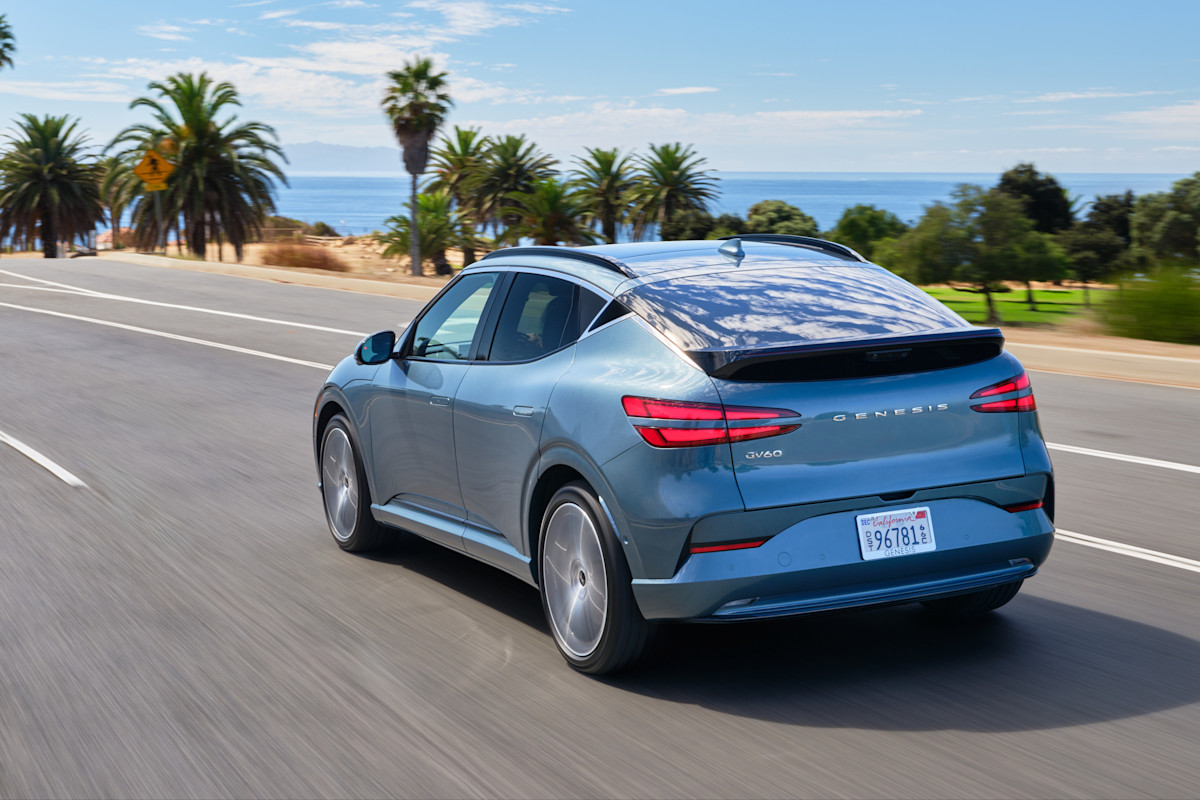
Amid a crop of newcomers, there are some EVs that have endured for a few years, one of which is the Genesis GV60—the more luxurious cousin of the Hyundai Ioniq 5 and Kia EV6. While it didn’t get as much attention as those models, it comes with the same highly rated electric powertrain as well as striking styling, an illuminated crystal sphere for a shifter, and a boost mode that brings its 0 to 100 km/h time down to 4.0 seconds.
For 2026, a midcycle refresh brings updated bumper, cladding, and wheel designs. A single 27-inch display panel for the infotainment screen and digital instrument cluster replaces the former pair of 12.3-inch screens. It’s also the first model year to feature a NACS charging port, compatible with the Tesla Supercharger network.
In Canada, the Sport model is the sole offering for the 2026 Genesis GV60. It uses an 84-kWh battery, up from the 77.4-kWh battery in previous model years, to deliver a range of up to 406 km and can be recharged at a Level 3 fast charger at a rate of up to 350 kW. Through standard dual-motor AWD, the GV60 has power specs of 429 hp—or 483 hp with boost mode activated—and 516 lb-ft of torque.
The 2026 Genesis GV60 has a Canadian starting price of $84,000. A high-performance version called the Genesis GV60 Magma is due to arrive in Canada in the second half of 2026. Genesis Motors Canada offers no-haggle pricing as well as at-home test drives and service pick-ups including a courtesy vehicle, five years of scheduled maintenance and map updates, and more.
If you like what you see from the Genesis brand but would prefer something with a more traditional look, consider the Genesis Electrified GV70. Despite the somewhat confusing name, it’s a fully electric compact SUV with 402 km of range that looks nearly identical to every other GV70 on the road. In Canada, the 2026 Genesis Electrified GV70 carries a starting price of $88,500.
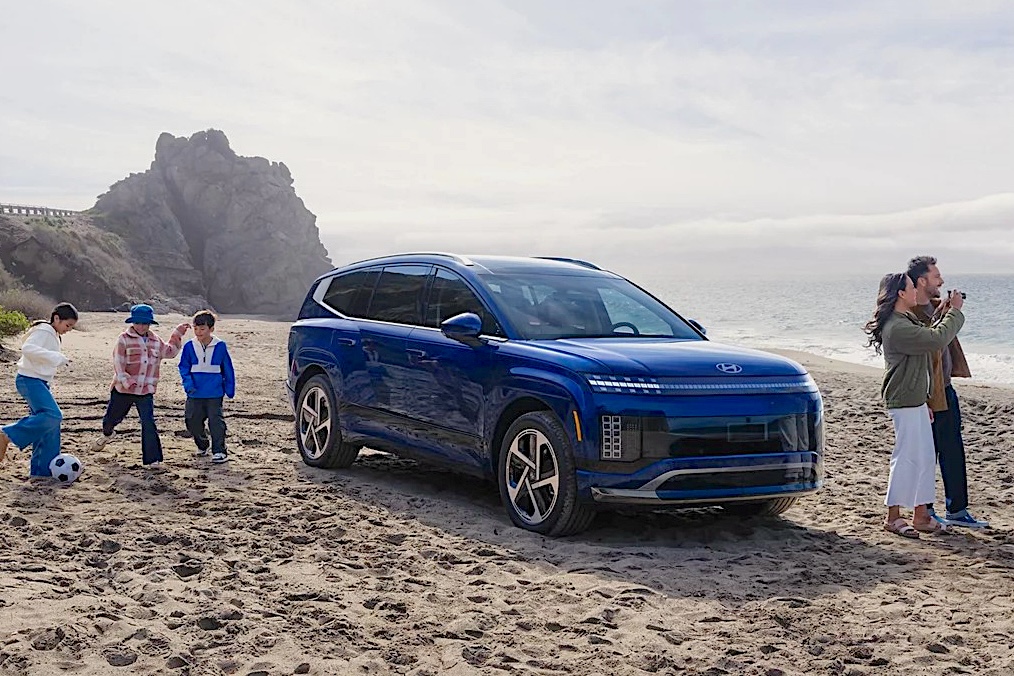
Hyundai Ioniq 9
When it first landed for the 2026 model year, the Hyundai Ioniq 9 rounded out the brand’s electric vehicle lineup with a spacious six or seven-seat three-row electric SUV.
Hyundai’s electric flagship carries over the pixelated exterior look that’s become the hallmark of the Ioniq sub-brand, and the interior features clean lines and eco-friendly materials. Although it has much in common with the related Kia EV9, the Ioniq 9 is 51 millimetres longer, which gives it a slightly more spacious interior.
Behind the third-row seats, the 2026 Hyundai Ioniq 9 offers 620 litres of cargo space, 48 litres more than the Kia EV9. Drop those seatbacks and you’ll free up 1,323 litres of space behind the second-row seats. Total cargo capacity from the front-row seats is 2,462 litres. The Ioniq 9 also has a front trunk (frunk) that adds 52 litres of space on all-wheel drive (AWD) trims and 88 litres with the base Essential RWD.
Three different powertrain configurations are offered. The Essential RWD uses a single rear motor to create 215 horsepower and 258 pound-feet of torque. The AWD version adds a motor to the front axle and generates 303 hp and 446 lb-ft of torque. The most powerful AWD+ version creates a total system output of 422 hp and 516 lb-ft. Range figures for these versions are 539 km, 515 km, and 500 km respectively from the 110.3-kWh lithium-ion battery, which can fast charge at speeds up to 350 kW using a NACS charging port.
Pricing for the 2026 Hyundai Ioniq 9 starts at $62,399. If you’re in the market for a smaller vehicle, Hyundai has two popular options. The 2026 Hyundai Kona Electric subcompact electric SUV has a range of 420 km and a starting price of $46,199, which qualifies for the federal EVAP rebate. The 2026 Hyundai Ioniq 5 compact electric SUV has up to 504 km of range and a starting price of $57,799.

Kia EV5
While Kia calls the all-new EV5 a midsize SUV, we think it’s Toyota RAV4-like proportions mean it’s better classified as a compact SUV. Either way, its boxy look is very similar to that of its larger sibling, the Kia EV9, and its price makes it one of the most affordable new EVs in Canada.
The line-up is extensive, as the EV5 offered in six different trim levels, four of which are offered with either FWD or AWD: Light (FWD only), Wind, Land, GT-Line, GT-Line Limited, and GT (AWD only). On the trims where AWD is optional, it costs $2,500 extra.
The Kia EV5 Light uses a 60.4 kWh lithium-ion battery to deliver a range of 335 km, according to Kia. All other trims are equipped with an 81.4-kWh battery, which produces a range of 457 km with FWD and 439 km with AWD, and 402 km with the sportier GT model. All versions can fast charge at rates up to 350 kW, and all but the base Light come with a standard heat pump for more efficient interior heating in cold weather.
Power is lowest in the Light at 154 hp and 218 lb-ft of torque, while most other trims deliver 214 hp and 218 lb-ft with FWD or 261 hp and 284 lb-ft with AWD. The GT trim has the most power at 302 hp and 354 lb-ft.
Pricing for the 2027 Kia EV5 starts in Canada at $45,680 for the Light trim, $49,680 for the Wind FWD, and $52,180 for the Wind AWD, all of which qualify for the federal EVAP rebate. The GT trim is the most expensive in the 2027 Kia EV5 line-up at $65,680. If you’re looking for its larger sibling, the 2026 Kia EV9 has a range of between 370 and 491 km and a starting price of $62,180.

Lucid Gravity
The Lucid Gravity is the second vehicle and first SUV from startup electric vehicle brand Lucid Motors out of California. This luxury electric SUV is offered in two-row and five-seat or three-row and seven seat configurations.
Two configurations of the 2027 Lucid Gravity are available, each using a CCS charging port. The base Touring trim comes with an 89-kWh battery that delivers a Natural Resources Canada-estimated range of up to 542 km. Its 670-volt architecture allows for fast charging at up to 250 kW, and standard dual-motor AWD delivers power specs of 560 hp and 811 lb-ft of torque.
If those specs aren’t enough for you, then check out the Lucid Gravity Grand Touring. Its 123-kWh battery creates an impressive 724 km of range, and its 900-plus-volt architecture allows for DC fast charging at up to 400 kW. The power wick is also turned up at 828 hp and 909 lb-ft of torque.
Cargo space, which is accessed through a clamshell tailgate, measures 603 litres behind the last row of three-row models, 1,591 litres behind the second row, and 3,007 litres with all rear seats folded. There’s also a 229-litre frunk. Height-adjustable air suspension, a wireless charging pad, and a 34-inch dashboard display with wireless Apple CarPlay and Android Auto are standard.
The Canadian starting price for the 2027 Lucid Gravity Touring is $113,200, and the 2027 Lucid Gravity Grand Touring starts at $139,200.
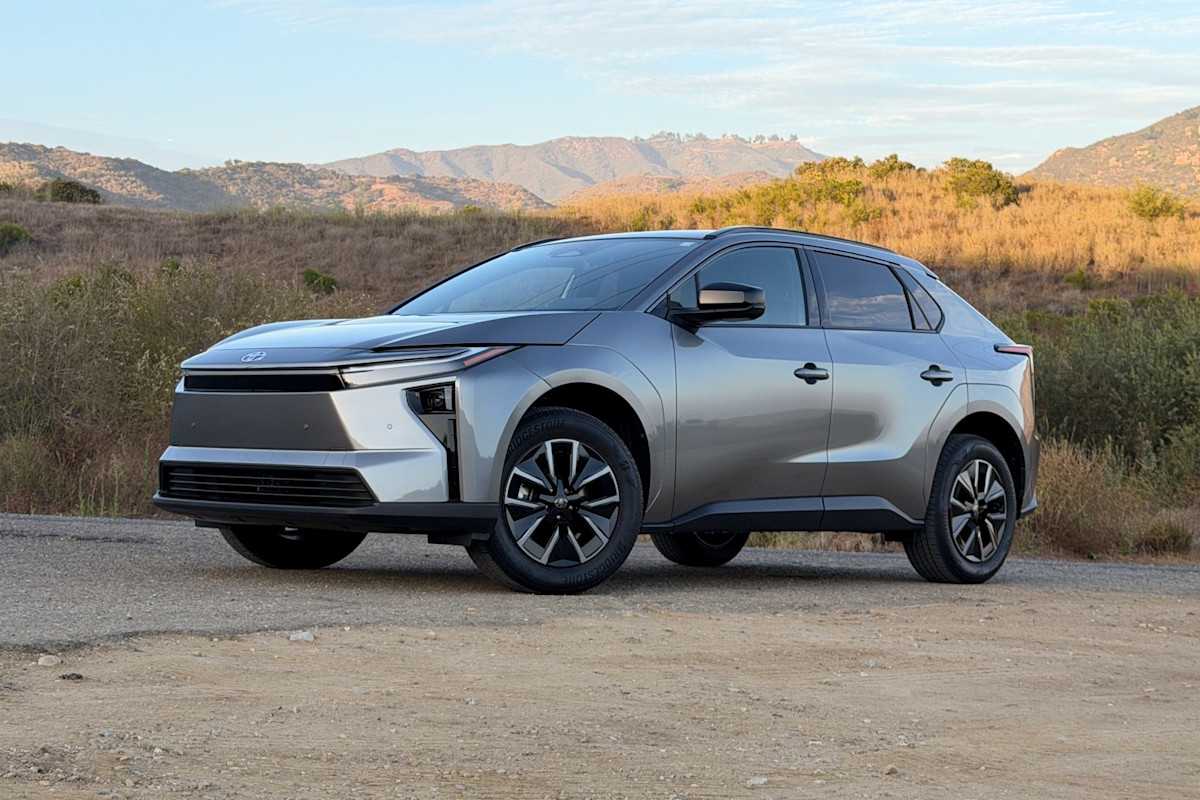
Toyota bZ
When Toyota received a lukewarm reception to its first all-electric vehicle, the bZ4X, the brand promptly took it back to the drawing board. The result is the 2026 Toyota bZ, with revamped styling, more power, and a longer range. The bZ also now has a NACS charging port, which allows it to access select Tesla Supercharger stations across North America.
Three configurations of the 2026 Toyota bZ are available. The base bZ XLE FWD has a 57.7-kWh battery, an estimated range of 380 km, and power specs of 168 hp and 198 lb-ft of torque. With dual-motor AWD, the XLE trim’s battery increases to 77 kWh for a range of 468 km and a bump to 338 hp. The top Limited AWD has additional equipment, which reduces its range slightly to 436 km.
Pricing for the 2026 Toyota bZ starts in Canada at $47,920 for the XLE FWD trim. With the manufacturer incentives available at the time of writing, both the XLE FWD and AWD qualify for the federal EVAP rebate. The 2026 Toyota bZ Limited is too expensive to qualify for EVAP at a starting price of $63,620. For a very similar but more upscale vehicle, take a look at the 2026 Lexus RZ, which has a maximum range of 478 km and starts at $62,195.
Frequently Asked Questions
What is the longest-range electric SUV available in Canada in 2026?
With an estimated range of 724 kilometres, the Lucid Gravity Grand Touring is the longest-range electric SUV on the Canadian market in 2026.
Are electric SUVs reliable in Canadian winters?
Modern electric SUVs are increasingly well-suited to cold weather, thanks to features such as heat pumps for faster cabin heating, battery preconditioning for more efficient charging, and standard or available all-wheel drive. Many also come with standard winter-friendly features such as heated front seats, a heated steering wheel, and heated exterior mirrors.
What's the difference between a plug-in hybrid and a fully electric SUV?
A plug-in hybrid SUV combines a gasoline engine with an electric motor and a smaller battery. This provides a limited electric-only range, typically 35 to 80 kilometres, before the gas engine takes over. A battery electric SUV runs solely on battery power and must be recharged but allows the owner to drive with zero emissions.
Can I charge an electric SUV at home in Canada?
Yes. Most EV owners install a Level 2 home charger (240 volts), which can fully recharge an EV overnight. Level 1 charging via a standard household outlet is also possible but considerably slower. Some provinces and utility companies offer rebates to help offset the cost of home charger installation.
Do any of these electric SUVs come with access to the Tesla Supercharger network?
Yes. Many 2026 models come equipped with a standard North American Charging Standard (NACS) charging port, which means they can use select stations on the Tesla Supercharger network. For the vehicles still equipped with a CCS port, most automakers now offer adapters so these vehicles can also access Tesla Superchargers.
Which electric SUVs offer the best value in 2026?
To find the best value in an electric SUV in 2026, look for a model with a range of more than 400 kilometres that has a before-fees price of $50,000 or less. This price point allows the vehicle to qualify for the federal government’s Electric Vehicle Affordability Program (EVAP), which takes up to $5,000 more off the purchase price. Examples of vehicles that qualify for EVAP include the Chevrolet Bolt, the Kia EV5, the Ford Mustang Mach-e, and the Toyota bZ.