2024 BMW X2 Reviews, Pricing & Specs


Pros & cons
What we like
Standard all-wheel drive
Impressive technology
Great safety ratings
What to consider
Potentially polarizing design
Poor ergonomic design
Not much cargo space
The CarGurus verdict
The redesigned 2024 BMW X2 is the most affordable of the automaker’s Sports Activity Coupes.
Based on the BMW X1, the new 2024 X2 is an SUV coupe because it has a sloping roofline for a sportier appearance. However, the X2 is longer than the X1 and offers about the same passenger room and cargo space, so aside from its higher price, there isn’t a downside to choosing it over its boxier sibling. The 2024 BMW X2 comes in xDrive28i and more powerful M35i flavours.
Verdict: Get the 2024 BMW X2 M35i for maximum driving fun because the X2 xDrive28i is disappointing in that respect. Simply put, the xDrive28i lacks the dynamism expected of a BMW, even with the M Sport upgrade. That makes it harder to overlook the X2’s awkward new styling and sometimes confusing controls.
out of 10 expert review
Look & feel
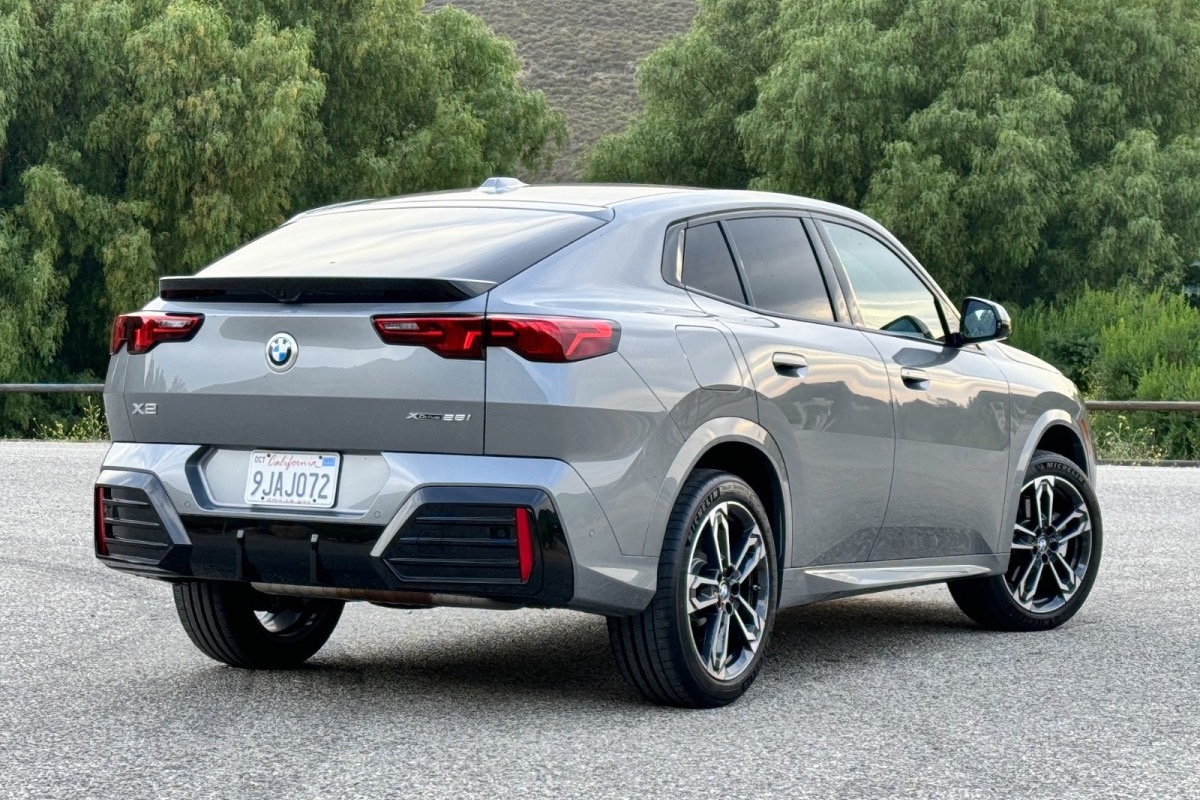
You may have noticed that BMW has entered a new design era featuring smooth, aerodynamic, almost featureless bodywork decorated with big grilles and overwrought M Sport bumper treatments. For proof, members of the jury need to look no further than Exhibit X2. Your judgment of this BMW’s stylistic appeal is your own. Colour us skeptical.
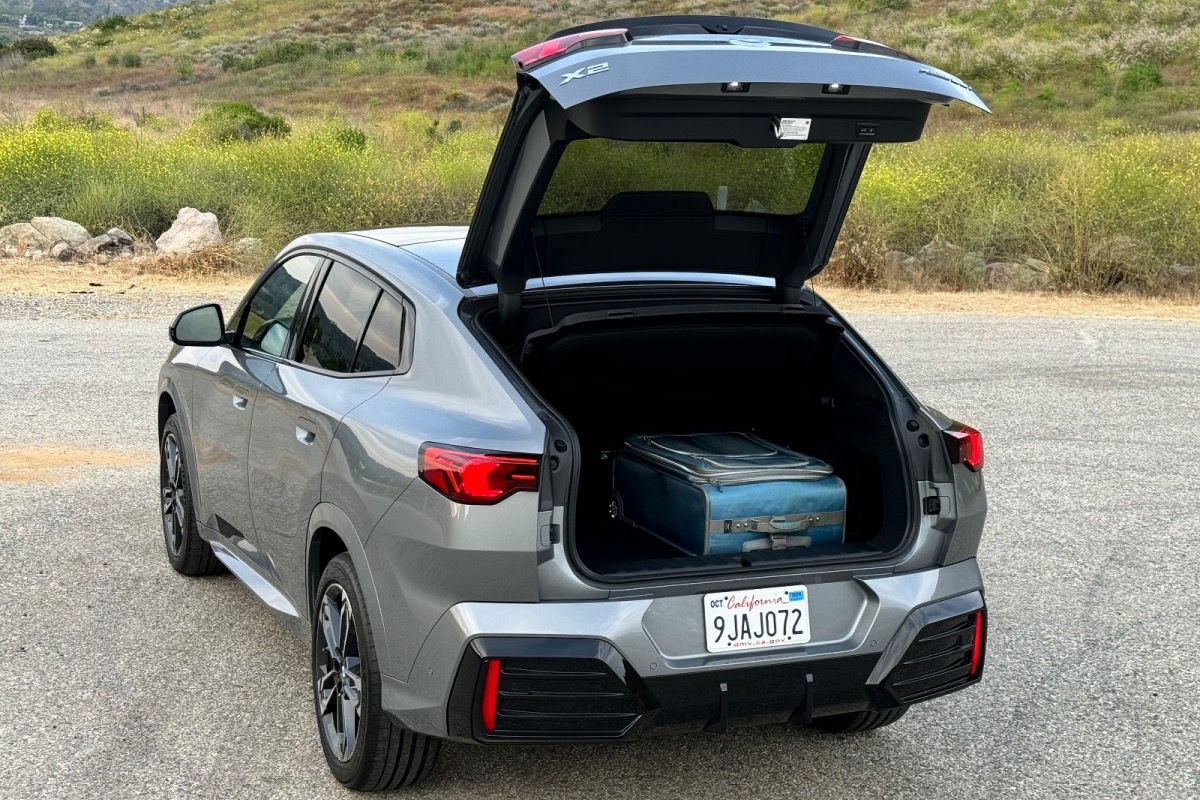
The new X2 is substantially larger than the outgoing model, encroaching on the X4 compact SUV coupe’s chunk of real estate within the BMW lineup. And it weighs more than 1,700 kilograms (3,800 pounds), so it’s a whopper. The added size translates into a habitable back seat and more cargo room. Surprisingly, the X2 can carry just as much stuff as the X1, which is a welcome development considering the reasonable $1,900 premium BMW charges for its rakish roofline and more expressive appearance.
Like the more traditional X1, the sporty-looking 2024 X2 comes in xDrive28i and M35i models. Prices for the 2024 X2 range from $52,055 to $62,655, including the $2,480 destination charge and other fees.
Our test vehicle arrived in xDrive28i M Sport specification, equipped with Skyscraper Grey paint, a Premium Package, a Driving Assistance Professional Package, heated front seats, a heated steering wheel, and remote engine starting. It wore a manufacturer’s suggested retail price (MSRP) of $52,185, including destination.
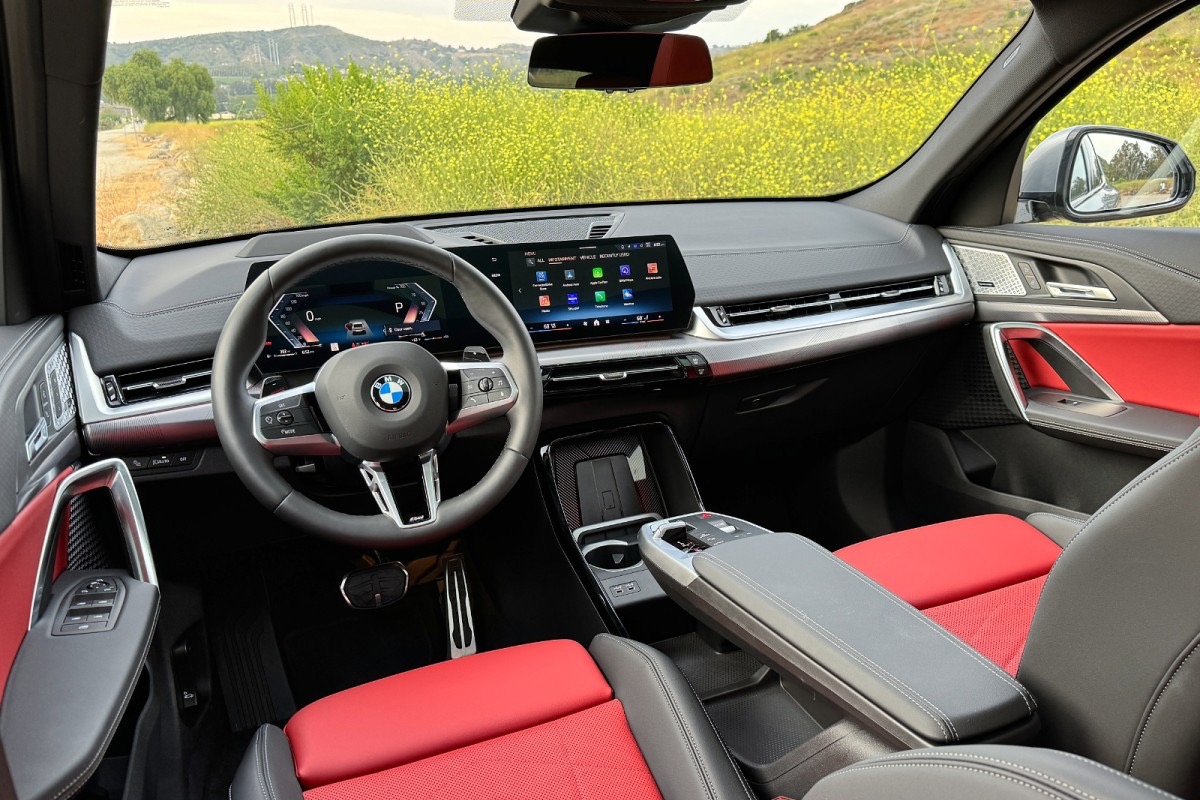
Minimalism rules within the X2. BMW has removed as many controls as it can and has replaced some of the remaining switchgear with touch-sensing and dual-function items that create driver confusion and distraction. Most of the X2’s features and settings live in the BMW Curved Display housing the digital gauges and infotainment system.
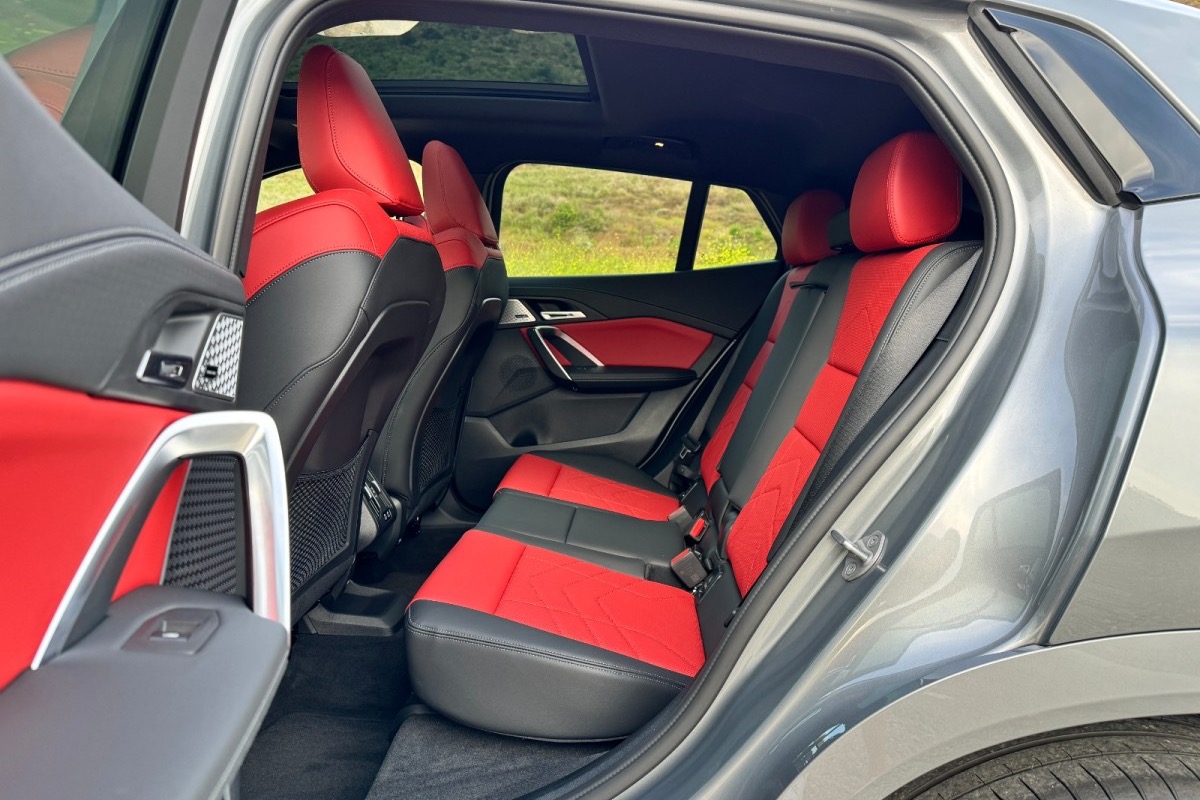
Black is the standard interior colour, but you can dress the cabin in high-contrast schemes like the test vehicle’s red-and-black perforated artificial leather upholstery. Aluminum trim with ambient lighting, polished metallic accents, and textured speaker grilles added visual interest to our test vehicle, giving the X2 enough credible touches of luxury to help justify its lofty price tag.
Performance
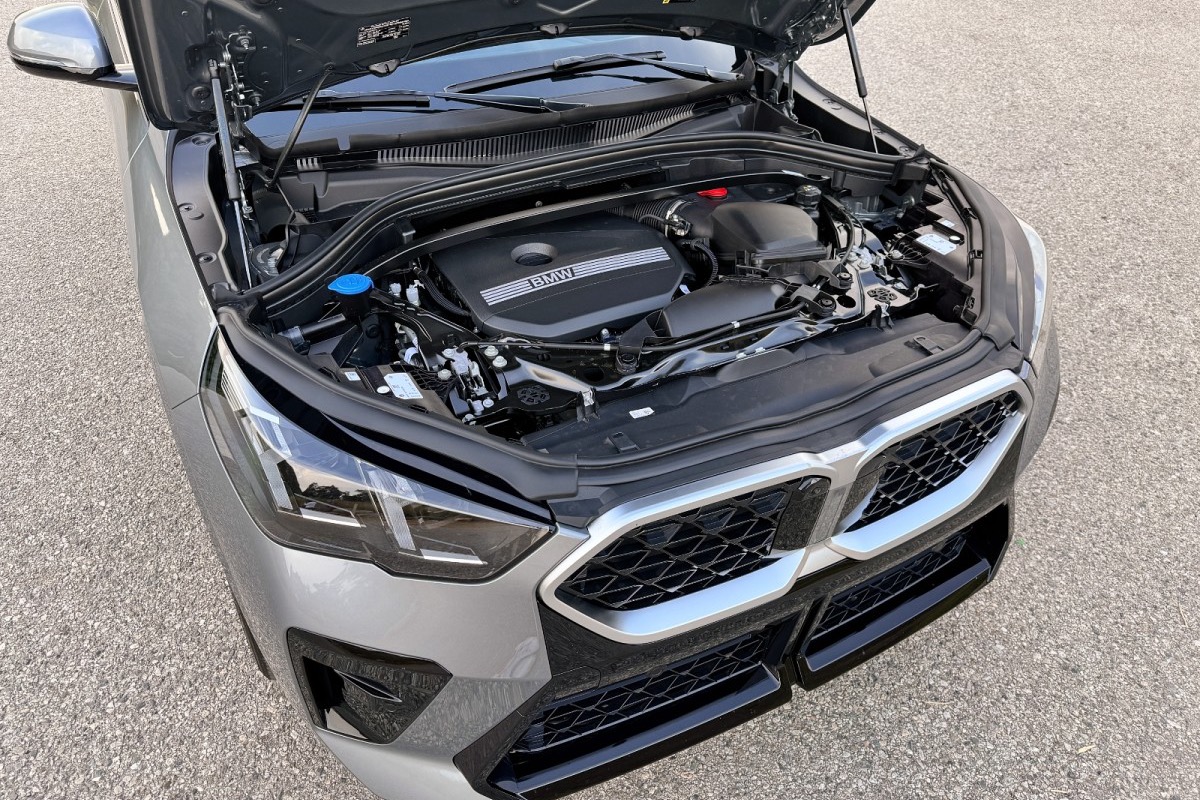
Both versions of the X2 have a turbocharged 2.0-litre four-cylinder engine. In the xDrive28i, it makes 241 horsepower from 4,500 to 6,500 rpm and 295 pound-feet of torque between 1,500 and 4,000 rpm. The M35i is ready to play with 312 hp from 5,750 and 6,500 rpm. It makes the same amount of torque but at slightly higher revs, between 2,000 and 4,500 rpm.
These engines pair with a seven-speed dual-clutch automatic transmission (DCT) that can seem unrefined at times, typically right after starting the X2 on a chilly morning. BMW’s xDrive all-wheel-drive (AWD) system is standard, and thanks to its 20.5 centimetres of ground clearance and standard hill descent control system, you might feel confident doing some light off-roading.
On the pavement, you can select between Efficient, Personal, and Sport driving modes. All X2s also get ventilated four-wheel-disc brakes with brake-fade compensation. M Sport packages add M Sport Brakes, Sport steering, and an M-tuned adaptive suspension. Wheels range in size from 19 to 21 inches in diameter. Our xDrive28i M Sport test vehicle wore P245/45R19 Michelin Pilot Sport 4S tires.
That rubber supplied impressive grip, but the X2 nevertheless lacked BMW’s traditional joie de vivre. Even in Sport mode, the adaptive suspension felt too soft on undulating mountain roads, allowing more vertical and lateral body motion than is preferable. In addition, the xDrive28i model’s turbo powertrain lacks oomph, especially when compared to similarly sized electric SUVs, and we decided the brake pedal feel and response did not bolster driver confidence.
Thanks to the acoustic window glass on most X2s, it is relatively quiet on the highway. Still, the driving character is unlike that of other BMWs in that it’s easy to stick close to the posted limit. Nothing about this SUV encourages its drivers to endanger their licenses.
In urban and suburban environments, the X2 feels zippy and firm and is easy to maneuver when parking. That’s especially true when equipped with the available Parking Assistant Plus camera technology, which compensates for the SUV’s mail-slot rear window and otherwise terrible rear visibility. Overall, the new X2 occasionally exhibits the confident and capable driving dynamics for which BMW is known. Most of the time, it drives like any other entry-level luxury SUV. That’s disappointing.
So was the fuel economy. On our evaluation loop, the X2 xDrive28i M Sport averaged 11.2 litres per 100 kilometres, considerably higher than the official Natural Resources Canada fuel consumption estimate of 8.5 L/100 km in combined driving. (The M35i is estimated to burn 8.9 L/100 km in combined driving.)
Form & function
If the new X2 isn’t as much fun to hustle as the first-generation version, the second-generation model improves in practical ways. For example, it is significantly bigger than the version it replaces, adding more interior room and cargo space in the process. In our estimation, while the new X2 remains an entry-level model, it is no longer a truly small SUV.
Our test vehicle had the available front sport seats, and they’re exceptionally comfortable and supportive. The artificial leather looks and feels like the real thing, and you enjoy a good view out to the front and sides. Oddly, the M Sport steering wheel rim is so thick that some drivers might be unable to wrap their hands completely around it. However, it is perfectly shaped and pleasing to grip.
Passengers will find the X2’s slightly low and reclined rear seats much more accommodating, especially regarding legroom. Air-conditioning vents and USB charging ports enhance the ride, and BMW provides adequate storage, though the tray under the air vents won’t hold anything in place if the driver accelerates hard, brakes suddenly, or turns rapidly.
BMW equips the X2 with a large storage tray underneath the centre armrest and control pod, but it is hard to see and reach. A dedicated smartphone charger with a bracket to hold your device in place is available, and the lower door panel bins are generously sized. In addition, you can stash small items in the shallow tray under the centre armrest.
Behind the 40/20/40 split-folding back seat, the X2 provides 716 litres of cargo space. That figure is deceptive; there isn’t much room underneath the cargo cover for luggage. Remove it and pack the cargo area to the roof, and you’ll come closer to fitting that much stuff in the trunk. Or, fold the back seat down to take advantage of 1,464 litres of cargo volume, which is more than you’ll find in the BMW X1.
Technology
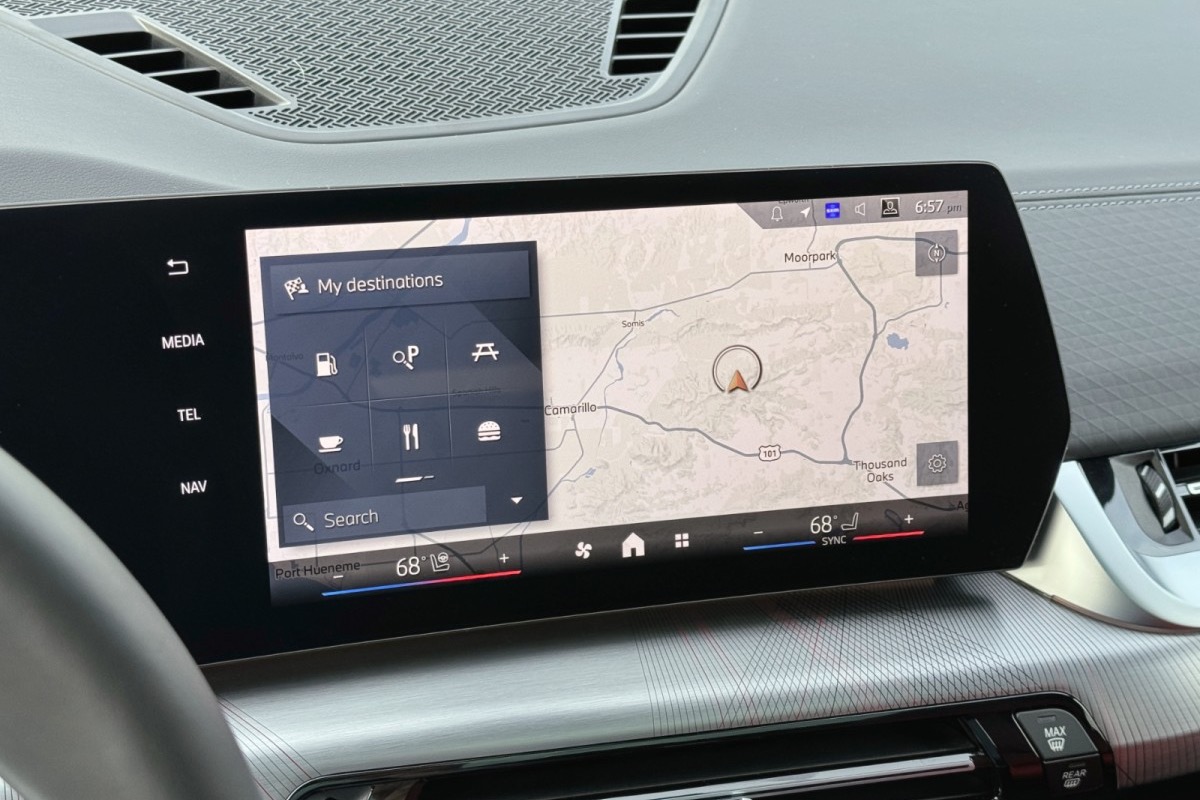
Dominating the dashboard, the BMW Curved Display houses a 10.25-inch digital instrumentation panel and a 10.7-inch touchscreen infotainment system powered by BMW Operating System 9 (iDrive 9). The displays change their appearance depending on the driving mode. This implementation of iDrive includes Quick Select organization of menus and apps. That means you can quickly navigate to a display showing all of them or subsets under primary topics. The approach helps, but iDrive 9 is undeniably complex.
The standard BMW Live Cockpit Plus setup equips the X2 with numerous connected services, a cloud-based navigation system, wireless Apple CarPlay and Android Auto connectivity, and a SiriusXM 360L Platinum Plan to satellite radio. In addition, a conversational Intelligent Personal Assistant stands ready to act on spoken voice commands and queries. It works exceptionally well, though it did not direct us to SXM channel 19 (the Bob Marley station) when we said: “Hey BMW, we want to listen to reggae music.”
A head-up display is available for the 2024 X2. Using a combination thumb wheel and toggle switch on the steering wheel, you can configure it to Standard, Assisted, and Sport data themes. The same control can also be used to modify the data and contents of the digital instrumentation.
Overall, BMW does a good job of simplifying the in-cabin technology. Still, by removing so much switchgear from the cabin in favour of touch-sensing surfaces and dual-action controls (the thumb wheel/toggle thingy serves double duty to control the stereo), it is easy for a driver to become distracted despite the impressive Intelligent Personal Assistant.
In addition, numerous available cameras provide various functions. They include a surround-view function when maneuvering, a remote view of the X2 via a smartphone app, a Drive Recorder that can save 60 seconds of video from a collision, and automatic recording of the exterior and interior if the anti-theft system activates. You can even use the interior camera to take selfies. Seriously.
Safety
BMW equips the X2 with standard forward-collision warning, automatic emergency braking, active blind-spot monitoring, and lane departure warning. Other features include front and rear parking sensors, semi-autonomous parking assist, and a semi-autonomous backup assist system that can follow the path you took to park in the current location.
The optional Advanced Driving Assistance Package adds adaptive cruise control, lane-keep, and lane-centring assist, evasive steering assist, and lane-change assist, and emergency stop assist. This package also includes a Traffic Jam Assistant with hands-free driving on selected limited-access highways at speeds under 65 km/h.
Due to BMW’s switchgear reduction effort, we had no idea how to adjust the following distance to traffic ahead. That was super frustrating because other cars kept cutting into the gap ahead, slowing progress, and showing us how the X2 frequently brakes too hard in response to lane interlopers.
The driver aids otherwise worked as advertised—with a single exception. Where an entrance ramp merges with a highway in the middle of a bend, the lane-assist technology struggled to navigate the situation smoothly. However, the X2’s tech effortlessly sailed through a T-shaped intersection with turn lanes and kinked travel lanes, a spot that usually causes driver assist systems to disengage momentarily.
Though the second-generation 2024 BMW X2 is brand new, the Insurance Institute for Highway Safety (IIHS) has already published crash-test ratings, which were good enough for a Top Safety Pick award.
Cost-effectiveness
Technically, BMW sells the only premium-brand SUV coupe at the X2’s base price. But that’s mainly because other automakers selling similarly rakish-looking crossovers don’t call them coupes. Take the Tesla Model Y, for example, which is similar in price to a base X2 xDrive28i after factoring in EV rebates.
When you broaden the scope to include gas-fueled crossovers with rakish instead of boxy back ends, the Audi Q3 and Cadillac XT4 are more affordable than the BMW, and the Lexus UX and Mercedes-Benz GLA start in the same pricing neighbourhood.
Aside from its love-it-or-hate-it styling, traditional Ultimate Driving Machine credentials could help the 2024 BMW X2 M35i stand out from this crowd. Unfortunately, in xDrive28i M Sport spec, it doesn’t qualify.
Note: Images show a US model.
What owners say
Trims & specs
Base MSRP $51,400 | Seating 5 |
Engine 2.0L 312 hp I4 | Cargo Capacity 25.3 cu ft |
Combined MPG 27 | Drivetrain AWD |
Base MSRP $42,000 | Seating 5 |
Engine 2.0L 241 hp I4 | Cargo Capacity 25.3 cu ft |
Combined MPG 28 | Drivetrain AWD |


