2023 Acura TLX Reviews, Pricing & Specs

Pros & cons
What we like
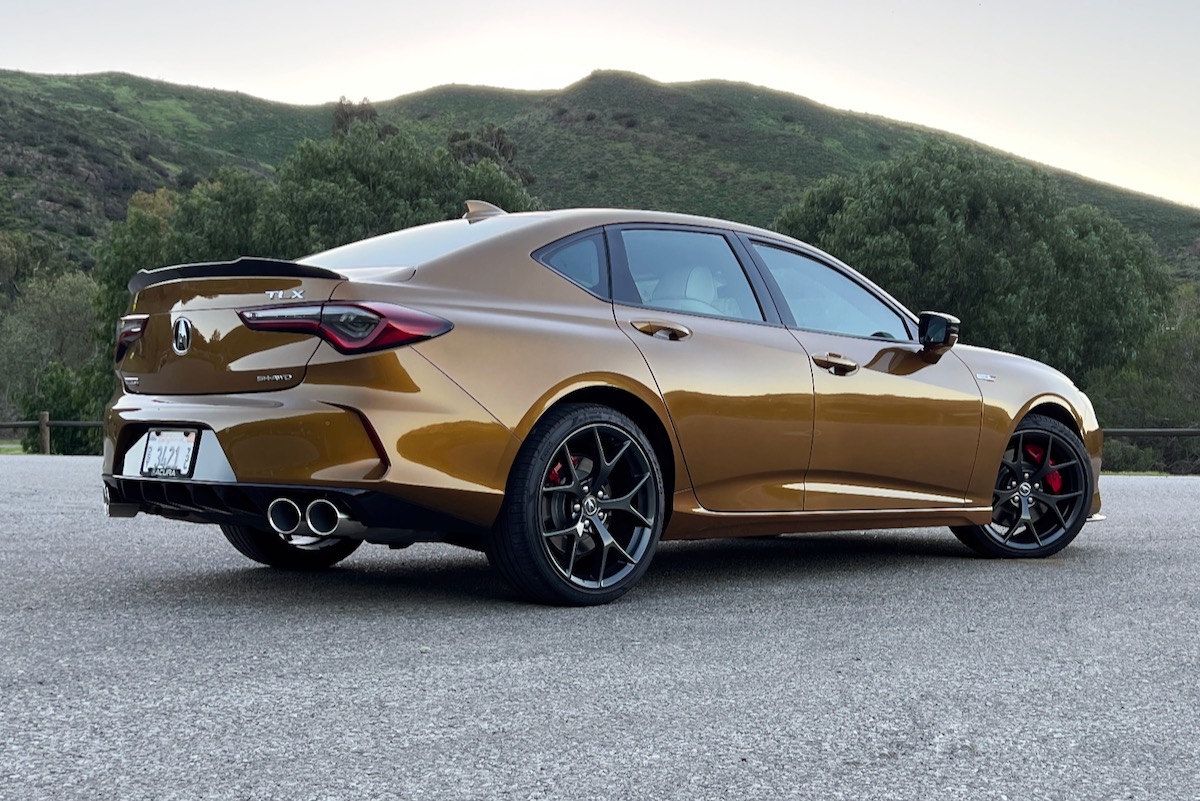
Stylish design
Fun to drive
Comfortable
What to consider
Poor ergonomic design
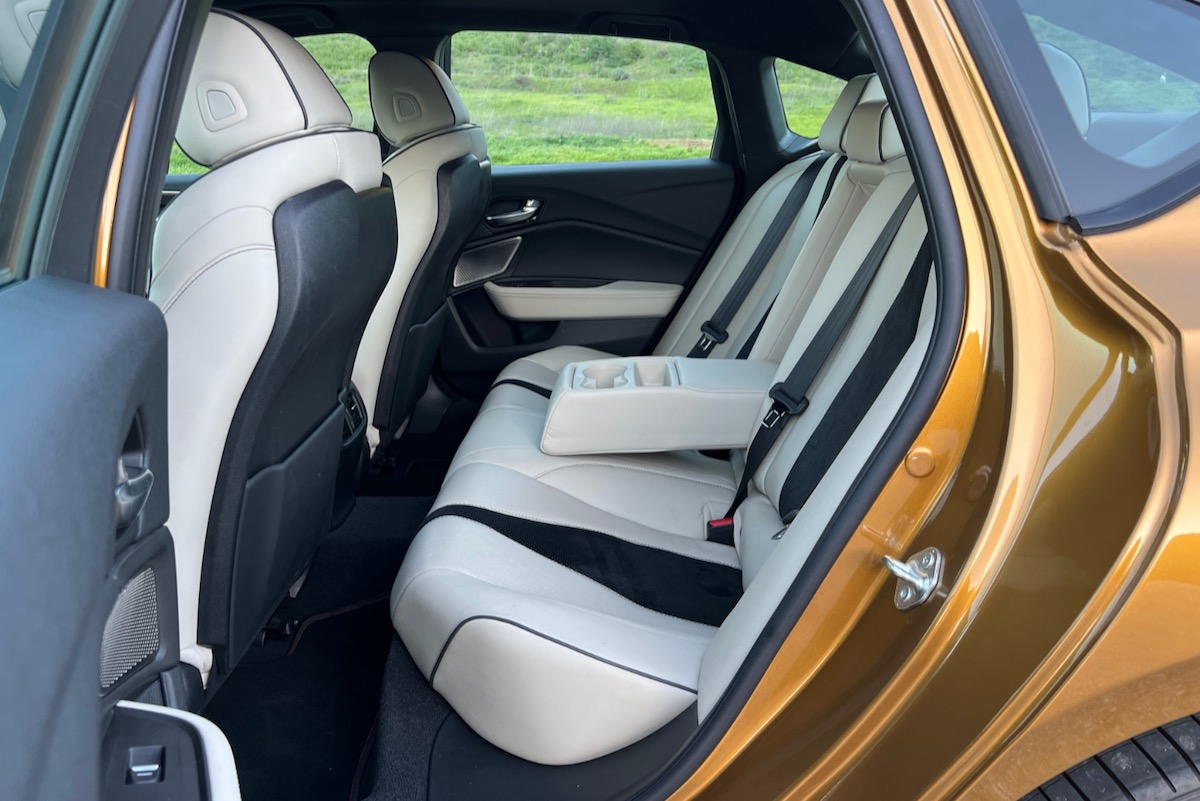
Cramped back seat
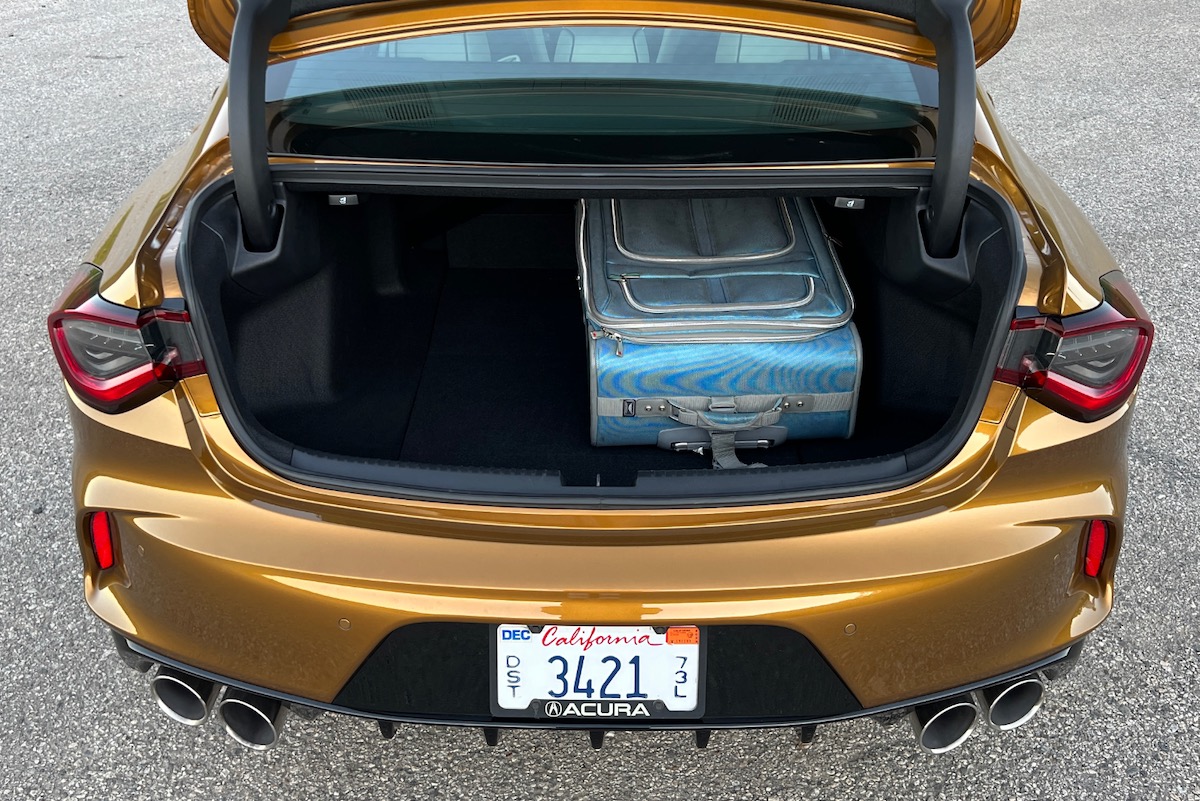
Not much cargo space
Expert review
With the 2023 TLX Type S, Acura finds a sweet spot in the luxury sports sedan segment.
Over the years, the Acura TLX has dropped in popularity even among the overall decline of sedans. How did this happen? Chalk it up to poor design decisions. From “the beak” on the fourth-gen TL to the rapid technological aging of the first-gen TLX, Honda’s luxury arm squandered opportunity in the midsize luxury sports sedan segment. And now that consumers have mostly switched to SUVs, there simply aren’t many people buying cars like the 2023 Acura TLX.
out of 10 expert review
Look & feel
Aside from the consumer shift to SUVs, other factors hamper the latest Acura TLX. The latest redesign for the 2021 model year arrived during the pandemic, and supply chain constraints have limited Acura’s ability to build vehicles. Add the new and used car pricing roller-coaster of the past few years and rising interest rates, and it’s not easy for Acura to advertise the appealing low-down, low-payment leases it previously relied on to move the metal. Acura also doesn’t dump its vehicles into rental fleets like some rivals.
That makes the 2023 Acura TLX a rarity on the road. We tested a sporty and eye-catching TLX Type S dressed in Tiger Eye Pearl paint, a performance wheel and tire package, and premium floor mats. In Canada, these upgrades would bring the manufacturer’s suggested retail price (MSRP) to roughly $67,500, including the $2,700 charge for delivery and other fees.
Acura based the latest TLX on a concept vehicle that introduced a new design language to the brand. Though it uses a front-wheel-drive (FWD) platform, the TLX is long, low, and lean and features a rear-wheel-drive (RWD) look as it tapers into a tidy tail. Admittedly, the dramatic styling takes a toll on the rear-seat headroom and legroom, and cargo space. But the car looks terrific, and Acura knows that if you prioritize a more comfortable back seat and added cargo room, you’ll likely get the RDX or MDX SUV instead.
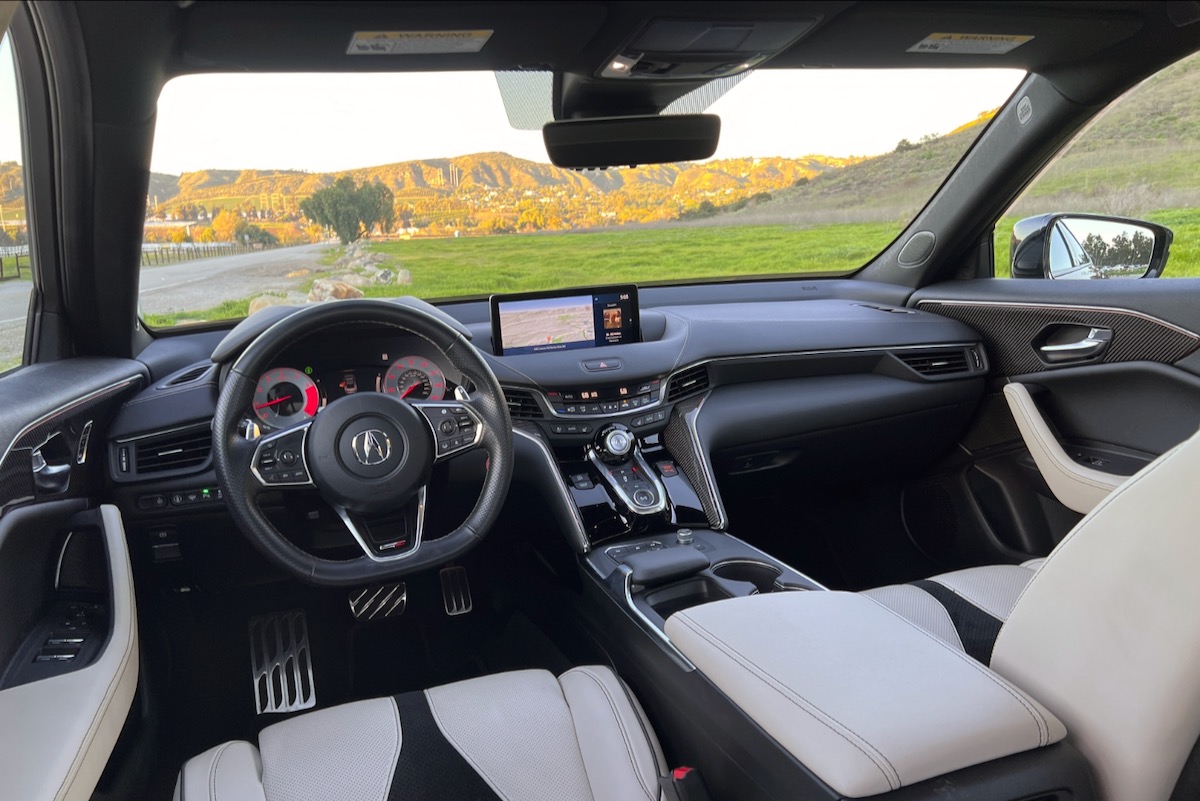
Inside, the TLX employs a layered dashboard design that emphasizes the car’s width. Unfortunately, style takes precedence over practicality again, as Acura chooses a control layout that forces you to relearn how to shift, use the infotainment system, and adjust driving modes. It causes unnecessary distraction, even after days or weeks of driving the car.
Our Type S test car, equipped with a turbocharged V6 engine and Acura’s Super Handling All-Wheel Drive (SH-AWD), was the most expensive version of the 2023 TLX you can buy. At the other end of the spectrum, a base TLX A-Spec with a turbocharged four-cylinder and SH-AWD, which is standard in Canada, costs $54,729, including the destination charge. Option packages for the TLX include A-Spec and Platinum Elite.
Performance
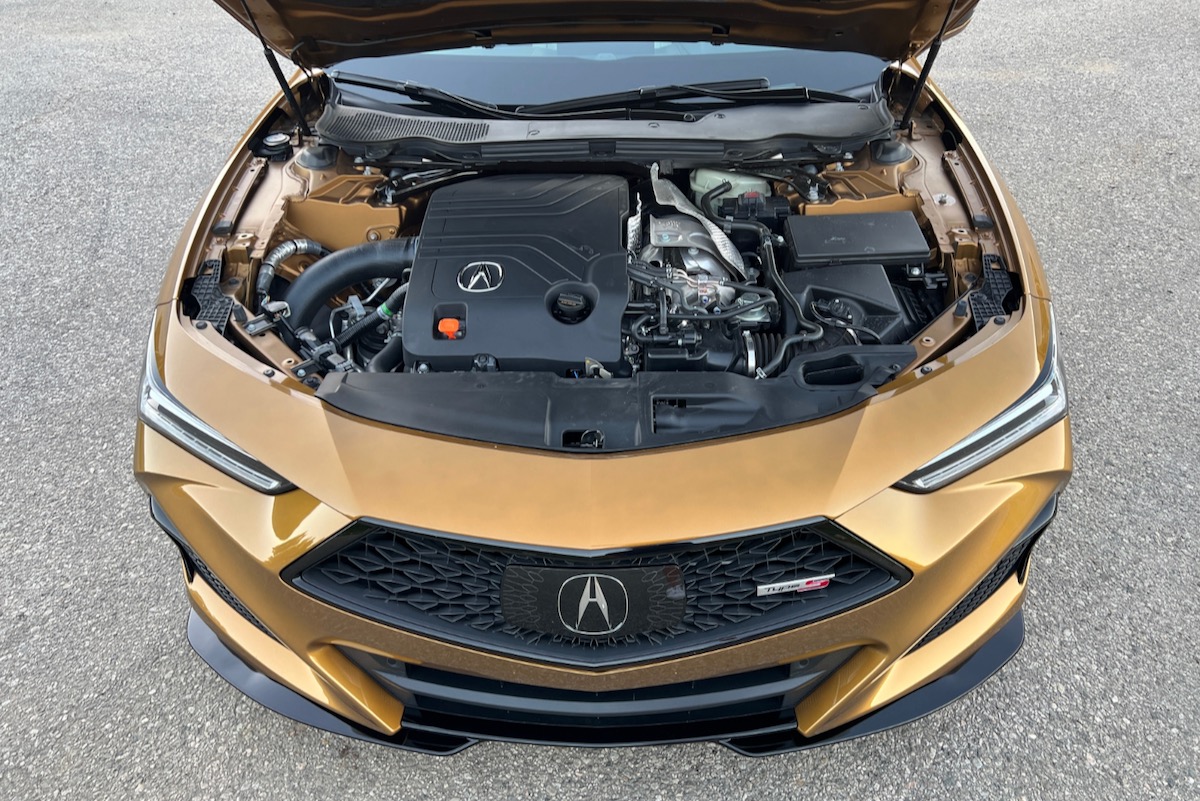
Most versions of the 2023 TLX have a turbo 2.0-litre four-cylinder engine making 272 horsepower and 280 pound-feet of torque. It pairs with a paddle-shifted 10-speed automatic transmission and, in Canada, standard SH-AWD. This engine has a rated fuel economy of 11.3 litres per 100 kilometres in city driving, 8.1 on the highway, and 9.8 combined.
Acura equips the TLX with several software features designed to limit unwanted transmission shifts when driving the car with enthusiasm. In addition, the TLX’s driver can select from multiple Integrated Dynamics System (IDS) driving modes, including Comfort, Normal, Sport, and Individual. The Type S adds a Sport+ mode.
Acura’s SH-AWD system provides mechanical torque vectoring by putting up to 70 percent of the powertrain’s output to a single rear wheel. Accelerate hard out of a corner or curve, and you can feel the system working to maximize power, grip, and control.
In addition to SH-AWD, a turbocharged 3.0-litre V6 engine is standard in the TLX Type S—the sportiest TLX model. It makes 355 hp and 354 lb-ft of torque, which is plenty of power for this size of a car. However, as you might expect, the Type S also features numerous enhancements to improve performance and make driving more enjoyable, including a sport automatic transmission with rev-matching downshifts, performance-tuned suspension with adaptive dampers and thicker front and rear stabilizer bars, and 14.3-inch front brake rotors with four-piston Brembo front calipers. Type S models also get added structural bracing and frame stiffeners, active exhaust, revised steering calibration, and 20-inch wheels wrapped in 255/35 tires.
Acura says the Type S can accelerate to 60 mph in five seconds (Acura does not provide 0 to 100 km/h figures) and reach a top speed of 250 km/h. Natural Resources Canada estimates it will burn 12.3 L/100 km in city driving, 9.4 hwy, and 11.0 combined. During the test drive, the Type S averaged 11.8 L/100 km.
Fuel efficiency may not be the Type S model’s strongest suit, but this car is undeniably fun to drive, and the performance modifications work better on the 2,350-kilogram (4,200-pound) curb weight of this car than on the higher-riding and heavier MDX Type S crossover SUV. Even the TLX’s Electro Servo braking system proved less irritating in the TLX Type S than the MDX Type S. But it still represents the single flaw in an otherwise tasty performance recipe.
Here’s the problem with the brakes: there isn’t a physical connection between the brake pedal and the system’s master cylinder. Instead, based on driver inputs, electronics interpret brake pedal use and pressure and send a signal to the hydraulic system. Acura bases this technology on what it used in the discontinued NSX sports car, theorizing that if it was good enough for that mid-engine exotic, it’s good enough for the TLX.
In the real world of stop-and-go traffic, the TLX’s brakes are fine. You’d never guess they’re a brake-by-wire design. However, on a twisty mountain road with the car in Sport or Sport+ mode, the transmission shifting according to how you’re driving, they aren’t as satisfying.
For example, imagine you’ve just rocketed down a straight section of road, and you’re coming up on a sharp curve. You begin braking, and the transmission ultimately responds with a rev-matched downshift. That downshift adds drivetrain friction, helping slow the car, so you bleed a little foot pressure off the brake pedal.
This is where things get a little sketchy because the electronic system often reduces braking more than you intend, leaving you with too much speed when entering or, if you’re a trail-braker, as you’re rounding a curve. The mismatch between your inputs and what the brakes actually do is subtle but obvious enough to draw your attention, cause momentary distraction, and force a change in strategy to achieve the desired outcome. As a result, the TLX Type S falls short of that holy grail of sports sedans, which is to feel as though it is hard-wired to your nervous system.
That’s unfortunate because, otherwise, the TLX Type S is a delight to drive. The car is fast, sounds terrific when revved, and slings around hairpin curves and past apexes with grace. The steering won’t dazzle you with its telepathic response to inputs, but neither does it require mid-corner correction or feel over or under-assisted while driving.
The test car’s lightweight alloy wheels and summer performance tires proved outstanding, supplying enormous grip and silence near the limit of adhesion while playing nice with the adaptive damping performance suspension. You’d never guess that 59 percent of the TLX Type S’s weight sits over the front wheels, a credit to the brake-based Agile Handling Assist technology that helps to reduce or eliminate understeer.
The Type S is also agreeable for daily driving when you’re not exploring its limits in the Sport+ driving mode. However, there are a few minor issues of note. With the suspension in its Normal setting, it is too easy to scrape the TLX’s nose on speed humps, drainage dips, and driveway aprons, so drive over them carefully. Additionally, the adaptive suspension occasionally produces artificial responses to the road surface, producing a disconnect between the driver’s expectations and the car’s behaviour. The automatic engine stop/start operation is also apparent, but it smoothly restarts, and the drivetrain is ready to go when you are. However, the test car allowed quite a bit of road noise to enter the cabin at highway speeds.
Form & function
In Canada, Acura offers the TLX Type S exclusively with the Ebony interior colour, rendered in premium Milano leather with Ebony artificial suede inserts and contrast stitching and piping. Our test car’s Orchid interior looked terrific, especially with the optional carbon fibre trim. However, this is a U.S.-spec test unit, and this colour is not available in Canada.
The Type S model’s flat-bottom sport steering wheel fronts a set of analog gauges with a brushed metal background. Unfortunately, the low-contrast red markings prove challenging to read at a glance. It would be great if the TLX offered the same digital instrumentation panel you can find in the Acura MDX.
Every Type S gets a set of 16-way power-adjustable front sport seats. They include adjustable thigh support and upper-side bolsters and feature automatic heating and ventilation. A heated steering wheel with paddle shifters is standard on every Acura TLX sold in Canada.
Overall, the front seat comfort is excellent. But, unfortunately, rear seat comfort is another story. The TLX’s rear doors are narrow, and the back seat is small, mainly lacking legroom. That’s because when Acura designed the TLX, it elected to preserve the Acura Precision Concept car’s long hood, short deck, and dramatic side sculpturing while maintaining a rear-drive sedan’s visually pleasing dash-to-axle ratio.
Around the back, the TLX’s trunk holds 382 litres of cargo. That’s more on par with a typical compact car than a midsize model, but a flat trunk floor and enclosed trunk hinges help you make the best of it.
Technology
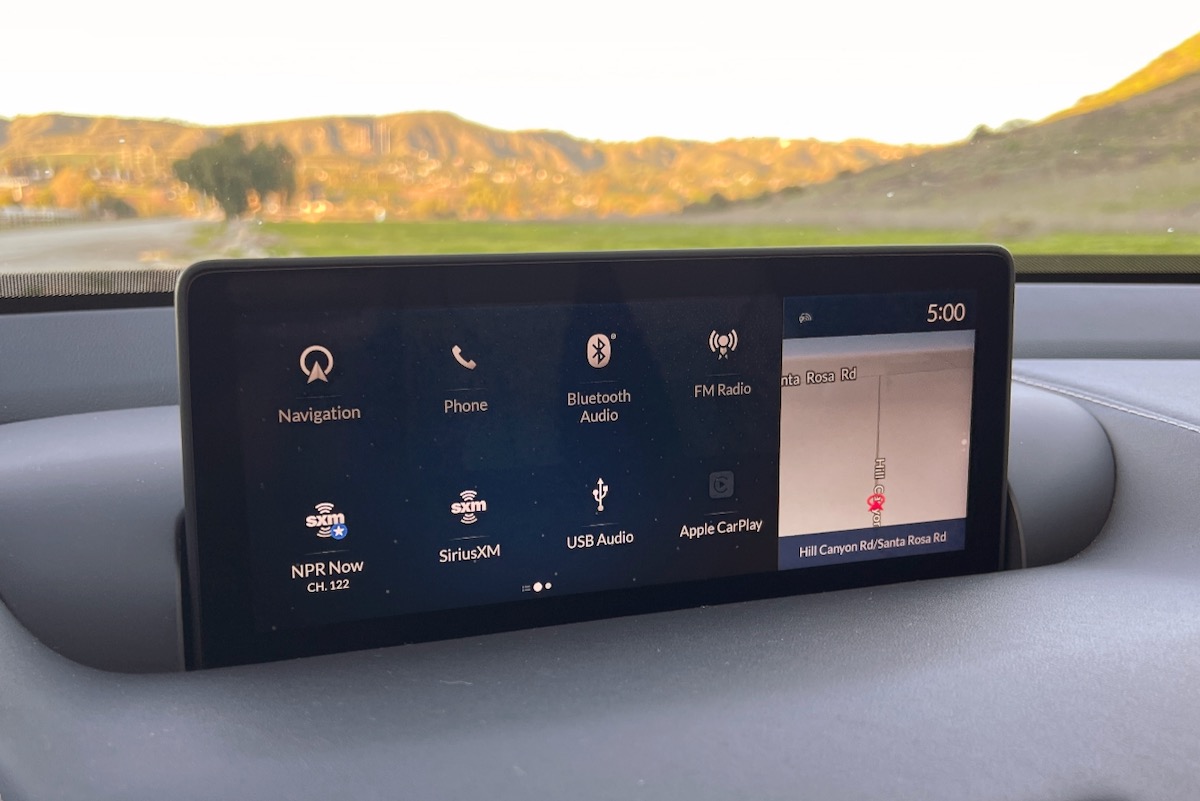
Consumer frustration with technology is a leading contributor to owner dissatisfaction with new vehicles, and with the 2023 TLX, Acura isn’t doing itself any favours. The True Touchpad Interface (TTI) infotainment system is the primary source of irritation, although the large driving mode dial in the middle of the dashboard and the collection of transmission buttons and switches below it are contributing factors.
The infotainment system’s 10.2-inch display is not touch-sensing. Instead, you use the TTI touchpad and buttons on the centre console, the steering wheel controls, and the natural voice recognition system. Thankfully, Acura provides a stereo volume knob and a radio tuning button on the centre console. Unfortunately, it is easy to reach for the driving mode knob expecting to turn the volume up or down, which is likely how we found the car in unexpected driving modes on several occasions.
Acura’s TTI provides a one-to-one relationship between the display screen and the touchpad. In other words, the spot you touch on the TTI pad corresponds to the control function you choose on the screen. In theory, this sounds straightforward. In practice, it proves distracting and is not superior to a touchscreen with traditional knobs and buttons located on or near the display. Worse, the TTI occupies precious centre console real estate that could serve as added storage, making using the standard wireless smartphone charging pad more difficult.
Standard infotainment features for all 2023 TLX models include Apple CarPlay, Android Auto, SiriusXM satellite radio, a wireless charging pad, on-board navigation, and a 17-speaker ELS Studio 3D premium audio system that sounds terrific. (AcuraLink connected services and access to the 4G Wi-Fi hotspot cost extra.)
We had no trouble pairing my iPhone 13 Pro to the TLX’s Bluetooth or streaming Pandora stations from my phone. Unfortunately, the TLX does not support wireless Apple CarPlay and Android Auto, so we did not use that function.
Safety
All TLX models come standard with driver aids like forward-collision warning with pedestrian detection, automatic emergency braking, lane-departure warning, lane-keeping assist, and lane-centring assist. The TLX also includes a traffic sign recognition system, adaptive cruise control with low-speed following capability, Traffic Jam Assist, blind-spot monitoring system, rear cross-traffic alert, and front and rear parking sensors.
In addition, the Type S includes rain-sensing wipers, a wiper de-icer system, and a surround-view camera, but it does not come with the head-up display (HUD) you’ll find on the TLX Premium Elite. We didn’t miss the HUD but the surround-view camera is helpful, especially in parking lots where it could be easy to crunch the lower front fascia accidentally.
Aside from issuing a couple of false lane-departure warnings and lane-keeping assists when traveling over pavement scars left by a previous construction project, and the adaptive cruise control’s leisurely acceleration back up to speed when traffic ahead cleared, the driver assist systems worked pretty well. However, the lane-keeping systems can struggle if the sun is in front of the TLX, especially if it’s low mid-winter light.
The TLX also features an Advanced Engineering Compatibility (ACE) body structure to deflect crash energy from the car’s interior. Eight airbags are standard, too, including one for the front passenger that aims to reduce head injury in a collision.
Based on crash-test results, the engineering appears to pay dividends. The Insurance Institute for Highway Safety (IIHS) gives the 2023 TLX a Top Safety Pick+ rating, but as we write this review, it applies only for the 2022 calendar year. Be sure to check with the IIHS for any updates.
The National Highway Traffic Safety Administration (NHTSA) gives the 2023 TLX a five-star overall crash-test rating, including a five-star rollover resistance rating. The only downgrade pertains to the front passenger’s seating position in a frontal-impact collision, where the car earns a four-star rating.
Cost-effectiveness
There are two ways to assess the Acura TLX Type S’s cost-effectiveness. First, you can compare it to the Audi S4 or BMW M340i xDrive. The Acura’s base price bests the BMW and the Audi, and the TLX Type S is better equipped right out of the box.
Second, you can compare it to the Mercedes-Benz CLS Coupe, which carries a base price more than $20,000 higher than the TLX Type S. Similar to the Acura, the Mercedes is a midsize car with coupe-like proportions, but the Benz has greater brand cachet. You can save money with the smaller Mercedes-Benz CLA Coupe, but by the time you finish optioning a CLA 250 4Matic to TLX Type S specification, the smaller car is essentially the same price.
Either way, the TLX Type S compares favourably in terms of value. Also, since an Infiniti Q50 Red Sport 400 is similarly priced, you can hope to save money only by going with a Cadillac CT5-V, a Genesis G70 3.3T, or a Lexus IS 350 F Sport. But let’s not forget about the Tesla Model 3 Performance, which mops the floor with the Acura (and everything else in the segment) when accelerating in a straight line.
Aside from the electric Tesla, the Acura TLX Type S sits in a sweet spot in the luxury sports sedan market, featuring a compelling blend of style, performance, equipment, and value. Now the company just needs to get the word out.
Note: Images show a US model.

What owners say
I like it; it’s very pricey. It’s missing auto mirrors and heated steering wheel
August 1, 2026Really nice car for the money. Same engine as A spec but a little less standard content. Still well equipped.
June 1, 2024Trims & specs
Base MSRP $55,750 | Seating 5 |
Engine 3.0L 355 hp V6 | Cargo Capacity 13.5 cu ft |
Combined MPG 22 | Drivetrain AWD |
Base MSRP $44,050 | Seating 5 |
Engine 2.0L 272 hp I4 | Cargo Capacity 13.5 cu ft |
Combined MPG 26 | Drivetrain FWD |
Base MSRP $49,000 | Seating 5 |
Engine 2.0L 272 hp I4 | Cargo Capacity 13.5 cu ft |
Combined MPG 25 | Drivetrain AWD |
Base MSRP $56,550 | Seating 5 |
Engine 3.0L 355 hp V6 | Cargo Capacity 13.5 cu ft |
Combined MPG 21 | Drivetrain AWD |
Base MSRP $46,800 | Seating 5 |
Engine 2.0L 272 hp I4 | Cargo Capacity 13.5 cu ft |
Combined MPG 26 | Drivetrain FWD |
Base MSRP $51,250 | Seating 5 |
Engine 2.0L 272 hp I4 | Cargo Capacity 13.5 cu ft |
Combined MPG 25 | Drivetrain AWD |
Base MSRP $40,050 | Seating 5 |
Engine 2.0L 272 hp I4 | Cargo Capacity 13.5 cu ft |
Combined MPG 26 | Drivetrain FWD |
Base MSRP N/A | Seating N/A |
Engine N/A | Cargo Capacity N/A |
Combined MPG N/A | Drivetrain N/A |


Pricing trends
MSRP range
$40,050 - $56,550
Current avg. market price
$39,563
Trending down by 1.4% this month
May 2026 - October 2026

