2026 Genesis GV70 vs 2026 Toyota bZ
Overview | |
Listings82 | Listings47 |
Ratings & Reviews | |
User Reviews | User Reviews |
Expert reviews8.2 out of 10 | Expert reviews6.5 out of 10 |
Pros
Cons
| Pros
Cons
|
2026 Genesis GV70 Reviews SummaryThere are some subtle alterations to the GV70’s exterior, most notably to the grille and lighting clusters. To find the biggest changes for 2026, though, you’ll have to look inside to see the very wide OLED display that dominates the view from the driver’s seat. In addition to the massive infotainment panel, the software that powers the GV70’s abundant technology and safety packages has gone through a comprehensive upgrade. Verdict: While we’d love to see Genesis push the styling envelope a little further — recent concepts like the X Gran Coupe and Equator show what the Korean brand’s stylists are capable of — the 2026 GV70 remains near the head of its class of compact luxury crossovers. The GV70 has been Genesis’s most popular model in Canada since launch and represented 57% of the brands total Canadian sales last year. Expect that trend to continue for the foreseeable future. | |
2026 Toyota bZ Reviews SummaryReaders are looking at the electric vehicle formerly known as the bZ4X. It wears a shorter name for 2026, but that’s not the big news. More power, up to 468 kilometres of range, a standard NACS charging port (with a CCS adapter), and Plug & Charge capability are all major improvements. Toyota has also tidied up the styling inside and out and added a larger infotainment screen. Verdict: With the refreshed 2026 bZ, Toyota has fixed the bZ4X’s most significant flaws, making this a genuinely competitive model at a comparatively affordable price. | |
No video found | No video found |
Popular Features & Specs | |
Engine2.5L 300 hp I4 | Engine168 hp Electric |
DrivetrainAWD | DrivetrainFWD |
Seating Capacity5 | Seating Capacity5 |
EV Battery Capacity | EV Battery Capacity57.7 kWh |
Fuel Economy (City)11.8 L(e)/100 km | Fuel Economy (City)1.6 L(e)/100 km |
Fuel Economy (Highway)9.0 L(e)/100 km | Fuel Economy (Highway)2.0 L(e)/100 km |
Battery Charge Time (240V) | Battery Charge Time (240V)6 hours |
Engine | |
Engine Name2.5L 300 hp I4 | Engine Name168 hp Electric |
Battery Charge Time (240V) | Battery Charge Time (240V)6 hours |
DrivetrainAWD | DrivetrainFWD |
Fuel Economy | |
EV Battery Capacity | EV Battery Capacity57.7 kWh |
Fuel Economy (City)11.8 L(e)/100 km | Fuel Economy (City)1.6 L(e)/100 km |
Fuel Economy (Highway)9.0 L(e)/100 km | Fuel Economy (Highway)2.0 L(e)/100 km |
Interior | |
Seating Capacity5 | Seating Capacity5 |
Key Features | |
Navigation SystemStandard | Navigation SystemOptional |
Safety | |
Front Crash Overall4 | Front Crash Overall4 |
Side Crash Overall5 | Side Crash Overall5 |
Dimensions & Capacity | |
Cargo Space818 L | Cargo Space784 L |
Curb Weight1962 kg | Curb Weight1840 kg |
Height1631 mm | Height1651 mm |
Length4714 mm | Length4689 mm |
Width1910 mm | Width1859 mm |
Wheelbase2875 mm | Wheelbase2850 mm |
Maximum Payload578 kg | Maximum Payload474 kg |
Number of doors4 | Number of doors4 |
Maximum Towing Capacity1588 kg | Maximum Towing Capacity |
Overview | ||
Listings | ||
Ratings & Reviews | ||
User reviews | ||
Expert reviews | 8.2 out of 10Read full review | 6.5 out of 10Read full review |
Pros & cons | Pros
Cons
| Pros
Cons
|
Summary | There are some subtle alterations to the GV70’s exterior, most notably to the grille and lighting clusters. To find the biggest changes for 2026, though, you’ll have to look inside to see the very wide OLED display that dominates the view from the driver’s seat. In addition to the massive infotainment panel, the software that powers the GV70’s abundant technology and safety packages has gone through a comprehensive upgrade. Verdict: While we’d love to see Genesis push the styling envelope a little further — recent concepts like the X Gran Coupe and Equator show what the Korean brand’s stylists are capable of — the 2026 GV70 remains near the head of its class of compact luxury crossovers. The GV70 has been Genesis’s most popular model in Canada since launch and represented 57% of the brands total Canadian sales last year. Expect that trend to continue for the foreseeable future. | Readers are looking at the electric vehicle formerly known as the bZ4X. It wears a shorter name for 2026, but that’s not the big news. More power, up to 468 kilometres of range, a standard NACS charging port (with a CCS adapter), and Plug & Charge capability are all major improvements. Toyota has also tidied up the styling inside and out and added a larger infotainment screen. Verdict: With the refreshed 2026 bZ, Toyota has fixed the bZ4X’s most significant flaws, making this a genuinely competitive model at a comparatively affordable price. |
Video | No video found | No video found |
Popular Features & Specs | ||
Engine | 2.5L 300 hp I4 | 168 hp Electric |
Drivetrain | AWD | FWD |
Seating Capacity | 5 | 5 |
EV Battery Capacity | 57.7 kWh | |
Fuel Economy (City) | 11.8 L(e)/100 km | 1.6 L(e)/100 km |
Fuel Economy (Highway) | 9.0 L(e)/100 km | 2.0 L(e)/100 km |
Battery Charge Time (240V) | 6 hours | |
Engine | ||
Engine Name | 2.5L 300 hp I4 | 168 hp Electric |
Battery Charge Time (240V) | 6 hours | |
Drivetrain | AWD | FWD |
Fuel Economy | ||
EV Battery Capacity | 57.7 kWh | |
Fuel Economy (City) | 11.8 L(e)/100 km | 1.6 L(e)/100 km |
Fuel Economy (Highway) | 9.0 L(e)/100 km | 2.0 L(e)/100 km |
Interior | ||
Seating Capacity | 5 | 5 |
Key Features | ||
Navigation System | Standard | Optional |
Safety | ||
Front Crash Overall | 4 | 4 |
Side Crash Overall | 5 | 5 |
Dimensions & Capacity | ||
Cargo Space | 818 L | 784 L |
Curb Weight | 1962 kg | 1840 kg |
Height | 1631 mm | 1651 mm |
Length | 4714 mm | 4689 mm |
Width | 1910 mm | 1859 mm |
Wheelbase | 2875 mm | 2850 mm |
Maximum Payload | 578 kg | 474 kg |
Number of doors | 4 | 4 |
Maximum Towing Capacity | 1588 kg | |
The 2026 Genesis GV70 showcased Hyundai's luxury arm's prowess in crafting premium vehicles, embodying the brand's "Athletic Elegance" design philosophy. Its refined style was marked by a strong grille and fascia treatment, complemented by a sweeping profile and roofline. The GV70 was available in eight colours in Canada, including four matte hues and the new Ceres Blue, inspired by the first dwarf planet discovered by humanity. The car's face was sharpened with a redrawn crest-shaped grille, flanked by two-line headlamps with micro lens array lighting elements. The interior featured a 27-inch OLED screen dominating the dashboard, with redesigned lighting elements adding a techy glow. The Sport model had unique design elements like dark chrome moulding and 21-inch wheels, with carbon fibre trim inside.
The 2026 Toyota bZ was offered in XLE and Limited trims with either single-motor FWD or dual-motor AWD, and two battery sizes. The larger battery provided more power, performance, and range, with Canadian prices ranging from $47,920 to $63,620. The bZ's restyled exterior looked better with body-colour trim, and the interior featured a cleaner dashboard and centre console. The 14-inch centre touchscreen integrated climate control, and the digital instrument cluster was mounted near the windshield, which could be blocked by the steering wheel. The bZ's seats had an upscale pattern, and the vehicle offered a comfortable ride with good outward visibility. However, the digital instrument cluster's placement and the lack of one-pedal driving capability were noted drawbacks.
The 2026 Genesis GV70 featured a base 2.5-litre turbocharged four-cylinder engine producing 300 horsepower and 311 pound-feet of torque, paired with an eight-speed automatic transmission and standard AWD. The 3.5-litre turbocharged V6 in the 3.5T Sport trim delivered 375 hp and 391 lb-ft of torque. The GV70 offered Comfort, Sport, and Sport+ driving modes, along with a new Terrain Mode for Snow, Mud, and Sand settings. The vehicle's hydro bushings and Highway Body Motion Control improved ride comfort, while the Road Preview feature used cameras to adjust the suspension for a smooth ride.
The 2026 Toyota bZ's FWD XLE model had a single electric motor and a 57.7-kWh battery, providing 168 horsepower and 198 lb-ft of torque, with a range of 380 kilometres. Dual-motor models with a 74.7-kWh battery produced 338 hp, with the XLE AWD offering a range of 468 km. The bZ could recharge from 10% to 80% in about 30 minutes using a DC fast charger. Efficiency tests showed the FWD bZ averaged 13.7 kWh/100 km in Eco mode and 15.9 kWh/100 km in Normal mode. The bZ's traction control system engaged easily, and while it was a comfortable cruiser, it struggled on winding roads due to its all-season tires and lifeless steering.
The 2026 Genesis GV70 offered ample space for tall drivers in the front seats, though the 27-inch OLED screen could be partially blocked by the steering wheel. The centre console featured a rotary shifter and infotainment dial, which could be confusing. Rear seats provided good headroom and shoulder room, but legroom was less generous. The sloping roofline made the rear feel cramped, and cargo space was adequate but less than competitors like the BMW X3.
The 2026 Toyota bZ, built on a skateboard-style EV platform, offered easy entry and exit with 21.1 cm of ground clearance for FWD and 20.6 cm for AWD. The front seats had eight-way power adjustment, with heated and ventilated options in the Limited trim. The bZ lacked a traditional glove compartment but compensated with ample storage solutions. Rear passengers enjoyed good legroom, though foot space was tight. The bZ provided 784 litres of cargo space, expandable to 1,611 litres with the rear seats folded.
The 2026 Genesis GV70 featured a 27-inch OLED touchscreen infotainment system with over-the-air updates, customizable themes, and wireless Apple CarPlay and Android Auto. The system included a 360-degree Surround View Monitor and a customizable digital gauge cluster. Voice commands could control climate, infotainment, and windows, though some features were not fully functional. The GV70 also offered Genesis Digital Key and a fingerprint authentication system.
The 2026 Toyota bZ came with a 7-inch digital instrument cluster and a new 14-inch touchscreen infotainment display. The system supported wireless Apple CarPlay and Android Auto, with SiriusXM satellite radio and complimentary connected service plans. The Drive Connect system powered navigation and voice assistant features, which worked well overall. However, the lack of a home screen and low-contrast daytime display were noted drawbacks.
The 2026 Genesis GV70 included a comprehensive suite of advanced safety features, such as forward collision avoidance assist, lane keeping assist, blind-spot collision avoidance assist, and more. The Genesis Highway Driving Assist II technology detected hands on the steering wheel and proved reliable. While the 2026 model had not been tested by safety organizations, previous versions received high ratings, suggesting similar results for the new model.
The 2026 Toyota bZ featured Toyota Safety Sense 3.0, which included high beam assist, forward collision warning, lane departure warning, and adaptive cruise control. Proactive Driving Assist provided subtle braking and steering inputs. The Limited trim added Traffic Jam Assist and other advanced features. The bZ's adaptive cruise control response was inconsistent, and the driver monitoring system was overly sensitive. The IIHS rated the bZ's front crash avoidance tech as Good, but the headlights received a Poor rating, and frontal-impact crash tests earned Acceptable ratings.
CarGurus highlights
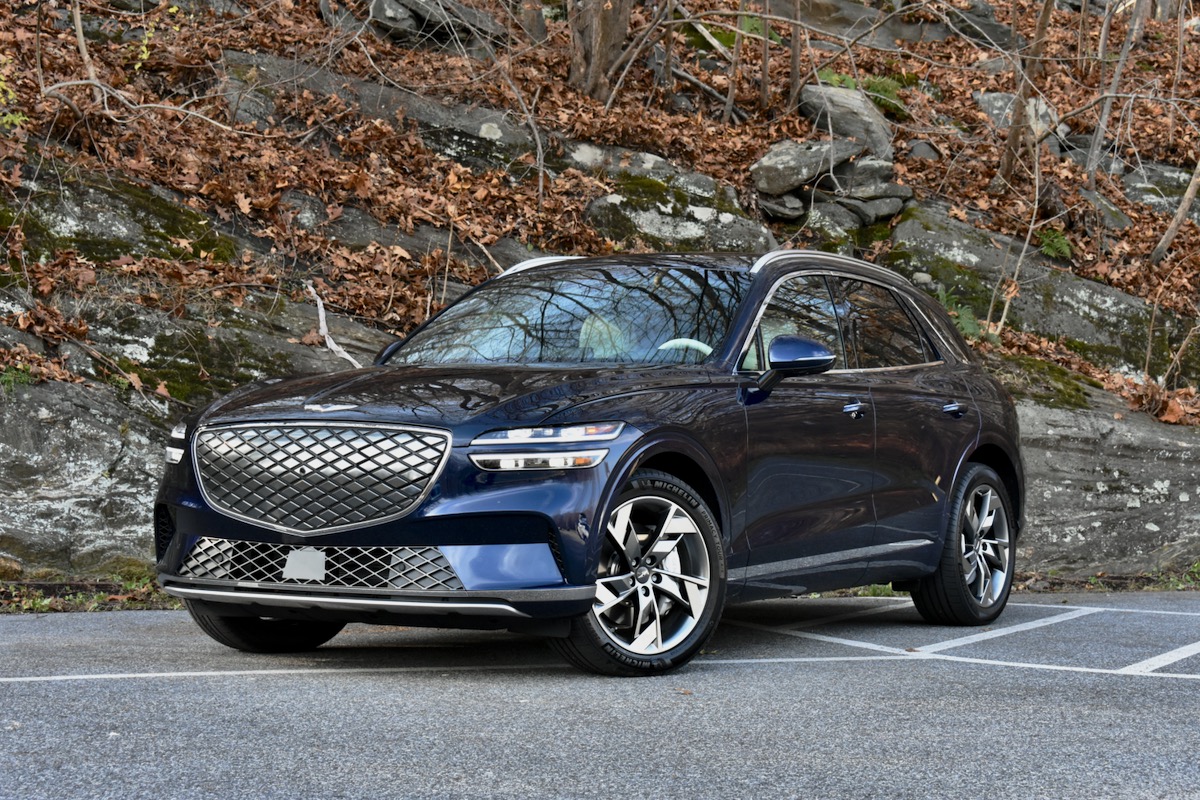
According to CarGurus experts, the overall rating for the 2026 Genesis GV70 is 8.2 out of 10, while the 2026 Toyota bZ scores 6.5 out of 10. Based on these ratings, the Genesis GV70 is the recommended choice for those seeking a luxurious and high-performing vehicle with advanced technology and safety features.
Choose the 2026 Genesis GV70 if:
- You prioritize a luxurious interior with advanced technology and a large OLED screen.
- You want a vehicle with strong performance and multiple driving modes, including a Terrain Mode.
- You value a comprehensive suite of advanced safety features and high safety ratings.


Choose the 2026 Toyota bZ if:
- You are looking for an electric vehicle with a choice of battery sizes and good range.
- You prefer a vehicle with a comfortable ride and ample interior space for passengers and cargo.
- You want a car with a comprehensive suite of safety features, including Toyota Safety Sense 3.0.


CarGurus highlights
According to CarGurus experts, the overall rating for the 2026 Genesis GV70 is 8.2 out of 10, while the 2026 Toyota bZ scores 6.5 out of 10. Based on these ratings, the Genesis GV70 is the recommended choice for those seeking a luxurious and high-performing vehicle with advanced technology and safety features.
Choose the 2026 Genesis GV70 if:
Shop Now- You prioritize a luxurious interior with advanced technology and a large OLED screen.
- You want a vehicle with strong performance and multiple driving modes, including a Terrain Mode.
- You value a comprehensive suite of advanced safety features and high safety ratings.
Choose the 2026 Toyota bZ if:
Shop Now- You are looking for an electric vehicle with a choice of battery sizes and good range.
- You prefer a vehicle with a comfortable ride and ample interior space for passengers and cargo.
- You want a car with a comprehensive suite of safety features, including Toyota Safety Sense 3.0.

By: CarGurus + AI
At CarGurus, our team of experienced automotive writers remain at the heart of our content operation, conducting hands-on car tests and writing insightful guides that are backed by years of industry experience. To complement this, we are harnessing AI to make our content offering more diverse and more helpful to shoppers than ever. To achieve this, our AI systems are based exclusively on CarGurus content, ratings and data, so that what we produce is both unique to CarGurus, and uniquely helpful to car shoppers.
