2025 Toyota Prius vs 2026 Mazda MAZDA3
Overview | |
Listings4 | Listings813 |
Ratings & Reviews | |
User Reviews | User Reviews |
Expert reviews6.7 out of 10 | Expert reviews6.5 out of 10 |
Pros
Cons
| Pros
Cons
|
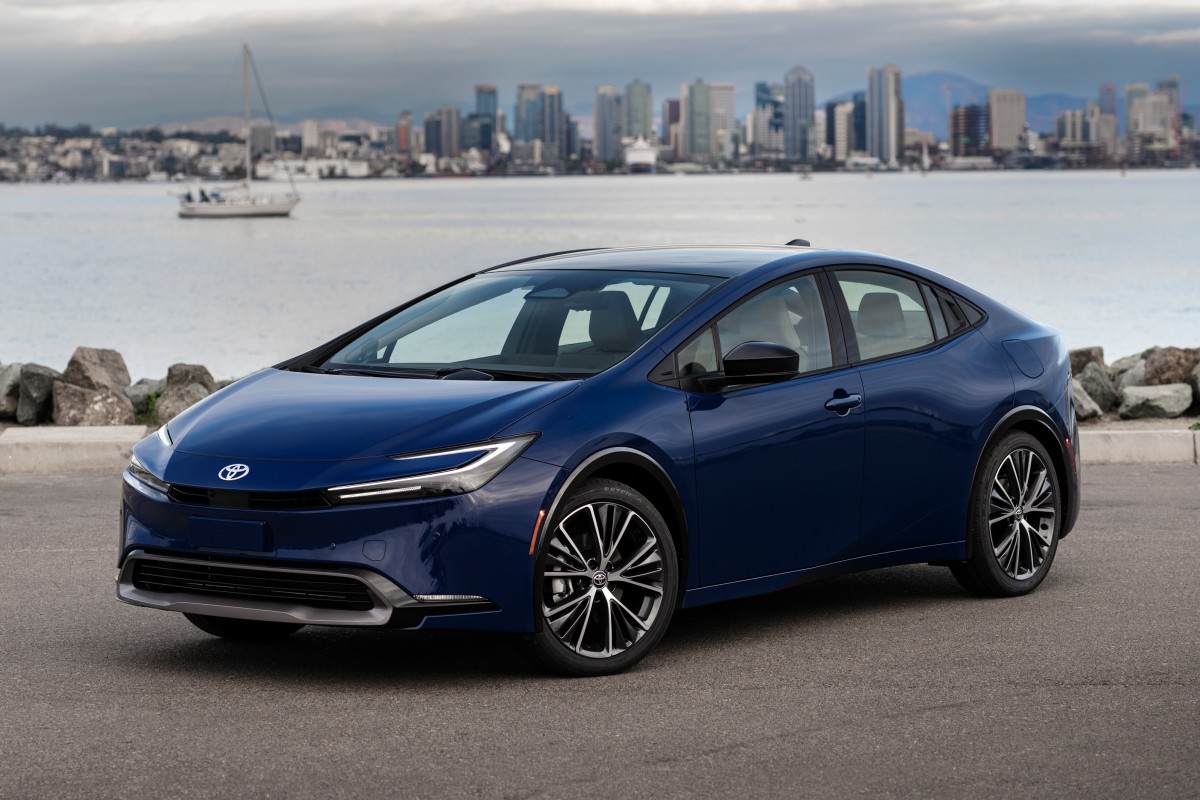
2025 Toyota Prius Reviews SummaryDecades ago, few cars were anywhere near as fuel efficient as the Toyota Prius. Today, the 2025 Prius remains a fuel economy champion, but numerous alternatives are close. Some even offer more interior room at a lower price. That reality, coupled with the cramped interior, limited trunk space, and general weirdness of the Prius, means hybrid car buyers have options. Verdict: The point of the 2025 Toyota Prius is fuel economy, but our test car averaged 6.0 litres per 100 kilometres, falling significantly short of the Natural Resources Canada estimate of 4.8 L/100 km in combined driving. That certainly isn’t superior to roomier hybrid cars from Honda, Hyundai, or from within Toyota’s own lineup. | |
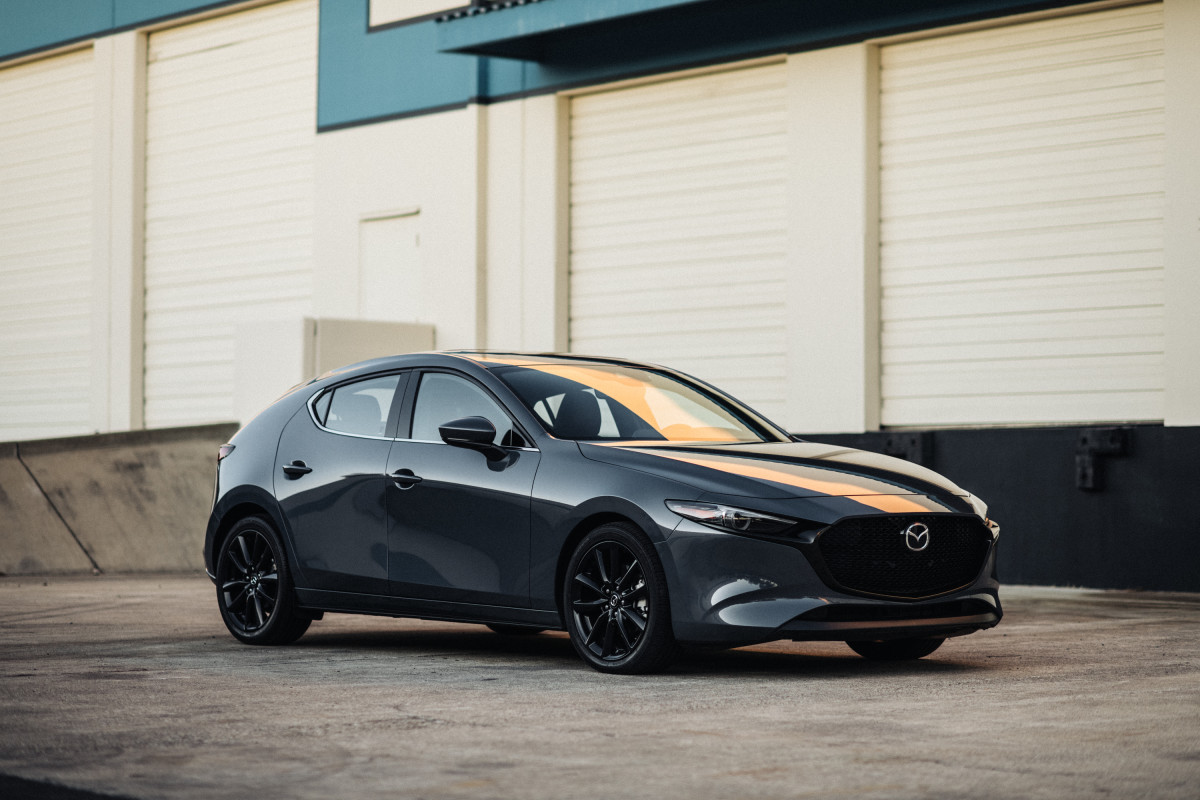
2026 Mazda MAZDA3 Reviews SummaryCompact sedans are some of the most affordable vehicles today, which often leads to cheaper interiors, disappointing performance, and uninspired styling. The 2026 Mazda3 bucks that trend with a cabin that could easily be mistaken for entry-level luxury fare, a spirited driving experience, and head-turning style. The current-generation Mazda3 debuted as a 2019 model, but despite its age few updates are expected for 2026. Verdict: The Mazda3 proves that small cars don’t have to be boring. | |
No video found | No video found |
Popular Features & Specs | |
Engine2.0L 194 hp I4 Hybrid | Engine |
DrivetrainFWD | Drivetrain |
Seating Capacity5 | Seating Capacity5 |
EV Battery Capacity0.9 kWh | EV Battery Capacity |
Fuel Economy (City)4.1 L(e)/100 km | Fuel Economy (City) |
Fuel Economy (Highway)4.2 L(e)/100 km | Fuel Economy (Highway) |
Engine | |
Engine Name2.0L 194 hp I4 Hybrid | Engine Name |
DrivetrainFWD | Drivetrain |
Fuel Economy | |
EV Battery Capacity0.9 kWh | EV Battery Capacity |
Fuel Economy (City)4.1 L(e)/100 km | Fuel Economy (City) |
Fuel Economy (Highway)4.2 L(e)/100 km | Fuel Economy (Highway) |
Interior | |
Seating Capacity5 | Seating Capacity5 |
Safety | |
Front Crash Overall5 | Front Crash Overall5 |
Side Crash Overall5 | Side Crash Overall5 |
Dimensions & Capacity | |
Cargo Space674 L | Cargo Space374 L |
Curb Weight1405 kg | Curb Weight1411 kg |
Height1420 mm | Height1445 mm |
Length4600 mm | Length4661 mm |
Width1783 mm | Width1796 mm |
Wheelbase2751 mm | Wheelbase2725 mm |
Maximum Payload390 kg | Maximum Payload440 kg |
Number of doors4 | Number of doors4 |
Overview | ||
Listings | ||
Ratings & Reviews | ||
User reviews | ||
Expert reviews | 6.7 out of 10Read full review | 6.5 out of 10Read full review |
Pros & cons | Pros
Cons
| Pros
Cons
|
Summary | Decades ago, few cars were anywhere near as fuel efficient as the Toyota Prius. Today, the 2025 Prius remains a fuel economy champion, but numerous alternatives are close. Some even offer more interior room at a lower price. That reality, coupled with the cramped interior, limited trunk space, and general weirdness of the Prius, means hybrid car buyers have options. Verdict: The point of the 2025 Toyota Prius is fuel economy, but our test car averaged 6.0 litres per 100 kilometres, falling significantly short of the Natural Resources Canada estimate of 4.8 L/100 km in combined driving. That certainly isn’t superior to roomier hybrid cars from Honda, Hyundai, or from within Toyota’s own lineup. | Compact sedans are some of the most affordable vehicles today, which often leads to cheaper interiors, disappointing performance, and uninspired styling. The 2026 Mazda3 bucks that trend with a cabin that could easily be mistaken for entry-level luxury fare, a spirited driving experience, and head-turning style. The current-generation Mazda3 debuted as a 2019 model, but despite its age few updates are expected for 2026. Verdict: The Mazda3 proves that small cars don’t have to be boring. |
Video | No video found | No video found |
Popular Features & Specs | ||
Engine | 2.0L 194 hp I4 Hybrid | |
Drivetrain | FWD | |
Seating Capacity | 5 | 5 |
EV Battery Capacity | 0.9 kWh | |
Fuel Economy (City) | 4.1 L(e)/100 km | |
Fuel Economy (Highway) | 4.2 L(e)/100 km | |
Engine | ||
Engine Name | 2.0L 194 hp I4 Hybrid | |
Drivetrain | FWD | |
Fuel Economy | ||
EV Battery Capacity | 0.9 kWh | |
Fuel Economy (City) | 4.1 L(e)/100 km | |
Fuel Economy (Highway) | 4.2 L(e)/100 km | |
Interior | ||
Seating Capacity | 5 | 5 |
Safety | ||
Front Crash Overall | 5 | 5 |
Side Crash Overall | 5 | 5 |
Dimensions & Capacity | ||
Cargo Space | 674 L | 374 L |
Curb Weight | 1405 kg | 1411 kg |
Height | 1420 mm | 1445 mm |
Length | 4600 mm | 4661 mm |
Width | 1783 mm | 1796 mm |
Wheelbase | 2751 mm | 2725 mm |
Maximum Payload | 390 kg | 440 kg |
Number of doors | 4 | 4 |
2025 Toyota Prius for Sale




2026 Mazda MAZDA3 for Sale


By: CarGurus + AI
At CarGurus, our team of experienced automotive writers remain at the heart of our content operation, conducting hands-on car tests and writing insightful guides that are backed by years of industry experience. To complement this, we are harnessing AI to make our content offering more diverse and more helpful to shoppers than ever. To achieve this, our AI systems are based exclusively on CarGurus content, ratings and data, so that what we produce is both unique to CarGurus, and uniquely helpful to car shoppers.
