2022 Mercedes-Benz GLS vs 2021 Toyota Highlander Hybrid
Overview | |
MSRP$38,735 | MSRP$77,850 |
Listings13 | Listings16 |
Ratings & Reviews | |
User Reviews | User Reviews |
Expert reviews6.7 out of 10 | Expert reviews7.3 out of 10 |
2021 Toyota Highlander Hybrid Reviews SummaryThere comes a time in everyone’s life when practicality rules. Usually, it arrives shortly before or after having children. In many ways, the 2021 Toyota Highlander is purpose-built to provide that practicality—especially in hybrid form. Redesigned for the 2020 model year, the 2021 Highlander adds a sporty XSE trim level (non-hybrid V6 models only), improved headlights on lower trim levels, and an upgraded Toyota Safety Sense 2.5+ collection of safety features. These changes can only make the Highlander a more appealing choice in a highly competitive segment. | |
2022 Mercedes-Benz GLS Reviews SummaryThe SUV that’s now known as the GLS was launched for the 2007 model year as the GL-Class, when Mercedes decided it needed a bigger, more luxurious SUV to sit above the M-Class in its lineup. The GL-Class and M-Class were rebadged the Mercedes-Benz GLS-Class and GLE-Class, respectively, in 2014 when Mercedes introduced a new naming scheme across its lineup. The current version of the GLS was introduced for the 2020 model year, and represents the model’s third generation. It’s aimed at other full-size luxury SUVs, including the BMW X7, Cadillac Escalade, Infiniti QX80, Land Rover Range Rover, Lincoln Navigator, and Lexus LX. Four models are available in Canada: the base six-cylinder GLS 450 4Matic, the GLS 580 4Matic, the AMG GLS 63 4Matic+, and the Mercedes-Maybach GLS 600 4Matic. Availability is currently limited, and specifications for the 2022 model year are not available. However, they are expected to be very close to those listed for 2021, which were used as reference for the information provided here. We tested a U.S.-specification 2022 GLS 450 for this review. | |
No video found | No video found |
Popular Features & Specs | |
Engine2.5L 243 hp I4 Hybrid | Engine3.0L 362 hp I6 |
DrivetrainFWD | DrivetrainAWD |
Seating Capacity8 | Seating Capacity7 |
Horsepower | Horsepower362 hp @ 5500 rpm |
EV Battery Capacity1.9 kWh | EV Battery Capacity |
MPG City36 | MPG City18 |
MPG Highway35 | MPG Highway24 |
Engine | |
Engine Name2.5L 243 hp I4 Hybrid | Engine Name3.0L 362 hp I6 |
Torque | Torque369 lb-ft @ 1600 rpm |
Horsepower | Horsepower362 hp @ 5500 rpm |
DrivetrainFWD | DrivetrainAWD |
Fuel Economy | |
EV Battery Capacity1.9 kWh | EV Battery Capacity |
MPG City36 | MPG City18 |
MPG Highway35 | MPG Highway24 |
Interior | |
Seating Capacity8 | Seating Capacity7 |
Key Features | |
Navigation System | Navigation SystemStandard |
Sunroof/Moonroof | Sunroof/MoonroofStandard |
Safety | |
Front Crash Overall4 | Front Crash Overall |
Side Crash Overall5 | Side Crash Overall |
Dimensions & Capacity | |
Cargo Space16.0 cu ft | Cargo Space17.4 cu ft |
Curb Weight4330 lbs | Curb Weight5467 lbs |
Height68.1 in | Height72.4 in |
Length194.9 in | Length205.0 in |
Width76.0 in | Width84.9 in |
Wheelbase112.2 in | Wheelbase123.4 in |
Maximum Payload1495 lbs | Maximum Payload1808 lbs |
Number of doors4 | Number of doors4 |
Maximum Towing Capacity3500 lbs | Maximum Towing Capacity7700 lbs |
Overview | ||
MSRP | $38,735 | $77,850 |
Listings | ||
Ratings & Reviews | ||
User reviews | ||
Expert reviews | 6.7 out of 10Read full review | 7.3 out of 10Read full review |
Pros & cons | ||
Summary | There comes a time in everyone’s life when practicality rules. Usually, it arrives shortly before or after having children. In many ways, the 2021 Toyota Highlander is purpose-built to provide that practicality—especially in hybrid form. Redesigned for the 2020 model year, the 2021 Highlander adds a sporty XSE trim level (non-hybrid V6 models only), improved headlights on lower trim levels, and an upgraded Toyota Safety Sense 2.5+ collection of safety features. These changes can only make the Highlander a more appealing choice in a highly competitive segment. | The SUV that’s now known as the GLS was launched for the 2007 model year as the GL-Class, when Mercedes decided it needed a bigger, more luxurious SUV to sit above the M-Class in its lineup. The GL-Class and M-Class were rebadged the Mercedes-Benz GLS-Class and GLE-Class, respectively, in 2014 when Mercedes introduced a new naming scheme across its lineup. The current version of the GLS was introduced for the 2020 model year, and represents the model’s third generation. It’s aimed at other full-size luxury SUVs, including the BMW X7, Cadillac Escalade, Infiniti QX80, Land Rover Range Rover, Lincoln Navigator, and Lexus LX. Four models are available in Canada: the base six-cylinder GLS 450 4Matic, the GLS 580 4Matic, the AMG GLS 63 4Matic+, and the Mercedes-Maybach GLS 600 4Matic. Availability is currently limited, and specifications for the 2022 model year are not available. However, they are expected to be very close to those listed for 2021, which were used as reference for the information provided here. We tested a U.S.-specification 2022 GLS 450 for this review. |
Video | No video found | No video found |
Popular Features & Specs | ||
Engine | 2.5L 243 hp I4 Hybrid | 3.0L 362 hp I6 |
Drivetrain | FWD | AWD |
Seating Capacity | 8 | 7 |
Horsepower | 362 hp @ 5500 rpm | |
EV Battery Capacity | 1.9 kWh | |
MPG City | 36 | 18 |
MPG Highway | 35 | 24 |
Engine | ||
Engine Name | 2.5L 243 hp I4 Hybrid | 3.0L 362 hp I6 |
Torque | 369 lb-ft @ 1600 rpm | |
Horsepower | 362 hp @ 5500 rpm | |
Drivetrain | FWD | AWD |
Fuel Economy | ||
EV Battery Capacity | 1.9 kWh | |
MPG City | 36 | 18 |
MPG Highway | 35 | 24 |
Interior | ||
Seating Capacity | 8 | 7 |
Key Features | ||
Navigation System | Standard | |
Sunroof/Moonroof | Standard | |
Safety | ||
Front Crash Overall | 4 | |
Side Crash Overall | 5 | |
Dimensions & Capacity | ||
Cargo Space | 16.0 cu ft | 17.4 cu ft |
Curb Weight | 4330 lbs | 5467 lbs |
Height | 68.1 in | 72.4 in |
Length | 194.9 in | 205.0 in |
Width | 76.0 in | 84.9 in |
Wheelbase | 112.2 in | 123.4 in |
Maximum Payload | 1495 lbs | 1808 lbs |
Number of doors | 4 | 4 |
Maximum Towing Capacity | 3500 lbs | 7700 lbs |
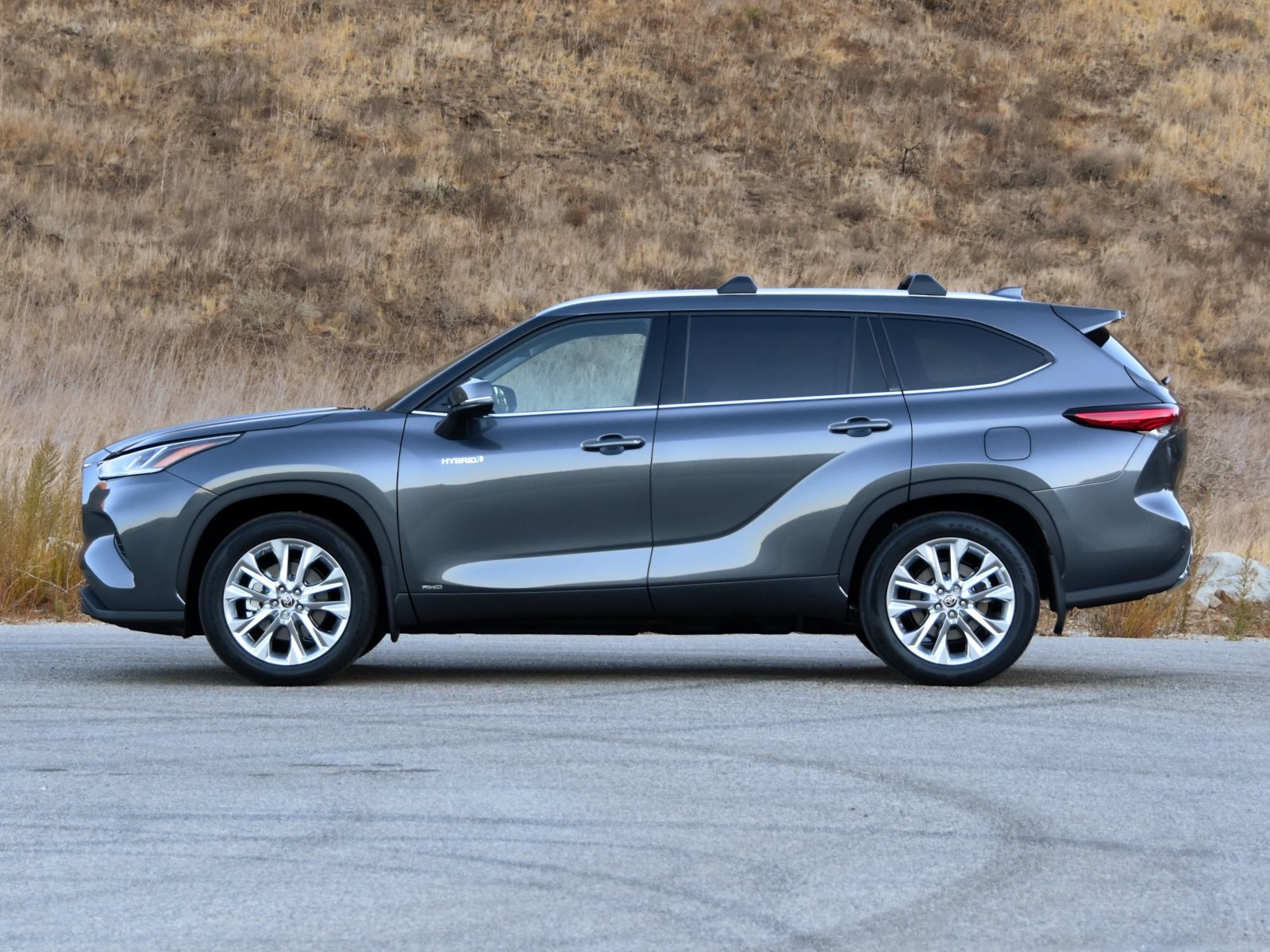
The 2021 Toyota Highlander Hybrid initially presented a bold and distinctive design, with its blunt and bulbous nose creating a striking first impression. Over time, however, its unique styling became more familiar and less polarizing. The SUV's black windshield pillars gave the illusion of a floating roof, while its swollen haunches attempted to balance the overall design. Despite the 20-inch alloy wheels, the flared quarter panels seemed exaggerated. Inside, the Highlander Hybrid Platinum offered a two-tone interior with soft leather, though the dashboard's asymmetrical design and glossy detailing could suffer from reflections. The mix of illumination colours in the gauges added to a somewhat busy appearance.
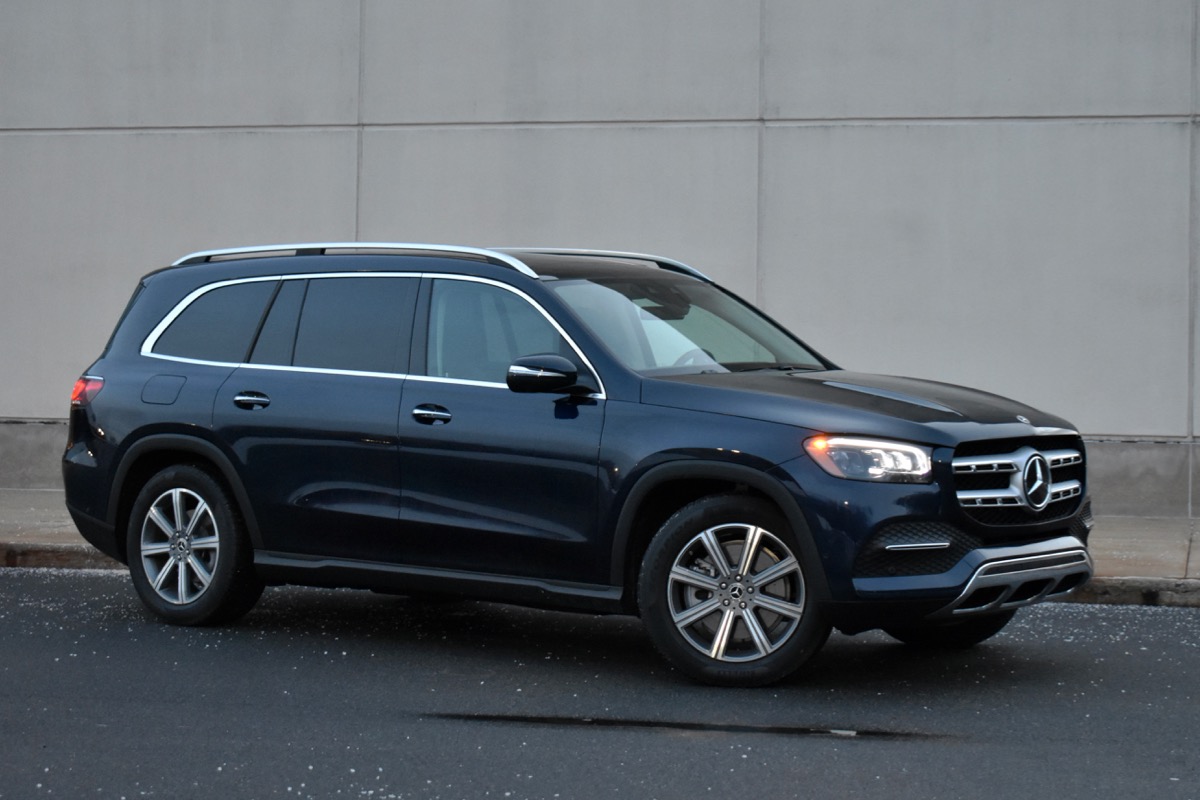
In contrast, the 2022 Mercedes-Benz GLS exuded a more understated elegance, especially in its base GLS 450 form, avoiding the flashy chrome of its competitors. The AMG GLS 63 and Maybach versions offered more dramatic styling with flared arches and chrome accents. Inside, the GLS maintained a luxurious feel with leather upholstery, a panoramic roof, and ambient lighting. The digital instrument cluster and infotainment touchscreen were seamlessly integrated, enhancing the cabin's modern aesthetic. Despite its luxury, the GLS's interior felt robust and well-suited for a high-end SUV.


The 2021 Toyota Highlander Hybrid transitioned from a V6 to a 2.5-litre four-cylinder engine, achieving a combined fuel consumption of 6.7 L/100 km and producing 243 horsepower. While this marked an improvement in efficiency, the driving experience was less engaging. The engine felt strained during acceleration, and the steering was lifeless. The regenerative brakes were an improvement, but the SUV's handling was compromised by its weight and soft suspension. On smooth roads, it handled well, but uneven surfaces revealed its limitations.
The 2022 Mercedes-Benz GLS 450 featured a 3.0-litre turbocharged inline-six engine with a mild-hybrid system, delivering 362 horsepower and 369 lb-ft of torque. The electric motor added short bursts of power, enhancing performance. The GLS's inline-six provided smooth power delivery, but the air suspension struggled with body control, leading to excessive motion over bumps. With a towing capacity of 3,500 kg, the GLS offered ample capability, though some competitors surpassed it.
The Highlander Hybrid Platinum provided comfortable seating for the driver and front passenger, with power adjustments and leather upholstery. The second-row bench seat increased capacity to eight but felt cramped for three adults. The third row was uncomfortable, with limited legroom and headroom. Cargo space was generous, with a maximum capacity of 2,387 litres, though storage solutions were less practical than before.
The GLS offered a seven-seat configuration with a sliding second-row bench, providing excellent legroom. Cargo space was competitive, with 2,400 litres available with seats folded. The power-folding seats and air suspension facilitated easy loading, though the touchscreen was difficult to reach. Despite some ergonomic quirks, the GLS was well-equipped for transporting passengers and cargo.
The Highlander Hybrid came with a 12.3-inch touchscreen, Apple CarPlay, Android Auto, and an 11-speaker JBL audio system. The infotainment system was user-friendly, with large controls and effective voice recognition. However, the sound system's performance varied, and the Driver Easy Speak feature enhanced communication with rear passengers.
The GLS featured the MBUX infotainment system with a 12.3-inch touchscreen and digital instrument cluster. The voice recognition system was intuitive, responding to natural speech. While the touchpad controller was cumbersome, the graphics were impressive. The augmented-reality navigation was a highlight, though the system occasionally suggested inefficient routes.
The Highlander Hybrid boasted Toyota Safety Sense 2.5+, including adaptive cruise control, lane departure warning, and intersection support. It earned a "Top Safety Pick+" from the IIHS and a five-star rating from the NHTSA. However, the lane-centring system was overly sensitive.
The GLS included forward collision warning, blind-spot monitoring, and Pre Safe technology. Optional features like adaptive cruise control and a surround-view camera system enhanced safety. Crash-test ratings were unavailable at the time of publication.
CarGurus highlights
According to CarGurus experts, the overall rating for the 2021 Toyota Highlander Hybrid is 6.7 out of 10, while the 2022 Mercedes-Benz GLS scores 7.3 out of 10. Based on these ratings, the Mercedes-Benz GLS is the recommended choice for those seeking a more luxurious and refined SUV experience.
Choose the 2022 Mercedes-Benz GLS if:
- You desire a luxurious and spacious interior with advanced technology.
- You appreciate smooth power delivery and a refined driving experience.
- You need a versatile SUV with ample towing capacity.


Choose the 2021 Toyota Highlander Hybrid if:
- You prioritize fuel efficiency and eco-friendly driving.
- You seek a more affordable three-row SUV option.
- You value Toyota's reputation for reliability and safety.


CarGurus highlights
According to CarGurus experts, the overall rating for the 2021 Toyota Highlander Hybrid is 6.7 out of 10, while the 2022 Mercedes-Benz GLS scores 7.3 out of 10. Based on these ratings, the Mercedes-Benz GLS is the recommended choice for those seeking a more luxurious and refined SUV experience.
Choose the 2022 Mercedes-Benz GLS if:
Shop Now- You desire a luxurious and spacious interior with advanced technology.
- You appreciate smooth power delivery and a refined driving experience.
- You need a versatile SUV with ample towing capacity.
Choose the 2021 Toyota Highlander Hybrid if:
Shop Now- You prioritize fuel efficiency and eco-friendly driving.
- You seek a more affordable three-row SUV option.
- You value Toyota's reputation for reliability and safety.

By: CarGurus + AI
At CarGurus, our team of experienced automotive writers remain at the heart of our content operation, conducting hands-on car tests and writing insightful guides that are backed by years of industry experience. To complement this, we are harnessing AI to make our content offering more diverse and more helpful to shoppers than ever. To achieve this, our AI systems are based exclusively on CarGurus content, ratings and data, so that what we produce is both unique to CarGurus, and uniquely helpful to car shoppers.
