2021 Honda HR-V vs 2022 Chevrolet Blazer
Overview | |
MSRP$21,220 | MSRP$33,400 |
Listings83 | Listings229 |
Ratings & Reviews | |
User Reviews | User Reviews |
Expert reviews6.8 out of 10 | Expert reviews6.2 out of 10 |
Pros
Cons
| Pros
Cons
|
2021 Honda HR-V Reviews SummaryThe 2021 Honda HR-V is the automaker’s smallest crossover SUV, sitting below the Honda CR-V in size and price. While Honda hasn’t updated the HR-V in some time, it remains worthy of consideration thanks to agile handling and impressive practicality for its size. Because while it’s billed as an SUV, the HR-V shares a platform with the discontinued Honda Fit hatchback. The HR-V is a bit bigger than that pint-sized wonder however, and adds features SUVs buyers want, such as a taller driving position and available all-wheel drive (AWD). Honda launched the HR-V for the 2016 model year, and added more tech features for 2019. While Honda has been pushing these updates, the subcompact crossover category has exploded, adding new entrants from the likes of Hyundai, Kia, and Toyota. The HR-V doesn’t receive any major updates for the 2021 model year, so we’re using our experience with past model years for this overview. The HR-V LX, Sport, EX, and EX-L trim levels carry over for 2021, but the HR-V Touring is no more. The only other changes are new wheel designs for the Sport, EX, and EX-L models, and added privacy glass for the HR-V Sport. | |
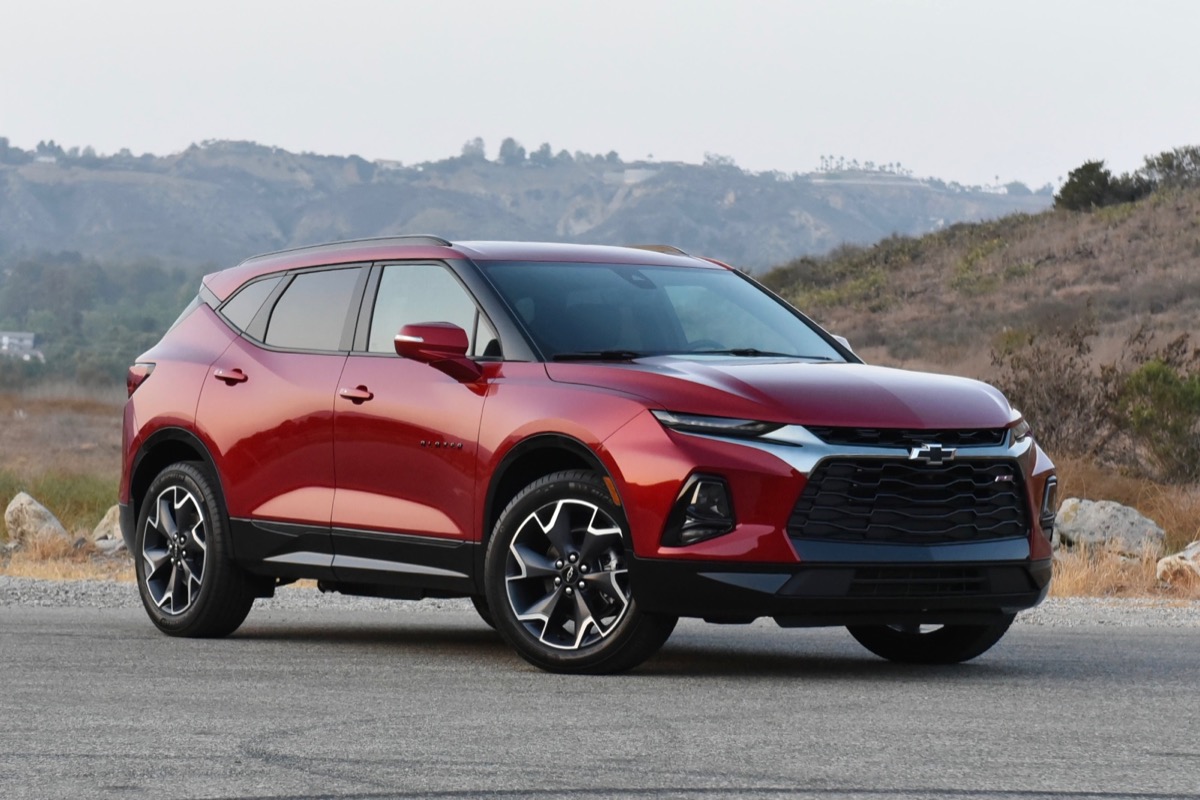
2022 Chevrolet Blazer Reviews SummaryHave you ever found yourself thinking that you’d love to have a new Chevy Camaro but what you really need is a midsize SUV? If so, you’ll want to consider the 2022 Chevrolet Blazer, a Camaro-influenced crossover that seats up to five people and carries up to 64.2 cubic feet of cargo. However, unlike Blazers of yore, the 2022 Blazer is best used on pavement. Generally speaking, though, aside from its sporty styling and overall adequacy, there isn’t much here to titillate a typical SUV buyer. Or Camaro dreamer. | |
No video found | |
Popular Features & Specs | |
Engine1.8L 141 hp I4 | Engine2.0L 228 hp I4 |
Drive TrainFWD | Drive TrainFWD |
Seating Capacity5 | Seating Capacity5 |
Horsepower141 hp @ 6500 rpm | Horsepower228 hp @ 5500 rpm |
MPG City28 | MPG City22 |
MPG Highway34 | MPG Highway29 |
Engine | |
Engine Name1.8L 141 hp I4 | Engine Name2.0L 228 hp I4 |
Torque127 lb-ft @ 4300 rpm | Torque258 lb-ft @ 1500 rpm |
Horsepower141 hp @ 6500 rpm | Horsepower228 hp @ 5500 rpm |
DrivetrainFWD | DrivetrainFWD |
Fuel Economy | |
MPG City28 | MPG City22 |
MPG Highway34 | MPG Highway29 |
Interior | |
Seating Capacity5 | Seating Capacity5 |
Safety | |
Front Crash Overall4 | Front Crash Overall5 |
Side Crash Overall5 | Side Crash Overall5 |
Dimensions & Capacity | |
Cargo Space24.3 cu ft | Cargo Space30.5 cu ft |
Curb Weight2906 lbs | Curb Weight3907 lbs |
Height63.2 in | Height67.0 in |
Length170.4 in | Length191.4 in |
Width69.8 in | Width76.7 in |
Wheelbase102.8 in | Wheelbase112.7 in |
Maximum Payload1095 lbs | Maximum Payload2094 lbs |
Number of doors4 | Number of doors4 |
Maximum Towing Capacity | Maximum Towing Capacity1500 lbs |
Overview | ||
MSRP | $21,220 | $33,400 |
Listings | ||
Ratings & Reviews | ||
User reviews | ||
Expert reviews | 6.8 out of 10Read full review | 6.2 out of 10Read full review |
Pros & cons | Pros
Cons
| Pros
Cons
|
Summary | The 2021 Honda HR-V is the automaker’s smallest crossover SUV, sitting below the Honda CR-V in size and price. While Honda hasn’t updated the HR-V in some time, it remains worthy of consideration thanks to agile handling and impressive practicality for its size. Because while it’s billed as an SUV, the HR-V shares a platform with the discontinued Honda Fit hatchback. The HR-V is a bit bigger than that pint-sized wonder however, and adds features SUVs buyers want, such as a taller driving position and available all-wheel drive (AWD). Honda launched the HR-V for the 2016 model year, and added more tech features for 2019. While Honda has been pushing these updates, the subcompact crossover category has exploded, adding new entrants from the likes of Hyundai, Kia, and Toyota. The HR-V doesn’t receive any major updates for the 2021 model year, so we’re using our experience with past model years for this overview. The HR-V LX, Sport, EX, and EX-L trim levels carry over for 2021, but the HR-V Touring is no more. The only other changes are new wheel designs for the Sport, EX, and EX-L models, and added privacy glass for the HR-V Sport. | Have you ever found yourself thinking that you’d love to have a new Chevy Camaro but what you really need is a midsize SUV? If so, you’ll want to consider the 2022 Chevrolet Blazer, a Camaro-influenced crossover that seats up to five people and carries up to 64.2 cubic feet of cargo. However, unlike Blazers of yore, the 2022 Blazer is best used on pavement. Generally speaking, though, aside from its sporty styling and overall adequacy, there isn’t much here to titillate a typical SUV buyer. Or Camaro dreamer. |
Video | No video found | |
Popular Features & Specs | ||
Engine | 1.8L 141 hp I4 | 2.0L 228 hp I4 |
Drive Train | FWD | FWD |
Seating Capacity | 5 | 5 |
Horsepower | 141 hp @ 6500 rpm | 228 hp @ 5500 rpm |
MPG City | 28 | 22 |
MPG Highway | 34 | 29 |
Engine | ||
Engine Name | 1.8L 141 hp I4 | 2.0L 228 hp I4 |
Torque | 127 lb-ft @ 4300 rpm | 258 lb-ft @ 1500 rpm |
Horsepower | 141 hp @ 6500 rpm | 228 hp @ 5500 rpm |
Drivetrain | FWD | FWD |
Fuel Economy | ||
MPG City | 28 | 22 |
MPG Highway | 34 | 29 |
Interior | ||
Seating Capacity | 5 | 5 |
Safety | ||
Front Crash Overall | 4 | 5 |
Side Crash Overall | 5 | 5 |
Dimensions & Capacity | ||
Cargo Space | 24.3 cu ft | 30.5 cu ft |
Curb Weight | 2906 lbs | 3907 lbs |
Height | 63.2 in | 67.0 in |
Length | 170.4 in | 191.4 in |
Width | 69.8 in | 76.7 in |
Wheelbase | 102.8 in | 112.7 in |
Maximum Payload | 1095 lbs | 2094 lbs |
Number of doors | 4 | 4 |
Maximum Towing Capacity | 1500 lbs | |
The 2021 Honda HR-V had a softer, friendlier appearance compared to Honda’s larger SUVs like the CR-V, Passport, and Pilot, which had more traditional SUV looks. The HR-V’s distinctive styling included upper and lower window lines converging near the taillights, housing the rear door handles. Most trim levels featured 17-inch alloy wheels, with the HR-V EX and EX-L sporting a machined finish, while Sport models had matte-black 18-inch wheels and blacked-out trim. Fog lights were standard on all trims except the base LX. Inside, the HR-V’s styling was plain but functional, with good material quality and fit and finish. EX and EX-L models included push-button start, automatic climate control, a moonroof, and heated front seats, with EX-L models also offering leather upholstery.
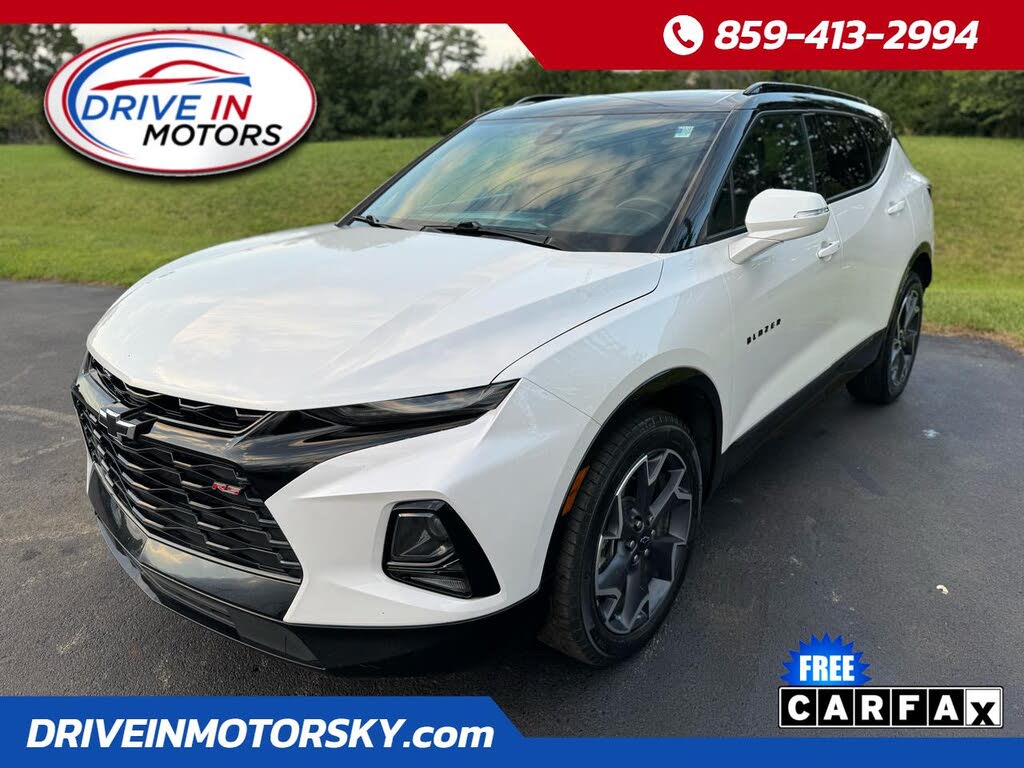
The 2022 Chevrolet Blazer was available in 2LT, 3LT, Premier, and RS trim levels. All but the RS had a standard turbocharged four-cylinder engine with FWD or AWD, while the RS included a V6 engine and a sophisticated twin-clutch AWD system. For 2022, the Blazer saw minor changes, including revised bumper and bodyside trim for Premier versions, a new Enhanced Convenience Package, and a Trailering Package for models with the turbocharged engine. Two-tone paint was available for LT and RS trims. The Blazer’s pricing ranged from $33,400 to $41,100, excluding a $1,195 destination charge. The RS test vehicle, with optional AWD, extra-cost paint, and additional packages, totaled $49,000. The Blazer’s Camaro-inspired design was appealing, especially with 20-inch wheels, though the black trim on the rear bumper gave it an unfinished look. Inside, the Blazer featured an 8-inch touchscreen, large round center air vents with temperature adjustment rings, and a strip of climate buttons. However, the interior had plenty of hard plastic, and the upper door panel trim was notably hard.






The 2021 Honda HR-V was powered by a 1.8-liter four-cylinder engine producing 141 horsepower and 127 pound-feet of torque, paired with a continuously variable transmission (CVT) with paddle shifters on higher trims. While AWD was available on all trims, FWD was standard. The HR-V’s powertrain remained unchanged from previous models, resulting in underwhelming highway performance and an ineffective CVT. Competitors like the Kia Seltos and Subaru Crosstrek offered more powerful engine options. However, the HR-V’s chassis provided a rewarding driving experience on twisty roads, living up to Honda’s reputation for fun cars. The HR-V’s AWD system was suitable for slippery roads but not for rougher terrain, and it lacked towing capability.
The 2022 Chevrolet Blazer featured a standard 2.0-liter turbocharged four-cylinder engine generating 228 horsepower and 258 pound-feet of torque, paired with a nine-speed automatic transmission. The Blazer RS included a 3.6-liter V6 engine producing 308 horsepower and 270 pound-feet of torque, also paired with a nine-speed automatic transmission. The V6 engine was available on 3LT and Premier trims but only the RS had a dual-clutch AWD system. The V6 could tow up to 4,500 pounds, 1,000 pounds more than the base engine. The Blazer RS felt firm and sporty in city and highway driving, with satisfying acceleration from the V6, though it sounded loud and unrefined. The SUV’s grip was decent, and the steering felt good except in Sport mode, where it became artificially heavy. The Blazer’s suspension struggled on back roads, and the nine-speed automatic was slow to downshift. The Blazer’s fuel economy was rated at 21 mpg combined, but our test vehicle averaged 20.5 mpg in FWD mode.
The 2021 Honda HR-V offered impressive cargo space for its size, thanks to the “Magic Seat” 60/40 split-folding rear bench seat. With the seat folded down, the HR-V provided 58.8 cubic feet of cargo space (57.6 for AWD models), and 24.3 cubic feet (23.2 cubic feet with AWD) with the seat up. These figures surpassed competitors like the Chevrolet Trax, Hyundai Kona, and Subaru Crosstrek. The HR-V also excelled in rear-seat legroom, leading the segment, though front-seat legroom and headroom were average. The HR-V’s interior featured sensibly-designed controls, including large knobs for climate control and an audio volume knob. The narrow center console was dominated by a large shift lever, and a standard tilt-and-telescopic steering wheel made finding the perfect driving position easier.
The 2022 Chevrolet Blazer’s interior was reasonably comfortable and useful. The RS test vehicle’s black leather upholstery with red perforations looked good and gave the cabin a sporty appearance. The steering wheel was pleasing to grip, with power tilt and telescopic adjustment and heating. Both front seats offered power adjustment, heating, and ventilation, though the bottom cushions lacked thigh support. Dual-zone automatic climate control was available, with rear air vents and USB ports for passengers. The Blazer’s back seat was wide and flat, with plenty of legroom and the ability to slide forward and back. Storage space was impressive, with a large glove compartment, a bin under the center armrest, and door panel shelves and bins. The Blazer’s cargo area measured 30.5 cubic feet with the rear seats up and 64.2 cubic feet with the seats folded down, which was small for a midsize crossover SUV.
The 2021 Honda HR-V’s base LX trim included standard Bluetooth, a 5-inch display screen, and a four-speaker audio system. The Sport trim and higher levels featured a 7-inch touchscreen with Apple CarPlay and Android Auto connectivity, while EX and EX-L models added SiriusXM satellite radio. The infotainment system was plain but functional, with two USB ports located in a cubbyhole ahead of the shifter. However, the 7-inch touchscreen was small compared to competitors, and Apple CarPlay and Android Auto were not standard on the base trim.
The 2022 Chevrolet Blazer’s infotainment system featured an 8-inch touchscreen display with high-resolution graphics and a modern appearance. The system included a power/volume knob, tuning buttons, and Home and Back buttons, making it easy to use. Wireless Apple CarPlay and Android Auto were standard, with an upgraded system offering satellite radio and connected navigation with enhanced voice recognition. Connected services, including an OnStar Safety and Security plan and a 4G LTE Wi-Fi hotspot, were available with short trial periods. The Blazer’s infotainment system was user-friendly, with separate stereo volume and tuning functions and climate controls. The enhanced voice recognition and connected navigation systems were impressive, and the test vehicle included wireless smartphone charging and an 8-speaker Bose audio system. The Blazer also had rear parking sensors, a high-resolution reversing camera, a 360-degree surround-view camera, and a rear camera mirror.
The 2021 Honda HR-V received top “Good” scores in all IIHS crash tests and a “Superior” rating for its optional front-crash prevention tech. However, it got “Marginal” and “Poor” headlight ratings and an “Acceptable” rating for LATCH child-seat anchor ease of use. The NHTSA gave the HR-V a five-star overall safety rating, with five stars in side crash testing and four stars in frontal and rollover crash testing. The HR-V’s EX and EX-L trims included Honda Sensing safety features, such as forward-collision warning, lane-departure warning, automatic emergency braking, Road Departure Mitigation, lane-keep assist, automatic high beams, adaptive cruise control, and Honda’s LaneWatch.
The 2022 Chevrolet Blazer came standard with Chevy Safety Assist, which included forward-collision warning, pedestrian detection, low-speed automatic emergency braking, lane-departure warning, lane-keep assist, and automatic high-beam headlights. The Blazer also featured a rear-seat reminder system and Teen Driver technology. Available safety upgrades included a vibrating Safety Alert Seat, adaptive cruise control with enhanced automatic emergency braking, blind-spot warning, rear cross-traffic alert, and LED headlights. The Blazer’s advanced driving assistance systems worked exceptionally well, with smooth adaptive cruise control and effective lane-keeping assistance. However, the IIHS did not give the Blazer a “Top Safety Pick” rating due to its headlight performance.
CarGurus highlights

According to CarGurus experts, the overall rating for the 2021 Honda HR-V is 6.8 out of 10, while the 2022 Chevrolet Blazer scores 6.2 out of 10. Based on these ratings, the 2021 Honda HR-V is the better choice, offering a more practical and rewarding driving experience, along with higher safety ratings and better overall value.
Choose the 2021 Honda HR-V if:
- You need a subcompact crossover with impressive cargo space and rear-seat legroom.
- You value a functional and straightforward interior with sensibly-designed controls.
- You prefer a vehicle with a rewarding driving experience on twisty roads.


Choose the 2022 Chevrolet Blazer if:
- You want a midsize SUV with a sporty appearance and Camaro-inspired design.
- You need a vehicle with a powerful V6 engine and a sophisticated AWD system.
- You prefer a user-friendly infotainment system with wireless Apple CarPlay and Android Auto.




CarGurus highlights
According to CarGurus experts, the overall rating for the 2021 Honda HR-V is 6.8 out of 10, while the 2022 Chevrolet Blazer scores 6.2 out of 10. Based on these ratings, the 2021 Honda HR-V is the better choice, offering a more practical and rewarding driving experience, along with higher safety ratings and better overall value.
Choose the 2021 Honda HR-V if:
Shop Now- You need a subcompact crossover with impressive cargo space and rear-seat legroom.
- You value a functional and straightforward interior with sensibly-designed controls.
- You prefer a vehicle with a rewarding driving experience on twisty roads.
Choose the 2022 Chevrolet Blazer if:
Shop Now- You want a midsize SUV with a sporty appearance and Camaro-inspired design.
- You need a vehicle with a powerful V6 engine and a sophisticated AWD system.
- You prefer a user-friendly infotainment system with wireless Apple CarPlay and Android Auto.

By: CarGurus + AI
At CarGurus, our team of experienced automotive writers remain at the heart of our content operation, conducting hands-on car tests and writing insightful guides that are backed by years of industry experience. To complement this, we are harnessing AI to make our content offering more diverse and more helpful to shoppers than ever. To achieve this, our AI systems are based exclusively on CarGurus content, ratings and data, so that what we produce is both unique to CarGurus, and uniquely helpful to car shoppers.

