2020 Toyota Sienna vs 2021 BMW X5
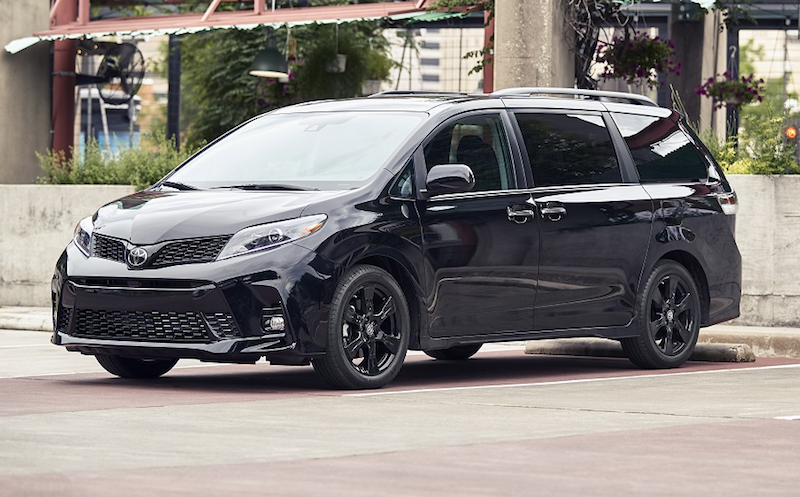
Overview | |
MSRP$29,715 | MSRP$59,400 |
Listings41 | Listings49 |
Ratings & Reviews | |
User Reviews | User Reviews |
Expert reviews7.8 out of 10 | Expert reviews8.0 out of 10 |
Pros
Cons
| |
2020 Toyota Sienna Reviews SummarySince the second half of the 20th century, each decade has had a hot-topic family car, and, as we’ve noted in a number of reviews this year, the crossover is our current darling vehicle. Before the crossover, there were big, truck-based SUVs. Before that, there were station wagons. And for the past 35 years, there's always been the minivan. The Dodge Caravan has been widely considered the Patient Zero of the minivan segment. From there, seemingly everyone joined the party, including Toyota, Nissan, Ford, Chevy, GMC, Volkswagen, Oldsmobile, and more. Heck, even Mercury had a “Nautica Edition” version of the Villager. The minivan was king once, the crossover is king now, and some other type of vehicle will likely dominate in the near future. But in all this, the 7- and 8-passenger minivans will always represent the ultimate in versatility. The crossover is an image-forward fad with a dash of usability, but the minivan continues to prove itself as the pinnacle of practicality. The 2020 Toyota Sienna is neither the newest nor flashiest minivan out there, but when you absolutely need space for people and gear, there’s nothing better. Additionally, as of 2020 the Sienna is the only minivan to offer all-wheel drive (AWD), which is something specifically desired by many car buyers. | |
2021 BMW X5 Reviews SummaryThe BMW X5 was fully redesigned for the 2019 model year. In 2020, high-performance models were added to the mix and for 2021, the SUV’s second-generation plug-in hybrid variant joins the family. All feature similar body design and utility, including a large cargo area. | |
No video found | |
Popular Features & Specs | |
Engine3.5L 296 hp V6 | Engine3.0L 335 hp I6 |
DrivetrainFWD | DrivetrainRWD |
Seating Capacity2 | Seating Capacity7 |
Horsepower296 hp @ 6200 rpm | Horsepower335 hp @ 5500 rpm |
MPG City19 | MPG City21 |
MPG Highway26 | MPG Highway26 |
Engine | |
Engine Name3.5L 296 hp V6 | Engine Name3.0L 335 hp I6 |
Torque263 lb-ft @ 4700 rpm | Torque330 lb-ft @ 1500 rpm |
Horsepower296 hp @ 6200 rpm | Horsepower335 hp @ 5500 rpm |
DrivetrainFWD | DrivetrainRWD |
Fuel Economy | |
MPG City19 | MPG City21 |
MPG Highway26 | MPG Highway26 |
Interior | |
Seating Capacity2 | Seating Capacity7 |
Key Features | |
Navigation System | Navigation SystemStandard |
Sunroof/Moonroof | Sunroof/MoonroofStandard |
Safety | |
Front Crash Overall4 | Front Crash Overall4 |
Side Crash Overall5 | Side Crash Overall5 |
Dimensions & Capacity | |
Cargo Space | Cargo Space33.9 cu ft |
Curb Weight4375 lbs | Curb Weight4828 lbs |
Height68.9 in | Height68.7 in |
Length200.2 in | Length194.3 in |
Width78.1 in | Width87.3 in |
Wheelbase119.3 in | Wheelbase117.1 in |
Maximum Payload | Maximum Payload974 lbs |
Number of doors4 | Number of doors4 |
Maximum Towing Capacity | Maximum Towing Capacity7209 lbs |
Overview | ||
MSRP | $29,715 | $59,400 |
Listings | ||
Ratings & Reviews | ||
User reviews | ||
Expert reviews | 7.8 out of 10Read full review | 8.0 out of 10Read full review |
Pros & cons | Pros
Cons
| |
Summary | Since the second half of the 20th century, each decade has had a hot-topic family car, and, as we’ve noted in a number of reviews this year, the crossover is our current darling vehicle. Before the crossover, there were big, truck-based SUVs. Before that, there were station wagons. And for the past 35 years, there's always been the minivan. The Dodge Caravan has been widely considered the Patient Zero of the minivan segment. From there, seemingly everyone joined the party, including Toyota, Nissan, Ford, Chevy, GMC, Volkswagen, Oldsmobile, and more. Heck, even Mercury had a “Nautica Edition” version of the Villager. The minivan was king once, the crossover is king now, and some other type of vehicle will likely dominate in the near future. But in all this, the 7- and 8-passenger minivans will always represent the ultimate in versatility. The crossover is an image-forward fad with a dash of usability, but the minivan continues to prove itself as the pinnacle of practicality. The 2020 Toyota Sienna is neither the newest nor flashiest minivan out there, but when you absolutely need space for people and gear, there’s nothing better. Additionally, as of 2020 the Sienna is the only minivan to offer all-wheel drive (AWD), which is something specifically desired by many car buyers. | The BMW X5 was fully redesigned for the 2019 model year. In 2020, high-performance models were added to the mix and for 2021, the SUV’s second-generation plug-in hybrid variant joins the family. All feature similar body design and utility, including a large cargo area. |
Video | No video found | |
Popular Features & Specs | ||
Engine | 3.5L 296 hp V6 | 3.0L 335 hp I6 |
Drivetrain | FWD | RWD |
Seating Capacity | 2 | 7 |
Horsepower | 296 hp @ 6200 rpm | 335 hp @ 5500 rpm |
MPG City | 19 | 21 |
MPG Highway | 26 | 26 |
Engine | ||
Engine Name | 3.5L 296 hp V6 | 3.0L 335 hp I6 |
Torque | 263 lb-ft @ 4700 rpm | 330 lb-ft @ 1500 rpm |
Horsepower | 296 hp @ 6200 rpm | 335 hp @ 5500 rpm |
Drivetrain | FWD | RWD |
Fuel Economy | ||
MPG City | 19 | 21 |
MPG Highway | 26 | 26 |
Interior | ||
Seating Capacity | 2 | 7 |
Key Features | ||
Navigation System | Standard | |
Sunroof/Moonroof | Standard | |
Safety | ||
Front Crash Overall | 4 | 4 |
Side Crash Overall | 5 | 5 |
Dimensions & Capacity | ||
Cargo Space | 33.9 cu ft | |
Curb Weight | 4375 lbs | 4828 lbs |
Height | 68.9 in | 68.7 in |
Length | 200.2 in | 194.3 in |
Width | 78.1 in | 87.3 in |
Wheelbase | 119.3 in | 117.1 in |
Maximum Payload | 974 lbs | |
Number of doors | 4 | 4 |
Maximum Towing Capacity | 7209 lbs | |
The 2020 Toyota Sienna, part of its third generation, had been around since the 2011 model year and received updates in 2018. Despite these updates, the 2020 version still felt somewhat dated, with occasional upscale touches. The front doors emitted a hollow "thud" when closed, a detail that many automakers strive to refine. The instrument panel appeared to be from Toyota's 2010 parts bin, but its simplicity made the controls user-friendly. The Sienna offered various trim levels, including CE, LE, SE, and XLE, each with distinct features. The base CE trim was well-equipped with 17-inch alloy wheels, remote keyless entry, and a 7-inch touchscreen with Apple CarPlay. The LE trim added family-friendly features like sliding dual power side doors and heated front seats. The SE trim included a power liftgate and leather upholstery, while the XLE added luxury touches like leather-trimmed seating and a power moonroof. The XLE Limited offered premium leather seats and a JBL audio system. For those prioritizing style, the Nightshade Edition added dark accents and 19-inch wheels.
The 2021 BMW X5 was known for its high-quality craftsmanship, fitting seamlessly into BMW's SUV lineup. Its design, from the kidney grille to the body shape, was unmistakably BMW, though it risked blending in with other models. The X5 featured full adaptive LED headlights and upscale exterior finishes, with M Sport models offering sportier styling. Wheel options ranged from 20 to 22 inches, depending on the trim. Inside, the X5's design was consistent with other BMW models, featuring leather and soft-touch materials, though there was an abundance of black plastic. M Sport models had unique interior styling, including an M sports steering wheel and exclusive trim strips. The interior was spacious, with comfortable seating for short trips, though the front seats could feel hard after extended periods. The X5 retained its split liftgate, offering convenience with full power functionality and adjustable vehicle height for loading cargo.


The 2020 Toyota Sienna was equipped with a 3.5-litre V6 engine, producing 296 horsepower and 263 pound-feet of torque, paired with an eight-speed automatic transmission. It offered a Sport mode for enhanced throttle and shift response, providing stout acceleration. The Sienna's powertrain was front-wheel drive as standard, with all-wheel drive available on most trims, offering a unique selling point in its class. The FWD Sienna achieved fuel efficiency of 12.6 L/100 km in the city and 9.1 on the highway, while AWD versions returned 13.4 L/100 km city and 9.6 highway. The Sienna's low centre of gravity and broad base contributed to decent handling dynamics, though its steering response could feel twitchy at higher speeds.
The 2021 BMW X5 offered multiple powertrain options, all paired with an eight-speed automatic transmission. The base xDrive40i featured a 3.0-litre inline six-cylinder engine with 335 horsepower and 330 pound-feet of torque, with AWD standard. The X5 M50i boasted a twin-turbocharged 4.4-litre V8, delivering 523 hp and 553 lb-ft of torque. The X5 M offered 600 hp, increasing to 617 hp with the Competition Package. The new xDrive45e plug-in hybrid model achieved 389 hp and 443 lb-ft of torque, with a 50-kilometre all-electric range. The X5's steering dynamics were less engaging than expected, with issues at both low and high speeds. The cabin was quiet, with the suspension absorbing road imperfections. The xDrive45e's charging port location was convenient, and it offered a total driving range of about 600 kilometres when fully charged. Fuel efficiency varied across models, with the xDrive45e rated at 4.7 litres-equivalent per 100 kilometres when using electricity and gas.
The 2020 Toyota Sienna excelled in cargo space, offering 4,247 litres, surpassing competitors like the Chrysler Pacifica and Honda Odyssey. However, accessing this space required removing the second-row seats, which could be cumbersome with the bench option. The third-row seats folded seamlessly into the floor, but getting into the backseat could be challenging. Toyota offered mobility access features, including a built-in rotating lift seat, making it an affordable option for those needing mobility conversions.
The 2021 BMW X5 made efficient use of space, with front cupholders conveniently placed and a wireless phone charging pad. The seating was spacious and comfortable for short trips, though the front seats could feel hard over time. The X5 offered an optional third row, though it wasn't tested. The split liftgate was easy to operate, with a vehicle height adjustment button for loading cargo. The X5 xDrive45e had slightly less cargo space than the traditional X5, but the difference was negligible for most buyers. Moving children and cargo in and out of the second-row seats was less convenient due to the limited door opening width.
The 2020 Toyota Sienna's base CE trim featured a 7-inch touchscreen infotainment system with Apple CarPlay, a long-awaited addition. It also included Bluetooth connectivity and five USB ports. Higher trims offered an 8-inch screen, navigation, and a JBL 10-speaker audio system. The XLE Limited trim included Driver Easy Speak, an intercom system that broadcasted the driver's voice to the rear speakers.
The 2021 BMW X5 came with a 12.3-inch infotainment touchscreen, wireless Apple CarPlay, and Android Auto. The system had connectivity quirks, with Apple CarPlay taking over music operations unexpectedly. Standard features included a 12.3-inch digital gauge cluster, a 10-speaker sound system, and a panoramic sunroof. Optional upgrades included a head-up display, quad-zone climate control, and premium audio systems. The iDrive system required some acclimation but was user-friendly once familiar.
The 2020 Toyota Sienna came standard with the Toyota Safety Sense (TSS-P) suite, including lane-departure alert, lane-keep assist, forward-collision warning, and dynamic cruise control. It earned five stars from the NHTSA and top ratings from the IIHS in various crash tests.
The 2021 BMW X5 featured standard safety equipment like blind-spot monitoring, forward collision warning, and adaptive cruise control. However, the Driving Assistance Professional Package had issues with adaptive cruise control and lane-keeping, particularly in bright sunlight or rain. The X5 received Good ratings from the IIHS and a four-star overall safety rating from the NHTSA.
CarGurus highlights

According to CarGurus experts, the overall rating for the 2020 Toyota Sienna is 7.8 out of 10, while the 2021 BMW X5 scores 8.0 out of 10. Based on these ratings, the BMW X5 is the recommended choice for those seeking a luxury SUV with advanced technology and a variety of powertrain options.
Choose the 2020 Toyota Sienna if:
- You need a minivan with class-leading cargo space and family-friendly features.
- You value standard safety features and top safety ratings.
- You require mobility access features directly from the dealership.


Choose the 2021 BMW X5 if:
- You prefer a luxury SUV with multiple powertrain options, including a plug-in hybrid.
- You appreciate a quiet cabin with high-quality materials and a spacious interior.
- You want advanced technology features, including a large infotainment screen and premium audio options.


CarGurus highlights
According to CarGurus experts, the overall rating for the 2020 Toyota Sienna is 7.8 out of 10, while the 2021 BMW X5 scores 8.0 out of 10. Based on these ratings, the BMW X5 is the recommended choice for those seeking a luxury SUV with advanced technology and a variety of powertrain options.
Choose the 2020 Toyota Sienna if:
Shop Now- You need a minivan with class-leading cargo space and family-friendly features.
- You value standard safety features and top safety ratings.
- You require mobility access features directly from the dealership.
Choose the 2021 BMW X5 if:
Shop Now- You prefer a luxury SUV with multiple powertrain options, including a plug-in hybrid.
- You appreciate a quiet cabin with high-quality materials and a spacious interior.
- You want advanced technology features, including a large infotainment screen and premium audio options.

By: CarGurus + AI
At CarGurus, our team of experienced automotive writers remain at the heart of our content operation, conducting hands-on car tests and writing insightful guides that are backed by years of industry experience. To complement this, we are harnessing AI to make our content offering more diverse and more helpful to shoppers than ever. To achieve this, our AI systems are based exclusively on CarGurus content, ratings and data, so that what we produce is both unique to CarGurus, and uniquely helpful to car shoppers.
