2020 Ford Explorer vs 2021 Volkswagen Atlas

Overview | |
MSRP$32,765 | MSRP$31,545 |
Listings535 | Listings163 |
Ratings & Reviews | |
User Reviews | User Reviews |
Expert reviews7.2 out of 10 | Expert reviews6.5 out of 10 |
Pros
Cons
| Pros
Cons
|
2020 Ford Explorer Reviews SummaryFor nearly 30 years, the Ford Explorer has settled into the American lexicon like Cheerios. We've gobbled up millions of them, from the rock-crawling Eddie Bauers of the 1990s to the brand-new ST that can take down sports cars. The 2020 Explorer brings an all-new chassis, cranks up the technology, and introduces hybrid and high-performance powertrains in a space the size of a small living room. The Explorer's also getting very expensive while other automakers catch on to Ford's winning formula—for a lot less money. | |
2021 Volkswagen Atlas Reviews SummaryIntroduced for the 2018 model year, the Atlas is Volkswagen's latest attempt to win over American buyers. Built in Chattanooga, Tennessee, the VW Atlas competes in the three-row crossover SUV segment against well-established nameplates like the Ford Explorer, Honda Pilot, and Toyota Highlander. Changes for 2021 are limited to exterior styling tweaks and a reshuffled option list. VW also offers the two-row Atlas Cross Sport. | |
Popular Features & Specs | |
Engine2.3L 300 hp I4 | Engine2.0L 235 hp I4 |
Drive TrainRWD | Drive TrainFWD |
Seating Capacity7 | Seating Capacity7 |
MPG City21 | MPG City21 |
MPG Highway28 | MPG Highway24 |
Engine | |
Engine Name2.3L 300 hp I4 | Engine Name2.0L 235 hp I4 |
DrivetrainRWD | DrivetrainFWD |
Fuel Economy | |
MPG City21 | MPG City21 |
MPG Highway28 | MPG Highway24 |
Interior | |
Seating Capacity7 | Seating Capacity7 |
Safety | |
Front Crash Overall5 | Front Crash Overall4 |
Side Crash Overall5 | Side Crash Overall5 |
Dimensions & Capacity | |
Cargo Space18.2 cu ft | Cargo Space20.6 cu ft |
Curb Weight4345 lbs | Curb Weight4248 lbs |
Height69.9 in | Height70.1 in |
Length198.8 in | Length200.7 in |
Width89.3 in | Width78.4 in |
Wheelbase119.1 in | Wheelbase117.3 in |
Maximum Payload1425 lbs | Maximum Payload1080 lbs |
Number of doors4 | Number of doors4 |
Maximum Towing Capacity5300 lbs | Maximum Towing Capacity2000 lbs |
Overview | ||
MSRP | $32,765 | $31,545 |
Listings | ||
Ratings & Reviews | ||
User reviews | ||
Expert reviews | 7.2 out of 10Read full review | 6.5 out of 10Read full review |
Pros & cons | Pros
Cons
| Pros
Cons
|
Summary | For nearly 30 years, the Ford Explorer has settled into the American lexicon like Cheerios. We've gobbled up millions of them, from the rock-crawling Eddie Bauers of the 1990s to the brand-new ST that can take down sports cars. The 2020 Explorer brings an all-new chassis, cranks up the technology, and introduces hybrid and high-performance powertrains in a space the size of a small living room. The Explorer's also getting very expensive while other automakers catch on to Ford's winning formula—for a lot less money. | Introduced for the 2018 model year, the Atlas is Volkswagen's latest attempt to win over American buyers. Built in Chattanooga, Tennessee, the VW Atlas competes in the three-row crossover SUV segment against well-established nameplates like the Ford Explorer, Honda Pilot, and Toyota Highlander. Changes for 2021 are limited to exterior styling tweaks and a reshuffled option list. VW also offers the two-row Atlas Cross Sport. |
Video | ||
Popular Features & Specs | ||
Engine | 2.3L 300 hp I4 | 2.0L 235 hp I4 |
Drive Train | RWD | FWD |
Seating Capacity | 7 | 7 |
MPG City | 21 | 21 |
MPG Highway | 28 | 24 |
Engine | ||
Engine Name | 2.3L 300 hp I4 | 2.0L 235 hp I4 |
Drivetrain | RWD | FWD |
Fuel Economy | ||
MPG City | 21 | 21 |
MPG Highway | 28 | 24 |
Interior | ||
Seating Capacity | 7 | 7 |
Safety | ||
Front Crash Overall | 5 | 4 |
Side Crash Overall | 5 | 5 |
Dimensions & Capacity | ||
Cargo Space | 18.2 cu ft | 20.6 cu ft |
Curb Weight | 4345 lbs | 4248 lbs |
Height | 69.9 in | 70.1 in |
Length | 198.8 in | 200.7 in |
Width | 89.3 in | 78.4 in |
Wheelbase | 119.1 in | 117.3 in |
Maximum Payload | 1425 lbs | 1080 lbs |
Number of doors | 4 | 4 |
Maximum Towing Capacity | 5300 lbs | 2000 lbs |
The 2020 Ford Explorer distinguished itself with a notably handsome design, which some believed was more attractive than competitors like the Land Rover Discovery. It refined its upscale, utilitarian look by slimming down body panels, especially at the rear, resulting in a lower and more athletic appearance. The widened headlights, large grille, and italicized "Explorer" lettering on the hood's edge created a prominent and recognizable front face. Although some might critique the small taillights, the overall proportions were deemed textbook perfect. Even after nearly a decade, the previous Explorer maintained strong sales, which likely influenced Ford’s decision to avoid a major redesign. The ST version, adorned with black 21-inch rims, blacked-out trim, red brake calipers, and quad exhaust pipes, was especially striking and garnered positive attention.
However, the interior was a different story. The 2020 Explorer's interior, surrounded by flimsy, rough-grained plastics, felt underwhelming, especially considering the price point. For a vehicle costing between $40,000 and $60,000, the quality of materials, such as door panels and the faux carbon fiber trim, was disappointing. While the top of the dashboard was padded, and features like aluminum speaker covers and white stitching helped break up the monotony, the overall feel did not match the luxury of some of its more affordable competitors like the Kia Telluride or the Toyota Highlander.
Conversely, the 2021 Volkswagen Atlas introduced a refreshed styling for the model year, including new front and rear bumpers and redesigned LED headlights and taillights. A new grille shared with the two-row Atlas Cross Sport model added to the renewed look. Overall, the newer Atlas model appeared more extroverted, although some felt the faux chrome exhaust tips were a bit cheesy. The R-Line trim further enhanced the sportier look with upgraded bumpers and side skirts. Although the drag coefficient of 0.34 wasn't impressive, it was acceptable for a large utility vehicle.
Internally, the Atlas favored a minimalist approach, avoiding excessive decorative trims and ensuring controls were laid out sensibly. Standard seating included seven seats across three rows, with split-folding options for the second and third rows. While the materials in the mid-level SE with Technology trim felt subpar, the overall design was functional and pleasing. High trims boasted real leather upholstery, but the impression remained that material quality didn't match its intent.


The 2020 Ford Explorer excelled in performance, largely due to its shift from a Volvo-based front-wheel-drive platform to a rear-wheel-drive (RWD) chassis, allowing for more balanced weight distribution. The ST trim, specifically enhanced by Ford Performance engineers, benefited from upgraded suspension and steering. Despite the large wheels, ride quality was commendable, and the Explorer displayed remarkable nimbleness and flat cornering. Equipped with a 3.0-liter twin-turbo V6 engine producing 400 horsepower and 415 lb-ft of torque, coupled with a 10-speed automatic transmission, the ST offered an enjoyable driving experience. The performance of the engine was impressive, and the transmission’s smooth transitions added to the overall appeal. The V6's towing capacity reached up to 5,600 pounds, with AWD variants showing some penalty in fuel economy, averaging around 18 mpg.
In contrast, the 2021 Volkswagen Atlas featured two engine options: a standard 2.0-liter turbocharged inline-four generating 235 horsepower and 258 lb-ft of torque, and a unique 3.6-liter VR6 rated at 276 horsepower and 266 lb-ft of torque. Both engines were paired with an eight-speed automatic transmission, with FWD standard and AWD as an option. The driving experience, particularly with the base engine and AWD, was perceived as underwhelming, with adequate acceleration but rough transmission shifts and a truck-like handling feel. Additionally, poor ride quality was noted, possibly exacerbated by the 20-inch wheels on the test vehicle. The VR6, available on higher trims, managed better but still faced similar downfalls in handling. The Atlas’ fuel efficiency was lower than its rivals, and its towing capacity capped at 5,000 pounds for the VR6 and just 2,000 pounds for the four-cylinder, underscoring its limitations in comprehensive performance.
In terms of interior space, the 2020 Ford Explorer proved commendable. During a road trip, it provided ample space and comfort for adults with a massive rear cargo area. Air vents, USB ports, a central console, and a panoramic moonroof added to the comfort, making long trips enjoyable. The third row could comfortably accommodate six-foot-tall adults for short trips, and the spaciousness continued to the expansive cargo area, boasting 18 cubic feet behind the third row, expanding to 48 cubic feet with the second row down, and up to 88 cubic feet with all seats folded. These specs positioned the Explorer as one of the more capacious options in its class.
The 2021 Volkswagen Atlas, while generally spacious, had trade-offs. Despite a generous total cargo space of 96.8 cubic feet with seats folded and 20.6 cubic feet with all seats up, it exhibited less second-row legroom compared to its competitors. The third row, a notable highlight offering more legroom, came at the expense of second-row comfort, which hosted less comfy, flimsy cushions. Nonetheless, accessing the third row was straightforward due to the sliding second-row bench, making up for some of its shortcomings. The Atlas emphasized functionality with logical control placements and additional features like multiple USB ports and abundant cup holders. Forward visibility and parking aids contributed to a more practical driving experience.
On the technology front, the 2020 Ford Explorer came well-equipped with an 8-inch touchscreen featuring Sync 3 infotainment, Apple CarPlay, Android Auto, and standard 4G WiFi. Higher trims included a 10-inch vertical touchscreen and a 12-inch digital instrument cluster. The advanced interface and customizable displays added a modern touch, though the system felt unfinished without additional customization options. While the Co-Pilot360 Assist+ provided semi-automated driving tech, it was less reliable than competitors.
The 2021 Volkswagen Atlas featured Bluetooth and smartphone compatibility as standard across all trims. Lower trims received a 6.5-inch screen, with higher trims enjoying an 8-inch touchscreen and VW's Digital Cockpit, a 10.3-inch reconfigurable display. Unfortunately, the Atlas' user interface wasn't as appealing, with plain, text-heavy displays. Audio-wise, the base six-speaker system performed decently, while higher trims offered a 12-speaker Fender system. New for 2021 was the 4G LTE WiFi hotspot, a nod toward modern connectivity needs.
Safety was a strong point for both vehicles, though with varying results. The 2020 Ford Explorer came with Co-Pilot 360, featuring forward emergency braking, blind-spot monitoring, and lane-keep assist as standard. The Assist+ added adaptive cruise control and reverse braking, though the latter had some issues. The Explorer received mixed results from the IIHS, with an "Acceptable" rating for small overlap driver's side crash test.
The 2021 Volkswagen Atlas excelled in safety ratings, with the IIHS awarding it top ratings in most crash tests, except for a marginal rating for child-seat anchors and mixed headlight ratings. The NHTSA had also given the 2020 model, which is similar structurally, a five-star overall rating. The Atlas featured standard automatic emergency braking and blind-spot monitoring across all trims, with higher trims offering adaptive cruise control and lane-keep assist. Later in 2021, Travel Assist and Emergency Assist were expected to enhance its safety profile further.
CarGurus highlights
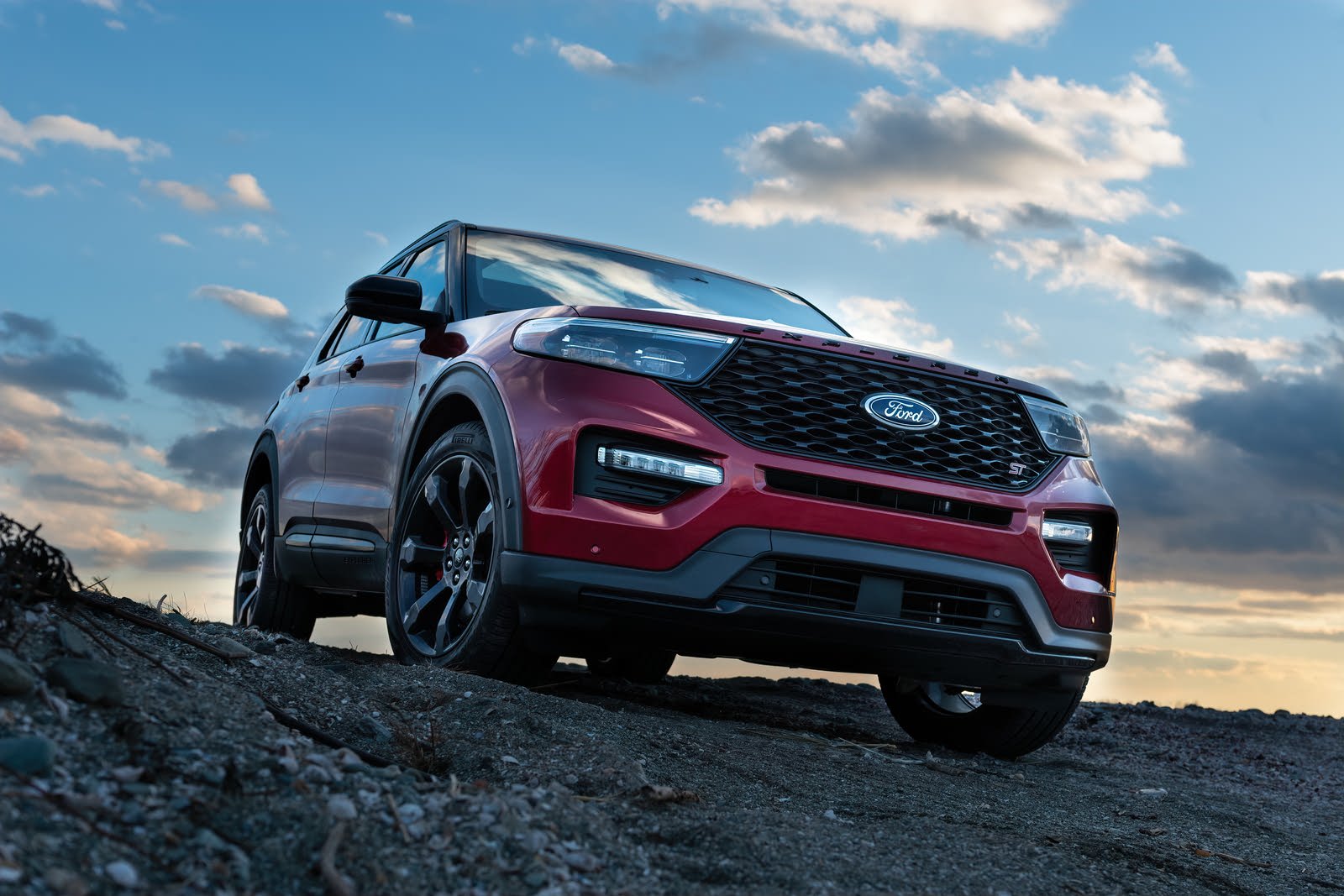
According to CarGurus experts, the overall rating for the 2020 Ford Explorer is 7.2 out of 10, while the 2021 Volkswagen Atlas scores 6.5 out of 10. Given these scores, the 2020 Ford Explorer emerges as the preferred choice. Its superior performance, spacious interior, and better-equipped technology make it a more compelling option compared to the 2021 Volkswagen Atlas.
Choose the 2020 Ford Explorer if:
- You prioritize balanced performance and handling, especially with the powerful ST trim.
- Ample cargo space and passenger comfort for long road trips are top considerations.
- Advanced infotainment features and functional interior design appeal to you.


Choose the 2021 Volkswagen Atlas if:
- You prefer a more minimalistic yet practical interior layout with ample third-row legroom.
- Consistent safety ratings and available driver-assist features are crucial.
- The availability of modern connectivity options like a 4G LTE WiFi hotspot is important.


CarGurus highlights
According to CarGurus experts, the overall rating for the 2020 Ford Explorer is 7.2 out of 10, while the 2021 Volkswagen Atlas scores 6.5 out of 10. Given these scores, the 2020 Ford Explorer emerges as the preferred choice. Its superior performance, spacious interior, and better-equipped technology make it a more compelling option compared to the 2021 Volkswagen Atlas.
Choose the 2020 Ford Explorer if:
Shop Now- You prioritize balanced performance and handling, especially with the powerful ST trim.
- Ample cargo space and passenger comfort for long road trips are top considerations.
- Advanced infotainment features and functional interior design appeal to you.
Choose the 2021 Volkswagen Atlas if:
Shop Now- You prefer a more minimalistic yet practical interior layout with ample third-row legroom.
- Consistent safety ratings and available driver-assist features are crucial.
- The availability of modern connectivity options like a 4G LTE WiFi hotspot is important.

By: CarGurus + AI
At CarGurus, our team of experienced automotive writers remain at the heart of our content operation, conducting hands-on car tests and writing insightful guides that are backed by years of industry experience. To complement this, we are harnessing AI to make our content offering more diverse and more helpful to shoppers than ever. To achieve this, our AI systems are based exclusively on CarGurus content, ratings and data, so that what we produce is both unique to CarGurus, and uniquely helpful to car shoppers.

